
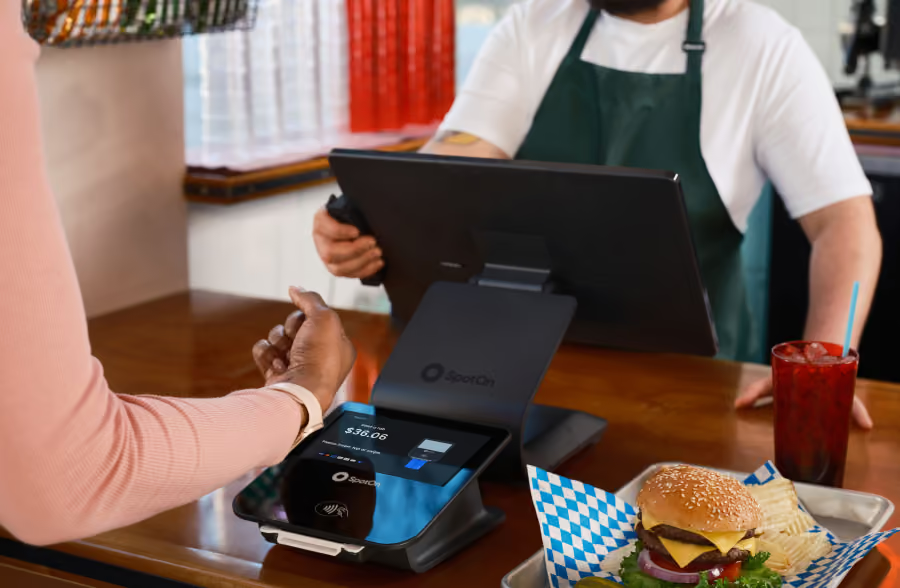
Restaurant employee turnover gets treated as background noise in an industry where it's always been high. But the numbers behind it are worth sitting with. Limited-service, or quick-service, restaurants saw hourly turnover of 110 percent in the third quarter of 2025, according to Black Box Intelligence's restaurant workforce research, an improvement from 133 percent in 2019, but still meaning a typical crew turns over more than once every twelve months. Full-service hourly turnover sat at 92 percent over the same period.
That churn isn't free. It's worth understanding exactly what it costs, and what actually moves the number down.
What restaurant employee turnover actually costs
Black Box Intelligence puts the cost of replacing a single hourly restaurant employee at $2,706 as of 2025, up from $2,300 the year before. Management turnover costs far more: $11,940 for a non-GM manager and $17,651 for a general manager. Training accounts for roughly 35 percent of hourly replacement costs and more than half of management replacement costs, meaning a large share of what turnover costs isn't recruitment, it's the time spent getting a replacement up to speed.
The knock-on effects go further than the direct cost. Black Box's data also shows that restaurants in the top quartile for retention, meaning the lowest turnover, see a measurable traffic advantage over their peers, including a 2.6 percent lift in comparable front-of-house traffic for full-service restaurants. Lower turnover doesn't just save on replacement costs. It shows up in the numbers customers generate too, the same causal chain EX=CX: the equation every restaurant operator needs to know lays out between crew experience and guest experience.
Why turnover is structurally higher in quick-service restaurants
Quick-service turnover runs meaningfully higher than full-service, and the reasons are mostly structural. Entry-level QSR roles often pay close to minimum wage, offer fewer hours than employees want, and come with less of a clear path upward than a full-service restaurant where tipped positions and kitchen career tracks are more established. None of that means high turnover is unavoidable. It means the interventions that move the needle look different from a general workforce retention playbook.
What reduces restaurant staff turnover in practice
7shifts' 2025 Restaurant Employee Engagement report, based on a survey of 1,500 active restaurant employees, points to specific, addressable drivers. Nearly half of employees who left a restaurant job cited difficult management as the reason. Over half say more recognition from management would increase their engagement. And 24 percent cite a lack of growth opportunity as a reason for leaving, even though 75 percent say career development matters to them.
None of that points to pay as the sole lever, though pay matters too. It points to management quality, recognition, and visible opportunity as the three factors doing the most damage when they're missing, and the most good when they're addressed directly. For the fuller playbook, see our 7 restaurant employee retention strategies.
How to reduce restaurant staff turnover with the tools you already need
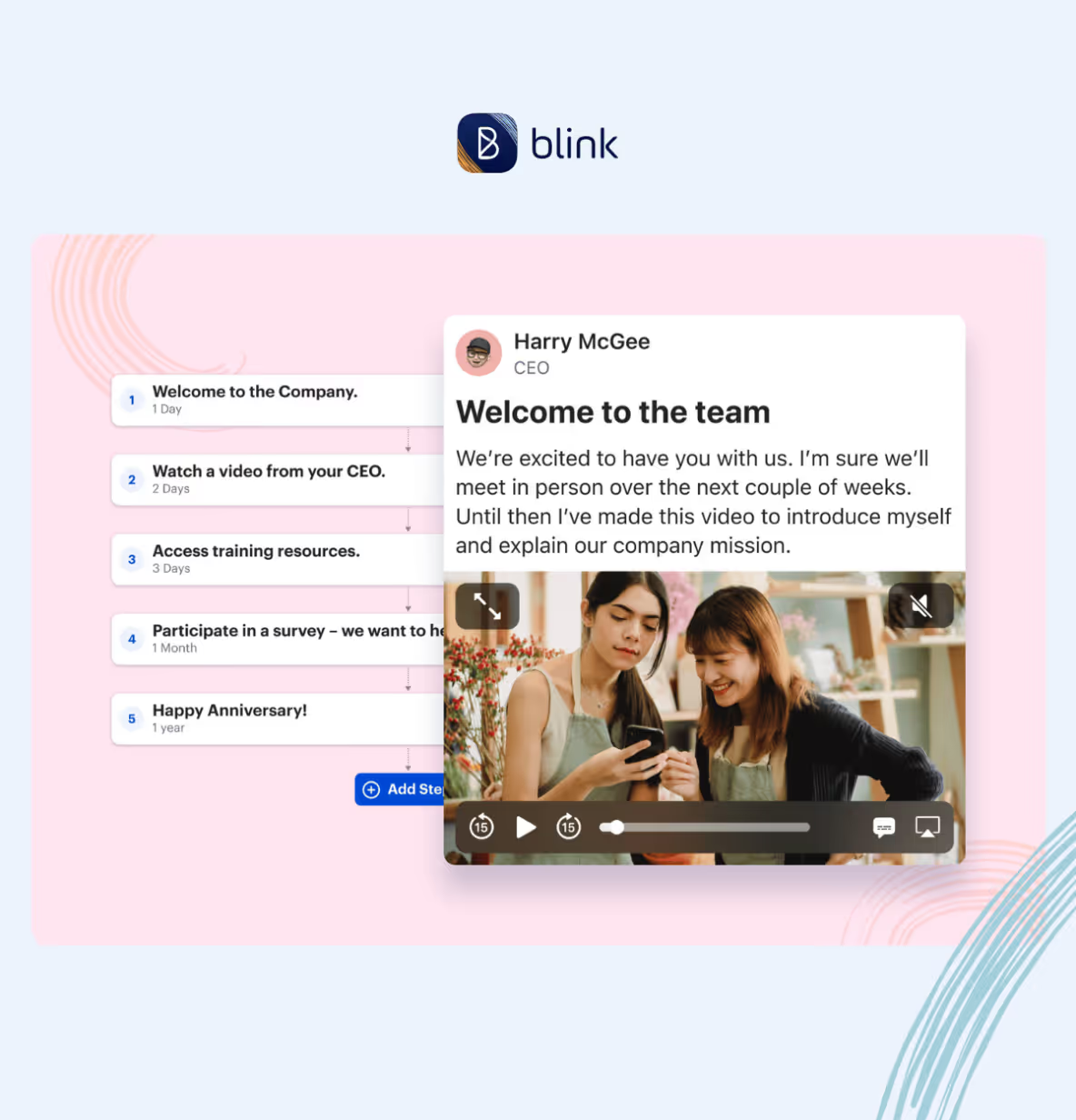
Most of what reduces restaurant staff turnover isn't a new expense, it's better execution of things restaurants are already trying to do: recognizing good work, training managers to communicate well, giving new hires real support past their first week, and giving staff a way to be heard. What's usually missing is a system that makes those things consistent across every shift and every location, rather than dependent on one manager remembering to do them.
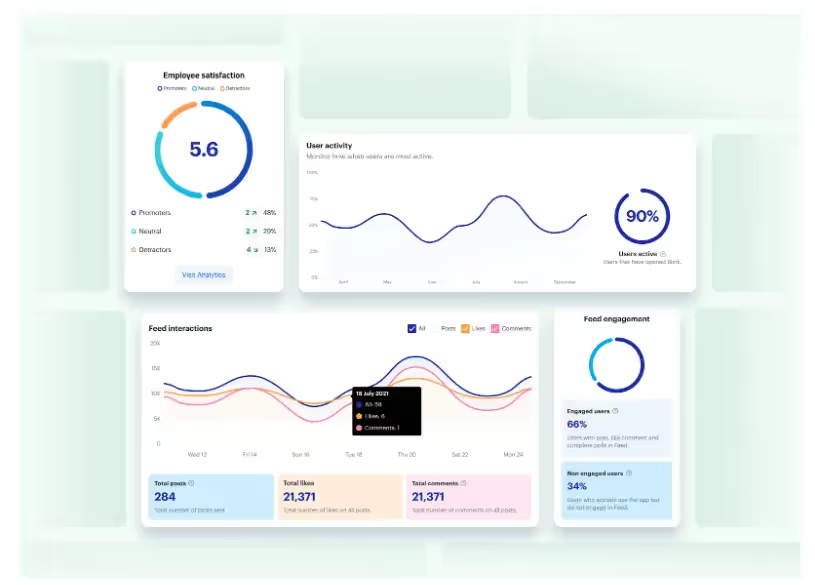
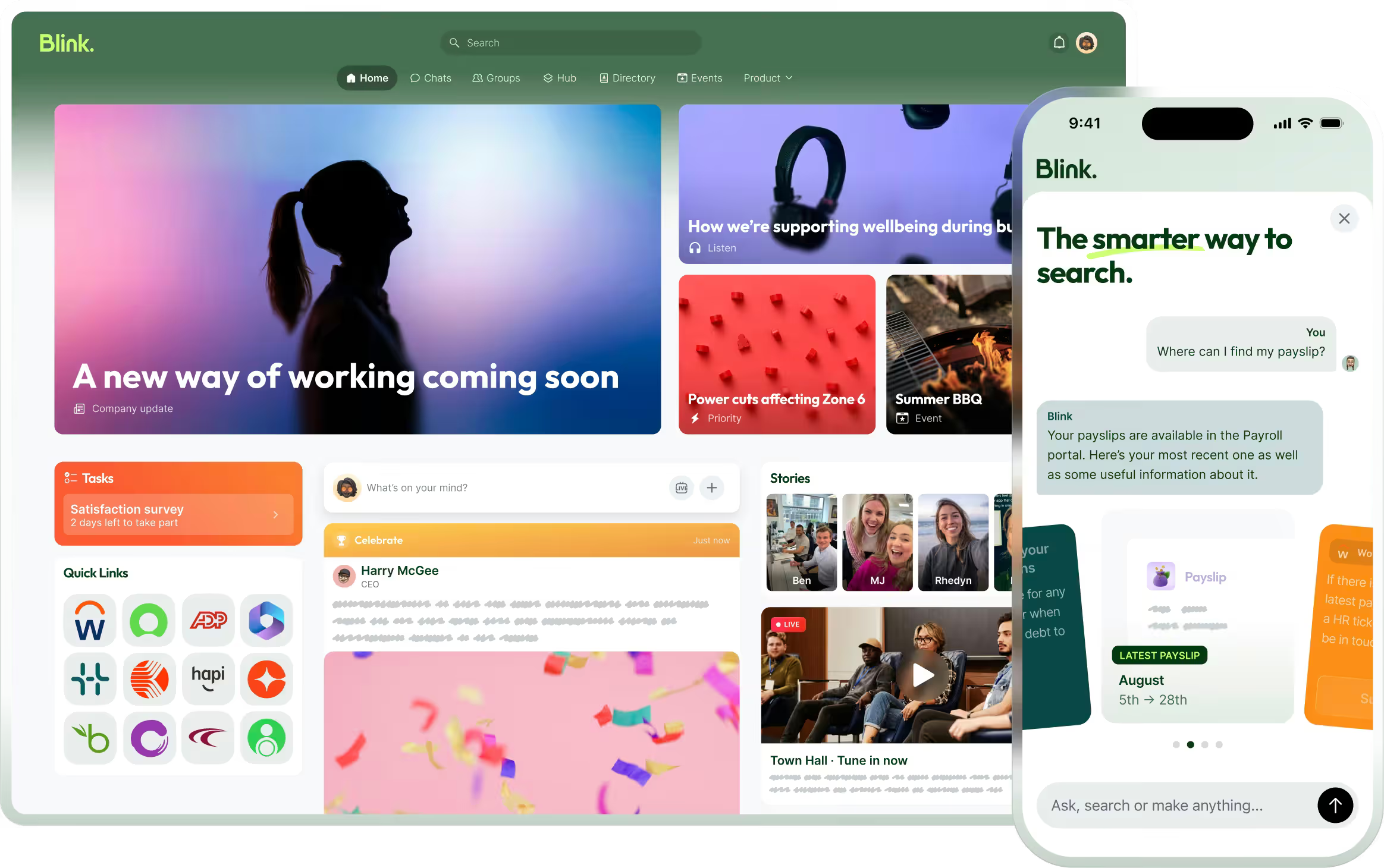
A restaurant employee app that combines recognition, communication, and onboarding into a single place employees already check gives operators a practical way to execute on turnover reduction at scale. Blink supports restaurant brands including McDonald's, Domino's, and Shake Shack with exactly this kind of platform, and frontline organizations using it typically see adoption above 90 percent within the first week, precisely because it doesn't ask staff to change how they already work.
Blink. And make staying the easier choice.
Sources: Black Box Intelligence Restaurant Workforce Data (2025) and 7shifts Restaurant Employee Engagement Report (2025).



.avif)

.avif)



.jpeg)




















.jpeg)


.avif)



.avif)



-min.jpeg)
.avif)


-min.avif)


%20(3).avif)











.avif)







.avif)





.avif)
%20(2).avif)