
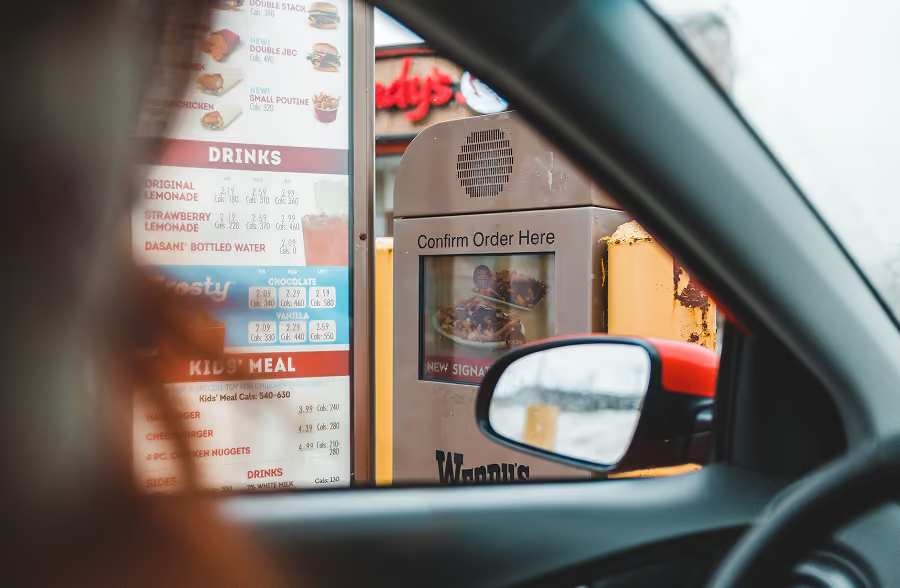
New hires in restaurants don't get much runway. A day or two of shadowing, a stack of forms, and then they're on the floor during a Friday dinner rush, expected to keep up. It's not that operators don't care about onboarding. It's that the tools most restaurants use for it, paper checklists, a binder in the back office, a manager's memory, were never built to scale.
Restaurant employee onboarding software exists to close that gap. Done well, it gets new hires productive faster and keeps more of them around past the point where most restaurant turnover actually happens.
What restaurant employees actually want from onboarding
7shifts' 2025 Restaurant Employee Engagement report, based on a survey of 1,500 active restaurant employees, found that preferences on onboarding length are split but clear: 46.6 percent want one to two weeks of structured onboarding, and 38 percent want less than a week. Very few want a long, drawn-out process. What they want is a short, well-organized one that actually prepares them for the job, not a marathon of paperwork that delays their first real shift.
Where paper-based onboarding breaks down
A binder or a stack of printed forms works fine for one new hire at a time, in one location, with one manager who remembers where everything is. It breaks down fast at any real scale: a franchise group opening a new location, a manager turnover that takes institutional knowledge with it, or simply a new hire who has a question on day four and no easy way to find the answer without tracking someone down.
The cost of getting this wrong isn't abstract. Black Box Intelligence's 2025 restaurant workforce data puts the cost of replacing a single hourly restaurant employee at $2,706, with training making up roughly 35 percent of that figure. A disorganized onboarding process doesn't just create a rough first week, it actively increases the odds that cost gets paid out again a few months later, feeding straight back into restaurant employee turnover.
What good restaurant employee onboarding software includes
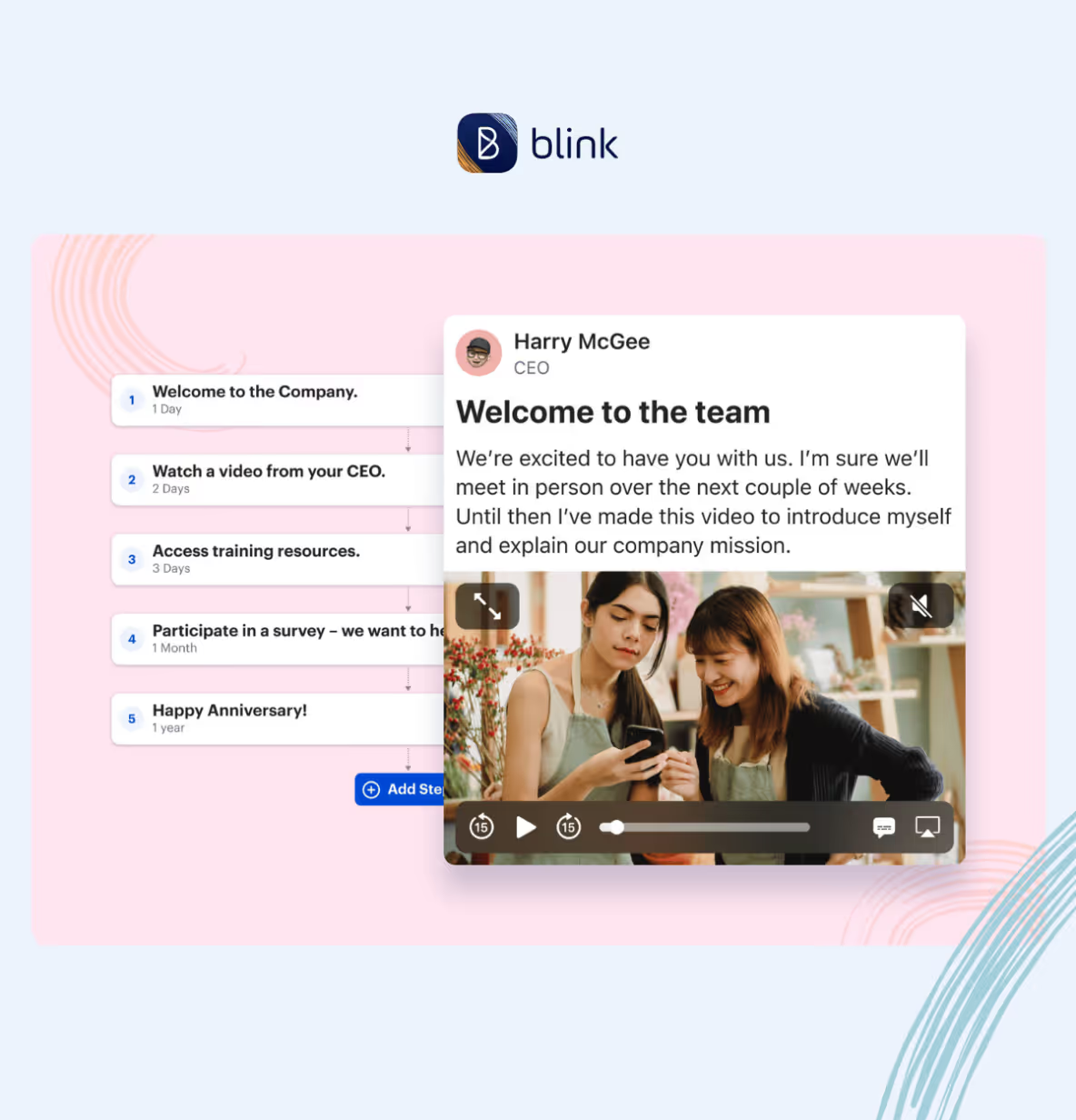
A structured, mobile-first checklist. New hires should be able to see exactly what's expected of them, in order, on the phone they already carry, rather than relying on a manager to remember what comes next.
Digital forms, not paper ones. Tax forms, policy acknowledgments, and compliance documents should be completable from a phone before day one, so the first shift can focus on the job itself.
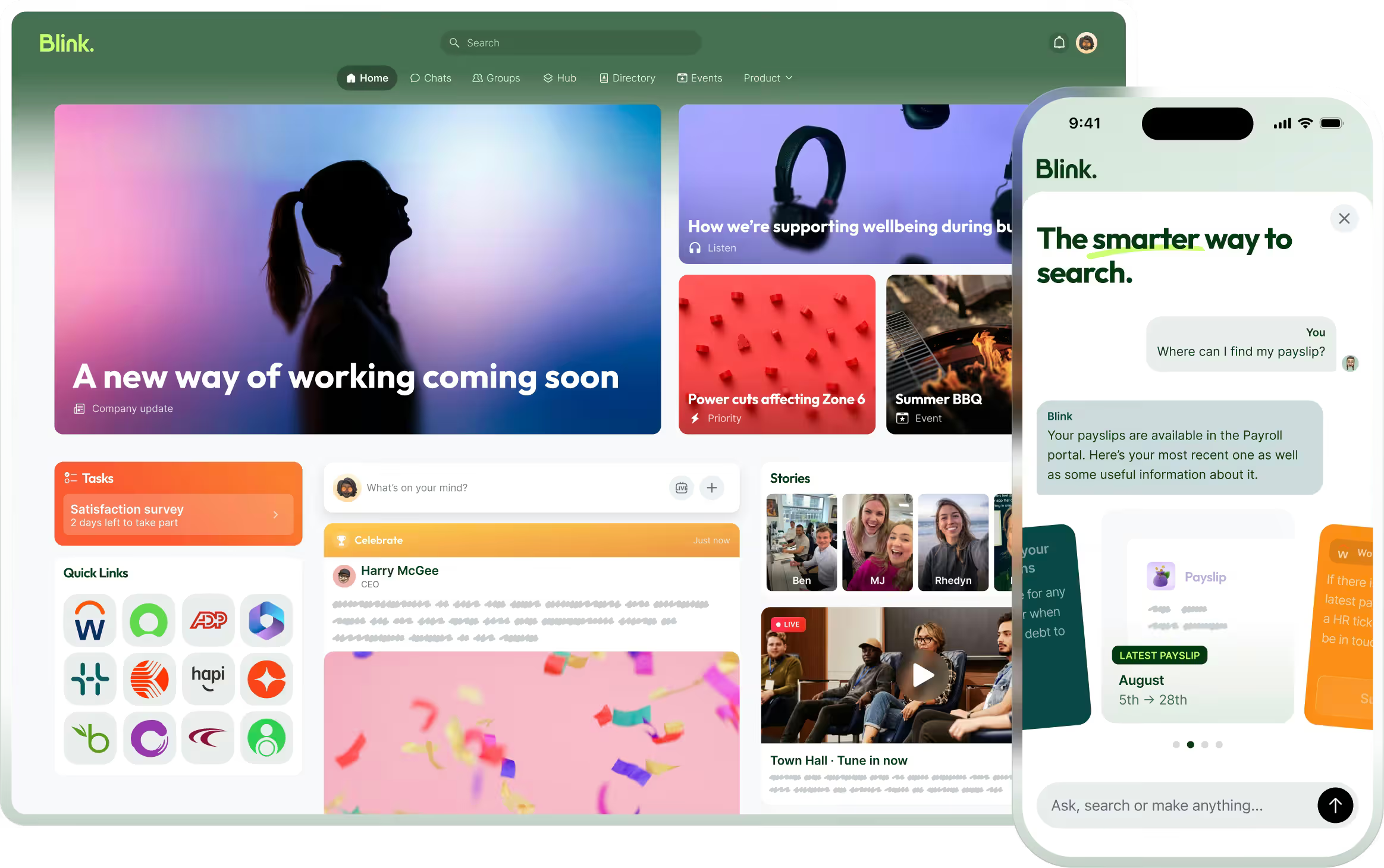
A way to ask questions without feeling like a burden. A searchable knowledge hub for policies and procedures means new hires can find answers themselves instead of interrupting a busy shift lead mid-rush.
Onboarding that doesn't stop at week one. The best restaurant employee onboarding software extends check-ins, recognition, and connection past the first few days, since the risk of a new hire leaving doesn't disappear once the paperwork's done.
Visibility for managers across locations. For multi-location and franchise operators, onboarding software should show which new hires are on track and which need a follow-up, without a manager having to chase down a status update site by site.
How Blink supports onboarding for restaurant teams
Blink turns paper-based onboarding into a structured, mobile-first journey that new restaurant hires can complete from their own phone, with digital forms replacing the printed stack and a searchable knowledge hub available for the questions that come up after week one. Because every employee gets access from their first day, whether or not they have a company email address, onboarding doesn't wait on IT setup or a manager's schedule.
For multi-location and franchise groups, that same structure runs consistently across every site, giving operators visibility into onboarding progress without needing a separate system per location. It's the same foundation behind Blink's restaurant employee app more broadly.
Blink. And make a new hire's first weeks the reason they stay.
Sources: 7shifts Restaurant Employee Engagement Report (2025) and Black Box Intelligence Restaurant Workforce Data (2025).


















.avif)



.avif)


-min.jpeg)
.avif)



-min.avif)


%20(3).avif)







.avif)




.avif)



.avif)



.avif)






.avif)