Abellio London puts an end to frontline worker gap with employee engagement app Blink
Super-app reconnects Abellio’s deskless workers and management to foster a more inclusive culture
Jess DeVore
Published:
October 31, 2023
Last updated:
December 12, 2023
What we'll cover
London, 1 November 2023 – Bus operator Abellio London has rolled out Blink, a mobile app that connects management with frontline, or deskless, workers.
Abellio, which operates bus services on behalf of Transport for London and serves 430,000 customers across Greater London every day, will connect its 2,800 employees across six depots and Transport UK Rail Replacement services through Blink’s super-app. Employees can connect, share information and communicate with each other wherever they are which, until now, had been impossible.
Abellio’s investment in Blink gives every worker digital connectivity to the organisation and each other, improving convenience, flexibility and inclusion. This investment forms part of Abellio’s ongoing initiatives to support inclusion within the business and tackle the national bus driver shortage. Transport for London recently revealed they were operating with a shortage of 2,510 drivers, and nationwide, many operators are still experiencing significant staff shortages, with bus vacancy rate at 6.8%, resulting in recent calls for bus drivers to be added to the Shortage Occupation List so operators can recruit drivers from abroad.
Due to the nature of their work, frontline teams – such as bus drivers – are often subject to manual processes and paperwork. They might not have immediate access to some of the tools or information that support them to deliver a positive experience to customers. Across the UK, frontline teams can feel disconnected from the rest of the workforce and, in some cases, undervalued: recent research found that only 39% of frontline workers feel heard, and that 42% are considering quitting their job.
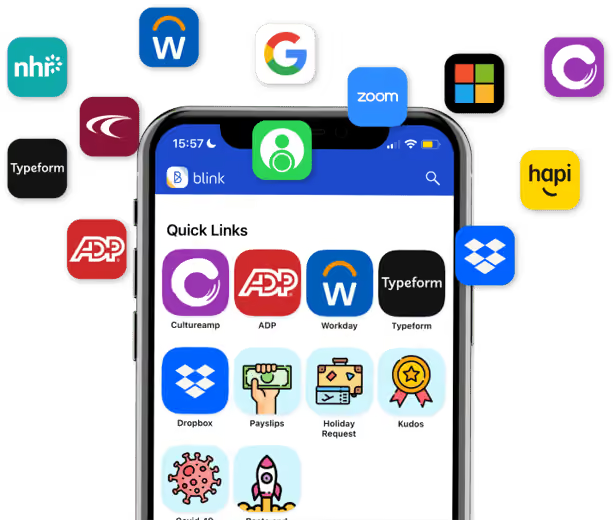
Blink tackles these issues head-on. Beyond communication, the Blink app provides seamless, always-on access to external applications across any device. Abellio’s bus drivers only need to sign into Blink once via secure Single Sign On in order to gain access to all the key systems and information needed for their roles, including the driver allocation system (DAS); payslip information and payslips; and company updates and information that have traditionally been shared by depot notice boards, social media groups or via their line managers.
Previously, drivers needed to access multiple systems to complete certain aspects of their role which was time-consuming and required different passwords and/or access to a computer. Mobile-first with desktop capabilities,Blink brings everything together in one super-app for Abellio’s drivers and management team. Drivers can complete their day-to-day tasks or reports via their phones in real-time and are kept in the loop at the same time as everyone else in the organisation. Crucially, they are able to directly communicate and share feedback with their senior leadership team, giving them a greater say in what’s happening.
“Abellio actively champions inclusivity, as a business that employs 43 different nationalities, we have always prided ourselves on our inclusive culture,” commented Abellio Operations and HR Director, Lorna Murphy. “Differences are very much valued, and our company's success depends on it. We needed an inclusive and simple way to bring our teams together and wanted to offer greater access to information and process for our frontline drivers.
“Blink fosters inclusiveness because everyone in the organisation has a mobile phone, meaning they can log in and access everything they need from wherever they are. It enables two-way conversations and brings connectivity to everyone in the business.”
Sean Nolan, CEO and Co-Founder of Blink, added: “Abellio London is on a mission to put a stop to the frontline worker gap and bring a sense of belonging to employees wherever they are. It recognises just how much an engaged frontline directly impacts how successful they are as a team. Amongst our customers we have seen that by fostering a more engaged and inclusive culture, productivity, quality, care, commitment, and retention will surely follow.
“The company is doing this by putting better company information at their drivers’ fingertips, while giving managers real-time access to frontline intelligence on employee performance and engagement. This will save them hundreds of hours, which they had been previously losing to disparate communications channels.”
The Blink app will also replace all the paper-based forms that currently require drivers to return to depot to complete. Thanks to the app’s intuitive interface, drivers can manage their schedules, payment information, and form-filling from wherever they are and whatever their technical ability.
Murphy added: “Using Blink, Abellio bus drivers can access a system of simple pathways that makes it easy for them to report issues, start a conversation with management or colleagues, or go about their day-to-day tasks such as checking shifts and accessing payslips, reconnecting them back to the organisation they work for via one simple, easy-to-use app.
“At a time when recruitment and retention in the industry is paramount, we hope that Blink, and tools like it, will support teams to feel connected to the business. Blink will help us to create a vibrant and open culture that champions better employee engagement, and give our drivers a channel through which they can voice their queries, ideas and concerns.”
As well as providing company-wide communications, Abellio can use Blink to create specific groups for supported work conversations, something that has been proven beneficial for employee wellness. Blink’s frontline intelligence and analysis capabilities will also help the leadership team to understand what employees need to perform, and how best to deliver it.
Blink has been proven to reach 95% of employees and reduce employee turnover by 26%. It also triples response rates, sees five times the number of adoption of tools thanks to its single sign-on(SSO), and gets a nine out of ten ‘ease of use’ rating from end users.
Press contacts
For more information or interviews, please get in touch with kate@transatlanticent.com | 07980 921961.
About Abellio
Abellio London is part ofTransport UK and operates 55 bus routes in the capital on behalf of Transport for London (TfL), plus rail replacement and event services across the UK.
The business operates around nine percent of London’s bus network, running over 800 vehicles and employing 2,500staff across six depots in Central, South, and West London. Abellio is a pioneer in EV public transport, operating over 100 no-emission fully electric buses in London.
Abellio London was a double winner in the 2021 Bus and Coach Awards and is a finalist in the British QualityFoundation’s EFQM Excellence awards, following a 5-star rating in the BQF Recognised For Excellence assessment. In 2020 it was named Operator of the Year at the London Transport Awards and also helped bring the first Caetano electric single-deck buses to the UK, which were the safest in London with the inclusion of TfL Bus Safety Standard measures. Since 2019 it has held Earned Recognition status with the Driver and Vehicle Standards Agency (DVSA), which recognises it as an exemplary operator, and in 2023 earned ISO 45001 accreditation across all six depots.
About Blink
Blink is the world's best super-app for deskless workers, with a mission to revolutionise work life for the frontline, closing the digital divide and enabling distributed organisations to communicate effectively and engage together like never before. Blink is used by over 200,000 frontline workers at industry-leading companies including Stagecoach, Elara Caring and Domino’s. Each user opens the app an average of seven times a day, helping lower frontline attrition by up to 25%.
Founded in 2015 and with offices in London, Boston, and Sydney, Blink is a Leader in the G2 Grid® for Best EmployeeEngagement Software and named in the 2022 Deloitte Technology Fast 50.
London, 1 November 2023 – Bus operator Abellio London has rolled out Blink, a mobile app that connects management with frontline, or deskless, workers.
Abellio, which operates bus services on behalf of Transport for London and serves 430,000 customers across Greater London every day, will connect its 2,800 employees across six depots and Transport UK Rail Replacement services through Blink’s super-app. Employees can connect, share information and communicate with each other wherever they are which, until now, had been impossible.
Abellio’s investment in Blink gives every worker digital connectivity to the organisation and each other, improving convenience, flexibility and inclusion. This investment forms part of Abellio’s ongoing initiatives to support inclusion within the business and tackle the national bus driver shortage. Transport for London recently revealed they were operating with a shortage of 2,510 drivers, and nationwide, many operators are still experiencing significant staff shortages, with bus vacancy rate at 6.8%, resulting in recent calls for bus drivers to be added to the Shortage Occupation List so operators can recruit drivers from abroad.
Due to the nature of their work, frontline teams – such as bus drivers – are often subject to manual processes and paperwork. They might not have immediate access to some of the tools or information that support them to deliver a positive experience to customers. Across the UK, frontline teams can feel disconnected from the rest of the workforce and, in some cases, undervalued: recent research found that only 39% of frontline workers feel heard, and that 42% are considering quitting their job.
Blink tackles these issues head-on. Beyond communication, the Blink app provides seamless, always-on access to external applications across any device. Abellio’s bus drivers only need to sign into Blink once via secure Single Sign On in order to gain access to all the key systems and information needed for their roles, including the driver allocation system (DAS); payslip information and payslips; and company updates and information that have traditionally been shared by depot notice boards, social media groups or via their line managers.
Previously, drivers needed to access multiple systems to complete certain aspects of their role which was time-consuming and required different passwords and/or access to a computer. Mobile-first with desktop capabilities,Blink brings everything together in one super-app for Abellio’s drivers and management team. Drivers can complete their day-to-day tasks or reports via their phones in real-time and are kept in the loop at the same time as everyone else in the organisation. Crucially, they are able to directly communicate and share feedback with their senior leadership team, giving them a greater say in what’s happening.
“Abellio actively champions inclusivity, as a business that employs 43 different nationalities, we have always prided ourselves on our inclusive culture,” commented Abellio Operations and HR Director, Lorna Murphy. “Differences are very much valued, and our company's success depends on it. We needed an inclusive and simple way to bring our teams together and wanted to offer greater access to information and process for our frontline drivers.
“Blink fosters inclusiveness because everyone in the organisation has a mobile phone, meaning they can log in and access everything they need from wherever they are. It enables two-way conversations and brings connectivity to everyone in the business.”
Sean Nolan, CEO and Co-Founder of Blink, added: “Abellio London is on a mission to put a stop to the frontline worker gap and bring a sense of belonging to employees wherever they are. It recognises just how much an engaged frontline directly impacts how successful they are as a team. Amongst our customers we have seen that by fostering a more engaged and inclusive culture, productivity, quality, care, commitment, and retention will surely follow.
“The company is doing this by putting better company information at their drivers’ fingertips, while giving managers real-time access to frontline intelligence on employee performance and engagement. This will save them hundreds of hours, which they had been previously losing to disparate communications channels.”
The Blink app will also replace all the paper-based forms that currently require drivers to return to depot to complete. Thanks to the app’s intuitive interface, drivers can manage their schedules, payment information, and form-filling from wherever they are and whatever their technical ability.
Murphy added: “Using Blink, Abellio bus drivers can access a system of simple pathways that makes it easy for them to report issues, start a conversation with management or colleagues, or go about their day-to-day tasks such as checking shifts and accessing payslips, reconnecting them back to the organisation they work for via one simple, easy-to-use app.
“At a time when recruitment and retention in the industry is paramount, we hope that Blink, and tools like it, will support teams to feel connected to the business. Blink will help us to create a vibrant and open culture that champions better employee engagement, and give our drivers a channel through which they can voice their queries, ideas and concerns.”
As well as providing company-wide communications, Abellio can use Blink to create specific groups for supported work conversations, something that has been proven beneficial for employee wellness. Blink’s frontline intelligence and analysis capabilities will also help the leadership team to understand what employees need to perform, and how best to deliver it.
Blink has been proven to reach 95% of employees and reduce employee turnover by 26%. It also triples response rates, sees five times the number of adoption of tools thanks to its single sign-on(SSO), and gets a nine out of ten ‘ease of use’ rating from end users.
Press contacts
For more information or interviews, please get in touch with kate@transatlanticent.com | 07980 921961.
About Abellio
Abellio London is part ofTransport UK and operates 55 bus routes in the capital on behalf of Transport for London (TfL), plus rail replacement and event services across the UK.
The business operates around nine percent of London’s bus network, running over 800 vehicles and employing 2,500staff across six depots in Central, South, and West London. Abellio is a pioneer in EV public transport, operating over 100 no-emission fully electric buses in London.
Abellio London was a double winner in the 2021 Bus and Coach Awards and is a finalist in the British QualityFoundation’s EFQM Excellence awards, following a 5-star rating in the BQF Recognised For Excellence assessment. In 2020 it was named Operator of the Year at the London Transport Awards and also helped bring the first Caetano electric single-deck buses to the UK, which were the safest in London with the inclusion of TfL Bus Safety Standard measures. Since 2019 it has held Earned Recognition status with the Driver and Vehicle Standards Agency (DVSA), which recognises it as an exemplary operator, and in 2023 earned ISO 45001 accreditation across all six depots.
About Blink
Blink is the world's best super-app for deskless workers, with a mission to revolutionise work life for the frontline, closing the digital divide and enabling distributed organisations to communicate effectively and engage together like never before. Blink is used by over 200,000 frontline workers at industry-leading companies including Stagecoach, Elara Caring and Domino’s. Each user opens the app an average of seven times a day, helping lower frontline attrition by up to 25%.
Founded in 2015 and with offices in London, Boston, and Sydney, Blink is a Leader in the G2 Grid® for Best EmployeeEngagement Software and named in the 2022 Deloitte Technology Fast 50.
What we'll cover
Start your free trial today
See how Blink helps frontline teams stay connected, informed, and engaged.
Mass walkouts make headlines. It would not be surprising if 2024 saw an increase in these headlines - particularly in sectors such as healthcare. The recent strike that saw 75,000 Kaiser healthcare workers walk off the job is reflective of the deep level of disengagement among frontline healthcare professionals in general. Unless healthcare leaders can spot rising levels of disengagement, understand what causes it, and take proactive steps to prevent it within their organizations, these worrying trends will continue to persist.
Unfortunately, despite significant and somewhat effective efforts by HR leaders to recognize and reward frontline workers for their contributions, the healthcare industry is struggling to bridge the gap between organizational initiatives and frontline satisfaction. Benefits programs, loyalty initiatives, listening surveys, and wellbeing apps have failed to move the needle, mainly because these initiatives simply don’t always reach those needing them. Technologies such as e-learning and team scheduling platforms, messaging, and collaboration tools - designed to engage employees and encourage a more connected and cohesive organizational culture - have not had the desired impact on frontline staff.
Mismatch Between Technology and Reality
The problem is that while the pace of digital transformation in the enterprise space has been undeniable, the technologies most healthcare organizations purchase today are designed for desk-based workers who are permanently online and have ready access to IT support and/or relevant training resources; or are another add on to an existing legacy system.
The modern enterprise tech ecosystem is incompatible with the reality of frontline work – where mobile ease of use and accessibility are pivotal to driving impact. These tools simply don’t work effectively when rolled out to hospital staff who are time-constrained, constantly on their feet, and rarely anywhere near a desktop computer, especially for anything nonclinical.
A survey of more than 500 US healthcare workers reveals that 37% say technology frustrates them. This lack of positivity around technology creates inequality of opportunity and influence within the workplace, as healthcare workers often don’t enjoy the same sense of value and belonging as their office-based peers, nor do they have the same opportunities for career advancement.
READ MORE: Achieving Employee Techquity: Our guide on why successful digital inclusion in healthcare starts in your teams.
Purpose-built Technology for Delivering Exceptional Care
Healthcare workers aren’t averse to using technology. As consumers, their digital world is immediate and enriching, driven by intuitive smartphone apps, instant notifications, and a sense of always having the tools they need at their fingertips. Yet in their jobs, the current digital experience can be slow and disjointed.
To close the digital divide, organizations must deploy technologies specifically designed with the on-the-go frontline healthcare experience in mind. For example, offering single sign-on (SSO), mobile-enabled access to all applications will greatly improve accessibility. Building a hub can make it easy for all workers to access important information and other systems. Simple mobile forms can replace paper trails, help workers improve efficiency, and eradicate convoluted processes so that workers do not waste time on administrative tasks.
Elara Caring, one of the largest US-based providers of personal care, home health, and hospice care, successfully addressed these challenges after experiencing a 65% annual staff turnover rate due to low morale and lack of peer-to-peer connection. The company decided to deploy Blink, the frontline employee super-app, which has transformed its operational landscape and solved its million-dollar challenge.
Elara, using Blink, streamlined onboarding, enhanced communication efficiency, and created a sense of community among employees, some of whom were never connected to the organization. By leveraging capabilities like SSO and automating daily tasks, Elara centralized operations and increased its productivity. Additionally, they facilitated seamless communication and peer-to-peer networking, fostering a culture of recognition and empowerment within Elara's workforce.
By leveraging Blink's multifaceted capabilities, Elara not only mitigated its turnover challenge but also established a more cohesive, efficient, and connected workforce, reinforcing its commitment to employee well-being and organizational success. And, now that Elara has been able to connect to this large employee constituency successfully, they are innovating on exciting new opportunities for improving these workers’ work-life and their patients’ experience.
Importance of Organizational Culture Shift
Creating a digitally inclusive environment for frontline workers goes beyond technology adoption. It requires a cultural shift within organizations – one that values and actively supports the digital empowerment of every employee, regardless of role. People and HR leaders must champion digital inclusion as a strategic priority, ensuring that frontline workers are not just recipients of technology but active participants in the digital transformation journey.
Organizations can foster this culture by promoting digital literacy programs, encouraging peer-to-peer learning, and recognizing the unique contributions of frontline workers. Understanding the specific pain points of these employees leads to more effective and user-friendly solutions and an increase in technology adoption.
Essentially, closing the digital gap for frontline healthcare workers isn't just about technological advancements, it's about ensuring exceptional healthcare and workplace equity. By investing in the right tools, training, and culture initiatives, healthcare organizations can enable and empower their frontline workforce to better thrive in the digital age.
Yoobic delivers mobile tools for task management, learning, and communication—especially in frontline industries like retail and hospitality. But as organizations grow or diversify, they often find Yoobic limiting in flexibility, integration depth, or user experience. Whether you need stronger communication tools, richer analytics, or a more intuitive interface, there are compelling alternatives worth exploring.
What to look for in a Yoobic alternative
When considering a switch, prioritize platforms that offer:
A mobile-first, intuitive experience for every employee
Unified communication, scheduling, and task tools
Engagement and feedback features to boost retention
Integration with your existing HR, LMS, and ops systems
Scalability across distributed teams and locations
Blink is the employee experience platform built to unify communication, tools, and culture—seamlessly. Where Yoobic leans operational, Blink elevates the full employee experience with a mobile-first interface that actually gets used. From personalized news feeds and embedded forms to secure messaging, digital workflows, and pulse surveys, Blink replaces scattered tools with a single hub for everything your teams need.
Trusted by global brands like McDonald's, Shake Shack, and easyJet, Blink empowers organizations to simplify their tech stack while increasing engagement, compliance, and visibility. It’s designed for both frontline and HQ teams — making it the go-to alternative for organizations seeking more than just task tracking.
Pros: Unified hub for comms, operations, engagement, and integrations Cons: No built-in LMS (but integrates with existing systems) Gartner Rating: 4.7/5
{{watch-video="/callouts"}}
#2. Axonify
Axonify specializes in frontline learning through microlearning and gamified content. It helps reinforce knowledge retention with bite-sized daily training and works well in retail, grocery, and manufacturing. While it doesn’t replace broader communication or task platforms, it’s an ideal learning companion.
Pros: Engaging training, gamification, strong knowledge retention Cons: Limited communication or task capabilities Pricing: Custom Gartner Rating: 4.5/5
#3. Connecteam
Connecteam offers a mobile-first workforce management suite with scheduling, task tracking, and team communication. It’s ideal for operations-heavy sectors like logistics, retail, and construction. The app is easy to deploy, though its focus is more functional than culture- or engagement-driven.
Pros: All-in-one mobile app for scheduling, tasks, and time tracking Cons: Less tailored for engagement and internal brand-building Pricing: Free for up to 10 users; paid plans start at $29/month for 30 users Gartner Rating: 4.5/5
#4. Nudge
Nudge is built for frontline employee engagement, combining surveys, communications, and recognition tools. It helps managers gather feedback and drive adoption of key initiatives. However, it may lack the operational features organizations need for broader workforce execution.
Pros: Great for surveys, recognition, and team feedback Cons: Limited task or scheduling functionality Pricing: Custom Gartner Rating: 4.5/5
#5. WorkJam
WorkJam unifies task management, training, scheduling, and messaging in one platform. Designed specifically for the frontline workforce, it’s widely used in retail and food service environments. It’s highly configurable, though it may require a steeper onboarding curve.
Pros: Feature-rich for scheduling, training, and communication Cons: More complex setup compared to lighter-weight tools Pricing: Custom Gartner Rating: 4.6/5
#6. Flip
Flip focuses on internal communication for large, distributed workforces, particularly in sectors like retail and manufacturing. It’s known for secure updates, mobile alerts, and simplicity. While not a full operations platform, it works well as a centralized comms tool.
Pros: Effective communication and updates at scale Cons: Lacks scheduling, forms, or deep tasking features Pricing: Custom Gartner Rating: 4.5/5
#7. Zipline
Zipline is a go-to platform for retail operations, helping brands streamline execution and communication from HQ to frontline. It ensures that every associate receives the right message with the right task—on time. Zipline’s specialty is bridging strategy and store-level action.
Pros: Excellent for retail execution and compliance Cons: More tailored to retail; less flexible outside that use case Pricing: Custom Gartner Rating: 4.7/5
#8. Beekeeper
Beekeeper is a communication and productivity platform built for frontline teams. It enables messaging, announcements, and workflow automation with easy integration into existing HR tools. While it’s strong on communication, some organizations find its analytics and personalization features limited.
Pros: Simple to use, mobile-first, great for large teams Cons: Limited customization and reporting options Pricing: Custom Gartner Rating: 4.6/5
#9. Jostle
Jostle is a cloud-based intranet designed to organize company news, documents, and people in one place. It’s more effective for desk-based or hybrid teams, and less suited for field-heavy operations. Jostle focuses on making communication clearer and more accessible.
Pros: Clean design, great for company-wide announcements and directories Cons: Not mobile-first; lacks task or shift features Pricing: Starts at ~$6/user/month Gartner Rating: 4.3/5
#10. Sociabble
Sociabble combines employee communication with advocacy and content-sharing features. It’s especially effective for marketing-driven organizations looking to engage employees while expanding brand reach externally. However, it’s not built for scheduling or operational workflows.
Pros: Strong for engagement, content sharing, and brand advocacy Cons: Not designed for internal task execution Pricing: Custom Gartner Rating: 4.4/5
#11. Workvivo
Workvivo offers a modern intranet experience focused on employee connection and engagement. It brings together social feeds, shout-outs, pulse surveys, and communication tools. While it doesn't replace operational platforms, it’s strong in building culture and visibility.
Pros: Engaging UI, social features, great for internal comms Cons: Lacks operational tools like scheduling and workflows Pricing: Custom Gartner Rating: 4.6/5
#12. Microsoft Teams (with Tasks & Shifts)
Microsoft Teams, when paired with add-ons like Shifts and Planner, can be extended to serve frontline teams. It’s best suited for organizations already embedded in the Microsoft ecosystem. However, it often requires extra setup and training to deliver the same out-of-the-box experience as dedicated platforms.
Pros: Secure, widely adopted, deeply integrated in Microsoft 365 Cons: Requires customization and third-party add-ons Pricing: Starts at $4/user/month (Microsoft 365 Business Basic) Gartner Rating: 4.3/5
Final thoughts: Choose a platform that moves you forward
Yoobic helped push frontline platforms forward—but it’s no longer the only player. Whether your team needs deeper engagement, simpler execution, or better integration, there are powerful alternatives available.
Blink stands out for its ability to unify communication, culture, and tools in one platform. It’s modern, mobile-first, and proven across industries. If you’re ready for a simpler, smarter employee experience, Blink is your best next step.
Why teams choose Blink over Yoobic
Yoobic focuses heavily on retail task execution and visual merchandising workflows. If communication and employee engagement matter just as much as task completion, Blink was built to cover both — mobile-first, no corporate email required, and used daily by teams at McDonald's, Domino's, and Chick-fil-A. See how Blink compares.
A 2022 Gallup report on the work environment found that businesses with engaged employees have 23% higher profits than companies with “miserable workers”. Such businesses also see lower absenteeism and higher customer loyalty.
Unfortunately, Gallup’s 2023 report goes on to tell us that only 23% of employees are actually engaged.
The solution? Effective employee engagement strategies designed to help you create a better company culture, reduce staff turnover, and eventually boost your company’s profits.
But before you can do any of that, you need to know how to measure employee engagement, and what measurement methods really work.
Once you have the tools to measure engagement, you’ll have a solid foundation for improving your engagement levels and reaping the benefits that highly engaged employees bring.
What should you do before measuring employee engagement?
Understand your workforce
Each employee is different with their own unique preferences, needs, and motivations. As such, it's important to get to know your teams well — their needs, challenges, and everything in between — so that you can tailor your employee engagement strategy to work best for them.
Start by getting to know your workforce better: who they are, how they work, and what currently gets in the way of them engaging.
For example, there is often a huge digital inclusion gap between frontline staff and their desk-based coworkers. This gap makes it very hard for frontline workers to engage with their organizations and roles – and even harder for business leaders to get to know them in the first place.
This is where engaging your first-line managers becomes crucial. By enabling first-line managers with the skills and tools to get to know their teams, you have a hotline directly to your frontline – and their engagement preferences.
It’s also important to consider the types of metrics you use for your specific workforce. Desk-based engagement metrics may not accurately reflect the engagement levels of people working in frontline roles. Transit, healthcare, logistics, or manufacturing workers (to name a few) will often have different requirements, channel preferences, and motivations for engagement than other employees.
Therefore, it's essential to understand the specific engagement requirements of your staff, track tailored engagement metrics, and create strategies to address them.
Agree on engagement goals and outcomes
Once you know your workers’ needs, it is important to agree on engagement goals and outcomes with other stakeholders in your organization. This could involve gaining the buy-in of senior management, employee representatives, or other key stakeholders.
Clearly defining your goals and desired outcomes will help ensure that efforts and metrics used to improve engagement are focused and aligned with your overall business strategy. Goal and outcome KPI could include:
Goal: Increase employee retention by 10%
Outcome KPI: Employee retention rate
Goal: Reduce employee turnover by 25%
Outcome KPI: Voluntary resignation rate
Goal: Drive employee satisfaction by 15%
Outcome KPI: Employee satisfaction survey or ENPS scores
By taking these steps before measuring employee engagement, you can ensure that you have a solid understanding of your workforce, metrics that reflect your business objectives, and clear engagement goals to achieve.
There are a number of metrics and methods that can help you gauge a holistic view of employee satisfaction, productivity, and overall engagement in your company, 10 of which we’ll dive into in more detail below.
10 ways to measure employee engagement
Both survey and non-survey methods are available methods to measure employee engagement. Typically, it’s best to use a mix of both to get a holistic overview of employee engagement.
How to measure engagement with survey methods
Surveys help you reach a considerable number of employees at once.
Running employee surveys can be a time-consuming, paper-filled process, but it’s still a great starting point for building the foundation of your employee engagement efforts. And with modern Employee Survey tools now available to streamline the whole process, it needn’t be such a laborious task.
Here are three survey measurement methods you can implement:
1. Annual employee engagement surveys
An annual employee engagement survey measures employees’ experience, motivation, and passion for their job and organization. It reveals how your employees go about their daily jobs and what you can do to improve their engagement on a large, long-term scale.
You can use these surveys to get ideas on areas for improvement and a basis for new recommendations and goals.
Similarly, you can use employee surveys to evaluate your company’s culture and see whether the desired cultural values are practiced among desk-based and deskless employees.
However, employee engagement surveys are only effective if you conduct them correctly.
Here are four best practices for conducting employee surveys:
Use a mix of survey questions: Ask both multiple-choice and open-ended questions. This helps your company collect the most insights into employee engagement without overwhelming respondents.
Leverage mobile apps:Paper surveys don’t cut it. They’re time-consuming since you wait for employees to return the survey papers before you can analyze them, and they’re often disregarded by employees completely or inaccessible by teams that are not in the corporate office, such as frontline teams. Digital surveys take far less time to create and share, and the response is almost instant. So, create surveys that employees can complete from their personal or corporate devices from any location.
Share employee survey results: Share the survey findings with your office and your frontline workers and let them know what actions you’ll take. Managers and leadership need to assure employees that they’re listening and taking into consideration the feedback received.
Identify the best time(s) to survey employees: It might be smart to run your survey during slower periods of work, so that employees have enough time to devote to the survey. Similarly, there’s solid advice to avoid conducting surveys during high-stress periods or bonus season. Such periods skew the survey results and give an unrealistic picture of everyday employee engagement and satisfaction.
2. Pulse engagement surveys
Employee pulse surveys allow you to send more frequent survey requests to your teams. Instead of the annual snapshot of data you gain from once-a-year surveys, pulse surveys let you measure employee engagement levels in real time.
This short survey format allows your teams to provide quick feedback on any aspect of the job or organization, from team dynamics and workflows to company policies and leadership. It’s a great way to learn more about what’s working for your employees on a daily basis and identify what could be improved.
Pulse surveys are much shorter, providing less data than annual surveys but offering real-time insights into employees’ current feelings about the workplace and their job satisfaction.
As such, pulse surveys can be incredibly effective at identifying any sudden decreases or increases in employee morale and engagement, helping you spot them and take action quickly.
You can also tailor pulse surveys to navigate different occasions and identify trends in employee engagement year-round, instead of just once a year. For example, you could send a survey after an important organizational announcement or when there’s been a period of major change.
However you choose to use them, regular pulse surveys are a great way to measure employee engagement and ensure your workforce feels heard.
3. Employee net promoter score (eNPS)
Chances are your organization is already using the net promoter score (NPS) to measure customer satisfaction and loyalty. The same metric can also be used internally to measure employee engagement.
The employee net promoter score (eNPS) provides a solid basis for understanding employee engagement and loyalty in a cost-effective way. By tracking the eNPS scores over time, you can identify trends in employee engagement — which can help you understand how the changes you implement affect staff engagement.
Expert tip: On its own, eNPS is not the most effective way to measure engagement.eNPS it tells you the ‘what’ but not the ‘why’ of an employee engagement score. Only measure employee engagement via eNPS if you can follow it up with more detailed methods, such as employee engagement surveys.
Further methods for measuring employee engagement
4. Implement an employee app with analytics features
Many leaders aren’t aware of the reasons behind the lack of engagement and increasing turnover rates in their business — especially frontline managers. Due to the nature of frontline organizations — varied work environments, conflicting shift patterns, and a historical reliance on paper — it is more difficult to engage with frontline workers and even harder to measure their engagement levels.
As such, employee feedback and surveys don’t always provide the response rates you want, and employees don’t always provide insights you can act on.
To address this, you can implement an employee engagement super-applike Blink to create a digital space that invites a multidirectional, real-time conversation where frontline workers (and their desked counterparts) can speak directly to management — and to each other.
You can also use this technology to measure the outcome of their work environment and assess how your workers engage with your content, interact with other teammates, and participate in company-wide conversations.
For instance, Blink offers Frontline Intelligence — anintegrated analytics tool that measures employee engagement by tracking:
Content metrics: See how your workers interact with posts, files, or pages you share. You can track important metrics such as reach, impressions, likes, comments, and link clicks.
Communication flows: View how many team members communicate with others using the employee app. Visualize the growth in communication and changes in relationships over time to keep a tab on your organization’s employee engagement.
Internal trends: Get an overview of trending posts and topics in the employee feed to understand which content performs best and when.
This allows you to uncover who your promoters of engagement are, and who’s in line with your company’s mission and values. You can capture the insights that aren’t explicitly communicated to you – and integrate that into your next steps.
This data can help you detect feelings of disengagement early on and do a root cause analysis before they become a serious problem, affect productivity and quality of work, and increase your turnover rate.
Ensure that you also measure the adoption rate for your employee app. A high adoption rate can be indicative that your employees are engaged in their roles and understand the value that a new tool is bringing to the business. You may see differences in app usage trends between the office and frontline workers. If that is the case, add questions surrounding employee app usage in the next employee survey.
If you’re looking for an employee app that’s designed for frontline organizations, check out Blink. This all-in-one platform gives:
Frontline workers access to the people, processes, communications, and applications they need to do their jobs — all through their corporate or personal devices.
Leaders access to the data they need to improve the employee experience in meaningful ways.
5. 1-1s
1-1s are one of the most effective ways to measure employee engagement.
These meetings allow you to have meaningful conversations with each of your team members about their performance, goals, and satisfaction levels. They also give employees an opportunity to provide honest and constructive feedback about their work environment, so that they can help influence real, positive change within the organization.
1-1s can be used as a more informal and frequent performance review, and they can give you detailed insights into the current state of employee engagement. By keeping track of these meetings over time, you can identify any sudden drops or increases in engagement, and take action accordingly.
6. Performance reviews and feedback meetings
As a more formal 1-1 process, performance reviews and regular feedback meetings can be used to make critical decisions on employee compensation, necessary training, and proposed career development. But you can also use them to gauge and measure employee engagement.
Highly-engaged workers are more likely to perform well in their jobs. Gallup found that engaged workers are 18% more likely to have above-average employee productivity.
To effectively gauge your employees’ performance and improve engagement, develop a continuous feedback process so that employees know how they’re doing and what’s expected.
Here’s how you can implement a reliable feedback process:
Create a list of opportunities when employee feedback can give you critical insights into how your company operates, such as at the close of onboarding and recruitment or during quarterly and annual performance reviews.
Use various methods and strategies to collect feedback to keep employees engaged and get the most relevant answers for the situation.
Implement engaging and constructive conversations between managers and employees at least once every two months. Ensure managers are practicing active listening and that they are actually implementing change based on the feedback.
Exit interviews are an important component of any employee engagement strategy. They provide invaluable insight into the reasons why employees choose to leave your company, and can help you identify areas that need improvement in order to keep your best talent.
What was the motivation behind your decision to search for a new job?
Can you identify the factors that had a positive or negative impact on your ability to succeed in your role?
Based on your experience, do you have any recommendations for onboarding new employees?
How did you feel about the management of your role?
Did you feel appreciated by your team, supervisors and/or managers?
What were the most enjoyable aspects of this job?
What was the most challenging aspect of this job for you?
Not all employees are willing to offer honest feedback during an exit interview, so consider implementing a post-exit survey where you can ask more detailed questions about employee satisfaction and engagement while the person is still employed at your organization.
This allows you to better understand the motivations behind each employee’s decision to leave and take action to prevent similar situations from occurring in the future.
If you want to stay two steps ahead of the exit interview, however, stay interviews can be a potentially transformative addition to your employee engagement strategy. Currently deployed by only 27% of US HR decision-makers, stay interviews help you understand how well your current employees’ expectations are being met when it comes to meaningful connections.
How to measure employee engagement through key metrics
8. Internal communication receptiveness
Effective internal communication can be used to bridge the gap between managers and employees, build trust in the workplace, and boost employee engagement. But it’s not enough just to communicate – you need to measure how your employees actually react and respond to the content you share.
That’s where key metrics come in. From employee app usage data, to the amount of content employees interact with or create, there are a number of metrics that can give you valuable insights about employee engagement.
You can measure receptiveness to your internal communication by tracking how much of your content is consumed, whether it’s posts or newsletters.
Specific metrics like post likes and response rates, message opens, and even file analytics can tell you how receptive your teams are to internal communication efforts. If you’re using a super-app like Blink, you can track these metrics over time to monitor how well your internal messages are being received.
The data from these analytics can give you the confidence you need to leave certain channels of communication behind. If frontline workers are not engaging with email — or don't even have access to it! — then waste no more time sending email comms, for example. An accessible mobile tool like Blink can pave the way for greater internal communication receptiveness by giving everyone equal access to messages, wherever they log in from.
9. Voluntary turnover rate
If an employee voluntarily resigns from an organization, it’s voluntary turnover.
Voluntary turnover is on the rise. According to the Institute of Corporate Productivity (i4cp) and Fortune’s global survey of 1,195 respondents in Q1 of 2022, 77% of large organizations experienced high voluntary turnover in 2021.
To calculate the voluntary turnover rate, divide the number of employees that voluntarily left your company by the average number of workers you had during that period.
These are the top reasons of voluntary turnover outlined in Microsoft’s 2022 Work Index report:
Personal well-being or mental health (24%)
Work-life balance (24%)
Lack of confidence in senior management or leadership (21%)
Lack of flexible work hours or location (21%)
In other words, a high voluntary turnover rate means your workers struggle to stay engaged with the company due to a lack of support and direction.
If you notice high voluntary turnover, conduct a voluntary turnover analysis to know the exact cause:
Check for trends: Compare your voluntary turnover rate to the previous period and look for possible trends and early warnings. For instance, if you see many employees leaving after two years, it may be due to a lack of career advancement opportunities. And if you see new hires leaving within the first year, onboarding might be the issue.
Gather employee feedback: Collect qualitative data from surveys and exit interviews to determine why employees leave your organization.
Prepare an employee turnover report: Translate the voluntary turnover data into monetary value. That’ll help you follow up with different departments and levels of hierarchy and develop an actionable plan to increase retention rates.
Analyzing the voluntary turnover rates for the first year is especially important since new employees represent a lot of pure cost. A time-to-productivity analysis can tell you when an employee’s productivity has risen to a point where their contribution outweighs their cost.
For example, if the average threshold productivity occurs at the six-month mark, any employee who leaves before that incurs a financial loss to the company.
10. Employee absenteeism rate
Absenteeism is the habitual failure to come to work or stay there during working hours, and it is often unplanned and unannounced.
It’s important to differentiate unexcused absences from legitimate ones, and to be aware of the disruption that absenteeism can cause to your organization. That’s because it will negatively affect anyone working with this individual and undermine trust between employees and management and the employees themselves.
A high employee turnover rate is a strong indicator that your company needs to make adjustments before this behavior impacts your workforce’s productivity and relationships. Absenteeism is often also a reflection of poor management, so your managers must be aligned on the appropriate policies and be upskilled to develop their leadership abilities.
To measure the absenteeism rate, divide the number of unexcused absences in a given period by the total workdays. Multiply the result by 100 to get the absenteeism rate for that period.
As a rule of thumb, an absenteeism rate of 1.5% is considered healthy. Employees do fall ill and request time off for various reasons, so you shouldn’t expect a rate below 1.5%.
However, an absenteeism rate above 2% indicates issues. Your workers may be burnt out, feeling disengaged, or in conflict with their peers or supervisors.
The best way to prevent employee absenteeism is to intervene early.
Develop an action plan by:
Asking your managers to arrange regular check-in meetings, especially with underperforming employees.
Implementing flexible work policies for employees struggling with personal issues.
Getting your managers to address the problems between workers who are having conflicts.
Ensuring management forms meaningful connections with employees and their leadership style receives positive feedback.
Comparing employee engagement measurement methods
How not to measure employee engagement
Measuring employee engagement incorrectly often leads to unreliable results and an inaccurate view of how well your team is doing. Common mistakes when it comes to measuring engagement include:
Not setting KPIs (Key Performance Indicators) which can provide you with measurable goals to strive for. Without these, it can be difficult to determine whether the changes you've implemented have had a positive or negative impact on your employee engagement levels.
Relying on just one method to measure engagement, such as employee surveys. This can not only be a problem that stops you from capturing the full image of engagement for your employees but can also lead to the overuse and over-reliance on surveys to measure engagement.
Ineffective methods of communication. If you rely on a communication channel that employees aren’t engaging with today —like an intranet — then you're highly unlikely to capture the richness of data that you need. That’s why we would always recommend an employee super-app over a back-end intranet.
What should you do after measuring employee engagement?
Whatever your employee engagement metrics and methods show, it’s important to note that engagement is not an activity, project, or initiative. It's an outcome you earn from consistently offering value to your business.
Remember: as trends continue to change, so will employee expectations. Keep your finger on the pulse of employee engagement levels within your organization and take swift action where necessary.
There are many digital tools to keep a tab on employee engagement. However, the best solution is one that’s designed specifically for your employees, and can provide all of these solutions in one place.
If you have a frontline-focused workforce, check out Blink. Blink offers interactive employee surveys, cutting-edge content analytics, and intuitive communication tools to measure and actively improve employee engagement.
Blink provides a solution to fixing the broken feedback loop and filling the knowledge gap between leadership and frontline workers.
To thrive, all companies must grow. Right now, a digital transformation roadmap is vital in doing so.
Why?
Businesses have always evolved to stay ahead of the competition. The current landscape is no different – it’s just adoption of new technology is the real crunch point right now.
That’s because the advancement we’ve seen in tech over the past few years, such as artificial intelligence and cloud solutions, far surpasses anything we’ve seen before.
Thanks to the impact of the COVID-19 pandemic, this adoption has been accelerated by around seven years, according to research by McKinsey.
This means your business can now:
Collect more data and use it for super-accurate forecasting and strategic planning
Take your customer experience to the next level with AI and AR solutions
Attract worldwide talent via remote and hybrid working options
Improve employee productivity by automating low-level administrative tasks
Increase employee engagement and reduce turnover costs
Ultimately, this results in more revenue. Significantly more, if you do it right – so much so that it simply won’t be possible to compete without it. Salesforce founder and CEO Marc Benioff describes it as a “must-have”:
“Organizations and governments around the world have a digital transformation imperative like never before, and many of them are accelerating their plans for a digital-first work-from-anywhere environment.”
Like any sort of large-scale change, this digital transformation requires a considered, planned approach to implementation to succeed. That’s where a digital transformation roadmap is essential.
What is digital transformation?
‘Digital transformation' is simply an umbrella term for any initiative your organization takes to introduce new technology to improve business processes.
This doesn’t have to be anything particularly remarkable. Used an employee app to move essential files (order forms, manuals and the like) online? Congrats, you’ve been digitally transforming!
There are likely hundreds of actions you can take across your business that would fall under the umbrella term of ‘digital transformation’.
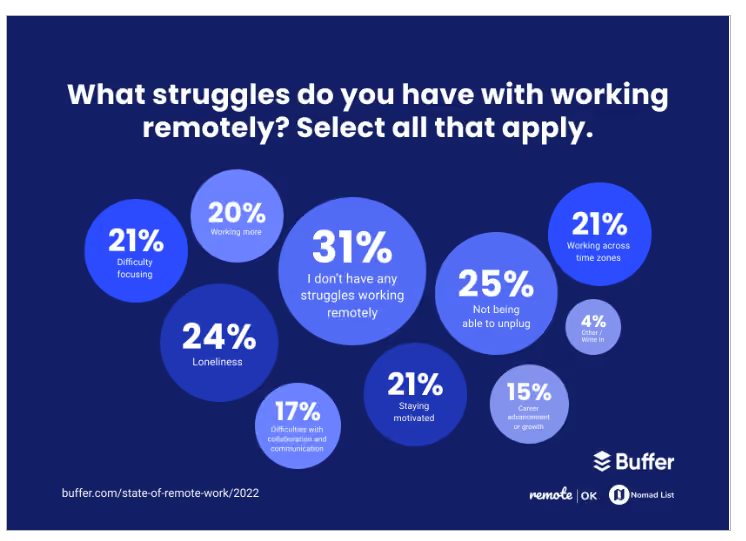
And, with 72% of companies looking to permanently allow some form of remote work, according to 2022 research by Buffer, it’s likely that you’re somewhere along this journey already.
Using e-signing for important business docs rather than paper-based processes
Incorporating augmented reality solutions into your business, for example on an e-commerce app or in product design processes
Using remote collaboration tools to encourage distributed teams to work together
A roadmap for digital transformation: what you should know
A digital transformation roadmap, in a nutshell, contains a plan for implementing your digital transformation and a series of steps towards doing so.
A digital transformation roadmap helps you define and categorize short and long-term goals. By breaking a vast and, let’s be honest, often intimidating process into manageable steps, it also increases your chances of success.
Defining the stages of your digital transformation and avoiding expensive scope creep
Stating overall goals clearly, and identifying immediately achievable short-term tasks
Making it clear where responsibility for different tasks lies
How do you build a digital transformation roadmap?
With so much resting on it, building your own digital transformation roadmap might seem like a struggle in itself!
That’s entirely natural. To help, we’ve got some pointers. In the next section, we’ll also offer up a digital transformation roadmap example so you know exactly what you should be aiming at.
Overall, your digital transformation roadmap should:
Clearly state what you want to achieve
Outline which basic actions will help you achieve this
Divide these actions between different teams or departments
Provide information on budget and how much you have to allocate to each step
The key question is: “how do we get here?”
Whilst every organization is unique and will work it out slightly differently, there are a few steps that will help out, no matter what your circumstances.
Planning your digital transformation out like this will also help reduce the chance of cost overruns. 28% of projects fail due to poor budgeting; these initial road mapping activities will reduce this risk by helping anticipate costs.
1. Identify your overall goals for digital transformation
‘Digital transformation’ shouldn’t be a goal in itself. Instead, think about what you want to achieve through digital transformation – do you want to offer a better customer experience, for example, or reduce costly errors in your manufacturing workflows?
1. Take stock of where you are right now
What causes holdups, setbacks and misunderstandings in your organization? Spend some time digging here, and don’t be afraid to ask your wider workforce what they think too – they’re on the frontline, after all!
2. Identify key improvement areas
Where could you fill shortfalls with digital technology? For example, you might notice that your HR team is too bogged down with admin to dedicate enough time to more valuable activities, such as solving workplace disputes or processing employee feedback.
A solution here would be to automate basic processes like expense and leave management so they can refocus their workload.
3. Secure funding and build a budget
Finding a senior management sponsor to back your project opens so many doors. Look for someone aligned with your goals who is prepared to fight your case for funding to the board.
Once you have that all-important cash backing, start to figure out where best to budget it.
4. Identify any cultural shifts you might need to foster
Generally, organizations are change-resistant.
Think about what you might need to do to get your wider workforce onboard and really help make a return on your investment.
If your workforce isn’t particularly tech-savvy, for example, would offering extra training help?
5. Create a roadmap with strategic priorities and timelines
Here’s where you bring it all together.
Bring your overall goals and smaller objectives into a digital transformation roadmap that charts key actions, metrics and milestones.
6. Assign deliverables to different departments
Make sure everyone knows what their responsibilities are, going forward.
Digital transformation roadmap template
Sometimes, it’s a little easier to visualize a large-scale roadmap with a couple of examples in front of you.
Use the infographics below for inspiration. There’s no budgetary info on there (different projects have vastly different budgets, so it would be of limited use), but it’s worth looking at different ways to conceptualize your roadmap.
Digital transformation is all-encompassing. If you want to thrive in the post-COVID economy, digital transformation will become essential for every corner of your business.
This is exactly why a digital transformation roadmap is necessary. Trying to implement something so massive without breaking things down into smaller chunks will only end in failure.
A step-by-step approach, a good amount of tenacity and patience as you progress towards your long-term goal is essential.
Keep your eyes on the prize, and reward your teams every time you hit a key milestone. You will get there!
Spoiler alert: Employees don’t count down the days until the next company update hits their inbox
But the next episode of their favorite TV show? That’s a whole different ballgame. Millions of people cleared their schedules to watch the Succession finale — or to binge the whole of The Bear in one sitting.
So what do these shows have that internal communications don’t? It’s not just good writing and compelling characters. It’s the way TV structures its stories to keep people coming back for more.
Internal comms can steal these tricks to make messages stickier, more memorable, and worth tuning in for. From the pilot episode to the spin-off, here’s how to make your employee communications essential viewing.
The pilot episode — hook them early
A pilot episode sets the tone for a TV series. If it falls flat, viewers won’t bother tuning in again. But hit all the right notes, and you’ll have your audience excited for the next installment.
The same goes for your internal communications. The experience employees get when they first encounter your messages shapes how they’ll engage with them — or ignore them — in future.
So, for new hires, comms related to theonboarding process should feel polished and well-produced. Give employees pre-first-day info that sets the scene. Then, deliver a steady stream of timely updates to get familiar with your communication platforms, your workplace, and their coworkers.
When it comes to launching new platforms and digital tools, treat the roll out of a new employee intranet or internal communication tool like a premiere event. Tease the launch with trailers, countdowns, and even a launch party. And make pilot content so strong that employees are blown away by their very first platform experience.
Action! Review your onboarding messages and launch campaigns. Are they as exciting and focused as a Netflix pilot? If not, refine them — think strong storytelling, quality design, and a tone that makes employees want to tune in for the next update.
{{mobile-main="/image"}}
Cliffhangers keep them coming back
“Just one more episode?” That’s the power of a cliffhanger.
The best TV shows don’t give everything away in one go. They create buzz and suspense by hinting at what comes next — leaving you hanging with a surprising reveal or creating excitement with a sneak peek of the next episode.
In internal comms, you don’t need to hold back crucial information to build suspense. But you can use this technique to spark anticipation:
Tease upcoming events. Drop a short trailer for a CEO town hall, a product launch, or a training session.
Share the headline. Drop a compelling stat, quote, or insight ahead of a big announcement or change management initiative.
End with a “next week on…” Close company newsletters or updates with a glimpse of what’s coming next.
These TV tactics build excitement for your next content drop. They can encourage employees to subscribe for updates or sign up for further details — and that means a bigger audience when your primary content lands.
Action! Take a closer look at your employee communication content schedule and look for places where you can share “coming soon” content. You’ll make employees feel like they’re part of an unfolding story — not just at the receiving end of a random collection of broadcasts.
Binge vs. weekly drops
Some TV fans love the ritual of a weekly release. Others prefer to binge the whole season in a weekend. Your employees are no different.
Bingeable comms work for employees who want to consume a lot of info in one sitting. That might be a full training module, an annual company strategy deck, or a comprehensive how-to guide.
Short, steady updates suit busy employees (particularly frontline workers) who need snackable updates they can read between tasks. Big ideas are broken down into bite-sized snippets with the help of visuals and clear copy.
The smartest internal communication teams blend both approaches. A box-set drop for complex topics paired with regular micro-updates to keep messages top of mind.
Action! Review your comms cadence. If everything you send is a dense “season drop,” break it up with lighter, more regular touchpoints. You’ll keep your audience engaged and informed without overwhelming them.
{{mobile-story-polls="/image"}}
Spin-offs shine a light on new characters
Where would the TV world be without Frasier or Better Call Saul?
Spin-off series show us what life is like for one character within an ensemble. They help audiences see familiar characters with a fresh perspective, getting to know their motivations, worries, and wins.
Apply this tactic to your internal communications strategy and you bring your organization together, while also boosting comms engagement. When you highlight lesser-seen people and departments within the company, you give teams the insight they need to collaborate more effectively.
So hand the mic to your delivery drivers, your engineers, or your payroll team. Champion an internal creator culture. And create department crossovers, where marketing and operations, or HR and finance, join forces for a joint update.
This original content is something employees don’t expect — and don’t tend to ignore.
Action! Run a quarterly “takeover” week, where a different department owns internal comms. It diversifies voices, keeps content fresh, and helps employees see work and the workplace from different perspectives.
The watercooler moment
The “red wedding” in Game of Thrones. The final episode of The Sopranos. That super-tense Stranger Things scene when Max faces Vecna to a soundtrack of Kate Bush.
The best TV moments become watercooler moments — both in person or on social media. They spark chatter, memes, and inside jokes. They go beyond the screen to build connection and a sense of belonging among their audience.
Internal comms can do the same, by:
Creating an emotional connection
Inviting employees to interact
Relatable, authentic content about real people creates an emotional connection. So spotlight employees and customers in stories and shout-outs. Encourage leaders to share behind-the-scenes moments. Don’t be afraid to use humor or memes to land a message.
But remember that content alone isn’t enough. The conversation has to flow both ways. Encourage employees to join in. Ask for their input and highlight their intranet contributions. Welcome their ideas and champion an internal creator culture.
Action! Encourage interaction on your corporate communications channels. Launch a poll, invite employees to share their comments under a company news feed post, or get them to create their own content from scratch. Digital channels feel more like a community when they’re built on two-way communication.
{{mobile-stories="/image"}}
All killer, no filler
Sometimes a TV writing team seems to run out of ideas, and you’re stuck sitting through a filler episode. It’s dull and forgettable, it doesn’t move the story forward, and it makes you much less likely to tune in next time.
The lesson for internal communicators? To keep the attention of your audience, avoid filler content at all costs. Ensure that everything you send out deserves its place in your core comms channel. Every piece of content should either:
Inform (share something useful)
Inspire (motivate action)
Connect (build company culture and employee communities)
If it doesn’t do any of those things, skip it.
Also, make every piece of content visually engaging. Videos, infographics, images, polls — Insta-worthy content keeps employees glued to your internal communication platform, making it easier for you to make messages cut through.
Action! Use intranet platform analytics to see which content drives the most (and least) digital engagement. Double down on the hits, learn from the misses, and keep your audience coming back for more.
Anthology vibes — standalones that fit the bigger story
Variety keeps things fresh and interesting — and a standalone story can make a big impact on an audience. Think Black Mirror. Every episode is self-contained but the series works because each installment contributes to a bigger theme.
Apply the same principle to your internal communication plans. Each campaign, post, or announcement should feel complete on its own — clear, valuable, and with a call to action. At the same time, it should tie back to the wider company story. Every message should reinforce the internal behaviors, corporate values, and company culture you want to build.
Action! Define three to four cultural story arcs for your comms this year. Then map every message against them. That way, even standalone content contributes to the bigger narrative, creating a coherent and engaging employee experience.
{{mobile-live-stream-poll="/image"}}
Make your comms less corporate memo, more shiny streaming service
TV shows succeed because they understand their audience, structure stories to keep viewers coming back, and mix variety with consistency.
Internal communications can do the same. From pilot episodes that hook new hires to spin-offs that highlight unsung heroes to watercooler moments that spark conversation — every message is an opportunity to boost employee engagement.
So treat your internal communication strategy like a hit TV series. Done right, employees won’t be second-screening, half-watching while scrolling their phones. Instead, they’ll be invested in your stories. They’ll tune in, interact, and feel part of something bigger.
Here's the question I come back to constantly: how do you get 16-to-19-year-olds on the shop floor to care about a message from the CEO?
It's not a rhetorical question. It's one my team has been working on for the last 18 months, and we've made a real impact.
Five generations, one workforce
JD Sports isn't a small operation. We have 90,000 colleagues across 20+ countries with25 brands under the JD Group banner. And five generations working side by side, with 70% of our workforce being under the age of 30.
That last number is the one that keeps me up at night (in a good way). The majority of our people are on shop floors, not in front of laptops. They're not opening an intranet. They're not watching the hour-long town hall recording.
There's never a day where we don't walk into the office and think: what can we do for the stores today, and how are we going to get this message to land? Everyone has a different love language. There is no one-size-fits-all anymore, there just can't be.
The red flag: one-way, overly corporate communication
As a FTSE 100 company, we have real obligations. Results to share, legal updates to communicate, leadership directives to cascade. None of that goes away.
But the way we were delivering it? It wasn't landing.
Long messages. Lengthy calls. Content that felt designed for a boardroom, not a stockroom.
The fix wasn't to dumb things down. It was to meet people where they actually are.
JD Now: going where our people are
We launched JD Now - our internal comms platform - in the UK 15 months ago. The brief was simple: mobile-first, bite-sized and human.
Instead of polished corporate videos, we started producing 30–45 second clips on iPhones. Quick editing, often with a same-day turnaround. A CEO update became five key points, delivered straight to camera, in under a minute.
For some of our shop floor colleagues, it might be the first time they've ever seen anything from our team or leaders. Because it's on their phone and it's done in a style of content they’re already used to seeing from their other favorite apps.
But the bigger unlock wasn't the content my team was making. It was the content our colleagues started creating themselves.
When you give people a platform, they run with it
Employee-generated content has taken over JD Now — and honestly, we didn't plan it that way.
One store team created a popular movie franchise-themed video to promote an Air Max release. A group in London started recording a podcast about career progression, using an Amazon mic and an iPhone. These all became smash hits with great engagement of likes and comments from their peers and leaders. We didn't ask them to do any of this. They just did it, because they'd found a space that felt theirs.
That podcast host? We spotted him, brought him up to Manchester to host a major youth event, and then took him to a King's Trust event where he met Prince William. Because he posted on our internal comms platform.
Making leaders human
One of the most consistent things we heard in surveys was simple: there’s a big opportunity to know and understand the people who are leading us better.
We tackled this head-on with JD Now — starting with our senior leaders in retail. Many of them are known as the important people who come in, provide feedback and expect excellence (we always make sure we’re the best, of course).. However, during our launch week, and the weeks leading up to it, we empowered these leaders to use JD Now as a platform to connect with their people - not just talk about sales, but use it as a way to connect and engage in a way they might not have been able to before. They’ve leaned into it…now commenting on various posts and showcasing their personalities a bit more.
The response from colleagues? Oh, they’re normal people!
I know it sounds corny. But we were blown away by how many colleagues said: yeah, actually, employee communications can be engaging. One comment, a post, a like on a photo from a store and the ability to have more visibility did so much more for the perception and connection to that team than a dozen town hall appearances.
The numbers back it up
When we first launched JD Now, we saw an incredible 74% adoption across our initial 20,000 colleagues, and it has grown from there. Right away, we knew that our teams had a genuine desire to experience a new way of communicating.
This was validated with a 3% increase in our overall Communication score in our first global survey following the launch of JD Now. We absolutely credit that to changing how we communicate and how we get retail leaders genuinely involved.
But the metric I care about most isn't a survey score. It's when a store manager says to me, unprompted: "We should put that on JD Now."
We didn't prompt them. They came to us. That's what matters.
What I'd tell every comms team
The future of communications isn't rooted in communication. It's about culture.
What makes your organization you?
What are your values, and how do they connect with your colleagues?
Everything else falls into place when you feel really good about what you have to offer — and when your people feel it too.
Gen Z is taking over the workforce whether we're ready or not. I'm a millennial, so I'm somewhere in the middle, but I see it every day, and understand the importance of connecting to people in a way that resonates with them, and knowing one-way isn’t the best way.
The organizations that'll win aren't the ones with the slickest content strategy. They're the ones that make young people feel like they actually belong there.
That's what we're building at JD. And we're only just getting started!