
Search for a solution to restaurant communication problems and you'll find the terms "restaurant employee communication app" and "restaurant employee communication software" used more or less interchangeably, sometimes on the same page. That's not an accident, and it's not something to overthink. In practice, they describe the same category of tool. The distinction that actually matters is what the tool needs to do, not which word is in front of it.
Why "app" and "software" mean the same thing here
"Software" is the broader, older term, used to describe any system that runs the communication function, whether that's on a desktop dashboard for head office or a phone for the crew. "App" tends to describe the same system from the employee's side, the thing they actually open on their phone during a shift. For a restaurant buyer, there's no meaningful difference between shopping for one versus the other. What matters is whether the system covers both ends: a usable admin side for managers and head office, and a genuinely mobile-first experience for the crew using it day to day.
What restaurant employee communication technology needs to solve
Restaurants have a specific communication problem that most generic tools weren't built for. Shifts are short and staggered, so there's rarely a moment when the whole team is present to hear an announcement at once. Turnover is high, so any system built around personal email addresses or long-term logins breaks down constantly. And the information that needs to travel, menu changes, food safety alerts, shift coverage requests, is often time-sensitive in a way that a weekly newsletter can't handle.
A restaurant employee communication app or software needs to solve for all of that: reaching everyone regardless of shift pattern, working without a company email requirement, and getting time-sensitive information out fast.
What to look for when evaluating options
Reach, not just delivery. It's not enough for a message to be sent. Managers need to see it was actually received and read, especially for anything safety-related.
No email dependency. Plenty of restaurant staff don't have or regularly check a company email address. Communication tools built around email as the primary identifier will always leave a share of the team out.
A single home for updates. Communication that lives in one app alongside scheduling, recognition, and HR self-service gets checked far more consistently than a standalone tool competing for a crew member's attention.
Multi-location consistency. For franchise and multi-unit groups, the same message needs to land the same way whether it's going to five people or five thousand, across every location.
Genuine mobile-first design. A tool that started as desktop software with a mobile app bolted on afterward usually shows it, in slow load times, clunky navigation, or features that only really work at a desk.
How Blink approaches restaurant communication
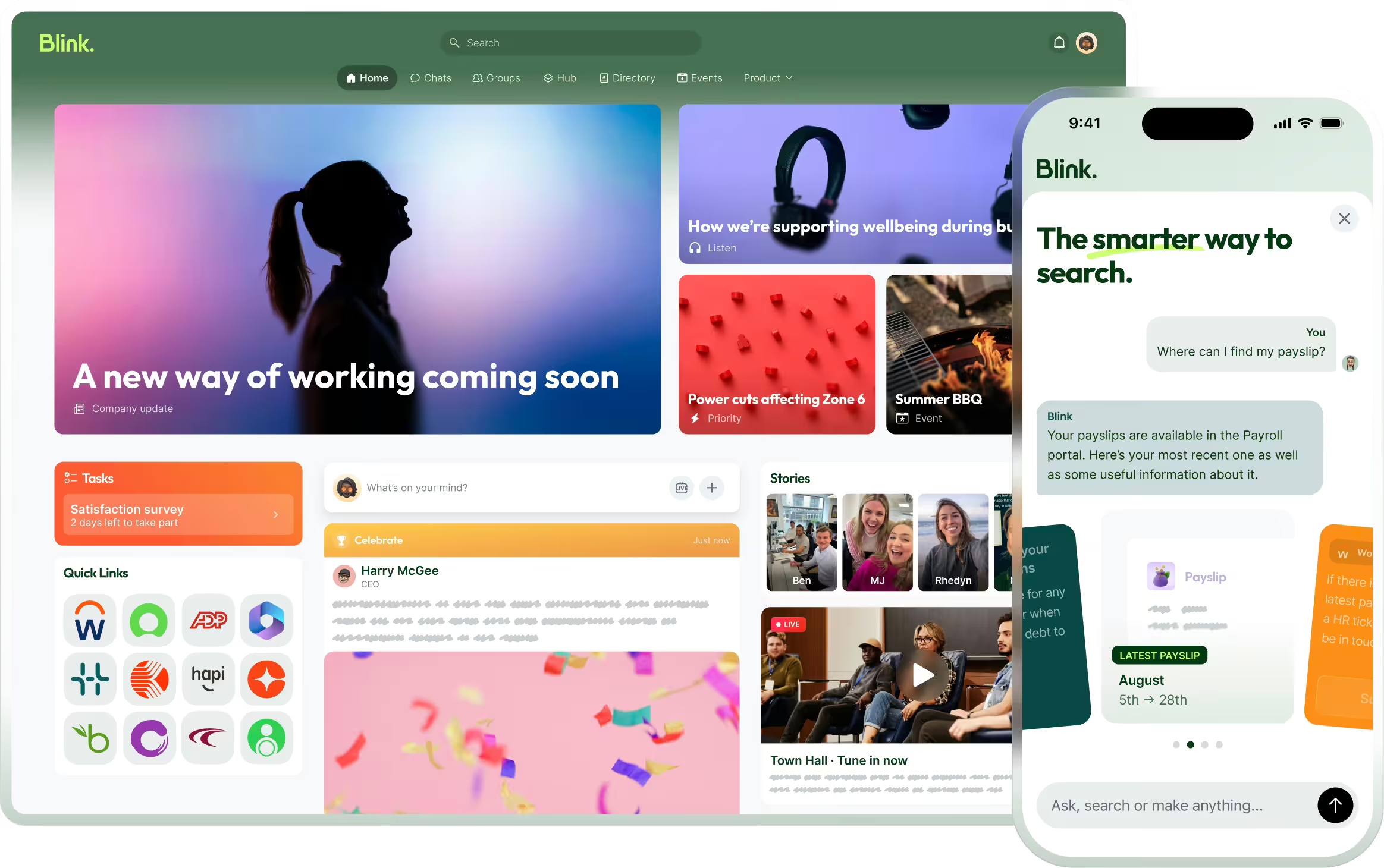
Blink is built as a single employee app that happens to include everything a restaurant would otherwise look for separately under "communication software": messaging, a company news feed, recognition, surveys, and self-serve HR access, all available from day one without needing a company email address. For restaurant operators, that means one place to manage communication instead of stitching several tools together, and one system that scales the same way whether it's serving a single location or a national franchise footprint.
Blink. And stop worrying about which tool a message is supposed to go through.















-min.jpeg)




.avif)










%20(3).avif)


















.avif)

















.avif)
%20(1).avif)
.avif)