Walk into most restaurant back offices and you'll find the same setup: a group chat someone set up on a personal phone, a printed schedule taped to the wall, and a manager who's become the human relay between head office and the floor.
It works, until the manager's on vacation, someone gets added to the wrong group, or a message about a recall or allergen change gets buried under twenty messages about who's covering Friday night.
An employee messaging app built for restaurant staff is meant to solve exactly this. But plenty of messaging tools claim to be "for teams" without actually being built for a shift-based, high-turnover, mobile-first crew. Here's what separates the two.
Why consumer chat apps aren't built for restaurant teams
WhatsApp, Facebook Messenger, and group texts are the default starting point for a lot of restaurant teams, mostly because they're free and everyone already has them installed. The problem is what happens next: there's no way to remove someone the day they leave, no record for a manager to review, and no separation between a personal account and a work one. For an industry with turnover rates well above 100 percent a year in quick-service restaurants, according to Black Box Intelligence's 2025 restaurant workforce data, that lack of structure adds up fast.
5 features a restaurant employee messaging app needs
1. Instant, all-staff reach. A message about a menu change, a food safety alert, or a last-minute schedule shift needs to reach every crew member on shift today, not just the ones who happen to check a particular group chat.
2. Manager visibility without micromanaging. Shift leads and store managers need to see that a message landed and was read, especially for anything safety or compliance related, without turning messaging into surveillance.
3. Clean offboarding. When someone leaves, and in an industry with this much turnover, someone is always leaving, access should end the same day. That's much harder to guarantee in a personal group chat than in a proper restaurant employee app.
4. Multi-language support. Restaurant crews are often multilingual, and a message that only lands in English doesn't reach everyone. The best restaurant messaging tools support translation so nothing gets lost for a share of the team.
5. One place for chat, not five. Messaging works best when it lives alongside the rest of the tools a restaurant employee already uses: their schedule, their payslips, company updates. Bouncing between four different apps to piece together the full picture defeats the purpose.
How Blink handles messaging for frontline restaurant teams
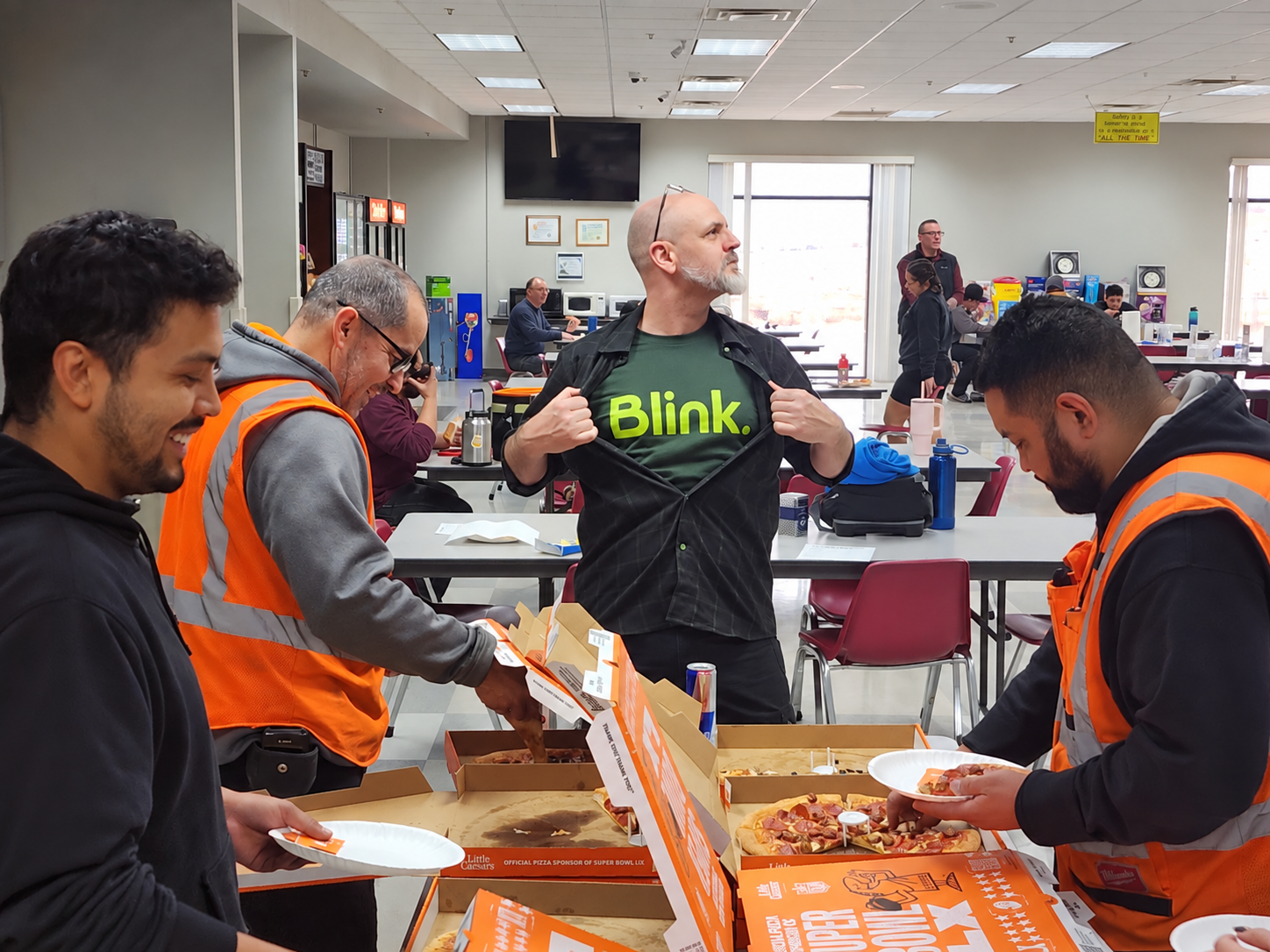
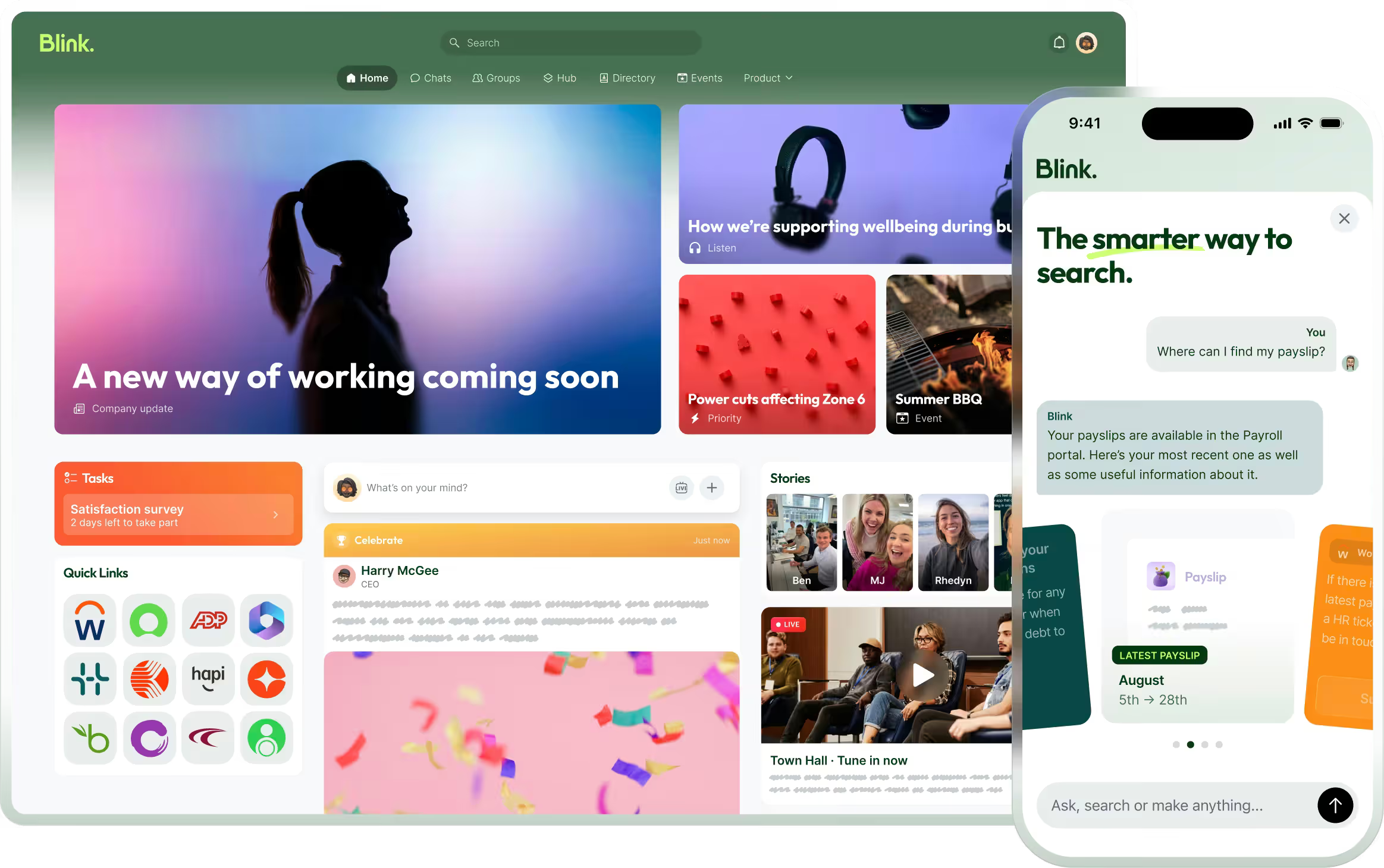
Blink's messaging sits inside the same app restaurant staff already use for company updates, recognition, and self-serve HR tasks, so there's no separate download and no confusion about which channel is "the real one." Every employee gets access from their first shift, whether or not they have a company email address, and managers can see message reach and engagement without needing to police individual conversations.
For multi-location and franchise restaurant groups, that reach extends across every site from one platform, with the kind of fast adoption that comes from building specifically for people who don't work at a desk. Frontline organizations using Blink typically see the bulk of their team activated within the first week. It's one reason messaging is usually the first thing operators fix on the way to a broader restaurant communication strategy.
Blink. And give every shift the message it needs, the moment it matters.

.avif)












-min.jpeg)




.avif)










%20(3).avif)
















.avif)
















.avif)
%20(1).avif)
.avif)