
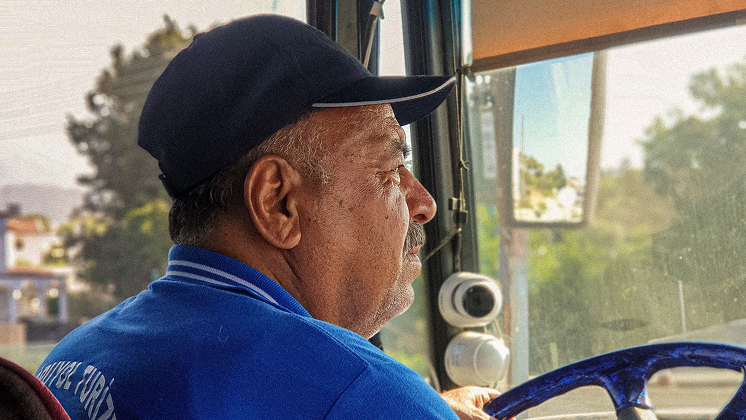
A driver navigates a surprise detour through an unfamiliar neighborhood during a downpour, keeps the route roughly on time, and de-escalates a tense moment with a passenger who missed a connection. Nobody from management saw any of it. There's no supervisor riding along, no manager walking the floor the way there might be in a warehouse or a restaurant kitchen. The only people who witnessed a good day's work were the riders, and they're not filling out a feedback form.
This is the quiet problem with recognition in transit. It's not that managers don't care. It's that the structure of the job makes recognition almost impossible to deliver in the moment. A driver clocks in, spends the whole shift alone in the cab, and clocks out. If a supervisor wants to say "nice work handling that," they need to already know it happened, and usually they don't.
Why recognition is harder when nobody's watching
Most recognition programs assume some level of visibility. A manager sees an employee go above and beyond and says something, or a colleague nominates them, having watched it happen. Transit breaks that assumption completely. Operators work solo, across staggered shifts, often at different depots than the people who supervise them. The good moments, the calm handling of a mechanical issue, the driver who always double-checks the wheelchair lift without being asked, happen without an audience.
The result is a workforce that can go months without hearing a direct, specific thank you from anyone above them, even when they're doing the job well. That absence isn't neutral. It reads as invisibility, and invisibility is corrosive in a job that's already isolating by design.
What "good job" looks like when there's no room to walk into
Recognition for a distributed, mostly solo workforce has to be built differently than a shoutout at a team meeting. It needs a way for a dispatcher, a supervisor, or even another driver to flag a good moment the instant they hear about it, whether that's a passenger complimenting a driver by name, or dispatch noticing someone stayed calm handling a mechanical breakdown mid-route. It needs to reach the driver directly, on their phone, so the thank you doesn't get lost in a shift-change note nobody reads. And it needs to be visible enough that it counts as public recognition, not just a private text that disappears.
Small moments, real mechanics
In practice this looks simple: a recognition post in a shared feed that any operator can see, a quick badge or shoutout tied to something specific rather than generic, and a way for peers to add their own thanks. None of it needs to be elaborate. The bar for a transit operator who's used to going unnoticed is low. A specific, timely, visible "thank you for handling that detour so well" does more for morale than a generic employee-of-the-month plaque ever will.
Recognition as a retention lever, not a nice-to-have
This isn't just a culture exercise. Blink's own work with Stagecoach, one of the largest bus operators in the country, showed a 26% reduction in staff turnover after giving drivers a direct line to the company and to each other, including the ability to be seen and recognized for the work they do every day. That lines up with what drivers say themselves: industry survey data shows drivers who feel genuinely connected to their workplace are far more likely to say they intend to stay. Recognition isn't the whole answer to transit's retention problem, but for a workforce that spends most of its day unseen, it's one of the cheapest, fastest ways to make people feel like they matter.
Related reading: Alone in the cab: driver retention strategies that address transit's real turnover problem and Off the bus, out of the loop: what transit agencies need from a frontline communication app.
See how Blink helps transit agencies recognize every driver on the Blink for transit page, or book a demo.
.jpeg)


.avif)