
Happy workers are highly productive and engaged at work. Discover how to ensure employee happiness and well-being in your company.
Jess DeVore
Published:
September 6, 2023
Last updated:
October 8, 2024
What we'll cover
Balancing employees’ happiness with their alignment to your company’s direction is not easy. And the most noteworthy example of this is Apple in its early days.
The company had positioned itself as an unconventional, new-age brand where creatives and rule-breakers flocked to work. So, as the company grew larger, cultivating the required discipline became a challenge. The more control senior management tried to exert, the more frustration it caused them and the employees.
What happened at Apple shows that a brilliant business model alone isn’t enough to push a business forward. In fact, none of it matters if your workers aren’t happy. Because if they aren’t, they won’t be engaged at work or receptive to new initiatives.
The good news? You can prevent this from happening at your organization. Not to mention boost productivity and build a strong employer brand. This article will show you why ensuring employee happiness and well-being is a must and ways to implement them at work.
Why is employee happiness important?
Research by Oxford University has found that happy workers are 13% more productive than unhappy ones. And that’s not the only perk of employee happiness and well-being. Let’s see the rest.
Happy employees equate to happy customers: Happy workers transmit their positive emotions to customers and prospects they encounter every day. And this helps nurture leads and makes them more likely to buy from you, or work with your business.
Happy employees collaborate better: Happy workers get along well with one another, boosting teamwork and effective communication. So projects run smoothly and meet deadlines.
Happy workers are healthier: Happy employees are more likely to remain physically and mentally fit. When you invest in employee well-being, you minimize workers’ sick days and loss of work output.
Happy employees are more loyal: When workers are happy in their jobs, they are less likely to quit or switch jobs. This helps you reduce the turnover rate and save money on new talent acquisition.
Top ways to ensure employee happiness
Use the following list to check whether you’re doing all you can to boost employee happiness and well-being at work. If you are, you’re on the right track. If not, it’s not too late to get started.
Value and respect your workers
In a survey of 129 large and midsize US businesses, 87% of leaders said that they are focusing on building a culture of dignity in the next three years.
Downtrodden workers can never consider themselves happy. If your company culture can’t assure dignity at work, then there is no hope for employee well-being.
That’s why respecting your workforce is not just a strategy for employee happiness, but a core principle that can set a solid foundation for all the other steps we have outlined below.
A happiness-driven company culture ensures that everyone is treated with dignity, and that respect is not being given selectively based on seniority, experience, color, gender, or any other factors.
So make sure to shape your work policies, communication, and every aspect of work in a way that each worker matters. Recognize employees for what they bring to the table and the contributions they make for your business.
Even simple gestures like high-fiving quick wins and taking their concerns seriously go a long way in making workers feel valued.
Encourage and act on employees’ feedback
Employees who feel heard at work are approximately five times more likely to perform their best work, according to research by Salesforce.
No workplace is perfect, and no employees expect it to be. But they do expect at the least that their problems and suggestions will be heard and acted on.
Yet in many workplaces, workers feel dissatisfied because their concerns are often brushed under the carpet. The result is diminished employee happiness and morale.
If you want to ensure employee well-being in the workplace, go out of your way to let your employees freely express how they feel and contribute new ideas.
Take group meetings, for example. Usually, the extroverts do most of the talking and introverts remain quiet. So it’s important to have weekly one-on-ones too to make sure everyone has a chance to be heard.
Develop your employees
A LinkedIn report states that 94% of employees would stay longer at a company if it invests in their professional growth. Knowing that you care about their development, workers will feel happy and more motivated.

Make sure to support them with adequate training and provide deserving workers with a clear roadmap and opportunity for promotion. Show them that their efforts are valued and will lead to their future growth. Plus, you can sign them up for seminars and conferences relevant to their work and ambitions.
Share positive feedback and constructive criticism
Data from 150+ countries and 1000+ organizations has found that 96% of employees appreciate receiving feedback regularly.
So you can imagine how important it is for workers to know how they are doing, what they are doing right, and if there’s something they can do better.
When you’re candid with your employees about their work, you demonstrate that you have faith in their skills and you care about employee well-being.
For example, if a worker has shared some great ideas in a group meeting, don’t wait to let him know how much you value the contribution. Even a small acknowledgment like below can have a great impact.
"Thank you for your suggestions, Jack! You came to the meeting prepared with well-researched ideas, and you're really helping us move forward with the project. Keep up the good work."
And don’t forget to set up weekly or biweekly meetings with your staff to go over their work. You can use this opportunity to give specific feedback that helps them excel in their roles.
Pay and treat workers fairly
Your employees may be enjoying what they do. But they should also get fair compensation for their work.

So don’t let any contribution slip through the cracks. Recognize and pay workers for every big and small investment they make at work. For example:
If they work overtime, pay for it.
If an initiative helped grow the company, give out bonuses to people involved.
Don’t underpay female employees for jobs similar to male employees.
Plus, there should be a transparent system that makes it easy to understand and reduce the pay gap among different employees.
You can even hire an external agency to avoid any bias or favoritism. This company will audit your performance review process and offer recommendations based on objective measures such as the current market value for job roles.
Reward workers’ accomplishments
We already touched a bit on rewarding your employees. But it warrants more attention. Having a reward and recognition program at work is crucial to employee happiness.
And rightly so. Your workers spend considerable time and effort in fulfilling your business mission. But if they feel their work isn’t acknowledged, they are more likely to be dissatisfied. So if you are serious about employee well-being, leave no stone unturned to show them what they do matters.
Apart from putting a formal reward system in place, there are plenty of small, informal things you can do to reward good work. These include a free meal, a company-wide update on what the employee is being recognized for, an extra day off, and even just a heartfelt thank you. Having these as little tactics as part of your overall employee engagement strategy will have a big impact.
Ensure proper communication
78% of US workers say that improving employee communication should be a high priority for their employer.
Workers are less likely to be happy if their responsibilities are not clearly communicated to them. And this is just one small example. Not communicating effectively with your staff can lead to a whole host of challenges, like frequent misunderstandings, workplace conflicts, and poor peer-to-peer relationships.
But just any type of communication isn’t enough. You can’t bombard employees with a ton of emails or unnecessary meetings in hopes of keeping them happy. You need to have the right channels, tools, and training.
And one of the best ways to tackle all these three areas is to use a single, unobtrusive communication platform like Blink. It follows a mobile-first approach. So it can reach workers wherever they are.
Not just that. It also requires minimum training. The social-media style interface ensures that workers know how to use it from the get-go.
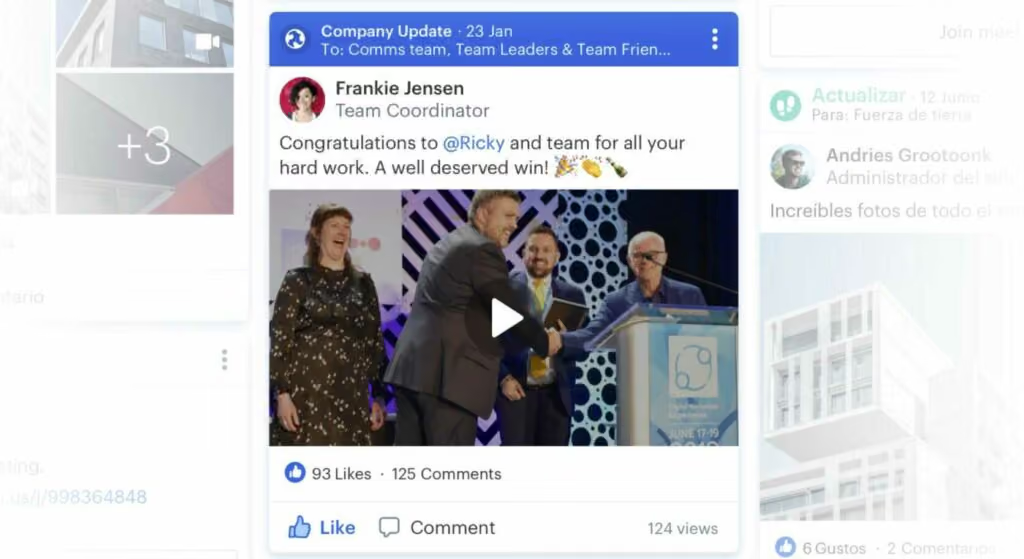
Implementing such a solution can help you establish communication norms without isolating both desk-based and front-line workers.
Conclusion: ways to improve employee happiness and well being
Overall, workplace happiness is a significant factor in employee engagement.
But at the end of the day, there is no shortcut or magic recipe to make your employees happy. It’s about the cumulative impact of the small steps you take and the culture you build.
Use the strategies and employee engagement best practices outlined above to encourage a happiness-oriented company culture. Plus, look for your own creative ways to delight your workers and make them feel valued. In the long run, you’ll see that the payoff for such efforts really makes them worthwhile.
Also, the right employee engagement app can make a big difference in the success of your initiatives to boost employee happiness. So book a free Blink demo today.
Balancing employees’ happiness with their alignment to your company’s direction is not easy. And the most noteworthy example of this is Apple in its early days.
The company had positioned itself as an unconventional, new-age brand where creatives and rule-breakers flocked to work. So, as the company grew larger, cultivating the required discipline became a challenge. The more control senior management tried to exert, the more frustration it caused them and the employees.
What happened at Apple shows that a brilliant business model alone isn’t enough to push a business forward. In fact, none of it matters if your workers aren’t happy. Because if they aren’t, they won’t be engaged at work or receptive to new initiatives.
The good news? You can prevent this from happening at your organization. Not to mention boost productivity and build a strong employer brand. This article will show you why ensuring employee happiness and well-being is a must and ways to implement them at work.
Why is employee happiness important?
Research by Oxford University has found that happy workers are 13% more productive than unhappy ones. And that’s not the only perk of employee happiness and well-being. Let’s see the rest.
Happy employees equate to happy customers: Happy workers transmit their positive emotions to customers and prospects they encounter every day. And this helps nurture leads and makes them more likely to buy from you, or work with your business.
Happy employees collaborate better: Happy workers get along well with one another, boosting teamwork and effective communication. So projects run smoothly and meet deadlines.
Happy workers are healthier: Happy employees are more likely to remain physically and mentally fit. When you invest in employee well-being, you minimize workers’ sick days and loss of work output.
Happy employees are more loyal: When workers are happy in their jobs, they are less likely to quit or switch jobs. This helps you reduce the turnover rate and save money on new talent acquisition.
Top ways to ensure employee happiness
Use the following list to check whether you’re doing all you can to boost employee happiness and well-being at work. If you are, you’re on the right track. If not, it’s not too late to get started.
Value and respect your workers
In a survey of 129 large and midsize US businesses, 87% of leaders said that they are focusing on building a culture of dignity in the next three years.
Downtrodden workers can never consider themselves happy. If your company culture can’t assure dignity at work, then there is no hope for employee well-being.
That’s why respecting your workforce is not just a strategy for employee happiness, but a core principle that can set a solid foundation for all the other steps we have outlined below.
A happiness-driven company culture ensures that everyone is treated with dignity, and that respect is not being given selectively based on seniority, experience, color, gender, or any other factors.
So make sure to shape your work policies, communication, and every aspect of work in a way that each worker matters. Recognize employees for what they bring to the table and the contributions they make for your business.
Even simple gestures like high-fiving quick wins and taking their concerns seriously go a long way in making workers feel valued.
Encourage and act on employees’ feedback
Employees who feel heard at work are approximately five times more likely to perform their best work, according to research by Salesforce.
No workplace is perfect, and no employees expect it to be. But they do expect at the least that their problems and suggestions will be heard and acted on.
Yet in many workplaces, workers feel dissatisfied because their concerns are often brushed under the carpet. The result is diminished employee happiness and morale.
If you want to ensure employee well-being in the workplace, go out of your way to let your employees freely express how they feel and contribute new ideas.
Take group meetings, for example. Usually, the extroverts do most of the talking and introverts remain quiet. So it’s important to have weekly one-on-ones too to make sure everyone has a chance to be heard.
Develop your employees
A LinkedIn report states that 94% of employees would stay longer at a company if it invests in their professional growth. Knowing that you care about their development, workers will feel happy and more motivated.
Make sure to support them with adequate training and provide deserving workers with a clear roadmap and opportunity for promotion. Show them that their efforts are valued and will lead to their future growth. Plus, you can sign them up for seminars and conferences relevant to their work and ambitions.
Share positive feedback and constructive criticism
Data from 150+ countries and 1000+ organizations has found that 96% of employees appreciate receiving feedback regularly.
So you can imagine how important it is for workers to know how they are doing, what they are doing right, and if there’s something they can do better.
When you’re candid with your employees about their work, you demonstrate that you have faith in their skills and you care about employee well-being.
For example, if a worker has shared some great ideas in a group meeting, don’t wait to let him know how much you value the contribution. Even a small acknowledgment like below can have a great impact.
"Thank you for your suggestions, Jack! You came to the meeting prepared with well-researched ideas, and you're really helping us move forward with the project. Keep up the good work."
And don’t forget to set up weekly or biweekly meetings with your staff to go over their work. You can use this opportunity to give specific feedback that helps them excel in their roles.
Pay and treat workers fairly
Your employees may be enjoying what they do. But they should also get fair compensation for their work.
So don’t let any contribution slip through the cracks. Recognize and pay workers for every big and small investment they make at work. For example:
If they work overtime, pay for it.
If an initiative helped grow the company, give out bonuses to people involved.
Don’t underpay female employees for jobs similar to male employees.
Plus, there should be a transparent system that makes it easy to understand and reduce the pay gap among different employees.
You can even hire an external agency to avoid any bias or favoritism. This company will audit your performance review process and offer recommendations based on objective measures such as the current market value for job roles.
Reward workers’ accomplishments
We already touched a bit on rewarding your employees. But it warrants more attention. Having a reward and recognition program at work is crucial to employee happiness.
And rightly so. Your workers spend considerable time and effort in fulfilling your business mission. But if they feel their work isn’t acknowledged, they are more likely to be dissatisfied. So if you are serious about employee well-being, leave no stone unturned to show them what they do matters.
Apart from putting a formal reward system in place, there are plenty of small, informal things you can do to reward good work. These include a free meal, a company-wide update on what the employee is being recognized for, an extra day off, and even just a heartfelt thank you. Having these as little tactics as part of your overall employee engagement strategy will have a big impact.
Ensure proper communication
78% of US workers say that improving employee communication should be a high priority for their employer.
Workers are less likely to be happy if their responsibilities are not clearly communicated to them. And this is just one small example. Not communicating effectively with your staff can lead to a whole host of challenges, like frequent misunderstandings, workplace conflicts, and poor peer-to-peer relationships.
But just any type of communication isn’t enough. You can’t bombard employees with a ton of emails or unnecessary meetings in hopes of keeping them happy. You need to have the right channels, tools, and training.
And one of the best ways to tackle all these three areas is to use a single, unobtrusive communication platform like Blink. It follows a mobile-first approach. So it can reach workers wherever they are.
Not just that. It also requires minimum training. The social-media style interface ensures that workers know how to use it from the get-go.
Implementing such a solution can help you establish communication norms without isolating both desk-based and front-line workers.
Conclusion: ways to improve employee happiness and well being
Overall, workplace happiness is a significant factor in employee engagement.
But at the end of the day, there is no shortcut or magic recipe to make your employees happy. It’s about the cumulative impact of the small steps you take and the culture you build.
Use the strategies and employee engagement best practices outlined above to encourage a happiness-oriented company culture. Plus, look for your own creative ways to delight your workers and make them feel valued. In the long run, you’ll see that the payoff for such efforts really makes them worthwhile.
Also, the right employee engagement app can make a big difference in the success of your initiatives to boost employee happiness. So book a free Blink demo today.

What we'll cover
Start your free trial today
See how Blink helps frontline teams stay connected, informed, and engaged.
Blink wins ClearBox Choice award for the second year running
Blink has been named one of the top intranet platforms by ClearBox in the latest update of the 2024 Intranet and Employee Experience Platforms report. Every year, the intranet consultancy takes an in-depth look at the intranet market, comparing available solutions and awarding the best intranet providers.
Here’s a snippet of what ClearBox had to say about Blink:
“The focus Blink places on the deskless audience is among the best we’ve seen in this report and makes a compelling choice for organizations with a frontline-heavy workforce.” — ClearBox Consulting
Let’s take a closer look at the ClearBox report and its review of Blink.
About ClearBox
ClearBox Consulting is an independent intranet consultancy that helps organizations find intranet solutions that meet their needs. It’s a vendor-neutral company that prides itself on giving honest, impartial advice. Previous clients include big names like Unilever, PlayStation, GlaxoSmithKline, and Bayer.
About the report
Every year, ClearBox compares 20 leading intranet vendors and their products, scoring them on eight criteria. It then releases a report to detail its findings. As part of the report, ClearBox highlights standout intranet vendors, giving them a ClearBox Choice Award. In 2024, Blink was among the award-winners for the second year running.
What does the report assess?
ClearBox evaluates every product against eight criteria. Criteria include user experience and visual appeal, community and engagement, publishing and communications management, and mobile and frontline support.
The organization also seeks customer opinions on the product and customer support from the vendor. It looks at information on pricing and each vendor’s development roadmap too.
Blink’s mobile-first intranet: The ClearBox review
ClearBox describes Blink as “a frontline-focused, mobile-first product that understands its target audience perfectly.”
The report praises Blink’s community and engagement features, its approach to integrations, and its ability to support two-way employee communications. ClearBox gives Blink particularly high scores in the following areas:
Mobile and frontline support
User experience and visual appeal
Community and engagement
Here, we look at each of these criteria in more detail.
{{mobile-main="/image"}}
Mobile and frontline support
Blink was the only software provider in the ClearBox report to score maximum points for this criterion. Staffbase comes close. But achieving the same mobile and frontline support as Blink comes at an additional fee for Staffbase customers.
Blink was built with the frontline workforce front of mind. We wanted to create a tool that leveled the playing field, giving deskless workers equal access to internal communications and company resources.
Employees can log onto our mobile-first platform via smartphone — they don’t need a desktop computer or a company email address. Via a user-friendly interface, they can then access everything they need to thrive in their roles. This boosts employee engagement and the frontline employee experience.
User experience and visual appeal
For user experience and visual appeal, Blink gets a near perfect score — and ties with Omnia and Staffbase for its out-of-the-box offering.
ClearBox highlights Blink’s highly effective mobile user experience and straightforward navigation. The report also references Blink’s excellent branding and design options, along with the social-media-style experience it provides for users.
We know that social media provides an excellent user experience. So, with Blink, you get a comprehensive company news feed that you can fill with interactive, multimedia content. Organizations can also share real-time updates and employee-generated content across Blink Stories.
Community and engagement
ClearBox highlights Blink’s focus on community and people. It also praises the wide range of engaging features Blink includes as standard. These include employee surveys, a range of communication channels, and employee recognition tools.
The ClearBox report also talks about Blink Journeys. Admins can create tailored content pathways for employees, triggering the right content at the right time in the employee lifecycle. This ensures relevant and engaging content that is personalized to every user.
Employees can also join Communities — spaces where workers can unite around shared interests — to find like-minded co-workers and develop a deeper sense of belonging.
Some more highlights from the ClearBox report
Here’s what else ClearBox had to say about Blink:
“Blink was designed with the frontline in mind and the focus on a mobile-first experience is clear throughout. Blink is an excellent app product and one of the best we’ve reviewed in this report.”
“[Blink is] easy to use and quick to navigate, making communications, reference materials, and tools easy to find.
“Blink offers organizations alternatives to shadow technology like WhatsApp, while also providing easy access to business tools without the need for employees to download multiple apps.”
And here’s what customers interviewed by ClearBox said about their experience with Blink:
“Blink has drastically improved the way we communicate with our team members. In a recent survey, [employees] already feel more listened to and this is all down to Blink.”
“[Blink] is amazing. They partner with us to complete projects or work through any desired improvements as they are able. Great partner to work with!”
Why choose Blink?
Blink is the leading mobile-first employee experience platform. It gives admins all the tools they need to share critical messages and build a strong company culture. It allows frontline and desk-based workers to join the conversation, build workplace relationships, and find the information they need to do their jobs well.
Employee experience (EX) has been a trending topic across workplaces for a few years now. Originating as what seemed like a corporate buzzword quickly became a large-scale strategy for major employers across the globe.
And according to Forrester, the EX outlook for 2024 remains gloomy:
“Two key metrics dropped between 2022 and 2023 globally: Employee engagement fell from 41% to 37%, while culture energy fell from 63% to 59%[...]We predict that 2024 will see continued decline, with employee engagement dipping to 34%.”
These percentages are likely lower for frontline employees.
That’s because frontline workers often miss out on the employee engagement boosts available to their office-based counterparts. We’re talking connection and development opportunities, tech tools, and regular recognition.
The key issue now is what employers plan to do about it. Employee experience remains an important focus for any forward-thinking business. That’s because when employees are happy and engaged, your business benefits from:
So how are companies planning to engage and retain employees in 2024? And what EX patterns are already emerging? Here are the employee trends set to impact the future of employee experience over the coming year and beyond.
Top 5 EX trends to look out for in 2025
The growth of AI in the workplace
First on our list of employee experience trends is artificial intelligence (AI).
AI was a hot topic in 2023. As generative AI – like ChatGPT and Bard – marched onto the scene, lots of people got their first, hands-on experience with the technology.
Many businesses are already on board. 55% of respondents to a McKinsey survey said that their organizations were using AI in 2023. And more than two-thirds expect their organizations to increase AI investment over the next three years.
AI isn’t going anywhere. So in 2024, we predict that more companies will harness its potential for both business and employee experience transformation. Here’s how.
Streamlining workflows
AI is helping to streamline workflows. Which is good news for organizations – and for frontline employees.
Tech takes care of repetitive and monotonous tasks. It reduces frontline friction, so employees can perform tasks more easily. Workers get to spend more time on customer care and on activities that demand a higher level of expertise.
For instance, in retail, AI is predicting increased footfall. This gives shop floor staff time to prepare the store and provide a better service.
In healthcare, AI can help to reduce waiting times, which means happier patients and frontline healthcare staff.
And in manufacturing, real-time AI insight into equipment status allows workers to make repairs before machines break down entirely, making their job easier.
In 2024, more businesses will use AI to improve processes and streamline the work of their frontline teams.
Internal communications
AI is also playing an important role in internal communications. Leaders are using AI to perform tasks like these:
supporting DEI by highlighting bias in real-time, as employees type a message
identifying employees who haven’t received recognition in a while
helping employees find relevant resources on the company portal
Some organizations are also using AI chatbots to support the employee experience. Bots provide 24/7 assistance to employees, guiding them through company systems and helping them complete HR self-service tasks.
This spells satisfying experiences for employees where their queries are answered quickly – and a lighter workload for your People Team.
HR
HR teams are using AI to hone recruiting, onboarding, and training processes. They’re making these EX touchstones more effective and streamlined.
AI is helping to:
remove bias from the recruitment process
predict the needs of new hires
highlight training resources relevant to a chosen career pathway
This means People Teams get more time to focus on value-add employee experience activities. And employees feel more engaged with your organization, right from the very beginning of their journey.
But a word of warning. Getting the right AI balance will be key. Employees are happy to deal with AI for some HR functions. But AI in its current form lacks emotional intelligence. A real, human touch is still needed if you want to achieve the very best EX.
Education
As a whole, organizations are more optimistic and curious about AI than they were five years ago. But there’s a disconnect between leaders and frontline employees. According to a BCG survey:
Leaders are more optimistic than frontline employees about AI (62% vs 42%)
Leaders are more likely than frontline workers to say they’ve received training to improve skills and stay relevant (44% vs 14%)
Leaders use generative AI more regularly than frontline workers (80% vs 20%)
Regular generative AI users are more optimistic than non-users about the technology (62% vs 36%)
Frontline workers are worried about AI eroding or stealing their jobs, so we anticipate AI education being an important part of the puzzle in 2024. Leaders will have to explain the value of this tech to employees and how they plan to use it going forward.
Every digital interaction a worker has at your company forms part of their digital employee experience (DEX). But workplace tech often falls short.
It fails to mirror the seamless digital experiences people get in their lives away from work. It’s also often inaccessible to any worker who doesn’t sit behind a desk.
However, in 2024, it feels like things are changing.
Updating technology
52% of employees believe that software related to their employee experience is dated and difficult to use. And 52% of frontline employees say they would leave their jobs over poor tech tools.
Employers are taking note. In response to employee tech frustrations, companies are upgrading from old company intranets to modern, mobile-first solutions.
They’re using employee apps, like Blink, that help organizations create connected company ecosystems that include every member of the workforce.
Available via a smartphone app, Blink doesn’t rely on email addresses or a complicated login process. It’s a secure, streamlined platform that puts company comms, tools, and resources in the same accessible place.
And because mobile-first apps like Blink are similar to the digital tools employees already use at home, they’re intuitive. Any team member can pick up an app and use it instantly.
Streamlining technology
We now know that too many tools hamper the employee experience. Rather than switching between different platforms, employees prefer to use the fewest number of programs to achieve their goals.
So this year, companies are battling tech bloat and looking for tools that perform multiple functions. They’re also implementing tools that meet the needs of various departments – like HR, IT, and comms teams – bringing all EX essentials under the same roof.
This streamlined approach will reduce the need for multiple employee logins. Instead, tools will be increasingly integrated and easy to use.
Personalizing the experience
Employees are getting personalized experiences away from work. Movie recommendations on Netflix. The annual listening roundup from Spotify. A shopping list from their supermarket app.
We know that a personalized approach drives customer loyalty. So could this be the year employers apply the same logic to their employee experience?
Personalized internal comms
Good internal communication is essential to EX. It fosters trust between employees and leadership. It also makes your workforce more engaged, connected, and aligned.
The best internal comms are reliable and consistent. They’re also personalized to each employee, based on their location, department, role, or tenure.
Comms leaders are increasingly using personalization as a way to get their message heard. They’re doing this with the help of tech that allows them to segment employees more effectively.
This means employees no longer receive irrelevant memos. They don’t get distracted or overwhelmed by internal communications that don’t apply to them.
Instead, they receive tailored messages that resonate – and that encourage sustained engagement with comms going forward.
Personalized tech
As you’ve probably gathered, tech and AI are a common thread throughout these employee experience trends. They’re integral to the progress being made in the sector.
As well as using AI to segment your workforce and target internal communications more effectively, you can use tech to create personalized digital experiences.
For example, employees can reconfigure their company dashboard, prioritizing the features most relevant to their work. Some companies are using tools that go a step further, using AI to personalize portals automatically.
Personalized learning and career pathways
L&D and career advancement are still top priorities for frontline employees in 2024. But one size never fits all. So we expect more organizations to develop personalized learning and career pathways for their employees.
It’s about making learning accessible and engaging for each individual. Leaders will make micro-learning, mentorship, coaching, on-the-job learning, and online courses available to all employees.
It’s also about making learning relevant to each individual career path. Tech tools – once again – stand at the forefront of this shift. L&D leaders are using them to identify and benchmark skills related to each role. And then recommend relevant learning materials and assessments.
Employees want to be heard
Companies that only engage in top-down communication will stick out like a sore thumb in 2024. Listening and open communication are now cornerstones of good employee experience management.
Employees want to feel heard because it helps them to feel valued. And employers stand to benefit, too.
When you give employees a voice – and listen to what they have to say – you gain valuable insight into what your workforce wants. You then make better EX decisions. But this is only possible when you allow information to travel in all directions – top-down, bottom-up and peer-to-peer.
Manager training
Good company-wide communication relies on an open company culture. But it seems there’s disagreement over how well organizations are doing.
According to Leapsome’s Workforce Trends Report, 97% of HR leaders say that they have a good feedback culture. But only 13% of remote employees agree. What’s more, a third of all employees don’t feel they can talk to HR.
This is perhaps why organizations are putting greater focus on manager development. Managers help set the culture. But listening and open communication don’t always come naturally.
With training, managers can gain the active listening and empathy skills they need to encourage collaborative communication. They also learn to embrace rather than shy away from employee feedback.
Surveys & feedback
In a bid to make EX strategies more effective, we expect organizations to spend more time in 2024 gathering the opinions of employees.
They’ll be finding out what matters to their workers. And what workers think of EX as it currently stands.
Companies will develop a regular schedule of feedback requests and surveys. Annual surveys to track progress over time – and pulse surveys to get an up-to-the-minute snapshot of their organization.
Personalization comes into play here too. By personalizing surveys to different departments, teams, and employee journeys, organizations get better feedback engagement and more accurate results.
But simply filling out a survey isn’t enough to make employees feel heard. Currently, it’s a hollow exercise for a worrying proportion of organizations.
According to O.C. Tanner’s Global Culture Report, only 58% of organizations take action to improve after receiving employee feedback.
So to get the most employee satisfaction and retention benefits from your surveys, always incorporate the following actions:
Acknowledging and thanking employees for feedback
Sharing survey results
Communicating how you plan to use employee feedback to improve EX
Giving everyone a voice
When it comes to being heard, some employees seem to have a louder voice than others. Usually, it’s those closer to the heart of operations – employees based at HQ who get regular contact with managers and leaders.
However, as organizations strive to improve EX for all employees, they’re looking to include everyone in the conversation. This means frontline as well as desk-based teams.
Leaders increasingly understand the importance of spending time with frontline workers – either digitally or in person. It’s a way to grasp the realities, successes, and challenges of their roles.
We predict more of this in 2024, as well as a push for more inclusive decision-making.
With the right communication tools, accessible to everyone, head office can pose questions and present problems to all employees. They can get input from all members of the workforce and craft better, more effective solutions.
Data-driven decision-making
As we’ve seen, companies are using tech solutions to supercharge their EX. In the process, they’re gathering a ton of valuable data that they can use to inform their future efforts.
Data-driven decision-making is the last of our employee experience trends. And it seems it’s becoming par for the course. Organizations are routinely asking their employees:
Are you engaged with your team?
Are you happy with management? Leadership?
Are you satisfied with your experience at work?
Companies are using data from staff surveys to better identify employee experience issues. But they’re also getting a sense of the bigger picture by setting employee sentiment data alongside statistics on staff retention and productivity.
With the help of segmentation, they’re able to understand these figures at a granular level – by location, by department, by manager. This is allowing leaders to make more targeted and effective EX interventions.
But to harness the potential of data-driven decisions, you need the right tech tools. You need readily available, real-time data. You also need data that is well-presented and easy to digest so management can pivot EX strategies effectively.
Blink analytics lets you see positive and negative team relationships at a glance. It shows you the data associated with each individual post on the company newsfeed. And it has all of the features you need to filter and benchmark data with ease.
What’s your EX plan for 2025?
2023 was a tough year. But the future of employee experience remains bright and exciting.
In 2024, we expect to see a real internal comms culture shift. Organizations are finding ways to amplify unheard frontline voices. They’re also making real efforts to act upon what they hear – and to involve everyone in the conversation.
AI and tech are a powerful force that we can use to improve EX. They make work easier and more enjoyable for employees while helping leaders create personalized and engaging experiences at every point in the employee journey.
And finally, thanks to both employee listening initiatives and great AI and tech tools, employers are getting better access to perspective-changing data. This is allowing them to drive informed and effective EX transformation.
So what are your EX plans for 2024?
Incorporate these employee trends into your EX strategy and you’ll get ahead of the competition. You’ll develop an employee-centric approach that drives better retention, productivity, and profits.
Check out a preview of Blink here to see how our frontline employee super-app can help transform employee experience.
How you complete that sentence could speak volumes about your leadership skills.
Good leadership in the workplace is crucial for the long-term success of your business and superb employee experience.
In fact, there's a 1674% chance of an employee having a strong perception about your leadership when you connect them to their purpose, accomplishments, or each other.
Great leaders inspire and motivate their team members. But it's easier said than done.
Being a good leader can be challenging. It takes a lot of practice and focus. But like any other skill, you can learn to be an effective leader.
If you don't know how to be a good leader, you're in luck. We'll explore 10 qualities of a good leader to give you tips to become a strong leader at work.
What makes a good leader in the workplace?
A good leader engages in open communication, motivates their team members, leads by example, listens to feedback, and is open to new ideas in an ever-changing workplace.
Anyone can sit in a corner office and boss people around, but there's more to effective leadership than that.
Learning the traits of a good leader will help you significantly impact your company's success.
With that in mind, here are 10 attributes of a good leader and how to use them effectively to your advantage.
1. Good leaders engage in open communication.
Employees want to be heard — whether it's an issue that needs resolving or ideas they believe would improve the business or better serve clients.
When you don’t communicate well with your team, they may feel discouraged, resulting in poor morale and lower production. Project.co shared that 35% of businesses have lost an employee due to poor communication.
The best leaders customize their communication styles to suit each situation and team members' preferences — which means they take the time to learn which communication mode each team member prefers.
Do your employees prefer email or phone conversations? Or maybe face-to-face?
You can also use a straightforward mobile app like Blink to turn your employees into a close-knit group by enabling communications between them.
Effective communication decreases misunderstandings and employee errors, builds trust among team members, and improves morale. Pumble backs that up, stating that effective communication can increase a team's productivity by 25%.
As long as it's done respectfully, you should maintain a work environment that promotes honest communication.
Promoting a judgment-free environment sinceyour employees are likely to give their opinions more often when they don’t fear discrimination.
Giving undivided attention to your team members when they’re speaking.
Asking your employees for suggestions to increase their engagement. You'll aim to implement employee engagement strategies that work.
Asking (not demanding) your employees to do stuff for you.
2. Great leaders encourage professional and personal development.
One of the most critical leadership qualities you can have is nurturing your staff by giving them personal development opportunities.
That can include anything from leadership training or teaching them a new skill to encouraging them to pursue a passion that inspires them in and out of the workplace.
In 2021, Lorman shared that 70% of employees are likely to leave their current job to work for an organization that invests in employee growth and development.
Employees value learning opportunities, so it's no surprise that companies with successful training programs typically see a significant increase in employee retention.
Picture a company culture where every team member receives training according to their interests. In such a case, every employee will feel you care about their goals, dreams, and overall well-being.
When that happens, your employees will go above and beyond to help you achieve your goals and vision.
Here are four strategies you can use to encourage professional and personal development in the workplace:
Encourage mentoring and coaching between managers and employees.
Identify and develop soft skills such as time management, active listening, and delegation.
Implement cross-departmental training programs to increase the efficiency of your entire company.
3. Successful leaders lead their employees by example.
One of the characteristics of a good leader is their ability to ‘walk the talk.’
Here’s an instance of a true leader leading by example:
Jane is a manager at a local bank with a team of seven employees (you can pretend that’s Jane and her team in the above picture). She shows up to work a few minutes early to plan her schedule.
When her team starts to arrive, she greets them warmly and inquires about their families.
She then calls her team members into a morning meeting. And instead of leading with her plan, she gives each person a chance to voice their ideas. She appreciates their input and asks them to create proposals to bring their ideas to life.
When it’s time to start working, Jane attends to clients like the rest of the team.
As a result, Jane gets high levels of employee engagement since she demonstrates that she’s invested in her team's initiatives and business.
Leading by example means guiding your employees through actions instead of words. The saying ‘do as I say, not as I do’ has no place in today’s world.
Nowadays, employees want to see your actions match what you say. That means showing them what’s required instead of just telling them.
Here are four ways to lead by example:
Be a role model to your employees by walking the talk.
Give clear instructions to your staff.
Avail yourself to answer questions your employees might have.
Make employees feel part of the team by letting them know why you're giving them specific instructions.
Use respectful words like ‘please’ when giving instructions to your team members.
4. Strong leaders give constructive feedback to employees about their performance.
Employee feedback is an incredibly effective tool. Offered well, it can grow your employees, strengthen bonds between staff and managers, and improve trust levels.
“We all need people who will give us feedback. That’s how we improve.” — Bill Gates
Direct, honest feedback is the best way to steer your team in the right direction.
Don’t wait for monthly or quarterly assessments to give your employees feedback. Give them right after an event has occurred. It will have the most significant impact on their performance.
Here are four tips to help you give employees effective feedback that gets the results you need:
Give individual feedback privately.
Avoid sandwiching corrective feedback between two positive feedbacks. It will create confusion, undermine the feedback, and decrease trust levels.
Focus on your employees' behaviors (what they do) rather than their personality traits (what they’re like).
5. Secure leaders ask for feedback from employees about their leadership style.
The saying goes: there’s always room for improvement. That’s especially true when you're a good leader.
Who can point out these growth opportunities better than your employees?
After all, they work with you every day, so they know your strengths and weaknesses.
“Feedback is the Breakfast of Champions.” — Ken Blanchard
However, getting honest feedback isn’t always easy.
Employees may feel awkward revealing their true thoughts. They may not want to offend anyone's feelings or face future consequences for harsh criticism. That may cause them to give you fluffy feedback or avoid the request.
Use these tips to ask your employees for feedback and increase the likelihood that they give honest, actionable feedback:
Ask your employees specific questions instead of vague questions such as, “What do you think?”
Tell your staff not to hold back on their feedback and make them feel they’re doing you a favor by being honest.
Give them time to think about your questions and develop helpful answers.
Ask employees about what you can do better in the future rather than what you did wrong in the past.
6. Transformational leaders are open to change and new ideas.
Change is hard — even if the change is for the better. Successful leaders are aware of this and don't pretend otherwise.
They also understand that embracing change with the right mindset is critical to creating an environment where change is integral to their company's DNA.
A great leader never wants to be the smartest person in the room. They surround themselves with a team of experts with more ideas and experience without feeling threatened.
And when these experts are led well, they can be a powerful force in driving strategy, making changes, and enhancing the company's bottom line. They’ll perform at a high level with little oversight and push you to grow continually.
“It doesn’t make sense to hire smart people and tell them what to do; we hire smart people so they can tell us what to do.” — Steve Jobs
Whether you're leading a team of two or five thousand, below are four ways to embrace new ideas and get your employees on the ‘change-wagon’ faster:
Surround yourself with a committed team of experts.
Understand why you need the change and clearly express the desired outcome.
Include your employees in decision-making from the get-go to strengthen their commitment to change.
Make sure your beliefs and behaviors support the change. Be resilient, persistent, and willing to step outside your comfort zone.
7. Effective leaders set clear employee goals and delegate work.
A good leader makes sure their employees are doing what they’ve assigned them to do to achieve the company's mission and goals.
The instructions you give should be measurable and quantifiable. Use existing data to develop a baseline for employees to do their best work.
Moreover, 2021 research by Bi Worldwide showed that 31% of employees said their manager set attainable goals for them, but they weren’t challenging. So be sure to have goal-setting discussions with your employees to set goals that will challenge them to grow.
An effective leader also knows what tasks to delegate. They know they can’t accomplish everything alone, so they assign tasks to team members they’re confident will complete them.
As a result, they empower and boost their employees’ morale. And in the process, they free up their time to focus on what will yield the highest returns and grow the business.
Here are three tips to help you delegate tasks to your team members:
Look for opportunities to delegate tasks based on your teams' strengths and weaknesses.
Walk your employees through the project you're delegating and clarify when you need it done.
Give continuous feedback and be specific on what they did well and what they need to improve on.
A good leader has the right motivation and passion. They’re not driven by money or prestige but genuinely want to inspire others to do their best.
Passionate leaders increase productivity and make sure workers are committed to the company's values, mission, and vision.
“A great leader's courage to fulfill his vision comes from passion, not position.” — John C. Maxwell
Most successful leaders have a passion (not a job) and know how to rally others around that passion.
In short, passionate leaders lead with heart.
Here are seven qualities that set passionate leaders apart from the crowd:
They're open-minded and respect differing opinions.
They have a positive attitude and superb problem-solving skills.
They’re great communicators and listen with the intent of genuinely understanding rather than advancing their agenda.
They're future-focused and capable of engaging others to achieve their goals.
They look at the big picture and embrace challenges.
They're risk-takers and put in the hard work to execute ideas.
They're self-aware, surround themselves with like-minded people, and sustain collaborative relationships.
Your ability to inspire, motivate, and create a magnetic vision needs commitment and perseverance. But it’s worth the effort, whether your goal is productivity, employee retention, or project management.
9. Successful leaders have a positive attitude even when things go south.
Most people tend to associate good leadership with smooth sailing.
After all, what can go wrong if you build and nurture a great team and generate excellent ideas?
…. a lot.
But whether it's a minor misunderstanding or a significant error, how you handle a negative situation reveals a lot about your emotional intelligence and leadership abilities.
“Great leadership usually starts with a willing heart, a positive attitude, and a desire to make a difference.” — Mac Anderson
When things go south, your words and actions as a leader are critical. Here’s what you can do during those times:
Take time to evaluate the situation and know what the problem is.
Face the problem with positivity and look for solutions.
Be flexible and adaptable and make adjustments along the way.
Remain persistent and determined to solve the issues.
10. Good leaders are always learning.
All successful leaders have one trait in common — a hunger for learning. They enroll in relevant online courses, read great books, use the best tools, and constantly improve.
Great leaders have an innate sense of curiosity that often drives them to learn more, which helps them perform better for their businesses and provide personal fulfillment.
“Leadership is not an expertise. Leadership is a constant education.” — Simon Sinek
Learning helps great leaders challenge their assumptions and bring clear understanding to the table.
In contrast, failure to keep learning means you won't adapt to the ever-changing work environment. And depending on your industry's competition, this can be a significant issue that spells the death of your company.
Here are three ways to keep learning and become a better leader:
Embrace an open mind to see things from different perspectives.
Read relevant books, industry publications, and blogs.
Take advantage of consultants, personal networks, industry events, and other organizations and learn from them.
How to be a good leader at work: your checklist
Openly communicate: Make sure your team always know what's going on and what is expected of them.
Develop your team: Push each team member in their personal development. Make sure you each team member has a clear and robust personal development plan.
Lead by example: Easier said than done, but be the example your team can learn from. Show them the type of employee you want them to be.
Give constructive feedback: Don't be afraid to give constructive feedback. 1-1's are normally the place for this.
Ask for feedback: You won't always get things right, and not everyone will agree with you. Ask for feedback from your team on your management style and how you can improve.
Be open to change and new ideas: If a team member has an idea or a new way of doing things, be open to it. Don't stick to the way things are just because "that's how it's always been".
Set goals & delegate: You can't do everything on your own, give your team responsibility and delegate tasks appropriately. This can help with point 2 as well.
Show your passion: If you love your job, show it. This passion can be infectious and help motivate your team.
Keep positive: Things won't always go to plan, but you can weather the storm. Keep positive and let your team know you have their back with whatever road bumps you hit.
Don't stop learning: Your development also doesn't stop. If you want to lead by example you need to make sure you are up to date with the latest techniques and strategies for your role.
Wrapping up: What makes a good leader in the workplace?
Most people aren’t born with the ability to get things done and inspire others every day. And that’s okay — you don’t have to be born with that ability to succeed.
Although it takes time to be a good leader, you can learn strong leadership skills. But like any other skill, it takes a lot of practice and focus.
Just keep in mind it also requires you to grow and engage your team. Blink’s Employee Engagement App can help you keep employees engaged and connected. Try it out today.
Employee engagement is a critical focus for People teams— or any other business leader. Learn what it is, why it’s important, and how to improve it in our complete guide.
Employee engagement is the difference between soaring productivity rates and a sense of stagnation. It’s fifty people applying for a single vacancy, rather than fifty vacancies and one applicant.
Yet for all its importance, companies frequently misunderstand what employee engagement is and what it looks like. That's why we’re here to help.
Whether you're looking to better understand the definition and importance of employee engagement, drive employee engagement in your organization, or simply understand examples of employee engagement, this complete guide to employee engagement has something for you.
What is employee engagement? A simple definition
Employee engagement is the ongoing process of ensuring your workforce feels satisfied with their job, aligned with your organization’s values, and supported enough to give 100% during work hours.
Research by SHRM defines the term employee engagement as relating to the level of an employee's commitment and connection to an organization, while Investopedia defines employee engagement as describing the level of enthusiasm and dedication a worker feels toward their job.
At Blink, we believe true employee engagement is a combination of two equally important parts:
Attitude - the commitment a worker feels toward the company
Behavior - the effort that an employee is willing to invest in their job
Whichever way you look at it, maintaining employee engagement is a key factor in determining how successful an organization will be. It also provides key insights into employee satisfaction and sentiment, which can help identify areas that may need improvement.
To better illustrate what employee engagement looks like, here are some of the key attitudes and behaviors of engaged vs disengaged employees:
What is employee engagement for employers?
HR is all about people. So it makes sense that, if that is your role, you want the best for your co-workers.
Still, there’s more to it than that.
Employee engagement is important because it affects the performance of your company. Think back to a job you’ve not enjoyed in the past — did you give as much to that role as you did to the ones you loved?
Now extrapolate this out across an entire company of unhappy, unmotivated workers. In toxic environments, productivity nosedives. Depending on the type of organization you work for, this could mean a lower output rate, poor customer service, an increase in safety incidents, reduced patient satisfaction, missed deadlines, or any other number of issues.
What is employee engagement for employees?
For employees themselves, engagement isn't so much a daily activity they schedule time for. It's a natural byproduct of a strong employee experience.
Engagement is directly correlated to a positive work environment; when people feel respected, appreciated, and valued for their work, they are more likely to be an engaged employee. It's about being part of something bigger than just your job title — it’s that sense of satisfaction and fulfillment when you know you are making a difference.
Different groups of employees have different engagement expectations — and when those expectations match the day-to-day experiences of their roles, employees are more likely to be engaged.
Whether it’s your dispersed, frontline teams or your first-line managers, it’s worth getting to know what your employees expect from their engagement experience.
Why is employee engagement important?
Employee engagement efforts don’t need to be expensive, but they do need to be intentional. Issues created by poor employee engagement practices can cost your company thousands.
These include:
Reduced productivity: people don’t work well when they’re unhappy. If teams are consistently falling short of productivity targets you know to be reasonable, there’s a good chance they’re unhappy at work
Absenteeism: unhappy employees stay at home and use more sick days and mental health days than those employees who enjoy their jobs and work environments
Presenteeism: Between May 2021 and November 2022 alone presenteeism rose by 18%. As the cost of presenteeism has historically been found to significantly outweigh the cost of absenteeism, this is one common challenge for engagement leaders to tackle.
High employee turnover: if someone is disengaged, it makes them more likely to leave. Replacing employees is super expensive (think six to nine months’ salary, plus up to 213% of the total annual salary depending on the seniority of the position). Along with being a cost drain, the extra workload will put pressure on your other, potentially unhappy, employees while you find a replacement
Employer brand damage: a stream of employees leaving your organization won’t do your reputation any good. Not only will you end up with a large list of vacancies, but you’ll also struggle to find people to fill them. With more job seekers than ever using online review sites, such as Glassdoor, to screen companies before they apply, a poor reputation for employee engagement has never been so damaging
This creates a cycle that your organization doesn’t want to slip into. Breaking it, or making sure that your company doesn’t start to slip down it, is an essential task that requires time and dedication to tracking — and improving key metrics.
3 core benefits of employee engagement
Gallup provides interesting insights on the benefits of employee engagement. Organizations with highly engaged employees experience:
As you can see in the employee engagement statistics above, there is a vast array of benefits to be gained from increased employee engagement. In the below sections, we’ve found some of the most compelling evidence for three core benefits of employee engagement:
Improved discretionary effort offered by engaged individuals is one huge benefit of employee engagement initiatives.
Those with high engagement levels often perform above expectations and develop meaningful relationships with their peers, contributing to improved outcomes for everyone involved. These efforts are what is known as ‘Discretionary Effort’.
The discretionary effort your employees put in directly impacts the success of your business outcomes, whether it’s your overall employee output rates, your patient safety outcomes and satisfaction levels, or a direct increase to your bottom line.
Improved job satisfaction
Employee engagement has the dual benefit of improving both organizational success and job satisfaction on a personal level.
This is because engagement initiatives themselves provide employees with more development opportunities, better recognition for good work, and better prospects for career growth. When employees reap these benefits offered to them by engagement strategies, they feel like they make a real impact on the success of an organization, and that what they are doing is meaningful.
Don’t underestimate the historic power of meaningful work on your employee satisfaction levels — nine out of ten employees would take a lower salary for more meaningful work.
Increased employee retention
Employees are more likely to stay with the organization when they are more satisfied and engaged.
Research by the IJECM (International Journal of Economics, Commerce & Management) found that job satisfaction is a reliable and relevant predictor of employee retention. Highly engaged employees develop a greater sense of attachment to the organization and become more loyal, resulting in up to a 43% difference in employee turnover according to further employee engagement research.
How to improve employee engagement
There are a number of ways to improve employee engagement, but, at Blink, we like to think of engagement efforts as being split into three key categories:
Delivering on the 10 key drivers of employee engagement
Identifying the employee engagement strategies and tactics that work for your employees
Ensuring the best employee engagement tools and software
Key drivers of employee engagement
In order to improve employee engagement, you must understand what drives it, and focus your efforts there. What coreexperiences and tools do you need to provide to your workforce in order to boost the overall employee experience and drive engagement?
By focusing engagement efforts on enabling these core engagement drivers, you will be much more likely to see significant engagement improvements.
Employee engagement strategies and tactics
An employee engagement strategy is the plan of action you take to bring about an increase in employee engagement levels. On the other hand, tactics are the individual steps and actions that will get you there. In the context of an employee engagement strategy, this means the tactics are the specific engagement actions your teams take to implement the initiatives outlined in the strategy.
Employee engagement strategies combine a number of tactics, such as the use of team-building exercises, offering career growth opportunities, providing more effective recognition for good work and positive behavior changes, or improving your internal communication processes.
In order to effectively craft an engagement strategy, it’s important to have a clear vision of what you want to accomplish, and how you plan to get there.
By having a clearly defined strategy, it is much easier to measure the success or failure of any engagement tactic you try. When you identify which tactics work and which don’t, you can adjust your future strategy accordingly.
Employee engagement tools
Employee engagement tools are products and tech solutions that enable companies to measure, manage, and improve employee engagement levels.
Employee engagement software comes in many forms, from survey software used to collect employee feedback and communication platforms providing a channel for discussion between teams.Engagement analysis tools can also provide insight into how your engagement efforts are faring.
However, if your staff are juggling a number of platforms and tools for different parts of their work, it will be inconvenient and you're not likely to see great engagement results. That's why an all-through-one engagement super-app is the best choice for any business wanting to consolidate engagement efforts.
A super-app brings together all of your employee communications, engagement surveys, recognition programs, and employee rewards into one, central platform.
This will not only make your life easier but will also ensure a more consistent experience for employees while enabling you to get an aggregated view of their engagement levels with just a few clicks.
Examples of employee engagement in action
How Go North West achieved 96% monthly active engagement app users
The challenge
Like many frontline organizations facing a digital inclusion gap, Go North West faced challenges when it came to digitizing processes and communications in their organization. Historically, their internal comms were split across various channels, such as emails, mail to drivers' home addresses, depot noticeboards, and unregulated social media platforms.
With so many paper-based operational processes, Go North West faced high levels of non-adherence and inefficiency. On top of this, they were also facing an industry-wise staff shortage in the wake of the Great Resignation and COVID-19, which made growth for the company more difficult to achieve.
The solution
The first solution to the engagement challenges faced by Go North West lay in using Blink’s Hub — the super-app’s central portal for accessing processes, documents, and tools. Go North West could now use this to share duties,schedule, and running boards for easy access and updating.
After this, the company had to ensure critical information such as route diversions could reach all members of staff quickly and efficiently. This was where the team used the Blink Feed — a company-wide, mobile-first communications channel, supplemented with the use of Chats to fulfill shift swaps and fills and ensure smooth service delivery.
The team at Go North West also needed to streamline how they provided drivers and other members of staff access to critical processes and resources. This was where Blink’s Digital Formsand Custom Apps stepped in to revolutionize how the organization worked.
By moving to digital processes from outdated paper-based processes, drivers were able to:
Request annual leave with a few taps from the app, made easier with functionality such as auto-population and validation
Access their schedules through one-click access to DAS-Web
Submit near-miss reports via a custom app on Blink, allowing them to log incidents quickly and easily, increasing the number of submissions to drive process improvement
The outcome
The outcome of this engagement tech overhaul was a resounding success. Engagement levels, retention, and digitization efforts were all improved.
What did this look like in terms of engagement? Well, alongside achieving 96% monthly active app users, Go North West also saw:
30,000 opens of DAS-Web per month
6,000 Chat messages per month
98,000 opens of Hub content
17 daily app opens per user
186 monthly app opens per user
What a result! Widespread success across the operation, with Go North West achieving its goal of higher engagement.
The use of Blink’s engagement super-app has enabled the team to move into a digital-first future and deliver an efficient service that allows them to better serve their employees — and customers. A win-win for everyone.
It’s not just something you need to focus on when employee morale is down and stop as soon as it reaches manageable levels… it should be a central part of the HR or People team’s day-to-day activities.
So, before implementing any of the below, ask yourself:
How much time should we dedicate to this a week?
Who should be in charge of this area?
Who can manage the on-the-ground responsibilities associated with this?
Are there any tools (e.g. a new employee super-app) that could help us manage this workload?
In terms of exactly what to measure and how to measure it, there are two key areas you need to focus on:
The data that already exists in your company
Data that you actively go out and collect.
Measuring employee engagement using existing data
This is data that your HR team won’t have to set up any new processes for; it (should) already be monitored by various departments. The key here is collating it, as there’s a good chance that inter-departmental silos mean that you won’t necessarily be able to access it right away, let alone see the big picture.
We’re talking about:
Absence rates
Employee turnover
Number of complaints to line managers
Number of complaints to HR
eNPS scores
Customer reviews
Customer retention
Sales
Turnover
Social media engagement
There could be a myriad of reasons why customer satisfaction has dipped, so take a look at it alongside some of the other metrics listed, over an extended period of time.
For example, do eNPS scores dip when employee turnover is highest? Do customers write poorer reviews when absence rates are particularly high? Start to compare ‘result’ metrics (like sales, turnover, customer satisfaction, and customer retention) with employee wellness to see whether you notice any patterns.
From there, measure, measure, measure! Set up dashboards with all your chosen metrics so that you can track and compare them at a glance. You can then monitor employee engagement via its direct consequences — absence rates going down and productivity going up is a sure sign that your efforts are working.
To assess your current data, an engagement analytics tool can help. It will look at the data you already have (like those mentioned above) to identify how engaged your people really are and provide real-time insights into what might need improvement.
All of the above help to paint a picture of where you are with employee engagement, but they aren’t the only weapon in your arsenal. So, once you’ve got those dashboards up and running, move onto…
Measuring employee engagement by collecting new data
What’s the best, most efficient way of understanding your employee engagement levels?
Just ask them.
Regular, anonymous employee engagement surveys are the most efficient way of doing this. You might see these referred to as “pulse” surveys, and they are so much better for measuring engagement than the traditional annual long-answer survey for the following reasons:
Response rates tend to be higher. It’s much easier to encourage employees to complete three quick “rate on a scale” questions with an optional “any further comments” box than three pages of long-answer questions that they don’t have time to do.
You can keep them focused on one single issue each time. This gives your HR team a much better chance of addressing feedback successfully and sharing what they’ve done to address their co-workers’ concerns.
They encourage constructive feedback. The issue with running an annual survey is that employees see it as their single opportunity to get everything off their chests.
It’s difficult to respond to 12 months of input from an entire company in any meaningful way, particularly if the topics covered range from disagreement with the company’s strategic direction or low staff retention to dissatisfaction with the options offered in the cafeteria.
How to use your employee engagement data
Whether you’ve noticed that your absence rates are soaring way above your industry average or carried out a highly targeted pulse survey, you need to take action from this data. Understanding exactly how to use your employee engagement data is therefore crucial.
Align key stakeholders with a plan of action
First, sit down with all relevant stakeholders and agree on a workable course of action. Involving stakeholders here keeps things grounded — it’s tempting to offer your workforce the moon on a stick when they’re unhappy, but this isn’t realistic. Avoid promising things you can’t deliver on — broken promises won’t be taken well by your employees, no matter how ambitious they are.
If, for example, your employees have stated they want better quality break rooms or equipment, it’s wise to take the time to align with the leadership suite on whether they have the resources to help with this before you promise a tech overhaul or new break room to your workforce.
Track improvements in data with KPIs
Second, it’s super important to track these improvements against realistic employee engagement KPIs. Change in organizations is gradual, so make sure your targets reflect this and avoid the temptation to try and go from 0 to 100 in three months.
If none of your employees are having regular one-to-one contact with their line managers, an example target structure could look like this:
3 months in: 20% of all employees having regular catch-ups
6 months in: 40% of employees
9 months in: 60% of employees
12 months in: 80% of employees
You could also consider how you roll this out. It’s much easier to coordinate regular catch-ups for office-based positions, so you could focus on getting a full 100% in the first three months for office-based teams as a quick win. Whilst you do this, you can sort out the infrastructure for deskless and dispersed teams to be able to do this further down the line.
Consider new tech
Finally, think about any tools that might help you meet these targets and/or address employees’ concerns.
There’s now plenty of workplace tech to help with a range of issues, like employee apps to help communication, productivity software to help meet targets, and advanced CRM features that make meeting customer needs much easier for frontline employees.
Check with your leadership team to see what sort of support they could offer here. They’ll be looking for a solid return on investment and plan before giving the green light, so make sure that if you’re making a direct request for new software, you build a solid business case about why you need it.
The golden rule: never assume that your workforce will notice your efforts to improve things without you communicating it.
Your workforce is busy, and meaningful change takes time — so you’re not going to make everything perfect right away. To really show your employees that you’ve taken their feedback on board, you’ll need to be explicit.
Include announcements about your planned improvements into your internal communications strategy. If you’ve conducted a pulse survey, share the results. This is a gesture of transparency that people will really appreciate—and emphasizes that you’re taking employee feedback seriously.
When announcing any improvement plans, consider:
The channel that would work best: would more people see it via email, on a noticeboard, or via a mobile-first employee app?
The frequency of your communication: how frequently should you update your employees on the progress you’re making towards these goals
You could also consider providing updates in person at company meetings, as this adds a welcome personal touch.
Remember the small things alongside big things
Big, organizational changes take time, but there are smaller things you can do for your workforce in the meantime.
Reworking the employee journey so there are more obvious routes for internal promotion takes time. Easier things like upgrading the coffee machine, setting up a couple of lunchtime clubs, or getting a pool table for the break room does not.
Implementing a couple of easy-to-manage changes (either that your workforce has specifically asked for, or just off your own back) emphasizes your commitment to improvement while you’re working towards the more structural stuff. It’s not a substitute, but it is a good reminder to your workforce about what you’re trying to do.
Blink. And your employee engagement strategy takes shape.
Blink is the all-through-one engagement super-app that your business needs to make sure employee engagement isn’t an extra task on your list, but part of a holistic approach to people management.
Our platform includes all the tools you need for effective employee engagement, from surveys and feedback loops to recognition programs and rewards. We also provide comprehensive reporting dashboards and insights to monitor progress, track performance, identify problem areas and create actionable plans.
When it comes to employee engagement, Blink is the perfect solution for businesses of all sizes.
No matter where you are in your engagement journey, we’re here to help you create the best possible experience for your employees and drive maximum success for your business.
Use employee engagement software to engage your workforce every step of the way
The employee lifecycle incorporates the following stages:
Preboarding: The time between an accepted offer and an employee’s first day
Onboarding: Orientation, training, and support delivered over a new hire’s first months in a role
Development: Support for learning and career growth
Engagement: Building a workplace culture of connection and belonging
Retention: Keeping top talent invested in your organization and their work
Transition: Supporting change and offboarding with care
The challenge for managers and HR teams is ensuring high levels of employee engagement at every point in that journey.
We know that just 23% of employees are engaged at work. And that disengagement hurts everything from employee retention to customer loyalty to employee well-being to productivity.
So how do you maximize the employee life cycle, ensuring levels of engagement that drive business success?
It helps to have the right employee engagement software on your team. With employee engagement tools, you can create a seamless, consistent, and personalized journey for all employees — whether they’re working in the office, from home, or on the frontlines of your organization.
Let’s take a look at how you can make that happen. Here’s how to use software tools to improve engagement throughout the employee lifecycle.
How to enhance the employee lifecycle with engagement software
#1. Preboarding: Creating a great experience before day one
First impressions matter. And the preboarding phase is your opportunity to introduce a new hire to company culture and set the tone for their employee experience.
An effective preboarding process welcomes new employees to the organization. It also calms those inevitable nerves, as it gives new staff all the information they need to prepare for their first day.
You can use employee engagement software during this phase to:
Sustain employee communication between the offer stage and an employee’s first day
Share useful documents and get employees to sign any necessary paperwork
Share welcome messages from managers and team members
Provide a road map of the onboarding process, so new hires know what to expect
With Blink’s Employee Journeys, you can use start-date triggers to send tailored employee communications ahead of their first day. You can also include an employee’s line manager in the journey for a seamless and supportive experience.
#2. Onboarding: Setting the stage for success
According to Gallup, employees who get a great onboarding experience are 2.6x more likely to be “extremely satisfied” at work. They’re also more likely to stay working for you.
This is a crucial time. The first 90 days in a role are considered some of the riskiest in terms of employee retention. New hires start working for you with high hopes and expectations. If the reality is too far from what was promised during recruitment, they’re likely to jump ship.
The good news is that employee engagement software can help you maximize engagement and minimize that attrition risk during the onboarding process.
Here are some key actions to take at this stage to boost — and maintain — employee morale:
Personalize the onboarding journey, ensuring content is hyper-relevant at key employee milestones with customizable templates
Provide self-serve access to resources, training, and team profiles, so employees can get to know the entire company and their co-workers
Check in regularly with pulse surveys, offering recognition for employee efforts and seeking their real-time feedback on the onboarding process
Train employees on how to use your employee engagement and internal communication tools, plus existing HR systems like Workday
Employee engagement software helps you deliver the right information to new employees at the right time. This prevents overwhelm and ensures a streamlined onboarding process.
You also free up a resource that is better than any bot at inspiring employee engagement — your real-life employees.
By leaving your software to take care of the nuts and bolts of the onboarding process, managers and co-workers can spend more time with your new hire. That means they experience meaningful interactions and feel part of the team more quickly.
{{mobile-hub="/image"}}
#3. Development: Nurturing growth and learning
In its 2025 Global Culture Report, O.C. Tanner explores why some employees are thriving, while others are only surviving. It reports that employees are 68 times more likely to thrive at work when their organization prioritizes skill-building and career development.
Nurturing employee skills and supporting them to reach their career goals is key to engagement and retention. And the right employee engagement solutions help you to achieve that.
You can use your software to:
Integrate training modules into your employee engagement platform to deliver a seamless experience
Craft personalized development plans that align with employee and organizational goals
Offer gamified and micro-learning training sessions to engage busy employees and allow them to learn at their own pace
Track progress toward personal and departmental objectives, offering regular support and recognition
With Blink’s employee intranet, seamless integration with L&D software is easy. With single sign-on technology, employees can access the latest training modules via the intuitive Blink interface — in just a few clicks. No additional login details necessary.
{{mobile-kudos="/image"}}
#4. Engagement: Building a culture of connection and belonging
Supportive workplace relationships are a bedrock of employee engagement. So helping employees to make connections with coworkers — and to feel part of company culture — is a sure-fire way to improve the employee experience.
If you have a remote team or lots of frontline employees, this is something you have to be very intentional about. It’s easy for people who work away from HQ to feel disconnected from the wider organization.
Luckily, this is another thing that an employee engagement app can help with. You can use your platform to:
Share real-time company news and amplify company culture via a multimedia news feed
A tool like Blink is available via an intuitive employee app. So employees can get company news and interact with co-workers via their smartphones. This ensures all employees — no matter where they work — experience the sense of connection and belonging that is key to engagement.
{{mobile-main="/image"}}
#5. Retention: Keeping top talent invested
Talent retention is about more than competitive pay. In fact, research shows that engaged employees look for a 31% pay increase to consider taking a job with another organization.
So what can you do to inspire this type of loyalty among your employees? Besides fostering employee development, career growth, and performance management — all while creating a culture of recognition — you can harness your employee engagement software to reduce employee turnover.
Here’s how:
Use platform data and employee feedback to identify disengaged employees and their pain points, staying ahead of potential issues
Launch well-being initiatives, providing resources and programs that support physical mental, and emotional health and boost employee satisfaction
Make social recognition an integral part of company culture, showing employees that you value their contributions
Your software allows you to track employee engagement — and discover areas of the employee experience that need improvement. These actionable insights can help you pinpoint the benefits and workplace changes that will make the biggest difference to employee retention.
#6. Transition: Supporting change and offboarding with care
The employee lifecycle doesn’t end when an employee hands in their notice. How you handle transitions — whether that’s a promotion, a role change, or an exit — can impact your employer brand and the morale of remaining employees.
So treat transitions as a chance to gather useful feedback from your employees. Try to discover what they did and didn’t like about the employee experience — and seek concrete ways to improve employee engagement.
You can use your employee engagement software at this stage in the employee lifecycle to:
Provide resources and support as an employee transitions to a new role
Send automated exit pulse surveys to capture valuable feedback before an employee leaves
Create a centralized content hub where employees can document workflows, processes, and critical knowledge before leaving
Analyze employee feedback to inform future engagement strategies
End the relationship on a positive note and ex-employees are more likely to recommend your organization as a place to work. They may even “boomerang” back to you when looking for their next role.
{{mobile-survey="/image"}}
Maximize your employee lifecycle with the best employee engagement tools
The employee lifecycle is a series of opportunities to engage, develop, and retain talent. And good employee engagement software provides tools to optimize every stage of that journey.
With the right platform, you can improve internal communications, training, recognition, and connection. You can inspire employees to feel more invested in their work, so they’re happier and more loyal to your organization.
Pick a mobile-first engagement tool and you ensure that every member of your workforce gets access to the same great employee experience. They can access your platform via their smartphones, checking in at a time and place that works for them.
So what does all of this mean for your organization? Sustained engagement throughout the whole of the employee lifecycle across your entire organization means:
Improved productivity
Reduced absenteeism
Lower levels of attrition
Improved employee well-being
According to Gallup, high engagement teams also experience a 23% increase in profitability, which makes employee engagement software an excellent investment for any organization.
Unfortunately for C-suite execs at frontline organizations, unless decisive action is taken quickly, things will only get worse.
While the problem of frontline turnover has many contributing factors, from salary competition to changing workforce demographics, one important part of the solution remains constant: employee engagement.
And here lies the problem: most of the time, it doesn’t work.
“If you build it...they won’t actually come”
Frontline businesses have invested in engagement solutions and projects before, but regardless of the type of organization, these are generally met with tepid responses.
The list of fallen soldiers here is considerable: town halls, employee surveys, intranets, ERGs. And often, the response sounds something like this:
“Great, another thing to remember”
“It’s not a natural part of my day”
“It’s a one-off thing”
“It’s too hard to use”
Hours of time from leadership, People teams, Internal Comms functions and supervisors go into projects that rarely succeed in their mission. This is like the birthday party where the decorations are up, the cake is ready and the music’s on – but nobody’s showed up.
The result? Frontline workers aren’t sustainably engaged, the cycle of attrition continues and there’s little meaningful data in order to understand exactly what to do to fix it.
The solution: chips and dips
Turning this around warrants changing the way we think about employee engagement. For most businesses, employee engagement is a thing that we ‘do’ - it’s a project, an initiative, even a tool or an app. But this is where we’re going wrong.
The solution lies in approaching frontline engagement as something that we ‘earn’ - it’s an outcome, not an output.
To illustrate this, let’s return to our party. Anyone who’s ever been to a house party will be able to tell you exactly where most people end up: the kitchen. And why are they in the kitchen? Because that’s where the drinks, the mixers, the snacks and the ice is. There’s useful stuff there, and so they gravitate there, and the good times start rolling.
So to return to frontline engagement: put out the ‘chips and dips’. In other words, focus on providing frontline workers with services and tools that not only fit into their busy days, but make them better – and use that space to invite engagement.
How it works: chips, dips and paystubs
Blink is a new type of frontline engagement app that the average worker opens ten times per day! Blink brings the processes that frontline workers and their managers need all into one place – from payslips to scheduling and critical documents, all with one login. This is our ‘chips and dip’.
For leaders and managers looking for engagement, this is the time to swoop. The whole of the frontline’s eyeballs are on the app, which means that surveys get seen, important messages from the CEO and HQ are read, and the work being done to improve the working day gets cut-through.
If a once-yearly employee engagement survey is the equivalent of putting out samples at Costco in the hope that a nameless stranger will take a drive-by snack, this is the equivalent of the work cafeteria – the place where the whole companies gathers, day after day.
How to be a good frontline host: Elara Caring’s story
Elara Caring – one of the largest US-based providers of personal care, home health and hospice care – had a frontline engagement problem when we first met them last year. With a 62% turnover rate of their more than 32,000 personal care attendants (PCAs), the leadership team needed sustainable engagement badly.
In adopting Blink, Elara looked to empower its PCAs and make their lives easier – and get engagement and loyalty in return.
They used Blink to remove the burden of paper-based admin: Elara’s PCAs had to constantly fill out expenses and other forms on paper. Blink’s solution was to integrate these manual processes and systems into a single app. Payslips, expenses and mileage reporting, key information from Sharepoint, schedules and rotas were all suddenly available to Elara’s PCAs at their fingertips.
The benefits for Elara’s PCAs? Time savings, with more attention devoted to their “real jobs” than ever before.
The benefits for Elara Caring? Sustainable engagement, with 95% of employees saying that they now feel more connected to the company. PCAs have begun to use Blink to create a community – and sub-communities – within the organization, creating the connection and cohesion that makes them stay.
https://www.youtube.com/watch?v=dINw_Y7CjWQ
In conclusion: good parties don’t skimp on the guac
In a war for a diminishing talent pool, the need to directly address frontline engagement has never been more acute. But it’s also shown where there are failings in trying to get engagement from the activities and programs that work for desk-based, white-collar workers. The key to success for the frontline is to not only fit into frontline life, but to make frontline life better and easier – and use that digital space you’ve created to finally connect your people.