
7 Restaurant employee retention strategies for high-turnover teams
Restaurant turnover is famously high. Here are 7 retention strategies backed by 2025 industry data, from management training to real career paths.
The Blink Team
Published:
August 10, 2026
Restaurant turnover isn't a mystery so much as an accepted cost of doing business. Limited-service restaurants saw hourly turnover of 110 percent in the third quarter of 2025, according to Black Box Intelligence, down from 133 percent in 2019 but still meaning the average crew turns over more than once a year.
The good news buried in that data: turnover isn't evenly distributed. Black Box's research also found that restaurants in the top quartile for retention, meaning the lowest turnover, see measurably better results, including a 2.6 percent comparable traffic advantage on the full-service front of house side alone. Retention isn't just a people problem. It shows up on the P&L, the same point EX=CX: the equation every restaurant operator needs to know makes about crew experience and guest experience.
Here are seven restaurant employee retention strategies grounded in what's actually driving people to leave, and stay.
Why restaurant retention starts with management
7shifts' 2025 Restaurant Employee Engagement report, surveying 1,500 active restaurant employees, found that nearly half of employees who left a restaurant job cited difficult management as the reason, and most of them went on to take another restaurant job rather than leaving the industry altogether. That's an important distinction: the people leaving aren't done with restaurant work. They're done with how they were managed.
7 restaurant employee retention strategies
1. Fix management, not just morale. If management quality is the single biggest reason people leave, retention strategy starts there, with training for shift leads and managers on how they communicate, recognize, and support their teams, not just how they run a shift.
2. Build a visible, even if short, career path. 75 percent of restaurant employees say career paths and growth opportunities are important or extremely important, per 7shifts' data, and 24 percent cite a lack of opportunity as a reason for leaving. That path doesn't need to be a corporate ladder. A shift lead role, a training certification, a clear next step is often enough.
3. Protect team relationships in scheduling. Coworker relationships rank as restaurant employees' top motivator, ahead of pay. Scheduling that breaks up teams constantly, rather than preserving some consistency in who works with whom, quietly undermines retention.
4. Take the first 90 days seriously. Most frontline turnover clusters around the three-month mark, after initial onboarding support has faded but before real engagement has taken hold. Extending structured check-ins and support past week one addresses this directly, and it's why onboarding software and retention strategy really are the same conversation.
5. Make recognition routine, not occasional. Over half of restaurant employees say more recognition from management would increase their engagement. Retention improves when recognition is built into the operating rhythm, not left to whichever manager happens to remember.
6. Close the loop on feedback. A quarter of restaurant employees say they rarely receive feedback of any kind. Retention strategies that include a real channel for employees to raise concerns, and evidence that something happens with what they raise, address a genuine and fixable gap.
7. Make the basics painless. Benefits access, schedule visibility, and payslip questions are small frictions on their own, but they add up. Self-serve access to this information removes a steady source of low-grade frustration that erodes retention over time.
Where technology fits
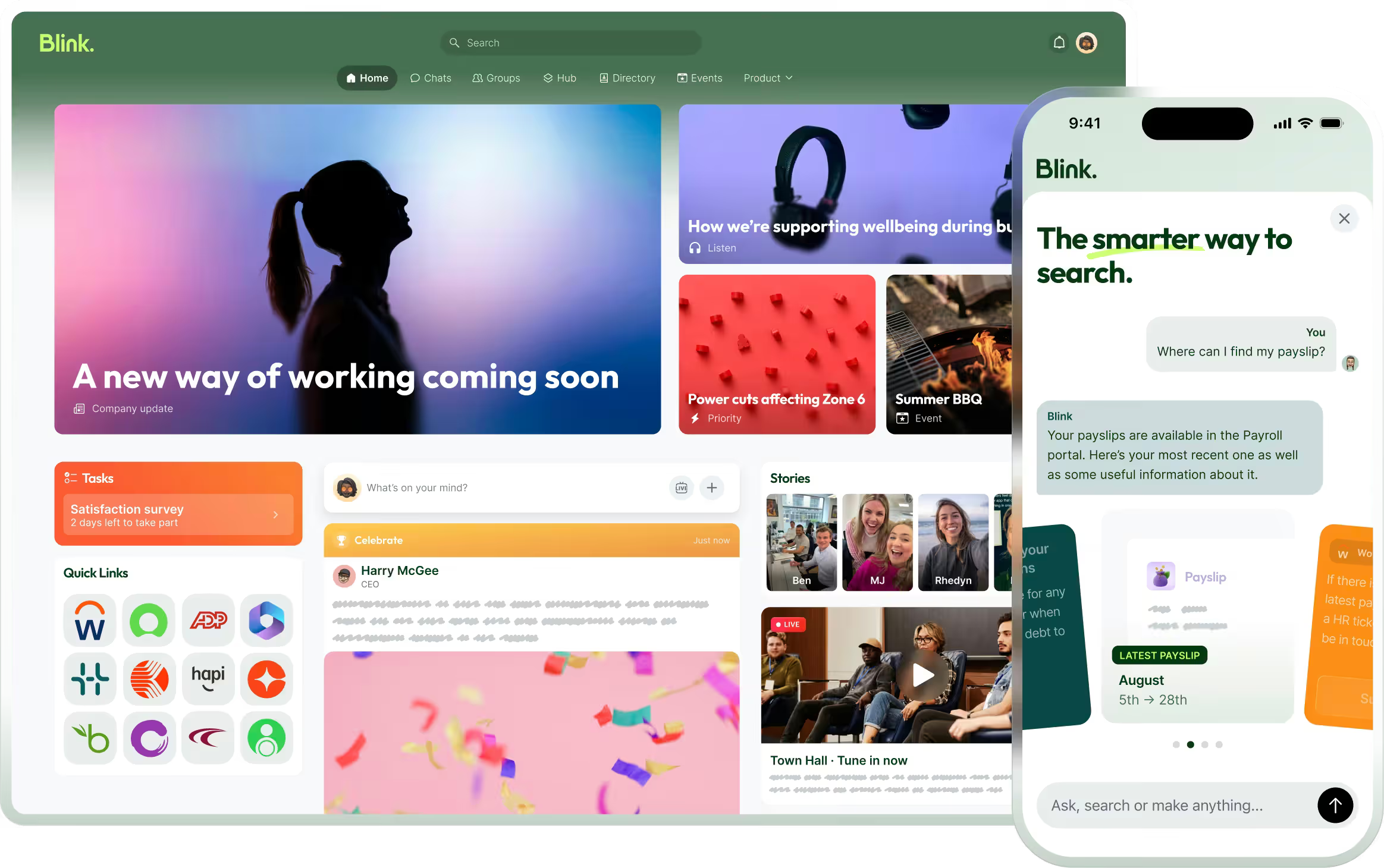
None of these strategies require expensive new programs, but most of them are hard to sustain consistently across multiple locations without a system behind them. A restaurant employee app that handles recognition, feedback, onboarding, and day-to-day communication in one place makes retention strategy something a franchise or multi-location group can actually execute at scale, rather than something that depends on one strong manager at one good location.
Blink brings these pieces together for restaurant brands including McDonald's, Domino's, and Shake Shack, with adoption rates in Blink's frontline customer base regularly landing above 90 percent within the first week.
In theory, everyone loves employee empowerment. Empowered employees are more productive and engaged, more likely to trust senior leadership and more likely to approach situations. What’s not to like?
Equally, that initial process of letting go can be hard – and that’s nothing to be ashamed about. Employee empowerment is a relatively recent philosophy, and many of us will have progressed our careers with a top-down approach to workplace management.
With the huge rise in remote and hybrid work, this approach is crumbling. As many workplaces are set to remain remote, and many others are losing employees in droves due to lack of career progression and low pay, it’s not a viable long term strategy.
Your managers can add huge amounts of value to your business in the projects they oversee and the bonds they build with their teams. Micromanagement is wasting them as a resource.
Staff empowerment involves trading some control over various aspects of your work environment for higher productivity and greater job satisfaction. Here’s how to embrace letting go in return for these tempting performance gains.
“Employee empowerment is a management philosophy that emphasizes the importance of giving employees the autonomy, resources and support they need to act independently and be held accountable for the decisions they make.”
“Autonomy, resources and support” encompasses a range of things here, and could include:
Offering employees freedom over where they work (e.g. remote or hybrid working arrangements).
Offering employees freedom over how they work by building managerial trust and avoiding micromanagement.
Providing resources for skills development and career progression
Structuring your organization in a way that allows employees some say in how it’s run, for example employee voice initiatives and shareholder schemes.
Employee empowerment, engagement, and satisfaction…what’s the difference?
Employee engagement is the strength of the mental and emotional connection employees feel toward the work they do, their teams and their organization.
Employee satisfaction is a measure of how happy an employee is in their role, and with their place of work in general.
Employee empowerment is providing the resources and support needed for your employees to act independently.
If you’re the type for metaphors (don’t blame you, they’re super useful!), consider employee satisfaction and employee empowerment as two key building blocks for employee engagement.
High employee engagement is the ultimate goal – companies with engaged employees are 21% more profitable than companies that aren’t. Workplace satisfaction and empowering employees with control over how they work are essential contributors to this.
The benefits of empowerment in the workplace
Your workforce is more flexible
Empowered workforces can work across locations and time zones, innovate more, and find solutions to problems quicker. That’s a real asset across your business – you can create better products, offer a vastly improved CX and build watertight internal processes.
Your workforce is more productive
Employees who feel trusted are more likely to get more done in the same space of time. This is partly because it’s easier to feel driven when you have autonomy over your work, and partly because micromanagement is a major time drain. Free your colleagues from this over-hierarchical hellscape and they’ll be more willing to go the extra mile.
Your workforce trusts leadership more
Trust is a two-way street. You’ll find that if employees are trusted to manage their workloads and have a say in how your business is run, they trust senior leadership to make mutually beneficial decisions as a result.
Research by the Great Place to Work Institute and Fortune suggests that trust between managers and employees is the main factor in the world’s best workplaces. Workplaces with the most mutual trust beat the average annualized returns of the S&P 500 by a factor of three.
How to empower employees in the workplace
Employee empowerment isn’t a bandaid that you can tack onto your existing workplace to make it better. It needs to be woven into the fibers of your company culture.
Bad news: this takes time and effort.
Good news: this investment will absolutely pay off in the long term. Creating new management practices, investing in new ways of working, sharing feedback regularly and creating a culture of recognition all help you maximize the value you get from employee empowerment as a business.
Feedback: give it and receive it
The more feedback you give on performance, the more you empower your employees to work dynamically, creatively and independently.
The more feedback employees share with you about the workplace, the more your workplace can meet their needs – and the more likely they are to stay.
Recognition: little and often is key
Did you know that a simple ‘thank you’ just once per month to your employees doubles employee engagement, halves the risk of them leaving and triples the likelihood of them sticking with you in the long term?
By all means celebrate the big milestones, but don’t forget to create a supportive, encouraging atmosphere day to day as well. Self belief is empowering – let your employees know that they’re doing a good job and watch performance improve.
Career development: make sure employees are working towards something
Career development motivates employees to act independently. Why take the risks that come with autonomy and decision-making responsibilities if there’s no payout?
In a recent survey 63% of workers cited lack of career opportunities as a reason why they left their position – the joint most popular response alongside ‘poor pay’. To create an empowered workforce motivated to stick around for the long-term, take a look at your career progression structure. What could be improved? Or, if you haven’t got any formalized structures in place, how could you design them to support the needs of your workforce?
Communication: two-way, not one-way
Watching your employees’ every move makes your workforce resentful and erodes trust. Instead of monitoring behavior, start thinking about how you can facilitate meaningful two-way communication between managers and employees.
As well as the right software – employee apps, instant messengers and project management software are all useful here – take a look at shifting your concerns away from regulating behavior and more towards focusing on results.
Responsibilities: avoid making things too top heavy
The classic scenario: managers are expected to maintain a huge degree of control over their teams, resulting in time pressures, delays and a lack of feedback for frontline teams.
By sharing responsibilities across employees and teams, you reduce this pressure drastically and encourage employee autonomy. You also avoid gradual erosion of trust and performance stagnation, as you empower your managers to spend time with their teams and invest time in employee development.
Barriers to employee empowerment and how to overcome them
Stuck on building a naturally empowering workplace? Check these common barriers to employee empowerment.
Your remote employees can’t communicate
To empower employees in a remote environment, your communications strategy needs to be stronger than it’s ever been.
If performance is suffering and deadlines are being missed due to confusion, invest in remote employee communication tools and make sure your managers are checking in at least daily.
Fear of position loss
If your employees are increasingly autonomous, what’s in store for middle to lower management positions?
Ease your managers’ concerns about this by communicating new expectations for different roles. If they know that employee empowerment is as much about reinvesting their time in meaningful work as empowering the workforce, they’re significantly more likely to get on board.
Lack of clear goals
“Be empowered” won’t cut it. To maximize returns on your employee empowerment strategy, you’ll need to be specific about what these goals look like. This could include:
Employees handling specific tasks on their own
Employees contributing regularly to strategic discussions
Employees shaping their workplace via employee voice initiatives
Employee empowerment in different industries
Not all industries work in the same way. What empowers employees in one industry might be impossible in another. Your healthcare workers might not be able to work remotely, for example, or there may be a particularly rigid professional hierarchy in place that you need to work around.
No matter your sector or organizational structure, there are ways to empower your employees. If flexible working is difficult, or there are real limits on the responsibilities you can share, try focusing on:
Employee voice initiatives like surveys and focus groups
Career progression – if your industry is hierarchical, work with it!
Recognition – a little ‘thank you’ never goes awry
Employee empowerment resources
There’s no such thing as being “too nerdy” about the wellbeing, productivity and performance of your employees. If you’re up for a bit of further reading, take a look at these resources.
And, don’t forget to check out our Frontline of the Future podcast! Listen here.
Employee empowerment examples
Need some real-world empowerment inspiration? Take a look at how these three businesses encourage their employees to reach their full potential.
Timpsons
British service retailer Timpsons is a renowned example of what happens when you trust your employees.
The business’s ‘upside down management’ philosophy was borne of owner John Timpson’s realization that “the only way to provide truly great customer service is to trust our customer-facing colleagues with the freedom to serve customers the way they know best.”
Timpsons’ frontline team members are encouraged to do whatever they can to provide a brilliant customer experience, including changing prices, rejigging displays and paying up to £500 to settle a complaint – without having to justify themselves to anyone senior.
John Lewis
If you’re looking for the ultimate employee empowerment strategy, look no further than employee ownership. Your employees become shareholders in your business, and get a share of annual profits and a say in how the business is run.
It’s definitely a commitment, but UK department store John Lewis makes it work. According to recent figures, 84% of John Lewis retail partners recommend John Lewis as a great place to work and 86% of customers feel valued when they shop with John Lewis outlets. Positioning their workforce as partners rather than employees drives empowerment; the retailer regularly tops ‘best workplace’ polls as a result.
Google
It’s no surprise that worldwide innovation leader Google expects the best from its employees. To facilitate this, Google invests a lot in building a creative work environment where employees are empowered to develop new skills at every turn.
Google Cafes encourage employees to build connections across the business, whilst the Google Moderator management tool draws a wider audience into meetings with a range of interactive features.
Google also allows its engineers to spend 20% of their working week on projects that interest them but show no immediate promise of paying dividends. Employees have the chance to develop new skills and work with their interests, whilst Google keeps ahead of the pack on long-term innovation.
Employee empowerment: final thoughts
As how we work continues to change, employee empowerment is becoming essential. Your teams need to be flexible, adaptable and engaged if you want to remain competitive – particularly right now, as open vacancies soar and workforces are asked to do more with less.
Employee empowerment will look different in different workforces. For example, you might not be able to offer flexible working, but you can still allow employees control over their processes and a say in how the workplace is run. Or, you might have strict protocols that need to be followed, but be able to offer some degree of time and location flexibility.
Whatever staff empowerment means for you, encouraging meaningful communication between managers and employees, setting clear expectations and building a culture of mutual trust is essential to success.
Blink is an employee app that enables two-way conversations, builds trust and empowers employees as a result. Get your free demo today!
As companies search for more agile, user-friendly solutions for internal communication and employee engagement, many are exploring Interact intranet alternatives that offer better customization, modern UX, mobile access, and integrations. While Interact has been a long-standing player in the intranet space, users often cite limitations around design flexibility, content sprawl, and admin complexity—especially for organizations with hybrid or deskless teams.
In this post, we’ll explore the top 10 Interact Intranet alternatives for 2025. Whether you're looking to enhance employee experience, streamline communications, or drive engagement across distributed teams, this list will help you compare platforms based on strengths, potential drawbacks, and pricing.
What to look for in an Interact intranet software alternative
When evaluating Interact intranet replacements, keep these key factors in mind:
Ease of use: Can employees navigate the platform without heavy training?
Mobile accessibility: Is there a native mobile app with full functionality?
Customizability: Can you brand and structure the experience to match your organization?
Engagement features: Does it go beyond file storage and announcements to include recognition, surveys, or social feeds?
Integrations: How well does it connect with tools like Microsoft 365, Slack, HRIS platforms, or scheduling software?
Blink is the modern employee experience platform that unifies communication, engagement, and productivity into a single app—without the complexity of a traditional intranet. Unlike Interact, Blink delivers a streamlined, mobile-first experience that actually gets used—whether your workforce is corporate, remote, or frontline.
With Blink, you can publish updates in real-time, manage compliance workflows, integrate with the systems your teams already use (like Kronos, SharePoint, or Workday), and give employees a single place to access everything from HR resources to payslips to scheduling tools.
Blink also stands out with its analytics and targeting capabilities, ensuring every message lands with the right audience—something many Interact users struggle with.
Pros
Mobile-first and intuitive UX
Powerful integrations and real-time analytics
Drives measurable engagement at scale
Cons
Not ideal for companies that want a static intranet experience
Enterprise plan required for advanced customizations
{{watch-video="/callouts"}}
#2. ThoughtFarmer
ThoughtFarmer focuses on social intranet features and knowledge sharing. It’s designed for ease of use and supports both top-down and peer-to-peer communication, making it suitable for collaborative teams.
Pros
Clean UI and strong support for content management
Good for mid-sized organizations
Cons
Limited customization for branding
Mobile app lags behind desktop features
#3. Jostle
Jostle promotes employee engagement through a simplified interface, making it easy to share news, connect departments, and celebrate culture. It’s best suited for organizations that don’t want to invest time in heavy customization.
Pros
Easy onboarding and admin tools
Strong emphasis on culture-building
Cons
Limited integrations with enterprise platforms
Less flexible for complex org structures
#4. Simpplr
Simpplr is a sleek, AI-powered intranet focused on enabling internal communications. It emphasizes intelligent content distribution and automation, appealing to large enterprises with robust content strategies.
Pros
AI-driven content delivery
Enterprise-grade scalability
Cons
Can be complex to deploy
Higher cost for small teams
#5. MangoApps
MangoApps is a modular platform that blends intranet, communication, and task management into one tool. It’s ideal for companies that want a little bit of everything in a single environment.
Pros
Extensive features from wikis to task tracking
Good for hybrid teams
Cons
UI can be overwhelming for new users
Setup may require IT support
#6. Staffbase
Staffbase offers a mobile-friendly intranet focused on internal comms and employee engagement. It’s often chosen by large organizations with complex communication needs.
Pros
Strong internal comms features
Personalized content targeting
Cons
Enterprise-focused pricing
Less flexible for small teams or startups
#7. Axero
Axero’s Communifire platform delivers an all-in-one intranet solution with collaboration tools like forums, blogs, and task management. It appeals to organizations that want both communication and project tools in one place.
Pros
Broad range of features
Community-style interaction tools
Cons
Learning curve for new users
Less mobile-optimized than some competitors
#8. Microsoft SharePoint
SharePoint is one of the most well-known enterprise intranet platforms, offering deep integration with Microsoft 365. It’s extremely flexible but often requires IT and governance to manage effectively.
Pros
Deep Microsoft 365 integration
Highly customizable
Cons
Steep learning curve
Not built for employee engagement
#9. Workvivo
Workvivo blends intranet and social engagement features, positioning itself as a digital hub for company culture. It’s especially strong in recognition and community-building use cases.
Pros
Built-in recognition and community tools
Engaging UX for culture-first organizations
Cons
Limited document management capabilities
Not as flexible with integrations
#10. Happeo
Happeo is a Google Workspace-native intranet that integrates deeply with Google Drive, Gmail, and Calendar. It’s a good option for companies that are fully embedded in the Google ecosystem.
Pros
Seamless Google Workspace integration
Strong search and navigation features
Cons
Less functional for Microsoft-based companies
Lacks some advanced comms features
Final thoughts: Choosing the right Interact intranet alternative
Finding the best Interact Intranet alternative comes down to your organization’s goals—whether it’s boosting engagement, simplifying communication, improving mobile access, or replacing outdated tools.
For companies that want a modern platform that employees actually use, Blink stands out as the top choice. It combines everything Interact offers with better usability, mobile functionality, and real-time engagement tools—making it ideal for the future of work.
Whether you're a global enterprise or a growing mid-sized team, there's an intranet solution on this list that can help streamline your internal communications and empower your people.
Why teams choose Blink over Interact Intranet
Interact is a solid traditional intranet, built primarily around desk-based content and document management. Blink is built the other way round: mobile-first, no corporate email required, and used daily by frontline teams at McDonald's, Domino's, and Chick-fil-A. See our full comparison on mobile access, chat, and frontline engagement.
Not every team is going to bring maximum energy every single day. That’s normal.
But if disengagement feels less like an occasional bad Monday and more like a permanent setting, something deeper is going on. For frontline workers especially, the gap between what they experience and what office-based employees take for granted is real — and it shows. The right employee experience platform (EXP) can close that gap in ways that matter.
An employee experience platform for frontline organizations gives every employee — frontline, remote, hybrid, and desk-based — access to communication, recognition, feedback, and connection. All in one simple, mobile-first space.
One login. One experience. One shared culture. And a big boost for employee morale.
Here, we explore what low morale really looks like — and how the right workplace culture platform can help turn it around.
{{human-internal-comms="/callouts"}}
Understanding low employee morale
Employee morale is the attitude, satisfaction, and emotional well-being workers experience in relation to their job, team, and organization.
Employee morale is closely linked to employee engagement (the degree to which employees feel invested in their work and workplace) and employee motivation (the energy and enthusiasm employees bring to their work).
Causes of low morale
Causes of low morale in the workplace are varied. They include poor leadership, lack of recognition, unclear goals, unsustainable workloads, and limited growth opportunities.
57% of people who rate their organizational culture poorly say they are actively or soon will be looking for another job. And just 45% of those working in poor or terrible cultures are motivated to produce high-quality work.
Symptoms of low morale
Signs of workplace disengagement and low morale include:
Absenteeism
Avoiding collaboration
Missed deadlines
Negativity
Lower employee satisfaction metrics
Impact of low morale
Low morale can lead to disengagement, lower productivity, and increased turnover. Despite these risks, 3 in 4 employers fail to regularly check in on how motivated their workforce is feeling.
Bus company, Go North West, experienced a 26% reduction in employee turnover
More than 8 in 10 employees at Domino’s are using the platform every month to check in with updates and celebrate team wins
As a platform for workplace culture, Blink builds morale into daily work. It allows you to collect feedback, increase psychological safety, and deliver timely manager support.
As a mobile-first platform, Blink makes these collaboration tools and resources available on employee smartphones. So you can bring a better employee experience to every member of every team.
Key benefits of using a workplace culture platform
Thinking of launching employee experience software for frontline organizations? Here are the benefits you can expect:
Better business performance. According to Gallup, highly engaged teams have 17% better productivity, 23% higher profitability, and a 10% increase in customer loyalty.
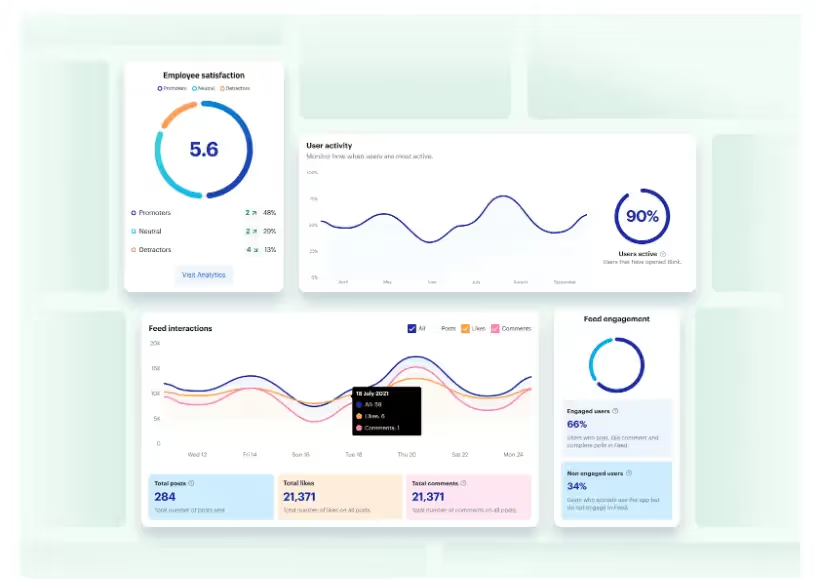
Visibility into engagement metrics. With one centralized platform and a dashboard for employee sentiment, it’s easy to spot issues with morale and engagement, then prioritize interventions.
Less “busy work.” Centralized communication, recognition, and culture-building tools simplify work. So teams have more time for creative and value-add tasks.
{{less-is-more="/callouts"}}
Addressing hybrid, remote, and frontline workforce challenges
For years, organizations unintentionally built workplace culture around office life. Town halls. Team lunches. Desk-side chats.
Effects on morale may once have been minimal. But things have changed.
A large proportion of employees are now working remotely or on a hybrid schedule. And frontline employees are simply fed up with being forgotten.
This is causing problems for frontline, remote, and hybrid workforce engagement:
21% of frontline employees in the UK are quiet quitting — they say a lack of recognition, ineffective communication, and poor relationships with co-workers and managers are to blame.
A centralized, mobile-first employee experience platform can change all that. It overcomes barriers of time and geography, giving every employee access to the company culture and connection they crave — straight from their smartphones.
Wondering how to welcome non-office workers onto your platform? Here are a few ways to use a culture-building tool for all employees.
Build connections
Support your teams to build connections and a sense of belonging with easy access to chat and company news feed tools.
Provide digital access to resources
Forms, shift swap tools, company policy docs, L&D, career progression, and operational tools — make everything available to all workers in just a few taps of the app.
Make frontline employees visible on the platform
Use employee-generated content and behind-the-scenes insights to make frontline, remote, and hybrid voices heard on your platform.
Personalize content
Use targeting tools to ensure each segment of your workforce sees personalized content and resources relevant to them and their roles.
Creating a virtuous employee lifecycle using data and feedback
Start using employee experience management software for your frontline organization, and you create a positive feedback loop.
You build a more positive company culture, ensuring every employee feels part of it. And you have the tools you need to measure the success of your morale-boosting initiatives — so you can become laser-focused in your approach.
The best workplace culture platforms provide platform usage data and employee feedback, plus actionable insights. Actionable insights are data-driven discoveries that prompt specific improvements to processes, policies, or engagement strategies.
To convert these insights into tangible improvements, you need to move from platform data and analytics and employee feedback to action. You have to close the loop with visible change.
For example:
A pulse survey reveals worrying levels of employee burnout in a particular team.
⬇️
You tell employees what you’ve found and what you plan to do about it (perhaps reallocating workloads or offering more flexibility).
⬇️
You make changes. Then, continue to report back, sharing results and progress transparently with employees.
By taking this approach to workplace sentiment analysis, you embed employee voice as an important part of company culture — and successfully use comms and HR analytics for engagement, satisfaction, and employee morale.
{{mobile-onboarding="/image"}}
Launching a workplace culture platform: tips for success
The way you approach culture platform implementation can make or break adoption. You need a good handle on change management in HR tech and a solid employee experience strategy.
As you roll out, you need to:
1. Define culture and engagement goals. What do you want your new platform to achieve? Develop SMART goals and take benchmark readings.
2. Get leaders on board. Ensure leadership buy-in. Emphasize the difference that C-suite input and interaction make. Then, develop ways for them to be visible on the platform.
3. Transparently communicate changes. Tell employees that a new platform is coming and how it benefits them. You may like to incentivize early adoption.
4. Train users. The best platforms have a minimal learning curve. But ensure everyone (particularly frontline and remote staff) is up to speed to ensure high platform adoption rates.
5. Integrate with your tech stack. When your culture platform plays nicely with other workplace tools (for example, HRIS system, shift booking tools, and learning platform), you encourage adoption and amplify impact.
6. Integrate communication tools into daily routines. Create a comms calendar that details when you’ll share recognition, employee surveys, and community updates, ensuring regular cultural touchpoints.
7. Use metrics to iterate and adjust. Keep an eye on platform analytics to find out which of your cultural initiatives are having the most impact and which need to be tweaked.
These adoption strategies will help you maximize return and avoid common pitfalls.
Workplace culture and technology: What’s next?
The right tech tools support a better, more inclusive, more inspiring workplace culture. But where are things headed next?
As ever in the world of tech, there are changes on the way. Here are the shifts in technology and employee expectations we expect to see over the coming months and years.
New platform features. Features like AI-powered content, hyper-personalized recognition, predictive workforce analytics, and mobile-first experiences will become the norm. AI in employee experience is here to stay.
Super-apps for workforce management. In response to app overwhelm, organizations will seek to simplify their tech stacks. They’ll avoid point solutions and, instead, choose tools that support every element of workforce management — with either in-built features or deep integrations.
The rise of employee voice. Organizations that really listen to their employees keep their finger on the pulse and can respond to engagement and morale challenges in real time. Soon, continuous listening will be the norm.
The future of digital workplace technology is already on its way. And it’s clear. Organizations are focusing on fewer tools and better experiences.
We’re already seeing the “platformization” of culture. Disparate tools are being brought together in unified, employee-centric apps, and organizations are realizing the power of tech to transform productivity and morale.
Mass walkouts make headlines. It would not be surprising if 2024 saw an increase in these headlines - particularly in sectors such as healthcare. The recent strike that saw 75,000 Kaiser healthcare workers walk off the job is reflective of the deep level of disengagement among frontline healthcare professionals in general. Unless healthcare leaders can spot rising levels of disengagement, understand what causes it, and take proactive steps to prevent it within their organizations, these worrying trends will continue to persist.
Unfortunately, despite significant and somewhat effective efforts by HR leaders to recognize and reward frontline workers for their contributions, the healthcare industry is struggling to bridge the gap between organizational initiatives and frontline satisfaction. Benefits programs, loyalty initiatives, listening surveys, and wellbeing apps have failed to move the needle, mainly because these initiatives simply don’t always reach those needing them. Technologies such as e-learning and team scheduling platforms, messaging, and collaboration tools - designed to engage employees and encourage a more connected and cohesive organizational culture - have not had the desired impact on frontline staff.
Mismatch Between Technology and Reality
The problem is that while the pace of digital transformation in the enterprise space has been undeniable, the technologies most healthcare organizations purchase today are designed for desk-based workers who are permanently online and have ready access to IT support and/or relevant training resources; or are another add on to an existing legacy system.
The modern enterprise tech ecosystem is incompatible with the reality of frontline work – where mobile ease of use and accessibility are pivotal to driving impact. These tools simply don’t work effectively when rolled out to hospital staff who are time-constrained, constantly on their feet, and rarely anywhere near a desktop computer, especially for anything nonclinical.
A survey of more than 500 US healthcare workers reveals that 37% say technology frustrates them. This lack of positivity around technology creates inequality of opportunity and influence within the workplace, as healthcare workers often don’t enjoy the same sense of value and belonging as their office-based peers, nor do they have the same opportunities for career advancement.
READ MORE: Achieving Employee Techquity: Our guide on why successful digital inclusion in healthcare starts in your teams.
Purpose-built Technology for Delivering Exceptional Care
Healthcare workers aren’t averse to using technology. As consumers, their digital world is immediate and enriching, driven by intuitive smartphone apps, instant notifications, and a sense of always having the tools they need at their fingertips. Yet in their jobs, the current digital experience can be slow and disjointed.
To close the digital divide, organizations must deploy technologies specifically designed with the on-the-go frontline healthcare experience in mind. For example, offering single sign-on (SSO), mobile-enabled access to all applications will greatly improve accessibility. Building a hub can make it easy for all workers to access important information and other systems. Simple mobile forms can replace paper trails, help workers improve efficiency, and eradicate convoluted processes so that workers do not waste time on administrative tasks.
Elara Caring, one of the largest US-based providers of personal care, home health, and hospice care, successfully addressed these challenges after experiencing a 65% annual staff turnover rate due to low morale and lack of peer-to-peer connection. The company decided to deploy Blink, the frontline employee super-app, which has transformed its operational landscape and solved its million-dollar challenge.
Elara, using Blink, streamlined onboarding, enhanced communication efficiency, and created a sense of community among employees, some of whom were never connected to the organization. By leveraging capabilities like SSO and automating daily tasks, Elara centralized operations and increased its productivity. Additionally, they facilitated seamless communication and peer-to-peer networking, fostering a culture of recognition and empowerment within Elara's workforce.
By leveraging Blink's multifaceted capabilities, Elara not only mitigated its turnover challenge but also established a more cohesive, efficient, and connected workforce, reinforcing its commitment to employee well-being and organizational success. And, now that Elara has been able to connect to this large employee constituency successfully, they are innovating on exciting new opportunities for improving these workers’ work-life and their patients’ experience.
Importance of Organizational Culture Shift
Creating a digitally inclusive environment for frontline workers goes beyond technology adoption. It requires a cultural shift within organizations – one that values and actively supports the digital empowerment of every employee, regardless of role. People and HR leaders must champion digital inclusion as a strategic priority, ensuring that frontline workers are not just recipients of technology but active participants in the digital transformation journey.
Organizations can foster this culture by promoting digital literacy programs, encouraging peer-to-peer learning, and recognizing the unique contributions of frontline workers. Understanding the specific pain points of these employees leads to more effective and user-friendly solutions and an increase in technology adoption.
Essentially, closing the digital gap for frontline healthcare workers isn't just about technological advancements, it's about ensuring exceptional healthcare and workplace equity. By investing in the right tools, training, and culture initiatives, healthcare organizations can enable and empower their frontline workforce to better thrive in the digital age.
Kerry Schumann is an Occupational Therapist with diverse experience in the healthcare sector. Currently employed at Ross Care since October 2022, Kerry previously held a similar role at Millbrook Healthcare and worked at the Eastern Cape Department of Health from December 2018 to November 2022, where responsibilities included establishing sustainable services as the sole therapist at a district-level hospital.
Kerry always goes above and beyond her role. She will always reach out to help anyone who needs it. She shows great initiative and is proactive in everything she does — and always has a smile around the office. She has always shown amazing rapport with service users and their family. Kerry is just a general delight to work alongside.
How has Blink helped in her role?
Kerry is our Blink Champion for Chandlers Ford.
What does she want to do next?
She wants to keep doing the best she can each and every day and hopes to progress within the clinical.
Dee has been with Arriva since Christmas 2016, working 3 days a week so she could care for her three children. When the 2019 Covid pandemic hit, Dee started to work 6 days per week and stepped up to become acting supervisor. During this time, the team was nominated for (and won bronze at!) the Made A Difference Awards for the initiative and depot leadership they showed. They were also recognized for having the fewest rates of drivers contracting the virus within the area.
After the pandemic, she continued to work 6 days each week — her children were getting older, and she had a lot of ideas to improve the standards! She continued to invest in herself and in Arriva: In 2023, she passed the passenger-carrying vehicle test, and when the previous supervisor retired, she became the supervisor in April 2024.
She gives immense credit to her team. In her own words:
“The two ladies I work with, Abby and Megan, are not only colleagues but friends as well, and that makes a difference. The friendship and team spirit within the team is very high and we all work together brilliantly. The goals and cleaning standards are at a high standard and we all work together to achieve this — when drivers compliment the cleanliness and difference is what I love most about the work we do.”