
%20(2).avif)
Businesses are investing more than ever to engage their frontline workforce
Recognition platforms. Pulse surveys. Culture initiatives. Manager training programs built on the idea that employees would be more engaged if leaders were simply inspiring enough.
And yet deskless employees remain the most disengaged segment of the global workforce. More than half say they’re feeling burned out and more than a quarter are actively or passively looking for a new job.
Something isn’t adding up. If engagement investment is going up but frontline employee engagement isn’t shifting, perhaps we’re trying to solve the wrong problem.
The motivation myth in frontline employee engagement
Most employee engagement strategies start from the same assumption — disengagement stems from a lack of motivation. Ultimately, it’s an emotional problem.
People don’t feel motivated enough, connected enough, recognized enough. So we focus on fixing the feeling. We appreciate our teams more, communicate more, and run more surveys.
For deskless workers, this framing misses something important. Because the problem isn’t only emotional. It’s also operational.
It’s hard to feel engaged at work when you don’t know what you’re supposed to be doing, when priorities change without warning, or when information arrives late — or not at all.
What frontline employees need isn’t more motivation. It’s clarity on the day ahead.
This is where many employee experience strategies fall short. They focus on how people feel — without fixing how work actually works.
And for frontline employees, the operational experience is a huge part of their overall employee experience.
What deskless workers say they actually need
When frontline employees are surveyed, they don’t complain that their organization runs too few employee engagement activities.
Some of their biggest frustrations center on something more fundamental: operational friction.
- 40% are unsure of their job expectations
- Only 10% of frontline workers say they have access to the tools, tech, and opportunities they need to connect and advance in their workplace
Frontline workers say that management is inconsistent. That they waste time chasing updates. And that they don’t have the information they need to do a good job.
These operational issues have a big impact on engagement. Because when work feels harder than it needs to, mistakes happen more often, confidence drops, and frustration builds. Eventually, people leave — or stay but stop trying.
The role of the frontline manager
So where are frontline managers in all this?
Frontline managers are stretched. They spend their days juggling priorities — solving operational problems, striving toward targets, and supporting employees.
They’re expected to communicate with staff over a patchwork of phone calls, bulletin board notices, WhatsApp messages, and occasional face-to-face check-ins.
And they have limited time in which to share information. 27% of frontline managers spend 15 minutes or less communicating with their team each day.
The answer to poor levels of employee engagement isn’t landing another engagement initiative on a manager’s plate.
Instead, it’s giving them what they actually need: the tools to set clear priorities, assign tasks, communicate operational updates, and track progress in real time.
When that infrastructure exists, employees arrive at their shift knowing their brief — what’s expected of them that day, that week, and that month.
And managers spend less time fielding questions, chasing updates, and managing the safety incidents that result from poor information flow and ineffective task assignment.
The case for task clarity as an employee experience strategy
Task management doesn’t usually sit under employee experience. But we’re here to make the case for a shift in mindset.
While task management is often seen as an operational issue, it’s also one of the most important drivers of deskless employee experience.
Because clarity on the task at hand changes how work feels. When tasks are clearly explained and assigned, employees:
- Know what’s expected of them
- Understand what success looks like
- Feel more in control of their day
- Build confidence and find work more rewarding
When tasks aren’t clear, employees second-guess themselves. They interrupt managers to ask questions that shouldn’t need to be asked. Or they make decisions despite not having the right information, which means everyone deals with the consequences later.
This cycle of confusion, error, and frustration helps to drive frontline disengagement. And no amount of recognition or culture change will fix it while that underlying operational friction remains.
This is why task clarity belongs inside your EX strategy.
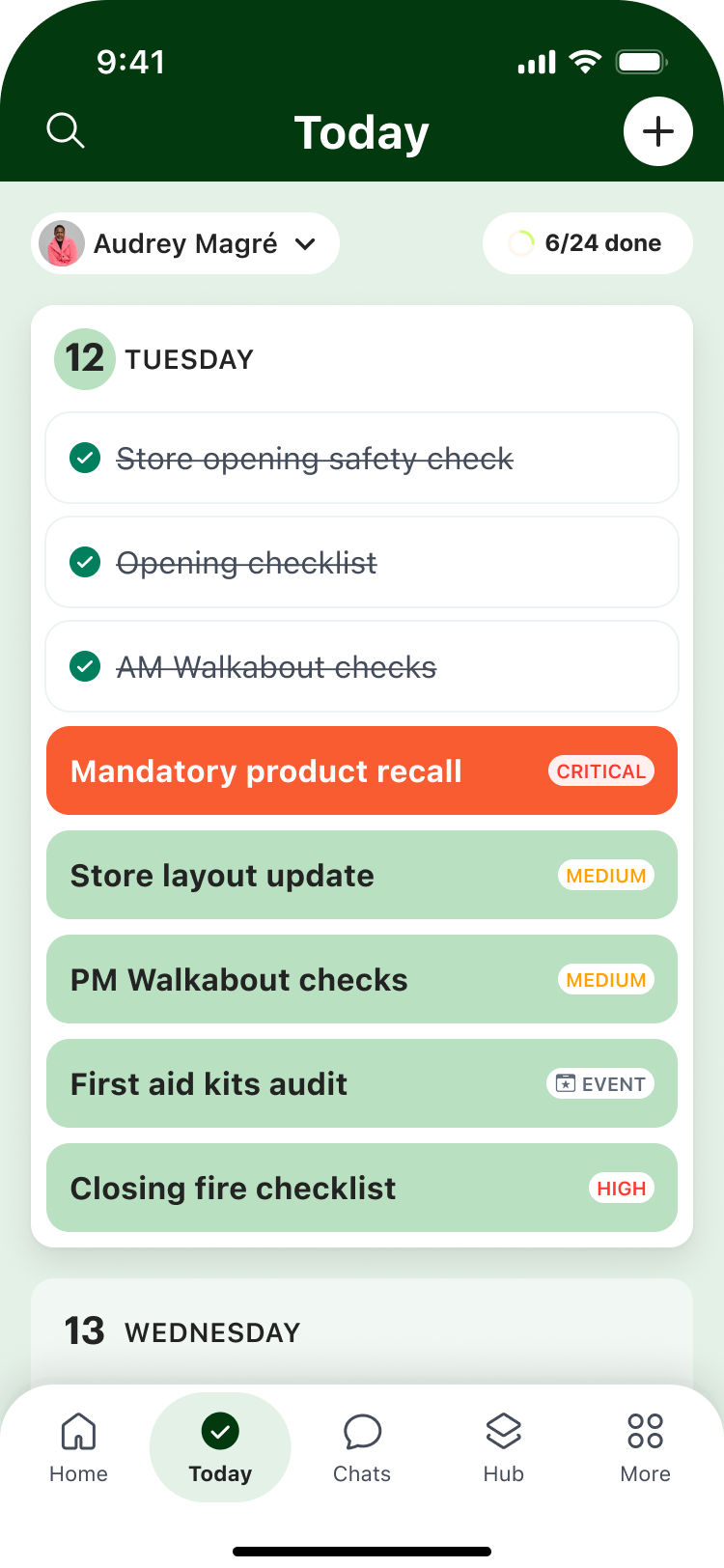
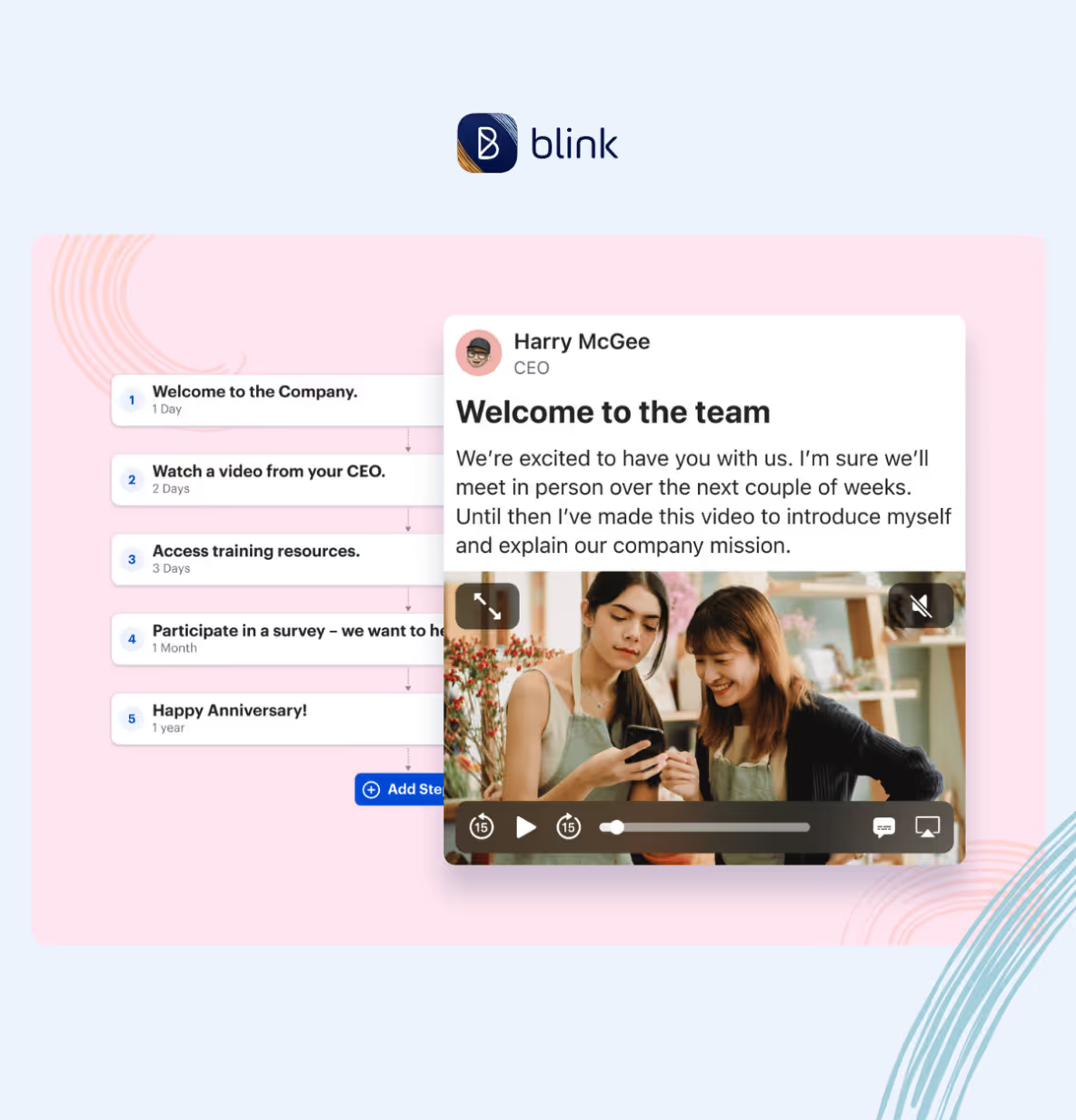
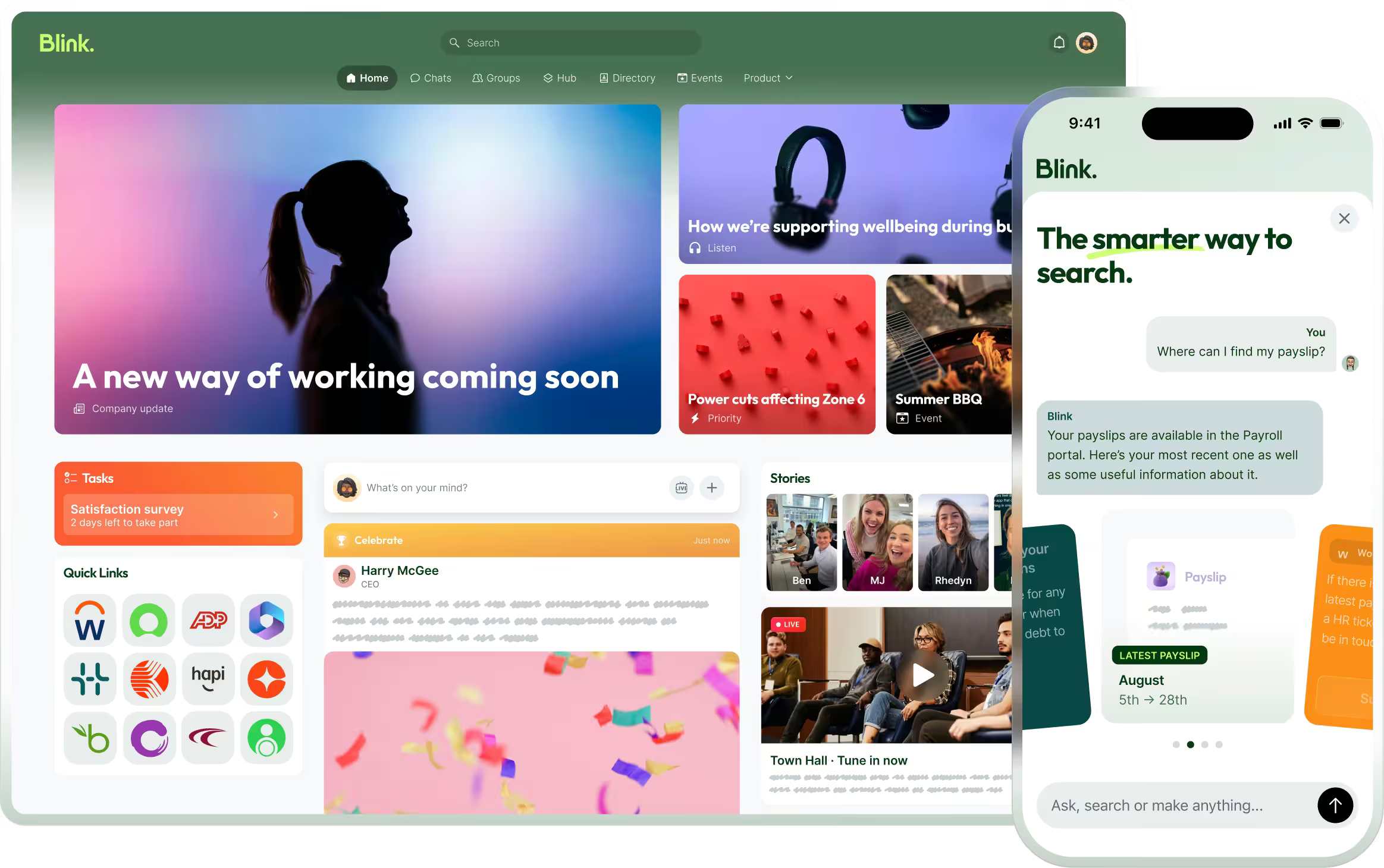
This is where Blink's task management earns its place in an EX strategy, not just an ops stack. Standard, scheduled, and ad hoc tasks show up in the same app your team already uses to talk, share, and stay in sync, packaged with the checklists, forms, and photo capture people need to get it right the first time. No guessing, no chasing a manager for context, no gap between what's expected and what's understood. That's task clarity, built in.
Task management in employee experience: Where to start
If you want to improve deskless employee experience, start with a simple audit. Not of your engagement programs, but of your managers’ ability to create task clarity.
Ask these three questions:
1. Do our managers have a clear way to assign and track tasks? Or are tasks shared verbally, via WhatsApp, or scribbled on paper? If there’s no clear route, task assignment is inconsistent, and completion is hard to track.
2. Can employees easily see what they need to do — and what’s changed? If information isn’t accessible, it isn’t actionable. Frontline employees should be able to view tasks and communications via their smartphones.
3. Can we see where work is getting stuck? Or do we only find out when something goes wrong? Visibility into task progress helps managers see where support is needed and ensure tasks are completed on time.
If your honest answer to any of these questions is “not really”, you have a task clarity problem, which can quickly translate into an engagement problem.
More positively, you also have a very clear focus for frontline employee engagement improvements.
Making operational design part of your employee experience strategy
Employees disengage when the work is harder than it needs to be, when expectations are unclear, and when the information they need to do their jobs well doesn’t reach them reliably.
Fixing that requires a shift in how we think about EX. Motivation-boosting initiatives are unlikely to succeed while operational friction remains. So operational design has to be an EX priority.
That means a greater focus on operational infrastructure — tools that allow managers to assign tasks, communicate clearly, and organize work more effectively.
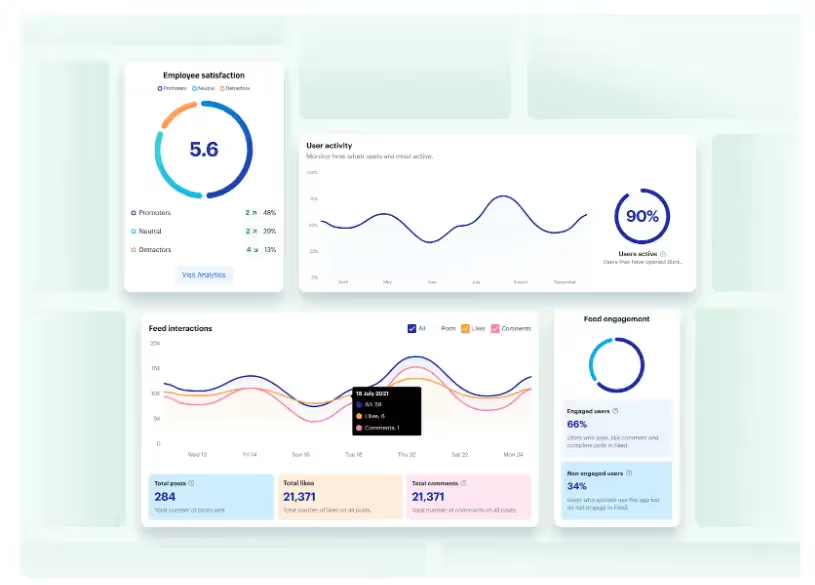
Blink can help. Our mobile-first employee experience platform gives you everything you need to manage frontline motivation and the operational experience.
Blink. And give frontline managers the tools they need to get more from their teams.



.avif)

.avif)



.jpeg)

















.jpeg)




-min.jpeg)


-min.avif)













.avif)





.avif)