

























The message is sent. But did it land before service started?
Sending the message is half the job. Every menu change, policy update, and training rollout depends on front-of-house and back-of-house knowing what's changed before the doors open.
When the pre-shift briefing misses someone, they find out mid-service instead.
Blink closes the gap between sent and landed, giving every team member one place to find what changed before the shift starts.
Your guest experience is only as good as your employee experience
Blink unlocks the potential of your managers by giving every front-of-house and back-of-house team member one place to find what matters, targeted to their role, their section, and their shift.
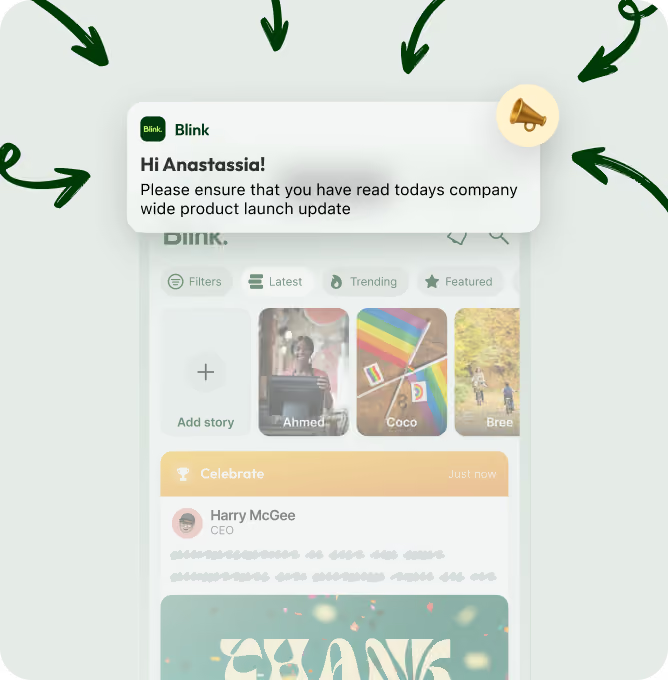
A one stop shop for front-of-house and back-of-house
Blink brings shift communication, training, recognition, and operational updates into one employee experience, so every server, host, line cook, and manager knows where to go, what matters, and what to do next before the first table sits down.
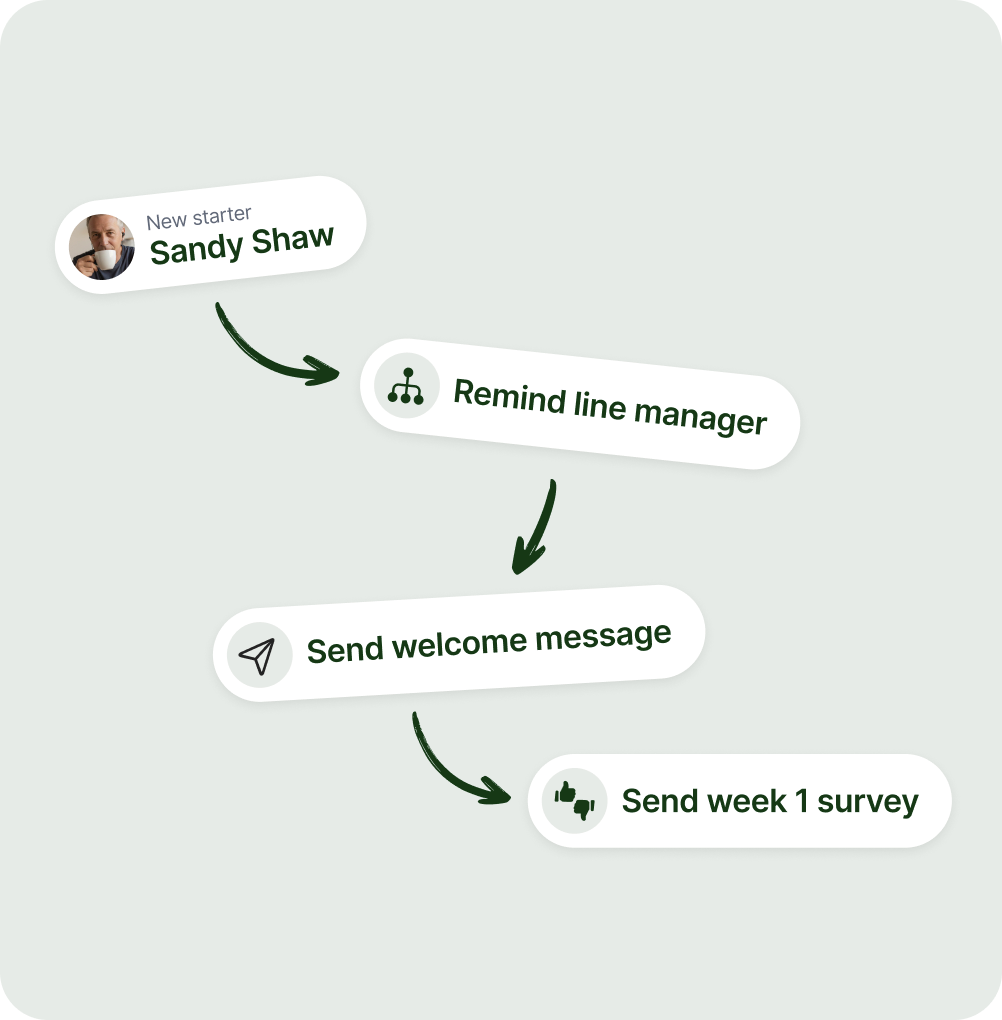
Onboarding
Full-service turnover means onboarding can't rely only on a rushed shadow shift or a binder in the back office. Blink gives new servers, hosts, and kitchen staff one place to start, learn the menu and the floor plan, and know what's expected before their first solo shift.
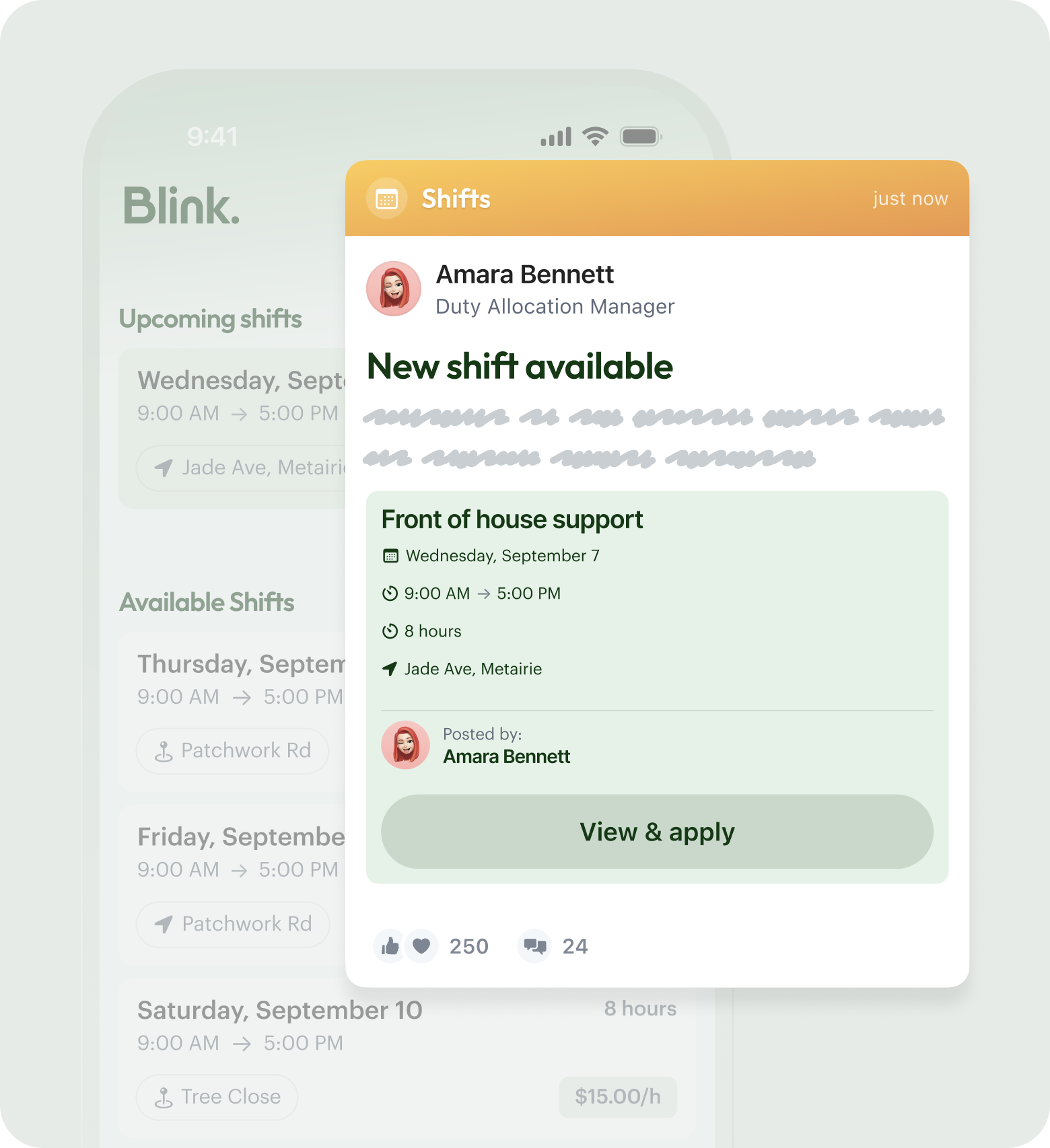
Target by role, section, or concept
A full-service floor runs on roles: servers, hosts, bartenders, line cooks, managers. When everything goes to everyone, important updates get missed. Blink helps teams target content by role, section, or concept, so a bartender isn't reading kitchen memos and vice versa.
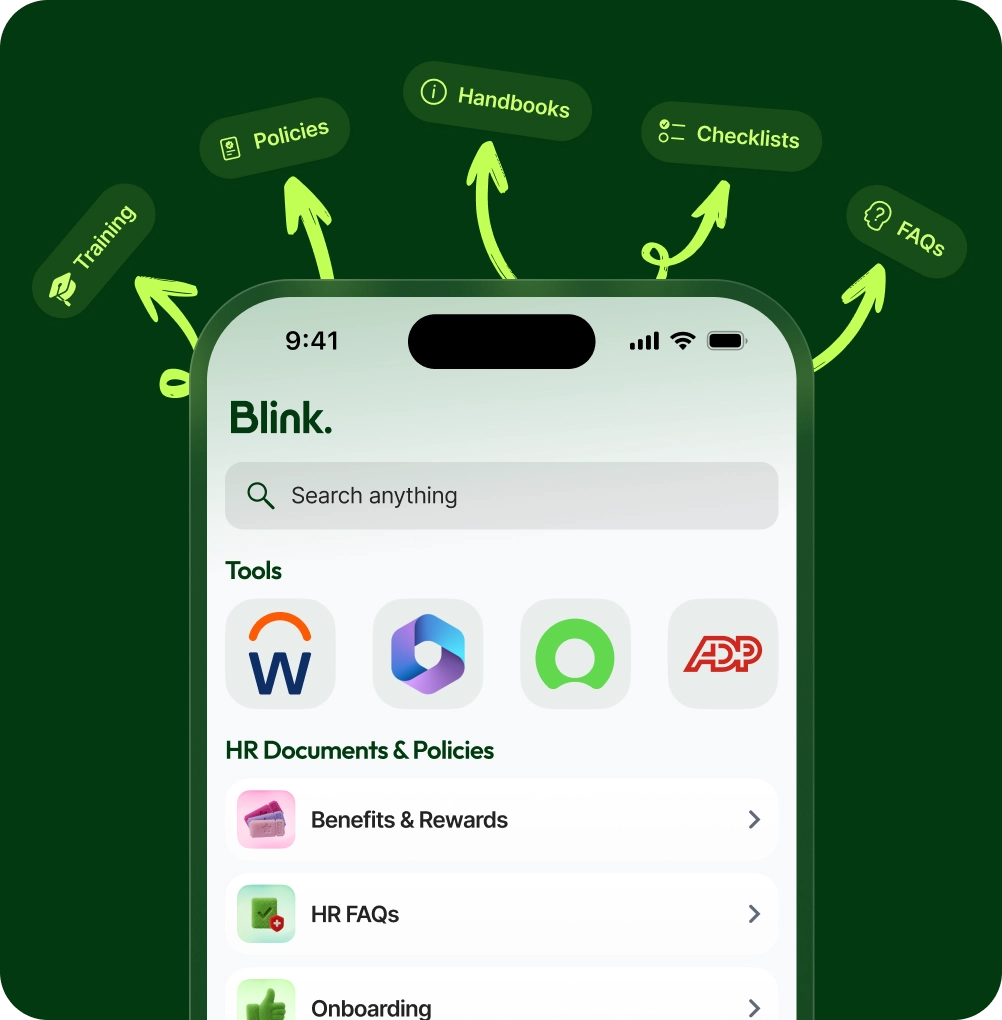
Connect everyday tools
Full-service teams juggle a POS, a reservation system, scheduling, and HR paperwork on top of the floor itself. Blink acts as the front door to the systems and content staff use most, cutting down on extra logins and "where do I find that?" moments mid-shift.
Built for teams doing work differently

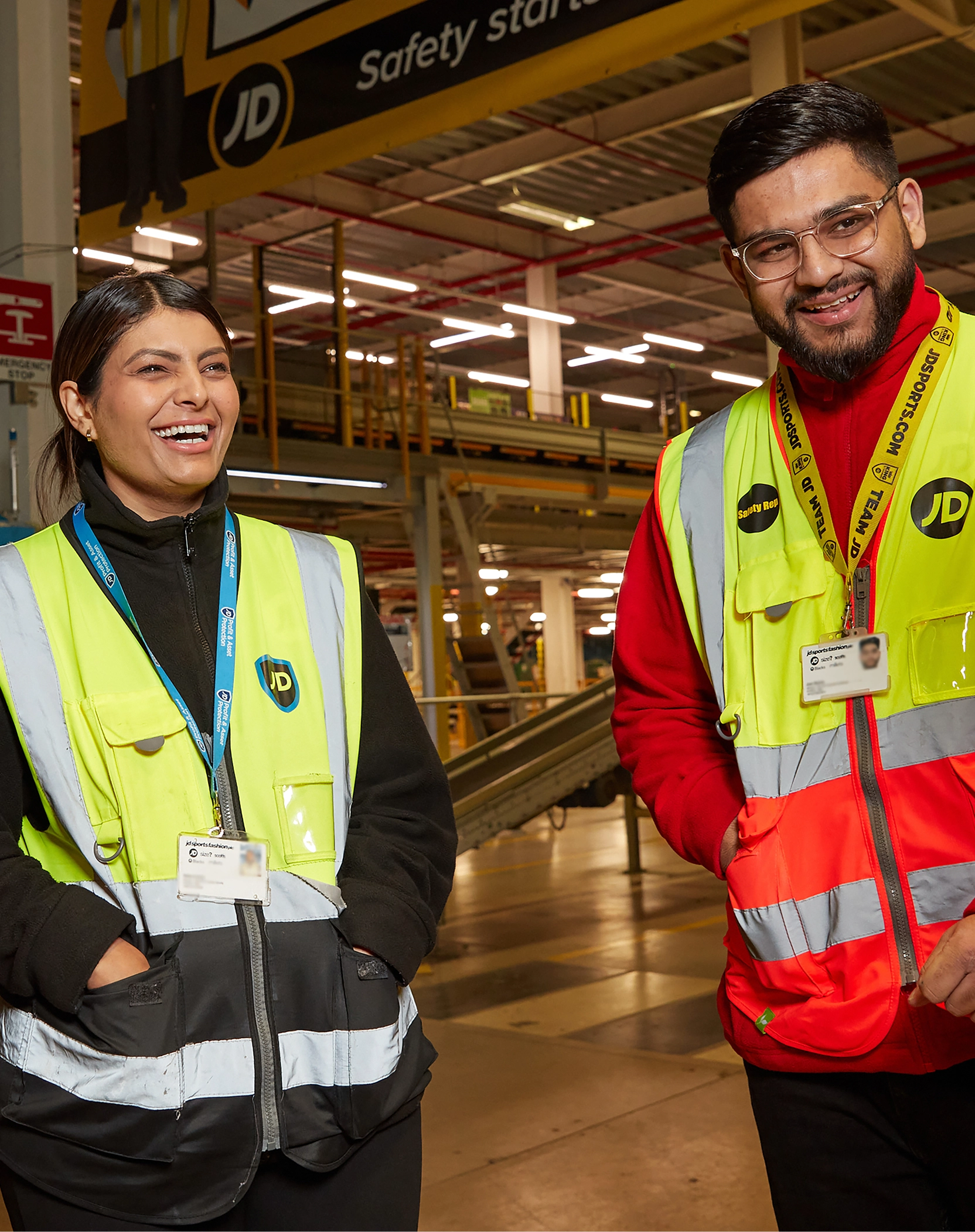

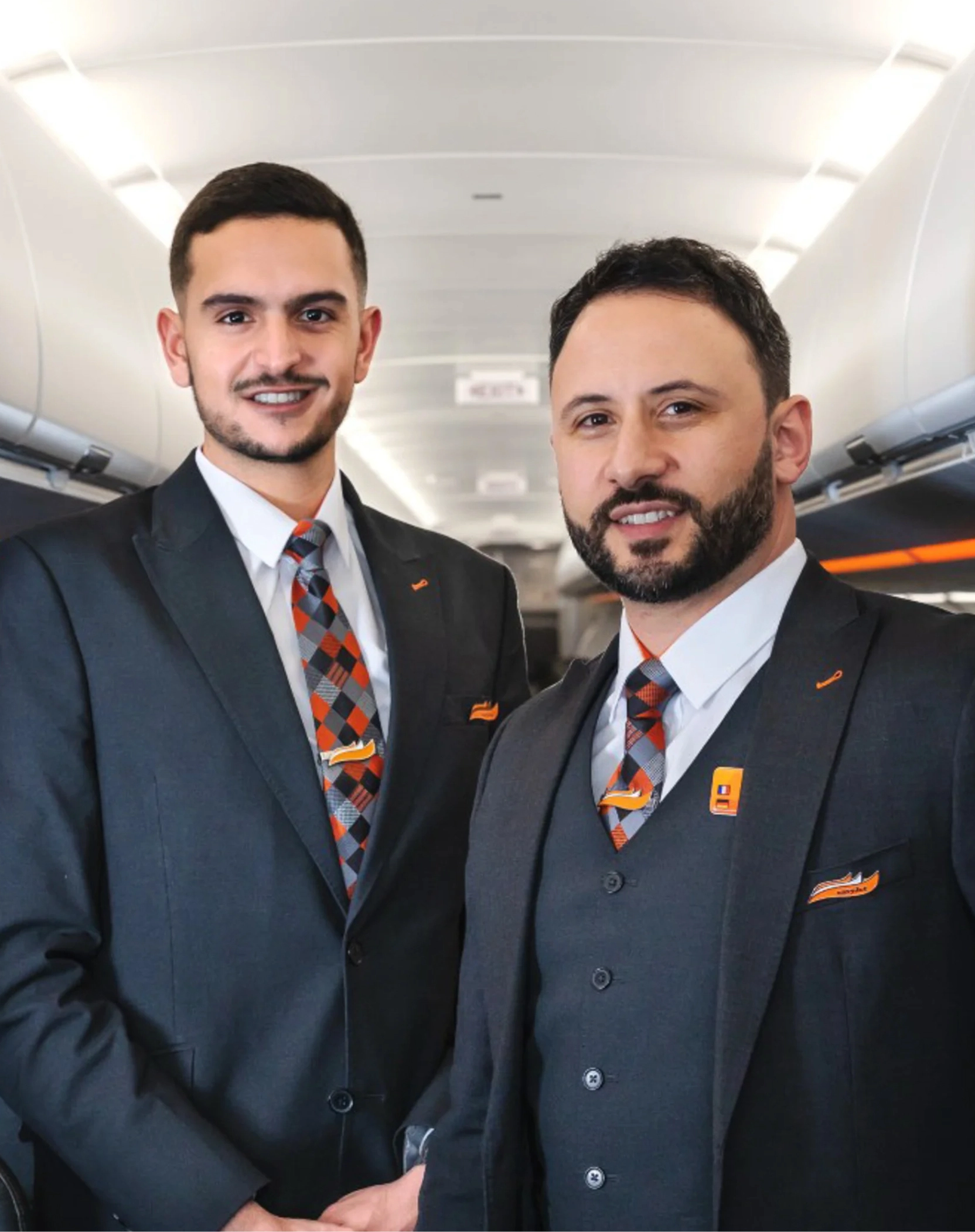

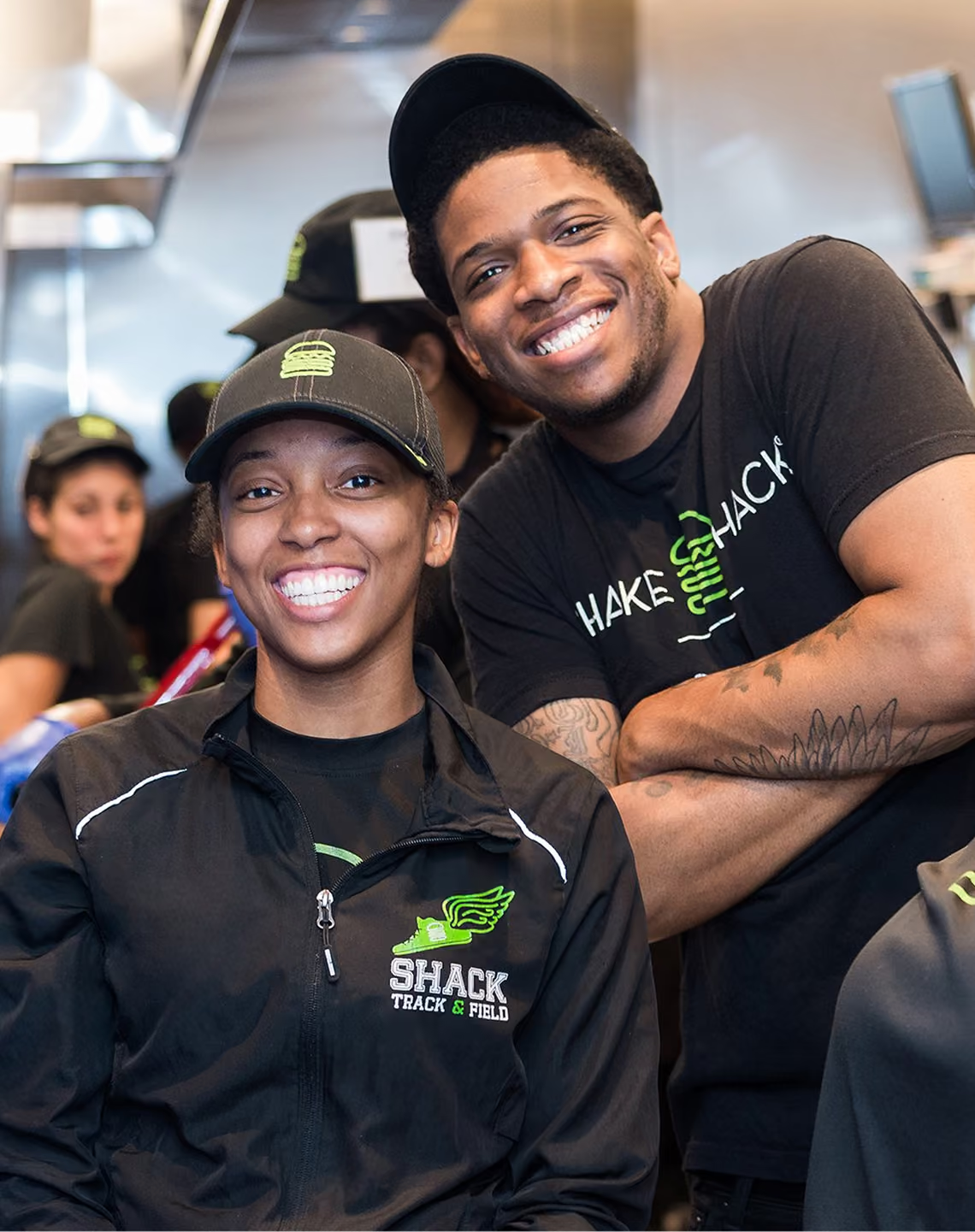

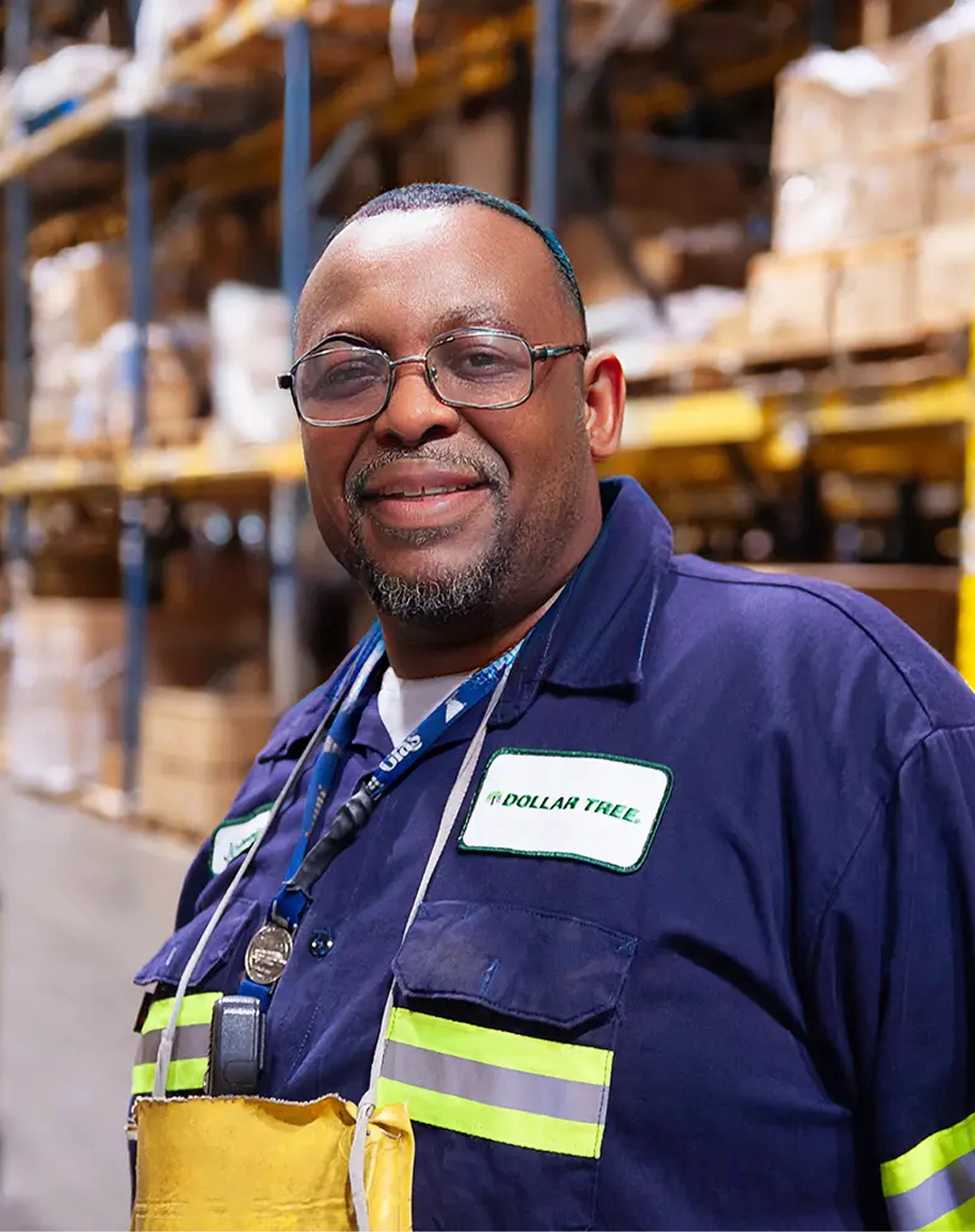













More resources for full-service restaurant teams






Frequently asked questions
POS and reservation systems run service. Blink runs the team behind it, giving staff one place for the updates, training, and communication those systems don't cover.
Yes. Blink can be structured by concept, brand, and location, so a restaurant group can run shared company-wide updates alongside concept-specific content from one account.
No. This page is built for full-service and table-service restaurants. If you run a quick-service or drive-thru brand, see Blink for quick service restaurants instead.
On average, Blink clients see a 91% adoption rate. They use it when training, launch updates, recognition, and everyday tools all live there, and leaders participate.
Blink works best with clear governance: targeted audiences, predictable content rhythms, notification hygiene, and clear ownership of what belongs on the platform.
Ready to unlock everyone’s potential?
Let’s go!