Job hugging: Why your frontline workers are staying put (and what that means for you)
Frontline turnover rate down? Here’s why that might not be the win you think it is.
Amelia Burke
Published:
June 11, 2026
Last updated:
June 22, 2026
High rates of frontline employee churn have been a persistent challenge.
But after the period of job hopping that occurred around the Great Resignation, there was an unexpected period of workforce stability in 2025 and into 2026.
Many have interpreted this as cause for celebration. If retention figures are stabilizing — or even improving — it’s proof that your frontline turnover strategy has been successful, right?
Unfortunately, that’s not the whole story… In an era of job hugging and quiet staying, there’s an uncomfortable question that every organization should be asking. It’s this:
Are workers staying with us because they want to — or because they feel they have nowhere else to go?
That distinction makes a huge difference to employee engagement, employee input, and long-term loyalty. And it’s exactly what we’re going to be looking at through the course of this article.
The "job hugging" trend explained
Job huggers are employees who cling to their current role out of financial anxiety rather than genuine commitment. They’re choosing a steady paycheck and stability over change and growth.
According to one recent study, 75% of workers are planning to job hug their way through 2026 and 2027 — not because they’re thriving, but because economic uncertainty has made moving feel too risky.
Let’s be clear. These employees are not engaged. They’re not loyal in any meaningful sense. They’re simply staying put because the cost-of-living squeeze, a cooling labor market, and an uncertain economic outlook have raised the personal risk of leaving.
Why low turnover isn't an automatic win
Low turnover figures can feel like a validation of your frontline turnover strategy. But on their own, they fail to tell you whether workers are actually engaged — or simply stuck.
It’s important to find out where your employees stand because disengaged workers, those who stay purely for the paycheck, create a specific and underappreciated set of problems:
They drain productivity. An employee who is present but not invested is unlikely to bring discretionary effort. They do the minimum required and no more. Across a large frontline workforce, this has a significant impact on productivity.
They infect team morale. Disengagement is contagious. When a significant proportion of workers are going through the motions — without enthusiasm, initiative, or investment in the work — it pulls down the performance and morale of colleagues around them.
They deliver worse customer experiences.Customers experience your brand through your frontline teams. Employees who are checked out deliver a sub-par service — and that harms customer satisfaction scores, repeat business, and brand perception.
They leave the moment conditions change. When the jobs market improves, when a too-good-to-miss opportunity appears, or when the economic pressure eases, job huggers leave. Retention figures fall rapidly when external conditions shift.
This is the difference between job hugging and genuine frontline employee retention. While the headcount looks the same, employee engagement metrics tell a very different story.
How to tell the difference between job hugging and genuine engagement
Frontline employee retention rates tell you who’s still on the payroll. This can be a useful metric. But only when viewed alongside other KPIs.
Low eNPS. Employee Net Promoter Score — the measure of how likely employees are to recommend your organization as a place to work — is a direct indicator of engagement. Job huggers will score their employer poorly because they’re tolerating, rather than enjoying, being part of your organization.
High absenteeism. Disengaged employees take more sick days. They're less resilient under pressure and less invested in showing up consistently. Rising absenteeism — particularly in specific teams or locations — often signals disengagement before it shows up in exit data.
Low survey participation. Employees who feel connected to their organization participate in feedback processes because they believe their input matters. Job huggers don't. And if your survey response rates are low, you're not getting an accurate picture of engagement. You're hearing from the committed minority.
Low internal comms engagement. Open rates, content interactions, and platform activity levels are all signs of engagement. Employees who are invested read company updates, react to recognition posts, and participate in communities. A gap between headcount and comms engagement is another indicator of fragile retention.
What job huggers actually need: Five drivers of frontline employee engagement
The answer to job hugging isn’t a pizza party or a one-off recognition event. Employee engagement on the frontline requires targeted engagement strategies, built around the realities of shift-based, deskless work.
Here’s what will really move the dial.
1. Visibility into growth opportunities
Job huggers often stay because they can’t see a better option elsewhere. So why not show them one within your organization? Clear development pathways and regular career conversations signal there’s a future worth staying for.
You can also deliver training that meets frontline employees where they are — on their smartphones and in the time between shifts.
2. A sense of connection to the team and mission
Employees who understand how their work contributes to the organization’s goals — and who feel connected to their immediate team — are significantly more resilient through periods of uncertainty.
You can achieve this with the help of mobile-first chat tools and co-worker communities — channels that enable interaction and connection.
3. Consistent communication
Frontline employees sometimes check out because they feel peripheral — uninformed about what's happening in the organization and unclear on how decisions are being made.
Regular, relevant, mobile-first communication via an interactive news feed reaches every frontline worker directly. It removes that sense of exclusion and keeps team members in the loop.
4. A voice
Job huggers are often employees whose feedback has gone unheard for so long that they’ve stopped offering it.
Two-way communication channels — like surveys, polls, and leadership Q&As — give frontline workers a route to raise concerns, ask questions, and influence decisions. They help to rebuild the trust that drives engagement.
5. Recognition
Consistent, visible recognition is another important driver of frontline engagement. Employees who feel seen and appreciated are significantly less likely to be counting the days until they can jump ship.
If recognition isn’t currently a big part of the frontline experience at your organization, provide channels for peer-to-peer and manager-led praise. Aim to build appreciation into company culture, so it’s a daily, not once-a-year event.
Turning “quiet staying” into lasting loyalty with Blink
The good news is that job huggers aren’t lost causes. They may be disengaged. But they’re still there, working for your organization.
That means there’s still an opportunity to build the connection and recognition that turns reluctant retention into genuine loyalty.
Making that shift requires insight and infrastructure. Insight into which employees are actively engaged and which are quietly staying. And the infrastructure to deliver a better frontline employee experience.
Blink is built to provide both:
Analytics and reports that reveal who’s engaged and where engagement is dropping, segmented by team, manager, and location.
A consolidated mobile-first platform that gives every frontline worker — regardless of their role or shift — access to company communication, peer connection, recognition, and self-serve tools.
With software to track and improve frontline engagement, you can start turning job huggers into loyal company advocates. Now, that’s real cause for celebration.
Job hugging is when employees stay in their roles out of economic anxiety and fear of the unknown, not because they’re committed or satisfied.
While it produces lower turnover figures in the short term, job hugging masks underlying employee disengagement that creates real costs for productivity, customer experience, and team morale.
How is job hugging different from real employee retention?
Real employee retention is what you get when employees feel informed, recognized, connected, and invested in a future with your organization. Job hugging is what you get when employees feel they have no better option than to stay put for the time being.
The headcount is the same. But when you look at employee engagement metrics, you can see that things aren’t as positive as they seem on the surface.
What do frontline job huggers need to become truly engaged?
The most effective interventions address the core drivers of frontline disengagement. That means offering career development pathways, mobile-accessible internal communication, two-way feedback channels, peer connection tools, and regular recognition.
How can technology help address job hugging on the frontline?
A mobile-first employee platform provides both the behavioral data to identify disengaged employees and the tools to reengage them:
Analytics surface which workers are disconnected from company updates and culture
Survey tools allow you to gather insight into employee experience
Recognition features give managers and peers a frictionless way to make frontline workers feel valued
Communication tools provide information, connection, and a sense of belonging
Pop quiz: Are your working parents set up for success?
Class is back in session for many students across the globe — and working parents are feeling the squeeze.
As kids rush back to their schools and classrooms, so do their parents for a variety of school-related events. School drop-offs and pick-ups. Meet-the-teacher nights and parent-teacher conferences. Kid sick days. Extended school vacations. The list is endless — and for working parents, finding a winning balance between work and family obligations can feel impossible.
Without the right support systems, parent employees are left in an unfair lurch. Half of working parents say that working makes it hard to be a good parent — with 1 in 4 feeling that they’ve been treated unfairly due to having children and half reporting that they’ve reduced their work hours to accommodate their children’s needs.
With parents making up nearly half of the workforce, creating a workplace culture where parent employees feel included and valued isn’t just a nice to have — it’s a necessity for personal well-being and long-term engagement and retention.
5 lessons for lightening the load on parents in the workplace
More than ever before, organizations have a moral imperative to support and engage their working parents.
Here are 5 strategies that internal communications leaders can use during this time of transition — and all year long — to support the parents who work at their organization.
#1. Create a parent-centric resource hub on your intranet
The modern company intranet should serve as the one-stop shop for all employee tools and resources — and your parent employees should be no exception.
A good partnership between internal comms, HR, and IT teams will be crucial in bringing a digital hub for working parents to life. By building a dedicated back-to-school section on the intranet, internal comms teams can point working parents to a content hub of resources like parenting guides, school-year planning tools, local childcare options, and educational materials.
To make sure this content gets in the hands of every employee, be sure to use a mobile-friendly hub so it’s easily accessible for employees who work on the frontline.
In addition to creating a digital hub for tools and resources, train and encourage managers to get more involved by empowering their teams with relevant content, from flexible work schedules to mental health resources. Consider why your parent employees would be visiting the intranet and tailor the content fit their needs. Think parenting resources, local school calendars, tips for balancing work and family, and even discounts on school supplies.
#2. Launch a back-to-school communication campaign
Following the quiet downtime of summer, many internal comms teams are now revisiting their communications calendar.
As part of the planning process, identify opportunities to create and distribute content that aligns with the school year and considers the needs of parent employees during the back-to-school season and beyond. Keep your communications engaging and reach every employee by sharing a combination of informative and inspirational content across different internal channels:
Send weekly emails or messages with helpful guidance or company benefits relating to work-life balance, flexible working options, and time-off policies.
Highlight stories from parents in the organization on your internal news feed to build a sense of community and shared experience.
Share tips that parent employees can use at home, like handling back-to-school stress, navigating school events, or managing homework.
And don’t be afraid to get creative! The most important thing to keep in mind is the makeup and needs of your unique workforce. Consider developing interactive content like quizzes, polls, or Q&A sessions to address common challenges or concerns of working parents at your organization, and build personalized advice or resources based on their responses.
#3. Offer flexible work options that meet parents’ needs
Flexibility is the key to helping employees mitigate burnout and better balance their work and personal lives — especially for working parents who are juggling family obligations.
And it isn’t just good for culture, it’s good for business: When working parents are free from burnout, they are 35x more likely to recommend their employer and 20x more likely to intend to stay.
Company policies around flexible hours, remote work, and time off should be well-communicated and easily accessible. Hosting these documents on mobile-friendly work platforms, like employee apps and intranets, makes it easy for parents to review this information and request adjustments while on the go.
Making changes to these policies, such as rolling out a new scheduling platform or updating expectations around working hours? Have an open town hall to share the news and answer questions. Bonus points for hosting and posting the session on a virtual platform so employees can tune in from anywhere or watch later if they can’t attend it live.
Consider leveraging an employee communication platform that includes or integrates with existing digital scheduling tools. This can make it easier for parents to view and adjust their work day around school drop-offs, pick-ups, and other unexpected schedule changes.
{{mobile-shifts="/image"}}
#4. Foster parent-to-parent social networking
For the broader parent community, social media isn’t just a networking tool — it’s a lifeline.
Internal comms can harness the power of social media to create a digital workspace where their working parents feel supported and connected.
If you haven’t already, start by creating a “Company Parents” community or group, designed specifically for your parent employees. This can serve as a dedicated virtual space where parents can connect with each other, share their favorite parenting articles or resources, offer advice, and build their own internal support system.
Within this group, explore different social features — like specialized chat groups for parents with children in a certain age range or in a particular school system — to allow for more personalized and granular employee connection.
Additionally, internal workshops are a great way to facilitate interactive community-building. Host regular sessions on topics like “How to Finally Get Your Work-Life Balance Right” or “Managing Your Time as a Working Parent,” featuring guest speakers who are experts in these areas. Even better if these are recorded and made available as on-demand content.
#5. Recognize and celebrate work-life balance wins
Recognition isn’t just nice to have — it’s becoming a game-changer when it comes to engagement and retention.
Research shows that employees who regularly receive recognition are 2.2 times more likely to go above and beyond their regular duties, and 1 in 3 employees said that more personal recognition would encourage them to produce better work more often.
For working parents, many of whom struggle with burnout and disengagement, a small act of recognition can make a big difference.
Back-to-school season is the perfect time to refresh your approach to employee recognition. Take this opportunity to take a close look at the digital platforms in your virtual workspace and establish a recognition strategy that contributes to a culture of appreciation and support. Post virtual shout-outs on your internal news feed recognizing parents who are putting in the extra effort, particularly during this busy time of year.
By posting spotlights on digital platforms as an internal “Wall of Fame,” other team members and colleagues can interact with the posts and comment their own messages of appreciation — creating a ripple effect of recognition throughout the organization.
{{mobile-onboarding="/image"}}
Turn your workplace into an A+ environment for parents
Don’t let the back-to-school blues get your employees down.
By creating a parent-focused communications stream and creating social spaces for parents on digital workplace platforms, internal comms teams can support working parents during the back-to-school season and beyond.
Extra credit for employers who are proactive, empathetic, and inclusive in their internal communications strategies, ensuring that all employees — whether on the frontline or in the front office — feel supported during this time of transition.
Whenever you place a new hire in a role, you hope they’ll go the distance. But ‘hopefully’ isn’t enough in this challenging recruitment climate.
The first 90 days of employment is an opportunity to set firm foundations and begin the first chapter of a productive, long-lasting relationship. And yet, within the caregiver and healthcare sector, those first 90 days are also where the majority (57%) of turnover occurs.
A small portion of this turnover will come from poor-fit hires and people who are asked not to continue after their probationary period.95.5% of all hospital staff turnover is voluntary though, so there’s clearly something to analyze here.
To put it plainly, employees who are supported and nurtured through their first 90 days in post become engaged, loyal workers — likely to stay for a year or longer. Those who aren’t, resign.
Let’s look at how you can harness the 90-day retention opportunity for your healthcare organization.
Retention efforts begin before recruitment ends
When we think about retention, we typically think of the employees we’ve already onboarded. And this appears entirely sensible: you can’t retain the staff you haven’t hired yet.
At the same time, we know that the employee experience journey starts way before an official job offer. The ‘moments that matter’ start as early in the lifecycle as first seeing your job advert and visiting your website.
Candidates are forming an opinion about your organization throughout the application and recruitment process. They’re deciding whether or not they can see themselves staying with you long-term.
At this stage, candidates are looking at factors such as:
What you ask of them during the assessment process
How well and often you communicate
Your employer branding
What current employees say about your business on social media
How well your organization is reviewed and how it’s represented in the press
What your annual reports say about the employee experience, your commercials, vision and values, and position in the marketplace
Not all candidates will deep dive into your organization’s public profile, but some will. And at the very least they’ll be on the receiving end of how you manage the application process. So to start as you mean to go on: to help employees get past the first 90-day threshold, your recruitment efforts need to serve as retention efforts, too.
This can be a challenge for organizations using staffing agencies, who may have significantly less control over their relationship-building efforts. Similarly, US companies deploying CDPAP may find care workers appearing on the payroll without any previous facetime and with limited understanding of the provider that’s hiring them.
The need to deliver retention is pressing even in these scenarios. Attrition is a phenomenal cost burden for healthcare organizations placing employees from any recruitment source.
Understanding attrition factors
Healthcare workers brought into your organization through traditional means — that is, not CDPAP or staffing agencies — must have been excited about the opportunity enough to accept your offer. What can happen to make them want to leave only a few months later?
Experience versus expectations
Employees come to a new role with a series of expectations. These come from their previous work experiences, your employer branding, and the job description. If their experience is significantly worse than — or even just different to — their expectations, they may decide to move on.
There’s a ‘two-factor theory’ at play here. On one hand, you have hygiene factors, otherwise thought of as ‘causes of dissatisfaction’. These can include issues such as problems with managers, poor working relationships, or a feeling of inadequate health and safety.
Motivating factors are the opposite: they make a worker want to stay. These include opportunities for growth, having a sense of purpose, and feeling recognized for good work.
If there’s a significant mismatch between hygiene factor expectations and experience, don’t be surprised if your staff start to churn quickly. An absence of motivating factors may take longer to push staff into leaving, but eventually, this will too.
Lack of access to training, resources, and tools
Staff who lack the necessary training, resources, and tools to perform their duties effectively quickly become frustrated and demotivated. They’re unable to enjoy their work or do it well.
This isn’t just an attrition risk. A lack of access like this also creates compliance and patient safety concerns — it leaves your organization open to risk, reputationally and financially.
‘Access’ is the right word to interrogate here. Training might be on offer for healthcare workers, you may have paper copies of necessary resources, and specific tools might have been rolled out to the frontline to support their day-to-day. But if employees can’t access them easily — without disrupting their working day — then they simply aren’t fit for purpose.
Frontline healthcare workers need tools designed to meet their needs. Tools and software solutions originally aimed at office-based workers are unlikely to fulfill this requirement.
It’s also important to recognize the additional administrative burden your employees face during their first 90 days. There’s rarely enough time for thorough onboarding and training before workers are asked to care for patients.
This leaves workers trying to juggle patient care and paperwork throughout their first 90 days. This overload and lack of intuitive tools can mean that aspects of onboarding and training get missed.
Scope of the role
Unsurprisingly, some healthcare roles have higher turnover than others. For example, larger hospitals with more than 500 beds have the highest rates of staff turnover.
Similarly, few new hires are comfortable joining a team that remains understaffed. If the situation isn’t resolved promptly then turnover is likely to be high.
Contact time
Some frontline healthcare workers spend the majority of their day surrounded by other people — on a busy Accident and Emergency ward, for example, or riding in the ambulance with the rest of their EMS crew. Others work solo. Home health carers can go weeks without seeing another co-worker or connecting with HQ.
Every frontline worker needs contact time with their manager. They need support, development, and feedback on their performance. They also want to share their difficulties and suggestions, and this contact time is all the more important during their first 90 days when so much of the role is new.
Contact time with co-workers is essential too. Teams need to spend time together to create a sense of belonging. They can share ideas and experiences and provide peer-to-peer support.
Healthcare and home health organizations relying on staffing agencies and CDPAP need to put in considerable extra effort to encourage this kind of culture.
Seizing the opportunity: what makes those first 90 days engaging
Flipping the above on its head, we can now start to assess what a great first 90 days looks like for healthcare employees.
An immediate and thorough welcoming
Employee onboarding plans set the tone across four important Cs: compliance, clarification, culture, and connection.
Compliance is vital in healthcare. You need to know that new hires understand what’s expected of them to satisfy the necessary criteria and continue with best practice. You should also use the onboarding process to ensure employees go through any required training or certifications before they treat patients.
Clarification is broader than compliance. It helps employees understand what their job role is in detail and by being crystal clear from the off-set you can set them up for success. You might also choose to clarify who they will work with, who they can turn to for questions and support as they learn the ropes, what your organizational goals are, and how much their individual contribution matters.
Culture we’ve mentioned already and it’s where many healthcare organizations start to fall down where retention is concerned. Harvard Business Review data concluded that “Competitive pay and other support options are essential to recruiting caregivers, of course, but organizational culture, including a commitment to excellence, is what makes them stay.”
Connection is rarely ever achieved without the right cultural environment. If culture can be thought of as how you work as an organization, then the way you connect your teams together naturally falls into this category. Remember: just because a healthcare worker is put on a busy ward with many busy co-workers doesn’t make them connected. Connection requires considered effort, from them and from you. And you have the opportunity to lead by example from as early as day one.
Welcoming staff shouldn’t be a one-way process, though. Yes, you will have lots of information you need to pass their way, but the earlier you get them actively engaging the better.
Run regular onboarding surveys at the end of weeks 1, 4, 8, and so on. And if you have employee groups and communities available to join, make sure your new hires know they are there. These could be around internal initiatives, like digital inclusion, or shared values and characteristics like LGBTQ+. Look for every opportunity to create community, belonging, and psychological safety. The impact on retention and employee wellbeing can be transformational.
Make employees feel 18x more committed to their employer
Increase a sense of connection in 91% of employees
And lead 89% of employees to feel ‘very engaged’ in their work
What could your healthcare organization do with stats like that?
Having the tools needed to succeed
Frontline healthcare workers often have tools extended to them as an afterthought. Whatever their desk-based peers in head office are using is what they are asked to use too.
But these tools are not fit for purpose for the frontline. Either as a result of bad mobile user experience, requiring multiple log-ins, complicated filing systems and navigation, or all of the above.
Some crucial workflows are still paper-based by default, causing a digital divide to form between healthcare teams. This impacts efficiency and productivity, employee engagement and satisfaction, and the quality of patient care.
By empowering frontline staff with the right tools for the job from their very first day you can greatly reduce attrition risks, solving for the ‘hygiene’ and ‘motivating’ factors we covered earlier on.
Facilitate single sign-on and bring all mission-critical apps together in one place
Allow teams to stay connected to each other and the wider organization
Transitioning from desk-based tools to a frontline employee app will make frontline hires feel valued and invested in. It’ll also keep them with your organization way beyond the first 90 days.
Checking in regularly
It’s no shock to anyone that great relationships rely on effective communication. What’s important is how you make this kind of communication normal for your new employees.
Encourage new hires to ask questions, build connections, and proactively seek out the training they need. Home Health Pulse explains it perfectly when they say, “Because inexperience breeds vulnerability, caregivers who feel unsure or underprepared in their position for too long will choose to save their dignity and quit to go where they feel competent.”
Focus on their relationships with co-workers and the first-line managers who lead them. These should be your employee’s first point of contact when they need help, so make it easy for them to ask
Ask for their feedback often. When staff find it easy to talk about the challenges they’re facing, you hear about problems early. This lets you tackle emerging issues around burnout or frustration before it’s too late. 91% of nurses blame burnout, poor working conditions, and pay for the staffing shortage — hear them out on these issues to minimize attrition. Annual healthcare employee surveys are only the beginning.
Offer your new hires a variety of paths to communicate their needs. Blink Pulse surveys let you track feedback from your new hires, opening up the opportunity to optimize and improve your retention rates.
Connecting new hires with your overall purpose and mission
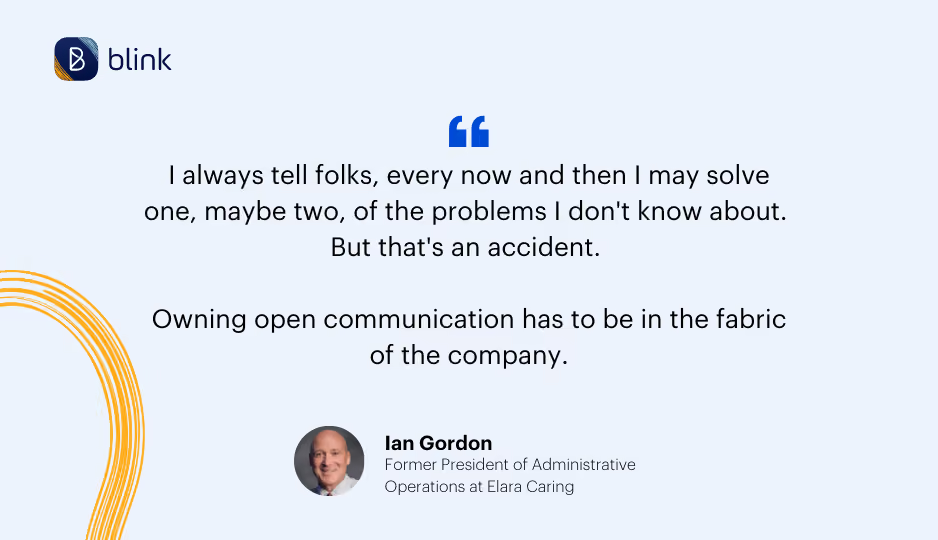
“I’m yet to meet a clinician or caregiver who got into this line of work to be on a computer all day” explains Ian Gordan, former President of Administrative Operations for Elara Caring.
And it’s true. At the risk of over-generalizing, frontline healthcare workers typically want a sense of purpose in their work — and it pays to provide this sense of purpose as soon as you possibly can.
Unfortunately, it can be difficult to remember this purpose when workers are constantly rushed, focusing on the immediate needs of their patients. Limited contact with co-workers can make this problem worse.
It’s here that tooling becomes essential again:
A shared news ‘Feed’ allows you to send regular reminders of the company's purpose and internalize those values in new hires
Building connections and ‘Chats’ between team members provides a collective sense of excellence and dedication to the cause
Lastly, but equally as importantly, there’s reward and recognition.
Keep your new hires motivated and enthused during and after their first 90 days by demonstrating a culture of recognition. Reward staff who are doing well early in their time with you. Give them a shout-out on your news Feed or gift them some company goodies.
It’s a basic tenant of psychology that we should reward the behavior we want to see repeated, but the benefits of recognition programs in the workplace extend far beyond productive behavior. Culture, customer service, and commercial outcomes are all improved when your healthcare workers feel appreciated.
Reaching the 90-day milestone — and beyond
Don’t let the 90-day milestone pass by without at least some form of recognition and check-in. If your employee stays with you past the first 90 days, celebrate that — and them.
If your employee voluntarily leaves before they pass the 90-day milestone then you have an opportunity to learn. Ask your employee why they’re leaving and what could have enabled them to stay.
Consider going further, too. Consider holding regular ‘stay interviews’, offering employees an opportunity to discuss concerns they have with their role and their aspirations for their career.
Blink. And deliver the best employee experience from recruitment to retirement
Blink helps you keep top talent from recruitment to retirement. Our frontline employee app enables and empowers healthcare staff with the tools, resources, and support they need to thrive at work and offer outstanding patient care.
Employee retention is the art of holding onto your staff once you’ve hired them.
And, in 202w, it’s more important than ever.
Why?
Because companies are finally waking up to the competitive advantages of being a "people" company. A "churn and burn" approach to hiring results in poor customer service.
This is an issue, because customers are placing increasing value on good service. With smartphones, it’s easier than ever to find a competitor company to buy from. Or in the case of consumer goods, to avoid the shop altogether and order online.
Before we start.
You can hold onto employees (more or less) by treating them well. Listening to their concerns, and providing them with a few incentives to stay put.
If you’re an HR professional or a CEO, you don’t need us to tell you that. What you might find useful is an in-depth guide to employee retention in the modern workforce.
How to maximize your employee engagement efforts. And make sure there were no stones left unturned in creating the most comprehensive guide... we asked some industry-leading experts to contribute. We’ll cover:
Detail on the importance of employee retention today.
How to build effective employee retention strategies.
The exit interview, and how to turn it into your secret employee retention weapon.
Let’s begin...
Why is employee retention important?
Employee retention means "treating your employees right"; it’s an end in itself, not just the means.
From an ethical standpoint, no company should mistreat their employees. Meeting your colleagues’ basic needs and providing them with a safe and stimulating workplace? It's the right thing to do for its own sake.
But it’s more than that.
Attracting talent to your company—and keeping it once you’ve found it—has so many advantages. According to Herzberg's famous Two-Factory Theory, employee retention and employee motivation are interdependent. You can find out more about this in the Vantage Circle HR blog. A strong employee retention strategy will:
Reduce operating costs.
Improve customer service levels.
Allow you to out-compete your competitors for the best people.
The cost of high employee turnover
Hiring and firing is expensive.
Eye-wateringly expensive, to be precise. Think six to nine months salary as a conservative estimate.
Then you need to consider the impact of not having someone there to do that person’s work. That could slow down a massive project. Cause higher overtime costs as existing staff pick up their work. Or just lead to a reduction in staff morale as they struggle with increased workloads.
Companies tend to get the importance of this for salaried positions and execs. but there’s often a bit of a blind spot when it comes to their non-desk workforce and the real cost of losing an employee.
Sure, replacing a senior-level manager is more expensive than replacing a bus driver. But what happens if your bus drivers’ morale becomes so low that two or three quit per month?
It all adds up.
"Losing talented staff can also have emotional consequences on those who stay. Effectively reducing productivity by decreasing morality and motivation," says Rochelle van Rensburg of the Ezzely Blog.
"Maintaining essential talent is therefore mission-critical to organizational effectiveness for all these reasons. Staff retention puts companies ahead of their competitors, by reducing recruiting and re-skilling costs. But more importantly, by keeping the top performers, which results in all of their specialized knowledge and expertise remaining in-house."
Your mobile workforce interacts most with customers. They are the public face of your company. So, their happiness will reflect in the level of service they give your customers.
Happier, more engaged employees deliver better customer service. They also build up a bank of operational knowledge over time. This helps them respond to queries quicker and more effectively than a steady stream of new hires ever could.
The importance of employee retention in 2020
An active employee retention strategy is more important than ever. There are two key reasons for this:
Firstly, it's never been easier for customers to look elsewhere if they feel that your levels of service don’t match their expectations. We live in an age where any information you want is available via a few taps of a smartphone screen.
Dissatisfied with a hotel stay? Booking.com can recommend thousands of others.
Bad experience in a taxi? A quick Google gets you all the phone numbers of other local firms.
Poor customer experience at a theme park? TripAdvisor lists other attractions.
You get the idea.
Despite this, customers still want to be loyal. Millennials want to stick around if your brand fits in with their personal values. Don’t throw away this loyal market.
Secondly, it's never been easier to browse jobs via online jobs boards. If your workforce isn’t happy they will move. Don’t assume that they will sit in their job miserable because there aren’t any other options.
Reasons why employees leave and reasons why managers leave aren't always the same.
Your competitors may be waking up to the benefits of being a "people company." They'll more than happily snap up the staff you can't keep.
The best employee retention strategies
A strong employee retention rate is crucial to remain competitive. How you go about doing this is worth examining in some depth.
Remember - you are an employee too! As you create your employee retention strategies, keep asking yourself, "would I be happy with this?" or, "does this seem reasonable to me?"
Here are a few points you’ll need to cover when creating an employee engagement plan. Remember, the employee experience starts before the first day at the interviewing stage. To set each new starter up for success, getting the onboarding right is crucial. Want to learn more? Check out the Definitive Guide to Onboarding.
Let's quickly touch on the foundation of any working relationship: trust. As Kayla Lopez from the recruitment firm Viqtory.com reminds us. "If your employees trust you and the organization they tend to embrace the workplace; this begins before the employee is even hired. Transparency is something that we need to willingly support to gain trust. A workforce that trusts you will be engaged, a workforce that is engaged will retain. Trust is the foundation of all strong partnerships."
Now for the details...
Pay well
We’ll start with the basics.
If your pay rates don’t match with your competitors’, you’re going to have a bad time keeping hold of your high achievers.
Take a quick look at what your competitors pay for equal positions. Try and build a league table of what similar companies to you pay, and where you rank. Glassdoor is a good starting point.
Aiming for the absolute top is ideal if you can afford it, but you don’t have to offer the best salary offer out there. There are plenty of other ways to encourage your staff to stay put (more on that below), as long as you can land in the middle of the table. For someone working in a frontline job, it is difficult to give your best at work knowing you could get $5.00 per hour more for the same job elsewhere. (Even if there’s free pizza every Friday).
It’s also worth noting that even a generous wage packet won’t persuade your employees to stay if you’re otherwise a nightmare to work for. Consider this step the cornerstone of all your employee engagement efforts. Not enough by itself, but essential in building something lasting and meaningful.
Give competitive benefits
You might not be able to take it to Silicon Valley levels. (Free three-course meals for breakfast, lunch and dinner, unlimited holidays, and puppy creches).
You can offer a benefits package or a performance bonus scheme tailored to the size of your business, your budget, and your business objectives. The key is to prioritize benefits that would have a tangible difference to the lives of your employees. Add the fancy stuff on if you have money to spare.
Think about:
Childcare vouchers: we’re all aware of the struggle to find affordable childcare. Help your workforce with their work-life balance (and keep it diverse—most of the people who end up quitting jobs for childcare reasons tend to be women) by offering vouchers to help with the cost.
Health coverfor employees and dependents: an absolute must if you're US-based, although even if you live in a country which has some form of universal health care, giving employees the opportunity to go private is very appealing.
Flexible working: if the type of work you do accommodates it, flexible working is like gold dust to your staff. A "work your hours however you want" policy helps people manage childcare commitments, fit in dentist appointments, and reduce the stress of trying to juggle work and life commitments.
Lunch program: Most of the lunch break is spent buying, prepping or reheating food. Offering a tasty and healthy in-house solution, such as the online canteen Smunch, allows your employees to capitalize on their break time and share a meal together. Ultimately, this will improve your company culture and cross-departmental communication as well.
Once you’ve got the basics sorted, some nice-to-have options include:
Above average PTO allowances
Free gym memberships and cycle to work programs
Personal development funds
Develop a feedback culture to empower employees
Your employees know their workplace better than anyone else. Make the most of it.
If your employees feel involved in shaping their workplace and consulted on major decisions then they will be reluctant to leave it.
The key to this is to carry regular, easy-to-complete employee engagement surveys so you know exactly what the mood on the ground is and how to improve it.
Employees will hold an enormous amount of goodwill towards a workplace that listens to their concerns and acts on them. Equally, they will reserve a special sort of resentment for those that send out survey after survey, only to ignore the results.
It’s essential to have a solid plan in place for your employee engagement surveys, or they will backfire spectacularly.
Key pointers
Small, regular surveys are better than long, annual ones. Only giving your employees one chance per year to raise issues will result in bottled up frustrations spewing out come survey time. Not only does this result in surveys that skew unhelpfully negative, but it also means that your HR team will face an uphill struggle
Another point about designing surveys that you can respond to effectively: keep it targeted. Focus each of your quick-answer surveys on a specific area—facilities onsite, for example, or about relationships with line managers.
Use short answer questions: "yes/no" or "on a scale of 1-5" formats make it easier for people to respond immediately. Long-form feedback can be helpful, but having lots of long-answer text boxes on your survey will put people off completing it. A good compromise is to have an optional "any specific comments" box at the end of the survey.
When you’ve processed the surveys, share the results and shout about what you’re doing to act on feedback. Employees will appreciate the transparency, and it’s important to signpost what you’re doing to address the concerns they raise—or they won’t bother to participate in future surveys.
Try and create a "feedback culture" in your company by encouraging people to come forward with suggestions for improvements any time they want. Surveys highlight pain points as they are reactive; an anonymous suggestions box (either digital or real-life), on the other hand, will bring out the more innovative side of your workforce.
These suggestions might be small—a new way of organizing the break room fridge, or the introduction of free coffee Mondays—but the opportunity to improve the workplace in this way will work wonders for your wider staff’s sense of allegiance to it.
Make your workplace a fun place to work
If your coworkers are your friends, spending time at work doesn’t seem so taxing.
This is where the fun stuff comes in—the away days, lunchtime yoga, the free breakfast bar, the Christmas party...
If you have a mobile workforce, don’t forget to include them, too! They might not be in the office that often, so having regular get-togethers or breakfast clubs when shifts change is a great way to build a sense of belonging.
Obviously, base these activities on what your own workforce would like, but some ideas include:
Regular lunchtime sports clubs (running, yoga, five-a-side, badminton are good starting points)
Away days and team-building weekends.
Semi-regular opportunities for free food. Depending on the size of your team, you could offer lunch on the company each Friday, pizza parties when teams hit their targets or just because
Big events like Christmas parties and family fun days. If you run awareness weeks for things like diversity, mental health and stress, why not run some exciting events for these too?
Recognition of key milestones. If there are particularly busy periods throughout the year (like the Christmas rush for anyone working in retail or hospitality), put on an event to recognize the hard work your employees put in. This could be a full-on party, or simply just giving your staff the nod to take off after lunch on a quiet day.
This step does, however, come with a big flashing warning sign that says: don’t bother doing any of these without doing the steps listed above first.
Because these are fun and exciting, and sound super trendy when you put them on your Careers page, people often use them in place of paying a decent wage, or offering flexible working hours, or acting on employee feedback.
The exit interview - your employee retention secret weapon
One of the best ways of figuring out what’s going wrong with your employee retention efforts is asking your colleagues when they leave.
Seems counter-intuitive, and rather frustrating, doesn’t it?
And in some ways, it is. No amount of collecting and aggregating exit interview data, tweaking your employee engagement plan and making changes in your company to reduce employee turnover will change the fact that, for that particular employee, your efforts weren’t enough. For HR people and line managers, that stings sometimes.
Still, if you can take your losses on the chin, this is a real opportunity to do better for your colleagues, and identify and fix any major issues that push people to leave.
There are three main reasons why exit interviews are so effective at flagging up things that need to change:
The employee is leaving so won't hold back
Regardless of how many times you reassure your colleagues that your pulse surveys are anonymous and that helpful suggestions are encouraged, they will still be a little suspicious.
The worry that surveys aren’t really anonymous, or that speaking out about a key workplace bugbear will get them labelled as a troublemaker, will be a constant thorn in the side of your employee retention efforts.
(As a side note, if this attitude is pervasive then it might be time to take a look at your workplace culture. A little reticence is natural. An all-encompassing dread of speaking up might indicate something a little more sinister).
The exit interview is a different kettle of fish. They’re leaving. There are no raises or opportunities for promotion in the pipeline. This is their opportunity to "tell it like it really is."
Listen, even if you think they’re being unfair and bitter.
Problems brought up during exit interviews tend to have weighed heavily on an employee’s decision to leave. In other words, they’re big issues you need to address urgently.
Get the whole picture
Multiple exit interviews help build up a better picture of life on the ground.
Of course, there’s always the chance that one particular employee just, for whatever reason, didn’t have a good time.
That’s where keeping data from previous exit interviews comes in.
For example, if an employee complains about their line manager being unbearable, it might just be a clash of personalities. Equally it could be because that line manager is difficult to work for and too demanding. It’s difficult to say without further info.
So. Run some analytics.
How many other employees from that line manager’s team have left over the past year?
Did they say anything in their exit interviews?
Have they been flagged to HR for anything previously?
If so, you might want to investigate further.
This is why it’s important to conduct an exit interview for every single person that leaves the business. If you restrict it to management positions, people based in HQ, or full-time workers, you’re missing key sets of data that could be useful in improving your employee retention strategy.
Find out what went wrong
An exit interview, conducted well, helps you identify wrong turns in your employee journey map.
You’ll probably have some sort of employee journey map already.
You might call it something different. We’re referring to the plan you make that starts at the hire phase and ends with the offboarding phase when the employee leaves. This normally includes guidelines for each stage they go through with your company. For example:
Hiring:
Offer letter and contract sent
Start date agreed two weeks in advance
Onboarding:
First day: tour of premises, fire safety, welcome coffee or lunch
First six weeks: all e-learning to be completed
You get the idea. Here's a basic template you could expand on:
The exit interview provides an excellent opportunity to ask your employees about various stages in this plan, to see whether they’ve been carried out to your expectations.
Ask specifically, and don’t be afraid to go right back to the start of their employment. Whether they felt welcomed in their first weeks, for example. If they were given clear and regular feedback on their performance, and compare that to your notes on how your employee journey should pan out.
It could be that, despite your meticulous efforts in planning it, your employee journey map isn’t being adhered to by managers in the wider organisation. This could be why your employees are leaving - this map provides guidelines on how to make sure people feel safe, supported and included at work. If people don’t follow it you’re going to have problems.
Your employee journey map is important. If it isn’t being followed, you need to correct that as soon as you can. Exit interviews are the best way to do this.
How to conduct an employee retention interview
Be flexible around your employees needs
If a lot of your workforce are remote or mobile, don’t insist on a face-to-face interview at HQ.
There are several free video calling apps available, so why not make use of them? An employee is more likely to feel comfortable talking to you if you’ve made accommodations for their situation.
If they’re more comfortable talking to you, they’re more likely to be honest with you, and that’s exactly what you want.
Don’t make it overly formal
Go for a relaxed vibe. Making things too formal will only stifle conversation.
If you’re conducting a face-to-face interview, it’s a nice touch to provide some sort of refreshments; hot drinks and a pastry, maybe. The employee will appreciate the gesture, and it will encourage a more conversational feel, which is exactly what will get them to open up.
Identify the specifics to touch on
You will know, from previous exit interviews if there are any particular pain points in your employee experience.
Ask about them. You’ll then be able to establish:
Whether these are still issues
What progress you’ve made on them, and how effective your efforts to tackle them have been.
...But allow them to express their opinion too
If the structure of the interview is entirely created by you, you could miss something important.
By allowing employees space to expand on their own concerns, you give yourself the opportunity to pick up on potential issues that aren’t on your radar. Sure, a lot of this could be specific to that particular individual, but you should investigate nonetheless—otherwise you’ll never know whether it’s the iceberg tip of something bigger.
Remember: your relationship with the employee isn't over
People leave for all sorts of reasons—not all of them negative.
You might want to leave the door open for talented employees, in case they want to return at some point. Also consider that talented former employees can be great source of referrals.
These can be your company’s cheerleaders, even after they’ve left. A good exit interview can make this relationship. A poor one can ruin it.
Of course, there’s also the possibility that the employee leaving has been less than stellar. In this case you should see the exit interview as a chance to smooth things over, and divert potentially negative Glassdoor reviews or social media mentions.
Final thoughts
To summarize:
An employee retention strategy is important because it makes your employees happier. Happier, more engaged employees perform better in general, and deliver better customer service.
The cost of employee turnover is measured in increased operational costs and decreased institutional knowledge.
Bearing this in mind, the question you should be asking yourself isn’t "can we afford to expand our employee retention efforts?"
It’s "can we afford not to?"
An engaged, happy workforce with a low churn rate isn’t just a nice thing to have.
It’s not just something you can boast about on your Careers page.
It’s a competitive advantage—and people are only just waking up to this fact. Because now more than ever, people value good customer service. If you can provide that, you’ll have a serious head start on your competitors.
Blink is an internal communications tool that’s does everything your intranet does, but better. Try it out today! Request a free demo to get started.
Searching high and low for the perfect employee to fill a complicated role can be difficult. It stresses you out if you’re already short-staffed and in a rush to get more hands as quickly as possible.
Of course, it would be preferable not to worry about hiring at all. Retaining employees you already have can be a lot simpler than constantly hiring. And it can benefit your business too.
While you’re probably familiar with some of the benefits of employee retention, there are several hidden advantages of employee retention that you may not have considered.
If you’re ready to get motivated to kick your retention efforts into high gear and retain your top talent, keep reading and learn some of the lesser-known benefits of staff retention.
Why employee retention is important
Employee retention is important because it can improve the productivity of an organization.
Organizations with high employee retention profit from increased employee engagement, higher employee morale, more experienced employees, and lower employee turnover costs.
That’s why 91% of Human Resources leaders are concerned about employee turnover in the near future.
Besides the revenue, companies with a lower turnover rate can spend time on their employees, build a cohesive company culture, and achieve innovations that outperform their high-churn counterparts.
Employee retention’s effect extends beyond your annual revenue or quarterly performance reports — it improves each day for your workers, managers, and customers.
In short, it’s hard to overstate the importance of effective employee retention strategies as they can impact just about every aspect of your business, including revenue, service, and company culture.
1. More quality hires
Hiring typically increases when employees leave your company. So it should decrease as your retention goes up.
The hidden benefit of high retention is that you can allocate more resources to the time-consuming job of sourcing new hires. You can be more selective in finding candidates with relevant experience and perfect cultural fit instead of rushing to fill a vacancy.
The candidates you hire this way are more likely to stick around and better fit your organization, which further improves your retention rate.
Ultimately, more employees staying means more business growth and more new positions. You can focus your hiring efforts on adding to the team rather than replacing previous talent.
2. Better employee training
Hiring new employees takes up a significant portion of your company’s HR budget and time. It’s estimated that replacing an employee costs anywhere from 50% to 200% of their annual salary.
Retaining just one extra employee means thousands of dollars saved you can use in other areas.
One often-neglected management area is training, with 78% of workers saying they want more training. By saving on hiring, you can spend on training.
With more time for training, your employees will be happier, more skilled, and even more likely to stay with your organization.
3. Improved customer relationships
Most of your return customers and clients don’t think of your business as a logo or physical store. They think of the person with whom they interacted. Your employees are the face of your business, from frontline workers up to account managers.
Your customers rely on your employee’s knowledge of their needs and history with the company to deliver the highest level of service. So when an employee leaves, the relationships they built with your customer base leave with them.
A PWC report found that 80% of Americans think a knowledgeable staff is the most important element to customer satisfaction, along with speed and convenience. They also pay more for things when they experience a positive customer experience.
The benefits of employee retention reach beyond your current staff and bottom line and impact the customer experience. A high employee retention rate ultimately improves your clients’ and customers’ perception of your business.
4. Faster progress
While onboarding and formal training programs are essential for satisfied, efficient employees, these resources are hardly the only way employees learn on the job.
One of the most valuable sources of guidance and information is your current employees. Studies show that 91% of employees with a workplace mentor are happy with their jobs.
By retaining most of your employees, you get:
Strong relationships between your employees that impact their performance
Employees who possess in-depth knowledge in their fields
Great mentors who have the technical skills and know little-known tricks in the field to help the newcomers
You benefit from the perks of high employee retention: Employees have a wealth of team members to turn to when they have a question or need advice. This turns your newest employees into your best employees.
Also, when turnover is low, you keep the work environment of cultural cohesion and the know-how of experienced employees. This results in less stress and high productivity.
Final thoughts: 4 hidden benefits of employee retention you should know
Why retain employees? The answer is clear.
The benefits of employee retention are wide-reaching for your entire organization. Employees, management, and customers all reap the benefits of employee retention.
Employees benefit from greater satisfaction, higher productivity, and better support on the job. Employers can enjoy greater profit and less uncertainty. And your customers can rely on consistently high-quality and personalized customer service.
These benefits are well worth the expense of managing incentives like healthcare, training, and work-life balance.
If you’re ready to improve your employee retention, an all-in-one employee communication tool like Blink can maximize your organization’s initiatives.
Employee appreciation ideas aren’t just a nice thing to do. They’re common business sense.
71% of highly engaged organizations recognize employees for a job well done, but only 41% of less engaged organizations do the same. Meanwhile, Gartner suggests that a well-designed employee recognition program can lead to an increase in average employee performance.
The numbers don’t lie – employee recognition is vital, now more than ever. You don’t need to spend a lot on employee appreciation ideas for them to be effective either, and some of the best employee recognition strategies are completely free.
Here’s how to start showing your employees how much you appreciate them, and some staff appreciation ideas to get you started.
Why are employee appreciation ideas so important?
Everyone likes to be recognized for the work they put in. For staff appreciation, ‘thank you’ is everything.
In fact, feeling underappreciated at work is one of the most common reasons why employees leave a role. A recent study of UK and US workers by Workhuman found that employees who had been thanked for their work in the last month are:
Half as likely to look for a new job (24% vs 48%)
More than twice as likely to be engaged in their work (48% vs 21%)
More than three times as likely to see a path to grow in the organization (59% vs 19%)
All that, just from two short but meaningful words! Imagine the boost more developed employee appreciation ideas could achieve.
And, with the Great Resignation in full swing, the power of ‘thank you’ has never been more apparent, or commercially essential. Around 4.5 million Americans quit their job in March 2022, enticed by rising wages and more flexible working options.
Appreciating your employees for all the hard work they put in is vital in encouraging them to stay put. The great news is that this isn’t a difficult task at all! All it takes is the willingness to listen and some creative thinking on your part.
How to start recognizing your employees’ achievements
Employee recognition isn’t just a top-down thing.
Sure, your senior execs can and should take the lead in calling out great performance – it makes it much easier for everyone else to follow. The issue is that senior managers can only be in so many places at once. They can’t recognize everything worthy of being recognized.
Instead, it’s all about building a culture of continuous recognition from the ground upwards, encompassing both informal and formal recognition methods. This could include:
An employee app that lets managers share great performance with the wider organization
A quarterly awards ceremony to recognize employees who have gone above and beyond
Peer to peer recognition apps to encourage colleagues to support each other
Training all of your employees in how to recognize their peers
That last point is important. In a recent survey, two thirds of businesses said that they trained their managers in employee recognition but only one third offered employees training in colleague recognition. To build a positive culture, it’s important that everyone knows how to offer praise, and its impact on creating an engaged workplace. Don’t leave it to chance.
It’s also essential to build employee preferences into this process. Some people might love receiving an award in front of all their colleagues; for others, this might seem more like a punishment! Ask your teams (or ensure your line managers do) what their ideal way of being thanked looks like. It's an employee engagement best practice worth following.
6 great staff appreciation ideas
1. Salary rise
Almost two-thirds of U.S. private sector payroll workers work in industries where the average weekly wage in the second quarter of 2021 was at least 5% higher than it was in the second quarter of 2020, according to the Bureau of Labor Statistics.
If your rates of pay haven’t budged since pre-pandemic, they’re likely no longer competitive. Show your staff you're serious about your long-term relationship by bringing them up to market rate – or higher! Costs of living are rising rapidly right now, and your team will appreciate it.
2. Public shoutouts
Use your employee app or intranet to shout about individual and team successes. As well as the warmth of public recognition, this helps your employees build their networks in your organization and get noticed by those who could help them progress. .
3. Fun benefits and perks
There’s nothing wrong with offering your employees a little treat every now and then. It won’t make or break employee engagement (a decent salary and day-to-day appreciation are far more important considerations), but it’s definitely a great addition.
Spa days, vouchers for department stores, team days out, gym memberships and personal development funds are all great ways to do this – you might have some ideas of your own.
4. Identify and celebrate key milestones
What we don’t mean: only celebrating 10-year milestones and giving your employees a watch on retirement. Things have moved on since the 1950s.
What we do mean: finding milestones that are meaningful to your business and celebrating little and often. Passing probation, completing advanced training, promotions and getting that first landmark sale are all worthy of celebration. Identify some that are meaningful to your workforce.
5. Individual and team specific
On some level, you’ll have to rely on your line managers to ensure employees feel appreciated on a day-to-day basis. Train them to express their appreciation frequently, and give them a budget for treats like team socials and post-project meals out. It’ll make all the difference.
6. Employee Appreciation Day
Dedicate a day to saying thank you to your employees! In the US, the official Employee Appreciation Day is celebrated on the first Friday of March, but you could hold your own staff appreciation day whenever suits you best.
Employee Appreciation Day ideas include running an awards ceremony to recognize all the effort your employees have put in over the year, followed by a few hours of fun to celebrate these achievements. Fire up the grill (or hire a food truck), plan some fun activities and let everyone have a great time.
On a budget?
It’s not all about the fancy extras. Some of the most effective employee appreciation ideas are free:
Creating a ‘wall of fame’ for great achievements
Celebrating employees’ birthdays, marriages and other life events
Putting effort into feedback, so that employees can develop their skills
Providing opportunities that will help build experience, such as shadowing other roles
Working remotely?
This doesn’t need to stop you! Try using an employee app that will allow you to share your appreciation virtually. You could also try the following employee appreciation ideas:
Early finish Fridays, especially in summer
Celebrations and awards ceremonies via Zoom or similar
Constant engagement and feedback via Slack or your other messaging channels
Treats (food, vouchers, care packages) via post. Everyone loves surprise mail!
Staff appreciation quotes
What you say and how you say it matters! Use these ideas as templates so that you really get the message across.
Every day: “Thank you”
Often, it doesn’t have to get much more complicated than this.
“Thank you for getting that report to me so promptly.”
“Thank you for stepping in last minute – we were really short.”
“Thank you for all your hard work this week – it’s been a long one.”
For small, day-to-day actions that have made everyone’s working lives a little easier, there’s no better alternative.
Recognizing consistently good performance: “I’ve noticed that…”
All too often, it’s large, one-off actions that get noticed rather than consistently good performance that keeps the organization running. Avoid this trap with the “I’ve noticed…” approach.
“I’ve noticed that you always make sure the shop’s tidy before locking up, even though that’s not your role.”
“I’ve noticed that you always hit deadlines without fuss, and it makes it so much easier for everyone else.”
“I’ve noticed that you always take the early shift to make life easier for colleagues with kids.”
Follow up with thanks, by passing on this info to higher ups in the business and potentially with a token of your appreciation – lunch on the company, an early finish this weekend or a large box of baked goods can all work, depending on the situation.
One-off actions: “That really made a difference”
For those times where an employee knocks it out the park, it’s always worth emphasizing the impact of their actions. Employees want their work to be meaningful, and this lets them know
“That report gave senior management a real insight into some of the issues we’re facing, and really made a difference in how we’re going to approach them.”
“That big deal you landed made a huge difference in us meeting our quarterlies. You should be very proud.”
“The new processes you suggested save us so much time. They’ve really made a difference to employee wellbeing.”
Again, follow up with an appropriate reward for maximum impact, whether that’s an award, a bonus or something similar.
Employee appreciation ideas: final thoughts
People like to feel appreciated, so a quick ‘thank you’ here and there works wonders for employee retention.
And, now that your employees can walk out of the job and be reasonably certain of finding another one pretty quickly, ‘thank you’ is a must. If your employees don’t feel appreciated, they will leave.
It’s all about the basics here. A fair wage, regular appreciation and long-term support will go further than doling out a few Amazon Prime vouchers once every quarter. Employee recognition should be a constant process that’s built into the heart of your business.
That’s not to say additional treats aren’t motivating. Rewards and bonuses of all kinds can be fantastic tactics as part of an employee engagement strategy, and they will make your staff feel appreciated. They are, essentially, the cherry on the top of your rewards program. Get the foundations right first for best results.
Blink helps you show employees the appreciation they deserve. Get your free demo today.
Diversity and inclusion aren’t just HR trends. They’re strategic issues.
Studies show that lack of inclusion in the workplace costs U.S. businesses up to $1.05 trillion. Insights highlighting the costs of poor diversity measures are forcing companies to reevaluate existing policies and practices.
Specifically, the COVID-19 global pandemic has shined a light on diversity and inclusion issues affecting frontline workers.
On the flip side, companies that implement diversity and inclusion strategies are reaping benefits such as increased employee engagement, better retention, and more creative problem-solving.
Here’s what you’ll learn
Current state of diversity in the workplace for frontline workers
How a lack of diversity in the workplace affects frontline workers
Business benefits of providing diversity in the workplace
What diversity in the workplace looks like
Obstacles to diversity in the workplace
How to promote diversity and inclusion in the workplace
Final thoughts: championing diversity in the workplace for frontline workers
In this post, we’ll discuss the current inclusion challenges facing frontline workers. We’ll also outline how businesses can better promote diversity in the workplace – and how to include it in your internal communications.
Current state of diversity in the workplace for frontline workers
Frontline workers in the United States are employed in the following six industries:
Grocery, convenience, and drugstore
Public transit
Trucking, warehouses, and postal service
Building cleaning services
Health care
Child care and social services
When the U.S. government issued mandated business shutdowns, these essential industries remained open. The frontline workers who keep these businesses running experienced pandemic-related stress and risk of exposure to the COVID-19 virus.
Here’s a quick look at the demographics of the more than 31 million frontline workers in the United States:
64.4% female / 36.6% male
58.8% white
17.0% Black
16.3% Hispanic
6.7% AAPI (Asian American / Pacific Islander)
Although women make up most frontline workers, they’re underrepresented in the public transit (29.1%) and trucking, warehouse, and postal service (22.7%) industries.
How a lack of diversity in the workplace affects frontline workers
Frontline workers are the face of your company, and they provide valuable insights into your customers’ needs and pain points. However, if you don’t prioritize diversity and inclusion in your frontline workforce, you could risk losing many of these high-impact team members.
Here are a few ways lack of inclusion and diversity in the work environment creates a negative experience for frontline workers:
Poor communication
Communication between team members with different native languages or cultures can be challenging. Add to that the fact your frontline employees aren’t necessarily in the office every day; they’re out in the world facing customers.
Without communications systems in place that cater to all of your employees, your frontline workers can feel confused or disconnected from the greater team. In more extreme cases, poor communication channels can lead to conflict between team members.
When companies have a clear majority profile, it’s more likely for an employee who doesn’t “fit the mold” to experience harassment and discrimination. If you don’t have diversity in management positions, it’s harder for employees to speak up about harassment or other negative experiences.
Less incentive to feel engaged at work
Even if frontline employees don’t experience harassment at work, lack of diversity leads to lower employee engagement. A frontline employee who’s different from the workplace majority can experience isolation and feel they’re not seen or heard.
And if your company tends to promote only those who fit the majority, then employees who feel different won’t see room for long-term growth that keeps them engaged.
Ultimately, employees who don’t feel safe or valued in your organization are more likely to leave. Over time, the cost of continually replacing alienated and dissatisfied employees will cost your business.
Business benefits of providing diversity in the workplace
Creating a more diverse place and inclusive culture doesn’t just benefit your frontline employees; it’s a competitive business advantage too.
Here are the top benefits that businesses report after investing in diversity and inclusion programs:
Increased perspectives and creativity
A diverse workforce brings unique perspectives to the table, which increases creativity and problem-solving. According to a Boston Consulting Group study of more than 1,600 companies, teams with diverse leadership drive almost 20% more innovation revenue than their counterparts.
How to champion diversity in the workplace for frontline workers 1
According to the Wall Street Journal, the 20 businesses ranked the highest in diversity and inclusion scores recorded 12% operating profit margins. Companies who ranked low on diversity initiatives, on the other hand, only generated operating profit margins of 8%.
Bringing together people from different backgrounds gives you a broader customer perspective, results in better decision making, and helps you avoid tone-deaf features or marketing campaigns.
Different perspectives in your business help you identify and capitalize on more market opportunities.
Reduced employee turnover
Higher employee engagement remains one of the top benefits of hiring diverse teams — businesses with better employee engagement experience less turnover in their workforce.
What diversity in the workplace looks like
It’s clear that successful workplace diversity and inclusion efforts can give businesses a strategic advantage.
But what exactly does diversity in the workplace look like?
It turns out that diversity is, well, diverse. Business owners and leaders must consider several types of diversity, including:
Cultural background diversity
Religious diversity
Gender identity diversity
Race and ethnicity diversity
Age diversity
Neurodiversity
Disability diversity
Sexual orientation diversity
Modern diversity equity and inclusion (DEI) programs need to go further than race and gender diversity.
Companies also need to think about embracing diversity in all departments and at all levels of their organization. Diversity initiatives are most successful when they include leadership and management.
Obstacles to diversity in the workplace
While the benefits of workplace diversity may seem clear, many companies struggle to implement effective diversity programs.
The primary obstacles businesses face when creating a diverse and inclusive environment are:
Leadership buy-in
Manager training
Lack of awareness
Encouraging honest feedback from employees
How to promote diversity and inclusion in the workplace
Expand where you post job notifications
Train leaders and managers
Allow employees to take off cultural and religious holidays
Offer on-site daycare
Extend options for flexible hours
Use an app with on-demand translation
Solicit feedback from your employees
1. Expand where you post job notifications
Fostering a diverse workplace starts with the hiring process. Hiring managers can reach a more diverse talent pool by expanding where they share job openings. Your hiring department can build relationships with outreach groups, community hiring offices and chambers of commerce, and job fairs that cater to minority groups.
2. Train leaders and managers
You can’t assume that your managers know the value of diversity. To successfully implement diversity and inclusion efforts into company culture, both leadership and frontline managers need to buy into the idea of creating diverse teams.
How to champion diversity in the workplace for frontline workers 2
As you make changes in your hiring process, conduct manager training sessions that underscore the benefits of an inclusive workplace. Give them tools to implement your initiatives on their teams.
3. Allow employees to take off cultural and religious holidays
When you hire diverse talent, demonstrate that your company honors and celebrates the various cultural backgrounds and points of view your team brings to the workplace.
One simple way to do that is by letting employees take off work for religious or cultural holidays that aren’t observed by the entire office. By creating a culture that empowers all workers to observe important holidays, you can increase employee engagement and retention.
4. Offer on-site daycare
Many diversity initiatives focus on race and ethnicity, but gender diversity is an equally important facet. Although gender roles are expanding, access to quality childcare presents a significant challenge to working mothers. During the COVID-19 pandemic, 2.9 million women left the workforce between March and September 2021, when schools closed.
According to Care.com, over 60% of parents would be more loyal to their company and have better job performance if they had access to employer-subsidized child care.
Let’s face it: your employees’ lives don’t revolve around their jobs. Many of them want to start families and raise children. If you consider child care a business issue, you can improve retention and job performance.
5. Extend options for flexible hours
If you can’t offer employer-subsidized child care, then consider expanding your flexible work hour options. Telecommuting, remote work, part-time positions, and job sharing help you provide equal opportunity to a more diverse talent pool.
How to champion diversity in the workplace for frontline workers 3
Flexible work hours will grow increasingly important as more baby boomers move into retirement and old age. Minorities rely less on professional care for the elderly. So, many millennials are entering an era where parent care and child care compete with work for their attention.
Offering remote work or even hybrid work models means your diverse employees won’t have to choose between work and parent care. You’ll have a more engaged team that feels seen, heard, and supported.
6. Use an app with on-demand translation
It’s not enough to focus on hiring people from diverse backgrounds; you have to ensure that your workplace culture feels inclusive to everyone. If you create a recruitment process that succeeds in cultivating a diverse workplace, consider using an app with on-demand translation.
How to champion diversity in the workplace for frontline workers 4
Make it possible for everyone at the company to access your internal communications in their native language.
7. Solicit feedback from your employees
Bottom line, fostering diversity and inclusion in the workplace is an ongoing process. You can’t do it all in one fell swoop. To ensure your entire team feels heard, consistently ask for feedback from employees.
That’s helpful when starting, and it lets you measure your success as you roll out changes to company culture. Keep in mind that change doesn’t happen overnight. Diverse employees may not feel comfortable voicing concerns to managers or other leaders in person. So, consider using an internal communications app to let employees submit feedback.
Final thoughts: championing diversity in the workplace for frontline workers
Implementing diversity and inclusion initiatives helps you create a workplace where your employees feel included and empowered. When you have an engaged team of diverse employees, your business performs better. Explore Blink today to learn more about technology solutions that improve engagement and retention for everybody on your team.

.avif)
.png)