Multilingual employee communication: a practical guide for frontline teams
Picture a manufacturing plant at the start of a morning shift. The safety briefing goes out. The plant manager reads it in English. The Polish technician, the Romanian line worker, and the Brazilian logistics coordinator get the same message, in English. Two of them can piece together the gist. One can't.
So the Romanian line worker turns to a coworker for a quick recap, gets half of it, and starts the shift with a gap in what he knows. Nobody flags it. Nobody even notices, until something goes wrong.
Most organizations still send one version of every message, in one language, and call it done. Multilingual employee communication, reaching every worker in the language they actually think in, is the gap sitting between your internal communications strategy and your frontline reality. When that gap shows up in a safety briefing instead of a newsletter, it stops being an engagement metric and becomes an operational risk.
This guide covers why multilingual comms breaks down on the frontline, how to think about translation approaches, what your platform needs to support, and the practical steps HR and ops leaders can take now.
What is multilingual employee communication?
Multilingual employee communication is the practice of reaching workers across different languages in a way that ensures each person receives, understands, and can act on the same information. For frontline-heavy organizations, manufacturing, logistics, hospitality, healthcare, this goes beyond simply translating a company announcement. It means building a communication infrastructure where every message, policy update, safety alert, and shift change reaches the right person in their preferred language, automatically, without creating a manual bottleneck for HR or comms teams.
The distinction between translation and multilingual communication matters. Translation converts text. Multilingual communication ensures the translated text actually reaches the right person, in the right channel, on the right device, with cultural framing that makes the message land. For a workforce of 5,000 employees across twelve countries, the gap between those two things is enormous.
Why multilingual frontline comms breaks down
Most multilingual comms strategies were designed for desk-based employees. They assume workers have company email, access to an intranet, and time to sit at a computer. Frontline workers have none of those things.
What they do have is a smartphone. And they're using it, just not for company communications. When the official channel doesn't work for them, they rely on personal messaging apps like WhatsApp, which carry real GDPR and compliance risk: no audit trail, no read confirmation, no employer-controlled archive.
The practical result is a familiar pattern: you send a message, you have no idea who read it, and the workers who missed it are the ones who needed it most.
For operations directors, the risk is more acute. A missed safety instruction caused by a language gap isn't just an engagement failure, it's an incident waiting to happen. Comprehension is the requirement, not delivery. Sending a safety briefing doesn't satisfy that bar if your workers couldn't understand it.
Three specific breakdowns drive most of the failure:
1. The volume problem. A multinational logistics firm might have workers across ten countries speaking twenty-plus languages. Running every piece of communications through a professional translation service is expensive and too slow to keep pace with frontline shift changes. By the time the translated shift notice arrives, the shift has started.
2. The channel problem. If your comms platform doesn't support the languages your workers speak, they won't use it. A low-engagement platform is a language problem as much as a product problem, and it's the exact failure mode frontline comms platforms are built to solve.
3. The culture problem. Translation handles words. Localization handles meaning. A translated message that uses idioms that don't exist in the target language, or that references a workplace process that works differently in a different country, can be technically accurate and practically useless.
Auto-translation vs. manual translation: how to think about the choice
The instinct for most enterprise comms teams is to default to manual translation for anything important. That instinct creates a bottleneck that breaks down under real-world volume.
Manual translation (using in-house translators, professional services, or bilingual employees) produces the highest-quality output for nuanced content: executive announcements, values statements, policy documents, legal notices. It respects cultural context and can be localized, not just translated. The trade-off is speed and scale. Manual translation costs time and money. For high-frequency frontline communications, shift changes, operational alerts, day-to-day updates, it's simply not practical.
Auto-translation (AI-powered, platform-native, or integrated tools) works best for operational and high-frequency content where timeliness matters more than stylistic precision. For short, plain-language messages, it's reliable enough that the risk of mistranslation is outweighed by the certainty that slow or absent translation creates. The key requirement is that it needs to be embedded in the communication platform itself, not a separate step requiring human intervention.
A practical tiered approach for most enterprise teams looks like this:
{{blink-table:table-1}}
The tier you choose matters less than having a clear, documented decision. Teams that operate without one tend to default to manual for everything (too slow) or auto for everything (loses nuance on content that needs it). Assign tier ownership to the comms lead and review it as workforce languages shift.
What your platform needs to support multilingual comms at scale
Not every internal communications platform is built to handle multilingual frontline teams. Here's what genuinely capable platforms provide.
Native auto-translation. Translation should happen inside the platform, automatically, based on each employee's language preference. Workers shouldn't need to take extra steps to read a message in their language. If they have to opt in each time, most won't.
Language preference at the user level. Every worker sets their preferred language once, and the platform handles the rest. This is different from a company-wide setting, which forces a single language choice and fails the moment you have workers in multiple regions.
Coverage across the languages your workforce actually speaks. This sounds obvious, but the gap between a platform that claims "multilingual support" and one that covers the specific languages in your workforce can be significant. Manufacturing operations in the UK might need Polish, Romanian, and Punjabi. Hospitality chains in the US commonly need Spanish and Haitian Creole. The question to ask any platform vendor is not "how many languages do you support?" but "do you support these specific ones?"
Translation for the full communication surface. Auto-translation that only applies to feed posts but not to comments, pages, or surveys creates a fragmented experience. A worker who can read the announcement but can't understand the comment thread, or can't fill in the compliance survey, is still excluded.
Read receipts and audit trails. For compliance-critical communications, you need to know that the message was received and read, not just sent. This is especially important for safety briefings, policy updates, and anything that carries regulatory or legal weight.
Blink's translation feature covers feed posts, comments, and pages automatically across dozens of languages, including Arabic, Polish, Romanian, Spanish, and Mandarin, with no setup required from the worker. The platform UI itself is also available in multiple languages, so the experience of using the app is familiar from the moment a new employee signs in. We've seen this kind of platform-wide language coverage, paired with a single login, drive the high activation that enterprise frontline deployments need: overall adoption across Blink's customer base now sits above 90%.
Why multilingual communication matters for frontline workers specifically
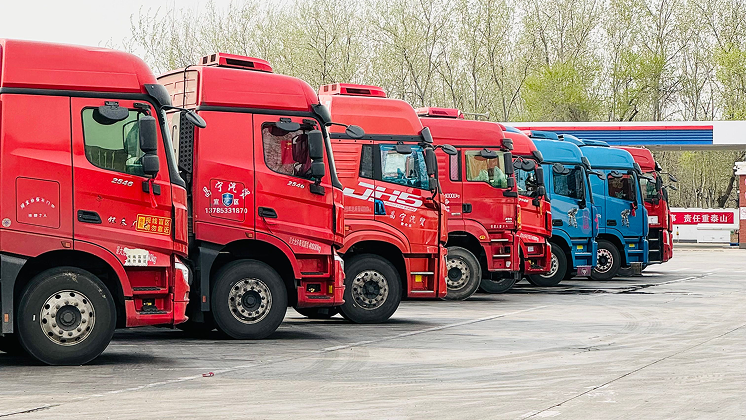
Frontline workers are disproportionately affected by language barriers at work, and disproportionately underserved by existing enterprise comms tools. Deskless and frontline employees are consistently where engagement gaps show up hardest, and language is one of the clearest reasons why. Construction, hospitality, manufacturing, logistics, healthcare, and agriculture all have workforces that reflect the diversity of the communities they operate in. A care operator with sites across several regions, for example, often has more languages represented on a single rota than a head office realizes.
The stakes are higher on the frontline. A missed email about a policy change is a problem. A missed safety instruction on a manufacturing floor or a construction site is an incident. Workers who can't fully understand instructions make more errors, take more risks, and are less likely to raise concerns when something looks wrong.
Engagement follows language. Workers who receive communications in their preferred language are more likely to read them, respond to them, and act on them. They're also more likely to feel seen and valued by their employer. In high-turnover industries, that feeling translates directly to retention. Customers typically see up to a 26% reduction in frontline turnover after putting a platform like Blink in place, with frontline reach and engagement cited as a key driver.
Compliance is cleaner. Read receipts on translated communications mean that when a regulator asks whether workers were informed of a policy change or a safety procedure, you have a documented answer.
Six practical steps for stronger multilingual frontline communication
1. Audit your workforce languages before you build your approach. You can't design a multilingual comms strategy without knowing which languages you actually need. Run a workforce census, ask new employees to record their preferred language during onboarding, and review recruitment data. The answer is often more diverse than central HR teams expect.
2. Set language preferences at the platform level, not the message level. Requiring workers to translate each message individually creates friction. Set the default so every message arrives in the worker's preferred language automatically.
3. Build a content tier system, and name an owner. Decide which communications need manual translation or localization, and which can go through auto-translation. Put the comms lead in charge of the decision and revisit it as the workforce's languages shift, so it doesn't rely on whoever happens to be in the office.
4. Train managers on plain-language writing. Auto-translation works best on simple, clear sentences. Idiomatic English, long sentence structures, and industry jargon don't translate well. A ten-minute briefing with line managers on writing for translation is one of the highest-value things an internal comms team can do.
5. Verify comprehension on safety briefings and policy updates, not just delivery. Read receipts tell you a message was opened. Pulse surveys, comments, and acknowledgment flows tell you it was understood. For safety-critical content, build confirmation steps into the process.
6. Include multilingual workers in feedback loops. Ask warehouse workers whether the translated alerts they receive are accurate and clear. Ask technicians on the floor if the safety briefings make sense. Build a feedback mechanism that catches translation failures before they become safety failures.
Ready to remove the language barrier from your frontline comms?
Blink's platform makes multilingual employee communication automatic. Workers set their preferred language once; every feed post, comment, and page translates instantly, with no manual steps required from your comms team. No bottleneck. No one left out.
See how Blink handles multilingual frontline comms, or book a 30-minute walkthrough with our team.