
For frontline workers raising a family, finding the right job and place to live can make all the difference for them and their children. From earning a competitive salary and accessing paid family leave to managing household expenses and childcare costs, several factors can shape how manageable everyday life is for working parents.
For employers, supporting frontline workers who are parents means helping them understand their benefits and providing working conditions that make it easier to manage work and family responsibilities.
To identify the best frontline jobs for working parents, we ranked 50 occupations based on factors including median annual pay, employment, paid sick leave, paid vacation, childcare benefits, and paid family leave. We also ranked 100 U.S. cities based on household income, rent, childcare costs, commute times, and childcare availability to identify the best places for frontline working parents to live and raise a family.
The top 10 frontline jobs for working parents
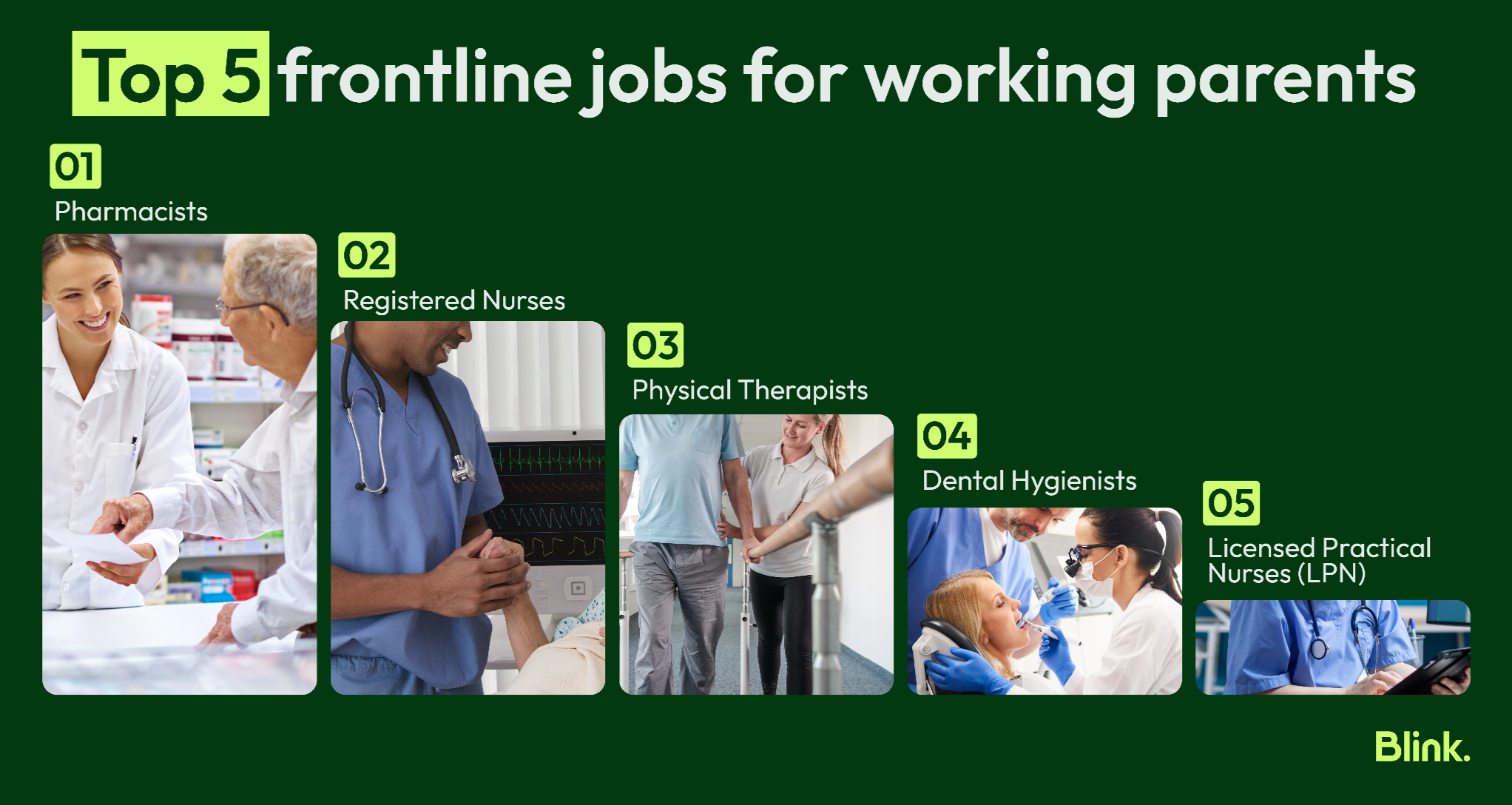
1. Pharmacists
Pharmacists rank as the best frontline job for working parents, with a median annual salary of $140,910, the highest among the top 10 occupations. Access to employee benefits can also help parents manage work and family responsibilities, with 92% of pharmacists having access to paid sick leave and 87% to paid vacation. However, family-related benefits are less common, with only 40% having access to paid family leave and 25% to childcare benefits. While pharmacists' high earning potential in the healthcare space can help families manage household expenses, limited access to childcare benefits may add to the cost of raising a family.
2. Registered nurses
Registered nurses rank second among the best frontline jobs for working parents, with a median annual salary of $97,550 and the largest workforce among the top 10 occupations, employing approximately 3.38 million people. Access to paid sick leave and paid vacation can help nurses manage work and family responsibilities, with 91% having access to paid sick leave and 86% to paid vacation. However, only 31% have access to childcare benefits, while 38% have access to paid family leave. These findings highlight how strong earning potential and access to paid time off can support working parents, while limited childcare benefits may add to family expenses.
3. Physical therapists
Physical therapists rank third among the best frontline jobs for working parents, with a median annual salary of $102,760. Access to employee benefits can help parents manage work and family responsibilities, with 92% having access to paid sick leave and 87% to paid vacation. However, only 25% have access to childcare benefits. While the competitive salary and paid time off can help parents manage household expenses and family commitments, limited access to childcare benefits may make childcare costs harder to manage.
4. Dental hygienists
Dental hygienists rank fourth, with a median annual salary close to $100,000. Their position in the ranking reflects competitive pay and access to workplace benefits that can help parents manage family responsibilities. While paid sick leave and paid vacation are widely available, access to family-related benefits is more limited, with 40% of workers having access to paid family leave and 25% to childcare benefits. This shows that while a strong salary is important, family-friendly benefits can also help frontline working parents manage responsibilities outside of work.
5. Licensed practical nurses
Licensed practical nurses (LPNs) rank fifth, with a median annual pay of $64,400. The occupation employs 648,410 people across the U.S. While LPNs have access to workplace benefits, these vary, with 92% having access to paid sick leave, 87% to paid vacation, 40% to paid family leave, and 25% to childcare benefits. Limited access to childcare benefits can make it harder for working parents to manage childcare costs alongside their work and family responsibilities.
6. Pharmacy technicians
Pharmacy technicians rank sixth, with a median annual pay of $45,750. The occupation employs 471,680 people. While pharmacy technicians have access to workplace benefits, these vary. The associated benefits data shows that 92% have access to paid sick leave, 87% to paid vacation, 25% to childcare benefits, and 40% to paid family leave. Despite access to paid time off, the relatively low median salary and limited availability of childcare benefits can create additional challenges for parents managing childcare responsibilities and balancing childcare costs with household expenses.
7. Emergency medical technicians
Emergency medical technicians (EMTs) rank seventh, with a score of 63.43 and median annual pay of $44,470. The occupation employs 180,510 people. The associated benefits data records access to paid sick leave at 92%, paid vacation at 87%, and childcare benefits at 25%. While access to paid time off can help parents manage their everyday family responsibilities, the relatively low median salary and limited availability of childcare benefits can create additional financial pressures for parents balancing their children's needs with other household expenses.
8. Teacher Assistants
Teacher assistants rank eighth, with a score of 61.33 and median annual pay of $36,780. The occupation employs approximately 1.42 million people. The associated benefits data shows that 92% have access to paid sick leave, 87% to paid vacation, 25% to childcare benefits, and 40% to paid family leave. While paid time off can help parents balance work, family life, and personal responsibilities, the relatively low median salary and limited availability of childcare benefits can add to the financial pressures teacher assistants face when managing household expenses and family responsibilities.
9. Postal service mail carriers
Postal service mail carriers rank ninth, with a score of 50.11 and a median annual pay of $60,550. The occupation employs approximately 328,820 people. The associated benefits data shows that 88% of postal service mail carriers have access to paid sick leave, 88% to paid vacation, 30% to paid family leave, and 13% to childcare benefits. While access to paid time off can help parents manage their family responsibilities, the limited availability of childcare benefits can add to the financial pressure on working parents balancing childcare costs with other everyday expenses.
10. K–12 teachers
K–12 teachers round out the top 10, with a score of 48.37 and a median annual pay of $63,970. The data covers approximately 1.39 million education jobs, with elementary school teacher salaries used for the ranking. In terms of benefits, 99% have access to paid sick leave, 28% to paid family leave, 20% to paid vacation, and 14% to childcare benefits. Despite high access to paid sick leave, limited availability of childcare benefits and paid vacation can add financial pressure on working parents balancing childcare costs with household expenses and family responsibilities.
Note: Benefits percentages are based on the relevant National Compensation Survey job groups in the dataset. They should not be interpreted as guaranteed benefits for every worker in an individual occupation.
Top U.S. cities for frontline working parents
Where frontline working parents live can make a real difference in their daily lives. Factors such as childcare costs, rent and commute times can all affect how easily they balance work and family responsibilities. Living in a city with lower housing costs, affordable childcare and shorter commutes can help ease the financial pressures working parents face.
1. Sioux Falls, South Dakota
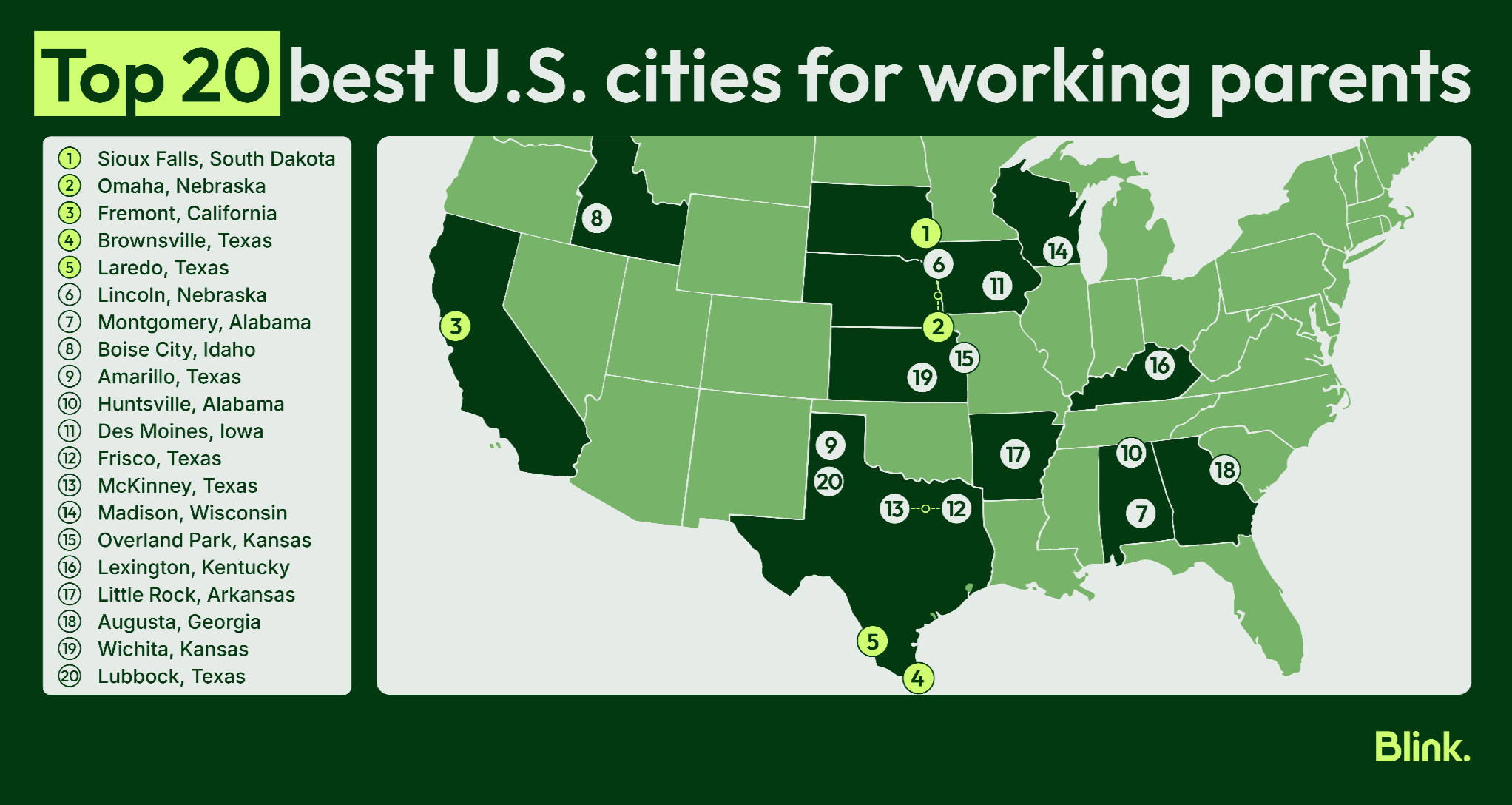
Sioux Falls ranks first among the best U.S. cities for frontline working parents, with a score of 74.65. Its top position reflects how factors such as childcare affordability, income, housing costs and commute times can impact a family’s day-to-day life. With a median household income of $75,970, average monthly rent of $1,035 and annual infant childcare costs of $10,618, Sioux Falls offers a combination of income and affordability that can help frontline workers manage the costs of raising a family.
2. Omaha, Nebraska
Omaha ranks second among the best U.S. cities for frontline working parents, with a score of 69.79. Factors such as childcare affordability, commute times and income help determine how manageable everyday life can be for frontline working families. With a median household income of $73,201, average monthly rent of $1,187 and annual infant childcare costs of $14,508, these factors can help frontline workers manage the costs of raising a family while balancing work and family life.
3. Fremont, California
Fremont ranks third among the best U.S. cities for frontline working parents, with an overall score of 68.92. The city also has one of the highest median household incomes among the top 10, giving families greater earning potential to help manage everyday expenses. While Fremont offers strong earning potential, high housing and childcare costs can put pressure on families’ everyday expenses, making affordability an important consideration for frontline working parents.
4. Brownsville, Texas
Brownsville ranks fourth among the best U.S. cities for frontline working parents, with an overall score of 68.74. With average monthly rent of $923 and annual infant childcare costs of approximately $9,166, its median household income of $52,130 highlights the importance of affordability when balancing family expenses and work responsibilities.
5. Laredo, Texas
Laredo ranks fifth among the best U.S. cities for frontline working parents, with an overall score of 68.36. Its annual infant childcare costs are among the lowest in the top 10 cities, at approximately $7,500, while average monthly rent is $1,030. These relatively low costs can help ease the financial pressure on frontline working parents, making it easier to cover essential expenses while balancing work and family responsibilities.
Curious where your city ranks? Check out our interactive table below.
What the best cities and jobs for frontline working parents have in common
The data showcases several factors that help determine the best job or city for frontline working parents. Pharmacists rank number one, with a score of 89.90 and a median annual salary of $140,910, while registered nurses have the largest workforce, with approximately 3.38 million workers. Benefits such as paid leave and childcare also vary between job groups.
Of the cities analyzed, Sioux Falls leads the rankings with a score of 74.65, followed by Omaha, which has 249 childcare centers. Childcare costs and availability are key factors in determining which cities are best for frontline working parents. Accessible childcare can help ease the financial pressure of raising a family while balancing work responsibilities. Laredo has the lowest annual infant childcare costs among the top 10 cities, at $7,500, while Huntsville has the lowest childcare cost burden, at 10.8%. Fremont also stands out for having the highest median household income among the top 10 cities.
Together, these findings highlight the factors that matter to frontline workers raising a family, from pay and employment benefits to housing costs, childcare expenses and commute times.
For employers, supporting frontline workers who are parents also means helping them access the basic resources they need, such as schedules and workplace communications, to balance work and family responsibilities. Blink’s frontline employee platform helps organizations connect teams across different locations and shifts, making the workplace more accessible to employees wherever they work.
Methodology
To determine the best frontline working professions and cities for parents, we ranked 50 frontline occupations on median pay and access to paid sick leave, paid vacation, childcare benefits and paid family leave, using Bureau of Labor Statistics data (benefits are published for broad job groups, so each occupation takes its group's figure). We then ranked the 100 most populous U.S. cities with 500,000 residents or fewer on childcare costs and availability, rent, frontline job share and commute times, using U.S. Census Bureau, Department of Labor and the National Database of Childcare Prices. Data is accurate as of October 9, 2026.