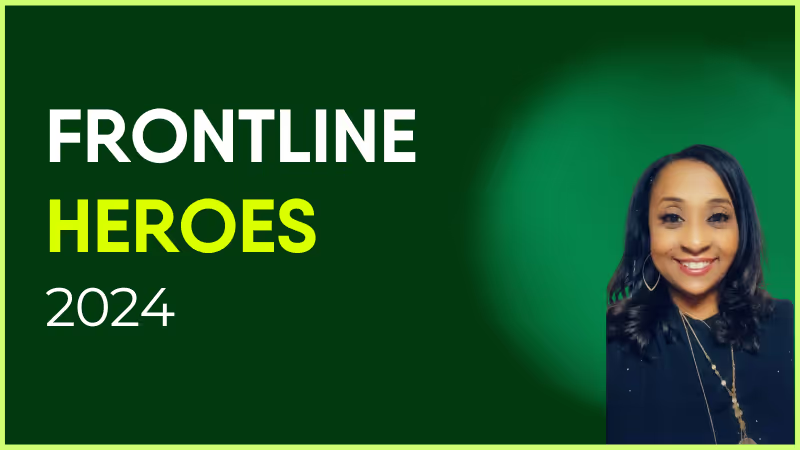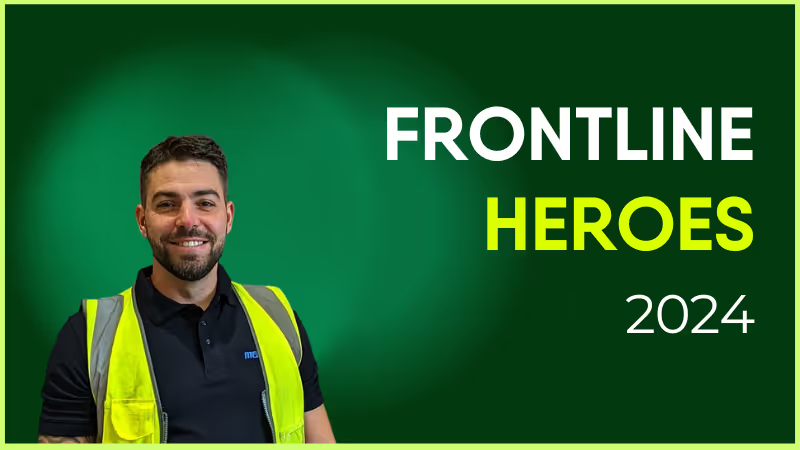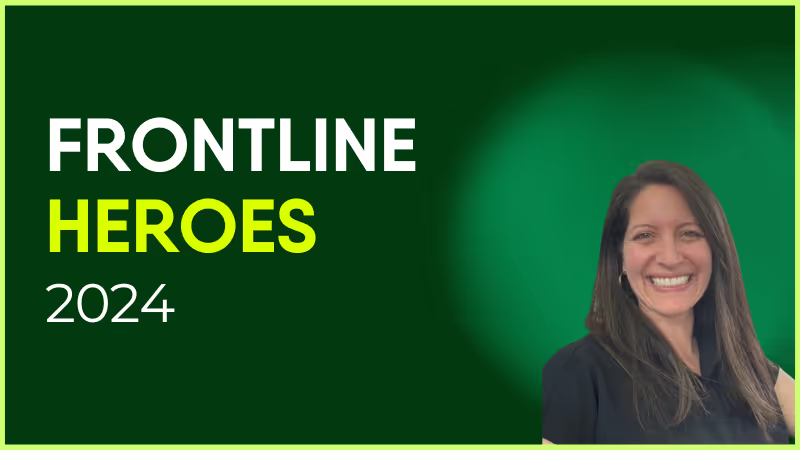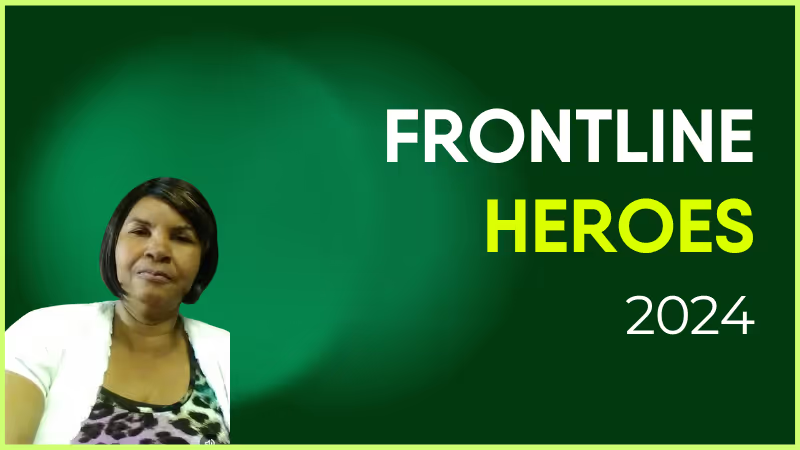
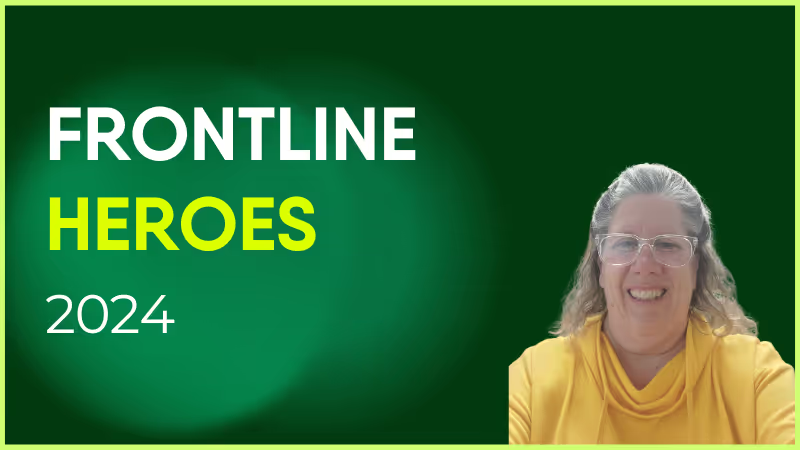
Carla has been with Elara Caring since 2022 as an Attendant Coordinator at the Mount Vernon branch in Texas.
Carla is a wonderful frontline champion at Elara Caring. She is the first to step up to help or train others. Her ability to teach and lead is amazing — CTs and all PCs reach out to her due to her kindness and understanding and compassion. She is a wonderful person and has taken the time to help me and lead me when there was none other.
Carla sacrifices what she wants for others and it's a blessing. People call her from other offices and states for help because they know how valuable she is to this company. Her determination and leadership is what this world needs more of. She doesn’t just do a great job — she touches lives in every way and work and in the client's home.
I have watched her over 6 months of being at this company and thought, “Wow, we have a jewel!” She deserves to be recognized for her greatness and champion spirit. Elara Caring is better each day due to the fact we have a champion on staff — Carla Brewer is a great person, a great employee, and a treasure to this world.
How has Blink helped in her role?
Carla is a master at Blink and often helps with training. She uses it to talk with the attendants and takes the time to go slow so all learn how to use it.
What does she want to do next?
I believe that Carla wants an environment where all feel valuable and like they have a place. She uses her life to bring light to stressful places and I believe she will only soar in this next level in her life and this company.

Nominated by: Sissi Watts, Attendant Coordinator
What makes her awesome?
Carla has been with Elara Caring since 2022 as an Attendant Coordinator at the Mount Vernon branch in Texas.
Carla is a wonderful frontline champion at Elara Caring. She is the first to step up to help or train others. Her ability to teach and lead is amazing — CTs and all PCs reach out to her due to her kindness and understanding and compassion. She is a wonderful person and has taken the time to help me and lead me when there was none other.
Carla sacrifices what she wants for others and it's a blessing. People call her from other offices and states for help because they know how valuable she is to this company. Her determination and leadership is what this world needs more of. She doesn’t just do a great job — she touches lives in every way and work and in the client's home.
I have watched her over 6 months of being at this company and thought, “Wow, we have a jewel!” She deserves to be recognized for her greatness and champion spirit. Elara Caring is better each day due to the fact we have a champion on staff — Carla Brewer is a great person, a great employee, and a treasure to this world.
How has Blink helped in her role?
Carla is a master at Blink and often helps with training. She uses it to talk with the attendants and takes the time to go slow so all learn how to use it.
What does she want to do next?
I believe that Carla wants an environment where all feel valuable and like they have a place. She uses her life to bring light to stressful places and I believe she will only soar in this next level in her life and this company.

Balancing employees’ happiness with their alignment to your company’s direction is not easy. And the most noteworthy example of this is Apple in its early days.
The company had positioned itself as an unconventional, new-age brand where creatives and rule-breakers flocked to work. So, as the company grew larger, cultivating the required discipline became a challenge. The more control senior management tried to exert, the more frustration it caused them and the employees.
What happened at Apple shows that a brilliant business model alone isn’t enough to push a business forward. In fact, none of it matters if your workers aren’t happy. Because if they aren’t, they won’t be engaged at work or receptive to new initiatives.
The good news? You can prevent this from happening at your organization. Not to mention boost productivity and build a strong employer brand. This article will show you why ensuring employee happiness and well-being is a must and ways to implement them at work.
Why is employee happiness important?
Research by Oxford University has found that happy workers are 13% more productive than unhappy ones. And that’s not the only perk of employee happiness and well-being. Let’s see the rest.
Happy employees equate to happy customers: Happy workers transmit their positive emotions to customers and prospects they encounter every day. And this helps nurture leads and makes them more likely to buy from you, or work with your business.
Happy employees collaborate better: Happy workers get along well with one another, boosting teamwork and effective communication. So projects run smoothly and meet deadlines.
Happy workers are healthier: Happy employees are more likely to remain physically and mentally fit. When you invest in employee well-being, you minimize workers’ sick days and loss of work output.
Happy employees are more loyal: When workers are happy in their jobs, they are less likely to quit or switch jobs. This helps you reduce the turnover rate and save money on new talent acquisition.
Top ways to ensure employee happiness
Use the following list to check whether you’re doing all you can to boost employee happiness and well-being at work. If you are, you’re on the right track. If not, it’s not too late to get started.
Value and respect your workers
In a survey of 129 large and midsize US businesses, 87% of leaders said that they are focusing on building a culture of dignity in the next three years.
Downtrodden workers can never consider themselves happy. If your company culture can’t assure dignity at work, then there is no hope for employee well-being.
That’s why respecting your workforce is not just a strategy for employee happiness, but a core principle that can set a solid foundation for all the other steps we have outlined below.
A happiness-driven company culture ensures that everyone is treated with dignity, and that respect is not being given selectively based on seniority, experience, color, gender, or any other factors.
So make sure to shape your work policies, communication, and every aspect of work in a way that each worker matters. Recognize employees for what they bring to the table and the contributions they make for your business.
Even simple gestures like high-fiving quick wins and taking their concerns seriously go a long way in making workers feel valued.
Encourage and act on employees’ feedback
Employees who feel heard at work are approximately five times more likely to perform their best work, according to research by Salesforce.
No workplace is perfect, and no employees expect it to be. But they do expect at the least that their problems and suggestions will be heard and acted on.
Yet in many workplaces, workers feel dissatisfied because their concerns are often brushed under the carpet. The result is diminished employee happiness and morale.
If you want to ensure employee well-being in the workplace, go out of your way to let your employees freely express how they feel and contribute new ideas.
Take group meetings, for example. Usually, the extroverts do most of the talking and introverts remain quiet. So it’s important to have weekly one-on-ones too to make sure everyone has a chance to be heard.
Develop your employees
A LinkedIn report states that 94% of employees would stay longer at a company if it invests in their professional growth. Knowing that you care about their development, workers will feel happy and more motivated.
Make sure to support them with adequate training and provide deserving workers with a clear roadmap and opportunity for promotion. Show them that their efforts are valued and will lead to their future growth. Plus, you can sign them up for seminars and conferences relevant to their work and ambitions.
Share positive feedback and constructive criticism
Data from 150+ countries and 1000+ organizations has found that 96% of employees appreciate receiving feedback regularly.
So you can imagine how important it is for workers to know how they are doing, what they are doing right, and if there’s something they can do better.
When you’re candid with your employees about their work, you demonstrate that you have faith in their skills and you care about employee well-being.
For example, if a worker has shared some great ideas in a group meeting, don’t wait to let him know how much you value the contribution. Even a small acknowledgment like below can have a great impact.
"Thank you for your suggestions, Jack! You came to the meeting prepared with well-researched ideas, and you're really helping us move forward with the project. Keep up the good work."
And don’t forget to set up weekly or biweekly meetings with your staff to go over their work. You can use this opportunity to give specific feedback that helps them excel in their roles.
Pay and treat workers fairly
Your employees may be enjoying what they do. But they should also get fair compensation for their work.
So don’t let any contribution slip through the cracks. Recognize and pay workers for every big and small investment they make at work. For example:
If they work overtime, pay for it.
If an initiative helped grow the company, give out bonuses to people involved.
Don’t underpay female employees for jobs similar to male employees.
Plus, there should be a transparent system that makes it easy to understand and reduce the pay gap among different employees.
You can even hire an external agency to avoid any bias or favoritism. This company will audit your performance review process and offer recommendations based on objective measures such as the current market value for job roles.
Reward workers’ accomplishments
We already touched a bit on rewarding your employees. But it warrants more attention. Having a reward and recognition program at work is crucial to employee happiness.
And rightly so. Your workers spend considerable time and effort in fulfilling your business mission. But if they feel their work isn’t acknowledged, they are more likely to be dissatisfied. So if you are serious about employee well-being, leave no stone unturned to show them what they do matters.
Apart from putting a formal reward system in place, there are plenty of small, informal things you can do to reward good work. These include a free meal, a company-wide update on what the employee is being recognized for, an extra day off, and even just a heartfelt thank you. Having these as little tactics as part of your overall employee engagement strategy will have a big impact.
Ensure proper communication
78% of US workers say that improving employee communication should be a high priority for their employer.
Workers are less likely to be happy if their responsibilities are not clearly communicated to them. And this is just one small example. Not communicating effectively with your staff can lead to a whole host of challenges, like frequent misunderstandings, workplace conflicts, and poor peer-to-peer relationships.
But just any type of communication isn’t enough. You can’t bombard employees with a ton of emails or unnecessary meetings in hopes of keeping them happy. You need to have the right channels, tools, and training.
And one of the best ways to tackle all these three areas is to use a single, unobtrusive communication platform like Blink. It follows a mobile-first approach. So it can reach workers wherever they are.
Not just that. It also requires minimum training. The social-media style interface ensures that workers know how to use it from the get-go.
Implementing such a solution can help you establish communication norms without isolating both desk-based and front-line workers.
Conclusion: ways to improve employee happiness and well being
Overall, workplace happiness is a significant factor in employee engagement.
But at the end of the day, there is no shortcut or magic recipe to make your employees happy. It’s about the cumulative impact of the small steps you take and the culture you build.
Use the strategies and employee engagement best practices outlined above to encourage a happiness-oriented company culture. Plus, look for your own creative ways to delight your workers and make them feel valued. In the long run, you’ll see that the payoff for such efforts really makes them worthwhile.
Also, the right employee engagement app can make a big difference in the success of your initiatives to boost employee happiness. So book a free Blink demo today.
Frontline employee engagement is no easy task. Your frontline employees work varying shift patterns and spend limited time at head office. They don’t tend to get much downtime during their working hours. And they aren’t always kept in the loop when it comes to company comms.
These obstacles get in the way when you’re trying to connect frontline workers to company culture — and each other. And it’s why standard team-building activities usually fall short.
To make a success of your employee engagement strategy, you have to tailor activities to your deskless workforce. Otherwise, you risk disengagement, plus the productivity and retention issues that go with it.
That’s why we’ve created this list of 18 employee engagement activities. These ideas are suited to busy frontline workers and their schedules. They’re designed to boost engagement and offer meaningful benefits to your employees.
This can lead to lower levels of productivity. It can also cause increased staff turnover rates, which already tend to be pretty high in frontline organizations.
Employee engagement activities, like the ones we’ve included below, help frontline employees feel more connected to their company, role, and co-workers.
And, according to Gallup, improving your employee engagement rates can lead to a range of business benefits. Besides increased productivity and employee retention, these benefits include:
A reduction in safety incidents
A decrease in absenteeism
An increase in customer loyalty
An increase in profitability
Employee engagement is good for employees — and it’s good for business. So let’s take a look at the activities that will help make it happen.
18 employee engagement activities (that work for a frontline workforce)
To engage your frontline workforce, you can incorporate any of the following employee engagement activities into your work days:
1. Engage with employees from day one
2. Celebrate employee milestones and contributions
3. Incentivize goals
4. Create a mentorship program
5. Offer perks that boost employee wellbeing
6. Give regular feedback
7. Encourage group chat
8. Provide shift swap tools
9. Plan a money management month
10. Launch a poll
11. Create online communities
12. Offer professional development opportunities
13. Launch a competition
14. Use video tools
15. Organize a volunteering day
16. Hand the mic to your leaders
17. Run Lunch and Learn sessions
18. Measure employee engagement
Team engagement ideas for frontline workers are different than for other workers. With their variable schedules, you can’t arrange lunch dates or after-work get-togethers.
Here are a few employee engagement initiatives your frontline workers can benefit from.
You can start with employee engagement activities like:
Introducing new co-workers (digitally if it’s not possible to introduce everyone in person)
Supporting new hires to login and familiarize themselves with your engagement tech tools
Sharing a library of online resources that explain the company, their role, and company culture
Assigning them a buddy or mentor
New hires need regular guidance, especially from managers. So don’t assume your workers are done onboarding after a few days or weeks. Instead, design a process that lasts for at least 90 days.
2. Celebrate employee milestones and contributions
Employee recognition improves engagement. Everyone likes to feel appreciated and valued by their employer.
So make recognition a regular feature on your company intranet or newsletter. Celebrate birthdays, volunteer work, and project milestones. Recognize the hard work and successes of employees.
You can also encourage peer-to-peer recognition. 75% of employees say that giving recognition makes them want to stay at their current organization longer.
Get co-workers to nominate each other for awards, then hold an award ceremony. Or simply get them to appreciate each other by sending a message on the company news feed.
3. Incentivize goals
Gamify the work environment by offering rewards in return for meeting goals. When employees perform well and meet targets, give them a gift you know they’ll like. Company rewards can include gift cards, discounts, cash prizes, an extra day of paid vacation, or the option to give a charitable donation.
But don’t dive right in. Before you announce your reward program, it’s a good idea to survey employees. Ask them which rewards they’d prefer so you can be sure that workers will be motivated by the prizes on offer.
4. Create a mentorship program
Do you want your employees to engage with each other, learn valuable skills, and help each other at the same time? Try rolling out a mentorship program.
Assign frontline workers a mentor within your organization. You can pair people from different departments and different levels of the company.
Then, set a regular schedule of mentor meet-ups. Mentors and mentees might like to conduct meetings online to better suit their work schedules.
Also, offer guidance on how constructive meetings should be run. The aim is for mentees to set workplace goals and come up with a plan for achieving them.
5. Offer perks that boost employee wellbeing
A healthy worker is a productive worker. So encourage fun runs, offer free healthy snacks, and provide discount gym memberships.
Also, try to provide flexible scheduling when possible to give employees a better work-life balance. You’ll reduce employee stress and their risk of burnout.
To ensure frontline employees can access wellbeing activities, you can use a wellbeing app. Via this type of tool, you can provide employee engagement activities. Things like mindfulness and meditation sessions, nutrition planning, and health tracking, all via an employee’s mobile device.
6. Give regular feedback
Gallup research shows that 80% of employees who say they’ve received meaningful feedback in the past week are fully engaged in their work.
So schedule activities where employees receive regular feedback from managers. Make it constructive and useful for employees, so it’s not an appointment they dread.
Also, take a few hours each week to run an online open-door session. This is a time when employees can meet with managers digitally to ask questions and express any concerns.
7. Use the company news feed
A user-friendly employee app with a company news feed acts as a virtual water cooler. It’s a place where frontline workers, who may spend little time with co-workers, get to build stronger workplace relationships.
The comms team can support engagement by using the news feed to share a mix of essential and informal posts. They can announce news, celebrate birthdays, and share tips — encouraging workers to comment, like, and post.
Also, consider these engagement-boosting ideas:
A weekly challenge — a photo contest, a trivia quiz, or a step-count competition
Employee spotlight — highlight a different employee each week, describing their achievements, personal stories, and contributions
A survey — whether the topic is something fun or something more serious, surveys are a great way to engage your workforce
Health and wellness tips — share tips and articles related to physical and mental health, all suited to the demands of frontline roles
8. Provide shift swap tools
Frontline employees want greater levels of flexibility. It’s not always easy for frontline organizations to provide this when there are fixed shifts to fill.
But with shift swap tools, you make it easy for workers to achieve a little more work-life balance. They can swap shifts with co-workers without HR or managers having to get involved.
You can provide other self-serve tools, too. For example, via the Blink interface, employees can access their pay stubs, request time off, and view their shift schedules.
Automating HR tasks like this gives more control to your frontline workers and lightens the load for your HR team.
9. Plan a money management month
Money worries can affect an employee’s wellbeing and their engagement with work. And employee engagement activities are most effective when they provide real value for your workers.
So plan a money management month to help employees make informed financial decisions. Use quizzes and polls to engage employees in the conversation. Challenge employees to a low or no spend day. Provide money advice over 1:1 chats or via your company resource center.
This is exactly what they’ve done at supermarket chain, Tesco, where they recognized the strain that the cost of living crisis has put on employees. In response, they introduced a range of new initiatives:
Skills training activities so employees develop store-wide skills and can pick up extra shifts
A Pay Advance scheme that allows workers to access earned pay ahead of payday
Personalized videos explaining to every worker how much their pension will be worth
10. Launch a poll
Polls give employees a chance to share their ideas and opinions. It’s a way to make their voices heard.
You can launch polls online, with the help of a tool like Blink Surveys. This allows you to quickly and easily find out what frontline employees are thinking about your chosen topic.
You might like to ask questions related to internal communications, company change, employee engagement, or simply the layout of the break room. Using this insight, you can make changes that make a real difference to your employees.
Just be sure to keep them updated with poll findings and your plan of action so they know that you’re really listening to what they have to say.
11. Create online communities
It’s easier to build connections with co-workers when you have something in common with one another. Online communities — based around shared interests — make it easy for frontline workers to find like-minded work friends.
So create space on your intranet for these types of communities. Perhaps you have a group that loves to run in their spare time. A gaggle of gamers. Or a bunch of bookworms. An online community helps bring these co-workers together.
12. Offer professional development opportunities
Training is a great way to improve workplace engagement. 71% of frontline workers have a strong desire for more learning opportunities at work. But a third of workers say that employers don’t invest enough in their growth.
Try to make training more accessible to your frontline workforce. Remember that it doesn’t have to take place in a classroom. You can put training resources into the palm of frontline workers’ hands with the help of the right technology.
You can offer micro-learning modules that workers can complete on mobile devices during a break. And provide fun online courses, with competitive and gamified features.
Also, remember that a lot of worker engagement can be tracked back to your managers. So ensure that managers get the employee engagement training they need, too.
13. Launch a competition
Pit teams of employees against each other with a fun company-wide competition. For an engagement boost, link your competition to company goals and values.
For example, if you’re championing employee wellbeing, set workers a steps or fitness challenge.
If you’re focused on employee development, encourage workers to complete training modules by setting them a training challenge.
To highlight your commitment to a chosen charity, set a fundraising contest.
Alternatively, improve engagement on the company app with a quick photo caption competition.
Pick challenges that can be completed remotely, without teams having to meet up in person. Also, plan rewards for the winners and give regular updates via your comms channels to keep competitors engaged.
14. Use video tools
When you can’t meet face to face, video is the next best thing. You can film leadership updates, company events, and new product demos to give employees more insight into the organization and their roles.
Videos are a great option for town hall meetings. Post the video on your employee news feed and employees who can’t attend in person can watch the video back later.
Similarly, get new hires to film a video to introduce themselves and post it to the news feed. Their co-workers can comment on the post to say hello and help their new co-worker feel more at home.
15. Organize a volunteering day
Offering employees opportunities to volunteer is good for their wellbeing and engagement levels. You can make this activity more appealing to frontline workers by giving them paid time off to volunteer and by giving them flexibility over the days they choose.
Salesforce leads the way on this. They give employees seven business days every year to volunteer for one of the non-profit organizations that Salesforce formally supports — or one of their own choosing.
Jamie Olsen, senior director of Citizen Philanthropy at Salesforce says:
“These are the types of programs that people want and that are attracting them to companies right now. They better the community. They improve people’s happiness.”
You can ensure everyone is on the same page by conducting a virtual Q&A session with one of your leadership team.
This type of event gives employees direct access to leadership. It bridges the gap between the frontline and head office. It also helps employees make their voices heard, which makes them feel valued and motivated.
The prospect of a Q&A can be a little daunting for leaders. But remember, a moderator can facilitate the session, reading out pre-submitted questions and managing live questions.
Also bear in mind that there are huge benefits to be gained. These include frontline insights, improved communication, and a stronger workplace culture.
17. Run lunch and learn sessions
When employees have all the information they need to do their jobs well, they feel more engaged. So give employees access to an online library of resources, transferring any old paper documents to a digital format.
With this library, you can then run virtual Lunch and Learn sessions. This is where a group of employees watches or reads a selected resource. Afterwards, they discuss their reflections either over video call or via group messaging.
18. Measure employee engagement
The last on our list of employee engagement activities is one for your people team, not your frontline employees. And it’s a really important part of any employee engagement strategy.
Find out how you’re doing by tracking employee engagement KPIs. Track your employee net promoter score (eNPS), engagement with your intranet platform, or employee survey results.
You can then set goals and — by drilling down into the data provided by your platform analytics — find actionable areas for improvement.
Final thoughts: employee engagement activities and ideas
To make a success of frontline employee engagement, you need to:
Provide employee engagement activities that offer real benefits for frontline employees
Make these activities accessible to the frontline with the help of flexible, digital solutions
You then create a culture that employees can play an active part in, no matter their schedule or location. You also motivate frontline workers to engage with company culture out of choice, making time for it in their busy days.
Incorporating the activities above into your frontline workplace is much easier when you have the right technology. And an employee engagement app comes in very useful. It’s a way to put all content and communication into the palm of every employee.
By creating online spaces where employees can gather, chat, share knowledge, and connect with company culture, you extend employee engagement to your hardest-to-reach employees — those on the frontline.
If you’re exploring alternatives to All Gravy, you’re likely looking for a platform that offers more flexibility, deeper integrations, or broader functionality for workforce engagement and management. All Gravy is known for its financial wellness and shift management tools, but it may not provide the full set of capabilities needed for growing organizations.
This guide reviews the best All Gravy alternatives in 2025—starting with Blink, our top recommendation—and includes pricing, reviews, and pros and cons for each.
What to look for in an All Gravy alternative
Before making a decision, it’s important to assess which features matter most to your organization.
Comprehensive Communication Tools – Look for platforms that combine messaging, news feeds, and surveys in one place to reduce tool fatigue.
Integrations – Seamless connections to HRIS, payroll, scheduling, and collaboration tools save time and reduce manual work.
Ease of Use – A clean, mobile-first design ensures both frontline and desk-based staff can use the platform without lengthy training.
Scalability – Choose a solution that can grow with your business without requiring a platform switch in a few years.
Analytics & Insights – Data-driven decision-making starts with robust reporting on engagement, adoption, and performance.
The 10 top All Gravy alternatives in 2025
#1. Blink – The #1 alternative to All Gravy
Blink is an all-in-one employee engagement, communication, and productivity platform designed for both frontline and office-based teams. It replaces multiple disconnected apps by bringing secure messaging, company news, task management, surveys, file access, and HR integrations together in one easy-to-use interface.
Its mobile-first design ensures high adoption rates, while advanced analytics give leaders actionable insights into engagement trends. Blink integrates with major tools like Workday, UKG, Microsoft 365, and Google Workspace, meaning it fits seamlessly into existing workflows. Organizations praise Blink for its intuitive user experience, enterprise-grade security, and rapid onboarding process.
Connecteam offers a modular platform that combines chat, scheduling, onboarding, task tracking, and time management. Its mobile app is designed for easy navigation, making it a good choice for organizations that want a straightforward, customizable tool. The built-in training and knowledge base features help teams onboard quickly, while its scheduling tools ensure shift coordination without external apps.
Pricing: Free plan for up to 10 users; paid plans from $29/month for 30 users.
Cons: Limited advanced analytics compared to enterprise-focused platforms.
#3. Workvivo
Workvivo focuses on employee connection and culture-building through a social-media-like interface. Employees can post updates, recognize peers, share wins, and engage with company news in a familiar, engaging way. Workvivo integrates with productivity tools like Slack, Zoom, and Teams, and offers a customizable interface for branding.
Pricing: Custom pricing based on company size.
G2 Rating: 4.7/5
Gartner Rating: 4.6/5
Pros: Strong focus on culture, intuitive social-style interface.
Cons: Less suited for task or operations-heavy use cases.
#4. Leapsome
Leapsome blends engagement, performance management, and learning into a single platform. It enables continuous feedback loops, performance reviews, 1:1 meetings, and learning paths to help employees grow. While it’s less operations-focused than All Gravy, it’s a strong choice for organizations prioritizing employee development.
Pricing: From $8/user/month.
G2 Rating: 4.8/5
Gartner Rating: 4.6/5
Pros: Excellent for performance and development, customizable workflows.
Cons: Not designed for frontline scheduling or shift management.
#5. Dayforce
Dayforce is a full HCM solution covering payroll, workforce management, benefits, and employee engagement. It goes far beyond All Gravy’s scope, offering compliance features and deep analytics. The unified approach makes it ideal for organizations wanting HR, scheduling, and payroll under one roof.
Staffbase is an internal communications platform that supports branded employee apps, intranets, and targeted messaging. It excels at reaching distributed teams with segmented communications and integrates with enterprise systems for analytics. While less focused on shift management, it offers superior content distribution capabilities compared to All Gravy.
Beekeeper is built for frontline workers, offering secure messaging, document sharing, and workflow automation. Its integrations with scheduling and HR platforms make it a practical alternative for shift-based teams. Compared to All Gravy, it offers broader communication features but fewer financial wellness tools.
Pricing: Custom pricing
G2 Rating: 4.4/5
Gartner Rating: 4.3/5
Pros: Designed for frontline teams, good integration options
Cons: Smaller app marketplace than some competitors
#8. Monday.com
Monday.com is a highly flexible work management tool with modules for projects, tasks, CRM, and operations. It can be customized for shift management, though it’s not a native feature. The platform’s visual boards and automation features make it ideal for cross-functional visibility.
Pricing: From $9/user/month
G2 Rating: 4.7/5
Gartner Rating: 4.4/5
Pros: Highly customizable, broad use cases
Cons: Requires setup to suit shift-based teams
#9. LumApps
LumApps is a digital workplace and intranet platform with strong personalization and knowledge management tools. It integrates with Google Workspace and Microsoft 365 for seamless document access and collaboration. While not built for shift scheduling, its focus on personalized content delivery helps keep employees informed.
Zoho People offers HR management tools for leave, attendance, onboarding, and performance. It integrates with payroll systems and supports custom workflows. While less engagement-focused than Blink, it’s a cost-effective way to centralize HR operations.
Pricing: From $1.50/user/month
G2 Rating: 4.4/5
Gartner Rating: 4.3/5
Pros: Affordable, broad HR features
Cons: Lacks rich employee engagement tools
Final thoughts
While All Gravy offers solid functionality for financial wellness and scheduling, it may not meet the full range of communication, engagement, and operational needs for every organization. Blink leads this list for its ability to centralize tools, improve adoption, and deliver measurable results—backed by excellent user reviews and enterprise-ready features.
This article is part of Blink's "frontline first" series: content created specifically for leaders of deskless or distributed teams. We know that the job of frontline leadership is entirely different from managing ‘desk-based’ teams, so this is for you and your unique set of challenges.
When you think of board-level management metrics, most people think along the lines of growth, market share, profit and efficiency. For frontline organizations, there’s another that’s just as critical: safety.
Frontline safety is front-page news
Where an organization’s success is built on distributed workers, there’s an inherent - and very human - vulnerability. The business’s success or failure hinges on these people and their ability (and will) to get to work - and so protecting their capacity to do so isn’t just a pastoral concern, but a fundamental one.
The COVID-19 pandemic brought this into sharp relief and public consciousness in an unprecedented way. When the desk-based world was able to retreat to working from home, frontline workers in healthcare, transit and retail were suddenly facing considerable risk simply by showing up. The scramble to give these workers - who had quickly (and deservedly) acquired ‘hero’ status - adequate protection shone a spotlight on what a lack of preparedness can do.
Although the pandemic is largely over, the key principle of frontline safety as a critical concern rightfully remains. Many frontline roles are intrinsically hazardous, involving operating dangerous equipment or working in environments such as construction sites where the potential for harm and injury is commonplace.
For anyone responsible for the performance of a frontline team, this article gives you some key principles to ensure that your people - and by extension, your organization - are protected.
Poor safety risks more than injury
The list of potential failures to deliver on frontline safety is long, including everything from trips and falls to crashes, cuts and even inhaling toxic fumes. These consequences should be reason enough to put frontline safety first, but it's worth talking about what else an organization risks by failing to do so.
1. The legal risk
As noted by the Occupational Safety & Health Administration, workers have many rights, including the right to:
Refuse dangerous work
Training and protection from dangerous equipment
Report and record injuries and receive treatment for those injuries
Request an inspection
A failure to adhere to local, state, or federal laws can result in legal liability, major fines or a license suspension. In extreme cases, upper management can be personally held civilly or criminally liable.
2. The union risk
Many organizations with large frontline workforces will have strong union representation, one of whose major responsibilities is to act if they perceive threats to the safety of their members. A failure to act quickly and visibly on any risks to safety could result in union action, causing disruption that invariably impacts the bottom line.
3. The reputational risk
Risks to frontline workers during COVID-19 were a public relations disaster for hundreds of organizations who fell behind on providing Personal Protective Equipment (PPE) or failed to provide adequate protection. From workers in factories for brands like Boohoo to the reporting of 20,000 cases of COVID-19 among Amazon workers, media and consumers alike were quick to rally behind frontline workers. While these levels of scrutiny may be now less acute post-pandemic, they remain a key concern for any business.
4. The performance risk
COVID-19 showed the frightening impact that safety has on the ability for a frontline business to operate effectively. Some reports suggest that up to one-third of US job vacancies are caused by long COVID, and every industry from transit to retail struggled to deliver services at times of high rates of sickness-related absence. For organizations to perform - particularly during the Great Resignation - they need a healthy (and therefore stable) workforce.
Four steps to create a culture of frontline safety
Frontline safety is more than just a worker's orientation at the start of a job. It involves the creation of a culture that values safety as a core pillar. Here’s how you deliver on it.
1. Start with strategy
COVID-19 showed us that a lack of planning can be devastating when it comes to safety. So review your frontline safety strategy - if it’s more reactive than proactive, it’s time to make a change.
You’re aiming for a comprehensive safety strategy that addresses and minimizes risks and dangers to workers, including preparedness and response plans for emergencies and adherence to all local, state, and federal worker safety regulations.
This is a major undertaking that demands buy-in from the highest leadership level and should involve third-party experts to assist in conducting audits and validating proposed policies for their effectiveness.
This strategy should cover the key areas of training, equipment and environment, and reporting as a matter of course. But another important consideration for this strategy should be policies on sickness and injury pay. This was another area that was found under the spotlight during the COVID-19 pandemic, when lack of adequate provision saw some frontline workers left with a choice between financial difficulty and putting themselves (and others) at risk.
Finally, a key - but often overlooked - aspect of building a safety strategy is to be highly demonstrative and communicative about it. Doing so allows team members to see that the organization is taking safety seriously and gives you the opportunity to start to build a safety-first culture.
2. Appropriate and ongoing training (for everyone)
Less than half of global frontline workers (44%) say they have received workplace health and safety training in the past year. This is a vital component of delivering on frontline safety, that should start with onboarding but be consistently reinforced and refreshed at regular intervals.
A critical concern here is to ensure that it’s not just the frontline worker who’s given high-quality, regular training - it’s also the manager.
Frontline managers are the critical point of failure for a safety-first culture: if they succeed, a team can be well-trained, issues can be effectively escalated and policies implemented properly. If they fail, this can allow policies and processes to fall into disrepair and for a culture of silence to be created, resulting in a ticking time-bomb for a safety issue. It’s therefore essential that manager training regularly reinforces the organization’s safety strategy, and that manager performance metrics ensure their accountability for its delivery.
3. Solicit safety-oriented feedback
Recent research by the Centre for People, Work and Organizational Practice at Nottingham Business School (NBS), in partnership with the Chartered Institute of Personnel Development (CIPD), revealed that people who work on the frontline were less likely to have access to channels which allow them to speak up about issues and worries. This worrying state of affairs should be cause for immediate attention by any frontline leader.
The report determined that in many cases, the ‘command and control’ structure of many operational roles often led to a culture that made employees afraid to raise concerns without fear of repercussions. Critically, office-based staff were more likely to feel confident to speak out and had communications channels, such as computer systems, which enabled them to access information and communicate to others.
The first part of this solution is cultural - working with management and the frontline to remove inhibitions about speaking up and ensuring that whistleblowers are protected - but the second is more technical. Which leads to our last point…
4. Make communications a priority
We saw that office-workers feel more comfortable to whistleblow on safety because they have the technology to do so subtly and directly. This is where the frontline situation is also in urgent need of change.
One of the perennial challenges for frontline teams is communication - many teams rely on paper memos, noticeboards and in-person briefings, all of which have obvious drawbacks in terms of effectiveness and scale.
Some organizations have attempted to move over to more digital communications, often using email and WhatsApp for team communications or an intranet for company-wide messaging. While these are an improvement, they're still not a watertight solution for safety, because the frontline often struggles with adoption - email engagement rates are low and intranets often go unchecked as neither are seen as a critical part of the job.
There’s also another problem - as a leader, you can never be sure that your message has been read and received. In the fast-moving and mission-critical world of safety communications, this should be a major concern.
This is where employee communication apps, like Blink, can help. Installed on a frontline worker’s phone, Blink allows for constant communication, enabling every worker to read important information, reply to questions, and digitally sign appropriate files and forms. It also has a mandatory reads feature that requires employees to acknowledge that they have read something, solving the problem of knowing whether communications have been effective.
While making leveling up how you deliver information to the frontline is mission-critical, there's another important communications consideration: how the frontline gets information back to you. As we've seen, this is where frontline workers are often disempowered. An app like Blink helps by enabling workers to report incidents with just a couple of clicks through digital forms, ensuring that important concerns and near-misses can be escalated quickly and efficiently.
Conclusions
Delivering on frontline safety is a make-or-break business issue, and should have equal priority with any other board-level discussion. As we’ve learned over the past two years, failure in safety can mean failure as a business - but for those teams that put in the work, it can be a critical support to a happy and therefore productive workforce.
Frontline safety might be at its most visible in equipment and guidelines, but making it truly effective starts with making it part of a company’s culture.
There are more employee communication tools available than ever. Modern intranets. Employee apps. And a ton of software add-ons. But — as we’re sure you now know — there’s soon to be one big player missing from the market.
Whether you’re affected by the closure of Workplace or simply feel that your employee communication tools need a rethink, choosing a new internal communication tool requires careful consideration.
You need a platform that promises to improve internal communications and employee engagement for your workforce. Something that facilitates easy communication between people at all levels of your organization.
Depending on your company and workforce, you may also need a tool that supports teamwork, company-wide updates, co-worker connection, recognition, feedback, and more.
The variety of software options available is an opportunity — and a challenge. It’s likely that there’s a perfect-fit platform out there. But the process of finding it can be tricky.
With that in mind, we’ve put together a list of questions you should ask when choosing a new employee communication tool. These questions will help you find software that performs as well as Workplace from Meta and meets the needs of your workplace.
But first, let’s take a quick look at the current employee communication landscape.
The employee communication landscape in 2024
In today’s digital workplace, effective employee communication relies on the right tech solutions. But if you’re looking for a new employee communication tool for your organization, chances are you’re feeling a little overwhelmed by the number of options on offer.
There are tools suited to certain segments of the workforce — for example, desk-based workers or frontline workers.
There are internal communication tools that focus on a very specific area of employee communications, like surveys or video conferencing.
And there are tools that go beyond employee communication to support organizations with tasks like employee engagement and project management, either through integrations or as an all-in-one solution.
Some tools are also exiting the marketplace.
Earlier this year, Meta announced that it would be discontinuing its Workplace tool. The platform will continue to operate until September 2025 and will remain read-only until May 2026. But many companies using Workplace from Meta are already looking to make a switch.
Deciding which tool — from this huge selection — is right for your organization can feel challenging. But it’s a priority for many business leaders in 2024, with 84% saying they plan to invest in more modern communication strategies.
You only have to look at some recent research to understand why.
According to the Axios report for 2023 into the State of Workplace Communications, the cost of poor internal communications amounts to $15,000 per employee per year. And while 77% of leaders think the communications they share support employees to do their jobs well, only 46% of employees agree.
31% of employees experience strained workplace relationships
26% of employees have missed deadlines
On the flip side, good internal communications lead to increased employee confidence, productivity, and work satisfaction. Ultimately, a much better employee experience and better business results, too.
Questions to ask when choosing a new employee communication tool
Ask the right questions and you’ll find it easier to create a shortlist of employee communication tools. Here are the things you should be asking yourself — and your teams — as you undergo your software search.
How do we rate our current communication channels?
Before you start looking for a new workplace tool, assess your current one. Whatever platform you’ve used until now — Workplace from Meta or an alternative — you need to clarify what you like and dislike about it. You’ll then have a clearer idea of what you need in a new solution.
So consider how effective your current communication tools are and whether they have any limitations. Establish whether there are any significant integration gaps. Launch an employee survey to gather the thoughts of your workforce.
Also, bear in mind what Grammarly said in its recent report: over the past 12 months, 73% of professionals say they’ve seen an increase in the variety of communication channels used in their workplace. But this isn’t leading to more effective internal communications.
Different workplace tools come with their own notifications, interfaces, and rules of engagement. Employees may feel confused about which channel is appropriate for which message. And conversations become disjointed and hard to track because they take place in multiple locations.
The best solutions are streamlined and easy to use. So consider how many different communication channels you’re currently using. And whether these tools are successfully communicating key messages and encouraging employee engagement.
You can look at adoption and platform engagement rates to better understand how employees interact with your current tech selection.
What do we want from this communication tool and partnership?
Onto challenges, goals, and platform features. When choosing a workplace tool, think about:
Your primary communication challenges. Perhaps messages are being missed. Or employees are failing to engage with the platform. Maybe there’s a disconnect between HQ and frontline workers.
What you’re trying to achieve with this tool. Do you want it to enhance workplace collaboration, improve employee engagement, or amplify company culture? Maybe you want it to do all these things.
Must-have features. What functionality do you need? This might include real-time messaging, video conferencing, document sharing, surveys, or social feed features.
Also, think beyond the platform itself. Sure, you need a communication tool that supports your organization’s style of communication. But it’s also useful to have a partner who understands employee communications — and your workplace challenges — inside out.
Here at Blink, we’re experts in employee communication and engagement. Unlike some of our competitors, this is our sole focus. Our clients can rely on us as a strategic partner, benefitting from our comms insights and ongoing support.
We work with our clients so they get the best from the Blink app. We offer extensive support through the launch phase, helping you to encourage adoption. We also pride ourselves on our responsiveness to client feature requests, feedback, and suggestions.
Will this communication platform work for all employees?
A good employee communication tool acts as a hub for your organization. It’s a place where co-workers connect, where they access collective knowledge, and where leadership shares important messages.
All pretty vital stuff. So it’s not fair to leave any employees out of the conversation. It’s not good for business either.
Unless everyone enjoys easy access to your platform, you fail to achieve the levels of workplace communication and employee engagement that you’re striving for.
Bear in mind that only 10% of frontline workers say they have high access to the tools, tech, and opportunities they need to connect and advance in their workplace. So when choosing a new employee communication tool, consider where and when your employees will be using it.
If your employees are fully desk-based, a desktop platform is likely to fit the bill. For hybrid teams, you need desktop systems with real-time communication and collaboration tools.
For frontline employees who don’t work at a desk — and don’t necessarily even have a company email address — you need a different type of workplace tool. A mobile-first employee app, available on employee smartphones, is your best option.
Of course, if you have a mix of frontline and desk-based staff, you need a solution that works for everyone. It should have the same extensive features on both mobile and desktop so no one misses out. And it should successfully bridge the gap between your company’s frontlines and head office.
What level of personalization and customization do we want?
The best employee communication tools offer personalization features. They allow you to adapt a platform to the branding and requirements of your organization. This is good for the employee experience and it helps improve employee engagement with your tool.
Don’t need a particular module? Then it probably shouldn’t take up space on the employee dashboard. Want the software to align with your company branding? This service should come as standard.
If you’re a large, global company, it may also make sense to create mini-sites within your platform. Each of these sites can be branded and personalized for a different segment of your workforce to ensure they’re relevant and engaging.
So clarify what you expect in terms of platform personalization, then ask platform providers what they’re able to deliver.
What integrations do we need?
As we’ve already touched upon, in today’s digital workplace, software overwhelm is a real problem. Throw too many tech tools at employees and you make them less productive and engaged.
That’s why a good employee communication tool is an all-in-one solution. It also integrates seamlessly with any other workplace software you like to use.
This makes life easier for employees because they access all tools from one unified dashboard. It can also improve software adoption rate. When employees don’t have to worry about separate logins and passwords, they find it easier to use the tools at their disposal.
Thanks to Blink’s digital hub, organizations enjoy 5x better adoption of existing tools. With single sign-on (SSO), users don’t have to waste time logging into different apps. This creates a streamlined and user-friendly experience — and it makes employees more productive, too.
What’s the user experience like?
Usability is another important consideration when choosing a new employee comms tool. There’s little point investing time in new tech if a large proportion of employees don’t actually end up using it.
The best employee apps require minimal employee training. They’re intuitive to use and navigate. There are few points of friction. It’s easy for admins to manage content and comms from the back end of the platform.
Your chosen employee communication tool should also support you in boosting employee engagement. It’ll come with a social-media-style news feed. Employees will have the option to like, comment, and post. You’ll be able to launch pulse surveys and send out rich, multimedia content.
If you’re switching from an existing tool — like Workplace from Meta — it makes sense to choose an internal communications solution with a similar interface and features. When a platform feels familiar, employees will find it easier to make the switch.
So how do you judge a tool’s user experience? A product demo helps you get a sense of what a platform is like in action. You can also look at a tool’s adoption rates and platform engagement rates to see how it’s working for other organizations like yours.
Find out what customers think of Blink. Take a look at our case studies.
What are the practicalities of this platform?
As well as considering the effectiveness of an internal communication tool, you need to consider its practical impact. So work with other departments, like IT and finance, to establish your requirements in terms of:
Budget. How much are you prepared to spend? What’s the ongoing cost of a platform? Are there any hidden costs and does it represent good value for money?
Security. Does this platform keep your company and employee data safe? What security practices does it follow?
Scalability. Can the platform grow with your organization? How will it adapt to your changing needs?
Final thoughts on choosing an internal communication tool
There are lots of employee communication tools to choose from. And — as Meta discontinues Workplace — lots of organizations looking for a new solution to meet the needs of their workforce.
To find the right internal communication tool for your organization, you need to ask the right questions.
Think about what you like and dislike about your current solution. Clarify what you want from platform features and a software partner. Consider customizations, integrations, and the user experience. And be sure to think about all employees and their communication needs.
This should help you narrow down the list of options. You can then conduct research into your shortlisted platform providers, looking at their adoption and engagement rates — and taking them for a spin as part of a free trial or demo.
Find out if Blink is the right internal communication tool for your organization by scheduling a personalized demo. Book your demo today.
"We know it's important. And we've got it covered. We do a survey every year."
We hear this depressingly often in our daily conversations about employee engagement.
Most healthcare workers know staff engagement matters. There are plenty of studies that show how important it is.
That's because the Annual Engagement Survey is the primary tool wielded by most healthcare organizations.
It asks employees to rank answers to statements like "I would recommend my trust as a place to work" on a five-point scale.
When everyone has labored through the questionnaire, frontline managers receive team results. Then, someone tallies the average score. First for hospitals, then for the organization as a whole. Most healthcare organizations repeat this exercise every year.
And unfortunately, when it comes to measuring employee engagement in healthcare, the Annual Employee Engagement Survey is ineffective. The best-case scenario: it isn't enough on its own. Worst case scenario? It actually makes employees less engaged.
Why an employee engagement survey isn't enough.
The format is too rigid Employees rank based on inflexible, pre-determined, multiple-choice answers. There's no room for the more varied input or nuance needed to get a clear picture.
The questions don't yield actionable answers. Standard engagement metrics on predictors outside most leaders' control: e.g., How motivated do you feel?
The metrics are fluffy. The most commonly-used questionnaire uses "percent favorable" metrics. These inflate scores and creates blind spots by making an appearance of high engagement without the outcomes to back it up.
The answers aren't necessarily honest. No matter how many times managers tell employees surveys are anonymous, there will still be a nagging sense that if they are frank, someone will link the questionnaire to their name – and it may have repercussions. It's a human thing.
Once a year is not enough. Bank account. Weight. If something matters to you, you'll check it regularly. You wouldn't rely on a once-a-year snapshot to get a clear picture of what's going on. An annual survey is a snapshot in time, and many random factors can influence results. How a healthcare worker feels on that particular day isn't reflective of how they feel year-round.
An employee engagement survey in itself is not enough. If something matters, you act on it. But most organizations finish the study and then move on.
Year after year: employees toil through the same one-size-fits-all form. No real changes happen. The same questions appear on the survey. And by the middle of the second quarter, any hopes for change fade again.
But what else can you do?
Surveys can be useful as an annual check-up. But healthcare leaders need to supplement them with regular, focused check-ins. Some companies choose to do this with pulse surveys. However, we find this leads to questionnaire fatigue. In a sector as demanding as healthcare – especially in the current climate – there will be even less patience.
The alternative? Monitor the vital data that contribute to engagement in the first place.
The following factors reflect how engaged your workforce is. By adding up averages and totalling scores, you will get a birdseye view of engagement across the organization as a whole and specific departments.
The 10 engagement indicators all healthcare leaders should be tracking
Employees on a leave of absence.
Workers who have filed compensation claims.
The number of employees who have quit in the last 12 months.
The number of training hours employees voluntarily attend.
Performance appraisal and evaluation ratings.
The number of discrimination complaints and legal claims.
The average commute time (the shorter, the better).
The average amount of relevant education employees undertake.
The number of employees on zero-hour contracts.
The number of employees progressing in their roles.
Keeping an eye on your workforce's 'health' in this way isn't complicated. Technology will do it for you. Specialized engagement platforms like Blink make engagement patterns in your organization visible and highlight where you need to invest more time and energy.
The format is flexible. You can adjust the set of factors depending on the way your organization operates.
The results are actionable. Because the metrics are so focused, it's clear what the issues are and whether it's in your control to improve them.
Data doesn't lie. These results are black and white, unsusceptible to individual moods or concerns about anonymity.
It's ongoing. You can monitor these results weekly, monthly, annually, and even daily.
And finally...
There's no need to pester busy healthcare workers. You can save the questioning for when it really matters.
Keeping an eye on the ‘health’ of your workforce by tracking these things on a regular basis (eg monthly) isn’t complicated. Technology like Blink will do it for you, making engagement patterns in your organization visible, and highlighting where you need to invest more time and energy.
So you’re tracking engagement indicators – then what?
Here’s another thing that I need to keep emphasizing in my conversations about staff engagement: engagement not something that ‘happens’ (or not) – it’s something you need to make happen. If an employee leaves within 12 months, that’s not just bad luck; it means something was missing, either in the onboarding process or in other ongoing processes in your organization. And it almost certainly means the employee was not engaged.
We know a fair amount about what underpins employee engagement. Five actionable points, in particular, play a key role. From the perspective of the employee, these are:
being clear about your role;
receiving adequate support;
having the right equipment;
being able to play to your strengths; and
working alongside committed colleagues.
Not surprising, then, that 70% of the variance in employee engagement in healthcare can be attributed to managers.
Managers are key to employee engagement.
And here are four key strategies that managers can implement to improve staff engagement:
It also means creating an atmosphere in which employees feel comfortable asking for guidance about prioritizing tasks to learning a new skill.
And it means supporting team members in sharing best practices, recognizing one another's accomplishments, and fostering a sense of shared accountability.
Make check-ins less formal and more regular
By seizing small opportunities for meaningful conversation, healthcare managers can build work environments where developmental conversations happen naturally and often.
Rather than reserving such discussions for one-on-one office meetings, managers can use morning huddles or impromptu hallway discussions to briefly "round" with employees -- asking about barriers, clarifying expectations, and answering questions. Even brief conversations can promote ongoing dialogue and communicate to employees that their manager cares about them.
Appoint clinical coordinators
For managers with vast control spans, facilitating regular conversations with individuals may be logistically impossible. In such cases, appointing and equipping nurses as clinical coordinators can nurture essential individualized development.
These coordinators will continue their frontline nursing duties but will also be responsible for facilitating ongoing developmental discussions with an assigned group of nurses, including regular (e.g. quarterly) goal-setting, accountability and strengths coaching.
Clinical coordinators often become a rich source of ever-present support. They turn into trusted counselors who hear opinions, remove obstacles and provide immediate feedback.
And because they maintain frontline responsibilities, they will have credibility among their teammates, as they will understand the demands of the job.
Prioritize employee health and wellbeing
This issue is urgent. The pandemic has made clear that much rests on employee health and wellbeing, and that these should be primary goals. The healthcare industry's current triple aim is to improve patient experience, reduce costs and improve population health.
A fourth one should be added to that, and it should probably come first: protect and support staff health and wellbeing.
A new Occupational Medicine study led by King’s College London found that over the past year, nearly half of NHS intensive care staff reported mental health symptoms consistent with severe anxiety or depression. An alarming 40% had symptoms of Post-Traumatic Stress Syndrome (PTSD), including flashbacks and nightmares.
This affects individuals and their lives; but it also impacts on teams and organizations.
Summing up
Frontline staff, when given enough support, confidence and encouragement, are capable of incredible things – improving care, reducing costs and designing solutions to big challenges.
In what has arguably been the hardest year of their career, healthcare professionals have run entire wards, created PPE solutions and developed care packages for Covid-19 patients. All these are manifestations of high levels of engagement.
But real staff engagement needs real investment. Not just a financial investment (although that too) but investment in genuinely facilitative leadership – the kind that is prepared to "walk the talk" and make engagement a truly two-way exercise.
That’s why health and care managers play such an important role in fostering staff engagement. But they shouldn’t have to find their way through this from scratch, investing time they don’t have. Giving them the technology/tools to more effectively drive engagement is essential.
Blink is an internal communications tool that’s does everything your intranet does, but better. Try it out today! Request a free demo to get started.