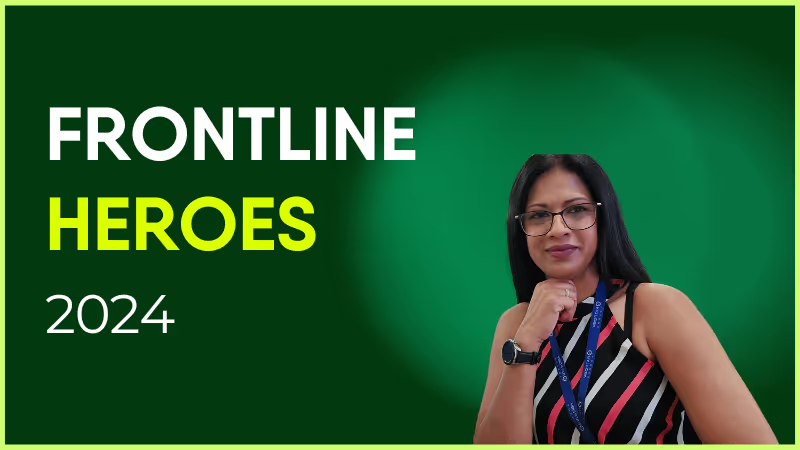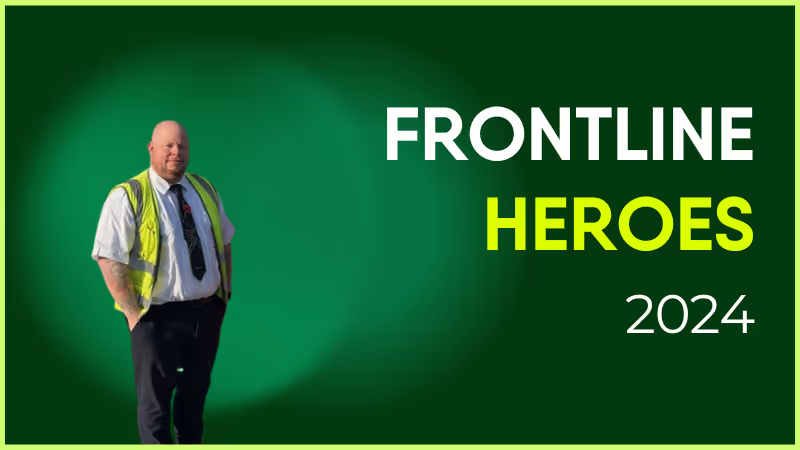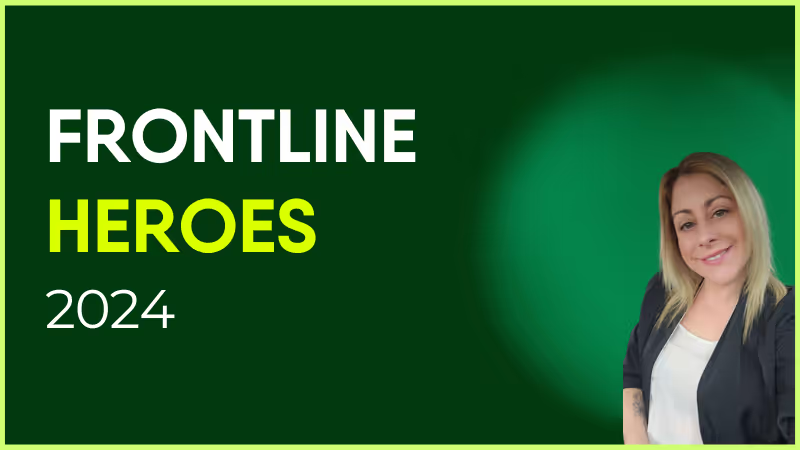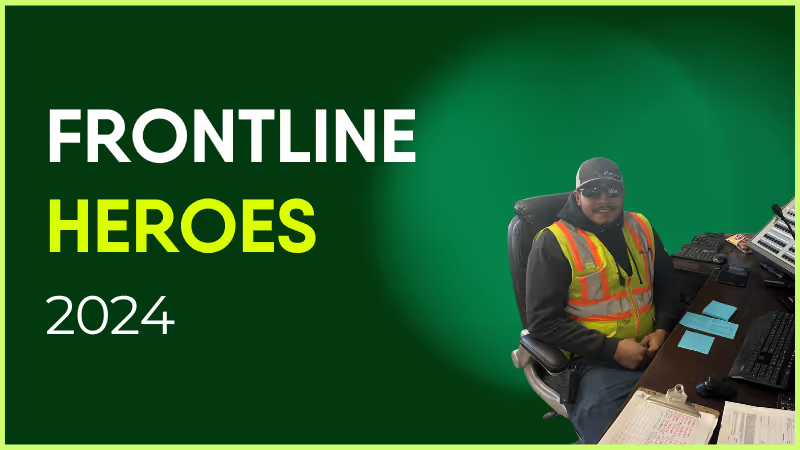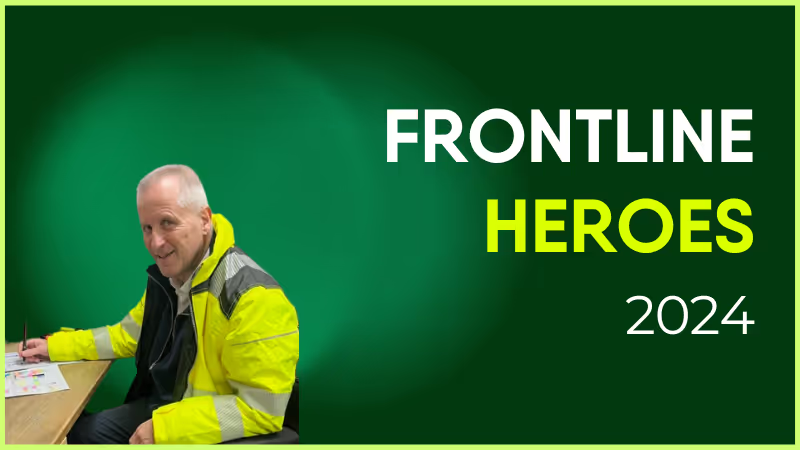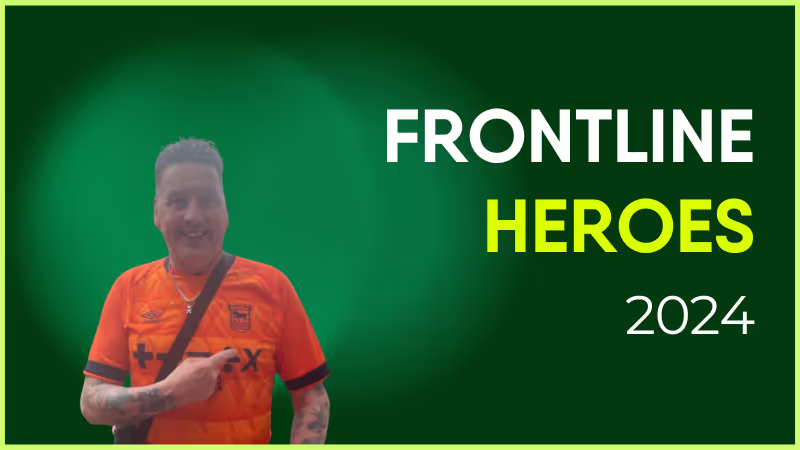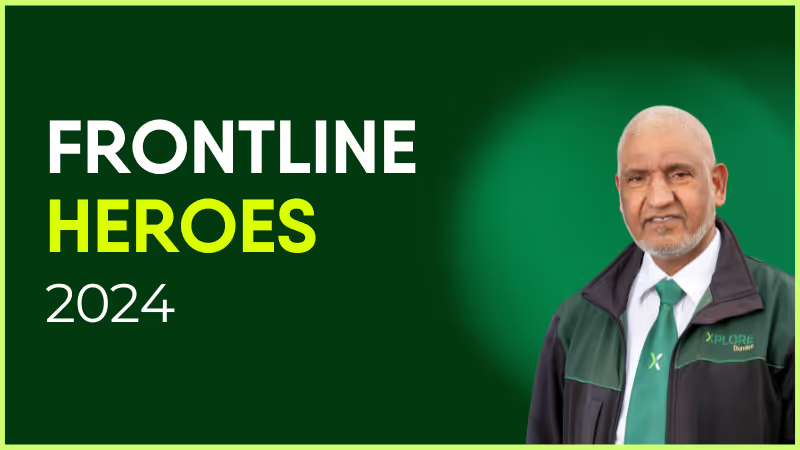
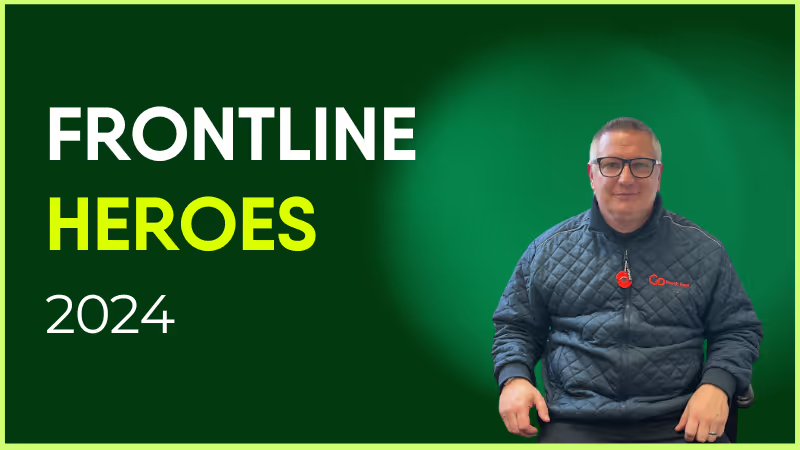
Stephen has been with Go North East since 2013. He has spent time as both a PCV driver and Depot Detailer, and works at the Percy Main depot in Newcastle. Stephen goes above and beyond to help staff everyday, despite the inherent challenges of the job. He spent over 23 of his earlier career with the Royal Air Force, and this strong work ethic and focus on teamwork carries through to everything he does. He never fails to maintain a high level of quality and professionalism in his work, helping to provide a best-in-class service to the people of Newcastle.
Nominated By: Karl Roper, Operations Supervisor
What makes him awesome?
Stephen has been with Go North East since 2013. He has spent time as both a PCV driver and Depot Detailer, and works at the Percy Main depot in Newcastle. Stephen goes above and beyond to help staff everyday, despite the inherent challenges of the job. He spent over 23 of his earlier career with the Royal Air Force, and this strong work ethic and focus on teamwork carries through to everything he does. He never fails to maintain a high level of quality and professionalism in his work, helping to provide a best-in-class service to the people of Newcastle.

Every week is EMS Week at Blink — because we care, too
EMS Week may be over, but at Blink, our appreciation for emergency medical professionals doesn’t end with the calendar. For us, recognizing the lifesaving work of EMTs, paramedics, and staff isn’t a once-a-year gesture — it’s a year-round commitment grounded in care.
This year’s EMS Week theme, “We care for everyone,” says it best. EMS teams are there for all of us — and it’s our job to be there for them.
Behind every siren is a team that deserves support
The reality of working in emergency medical services is demanding on every level. Long hours, unpredictable situations, and high-stakes decisions are just part of the job. And for EMS professionals, that job never really stops — holidays, weekends, middle-of-the-night calls.
It’s a role that requires not just skill and courage, but constant coordination, communication, and clarity. And that’s where Blink comes in.
Caring for others starts with caring for your team. That’s why Blink is designed to meet the needs of EMS professionals — not just as employees, but as people.
At Blink, we’re proud to serve thousands of paramedics, EMTs, and staff across some of the country’s largest EMS organizations.
Assisting EMS behind the scenes
We’re proud to work with EMS organizations across the country — from city ambulance services to rural responder units — to help their teams stay connected, informed, and empowered, no matter where the job takes them.
Whether they’re responding to an emergency or prepping for the next shift, EMS workers need tools that work as hard as they do.
With Blink, EMS organizations can:
Send real-time updates about protocols, routes, or equipment changes
Deliver training resources straight to mobile devices
Coordinate shifts and crews with better visibility and fewer delays
Recognize outstanding work with peer-to-peer shoutouts and leadership messages
Give employees a voice with surveys, feedback tools, and two-way communication
Foster connection between teams that rarely see each other face-to-face
Poor communication is the #1 most common stressor for EMS workers (BMC Emergency Medicine)
Built for the field — not just the office
EMS professionals don’t spend their days behind a desk. So why rely on systems that expect them to?
Blink is a mobile-first employee experience platform, built for people whose work happens on the move. We make it easier for EMS leaders to reach every team member — from the newest trainee to the most experienced paramedic — and equip them with the information they need, when they need it.
EMS professionals care for everyone with every call they answer. At Blink, we believe the same care should be extended to them — through tools that reduce friction, strengthen connection, and show that their work and well-being truly matter.
We believe EMS teams deserve more than recognition during one week of the year. They deserve better tools, better communication, and better connection — every week.
To all the EMS professionals working tirelessly behind the scenes and on the frontlines: thank you. We see you, we support you, and we’re committed to building technology that helps you do what you do best — saving lives.
Blink. And keep your EMS teams stay connected — every hour, every shift, every week.
For IT leaders, SharePoint can feel like a safe bet
Microsoft tools already power your organization. So why wouldn’t you use SharePoint as your employee intranet?
The truth is, while it can seem like a quick-fix solution, SharePoint has its drawbacks. It’s complex to learn and use. It doesn’t support frontline access or employee engagement. It simply isn’tbuilt for every employee or every intranet task.
The upshot? SharePoint lands your organization with a hidden IT tax — in the form of resources, consultants, workarounds, and additional software. It can quickly become a drain on your IT team’s time and budget.
So here, we look at exactly where SharePoint falls down — and explore modern intranet alternatives that make life a whole lot easier for your IT crew.
The promise vs. the reality of SharePoint
SharePoint is marketed as an “all-in-one” employee intranet and internal communications solution. File storage. Team sites. A knowledge base. A communication hub.
But the practical reality is a little different. The fundamental role of SharePoint is to store files. So, as an intranet, supposed to go way beyond file storage, there are some key ways that SharePoint fails to deliver:
Top-down communication. SharePoint prioritizes corporate broadcasts over peer-to-peer interaction. Without additional software, teams miss out on the human connections that drive satisfaction and retention.
Limited personalization. No intuitive dashboards or role-based filters here. So employees have to wade through irrelevant content to find the information they need. This is bad for intranet engagement and employee productivity.
An outdated user experience. In a world where TikTok and WhatsApp set the standard, SharePoint feels like a dusty corporate archive. Employees expect simple, fast, consumer-grade experiences — and SharePoint simply isn’t up to the task.
And those are just the headlines, not the full story. Beyond these issues, SharePoint poses problems for two key segments of your workforce — the IT team tasked with implementing it and the frontline workforce struggling to access it.
{{mobile-hub="/image"}}
The IT tax of SharePoint explained
First, let’s look at SharePoint from the perspective of your IT team. What does using SharePoint as an intranet platform mean for the people tasked with running it?
#1. Complex customization and integration
Configuring SharePoint isn’t a case of plug-and-play. Setting up permissions, workflows, and integrations requires specialized IT knowledge. Even small changes — like tweaking layouts — become time-consuming tasks.
Yes, SharePoint is customizable. But for many, that flexibility comes at a cost in the form of heavy technical requirements. Developers are essential to get just the basics working smoothly.
#2. Ongoing maintenance and updates
SharePoint setup is never “done.” Updates, patches, and version issues all demand ongoing IT oversight. This can be a huge burden for small IT teams and another cost to consider if you have to outsource this maintenance work.
#3. Reliance on consultants
Most organizations don’t have deep SharePoint expertise in-house. That means relying on external consultants for custom builds, integrations, and even routine maintenance. This can drag out timelines and inflate your IT budget.
#4. Extensive training
Training existing staff is an alternative to getting in the consultants. But it’s, again, expensive and time-consuming. It can take months of training to ensure that teams are proficient, and across a large IT team, getting everyone up to speed turns into a long-term project.
#5. Managing additional software
When you use SharePoint as your employee intranet, there are inevitably going to be gaps. IT has to find software that supports employee engagement, mobile access, and custom notifications.
This can bring its own problems. Your IT team shoulders the burden of keeping all software updated and integrated. And when employees have to navigate a complex tech stack, juggling multiple logins and passwords, tickets start to mount.
#6. Constant employee support
SharePoint’s complex infrastructure makes it hard for non-technical users (like your comms team) to create, update, and manage the intranet. Routine tasks turn into IT tickets, creating delays and frustration.
Comms teams can’t publish updates quickly, employees wait a long time for information, and IT is stuck in helpdesk mode. Instead of driving innovation, your tech team only has the bandwidth to wade through support requests.
#7. Adoption issues
Employees are used to fast, easy, and convenient online experiences. And SharePoint doesn’t live up to their high expectations. Intranet adoption suffers. Your IT budget is spent on an intranet platform that a large proportion of your employees avoid using.
{{mobile-main="/image"}}
How SharePoint falls down for the frontline
SharePoint causes problems for another segment of your workforce — frontline employees. The platform was never designed with deskless workers in mind. So, if you choose to use it as your only intranet platform, your frontline experiences the following.
A clunky mobile experience
SharePoint’s mobile navigation is awkward and slow. For employees on the go, employee communications are hard to access. This damages internal communications and the frontline employee experience.
The need to “go seek” information
Without real-time notifications, role-based alerts, or clearly defined communication channels, SharePoint forces employees to hunt down updates. For busy shift workers and deskless teams, this means critical comms are often missed.
No support for asynchronous work
SharePoint emphasizes live chats and video calls but ignores the reality for employees working shifts or across different time zones. If frontline staff aren’t online at the right time, they struggle to keep up with organizational updates.
A disconnected culture
Without a central, easy-to-use space for celebrating wins, sharing knowledge, or connecting co-workers, frontline employees are excluded from the company conversation. They miss out on the camaraderie that boosts engagement.
A digital divide
SharePoint creates a digital divide. Your desk-based employees can use it to access comms and resources online. Frontline employees have to make do with word-of-mouth messaging and the chaotic memo board. This two-tier approach leaves deskless workers feeling undervalued and less loyal to your organization.
And — in another bit of bad news (sorry!) — frontline accessibility issues spell further problems for IT.
Your IT team spends a huge amount of time troubleshooting accessibility gaps, finding workarounds, third-party plugins, and manual fixes. All the while, comms go unread, resources go unused, and the cost and complexity of your intranet ecosystem spiral higher.
{{mobile-hub-documents="/image"}}
The alternative? A modern employee intranet
Let’s give SharePoint its due. It’s a powerful document management system, deeply integrated with Microsoft 365. For compliance-heavy workflows and content storage it does the job.
But here’s the issue. SharePoint was never built to be an all-in-one employee intranet. And in 2025, an intranet needs to do far more than simply manage files.
An employee intranet has to work for all members of staff, including those hard-to-reach employees on the frontlines of your organization. It needs to support information sharing, employee engagement, and company culture. And it needs to alleviate the pressure on your IT team, rather than adding to it.
If you want an intranet that does all of the above, SharePoint isn’t the answer. Instead, you need a modern intranet solution, with the following intranet features:
Mobile-first design. A modern intranet is designed to work beautifully across all devices. It provides real-time notifications, offline access, and easy login — even for employees who don’t have a corporate email address.
Easy admin. Comms teams can post updates, share resources, and customize dashboards without sending a single IT ticket. With user-friendly drag and drop controls, they can tailor the platform to fit their needs without complex back-end development.
Culture-building tools. Modern intranets aren’t just information repositories. They’re engagement platforms — places where employees can share successes, receive recognition for a job well done, connect with peers, and feel part of something bigger.
A consumer-grade experience. The best modern intranet solutions are as intuitive and engaging as the comms apps employees use away from work. They feature social media-style tools, deep integrations, and single sign-on technology. So employees can access all workplace tools in a few easy clicks.
Bear in mind that a modern intranet doesn’t have to replace SharePoint altogether. It can integrate with it, pulling through documents, policies, and resources, while layering on the communication and engagement features SharePoint lacks.
That way, IT gets to keep Microsoft compliance and storage, and employees get an interface they’ll actually use — all without the associated implementation headache.
{{mobile-chat="/image"}}
SharePoint isn’t all bad — it’s just not enough
SharePoint is perfect for storage. But it’s not built for connection.
If you want a true intranet — one that engages frontline employees, strengthens culture, and reduces IT overheads — you need a modern platform, designed for today’s workforce.
That might mean ditching your current setup and opting for a SharePoint alternative. Or it could mean layering a digital front door on top of SharePoint, retaining the software’s good points while fixing its flaws.
An intranet like Blink is the perfect solution. Think mobile-first design, a consumer-grade user experience, and deep integrations with the workplace tools you already use.
With Blink. comms and employees can publish updates, share resources, and customize dashboards without waiting on IT — and IT finally gets to step away from firefighting SharePoint problems to focus on strategic projects.
The result? No more workarounds. No more time and money spent on that hidden IT tax. Just an employee intranet that works for everyone — from HQ to the frontline to your IT team.
Blink. And go beyond SharePoint to discover what really works for internal comms.
Unmotivated workers do the bare minimum. They can drag other team members down with them. They’re also more likely to be looking for a job elsewhere.
Given that only 23% of global employees feel engaged at work, improving employee motivation is a critical business priority. You need to employ strategies known to boost motivation and inspire better employee productivity.
In this article, we list a range of employee motivation ideas that will help you get the most from your workforce. We’ll be looking at the following:
Why is employee motivation important?
Key factors in employee motivation
12 ways to motivate employees
Using an employee super-app to create a motivated workforce
Why is employee motivation important?
Motivated employees tend to enjoy work. They have a sense of purpose and accomplishment. They also approach work with energy and drive.
But employee motivation isn’t just good for employees. It benefits your business, too. Here’s how:
Increased employee productivity. Motivated employees work harder. They’re more efficient and focused. They’re also more likely to take the initiative, going beyond their basic responsibilities.
Better quality of work. A motivated workforce doesn’t just produce more work. It produces better work. Workers are committed to quality. This results in fewer errors, fewer missed deadlines, and fewer workplace safety incidents.
Higher retention rate. Engaged employees are loyal to your organization. So they’re less likely to look for another job. With a motivated workforce, your organization experiences higher levels of employee retention and less absenteeism.
More profit. Gallup research on employee engagement shows that employee morale impacts a range of business outcomes. It leads to a 23% increase in profitability and a 10% increase in customer loyalty.
Key factors in employee motivation
There are two types of motivation — extrinsic and intrinsic.
Extrinsic motivation is all about the carrot and the stick. You create extrinsic motivation with external rewards and penalties. Rewards might include an employee’s salary, bonuses, rewards, and praise. Penalties might include a poor performance review or a manager reprimand.
Intrinsic motivation comes from within. Employees are motivated to do their best work because they find it personally rewarding. This type of motivation relies on drivers like interest, purpose, pride, and curiosity.
When you have high levels of employee engagement within a workplace, you tend to get high levels of intrinsic motivation. Employees feel invested in their work and the company. So they’re driven to bring their A-game without needing constant carrot-and-stick encouragement.
As an employer, it may seem that you have more control over extrinsic motivation. You can raise someone’s salary, provide bonuses, and praise a job well done. All of these things help to motivate an employee.
But the fact is, you can influence levels of intrinsic motivation, too. Here are some of the things that prompt intrinsic motivation in your employees.
Feeling valued
When employees feel you care about them, their wellbeing, and their lives beyond work, they’re more likely to bring their all. That means giving employee recognition where it’s due, treating people fairly, and valuing their input, too.
Making progress
Employees like to know where they’re heading — and where they’re at right now. That requires regular, positive feedback and constructive criticism. Training, development, and clear career pathing are also important.
A sense of purpose
Every job has its boring bits — the tasks that an employee is never going to be excited about doing. But when employees understand how their work contributes to organizational success and wider society, finding that motivation gets easier.
A positive company culture
Motivation is contagious. And it spreads more easily in organizations where there’s good communication and a sense of belonging. When they’re part of an open and supportive company culture, employees are more invested in company success.
The ideas we’ve included below incorporate all of the above. They also provide ways to inspire both intrinsic and extrinsic motivation in your workforce.
12 ways to motivate employees
To motivate your employees, you need to:
Highlight values and purpose
Communicate transparently
Give employees the resources they need
Use the right technology
Provide opportunities for professional development
Develop employee career paths
Support employee wellbeing
Encourage teamwork and collaboration
Support employees to build workplace friendships
Recognize employee contributions
Ask employees for their thoughts and feedback
Treat everyone equitably
Highlight values and purpose
According to Gartner research, shared purpose is one of five primary things motivating employees to stay in their jobs right now. It helps them feel invested in their work and your organization.
Shared purpose helps employees feel part of something bigger than themselves. So work becomes about more than just a paycheck.
You can support purpose in the workplace, by crafting clear company values and communicating these values regularly.
Start during onboarding. Introduce new hires to your company’s vision, mission, and values from day one. Explain how their role contributes to your goals and social impact.
Be consistent. Regularly reinforce your company's vision and mission in all employee communications. Make purpose a recurring theme in meetings, updates, and internal messaging.
Build a values-based culture: Create an environment where company values are lived and breathed daily. Take concrete action based on your values. That way, employees are more likely to believe in them.
Communicate transparently
Employee communication is another important element of employee motivation. Open and transparent communication builds trust. And employees who get enough information to do their jobs well are 2.8 times more likely to be engaged.
But while 87% of business leaders think their internal communications are “highly effective”, only 63% of employees agree. So what does effective communication look like?
Effective communication is a two-way conversation, where both leaders and employees get to share ideas, concerns, and feedback. It’s keeping employees up-to-date with key company developments, and it’s ensuring that you have clear channels of communication to reach all employees.
For remote and frontline teams, this means choosing streamlined, digital communication channels. You need internal communication tools you can use to relay messages quickly and reliably, bypassing paper memos and an employee’s already overflowing email inbox.
Give employees the resources they need
Imagine you’re setting out on a long hike. You’re excited and determined to reach the endpoint.
But you’re given a pair of ill-fitting hiking boots to wear. And a mile or so into the walk, you realize that the map you’re following isn’t 100% accurate. You decide to call the hike organizer for directions. But the number’s engaged and you fail to get through.
It’s likely that at this point in the hike, your motivation has started to dip. You feel thwarted and discouraged. You’re tempted to turn back. What felt like a promising journey now feels like an uphill struggle.
That’s why it’s important to give employees the resources they need. They need the right tech, training, support, and information to do their jobs well. Without it, morale takes a hit.
Use the right technology
Technology is increasingly important to the employee experience. Done right, it makes life easier for employees. Done wrong, it causes friction and frustration, which harms employee motivation.
A concerning 83% of HR leaders say they don’t have the right technology at work. This is contributing to stress, burnout, and low morale. Similarly, only 10% of frontline workers say they have access to the tools, tech, and opportunities they need to connect and advance in the workplace.
All workers — those in the office, those working remotely, and those on your company’s front lines — need access to high-quality, user-friendly tech that makes their jobs easier, not harder.
That might mean using a mobile-first employee app to give frontline employees the resources and co-worker connection they crave. Or it might mean implementing a social intranet that supports workplace communication and collaboration.
You can also use tech tools that have a direct impact on employee motivation. Employee engagement tools help organizations to improve and track staff morale.
Provide opportunities for professional development
According to O.C. Tanner research, organizations have five times greater odds of achieving employee fulfillment when they support professional development. A comprehensive training program improves your workplace retention rate, too.
O.C. Tanner also found that organizations are more likely to make a success of skills-building initiatives when they:
Empower employees to make their own training decisions. Supporting employees to choose training paths that align with their career goals and interests improves engagement with the learning process.
Give employees time during work to complete training. Allocate dedicated time for training so employees don’t experience stress, trying to juggle learning with daily tasks and out-of-work responsibilities.
Provide or reimburse hobby classes as well as work-related learning. Reimbursement for hobby classes improves the odds that a skill-building program will improve retention by 119%.
Develop employee career paths
Training is important. But unless employees can put those newfound skills to use within your organization, they’re going to become frustrated. That’s why every employee should have a clear progression path within your organization.
Sit down with employees to find out where their ambitions lie. And — as we mentioned above — personalize a training program to support their career goals.
Also, try to be realistic and open with workers about when a promotion is likely. This will depend on their current skill set and your organizational needs. If an upward move isn’t available for the foreseeable, there are other things you can do to keep staff motivated.
A lateral move helps employees to develop skills in another area of the business. You give them a new challenge and support them to become well-rounded members of your organization.
Similarly, stretch assignments are a great way to grow employee skills. They encourage workers to move beyond their comfort zone, take on new responsibilities, and prepare for higher-level roles.
Support employee wellbeing
In its State of the Global Workplace Report for 2024, Gallup talks a lot about employee wellbeing. It reveals that to improve employee lives and organizational performance, employers need to do the following:
Make support for employee wellbeing visible and consistent
Assign employee wellbeing counselors or coaches
Emphasize wellbeing at work and in life
Go beyond physical health to provide mental health and holistic support
Employee wellbeing goes beyond the odd mindfulness session. It requires a company-wide approach and a real understanding of what your employees might be struggling with.
Starbucks is a great example. They’ve been helping employees with the astronomical cost of housing. They offer a Tenancy Deposit Loan Scheme that they’ve named Home Sweet Loan. Employees can access an interest-free loan to pay the rental deposit when moving into a new home.
Starbucks is making it easier for employees to find and secure housing. This is good for their baristas. But it’s good for business, too. Because when employees aren’t worried about the roof over their heads, they’re more motivated and focused at work.
Encourage teamwork and collaboration
A 2022 Corel report reveals that 41% of employees have left their jobs or would consider leaving their jobs due to poor collaboration at work.
Collaboration is a great way to engage employees. It helps to create a sense of belonging. It makes work more efficient because teams share knowledge and resources freely. Plus, employees motivate one another when they work together.
You can support collaboration by supporting employees to build positive workplace relationships (more on this in a moment). Praising teams, rather than individuals, for their successes is also a good idea.
For teams who work disparately, the right intranet or app is an important part of the puzzle. You need tools that support employees to collaborate in real-time and access shared resources.
Water cooler chat may feel like an unnecessary part of the work day. But giving employees the time, space, and, in some cases, the tech they need to develop workplace friendships is incredibly important to engagement.
Employees who feel that they belong within an organization are 5.3 times more likely to feel empowered to perform their best work. And those with a best friend at work are more productive, happier to innovate, and happier to share ideas.
So schedule social events. Allow time at the beginning or end of meetings for informal conversation. If your team works remotely or you have frontline workers, be intentional about creating these opportunities for connection.
That might mean letting employees create shared interest groups on the company intranet. How about a book club? Or a running club? Maintaining a news feed where employees can post, comment, and like, helps remote and frontline workers to build connections, too.
Recognize employee contributions
Employee recognition and rewards are another important pillar of employee morale. When employees feel their hard work is appreciated, they’re more likely to maintain their motivation.
They’re also more likely to stay working for your company. According to recent Gallup and Workhuman research, a 10,000-person organization can save up to $16.1 million a year in reduced employee turnover costs by making recognition an important part of company culture.
Timely and relevant recognition from managers is essential. But peer-to-peer recognition can be just as valuable and it has a surprising benefit. 75% of employees say that giving recognition makes them want to stay at their current organization longer.
Blink’s employee recognition feature makes it easy to give every employee the appreciation they deserve. You can create personalized recognition posts in seconds. Then, share praise with the individual or publish it on the company news feed for everyone to see and celebrate.
If you want to offer employee rewards as part of your recognition program, be sure to find out what employees are excited by. You may think that cash bonuses and company merchandise are great incentives. But it may be that employees would prefer something else, like extra paid time off.
Employees are more motivated when they feel listened to. When an employer seeks their input and insight, it makes them feel valued, which contributes to employee morale.
Ask for employee input on key decisions. Taking everyone’s opinions into account when implementing change helps to ensure buy-in.
Also, get employee feedback on a range of issues, on a regular basis. Use surveys to ask workers about the employee experience, workplace satisfaction, or workplace rewards. Their answers will help you to develop a more motivating environment for employees going forward.
Just remember that feedback is a multi-stage process that requires effective communication. You need to:
Ask for employee feedback
Thank employees for their feedback
Tell employees what their feedback has revealed and what you plan to do about it
Keep employees in the loop, informing them how your plans are going
Closing the feedback loop like this keeps employees invested in the feedback process. It shows them that you’re really listening to what they have to say.
Treat everyone fairly and equitably
Fairness is crucial to employee motivation. When employees feel that they aren’t being treated fairly or equitably, motivation takes a dive.
So all employees must be given equal access to training and career progression opportunities. Everyone should have the option to give feedback and build workplace friendships. They should get the resources and recognition they need to feel valued.
Pay also comes into the equation. You can prevent resentment and employee churn by offering employees a fair salary. Conduct a pay equity audit. Also, regularly check to see how your wages match up with market trends and the cost of living.
But bear in mind that engaged employees look for a 31% pay increase to consider taking a job with another organization. So you don’t necessarily have to match competitors like-for-like if you provide non-monetary benefits and a company culture employees enjoy being part of.
Using an employee super-app to create a motivated workforce
Having the right tech on your team makes it easier to boost employee motivation.
An employee super-app is particularly useful for remote and frontline employees who may feel disconnected from motivators like co-worker support, feedback opportunities, and company resources.
An employee app helps you to create an equitable experience for all members of staff, no matter where they work. It also allows you to put motivation-boosting features into the palm of every employee’s hand.
Take a look at these employee app features, sure to improve employee motivation.
Social features
Social features like a company news feed help to include everyone in your company culture and support workplace connections.
A resource library
A resource library gives all employees, no matter where they work, access to essential workplace resources. You can populate your library with how-to guides, company policies, and FAQs.
Recognition features
Built-in recognition features make it easy to show appreciation for employees and encourage peer-to-peer recognition, too.
Survey tools
The best employee super apps make it easy for managers to request feedback — and for employees to provide it.
A digital hub
By integrating with all of the digitals you use, you can give employees access to professional development, wellbeing, and collaboration tools, all in the same place.
Effective communication
With a news feed, group messaging, and 1:1 chats, it’s easy for every member of your organization to take part in the company conversation and for leaders to amplify company culture.
Analytics
Analytics help you to track motivation and engagement. This allows you to make data-backed improvements to your engagement initiatives.
In summary
Find ways to motivate your employees and you create a happier, more engaged, more productive workforce. You improve employee loyalty and talent retention. You also achieve better business results.
There are lots of different things you can do to motivate your workforce. But all actions center around four key pillars:
Help employees find meaning in their work
Show employees that you value them as people as well as workers
Support employees to make progress in their careers
Build a positive company culture
It’s easier to do all these things when you have the right tech tools. An employee super-app brings your organization together and helps you establish a positive company culture.
It also gives employees all the communication, resources, and digital tools they need to excel in their roles. They experience more flow and less friction, which makes for improved employee motivation.
For business leaders, having a strong team is essential for the success of their organization, especially if your teams are dispersed, deskless or remote. But how can you ensure that your team is performing at their best, wherever and however they work? How can you truly improve teamwork in the modern workplace?
The truth is, there’s no one-size-fits-all approach when it comes to how to improve teamwork in the workplace. The best thing you can do is experiment with many different methods until you figure out what works for your workers’ needs. That’s why we created a list of strategies for you to choose from.
So, how can you improve workplace teamwork?
This post covers 22 creative ideas to consider, plus discusses the differences in improving teamwork for frontline teams.
Improving teamwork in frontline teams vs desk-based teams
It's important to acknowledge that there are key differences in ways of improving teamwork depending on whether your team is desk-based or on the frontline.
With desk-based teams, developing better teamwork skills might involve setting clear goals, implementing agile project management techniques, and creating an inclusive work culture. You’re likely going to be able to have regular and easy face-to-face meetings to keep team members engaged and up to date on team projects. Your tactics for improving teamwork, therefore, become a little more straightforward and almost naturally occur.
Frontline employees, on the other hand, require a bit more attention and thought. Frontline workers aren’t going to be sitting at their screens all day, and they may not meet in a central location like an office. This is why you may need to implement specific teamwork tactics for this group of employees.
For example, you might focus on workflow optimization and really driving efficient two-way communication between teams and leaders in order to compensate for the lack of a central location and “office chit-chat.” Tightening your comms between the frontline and desk-based teams ensures everyone is on the same page and working towards a common goal.
Whether you’re managing a frontline or desk-based team, what really matters is that you listen to the direct needs of your workers. What does their day-to-day life at work look like? How can you provide your teams with the right tools to succeed as a team, wherever they may be working from? The creative ideas outlined in this guide should help you brainstorm some out-of-the-box solutions for improving teamwork in your workplace.
How to improve teamwork: First steps for leaders
Using the innovative tips we've outlined for you below, you can inform your regional managers, team leaders, and line managers, so they can start implementing these ideas with their respective teams. But before jumping straight into the fun, get-your-hands-dirty type of team building, it's important for leadership to lay down some groundwork.
Here are our first steps for business leaders looking to improve teamwork in their workplace:
Clearly define team goals, roles, and responsibilities
Communicate openly and frequently
Foster a culture of accountability and support
Find the right employee app to support your workforce.
21 innovative ideas to improve team performance
1. Involve team leaders in corporate communication
Leadership is a crucial driver of teamwork. For teams to work effectively, objectives need to be clearly defined. Competing projects and responsibilities pull most team members in different directions (see the corporate communications strategy tool).
For example, leaders in the manufacturing industry can often be stationed on the factory floor, where they may not have easy access to company-wide communications. This can lead to a disconnect between their team and overarching company goals.
It’s up to leaders to set the bigger picture so they can set priorities. Ensure leadership is involved in internal comms planning so employees at all levels across multiple teams can understand the overarching company goal towards which they’re working. If all team members understand their place in the bigger picture, it will help motivate and align their efforts towards a common goal.
2. Create teamwork recognition programs
Rewarding successful collaboration creates an incentive for people to do so more frequently. Collaboration is significant for deskless and frontline employees who might not feel like part of the team.
Find ways to publicly acknowledge the hard work of effective teams, whether by giving them an award in front of their peers or by sharing their wins in a writeup. Teams who win together will continue to work well together.
Teamwork recognition programs will be especially important for frontline or remote teams, as they may not receive that natural praise that occurs in an in-person or office setting unless it is directly communicated with them.
In fact, employee engagement statistics show that nearly 4 in 10 (37%) frontline workers don’t feel as valued as their desk-based colleagues. One solution to this is to provide an employee app with a recognition feature, such as Blink’s Recognition.
By providing direct tools that enhance recognition or Kudos between team members, leaders can increase collaboration, job satisfaction and more natural engagement.
3. Clarify ownership early on
Teamwork is challenging when people aren’t sure what their roles are. Ambiguity can lead to resentment, arguments, or even delayed projects. So, clearly document the scope of each role from the get-go. And make sure that documentation is accessible to everyone, so that when questions arise, they’re easy to answer.
For example, Blink users can store this information in the Hub. This allows workers that are frequently on the go to have easy access to job responsibilities and sets the tone for role ownership.
4. Make communication a two-way street
Teamwork only works when team members feel like they can speak openly, share ideas without getting shot down (and build on those of others), make suggestions, and voice their opinions.
Make sure communication isn’t just flowing downward, but also upward and between team members. Multi-way communication is the goal. A communication tool that allows employees to engage in two way conversations with each other and with management is a great way to facilitate this.
Outlining clear roles isn’t enough to keep teams operating smoothly. The next step is figuring out who is responsible for what work (on what timelines). Get the team together to outline skill-sets and create project workflows and deadline charts. Oh, and make sure everyone's present when the discussion happens. That way, team members can call out unrealistic expectations of them.
6. Have a clear organizational purpose
Every member of a team should be clear on what the long-term goals of the company are. This ensures the team projects are purpose-driven and valuable, have clearly defined and measurable objectives, and that everyone on the team moves in the same direction.
Having a purpose-driven team impacts engagement levels, productivity, and innovation. When team members have a clear understanding of why they’re doing what they do, they are more likely to feel motivated and inspired to work towards that purpose.
If your company doesn’t have a clearly defined purpose or mission statement, now is the time to create one. This initiative can be guided through brainstorming sessions or employee surveys, and can be stored in an easy-to-access, mobile Hub for on-the-go guidance.
7. Set clear team goals
When you're talking about improving teamwork in the workplace, the importance of clearly defined objectives can't be overstated. Teamwork is basically impossible in an environment where no one is sure what the team is working toward. You need to be sure that everyone on every team is on the same page.
To help with this, you can establish team processes that guide behavior and decision making towards meeting your goals. Whether that means letting other project members know the status of your work, or always speaking up if you see a problem that could affect the team’s success, setting clear expectations helps team members work better together.
An employee app like Blink can keep each team member on the same page and working towards the same goal with secure direct chats, the Blink feed for key updates and a central hub for storing policies, procedures, and guides in one convenient place.
8. Identify communication problems
Doing an internal comms assessment may seem like a strange way to bolster teamwork, but remember that effective collaboration can’t happen without effective communication. Addressing communications pain points and sources of strife (e.g., failure to meet deadlines, unresponsiveness, and interpersonal issues) in your organization proactively will make it easier for all of your employees to collaborate in the future.
To better identify and understand communication problems arising in your teams, particularly on the frontline, you need a way to measure them.
With Blink's Frontline Intelligence feature, you can track powerful engagement analytics to offer insight into the people and relationships that make your organization tick. By understanding who engages with what, and what your teams aren't engaging with, you have the opportunity to spot any potential communication pain points and address them before they become a larger issue
9. Stop micro-managing
Teams should feel like standalone units even as they contribute to your larger organizational goals. If you don't give your teams some degree of autonomy, they won't work as a collective because they'll always be waiting for management to issue orders from on high. As much as possible, let teams set their deadlines, develop their workflows, and work out their issues.
10. Talk less, listen more
There will always be give and take on teams, but the giving and the taking eventually has to balance out, or resentment will build up, and work will slow down. Ensure your company culture rewards listeners as much as speakers and sets a good example by being a listener yourself.
You can also give those whose ideas and opinions would ordinarily be drowned out a voice by encouraging people to share outside of team meetings (on an employee engagement app like Blink, during open-door hours, etc.).
Encouraging a culture of listening will not only have a positive impact on teamwork but on the workplace in general as it will make employees feel valued and increase engagement between team members.
When team members feel heard and their opinions valued, they’re more likely to contribute and collaborate effectively. So next time you’re in a meeting or brainstorming session, remember the age-old adage: it’s better to listen than to speak. Your team will thank you for it.
11. Let teams use multiple methods of communication
Different employees communicate in different ways. Some, as noted above, will dominate a meeting. Others prefer to speak one-on-one while others feel most comfortable in a chat room or texts.
Deskless and frontline employees may be most efficient when using an employee app or similar communication tool. In any case, letting teams use whatever forms of communication and communication tools they prefer is another way to ensure that everyone can have their say.
One way to facilitate this is to provide your workforce with a mobile and desktop employee communication app, like Blink, that allows for various forms of communication and feedback within one easy-to-access, flexible platform.
12. Mediate disputes
Some companies approach conflict resolution with a wait-and-see approach, but that doesn't work very well for team members' disputes. Because these disputes can quickly grow into serious issues that interfere with projects, it's necessary for team members to address them proactively. Ensure interpersonal conflicts are written and bring in mediators as required to work through issues between colleagues.
13. Allow flex work
Introverts, early risers, night owls, and caregivers can all be valuable team members, so don’t ignore them when you’re considering how to improve teamwork in the workplace.
Offering employees flex work options like telecommuting and quiet workspaces ensures that your entire workforce can be as productive as possible and take advantage of opportunities to work collaboratively.
Flex work can also have a positive impact on overall employee satisfaction and mental health by improving work life balance and decreasing stress levels.
So consider offering flex work options, along with the right employee engagement tools to keep your team engaged, and see how it improves teamwork in your organization.
14. Use better collaboration tools
Integrated tools like Blink encourage effective teamwork because they put all of the resources employees need to collaborate in one place. There are information management tools, agile project management tools, sharing tools, scheduling tools, team project and task management tools, and admin tools in one place, so teams don’t have to waste a lot of time switching between platforms.
If you are working with a remote team, you may also want to consider adopting a cloud-based desktop virtualization solution such as V2 Cloud, which provides complete access to a full Windows desktop from anywhere, with any device. It’s crucial to have the right infrastructure when working with a hybrid policy to boost better collaboration and productivity.
This enables distributed teams to accordingly give members access to a multi-user Windows operating system with Microsoft Office, Quickbooks cloud hosting and all business applications that employees and consultants require.
15. Ask team members for feedback
Knowledge is power, so if you want to know where your workforce is when it comes to teamwork, why not just ask them? Soliciting feedback doesn’t have to be complicated or time-consuming.
Open and honest feedback is a vital cog in the teamwork wheel, especially for frontline workers. If team members feel they have a safe space to share their thoughts and concerns, even when they're out of the office loop, they’ll likely be more engaged and willing to contribute their ideas in future. This can help to guide future team-building processes and be part of your employee engagement strategy.
Blink offers surveys within the employee app so that all employees have the opportunity to provide feedback - or do short interviews with team members to see how projects are coming along.
16. Hire wisely
It’s so tempting to fill positions with candidates who have the top qualifications but don’t discount the importance of an applicant’s personality. When you know that a new hire will be working as a part of a team, consider involving that team in the hiring process.
You may know what kind of skills and experience a hire should have, but they will have more insight into how well potential hires will or won’t fit in with existing team members.
17. Start a culture committee
Did your company’s culture develop intentionally? Probably not. Suppose your company culture grew more or less organically and isn’t really supporting teamwork initiatives. In that case, you can create a culture committee to retool your company culture so that it supports collaboration, openness, and other values you deem necessary.
18. Create a mentor program
Team members will work together more effectively when they feel connected. Creating a mentor program that pairs new team members with company veterans promotes cohesiveness and smoother collaboration.And for deskless workers, the benefits of a mentor program reach wider than just your employees.
Studies show that providing coaching and mentoring for frontline practitioners can have a positive mediating impact on outcomes for the children, young people, families and communities who use these services.
19. Meet in different locations
You can cut down on the number of meetings teams have to attend by doing more of your communication in an employee app like Blink, but that doesn't mean you'll never need to have another meeting. When you have to meet, hold meetings in new locations in the office or local cafes or other public spaces. Talking outside of the office can increase productivity, inspire communication, and make team members more creative. Just make sure you’re aware of the risks associated with using public wifi and take appropriate measures to protect yourself from cyberattacks.
20. Create team traditions
When teams have their traditions, and inside jokes, they'll naturally feel a sense of unity. That solidarity will positively impact the work they do, whether in the office or out. Encourage teams to eat lunch or take a coffee break together, or hold a team vs. team board game or video game competition.
This can help to build teamwork skills in a lighthearted and relaxed environment, promoting team collaboration.
21. Mix it up
Teams that have been working together for a long time work better together and may be more productive because of the trust and familiarity that has built up over time. Newly-formed teams, on the other hand, are typically better at coming up with new ideas and making big leaps. Don’t be afraid to shift people around or to form new teams.
You can’t force teamwork. Collaboration is something that happens naturally when conditions are right. Implementing some or all of the ideas above can set the stage for smoother teamwork at your company—resulting in higher productivity (and more profit).
How can the right employee engagement app improve teamwork in the workplace?
As mentioned above, using an employee engagement app can cut down on the number of meetings teams have to attend, allowing them to spend more time actually collaborating and working on projects.
Additionally, having a central place for all company announcements and updates can improve communication between desk-based teams and frontline workers—who make up a whopping 80% of the global workforce.
By facilitating and driving engagement, the best app for business teamwork will enable teams to work together effectively, improve the employee digital experience and help them stay on top of their day-to-day tasks, goals, and communications. By making teamwork easier and more efficient, an employee engagement app can ultimately result in improved productivity and stronger team collaboration, particularly for frontline teams.
Plus with key employee engagement data, analytics and insights available through the Blink platform, your leadership team can always stay on top of who's engaging with what to streamline the employee experience and encourage teamwork.
Why workplace teamwork matters so much
Collaboration is the backbone of business success. In fact, the strengths and dynamics of your team directly affect your business outcomes.
In the modern knowledge economy, productivity often involves working with people from different backgrounds, skill sets, and industries. One mind alone cannot generate solutions to the kinds of large-scale problems companies have to overcome to succeed.
The most successful companies think regularly about how to improve teamwork in the workplace because they know they’ll see a return on their investment. They actively work to create the kinds of conditions that promote collaboration.
Here’s the ROI these organizations see:
Boosted employee engagement
Worker engagement distinctly increases when employees can regularly work together in teams and collaborate. The ADP Research Institute surveyed over 19,000 workers and found that feeling part of a team is a massive factor in employee engagement: those employees who felt like members of a team were more than twice as likely to be fully engaged.
In addition, research by McKinsey shows us that the most engaged workers are those who work in teams. They are twice as likely to be fully engaged as people who work on their own.
Collaboration breeds innovation
When teams work together smoothly, they harness the power of diversity and can come up with ideas an individual might struggle to come up with alone. Alexia Cambon, Director of Research at Gartner, says:
“Our research shows that teams of knowledge workers who collaborate intentionally are nearly three times more likely to achieve high team innovation than teams that do not use an intentional approach.”
As such, it’s important to make sure teams have the right tools and processes in place to collaborate effectively. This might include a live, collaborative Feed for easy access to live updates project materials, a team chat tool for quick communication, and regular check-ins to ensure everyone is on the same page.
Teamwork is faster
Teams that work together also tend to work faster because they can draw upon a wider range of opinions, skills, and experiences, whether they’re making decisions or putting together plans.
Divide difficult tasks into simpler ones, then collaborate to complete them faster
Develop specialized skills, so that the best person for each task can do it better and faster.
So encourage teamwork in your organization and watch productivity soar. Not only will speed increase, but it will maximize your efficiency and give your team the opportunity to learn and grow.
Simply put, more brains = more productivity
When an entire team is working on a project, that project will move from the design phase into the implementation phase more quickly, and more efficiently –– even with fewer resources.
Teamwork leads to learning opportunities
Working collaboratively gives all team members an opportunity to learn others’ experiences. They gain insight from fresh perspectives and learn new ways of doing things. This can lead to greater job satisfaction, as well as improved morale and productivity over time.
In addition, team projects can serve as valuable development opportunities for individuals’ skills and experience, helping them grow in their careers, and even develop higher levels of loyalty to your business.
“By sharing information and essentially cross training each other, each individual member of the team can flourish,” reports Atlassian.
Collaboration builds confidence
People who work on effective, supportive teams feel valued and appreciated because they know they have something special to offer the team. And as we’ve discussed many times in the past, employees — especially introverted employees — who feel valued are more engaged.
Of course, it’s important to clarify that questions about how to improve teamwork in the workplace aren’t just being asked by employers. Surveys show that most employees consider teamwork very important, even if they’re not sure how to improve collaboration in their workplaces.
In addition, a person who feels valued as part of a team will feel more confident and willing to share their ideas and take calculated risks. Should they stumble, they know they have a team there to lift them back up.
Final Thoughts
Ultimately, fostering a culture of teamwork takes effort, but it’s worth it for improved productivity and satisfaction in the workplace.
By implementing some of these ideas and using an employee engagement app like Blink, your employees will feel more connected, communication will improve, and your team’s collaboration will thrive. Happy teamwork!
Blink’s employee app makes working in teams a breeze.
Actimo vs. Blink – which is better? It's a question many buyers are asking. And of course, the answer depends on who's asking!
Blink and Actimo are both cloud-based internal communication platforms with a strong customer base and some overlap in features. Yet their primary focus varies.
Actimo vs. Blink – quick facts
Actimo is ideal for teams who want a platform that enables e-learning but aren’t as concerned about real-time interaction.
In contrast, Blink is a truly inclusive real-time communications platform for frontline workers, though it doesn’t have an integrated LMS system.
Your organization’s technical resources may also determine which one is best for you. Blink is easier to use out-of-the-box, while Actimo requires a more thorough setup.
Both apps place a heavy focus on mobile usability, but Actimo doesn’t offer a newsfeed and is best used as a static intranet.
And while Actimo's designed for medium-sized organizations, Blink works best for extra-large enterprises with 25,000+ staff.
In this post, we'll break down the key differences and similarities between Blink and Actimo.
Let's dive into it.
Actimo vs. Blink How they're similar
Mobile-first content
On Blink and Actimo, all content is mobile-first. In other words, everything is optimized to be viewed on a small phone screen, not a desktop. This means both could be a solid option for organizations with mobile or frontline workers.
Customizability
Blink is customizable through third-party integrations and offers a wide variety of functionality through its micro-app function. While the starter platform is incredibly easy to set up, full end-to-end customization can take some work through micro-apps and necessary integrations.
Similarly, Actimo can be extensively configured with a fully customizable onboarding flow and plenty of in-app engagement data. Capterra users commented that it's 'easy to make presentations or apps for almost any purpose.'
Multi-lingual offering
Both platforms cater to multiple different languages. Blink even offers on-demand translation of content into the users language of choice.
Some users complained that Actimo switches text from English to Danish.
Actimo vs. Blink: How they're different
Integrations
Blink's integration capability is one of its strongest selling points. Through its dedicated app marketplace, users can shop for new integrations and mix and match to build their own 'super app'. Integrations are configured using Single Sign-On, so users can access different tools without leaving Blink.
By contrast, Actimo probably won't be the solution that replaces every one of your current internal communications tools. There are limited integrations with third-party business tools beyond HR systems.
Employee engagement
Taking a cue from the most popular social apps, Blink offers a live feed with company updates and user-generated text, images, and video. As a result, engagement with the app is remarkably high, with an average of 14 app opens per user per day.
On Actimo, it can be a lot of work to get set up and maintain engagement. Since the content isn’t primarily user-generated, admins will need to regularly create and schedule content to encourage use. That also means communications are more top-down than other platforms.
e-Learning
Actimo is a fantastic application to facilitate training and learning. Users liked that 'training is fully self-paced and fits anywhere in employee schedules.'
Within the platform, micro-learning is detailed yet simple to use. There are also engaging learning paths with gamified achievements that users can access at their own pace. Data on the compliance with, and completion of, necessary training, is another plus.
On Blink, there is no native onboarding and training function. However, a function can be added with the micro-apps feature, or by adding an integration.
Peer-to-peer communication
Blink offers a searchable in-app database of employees, so it’s easy for users to find a coworker they want to connect with. When they find that co-worker, there are many different ways to communicate: 121 or group chat, through real-time feed posts and comments, or by creating Hub content.
For those looking for a platform with a People Directory, Actimo may also not be a good choice. Beyond group members, there is no way to see a complete list of employees at your organization.
UX/UI
Blink developers design the app to mimic consumer apps like Uber and Facebook as closely as possible, so the user experience is familiar and fresh. Reviewers praised the platform's 'responsive, team-customizable features.'
While Actimo users appreciate they have 'full control of the layout', they were disappointed that the UI is 'clunky andoutdated'.
Frontline focus
While users commented that the app works 'just as well for desktop as it does on mobile', Blink is unique in its laser focus on the frontline experience. And despite offering a highly usable mobile experience, there is also a surprising amount of depth to the content and features.
While Actimo is optimized for the frontline experience, it doesn't focus on tailored features for specific industries (in Blink's case, transport and healthcare).
Targetting content
Blink's architecture is based on 'teams', which means all content is targetted is personalised to users depending on the groups they're in. Users can schedule campaigns months in advance, and 'pin' posts to ensure they're read, or tag them as 'mandatory reads'.
Actimo users complained the app is 'missing a way to micro-manage groups and send-outs', and requested 'more functionality for campaign planning.'
Actimo vs. Blink: systems and pricing
Unlike Actimo, Blink offers all of its features and capabilities through a single system with optional paid add-ons, which includes a dedicated Customer Success Manager. An all-in-one solution like Blink is attractive to many buyers since it provides seamless functionality and is priced as a single unit.
Blink also offers a number of pre-built integrations with popular business apps to allow for further customization.
The core product is priced in four according to scale:
Essential
Business
Enterprise
Enterprise Plus
Organizations can also take advantage of a 40% discount if they pay annually.
Overall, Blink is an affordable product, with users commenting on its 'excellent value for money'. While Actimo pricing is not available online, reviewers commented on the cost per user being 'hard to justify' for smaller organizations.
Actimo vs Blink: final thoughts
While Actimo is a strong choice for organizations focused on training and onboarding, it lacks the features to make it a true digital workplace.
While the Great Resignation seems to have subsided, talent retention is still a pressing issue — and it can make all the difference to your business. Holding onto your best people, with all their skills and knowledge, means better productivity, customer service, and profitability.
In this quick guide, we explain what talent retention is and why it’s important. We also share what you can do to inspire employee loyalty in 2025 — from a connected workplace culture to the perks that matter most.
Ready to turn retention into a competitive advantage? Let’s get started.
What is talent retention and why is it so important?
Talent retention is your ability to hold onto your employees once you’ve hired them.
If you have an effective talent retention plan, employees stick around for long, stable, and productive careers within your organization.
So why does talent retention matter?
Talent retention is important because replacing employees is expensive. Gallup estimates that replacing a frontline employee costs 40% of their salary. This rises to 80% for employees in technical roles and 200% for leaders and managers.
By improving staff loyalty, you reduce costs associated with recruitment and onboarding. But there are other benefits of employee retention to bear in mind:
Improved productivity. Your organization is more productive because a high proportion of employees are fully trained and know how to do their jobs.
An expert workforce. You retain knowledge and skills within the business, which means you achieve your goals faster.
A positive company culture. Because workers are able to build strong and lasting relationships with co-workers, you raise satisfaction and loyalty.
One final benefit of staff retention is a better customer experience. And that deserves a section all of its own...
The link between employee retention and customer experience
“The customer's perceptions and related feelings caused by the one-off and cumulative effect of interactions with a supplier's employees, systems, channels or products.”
The snappier version? It’s the degree to which interactions with your brand spark joy in customers.
It’s easy to delight customers when employees are informed, happy, and engaged. And it’s very easy to do the opposite if staff are new to the job — or looking for a role elsewhere.
According to PwC research, 46% of customers will abandon a brand if employees aren’t knowledgeable and don’t know how to meet their needs.
Employee retention, employee experience, and customer experience are closely linked. Do right by your employees and they’re more likely to stay working for your company.
They continue to build their knowledge and skills, which means they’re more likely to provide an industry-leading experience for your customers.
Talent retention: why now?
52% of employees say they’re watching for or actively seeking a new job. And turnover rates for frontline industries remain high: 73.8% in hospitality, 56.7% in transportation, and 21.9% in professional and business services.
There’s another, stealthier problem at play too. Glassdoor has revealed that nearly 2 in 3 employees feel stuck in their roles. And Gallup says that we’ve moved beyond the Great Resignation into the Great Detachment, where employees are staying in roles they have little interest in.
In 2025, some employees are quitting. Others are sticking around for lack of a better option. In either case, the business suffers. But a focus on talent retention can help to combat both of these issues.
Talent retention strategies revolve around improving the employee experience. You make your workplace a better, more fulfilling, and more inspiring place to be. So both employee engagement and retention improve.
The first hurdle: identifying talent retention issues
How is your company doing in terms of talent retention?
To truly understand your performance, you need to know — and keep track of — your employee retention rate. You can use this number to set a baseline and establish targets. But while this figure tells you how many employees are leaving your organization, it doesn’t tell you why.
For that, you need to dig deeper. Exit surveys and interviews can reveal trends and problems with the employee experience. They can help you understand why employees are choosing to leave. Some of the most common culprits in 2025 include:
Work-life balance: a lack of flexibility in the workplace is leading staff — including frontline employees — to look for jobs elsewhere.
Career progression: lack of career or professional development opportunities is one of the most cited reasons for leaving a job.
Recognition: when you don’t show regular and authentic appreciation for employee efforts, they become demotivated and more likely to jump ship.
Workplace culture: a sense of connection and belonging have a big impact on employee satisfaction, so issues with managers and co-workers, or feelings of loneliness can raise employee turnover.
Salary and benefits: sometimes, it’s simply about the money — it’s difficult to keep employees if competitors are offering better rates of pay.
Convince employees to stay with these 6 talent retention strategies
Staff retention rates not where you’d like them to be? Reduce employee turnover with the help of these practical strategies.
Keep your finger on the pulse
Exit interviews are a useful talent retention tool. But wouldn’t it be better if you could prevent employees from handing in their notice in the first place? To do this, you need to understand the state of employee morale and engagement in your organization at any given moment.
There are some signs a manager may be able to spot. Drop-offs in productivity, refusal to commit to long-term projects, and a lack of enthusiasm are all signs that an employee sees their future elsewhere.
But you can go beyond manager observations to take the pulse of your entire organization. Use employee surveys to gauge sentiment on a range of retention-related topics. For example, job satisfaction, internal communications, benefits packages, and recognition.
{{mobile-survey="/image"}}
You can then act on any major bugbears to prevent employee experience issues from translating into higher employee turnover.
This feedback process has another talent retention benefit. When you show employees that their input is prompting real change in the workplace they feel heard and valued — and become more invested in your organization.
Help them achieve their goals
According to recent Randstad research, 31% of employees have quit a job because of a lack of career progression opportunities. Employees want to feel that they’re making progress toward their learning and career goals.
Investing time and money in professional development sends a strong signal that you’re supporting your employees over the long term. Build in career development plans, coaching, and one-on-one time as soon as a new member of staff joins your workforce — and sustain these initiatives throughout the entire employee journey.
Emphasizing that you see this as a long-term partnership rather than a transactional exchange of services (“you work, we pay”) lays the foundations for future success.
Offer regular recognition
Retaining employees is easier when they feel valued and appreciated. Workers are five times more likely to stay with your organization for two years or more when there’s a comprehensive recognition program in place.
{{mobile-kudos="/image"}}
All employees — whether they work in the office, at home, or on the frontlines of your organization — should receive regular appreciation for the work they do.
For teams working in the same location, informal recognition is relatively easy. For disparate teams and frontline employees, you have to be more intentional. The right internal communication tools can help.
You can use an employee app or intranet to highlight the hard work and achievements of your employees — and encourage peer-to-peer recognition across digital communication channels, too.
Create a positive workplace culture
Having a work bestie is more important than you might think. Employees who feel a sense of belonging are more likely to stay working for your organization.
As well as helping employees to build connections with co-workers, support them to understand and take part in company culture. Make company values and purpose part of your every day.
Managers also have a big role to play. 70% of the variance in team engagement comes down to the manager. So give your leaders the training they need to boost employee engagement and create a culture employees enjoy being part of.
Offer flexibility where possible
Flexibility and work-life balance are a top priority for employees. In fact, it’s the second most important factor for frontline employees when choosing a job.
Flexible working looks different in different organizations. Some employees get to work remotely, work compressed hours, or choose start and finish times.
For frontline employees, this isn’t so easy. But you can support work-life balance for this segment of your workforce by offering expanded paid time off (PTO) policies, a choice of schedules, and easy-access shift swap tools.
Revamp your salary and benefits package
When was the last time you looked at the salary and benefits package you offer? Pay is another big factor in employees deciding to look for another job.
So compare your offering to that of your competitors and consider improving your package if you find you’re falling behind the pack.
But remember that pay isn’t everything. It will take more than a small pay increase to tempt engaged employees to jump ship. According to SHRM, employees may be willing to trade pay for improved work-life balance, flexibility, and workplace culture.
Make life easier for your HR team with talent retention software
An effective talent retention strategy gives you an edge over your competitors. When you build and maintain a skilled and engaged workforce, your business performs better.
To achieve high levels of retention, you need to offer training and development, honor work-life balance, and provide regular recognition. You should also strive to create a company culture based on purpose, connection, and community.
The best software is available on desktop and as a mobile-first employee app, so you can tackle talent retention issues across your entire workforce. These solutions provide employees with easy, digital access to:
Training and career development tools
Company news, community, and co-worker chat
Recognition and rewards
Health and wellbeing resources
They also give HR teams access to tools like employee surveys and analytics. So you get greater insight into the state of employee engagement and talent retention within your business.
You can spot engagement and retention issues before they harm company culture and lead more workers to jump ship — and you can uncover what employees want from your organization.
With this information, you can make meaningful improvements to the employee experience, keeping staff turnover rates low and engagement high.