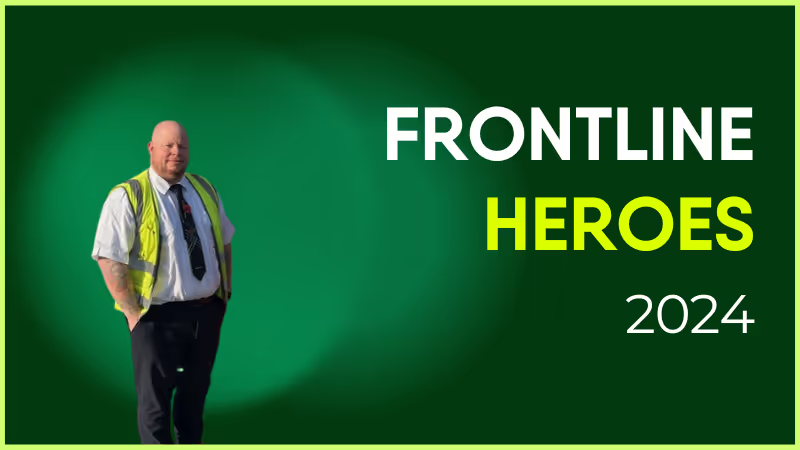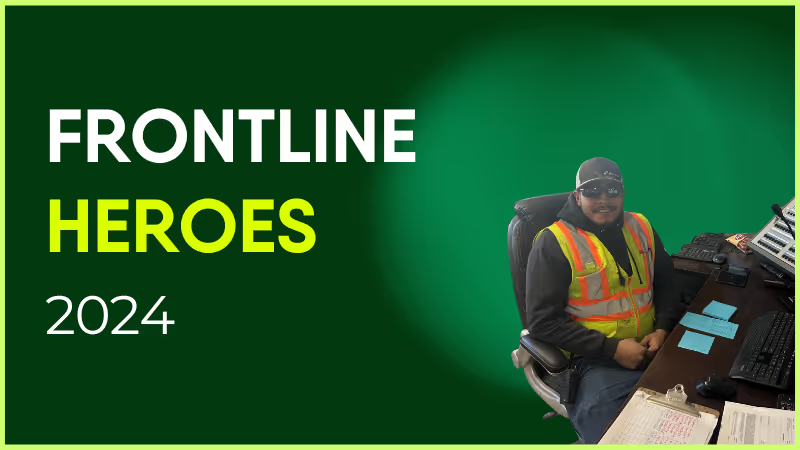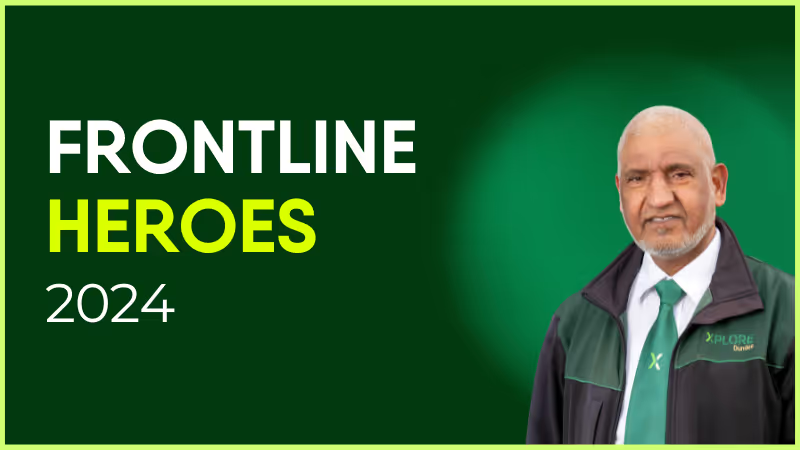
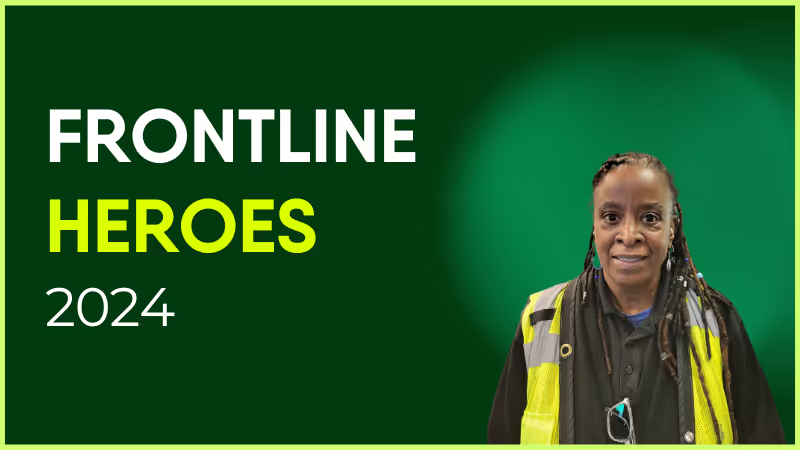
KC has been with Arriva North West and Wales since 2023. A well-loved character at the Speke Bus Depot, he is an extrovert and gregarious. In his own words: “I love social interaction because it brings me enjoyment. I love meeting new people and feel energized at big social events.”
This is why bus driving matches him perfectly. Unsurprisingly, what he loves most about his role is meeting new passengers and learning something about them. He practices his faith as often as possible, and his gratitude and positive attitude is contagious: “I feel blessed and always like to give thanks.”
Alongside the people, he also enjoys discovering new routes and the challenge of learning them. Most of all, community is at his heart, saying that bus driving “makes me feel like I can make a difference in my local community… I just like driving buses as they make many people happy when you get it right.”
According to Mark Brack, the Site Manager: “He has been a breath of fresh air in our Speke depot and has thrown himself into a number of roles to help improve engagement and the performance of the depot, including being our Blink and Employee Survey Champion. It’s great to see him recognized.”
Nominated by: Lee Coleman, Head of Communications and Engagement
What makes him awesome?
KC has been with Arriva North West and Wales since 2023. A well-loved character at the Speke Bus Depot, he is an extrovert and gregarious. In his own words: “I love social interaction because it brings me enjoyment. I love meeting new people and feel energized at big social events.”
This is why bus driving matches him perfectly. Unsurprisingly, what he loves most about his role is meeting new passengers and learning something about them. He practices his faith as often as possible, and his gratitude and positive attitude is contagious: “I feel blessed and always like to give thanks.”
Alongside the people, he also enjoys discovering new routes and the challenge of learning them. Most of all, community is at his heart, saying that bus driving “makes me feel like I can make a difference in my local community… I just like driving buses as they make many people happy when you get it right.”
According to Mark Brack, the Site Manager: “He has been a breath of fresh air in our Speke depot and has thrown himself into a number of roles to help improve engagement and the performance of the depot, including being our Blink and Employee Survey Champion. It’s great to see him recognized.”

Nominated by: Lee Coleman, Head of Communications and Engagement
What we'll cover
Start your free trial today
See how Blink helps frontline teams stay connected, informed, and engaged.
Get ready for this week’s Life at Blink spotlight! We’re thrilled to introduce a pivotal member of our Boston team — George Monk! As an Account Executive, George has been with Blink for nearly four years, making a significant impact from both sides of the Atlantic. Starting out in our London office, George was Blink’s first US SDR, pioneering our efforts to connect with U.S. businesses. Dive in to learn more about George, his journey, and what makes Blink such a unique place to work!
What initially attracted you to join Blink?
When I first joined Blink, I wasn’t sure what to expect. The idea of joining a startup initially made me hesitant because I was concerned about potential lack of structure and training programs. But eventually, I told myself, "Why not give it a shot and embrace the challenge?"
Blink was actually my first job right out of university, where I studied chemistry. It’s funny because, during my time at university, I had no idea what my career path would look like. I knew I was interested in joining the private sector, but my vision for the future was still blurry. It wasn’t until I joined Blink that I found a direction that truly resonated with me, and I'm glad I took that leap of faith.
What's a project you are proud of from your time at Blink?
I'm particularly proud of what we've achieved in the EMS sector, working with paramedics, EMTs, and medical technicians. It’s an area where Blink has really made an impact, especially with the younger workforce, who are typically between 18 and 25 and are very receptive to using our platform. When I first joined, our presence in the EMS industry was minimal — we were just starting to break into the market. But now, we're leading the charge. We've partnered with over 20 agencies, and Blink is becoming a household name in the industry. It’s been incredibly rewarding to watch that growth and know that we've made a real difference in helping these critical workers stay connected and informed.
How would you describe the company culture at Blink in three words?
If I had to describe Blink's company culture in three words, I’d say it's high-achieving, fun, and inclusive. We’re all about pushing ourselves to deliver the best results, but we also know how to enjoy the process along the way. There’s a strong sense of camaraderie, and despite how driven everyone is, it’s still an incredibly supportive and inclusive environment.
What's one thing you're excited about for the future of Blink?
I'm really excited about Blink's future, especially as we focus on expanding our presence in the US. Bringing more household names and big brands onboard is something that really energizes me. We're making a significant impact, and I can't wait to see how we continue to grow in the American market. It’s thrilling to think about how far we’ve come and how much potential there still is to grow.
Can you tell us about a recent initiative or program launched at Blink that you found particularly exciting?
A recent initiative that I find really exciting is the opportunity we have to help thousands of customers who’ve been left behind by the closure of Meta's Workplace. Being able to migrate them over to Blink is a huge opportunity not just for those businesses but for us as well. Meta announced they’d be closing in May, so it’s been a major focus for us since then. With the official discontinuation happening in August next year, I imagine we’ll continue helping with these migrations for months to come. It’s incredibly rewarding to know we’re stepping in to provide a solution when these companies need it most.
Why do you work for Blink?
I have the luxury of coming to work every day and genuinely enjoying it. I love the people I work with, and I love the diversity of our customers. Getting to work with companies from so many different industries keeps things exciting and fulfilling.
Awkward ice breakers. Forced fun. Activities with very little bearing on the work you actually do.
But if that’s been your experience, the problem wasn’t team building — it was how it was done.
Done well, team building in the workplace is a valuable investment.
It fosters trust and collaboration, develops communication skills that prevent costly misunderstandings, and helps to create a workplace culture that keeps people engaged and loyal.
Here, we look at the meaning of team building, at all the reasons why team building is important, and at how to make team building activities work for all types of teams.
What is team building?
Team building is a term used to describe activities, training, and initiatives that help employees work well together and achieve shared goals.
It can take many forms. Organized team building sessions. But also social occasions, volunteer days, and informal micro-activities built into the working day.
Done badly, team building is a half-day exercise forgotten by the weekend.
Done well, it creates the conditions for genuine trust and stronger relationships. It helps you build a workforce that can adapt, problem-solve, and perform — together.
Why team building is important
Team building helps improve teamwork in your organization. And that leads to the following business-boosting benefits. Here are all the reasons why team building is important.
It builds trust
Trust is the foundation that makes everything else possible: open communication, team collaboration, the confidence to raise a problem before it becomes a crisis.
A warehouse team working together through a theoretical logistics challenge learns to rely on each other in a low-stakes environment. That reliance translates directly to the real shift, where the pressure and stakes are higher.
It improves communication
Most team-building activities require good communication. Participants have to assign roles, share information, adapt plans in real time, and make decisions under some degree of pressure.
The communication skills developed through team building — active listening, clear information sharing, constructive feedback — transfer directly to the workplace.
This matters to your organization because poor communication is costly — in terms of duplicated work, errors, safety incidents, and customer experience failures.
It increases productivity
Productivity is another reason why team building is important.
A store team that’s practiced working together is faster at solving problems during a busy shift. An office team that knows and trusts each other moves more quickly than one that doesn’t.
When employees are familiar with each other’s strengths and weaknesses, they work together more efficiently. They know when to step back and when to step in.
It builds workplace friendships
Four out of five employees say workplace friendships are really important to them. Having friends at work increases engagement, satisfaction, and connection to the organization.
Team-building activities create the conditions for those friendships to form. It gives people a reason to interact with each other beyond the transactional demands of the working day.
For remote and frontline workers who don’t share a physical space, this is particularly important. Digital team-building activities that connect employees, regardless of location, reduce feelings of isolation and disengagement.
It boosts employee engagement and morale
Gallup research shows that effective team working leads to a 23% increase in employee engagement. This reflects the fact that working as part of a team, with shared goals and strong relationships, has a huge impact on how employees feel about their work.
Team-building initiatives reinforce that sense of shared purpose. They remind employees that they’re part of something bigger than their individual task list. And that gives them a reason to show up that goes beyond their paycheck.
It breaks down silos between teams
You can fuel cross-functional collaboration by planning team-building initiatives that deliberately cross departmental boundaries.
Employees from different departments can develop relationships, build mutual understanding, and learn where their skills and remits overlap.
For organizations with a large frontline workforce, cross-functional team building also addresses the sense of separation that can develop between head office and the floor.
Initiatives that bring frontline and desk-based employees together — physically or digitally — reduce the “two cultures” dynamic that so many frontline workers say they experience.
It encourages creativity and innovation
Creative thinking doesn’t thrive under pressure and in isolation. It emerges from the kind of relaxed, collaborative, escape-from-the-norm environment that good team building creates.
This is an environment where employees feel safe enough to suggest ideas that might not work, build on each other’s thinking, and approach problems from new angles.
That mindset goes beyond a team-building session. Employees carry creative thinking back to their everyday work, and can think about problems and situations from different perspectives.
It improves conflict resolution
Workplace conflict is more common than you might think. In the UK, 44% of working-age adults said they experienced conflict at work in a 12-month period, from 2024 to 2025.
You can’t prevent disagreements. But you can develop employees’ ability to handle them constructively.
The skills at the heart of effective conflict resolution — listening to understand rather than to respond, respecting different perspectives, communicating without defensiveness — are the same ones that good team building helps to develop.
It nurtures and reveals skills
Team building develops team working skills — like delegation, rapport building, and open communication.
Employees can also learn skills from each other, sharing knowledge earned in different parts of the organization and from different life experiences.
Team building often reveals pre-existing skills, too. Skills that have no obvious outlet in someone’s current role become visible — and can then be put to use.
For example, you may find a great team leader among your frontline crew, or a strategic thinker among your new hires. This is another reason why team building is important, across every team in your organization.
It strengthens company culture
83% of employees say that a positive workplace culture contributes to their productivity. It also encourages them to stay working for your organization.
A positive culture is built through repeated, shared experiences that reinforce what your organization stands for and how it shows up for employees.
Team building creates those experiences deliberately. You can create moments where employees can connect with one another and really get to understand what it means to be part of your organization.
When teams work together effectively, the working environment is more communicative and collaborative. Employees enjoy a sense of community and belonging that drives loyalty.
According to Gallup, employees are 29% more likely to stay with their company for the next year and 42% more likely to remain with their company for their entire career when they’re part of high-performing teams.
Team building for every type of workforce
So now we know why team building is important, but how do you ensure those benefits are felt across the whole of your organization? The way you deliver team building has to vary depending on the team you’re leading.
Office-based teams
Office-based teams have the advantage of shared physical space and regular informal interaction. Structured team building supplements what already happens organically.
You can use in-person events to deepen relationships, develop specific skills, and create cross-functional connections that the day-to-day working environment doesn’t always support.
Remote and hybrid teams
When planning team building for employees who spend some or all of their time away from the office, you have to be more intentional.
Limited face-to-face connection with co-workers means the informal relationship-building that happens among office-based teams has to be replaced with structured alternatives.
Virtual team-building activities, digital communities, and regular opportunities for informal communication give distributed employees a way to connect as people rather than just as colleagues.
Frontline teams face the most significant structural barriers to team building in the workplace.
Employees may work across sites and shifts. They don’t always work alongside the same people and they get limited face time with leadership. This makes it difficult for them to build connections with co-workers and company culture.
Effective frontline team building takes these barriers into account. That might mean using:
Mobile-accessible digital tools to make connection possible, no matter where or when an employee is working.
Short-form content and activities designed for employees who are on their feet, not sitting in front of a screen.
Thoughtfully-designed in-person sessions, scheduled with shift patterns in mind and repeated across different shift cohorts.
The importance of team building shouldn’t be underestimated. It’s an incredibly useful tool — one that shapes how your people communicate, collaborate, and perform.
When it’s done well, the impact is clear: better problem-solving, higher employee engagement, improved retention, and greater productivity.
For dispersed and deskless workforces, who don’t always get the opportunity for informal connection with teammates, the case for intentional team building is particularly strong.
This requires the right approach and the right infrastructure. You need mobile-first tools that make digital team building possible, and that sustain the relationships and culture that in-person sessions create.
Organizations that understand the importance of team building are investing in employee communication tools, like Blink, that support teamwork across sites and shifts.
The line that launched a thousand eye rolls — and how to counter it.
“Can you just send this out?”
Six words that send a chill up any internal communicator’s spine.
And a phrase that indicates how many organizations still view the internal communications team. As glorified messengers, not strategic partners.
This mindset is harming the effectiveness of internal communications and the business outcomes that are linked to it. Think employee experience, retention, and productivity.
Because today’s workplace is noisy. And sending out messages without strategy only adds to that noise. Messages get lost. People switch off. It gets even harder for comms to cut through.
This was a hot topic in Blink’s recent webinar — Human internal comms: Fueling engagement with authenticity. And here, we’re going to dig a little deeper into why the comms function is so routinely misunderstood — and what we can do to fix that.
Internal communications: The most undervalued strategic function
Internal communication (IC) has long been overlooked and undervalued. And too many communicators are still kept on the sidelines.
According to recent Gallagher research, 27% of internal communicators say they lack leadership buy-in and are left out of decision-making. They’re relegated to a supporting role rather than a strategic one.
But internal communication sits at the heart of company culture, change, and connection. It’s a direct line to employee experience — especially for frontline employees with limited digital or face-to-face contact.
And let’s be clear: It’s about more than churning out information. Internal communicators shape meaning and build trust. They develop effective ways to really reach and resonate with your workforce.
And this is important. Because your people receive a staggering number of employee communications. Over on the webinar, the panel shared the fact that people receive 121 business emails every day and switch between tools and tabs nearly 1,200 times.
“Internal comms […] are fighting against this noise. People don’t want more information, necessarily. They want more meaningful information and meaningful connections.”
— Blink
Simply “sending this out” does a disservice to employees, organizational goals, and the morale of your IC team.
{{mobile-main="/image"}}
How we got here: What’s holding comms back?
So why have some IC teams ended up simply distributing messages rather than crafting a narrative? Here’s what’s standing in the way.
A misunderstanding of the role
In too many organizations, internal communicators are seen as wordsmiths — a team who’ll polish a piece of text before sending it out to employees. This perception can be hard to shake and leaves IC wading through admin tasks rather than forging strategy.
Lack of leadership buy-in
Without the backing of the C-suite, the comms team is brought in late — often after decisions are made. This leaves little room for IC to shape the company story or influence outcomes. The impact IC has on business objectives is also underestimated so it’s hard for teams to secure the budget and support they need.
Lack of tools to measure strategic value
It’s a catch-22. Comms teams struggle to get investment for modern tech tools. But without these tools — and their data analytics — it’s hard to prove the worth of IC and justify investment. You need data to show how IC supports big business goals.
Too reactive, not proactive
Many IC teams get stuck in a reactive cycle — publishing company news and chasing approvals. They don’t get the breathing room or support they need to step back, align with business objectives, and plan a comprehensive internal communication strategy.
Siloed working
If internal communications is isolated from HR, IT, operations, and line managers, they miss opportunities to align and embed strategy and share employee feedback. Cross-functional collaboration is impossible and teams miss out on the insights others within the organization can provide.
The cost of staying in your lane
Fail to break free from the messenger role and there are a bunch of risks to contend with. These include:
Information overload. When messages are delivered without strategy — or a sense of the wider narrative — employees become overwhelmed and switch off from internal communications.
Poor employee engagement. Messages don’t feel consistent, relevant, or interesting. Employee engagement suffers, along with employee retention, productivity, and satisfaction.
IC burnout. Communicators struggle to sustain their morale. Those who enjoy collaborative relationships with the C-suite have 2x better well-being than those with transactional relationships.
Misalignment. Poor internal communications lead to measurable losses for your organization. These include project delays, compliance issues, and lost productivity.
Frontline connection gap. Without a clear strategy, deskless workers get stuck with paper notices or word-of-mouth comms.
Missed impact. If you’re treated like a service desk, your influence is capped. So you find it hard to support business objectives in the way you know internal communications can.
{{mobile-chat="/image"}}
Redefining the role: What internal communications should look like
A tactical internal communicator wears many different hats. Here’s what a new and improved strategic role should look like.
A strategic partner
Comms teams deserve a seat at the table. When you get a say in company strategy, you can better manage company changes and crisis communication. You get greater control over tech tool selection and have the intel you need to drive company-wide alignment.
A trusted advisor
You act as a comms guru for your organization, training leaders and managers to show up in the right way, on the right communication channels, at the right time. You guide them in open communication and empathy, giving them an effective blueprint to follow.
An EX designer
When comms gets tactical, you can craft the employee experience journey, rather than simply delivering touchpoints. You can connect messages to meaning more effectively, ensuring that EX talking points are backed by policy and action.
A community builder
You don’t just send out top-down messages. You develop interactive, two-way comms that spark conversations and fuel employee engagement. Think polls, Q&As, employee-generated content, and content that inspires comments, likes, and shares.
A creative powerhouse
The best internal communicators aren’t satisfied with sending out text-heavy emails and documents. They keep their finger on the pulse of internal comms trends and create attention-grabbing, short-form, social media-inspired content. We’re talking images, photos, videos, graphics, and short snippets of text.
{{mobile-stories="/image"}}
So what now? How to shift from executor to strategist
Ready to level up? Here’s how you can move beyond messaging to deliver an internal communication plan with real impact.
Say no to being the messenger
Crafting effective internal communications means knowing when to say no. As Tiffin Jernstedt — former chief communications officer and internal communications expert — puts it:
“You have to say: We know everything that’s going on in the organization and your message doesn’t fit today.”
You can’t send everything. Your job is to prioritize. To help people within your business understand what matters most right now — and how messages fit within a broader narrative, that day, that week, and that month.
Need help pushing back? Try one of these approaches:
Ask: What outcome are you trying to achieve with this message?
Suggest: I think that message is most suited to this channel.
Offer: We can help shape this message to make it land — but we’ll need to rework it slightly.
Explain: We track comms engagement closely. Here’s why timing matters.
Bring data to the table
Authentic internal communication doesn’t just inform. It inspires, connects, and builds trust. To prove that, track internal communication metrics, like these ones:
Content read rates
Employee response time
Behavior change
Platform adoption rate
Employee satisfaction
Employee engagement
Then, link these metrics to overarching business objectives. If you can prove the ROI and impact of your employee communications, you can make the case for a more strategic role.
Build cross-functional allies
Team work makes the dream work.
Foster positive working relationships with your HR, ops, and IT teams. You can work together toward shared goals and get well-rounded insight into what employees need.
Not sure where to begin? Start small:
Start a recurring cross-functional meeting to think through EX gaps and opportunities
Ask key stakeholders what they wish more employees knew
Help a frontline leader share a success story
Share data between departments to build a detailed picture of EX
Push for better tools
The best internal communication tools support you to deliver rich, multimedia messages. They provide the channels and functionality you need to win employee attention, craft compelling journeys, and encourage interaction.
These digital tools also give you reporting and analytics tools that help you make meaningful internal communication improvements, while also proving your impact and justifying a more strategic role.
{{mobile-survey="/image"}}
Raise the bar — and your voice
Internal communications deserves better — and whether you’re a team of one or a team of many, so do the professionals behind it.
It’s time to shift perceptions, get strategic, and fight for a seat at the table. Move beyond simply sending out messages and you can make a real difference to internal communication and the business results that rely on it.
The Winter 2025 product release highlights Blink's latest innovations — some already live and others rolling out over the next quarter. Missed our Autumn 2024 release? Check it out here!
At Blink, our employee experience platform is always evolving to keep pace with the ever-changing needs of organizations and their teams.
In line with our dedication to creating exceptional employee experiences — whether on the frontline or in the front office — we’re excited to introduce our latest product features, built to transform how employees connect with their organizations and each other.
From enabling easy communication with in-app calling and live streaming, to powering better outcomes through enhanced data intelligence, these powerful new features are designed to support a connected, engaged, and uplifted workplace.
#1. Voice and video calling: Power real-time, in-app collaboration
We’re excited to announce the addition of native 1:1 video and voice calling within Blink, making it even easier for employees to connect, collaborate, and deliver real-time results for your business.
This new feature will include:
Streamlined communication: Enables seamless 1:1 video and voice calls directly from individual chats or colleague profiles on mobile.
Built for international teams: Ideal for organizations with global workforces who need quick and reliable access to colleagues.
Future-proof design: Will launch on mobile, with plans to extend to desktop and explore group calling capabilities.
Flexible add-on: Available as an optional feature priced based on users, ensuring scalability for any organization.
{{mobile-voice-video="/image"}}
#2. Live streaming: Go live with all employees at once
Bring your live events to life on Blink! Our new live streaming feature lets you promote and host events directly in the Feed, fostering real-time engagement and interaction.
Here’s what you can do:
Stream seamlessly via Vimeo or YouTube, with full support for Vimeo interactions on Blink.
Share streams from other platforms using Real Time Messaging Protocol (RTMP) for an additional cost.
Engage your audience as they comment and interact during your event.
Discover what drives your organization with Advanced Employee Intelligence — an upgraded analytics suite that goes beyond the basics to tackle turnover, engagement, and productivity. These actionable insights, available as a paid add-on feature, will empower you to address challenges proactively and foster a thriving workplace.
Transform your data into a powerful driver of organizational success with four core pillars of insights:
Activation: Ensure every employee is connected and engaged with activation metrics by team and role, plus gamified nudges to boost adoption.
Communication: Maximize the impact of your messages with heat maps and deep-dive analysis into communication effectiveness by category, media, and more.
Engagement: Track and improve satisfaction with tools like engagement leaderboards and influencer metrics that spotlight key communicators.
Productivity: Streamline workflows by analyzing app usage, tool access, and shift management to reduce friction and optimize efficiency.
#4. Journeys 2.0: Engage employees before day one
Make a lasting first impression with Blink’s new Journeys for preboarding! This enhancement to our Journeys feature allows managers to kick off onboarding before an employee’s first day, creating a standout employee experience right from the offer stage.
Here’s what’s new:
Include line managers in the journey for a seamless, supportive experience.
Use enhanced start-date triggers to send tailored communications ahead of the first day.
Deliver a bespoke preboarding journey that sets the stage for success.
#5. Image-first feed: Curate the content experience
We’ve made the Feed even better with a new posting experience designed for high-quality, highly curated content that stands out and visually engages users.
Here’s what’s new:
Choose your layout: Opt for the classic look or an enhanced layout that puts your images front and center.
Audience-first review: See how your post will appear to your audience before you post.
Simple to use: The curation and review steps are seamlessly built into the posting process.
#6. Self-service SSO: Simplify access to third-party systems
Our new self-service SSO feature streamlines user access to key third-party systems directly through Blink, reducing the need for multiple logins and improving overall security. This feature makes it easier than ever to connect Blink with the tools your teams rely on.
Key takeaways include:
Enhanced user experience: Simplify workflows by allowing users to access essential systems without remembering multiple passwords, driving better uptake and ease of use.
Flexible configuration: Administrators can set up and manage SAML 2.0 Single Sign-On directly from the Blink Admin dashboard, enabling seamless integration with your Service Provider.
#7. Polls as Stories: Boost engagement with a visual integration
Take your Polls to the next level by sharing them through Stories, including our new image-first Polls feature, to maximize visibility and participation. This integration helps make employee feedback and interaction more accessible and engaging than ever.
Here’s what you can do now:
Increase engagement: Promote Polls in Stories to capture attention and encourage more responses from your teams.
Visual appeal: Leverage image-first Polls to create a dynamic and engaging experience, driving curiosity and interaction.
{{mobile-story-polls="/image"}}
#8. Chat and channel moderation: Maintain a professional communication environment
Administrators now have greater control over chats and channels with new moderation capabilities, including the ability to hide certain types of content when necessary. These tools empower admins to foster a safe, engaging, and well-managed communication space for everyone.
With this feature, you’ll gain:
Improved oversight: Maintain a positive and professional environment by managing and moderating conversations directly within chats and channels.
Content management: Use the “hide” feature to remove inappropriate or irrelevant content, ensuring discussions stay on track.
#9. Dark mode: A new way to experience Blink
Enjoy a more comfortable and visually striking interface with our new dark mode feature, now available via a simple toggle in your settings. This update adds a touch of personalization and comfort to your everyday platform experience.
With dark mode:
Improved comfort: Reduce eye strain during late-night use or in low-light environments with a sleek, dark interface.
Personalized experience: Give users the flexibility to choose between Light and Dark modes based on their preferences.
{{mobile-dark-mode-post="/image"}}
Coming soon
Get excited for updates to the Hub experience, moderation enhancements, and in-app events management!
Bring your consumer-grade employee experience to life
As we kick off a new year of workplace evolution, our mission remains unchanged: to deliver tools that strengthen connections, boost productivity, and ensure every employee enjoys a seamless and exceptional experience — no matter their role or location.
These latest product enhancements reflect our commitment to helping organizations supercharge their employee experience as we step into 2025.
Many factors go into a business making it in today’s world, but one of the biggest make-or-break factors is the environment. Strong downtown districts tend to benefit from a range of factors, the main ones being population growth, local engagement, and economic activity. From retail to hospitality, mid-sized cities are a good sweet spot due to affordability and space.
For businesses, understanding where people spend time and engage with their communities is becoming increasingly important. That's why Blink helps brands better understand and connect with local audiences. By identifying the cities where residents are actively exploring, businesses can make more informed decisions about where to invest and grow.
A successful Main Street isn't just about the number of businesses operating there. It's also about whether people want to work, shop, eat, and spend time in the area. To determine the U.S. cities with the most booming downtown areas, we focused on retail and food/hospitality business density, small business births, and workforce growth, alongside search volume, population growth, and walkability score.
Orlando takes the top spot with a score of 46.8, thanks to its blend of rapid growth, thriving tourism, and a steady stream of new businesses. The city added 7,464 residents in just one year and generated one of the highest small-business search volumes in the rankings, at 8,140. Retail and hospitality continue to flourish, with thousands of new businesses opening across both sectors. Orlando's appeal extends well beyond its theme parks, too, with 25,800 searches for things to do in the city. For entrepreneurs, that means access to a large, active audience of locals and visitors looking to shop, dine, and explore.
2. McKinney, Texas
McKinney may have one of the smaller populations in the top 10, but it's growing faster than almost anyone else. The city added 11,664 residents between 2023 and 2024—the largest population increase in the rankings—and continues to see strong growth in both retail and hospitality. That momentum is helping transform McKinney into one of the most exciting business destinations in North Texas. With more than 3,000 searches for both local businesses and things to do, it's clear that people are increasingly paying attention to what the city has to offer.
For entrepreneurs eyeing cities like McKinney, getting the foundations right matters from day one—starting with choosing the right business structure for a high-growth market.
3. Frisco, Texas
Once overshadowed by neighboring Dallas, Frisco has quickly carved out a name for itself as one of Texas's fastest-growing business hubs. The city earned a score of 41.7 after adding more than 8,200 new businesses in a single year and posting strong employment growth across retail and hospitality. Interest in the city is growing alongside its business community, with searches for things to do in Frisco reaching 3,700. As more residents and visitors discover the city's shopping, dining, and entertainment options, Frisco continues to strengthen its appeal for entrepreneurs.
4. Tampa, Florida
Tampa combines the advantages of a large city with the energy of a growing small business scene. Home to more than 427,000 residents, the city welcomed nearly 4,800 new people in the past year while generating more than 7,000 searches for small businesses. Tampa's downtown also attracts plenty of attention, with nearly 16,000 searches for things to do. Supported by a healthy mix of population growth, tourism, and local engagement, Tampa remains one of Florida's strongest cities for retail and hospitality businesses.
5. Garland, Texas
Garland rounds out the top five with a score of 38.5, driven by strong business expansion and steady population growth. The city added more than 4,100 residents over the past year and achieved an impressive average employment growth rate of 10.3% across retail and hospitality. At the same time, thousands of searches for local businesses and downtown activities show that people are actively exploring what Garland has to offer. These trends suggest the city is becoming an increasingly attractive place for both business owners and customers.
6. Arlington, Texas
Arlington is best known for its sports, entertainment, and major attractions, but it is also proving to be a strong environment for small businesses. The city is home to more than 408,000 residents and recorded average employment growth of 10.3% across the retail and hospitality sectors. Interest in local attractions remains high, with more than 4,000 searches for things to do downtown and more than 3,300 searches related to small businesses. Combined with steady population growth, Arlington offers businesses a large audience and plenty of opportunities to stand out.
7. Boise, Idaho
Boise shows that a smaller city can still deliver big opportunities for entrepreneurs. With a population of just under 239,000, Boise recorded an average employment growth rate of 9.7% across retail and hospitality sectors, while also earning the highest walkability score among the top 10. More than 3,700 searches for small businesses and over 3,000 searches for things to do downtown reflect a community that actively supports its local economy. Combined with steady population growth, Boise continues to attract both new residents and new business ventures.
8. Glendale, Arizona
Glendale has quietly become one of the strongest markets for retail and hospitality businesses in the Southwest. The city added more than 3,100 residents over the past year and recorded some of the strongest workforce growth in the rankings, including a 15.3% increase in hospitality employment. Searches for local businesses and downtown activities also remain healthy, highlighting a city that is attracting attention from both residents and visitors. These factors helped Glendale secure a place among the top 10 booming main streets in America.
9. Scottsdale, Arizona
Scottsdale pairs strong business growth with one of the most engaged audiences in the rankings. The city posted an average employment growth rate of 11.5% across retail and hospitality while generating 6,450 searches for things to do downtown—one of the highest totals in the study. Searches for small businesses also remained strong at 3,680, showing that people are actively seeking out local experiences. This combination of business activity and visitor appeal continues to make Scottsdale a standout destination for entrepreneurs.
10. Plano, Texas
Plano closes out the top 10 with a score of 37.0, demonstrating that a strong business community can thrive even during slower population growth. Despite a slight population decline, the city maintained an average employment growth rate of 10.3% across retail and hospitality and generated nearly 3,800 searches for small businesses. Interest in local attractions also remains high, with almost 4,500 searches for things to do downtown. Those figures suggest Plano's established business ecosystem continues to attract customers, helping the city remain competitive for new and growing businesses.
The top U.S. cities for job growth
1. Lubbock, Texas
Taking the top spot is Lubbock, TX, with the highest average employment growth rate in the ranking at 13.1%. The city's labor market is being driven by strong expansion across both major industries analyzed. Retail employment grew by 11.3%, while employment in food and accommodation services climbed even higher at 14.9%, making Lubbock one of the few cities to post double-digit workforce growth in both sectors. This balanced growth suggests that job creation is occurring across a broad range of businesses rather than being concentrated in a single industry. With a population of 279,104 and an annual population growth of 4,033 residents, Lubbock's workforce momentum shows few signs of slowing.
Coming in at #2 is Huntsville, AL, with an average employment growth rate of 12%. The city recorded workforce growth of 10.6% in the retail sector and 13.4% in food and accommodation services, highlighting strong hiring demand across consumer-facing industries. Huntsville's ability to achieve double-digit employment growth in both sectors demonstrates a healthy local economy that is rapidly creating opportunities for workers. Supported by a growing population of 237,413 residents and an annual population growth of 1,305 people, Huntsville continues to establish itself as one of the strongest job markets in the country.
3. Glendale, Arizona
Rounding out the top three is Glendale, AZ, with an average employment growth rate of 11.45%. While retail employment increased by a solid 7.6%, the city's food and accommodation sector was the standout performer, recording workforce growth of 15.3%—the highest among the top three cities. This surge in hospitality hiring helped push Glendale's overall employment growth into double digits and reflects increasing demand from both residents and visitors. With a population of 262,745 and an annual population growth of 3,142 residents, Glendale's expanding workforce suggests a city where employers continue to invest and hire at a significant pace.
The fastest-growing U.S. cities
1. Spring Valley, Nevada
Taking the top spot is Spring Valley, NV, which added an incredible 22,974 residents from 2023-2024, the largest population increase in the ranking. With a total population of 229,494, the city is experiencing rapid expansion, welcoming new residents at a pace that far exceeds that of many larger metropolitan areas. Spring Valley also maintains a substantial business presence with 6,500 retail businesses and 5,780 food and accommodation businesses. The area's continued population boom suggests growing demand for housing, services, and local businesses as more Americans choose to call this Nevada community home.
2. Port St. Lucie, Florida
Coming in at #2 is Port St. Lucie, FL, which welcomed 11,880 new residents in 2023-2024 alone. The city now has a population of 284,448 and remains one of Florida's fastest-growing destinations. Population gains have been accompanied by healthy economic growth, with average employment growth reaching 5.1% across the retail and hospitality industries. The city is home to 1,639 retail businesses and 1,011 food and accommodation businesses, helping support its expanding population. As more people relocate to Port St. Lucie, demand for local services, shopping, dining, and entertainment is likely to continue rising, further strengthening the local economy.
3. McKinney, Texas
Ranking third is McKinney, TX, which added 11,664 residents in 2023-2024, bringing its population to 242,534. The North Texas city continues to attract new residents thanks to its strong economy and growing business community. Employment growth averaged an impressive 10.3% across retail and hospitality sectors, one of the highest rates in the ranking, indicating that job creation is helping fuel population growth. McKinney also benefits from a sizable business base, with 21,680 retail businesses and 18,161 food and accommodation businesses supporting the local economy. With thousands of new residents arriving each year and employers continuing to expand their workforce, McKinney remains one of the fastest-growing cities in America.
The U.S. cities with the most walkable downtowns and main streets
1. Boise, Idaho
Taking the top spot is Boise, ID, with an exceptional walkability score of 93, making it the most walkable downtown and main street destination in the ranking. For residents and visitors alike, this means many of the city's shops, restaurants, and attractions can be reached on foot, creating a vibrant environment for local businesses. Boise is home to 2,281 retail businesses and 1,732 food and accommodation businesses, while employment growth remains strong across both sectors, averaging 9.7%. People are also very interested to see what the city of trees has to offer, with 3,730 searches for small businesses, 500 for local shops, and 3,080 for things to do downtown. Combined with annual population growth of 1,530 residents, Boise's highly walkable downtown continues to support both economic activity and quality of life.
2. Jersey City, New Jersey
Jersey City, NJ, takes the second spot thanks to its highly walkable downtown and vibrant urban atmosphere. With a walkability score of 87, residents can easily access shops, restaurants, and local services without relying on a car, helping create a lively environment for small businesses. The city is also home to a substantial retail and hospitality sector, supported by strong interest in local attractions and businesses, with more than 4,000 searches for small businesses over the past year. While employment growth has slowed recently, Jersey City still added 4,609 residents, suggesting its mix of convenience, amenities, and proximity to New York City continues to attract new residents and support local commerce.
3. Newark, New Jersey
Newark, NJ, rounds out the top three thanks to its highly walkable downtown, growing population, and thriving business community. With a walkability score of 76, residents can easily access local shops, restaurants, and everyday services, helping create a bustling environment for businesses of all sizes. The city added 8,078 residents in the past year—one of the largest population increases among the top-ranked cities—while also generating nearly 4,800 searches for small businesses and more than 2,400 searches for things to do downtown. With its extensive retail and hospitality sectors, Newark continues to offer a mix of accessibility, activity, and growth that helps local businesses thrive.
Curious where your city ranks? Check out our interactive table below
What America’s top main streets have in common
The results show that thriving main streets aren't limited to major metropolitan areas. While fast-growing cities in Texas and Florida performed especially well, the rankings highlight a broader trend: places with growing populations, active downtown districts, and strong retail and hospitality sectors tend to create the best conditions for small businesses. But the businesses that thrive long-term in these cities are the ones that also get the fundamentals right internally — from managing employees effectively to building teams that grow with the city around them.
Whether driven by tourism, new residents, or vibrant local communities, these cities are proving that a successful main street depends on more than just business density; it requires an environment where people want to live, work, shop, and spend time.
Methodology
To determine which U.S. cities have the most booming main streets, we analyzed the 200 most populous mid-sized cities (pop. 500,000 or less) using a weighted index combining four key indicators:
- Retail & Food/Hospitality business density — the total number of retail, food, and hospitality businesses (NAICS 44-45) (NAICS 72) operating in each city's surrounding metro area
- Retail, Food, and Hospitality workforce growth — the percentage change in retail, food, and hospitality sector employment between Q1 2019 and Q1 2025
- Retail, Food, and Hospitality small business births - The number of newly established retail, food, and hospitality small businesses within each city's surrounding metro area
- Search Volumes - The total search volume for each query (“Small businesses [city]”, “Local shops [city]”, “Things to do downtown [city]”) across each city listed
- Population Growth (1-Year growth '23-'24) - The increase or decrease in population YoY from 2023-2024 (most recent data available)
- Walkability Score - The total score determining how easy it is to walk around each city listed
Establishment counts were sourced from the U.S. Census Bureau's 2023 County Business Patterns. Employment growth figures were drawn from the U.S. Census Bureau's Quarterly Workforce Indicators, accessed via the LED Extraction Tool. The MSA populations were sourced from the 2023 American Community Survey 5-Year Estimates.
Cities sharing an MSA were assigned the same metro-level data, showcasing that retail and hospitality businesses serve regional economies rather than strictly city limits. Cities were then ranked from highest to lowest by total score to identify the metros where small-business activity and growth are strongest.
* Workforce growth was measured by comparing Q1 2019 to Q1 2025 employment data from the U.S. Census Bureau's Quarterly Workforce Indicators (QWI). For four metros — Columbia, MO; Springfield, MO; Springfield, MA; and Worcester, MA — Q1 2024 was used as the endpoint due to the delayed Q1 2025 release; this represents a 5-year span instead of the standard 6-year span. For Anchorage, AK; St. Louis, MO-IL; Detroit-Warren-Dearborn, MI; and Grand Rapids-Wyoming-Kentwood, MI, workforce growth could not be calculated due to incomplete or unreleased state-level QWI data. These cities remain in the ranking based on their establishment density figures (Census 2023 County Business Patterns), with workforce growth treated as -100%. Data accurate as of May 15th, 2026.
The employee intranet is a critical piece of the employee engagement puzzle. It keeps your workforce on the same page, supports the easy sharing of information and resources, and serves as a valuable tool to support internal communications, HR, and IT functions.
But historically, employee intranets have been developed with a desk-based workforce in mind, creating a gap in the workforce tech experience for frontline employees — the vast majority of the global workforce.
It’s a gap that these deskless employees are keenly aware of: Just 10% of frontline workers say they have enough access to the tools, tech, and opportunities they need to connect and advance in their workplace.
This lack of access is often a result of two simple reasons: Most intranets are 1) designed for a desktop computer experience and 2) accessible only through a corporate email address — two things that many frontline workers don’t have or use on a regular basis.
To overcome these issues, organizations sometimes try communicating with their frontline workers using memos on a noticeboard, SMS messages, or shadow IT. Yet this just furthers the disconnect, with desk-based workers getting a rich digital workplace experience — and frontline workers still missing out on all the benefits an employee intranet brings.
With frontline satisfaction and retention in need of urgent attention, a modern intranet, suited to all sectors of your workforce, can transform the frontline employee experience.
Let’s look at six ways that organizations can customize their intranet to make it more frontline-friendly. By incorporating these ideas into your own intranet, you can give your frontline employees — alongside your office staff — the communications, connection, and resources they need to thrive in the workplace.
6 ways to customize your intranet for the frontline
#1. Make all tools and resources accessible in one hub
Frontline employees work busy shifts with limited downtime. If they have to switch between lots of different apps, remembering multiple sets of login details, they’re unlikely to regularly use your workplace tools.
By putting everything your workforce might need in a centralized employee app, your frontline workers can benefit from quick and easy access to key tools and resources.
An employee app, accessible via smartphone or desktop computer, can act as a content hub where all policies, documents, and forms are stored. It’s where employees can catch up with company news, connect with coworkers, and fill out the latest employee surveys.
{{mobile-hub="/image"}}
With the help of single sign-on technology, a company app can also act as the gateway to all other workplace software, improving adoption of tools across the business. Employees need to sign on just once to access anything from training programs and shift-swapping software to time-off policies and employee benefits.
#2. Create different channels to satisfy all employee connection needs
While it may not take place around the famous water cooler, office-based workers get lots of opportunity during the work day for informal chit chat. But frontline employees — who often work disparately, away from HQ and on their own — tend to miss out on coworker connection. This can create a disjointed employee experience and get in the way of knowledge sharing, team building, and collaboration.
So when it comes to the company intranet, don’t just create channels for important company updates. Create channels suited to informal conversation and two-way communication, too.
{{mobile-connect="/image"}}
Here, employees can get to know one another and chat about their choice of topics. They can enter groups, building relationships with co-workers in the same location, in the same role, or with the same hobbies. By providing a variety of communication channels on your employee intranet, you satisfy the various connection needs of your workforce.
#3. Use mandatory reads to highlight important communications
Some frontline employees work in environments where safety and compliance are critical. Others interface with customers and need the most up-to-date information on inventory and processes. But these workers don’t always call into HQ before their shift starts, and they sometimes operate with less direct supervision than their office-based peers.
So how can you ensure critical updates get through to your deskless workforce?
By marking the latest policies, safety alerts, and best practices as mandatory reads on your intranet, they’re more likely to cut through the noise.
Mandatory reads appear prominently on the intranet dashboard or the company news feed. They only disappear when an employee reads and acknowledges them. And by using backend analytics that track engagement and reading rates, your internal communications team can ensure that all workers, regardless of their locations, have received and read new need-to-know information.
#4. Surface personalized content based on teams and titles
If you primarily use your intranet for your desk-based workforce, it likely contains a lot of information that is irrelevant to your frontline teams. Serve this information to your frontline employees and they’ll become disengaged with your intranet, making it harder for you to communicate key messages.
Use intranet tools that allow you to personalize the user experience — and don’t simply make a distinction between your office and frontline staff.
Segment your employees based on their title, team, location, and tenure. Then customize their dashboard so it features the most relevant content. For frontline employees, you might like to include key contacts, “suggested for you” content, and news related to the frontline.
Similarly, when employees access the company news feed, they should see content relating to them and their roles. You can achieve this by selecting the audience for each post — whether that’s the whole company, your office staff, your frontline workers, or a particular team.
#5. Make it easy for managers to recognize great workers
A third of frontline workers say that a primary reason for leaving their position is feeling undervalued by their employer. Yet despite the role of workplace appreciation in engagement and retention, less than half of workers said they had received recognition from their organization, leaders, or peers in the previous month.
Frontline managers are well-placed to offer praise but — like the people they lead — these managers are busy, feeling like there are barely enough hours in the day. To build recognition into the frontline employee experience, make it easy for managers to tackle through an employee intranet with built-in rewards and recognition features.
By providing ready-to-go templates, managers can easily but meaningfully personalize and post messages of recognition to a company news feed or a group chat. With just a few clicks, managers can show appreciation for hard work, highlight successes, or celebrate an employee birthday.
{{mobile-kudos="/image"}}
Highlight employees on public channels within your intranet and recognition will take on a life of its own. Coworkers and other managers can like the post and comment with their own words of praise, amplifying the post’s impact.
The fewer steps involved in employee recognition, and the more visible you make it, the more likely it is to become an integral part of company culture.
#6. Analyze intranet data to identify gaps and opportunities
A modern intranet is more than just an information hub — it’s a way to capture, measure, and analyze employee engagement rates. It also allows you to segment data by division, location, and more criteria to unearth more granular employee-level insights.
By examining intranet engagement data for your frontline workforce, you can build a clearer picture of which strategies are working — and which could be improved. Also, consider using employee surveys to ask your frontline about their intranet experience. You may discover points of friction and reasons why employees aren’t using your intranet.
With these data-backed insights, you can make targeted and informed decisions about how to customize your intranet to maximize frontline employee engagement.
A frontline-friendly culture can be built on the intranet
While standard intranets don’t always work for a frontline workforce, there are ways to customize your employee intranet so it meets the needs of everyone.
Personalize your intranet experience so its content and chats are more relevant to frontline employees. Give your dispersed workers recognition and coworker connection opportunities. Above all, make your intranet easy to access and use via a mobile app.
By doing so, you’ll make your intranet more engaging — and provide a reliable source of information and connection for all employees.