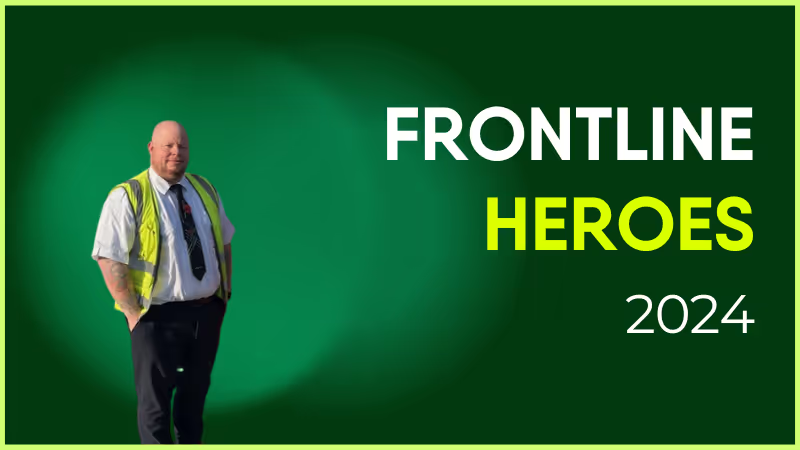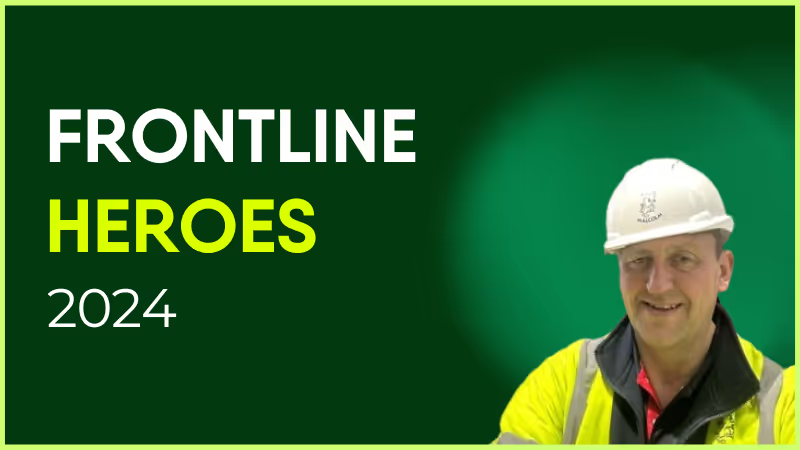

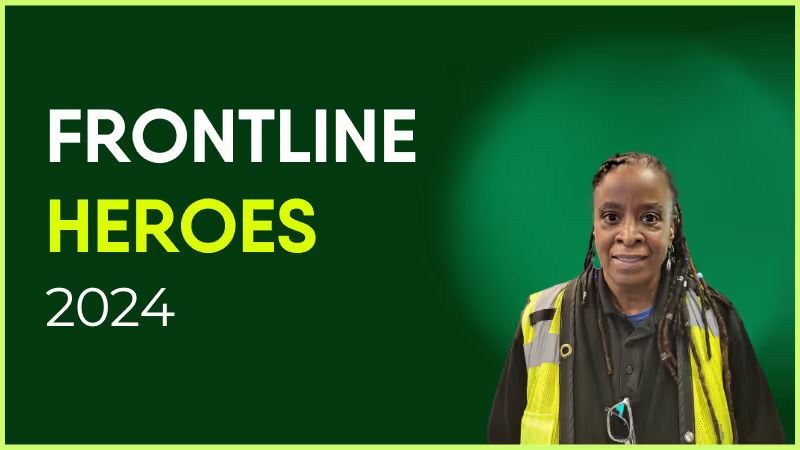
Ben epitomizes the value of “genuine.” He consistently demonstrates good character and looks out for the safety and wellbeing of everyone around him. His easygoing nature and technical ability make him a great leader and a core member of the operational team.
How does Blink help in his role?
Blink helps in delivering safety-critical documentation to the RSW workgroup.
What does he want to do next?
Continue driving excellence in training and ORAs standards.
Nominated by: Joel Farrell, Rail Operations Manager

What makes him awesome?
Ben epitomizes the value of “genuine.” He consistently demonstrates good character and looks out for the safety and wellbeing of everyone around him. His easygoing nature and technical ability make him a great leader and a core member of the operational team.
How does Blink help in his role?
Blink helps in delivering safety-critical documentation to the RSW workgroup.
What does he want to do next?
Continue driving excellence in training and ORAs standards.
Nominated by: Joel Farrell, Rail Operations Manager

What we'll cover
Start your free trial today
See how Blink helps frontline teams stay connected, informed, and engaged.
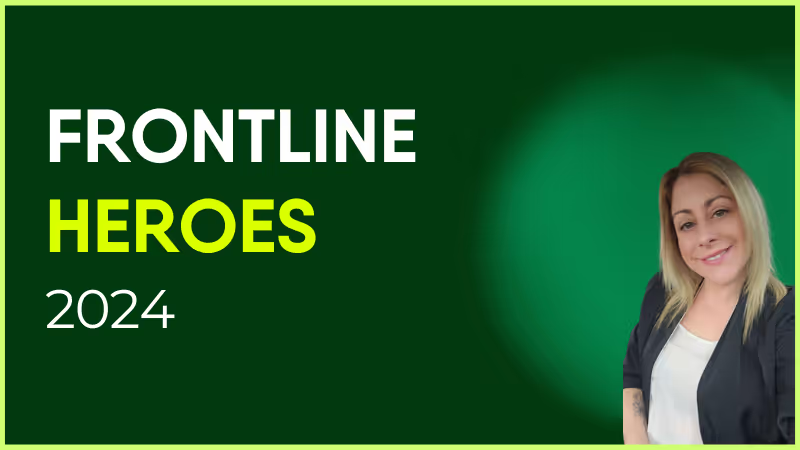
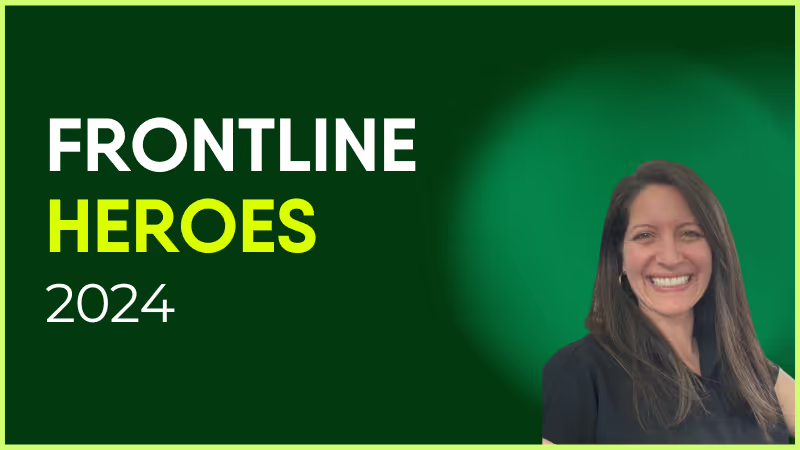
Carla has been with Elara Caring since 2022 as an Attendant Coordinator at the Mount Vernon branch in Texas.
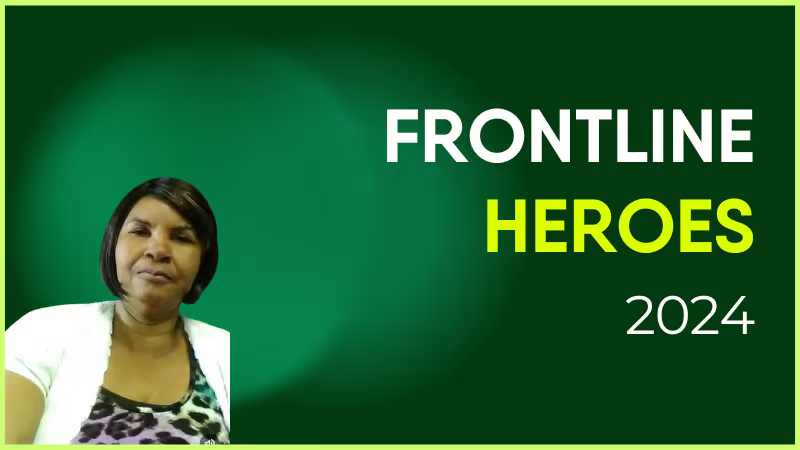
Carla is a wonderful frontline champion at Elara Caring. She is the first to step up to help or train others. Her ability to teach and lead is amazing — CTs and all PCs reach out to her due to her kindness and understanding and compassion. She is a wonderful person and has taken the time to help me and lead me when there was none other.
Carla sacrifices what she wants for others and it's a blessing. People call her from other offices and states for help because they know how valuable she is to this company. Her determination and leadership is what this world needs more of. She doesn’t just do a great job — she touches lives in every way and work and in the client's home.
I have watched her over 6 months of being at this company and thought, “Wow, we have a jewel!” She deserves to be recognized for her greatness and champion spirit. Elara Caring is better each day due to the fact we have a champion on staff — Carla Brewer is a great person, a great employee, and a treasure to this world.
How has Blink helped in her role?
Carla is a master at Blink and often helps with training. She uses it to talk with the attendants and takes the time to go slow so all learn how to use it.
What does she want to do next?
I believe that Carla wants an environment where all feel valuable and like they have a place. She uses her life to bring light to stressful places and I believe she will only soar in this next level in her life and this company.
MJ Moore has been paving the way at Blink for over three years, bringing her Workday consulting background to build our entire Implementation function from the ground up. Now, as VP of Implementation in our London office, she’s led lightning-fast launches and established a team that customers can’t stop raving about.
We chatted with MJ about what drew her to Blink in the first place, the culture she thrives in, and why she’s more energized than ever to keep driving innovative solutions for frontline workers around the globe.
What is your position at Blink?
I’m the VP of Implementation.
How long have you been at Blink?
Just over three years. I celebrated my three-year anniversary in February.
What initially attracted you to join Blink?
I think I simply loved the technology. I came from a Workday background, doing Workday consulting, and was looking for that early-stage buzz again — something I felt Blink had in spades. The technology was at an exciting point in the market, and I wanted to be part of a company that had tons of potential for growth.
What's a project you are proud of from your time at Blink?
That’s a tough question because there are so many highlights! One of the biggest is building the Implementation team from scratch. When I first joined, there wasn’t an official Implementation function at all. Now, we’ve got a robust team of people working together with clear processes, methodologies, templates — everything we need. They’re incredibly self-sufficient, and our customers love them, which is such an awesome feeling.
Another standout moment was launching Blink to 6,000 users in Mexico in under eight days. We were a lot smaller at the time, so I ended up running almost the entire project on my own. The client was facing serious union issues and worried about potential factory closures, so they needed Blink ASAP to keep everyone informed and hopefully avoid a strike. It was crazy stressful, but we pulled it off, and in the end, they were able to communicate everything in time. They actually avoided the strike altogether, which was a huge relief for them — and for us, knowing we helped make that possible.
How would you describe the company culture at Blink in three words?
Energetic, challenging, and supportive: There’s a lot of energy in the team; we set high expectations for ourselves; and everyone is there to help each other succeed.
What's one thing you're excited about for the future of Blink?
Honestly, it’s thrilling to think about how much opportunity lies ahead. We’re in an industry where Blink could become essential to so many different sectors — frontline workers, office-based teams, you name it. We’ve barely scratched the surface of what we can do, and each new market or customer segment opens up possibilities we haven’t even explored yet. That level of untapped growth is exactly what makes Blink so exciting to be part of. It’s the kind of momentum that drives you to keep innovating, knowing there’s still so much room to make a real impact.
Can you tell us about a recent initiative or program launched at Blink that you found particularly exciting?
I really love the “Adopt a Customer” program because it encourages everyone in the company — even those who don’t usually interact with customers — to take a deeper interest in who we serve. Our biggest goal is driving customer happiness, and this initiative pushes each person to learn about one specific customer’s journey, challenges, and needs. When you have to present your findings at an All Hands meeting, you naturally dive into researching their background, business goals, and how they use Blink. That extra effort is not only fun, but it also fosters empathy and understanding. It’s awesome to see colleagues who haven’t had much customer exposure suddenly become champions for “their” customer, sharing insights that might otherwise go overlooked.
Why do you work for Blink?
I’m here because Blink’s mission speaks to me on a really personal level. There’s something powerful about the tools we provide — especially for frontline workers who haven’t had anything like Blink before. It has the potential to fundamentally change how they do their jobs, and that’s exciting to be a part of.
I’ve also been given a lot of responsibility and freedom to make an impact, which is something I really value. In previous roles, I sometimes felt disconnected from the end users, but here, I get to see real reactions to our tech — people lighting up because it makes their work lives easier. That’s a genuine thrill and it reminds me why I do what I do every day.
Internal communication isn’t just about messages — it’s about impact
Too often, internal comms teams focus on sending the right messages through the right channels. But what if that’s not enough?
With workplace expectations evolving — especially among Gen Z and Millennial employees — internal communications leaders need to do more than inform. They need to engage. Influence. Inspire action.
That’s where the 3 C’s of internal communication come in: Curiosity, courage, and catalyst.
“We know that with younger generations, it’s so much more important for them to feel that they are a part of things. Old fogies like myself, you just get your head down, do the work, hope that you get a paycheck… It’s so different these days.”
This framework, developed by author and keynote speaker Shola Kaye, transforms internal comms teams from messengers into strategic influencers. In a recent podcast, the Blink team sat down with Shola to explore the 3 C’s — why they matter and how comms leaders can put them into action.
Let’s break it down.
Curiosity: Don’t make assumptions right off the bat
The first C you need in your internal communications toolkit is curiosity.
Curiosity prevents us from making assumptions, which get in the way of empathy. By being curious, we get to know and understand the people around us.
“If you want to engage people, you’ve got to really know who you’re speaking to. What is on their minds? Where are they coming from? Because otherwise, how will you know how to pitch your content?”
That means listening before you speak. And creating a company culture of psychological safety where employees feel confident that their thoughts and opinions will be taken on board.
Why it matters:
Too often, comms teams assume they know what employees want or need — but a strong company culture of employee engagement starts with listening.
It’s also worth remembering that internal comms trends and employee expectations are always evolving. What worked last year might not work today. So it pays to stay curious, listening to the voices of your target audience on a continuous basis.
How to apply it:
Use pulse surveys and real-time employee feedback loops. Uncover what’s resonating and implement two-way communication practices. Be sure to acknowledge and act upon employee input or employees will start to doubt the process.
Let employees shape your internal communication strategy. Ask them: What’s missing? What do they need? How do they like to receive company communications? You can then craft more effective and engaging messages.
Create conversational hooks. Ask informal questions. For example: What did you do on the weekend? What’s a great movie you watched recently? This creates conversational hooks, which lead to connection, trust, and collaboration within the workplace.
Go beyond small talk. Ask “big talk” questions. Instead of simply asking “How are you?” try asking, “How are you feeling about these changes?” These deeper-level questions encourage meaningful dialogue and bottom-up communication.
{{mobile-survey="/image"}}
Courage: Own your voice so people can’t help but listen
Internal communications teams are the unsung heroes of the workplace. It takes real courage to be the voice of a company — sharing tough news, listening to hard feedback, and taking bold risks to build a better employee experience.
“To be empathetic, you’ve got to open yourself up to what is going on for someone else. That can press buttons. It can be triggering. It can be exhausting. So it takes some courage to develop empathy and this level of communication in the workplace.”
Courage means having difficult conversations in the knowledge that you’ll come out the other side “stronger, better, more confident at communication.” It means taking your comms beyond the internal communication tools, styles, and channels you’ve used traditionally to deliver something more engaging and authentic.
Why it matters:
Internal comms teams often walk a tightrope between corporate messaging and employee advocacy.
But great communicators don’t just share what’s safe — they push for transparency, honesty, and authenticity. They speak in an open, human way that sets the tone for the whole organization.
How to apply it:
Advocate for direct, no-BS communication. Employees respect transparency over corporate jargon so don’t be afraid to speak honestly, as long as you approach tricky subjects with tact and sensitivity.
Take a stand on employee well-being and inclusion. Don’t sit on the fence. If it matters to your workforce, it should matter to senior management. Clearly communicate your business goals and what your company stands for.
Encourage business leaders to be real and visible. Align your internal communication plan to where senior leaders are on the “audacity scale.” For one C-suite member, that might mean recording a video message or running a listening tour, while the more gregarious may be happy to run a Q&A session with employees.
Be open to new channels and formats. For comms leaders, courage can mean experimenting with new internal communication channels and formats. Video updates. Mobile-first and social tools. Insta-grade storytelling. You don’t always know how these changes will go down with employees. But the reward may be worth the risk.
Catalyst: Make change happen
Being a catalyst for change is easier than you might think. Asking the right questions at the right time — and directing employees toward the collaboration tools and resources they need — can be all it takes.
However, to be an effective catalyst, inspiring others to do and be more, you need to put the other C’s — curiosity and courage — into action first.
“If we’re being empathetic and truly listening to others, we start to learn what they need to grow, to move forward… So then we can step into this role of catalyst to help facilitate that growth.”
Why it matters:
Internal comms isn’t just about informing employees. Done right, your internal communication strategy can inspire action. It can cultivate a motivated and engaged workforce. It can drive cultural change.
Effective communications help employees feel more connected and valued — and engaged in the company’s mission. And when employees understand how they contribute to organizational goals, they become more invested in their own growth and development, too.
{{mobile-main="/image"}}
How to apply it:
Turn communication into action. Don’t just inform. Invite employees to share ideas in town hall meetings or employee surveys. Provide clear steps and resources that make it easy for them to shape company culture.
Set an inspiring example. Leverage storytelling to highlight employee success stories, frontline employee contributions, and company impact. Show, don’t tell — using formats like short videos, photos, and quotes — how individuals are driving change.
Amplify unheard voices. Actively seek out perspectives from underrepresented teams, then amplify their contributions and elevate them as internal influencers so they reach a wider audience.
Champion new digital tools. Be the change you want to see. Advocate for technology that makes internal communication more accessible and inclusive. Think mobile-first apps, AI-powered chat tools, and one-stop digital hubs.
{{future-of-internal-comms-2025="/callouts"}}
Put the three C’s into action for next-level internal comms
Curiosity, courage, catalyst — three simple words that provide a blueprint for next-level internal communications. The 3 C’s can help you take your internal communications strategy from a function to a force for connection and change.
By staying curious, you uncover what truly matters to your workforce, across all generations. By leading with courage, you create space for honest, impactful conversations. And by stepping up as a catalyst, you empower employees to shape their futures — and that of the organization.
HR and employee engagement conferences are more than educational forums for people management insights (although that’s absolutely one of the benefits of attending these events). They are also a gateway to exciting, lucrative networking opportunities — it’s no wonder that huge businesses are built on running conferences for HR and people leaders.
Which employee engagement and HR conferences are best for you to attend in 2023? We’ve put together a list of the events worth your time and the speakers you should be lining up to hear from.
The importance of employee engagement conferences
Every organization strives to engage its workforce, making employee engagement investments and running employee engagement programs. And yet, the latest surveys illustrate that 79% of employees don't feel engaged at work meaning that we’ve still got work to do.
Disengagement is widespread — particularly when it comes to frontline employee engagement — and every business can take bold steps to improve.
Employee engagement is about inspiring your staff to be the best version of themselves. It requires a proactive attitude, one that picks employees up and motivates them to find their feet and climb higher.
But the opportunity to engage employees can only be achieved by seeking out the tried and tested advice of experts. And that’s where employee engagement conferences come in.
What's the link between employee experience and employee engagement?
This is a topic we see come up a lot, but there’s an easy way to remember where employee engagement fits within employee experience.
Employee engagement is the target you're trying to hit and employee experience is the means to get you there.
Employee experience covers everything an individual sees, hears, feels, and believes while at work. It’s made up of countless interactions (or ‘moments that matter’) across the employee lifecycle, from the initial onboarding process to daily tools and responsibilities. Employee engagement, on the other hand, is how demonstrably committed a worker is to their role and your organization.
What are the 4 Cs and 3 Es of employee engagement?
Driving employee engagement is easier when you have a simple guide to follow. Here are the seven key points that will take center stage at employee engagement conferences in 2023:
Contribution - employees need to feel they have an active role to play in your company and that their work is making a notable impact
Connection - whether working remotely, on-site, or on the frontline, it's important to avoid working in silos by forging meaningful relationships with co-workers
Communication - having a management team that’s accessible and approachable offers employees the means by which to speak up and take part
Confidence - members of staff need certainty in their role, to allow them to perform to the highest of their abilities, without worrying about the health of the company or if their job is at risk
Empowerment - instilling employees with a sense of trust and authority gives them the motivation to go that extra mile
Enablement - in order to improve productivity, every employee needs to have the right tool for the job, so ensure their technology needs are met
The challenges and benefits of frontline employee engagement
Frontline employee engagement challenges
When it comes to frontline employees, there are several unique challenges to consider. And all too often courses, articles, and guides don't feel as relevant or relatable — as if they've been written with one (office-based) employee model in mind.
Frontline workers feel disengagement more acutely than most other professions. For one, there’s the disconnection inherent in their line of work, separating them from their co-workers and the wider organization. This deals a heavy blow to morale and productivity in the process.
The trick is to find an employee engagement solution that suits the frontline’s needs and requirements. It should speak to their inconsistent sense of belonging with the company and offer clear development to help employees build careers with your organization, rather than ‘just jobs’.
This goes beyond empty investments and initiatives. Frontline employees want to feel listened to, recognized, and included in strategies that directly affect them, rather than being an afterthought.
Frontline employee engagement benefits
The truth is, we all know the benefits of an increase in engagement. Employees that are committed, motivated, and engaged at work deliver more and perform better — and that means your bottom line improves across each and every level of your organization.
Absenteeism and health and safety incidents fall significantly and employee turnover plummets as staff engagement soars. With this, your competitiveness in the industry and attractiveness to prospective new hires is solidified. For CHROs, this is what makes the job feel great and it's understandable to see why employee engagement conferences are so appealing.
Learn more about how frontline organizations can improve employee experience and engagement through Blink’s customer case studies.
11 must-see HR and employee engagement conferences for 2023
Priding themselves on securing top industry names, you can expect to see representatives from Amazon, Deloitte, Capital One, UPS, Microsoft, and many others, all sharing their invaluable talent management insights.
With a strong focus on HR tech, UNLEASH is the ideal opportunity to explore how technology is changing the future of work across all industries — and the investments you can make to elevate efficiency. It's a must for those in HR and employee engagement.
This convention is not to be missed. One of the biggest of its kind, the CIPD Festival of Work boasts an impressive roster of guests. Organizations with frontline workers will be particularly interested in hearing from Danny Mortimer, CEO of NHS Employers, Tunde Agoro, Head of ESG at Hydrock, Fiona Brunskill, Chief People Officer of Transport for London, and Toby Culshaw, Global Head of Talent Intelligence at Amazon.
And for that specific focus on employee engagement, CIPD has two keynotes lined up: ‘Maintaining engagement through periods of change’ and ‘Employee listening — the key to retention and employee engagement’.
Energetic, vibrant, and fun — SHRM's annual conferences are well-known in the HR world. SHRM’s mission is to offer the widest possible reach with its events, covering ways to improve every facet of working life.
This gathering of industry professionals from all walks of life guarantees that every organization has something to gain from the expansive four-day HR conference.
HR Summit is the UK’s home for HR networking. Understanding that your time is precious, their goal is to pair you up with professionals that can answer the burning questions you have and provide the solutions you need.
They achieve this by organizing pre-arranged, face-to-face meetings between delegates and key industry suppliers. The event also features an array of cutting-edge technology, as well as HR products and services, all presented without a pushy hard sell.
Technology is a main talking point at many HR conferences. The tools we use to manage staff and improve business practices are growing exponentially — and HR Vision dives into the tech that’ll revolutionize your workflows.
The aim of this HR conference is to empower your workforce with the right HR technology and connect People leaders to an impressive set of speakers. Look out for Brady Pyle, Deputy Chief Human Capital Officer at NASA, Stephen Pierce, Deputy MD and CHRO of Hitachi Europe, and Cath Possamai, CEO of Recruiting Group, British Army, and other big names on the HR Vision agenda.
The idea of a sprawling event can feel overwhelming for those new to the employee engagement conference scene. Thankfully, there are more intimate options, such as Canada's Western Cities HR Conference 2023.
This event is made up of personal interactions with like-minded professionals and is designed to help managers gain a better understanding of their employees’ challenges. And with a focus on improving employee experience to drive employee engagement, this year's Western Cities HR Conference may be the best option for those looking to dip their toe into the HR conference experience.
Delivering the best HR tech on the market is what a lot of HR conferences pride themselves on. But for companies looking ahead to the horizon, they want to know what the next leap is, several years down the line — and how they can get in on the action early.
For those businesses, HR Technology Conference & Expo is where it's at. The organizers certainly know that having your finger on the pulse and investing in HR technology is a reliable way to improve your company’s HR standing.
Gartner ReimagineHR Conference
Date: September 11-12, 2023, October 23-25, 2023, and December 4-5, 2023
Location: London, UK, Orlando, USA, and Sydney, Australia
While still too far away for an agenda to have been published, we’re expecting more top-quality content from Gartner’s ReimagineHR Conference in 2023. Attendees of this employee engagement conference will learn how to tackle pressing issues within talent management, such as attrition, while keeping one eye on what’s coming further down the line.
What's more, this is a great opportunity to explore leadership development, culture building, and improved strategic decision-making — all to help your business operate at its highest possible level.
Date: September 26-29, 2023 and November 14-16, 2023
Location: San Francisco, USA and Barcelona, Spain
Ticket price: TBD
Workday’s online employee engagement content was available until April 2023 and it’s bringing the in-person experience to San Francisco and Barcelo towards the end of the year.
With a rallying cry of “It’s time to rise”, Workday Rising’s conference content is always inspiring — and helps deliver more than a few of those employee engagement 4 Cs and 3 Es. It’s energizing and empowering, designed to enable People leaders to excel in their roles. You’ll also connect with fellow leaders and gain greater confidence in the work that you do.
How to get the most from an employee engagement conference
With so many options in mind, having a clear game plan will result in the best takeaways and ROI from your experience. Here's what you should focus on:
Research and planning
What are the particular challenges your organization is facing? Will improving retention have the most impact or do you need to create a culture of communication? Understanding where you’re at today and where you want to be in the future is a great way to prepare for employee engagement conference season.
While it might not look like it on the surface, each HR conference will have its own niche angle. Research the speakers, investigate the talking points, and read reviews of how engaging and effective their output is. What you want to see are the success stories, so you can become one too.
Organize your time
HR conferences are designed to wow you. There are multiple stands, panels, and events that will draw your attention, but having a clear itinerary will keep you on track. Keep the exact timings and locations of must-see sessions marked down to avoid disappointment. But don't overload yourself either. Make sure you schedule breaks and allow for chance encounters, too.
Network before, during, and after
Speaking of encounters… The best thing about employee engagement conferences is that you’re with like-minded professionals. Hunt down the group chats or hashtags on sites like LinkedIn to build those connections in advance, then make time in your schedule to introduce yourself in person.
And, perhaps most importantly, keep the fire burning. Maintain momentum and keep in touch to convert that conference acquaintance into a strong business connection.
This is particularly important for HR leaders from frontline organizations. As we know, there are very few conferences that cater specifically to the frontline employee engagement challenges, so use the events listed above to find your allies. You can support each other from there!
Meet Blink at an employee engagement conference near you
Here at Blink, we don't just talk about HR conferences — we attend them too. Take a look at the exciting employee engagement conferences we'll be attending this year. And whether this is your first time or you're a seasoned pro, come and say hello.
Frontline employee engagement is no easy task. Your frontline employees work varying shift patterns and spend limited time at head office. They don’t tend to get much downtime during their working hours. And they aren’t always kept in the loop when it comes to company comms.
These obstacles get in the way when you’re trying to connect frontline workers to company culture — and each other. And it’s why standard team-building activities usually fall short.
To make a success of your employee engagement strategy, you have to tailor activities to your deskless workforce. Otherwise, you risk disengagement, plus the productivity and retention issues that go with it.
That’s why we’ve created this list of 18 employee engagement activities. These ideas are suited to busy frontline workers and their schedules. They’re designed to boost engagement and offer meaningful benefits to your employees.
This can lead to lower levels of productivity. It can also cause increased staff turnover rates, which already tend to be pretty high in frontline organizations.
Employee engagement activities, like the ones we’ve included below, help frontline employees feel more connected to their company, role, and co-workers.
And, according to Gallup, improving your employee engagement rates can lead to a range of business benefits. Besides increased productivity and employee retention, these benefits include:
A reduction in safety incidents
A decrease in absenteeism
An increase in customer loyalty
An increase in profitability
Employee engagement is good for employees — and it’s good for business. So let’s take a look at the activities that will help make it happen.
18 employee engagement activities (that work for a frontline workforce)
To engage your frontline workforce, you can incorporate any of the following employee engagement activities into your work days:
1. Engage with employees from day one
2. Celebrate employee milestones and contributions
3. Incentivize goals
4. Create a mentorship program
5. Offer perks that boost employee wellbeing
6. Give regular feedback
7. Encourage group chat
8. Provide shift swap tools
9. Plan a money management month
10. Launch a poll
11. Create online communities
12. Offer professional development opportunities
13. Launch a competition
14. Use video tools
15. Organize a volunteering day
16. Hand the mic to your leaders
17. Run Lunch and Learn sessions
18. Measure employee engagement
Team engagement ideas for frontline workers are different than for other workers. With their variable schedules, you can’t arrange lunch dates or after-work get-togethers.
Here are a few employee engagement initiatives your frontline workers can benefit from.
You can start with employee engagement activities like:
Introducing new co-workers (digitally if it’s not possible to introduce everyone in person)
Supporting new hires to login and familiarize themselves with your engagement tech tools
Sharing a library of online resources that explain the company, their role, and company culture
Assigning them a buddy or mentor
New hires need regular guidance, especially from managers. So don’t assume your workers are done onboarding after a few days or weeks. Instead, design a process that lasts for at least 90 days.
2. Celebrate employee milestones and contributions
Employee recognition improves engagement. Everyone likes to feel appreciated and valued by their employer.
So make recognition a regular feature on your company intranet or newsletter. Celebrate birthdays, volunteer work, and project milestones. Recognize the hard work and successes of employees.
You can also encourage peer-to-peer recognition. 75% of employees say that giving recognition makes them want to stay at their current organization longer.
Get co-workers to nominate each other for awards, then hold an award ceremony. Or simply get them to appreciate each other by sending a message on the company news feed.
3. Incentivize goals
Gamify the work environment by offering rewards in return for meeting goals. When employees perform well and meet targets, give them a gift you know they’ll like. Company rewards can include gift cards, discounts, cash prizes, an extra day of paid vacation, or the option to give a charitable donation.
But don’t dive right in. Before you announce your reward program, it’s a good idea to survey employees. Ask them which rewards they’d prefer so you can be sure that workers will be motivated by the prizes on offer.
4. Create a mentorship program
Do you want your employees to engage with each other, learn valuable skills, and help each other at the same time? Try rolling out a mentorship program.
Assign frontline workers a mentor within your organization. You can pair people from different departments and different levels of the company.
Then, set a regular schedule of mentor meet-ups. Mentors and mentees might like to conduct meetings online to better suit their work schedules.
Also, offer guidance on how constructive meetings should be run. The aim is for mentees to set workplace goals and come up with a plan for achieving them.
5. Offer perks that boost employee wellbeing
A healthy worker is a productive worker. So encourage fun runs, offer free healthy snacks, and provide discount gym memberships.
Also, try to provide flexible scheduling when possible to give employees a better work-life balance. You’ll reduce employee stress and their risk of burnout.
To ensure frontline employees can access wellbeing activities, you can use a wellbeing app. Via this type of tool, you can provide employee engagement activities. Things like mindfulness and meditation sessions, nutrition planning, and health tracking, all via an employee’s mobile device.
6. Give regular feedback
Gallup research shows that 80% of employees who say they’ve received meaningful feedback in the past week are fully engaged in their work.
So schedule activities where employees receive regular feedback from managers. Make it constructive and useful for employees, so it’s not an appointment they dread.
Also, take a few hours each week to run an online open-door session. This is a time when employees can meet with managers digitally to ask questions and express any concerns.
7. Use the company news feed
A user-friendly employee app with a company news feed acts as a virtual water cooler. It’s a place where frontline workers, who may spend little time with co-workers, get to build stronger workplace relationships.
The comms team can support engagement by using the news feed to share a mix of essential and informal posts. They can announce news, celebrate birthdays, and share tips — encouraging workers to comment, like, and post.
Also, consider these engagement-boosting ideas:
A weekly challenge — a photo contest, a trivia quiz, or a step-count competition
Employee spotlight — highlight a different employee each week, describing their achievements, personal stories, and contributions
A survey — whether the topic is something fun or something more serious, surveys are a great way to engage your workforce
Health and wellness tips — share tips and articles related to physical and mental health, all suited to the demands of frontline roles
8. Provide shift swap tools
Frontline employees want greater levels of flexibility. It’s not always easy for frontline organizations to provide this when there are fixed shifts to fill.
But with shift swap tools, you make it easy for workers to achieve a little more work-life balance. They can swap shifts with co-workers without HR or managers having to get involved.
You can provide other self-serve tools, too. For example, via the Blink interface, employees can access their pay stubs, request time off, and view their shift schedules.
Automating HR tasks like this gives more control to your frontline workers and lightens the load for your HR team.
9. Plan a money management month
Money worries can affect an employee’s wellbeing and their engagement with work. And employee engagement activities are most effective when they provide real value for your workers.
So plan a money management month to help employees make informed financial decisions. Use quizzes and polls to engage employees in the conversation. Challenge employees to a low or no spend day. Provide money advice over 1:1 chats or via your company resource center.
This is exactly what they’ve done at supermarket chain, Tesco, where they recognized the strain that the cost of living crisis has put on employees. In response, they introduced a range of new initiatives:
Skills training activities so employees develop store-wide skills and can pick up extra shifts
A Pay Advance scheme that allows workers to access earned pay ahead of payday
Personalized videos explaining to every worker how much their pension will be worth
10. Launch a poll
Polls give employees a chance to share their ideas and opinions. It’s a way to make their voices heard.
You can launch polls online, with the help of a tool like Blink Surveys. This allows you to quickly and easily find out what frontline employees are thinking about your chosen topic.
You might like to ask questions related to internal communications, company change, employee engagement, or simply the layout of the break room. Using this insight, you can make changes that make a real difference to your employees.
Just be sure to keep them updated with poll findings and your plan of action so they know that you’re really listening to what they have to say.
11. Create online communities
It’s easier to build connections with co-workers when you have something in common with one another. Online communities — based around shared interests — make it easy for frontline workers to find like-minded work friends.
So create space on your intranet for these types of communities. Perhaps you have a group that loves to run in their spare time. A gaggle of gamers. Or a bunch of bookworms. An online community helps bring these co-workers together.
12. Offer professional development opportunities
Training is a great way to improve workplace engagement. 71% of frontline workers have a strong desire for more learning opportunities at work. But a third of workers say that employers don’t invest enough in their growth.
Try to make training more accessible to your frontline workforce. Remember that it doesn’t have to take place in a classroom. You can put training resources into the palm of frontline workers’ hands with the help of the right technology.
You can offer micro-learning modules that workers can complete on mobile devices during a break. And provide fun online courses, with competitive and gamified features.
Also, remember that a lot of worker engagement can be tracked back to your managers. So ensure that managers get the employee engagement training they need, too.
13. Launch a competition
Pit teams of employees against each other with a fun company-wide competition. For an engagement boost, link your competition to company goals and values.
For example, if you’re championing employee wellbeing, set workers a steps or fitness challenge.
If you’re focused on employee development, encourage workers to complete training modules by setting them a training challenge.
To highlight your commitment to a chosen charity, set a fundraising contest.
Alternatively, improve engagement on the company app with a quick photo caption competition.
Pick challenges that can be completed remotely, without teams having to meet up in person. Also, plan rewards for the winners and give regular updates via your comms channels to keep competitors engaged.
14. Use video tools
When you can’t meet face to face, video is the next best thing. You can film leadership updates, company events, and new product demos to give employees more insight into the organization and their roles.
Videos are a great option for town hall meetings. Post the video on your employee news feed and employees who can’t attend in person can watch the video back later.
Similarly, get new hires to film a video to introduce themselves and post it to the news feed. Their co-workers can comment on the post to say hello and help their new co-worker feel more at home.
15. Organize a volunteering day
Offering employees opportunities to volunteer is good for their wellbeing and engagement levels. You can make this activity more appealing to frontline workers by giving them paid time off to volunteer and by giving them flexibility over the days they choose.
Salesforce leads the way on this. They give employees seven business days every year to volunteer for one of the non-profit organizations that Salesforce formally supports — or one of their own choosing.
Jamie Olsen, senior director of Citizen Philanthropy at Salesforce says:
“These are the types of programs that people want and that are attracting them to companies right now. They better the community. They improve people’s happiness.”
You can ensure everyone is on the same page by conducting a virtual Q&A session with one of your leadership team.
This type of event gives employees direct access to leadership. It bridges the gap between the frontline and head office. It also helps employees make their voices heard, which makes them feel valued and motivated.
The prospect of a Q&A can be a little daunting for leaders. But remember, a moderator can facilitate the session, reading out pre-submitted questions and managing live questions.
Also bear in mind that there are huge benefits to be gained. These include frontline insights, improved communication, and a stronger workplace culture.
17. Run lunch and learn sessions
When employees have all the information they need to do their jobs well, they feel more engaged. So give employees access to an online library of resources, transferring any old paper documents to a digital format.
With this library, you can then run virtual Lunch and Learn sessions. This is where a group of employees watches or reads a selected resource. Afterwards, they discuss their reflections either over video call or via group messaging.
18. Measure employee engagement
The last on our list of employee engagement activities is one for your people team, not your frontline employees. And it’s a really important part of any employee engagement strategy.
Find out how you’re doing by tracking employee engagement KPIs. Track your employee net promoter score (eNPS), engagement with your intranet platform, or employee survey results.
You can then set goals and — by drilling down into the data provided by your platform analytics — find actionable areas for improvement.
Final thoughts: employee engagement activities and ideas
To make a success of frontline employee engagement, you need to:
Provide employee engagement activities that offer real benefits for frontline employees
Make these activities accessible to the frontline with the help of flexible, digital solutions
You then create a culture that employees can play an active part in, no matter their schedule or location. You also motivate frontline workers to engage with company culture out of choice, making time for it in their busy days.
Incorporating the activities above into your frontline workplace is much easier when you have the right technology. And an employee engagement app comes in very useful. It’s a way to put all content and communication into the palm of every employee.
By creating online spaces where employees can gather, chat, share knowledge, and connect with company culture, you extend employee engagement to your hardest-to-reach employees — those on the frontline.
For IT leaders, SharePoint can feel like a safe bet
Microsoft tools already power your organization. So why wouldn’t you use SharePoint as your employee intranet?
The truth is, while it can seem like a quick-fix solution, SharePoint has its drawbacks. It’s complex to learn and use. It doesn’t support frontline access or employee engagement. It simply isn’tbuilt for every employee or every intranet task.
The upshot? SharePoint lands your organization with a hidden IT tax — in the form of resources, consultants, workarounds, and additional software. It can quickly become a drain on your IT team’s time and budget.
So here, we look at exactly where SharePoint falls down — and explore modern intranet alternatives that make life a whole lot easier for your IT crew.
The promise vs. the reality of SharePoint
SharePoint is marketed as an “all-in-one” employee intranet and internal communications solution. File storage. Team sites. A knowledge base. A communication hub.
But the practical reality is a little different. The fundamental role of SharePoint is to store files. So, as an intranet, supposed to go way beyond file storage, there are some key ways that SharePoint fails to deliver:
Top-down communication. SharePoint prioritizes corporate broadcasts over peer-to-peer interaction. Without additional software, teams miss out on the human connections that drive satisfaction and retention.
Limited personalization. No intuitive dashboards or role-based filters here. So employees have to wade through irrelevant content to find the information they need. This is bad for intranet engagement and employee productivity.
An outdated user experience. In a world where TikTok and WhatsApp set the standard, SharePoint feels like a dusty corporate archive. Employees expect simple, fast, consumer-grade experiences — and SharePoint simply isn’t up to the task.
And those are just the headlines, not the full story. Beyond these issues, SharePoint poses problems for two key segments of your workforce — the IT team tasked with implementing it and the frontline workforce struggling to access it.
{{mobile-hub="/image"}}
The IT tax of SharePoint explained
First, let’s look at SharePoint from the perspective of your IT team. What does using SharePoint as an intranet platform mean for the people tasked with running it?
#1. Complex customization and integration
Configuring SharePoint isn’t a case of plug-and-play. Setting up permissions, workflows, and integrations requires specialized IT knowledge. Even small changes — like tweaking layouts — become time-consuming tasks.
Yes, SharePoint is customizable. But for many, that flexibility comes at a cost in the form of heavy technical requirements. Developers are essential to get just the basics working smoothly.
#2. Ongoing maintenance and updates
SharePoint setup is never “done.” Updates, patches, and version issues all demand ongoing IT oversight. This can be a huge burden for small IT teams and another cost to consider if you have to outsource this maintenance work.
#3. Reliance on consultants
Most organizations don’t have deep SharePoint expertise in-house. That means relying on external consultants for custom builds, integrations, and even routine maintenance. This can drag out timelines and inflate your IT budget.
#4. Extensive training
Training existing staff is an alternative to getting in the consultants. But it’s, again, expensive and time-consuming. It can take months of training to ensure that teams are proficient, and across a large IT team, getting everyone up to speed turns into a long-term project.
#5. Managing additional software
When you use SharePoint as your employee intranet, there are inevitably going to be gaps. IT has to find software that supports employee engagement, mobile access, and custom notifications.
This can bring its own problems. Your IT team shoulders the burden of keeping all software updated and integrated. And when employees have to navigate a complex tech stack, juggling multiple logins and passwords, tickets start to mount.
#6. Constant employee support
SharePoint’s complex infrastructure makes it hard for non-technical users (like your comms team) to create, update, and manage the intranet. Routine tasks turn into IT tickets, creating delays and frustration.
Comms teams can’t publish updates quickly, employees wait a long time for information, and IT is stuck in helpdesk mode. Instead of driving innovation, your tech team only has the bandwidth to wade through support requests.
#7. Adoption issues
Employees are used to fast, easy, and convenient online experiences. And SharePoint doesn’t live up to their high expectations. Intranet adoption suffers. Your IT budget is spent on an intranet platform that a large proportion of your employees avoid using.
{{mobile-main="/image"}}
How SharePoint falls down for the frontline
SharePoint causes problems for another segment of your workforce — frontline employees. The platform was never designed with deskless workers in mind. So, if you choose to use it as your only intranet platform, your frontline experiences the following.
A clunky mobile experience
SharePoint’s mobile navigation is awkward and slow. For employees on the go, employee communications are hard to access. This damages internal communications and the frontline employee experience.
The need to “go seek” information
Without real-time notifications, role-based alerts, or clearly defined communication channels, SharePoint forces employees to hunt down updates. For busy shift workers and deskless teams, this means critical comms are often missed.
No support for asynchronous work
SharePoint emphasizes live chats and video calls but ignores the reality for employees working shifts or across different time zones. If frontline staff aren’t online at the right time, they struggle to keep up with organizational updates.
A disconnected culture
Without a central, easy-to-use space for celebrating wins, sharing knowledge, or connecting co-workers, frontline employees are excluded from the company conversation. They miss out on the camaraderie that boosts engagement.
A digital divide
SharePoint creates a digital divide. Your desk-based employees can use it to access comms and resources online. Frontline employees have to make do with word-of-mouth messaging and the chaotic memo board. This two-tier approach leaves deskless workers feeling undervalued and less loyal to your organization.
And — in another bit of bad news (sorry!) — frontline accessibility issues spell further problems for IT.
Your IT team spends a huge amount of time troubleshooting accessibility gaps, finding workarounds, third-party plugins, and manual fixes. All the while, comms go unread, resources go unused, and the cost and complexity of your intranet ecosystem spiral higher.
{{mobile-hub-documents="/image"}}
The alternative? A modern employee intranet
Let’s give SharePoint its due. It’s a powerful document management system, deeply integrated with Microsoft 365. For compliance-heavy workflows and content storage it does the job.
But here’s the issue. SharePoint was never built to be an all-in-one employee intranet. And in 2025, an intranet needs to do far more than simply manage files.
An employee intranet has to work for all members of staff, including those hard-to-reach employees on the frontlines of your organization. It needs to support information sharing, employee engagement, and company culture. And it needs to alleviate the pressure on your IT team, rather than adding to it.
If you want an intranet that does all of the above, SharePoint isn’t the answer. Instead, you need a modern intranet solution, with the following intranet features:
Mobile-first design. A modern intranet is designed to work beautifully across all devices. It provides real-time notifications, offline access, and easy login — even for employees who don’t have a corporate email address.
Easy admin. Comms teams can post updates, share resources, and customize dashboards without sending a single IT ticket. With user-friendly drag and drop controls, they can tailor the platform to fit their needs without complex back-end development.
Culture-building tools. Modern intranets aren’t just information repositories. They’re engagement platforms — places where employees can share successes, receive recognition for a job well done, connect with peers, and feel part of something bigger.
A consumer-grade experience. The best modern intranet solutions are as intuitive and engaging as the comms apps employees use away from work. They feature social media-style tools, deep integrations, and single sign-on technology. So employees can access all workplace tools in a few easy clicks.
Bear in mind that a modern intranet doesn’t have to replace SharePoint altogether. It can integrate with it, pulling through documents, policies, and resources, while layering on the communication and engagement features SharePoint lacks.
That way, IT gets to keep Microsoft compliance and storage, and employees get an interface they’ll actually use — all without the associated implementation headache.
{{mobile-chat="/image"}}
SharePoint isn’t all bad — it’s just not enough
SharePoint is perfect for storage. But it’s not built for connection.
If you want a true intranet — one that engages frontline employees, strengthens culture, and reduces IT overheads — you need a modern platform, designed for today’s workforce.
That might mean ditching your current setup and opting for a SharePoint alternative. Or it could mean layering a digital front door on top of SharePoint, retaining the software’s good points while fixing its flaws.
An intranet like Blink is the perfect solution. Think mobile-first design, a consumer-grade user experience, and deep integrations with the workplace tools you already use.
With Blink. comms and employees can publish updates, share resources, and customize dashboards without waiting on IT — and IT finally gets to step away from firefighting SharePoint problems to focus on strategic projects.
The result? No more workarounds. No more time and money spent on that hidden IT tax. Just an employee intranet that works for everyone — from HQ to the frontline to your IT team.
Blink. And go beyond SharePoint to discover what really works for internal comms.