How to Engage Next-Gen Paramedics and EMTs With Comms
EMS leaders share communication strategies for engaging younger paramedics and EMTs. Insights from the American Ambulance Association Annual Conference.
Jess DeVore
Published:
May 1, 2024
Last updated:
May 1, 2024
What we'll cover
In April, Blink attended the American Ambulance Association Annual Conference & Trade Show (a.k.a. AAA) in Nashville, TN. As the premier event in the ambulance industry, leaders gather at AAA to discuss the trends and pitfalls they face, find innovative vendor solutions, and hear from experts about the future of Emergency Medical Services (EMS).
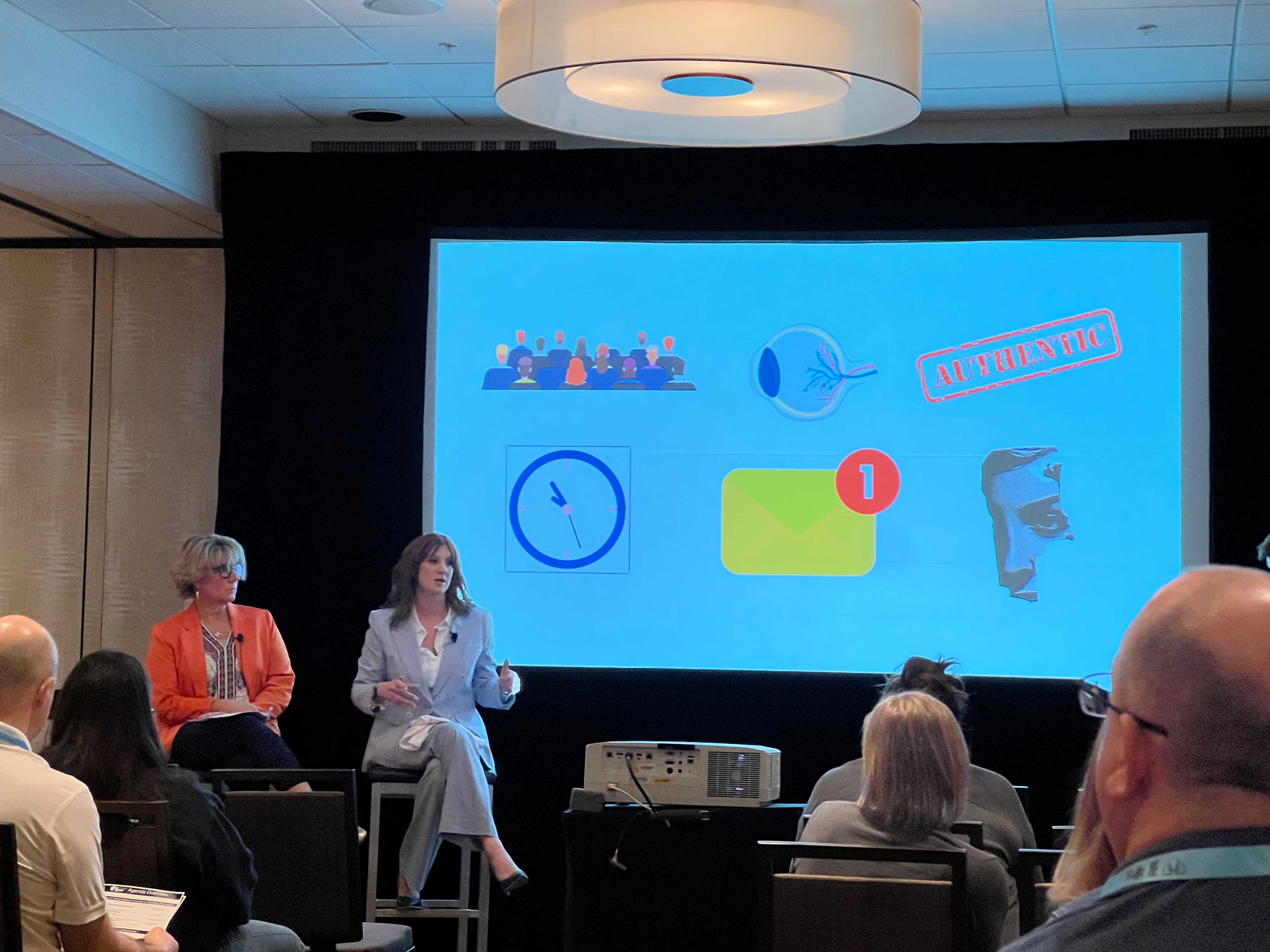
We had the honor of sharing the stage with a few of those trend-setting industry experts. Blink hosted a panel discussion, “Uncensored: Cutting The BS On Employee Communications,” with two of the industry’s most straight-talking COOs: Danielle Thomas (Lifeline Ambulance) and Meredith A. Lambroff-Brown (Armstrong Ambulance Service).
Keep reading to discover some of the employee communications insights Danielle and Meredith shared with the audience.
Why good employee communications matter for EMS agencies
First, let’s set the stage to understand why frontline communications are so critical for ambulance companies. EMS frontline workers—paramedics and emergency medical technicians (EMTs)--play a critical role in society. Ambulance companies face a difficult task, however, when it comes to keeping a strong workforce and staying connected with them.
Frontline roles in healthcare related industries are notoriously challenging to keep filled—and EMS is no different. Over the last few years, turnover rates have increased, with an average of 11% turnover in the US and a peak of 20% turnover in high response volume areas in 2022. The turnover problem is compounded by waning applicant pools, with nearly two-thirds of agencies reporting a decrease in applications.
On top of that, EMS practitioners are a young and increasingly diverse workforce. In California, for example, the EMS workforce is younger on average than the rest of California’s workforce. In the US, more broadly, EMTs are one of the youngest workforces, with a median age of 29.7 years, according to the Bureau of Labor Statistics.
What industry COOs are saying about employee communications
Against this backdrop, what advice and insights did Thomas and Lambroff-Brown have for companies struggling to communicate with a young, mobile, and diverse workforce? Here are a few takeaways from the talk.
1. Comms is a must-have, not a nice-to-have
In many ambulance agencies, the practice of communications is often viewed as an afterthought, rather than what it really is: one of the most powerful tools available. A good communication strategy has the power to educate, motivate, connect, and focus workers; a bad communications strategy can tear down people and workplace culture.
2. Master the building blocks of communications
When working on your internal communication strategy, pay attention to the three main building blocks of communication—what you say, how you say it, and how you deliver it. Each company will need a different voice tailored to their audience, so play around with these facets to ensure your message is being heard.
3. Create a relevant and sustainable comms strategy
Getting employee communications right is hard because language and culture are always evolving. What worked yesterday isn’t guaranteed to work today. That’s why leaders need to constantly ensure their comms are specific, set clear expectations, and provide a model for the rest of the workforce. In other words, “what you put up with, you end up with.”
4. EMS leaders are scared to over-communicate, but shouldn’t be
In any organization, the comms team will need to handle sensitive topics. Naturally, leaders are scared of over-communicating and causing uproar over certain topics. But, rather than letting the fear of an outcome shut down communications, focus on building trust with the workforce through constant communication. That way, you’re more likely to be given grace to make a communication misstep by employees who feel connected to you already.
5. Build the culture with your posts
Your communications strategy plays a critical part in building the company culture. This is especially important—and challenging—for frontline organizations where workers often work alone or in pairs. Don’t shy away from posts that may seem “fluffy,” and be sure to tailor those posts to your workforce. For the younger EMS workers, the COOs take advantage of videos in the Blink Feed, because that’s how that generation consumes information.
6. Control the narrative
Rumors and misinformation are an unfortunate part of managing frontline communications. Rather than avoid tough topics, the comms strategy needs to prioritize getting ahead of the narrative. Whether it’s discussing the disparity between racial representation in the workforce and in leadership roles or an emergency issue like an error with gas card payments, set the terms of the discussion early and provide clear next steps to fend off the rumor mill.
7. Measure the operational impact of your strategy
Good comms are measured by more than anecdotes. Inefficient communications and misaligned technology hinder frontline workers and contribute to waste and high turnover. When Lifeline Ambulance switched to Blink for their communications and HR tool, the company saved $420,000 in the first year—nearly 10x more than their investment in Blink. Understand the operational cost of your current strategy, find new strategies and new tools like Blink, and measure the impact regularly.
In summary, a good frontline communications strategy is one of the most important things an EMS agency can do. But communicating with a young, diverse frontline workforce can’t follow the same playbook as your office-based staff. Ambulance agencies need a communications strategy that is tailored to this mobile, fast-paced, highly-dispersed workforce.
If you can find what works for your agency, it can help reverse the turnover trend and help create positive employee engagement that propels the business forward.
It was a compelling, hour-long discussion with both COOs. This summary is just a fraction of the insights the audience walked away with.

In April, Blink attended the American Ambulance Association Annual Conference & Trade Show (a.k.a. AAA) in Nashville, TN. As the premier event in the ambulance industry, leaders gather at AAA to discuss the trends and pitfalls they face, find innovative vendor solutions, and hear from experts about the future of Emergency Medical Services (EMS).
We had the honor of sharing the stage with a few of those trend-setting industry experts. Blink hosted a panel discussion, “Uncensored: Cutting The BS On Employee Communications,” with two of the industry’s most straight-talking COOs: Danielle Thomas (Lifeline Ambulance) and Meredith A. Lambroff-Brown (Armstrong Ambulance Service).
Keep reading to discover some of the employee communications insights Danielle and Meredith shared with the audience.
Why good employee communications matter for EMS agencies
First, let’s set the stage to understand why frontline communications are so critical for ambulance companies. EMS frontline workers—paramedics and emergency medical technicians (EMTs)--play a critical role in society. Ambulance companies face a difficult task, however, when it comes to keeping a strong workforce and staying connected with them.
Frontline roles in healthcare related industries are notoriously challenging to keep filled—and EMS is no different. Over the last few years, turnover rates have increased, with an average of 11% turnover in the US and a peak of 20% turnover in high response volume areas in 2022. The turnover problem is compounded by waning applicant pools, with nearly two-thirds of agencies reporting a decrease in applications.
On top of that, EMS practitioners are a young and increasingly diverse workforce. In California, for example, the EMS workforce is younger on average than the rest of California’s workforce. In the US, more broadly, EMTs are one of the youngest workforces, with a median age of 29.7 years, according to the Bureau of Labor Statistics.
What industry COOs are saying about employee communications
Against this backdrop, what advice and insights did Thomas and Lambroff-Brown have for companies struggling to communicate with a young, mobile, and diverse workforce? Here are a few takeaways from the talk.
1. Comms is a must-have, not a nice-to-have
In many ambulance agencies, the practice of communications is often viewed as an afterthought, rather than what it really is: one of the most powerful tools available. A good communication strategy has the power to educate, motivate, connect, and focus workers; a bad communications strategy can tear down people and workplace culture.
2. Master the building blocks of communications
When working on your internal communication strategy, pay attention to the three main building blocks of communication—what you say, how you say it, and how you deliver it. Each company will need a different voice tailored to their audience, so play around with these facets to ensure your message is being heard.
3. Create a relevant and sustainable comms strategy
Getting employee communications right is hard because language and culture are always evolving. What worked yesterday isn’t guaranteed to work today. That’s why leaders need to constantly ensure their comms are specific, set clear expectations, and provide a model for the rest of the workforce. In other words, “what you put up with, you end up with.”
4. EMS leaders are scared to over-communicate, but shouldn’t be
In any organization, the comms team will need to handle sensitive topics. Naturally, leaders are scared of over-communicating and causing uproar over certain topics. But, rather than letting the fear of an outcome shut down communications, focus on building trust with the workforce through constant communication. That way, you’re more likely to be given grace to make a communication misstep by employees who feel connected to you already.
5. Build the culture with your posts
Your communications strategy plays a critical part in building the company culture. This is especially important—and challenging—for frontline organizations where workers often work alone or in pairs. Don’t shy away from posts that may seem “fluffy,” and be sure to tailor those posts to your workforce. For the younger EMS workers, the COOs take advantage of videos in the Blink Feed, because that’s how that generation consumes information.
6. Control the narrative
Rumors and misinformation are an unfortunate part of managing frontline communications. Rather than avoid tough topics, the comms strategy needs to prioritize getting ahead of the narrative. Whether it’s discussing the disparity between racial representation in the workforce and in leadership roles or an emergency issue like an error with gas card payments, set the terms of the discussion early and provide clear next steps to fend off the rumor mill.
7. Measure the operational impact of your strategy
Good comms are measured by more than anecdotes. Inefficient communications and misaligned technology hinder frontline workers and contribute to waste and high turnover. When Lifeline Ambulance switched to Blink for their communications and HR tool, the company saved $420,000 in the first year—nearly 10x more than their investment in Blink. Understand the operational cost of your current strategy, find new strategies and new tools like Blink, and measure the impact regularly.
In summary, a good frontline communications strategy is one of the most important things an EMS agency can do. But communicating with a young, diverse frontline workforce can’t follow the same playbook as your office-based staff. Ambulance agencies need a communications strategy that is tailored to this mobile, fast-paced, highly-dispersed workforce.
If you can find what works for your agency, it can help reverse the turnover trend and help create positive employee engagement that propels the business forward.
It was a compelling, hour-long discussion with both COOs. This summary is just a fraction of the insights the audience walked away with.

What we'll cover
Start your free trial today
See how Blink helps frontline teams stay connected, informed, and engaged.
Carla has been with Elara Caring since 2022 as an Attendant Coordinator at the Mount Vernon branch in Texas.
Carla is a wonderful frontline champion at Elara Caring. She is the first to step up to help or train others. Her ability to teach and lead is amazing — CTs and all PCs reach out to her due to her kindness and understanding and compassion. She is a wonderful person and has taken the time to help me and lead me when there was none other.
Carla sacrifices what she wants for others and it's a blessing. People call her from other offices and states for help because they know how valuable she is to this company. Her determination and leadership is what this world needs more of. She doesn’t just do a great job — she touches lives in every way and work and in the client's home.
I have watched her over 6 months of being at this company and thought, “Wow, we have a jewel!” She deserves to be recognized for her greatness and champion spirit. Elara Caring is better each day due to the fact we have a champion on staff — Carla Brewer is a great person, a great employee, and a treasure to this world.
How has Blink helped in her role?
Carla is a master at Blink and often helps with training. She uses it to talk with the attendants and takes the time to go slow so all learn how to use it.
What does she want to do next?
I believe that Carla wants an environment where all feel valuable and like they have a place. She uses her life to bring light to stressful places and I believe she will only soar in this next level in her life and this company.
“I kind of feel that 60 is the new 40,” says Ciarán McKinney, 61-year old manager at Age & Opportunity. Workplace communication skills are shifting as the workforce is slowly shifting as baby boomers continue working past the traditional retirement age.
The trend is mirrored on the other end, too. The teen employment rate in 2021 is the highest it has been in the last 10 years. These new workers are the first generation Z members to enter the workforce, and many are starting as frontline workers.
What does this mean for you?
Generational differences in the workplace affect many industries, but frontline workers are usually the most diverse. Over 33% of frontline workers are over 50, and the low barrier to entry means many frontline workers are among the youngest workers.
Your workforce demographic is more diverse than ever. You have employees belonging to multiple generations with different internal communication styles working together. To get the most out of them, you need to manage them effectively.
Managing a multigenerational workforce takes practice and understanding. You need to understand generational differences in the workplace and approach each generation in a way that suits them.
Generation breakdown – understanding the differences
If you’ve read the classic To Kill a Mockingbird, you might remember Atticus Finch's advice:
“You never really understand a person until you consider things from his point of view... Until you climb inside of his skin and walk around in it.”
Taking Atticus’s advice to heart, you should remember that while you can define a generation by a few key events and common traits, you must view the person as an individual first.
To find common ground with different generations, let’s understand the environment they grew up in.
Baby boomers
Commonly called baby boomers, the generation born between 1946-1964 represents close to 40 million members of the American workforce.
For most of their work-life, they either communicated face-to-face or used emails and phone calls. They might be known as the tech-averse generation, but 52% of baby boomers own a tablet.
Generation X
Generation X includes those born between 1965-1980. It is the second-largest generation in the American workforce (53 million active workers).
They were also the first generation that saw both parents in the workforce as normal. This might have made many Gen Xers independent and self-reliant.
Millennials
Millennials, sometimes referred to as Generation Y, were born between 1981-1996. With 56 million millennials in the American workforce, they are the largest generation at work today. This is true in the UK as well, where roughly 50% of the workforce consists of millennials.
Millennials grew up surrounded by technology. The internet and mobile phones became common during their childhood.
The best way to communicate with them is usually by texting. On average, millennials spend 48 minutes a day texting, higher than any other group surveyed.
But try to avoid phone calls as 75% of millennials find them time-consuming.
Generation Z
The newest addition to the workforce, Gen Z, was born between 1997-2012. They represent a small but growing group.
Gen Z is best known for its passionate beliefs around diversity, climate change, and a desire to change the world.
Here’s what Casey Winch, CEO of Tallo, has to say about that:
“If you’re in the business of recruiting Gen Z, you need a diversity and inclusion strategy, and you need it now.”
Gen Zers came into a world with widespread access to technology. You can call them digital natives. They are likely to possess excellent tech skills and communicate using text messages, instant messaging, and social media.
Effective communication in a multi-generational workforce
Working with a multigenerational workforce doesn’t have to mean struggling to balance everyone’s needs. You can use the range of experiences from different age groups as an advantage.
Some companies have done this effectively.
Pair different generations together intentionally
You can get higher productivity by mixing older and younger generations as teams. It increases the productivity of both older and younger employees.
Riva Precision Jewelry went for this when it faced a skilled labor shortage. It hired young workers who lacked skills and paired them with experienced employees.
This addressed their labor shortage and made both groups happy. Older workers were compensated for their time teaching, and the newer employees gained experience in the industry.
Offer flexibility to older employees
One way companies have stayed engaged with older workers is by offering them a flexible schedule. This can even include working at multiple locations.
Companies like Home Depot and CVS have started implementing snowbird programs that allow older workers to transfer to a warmer store during the winter months. These workers tend to defer retirement since they can fit work into their schedules easily.
“A good number of our pharmacy customers are going to be mature customers, and as part of our focus on diversity, we want a workforce that reflects our customer base,” according to David Casey, CVS’s vice president for workforce strategies.
Find a way to provide coaching to younger workers
The nursing field has struggled with an ageing workforce and retaining new workers. Baptist Health Lexington was no exception.
Managers at the hospital struggled to find time to meet with staff about career concerns, but millennials longed for career mentorship. They hired an on-call career counsellor and saw an 11% decrease in turnover.
The return on investment (ROI) and worker satisfaction encouraged Baptist Health Lexington to keep the change.
Workplace communication skills for every generation
We’ve seen how some frontline companies are crafting policies for a multigenerational workforce, but finding solutions for your workers might take time. There are some general ideas you should keep in mind when managing generational differences in the workplace for your frontline staff.
Keep things conversational, not corporate
Keep the team communication distributed over communication channels by complexity and importance.
If you’re praising someone, do it over the phone. Guiding someone, opt for face to face.
This is especially important as companies adapt to more text-based communication for frontline workers. You can easily approach a coworker in the break room, but a casual conversation on the company's texting app takes practice.
In general, you want a reason to message someone. If you see a coworker you need to speak with commented on a company post, try to initiate a conversation.
Understand that people might take more time to respond to your feedback than you are used to. Some generations are more sensitive about respecting their free time and may wait to reply until they are at work again.
Prioritize flexibility
Jacquelynn Wolff, a Boston resident, received an offer for her dream job. But it was in New York. She didn’t want to leave, so she discussed it with her employer who agreed on remote work.
“It lowered my stress levels instantly. I’m able to work better for my team, too, because I don’t have to worry about adjusting to a new city or a long commute.”
She isn’t alone. Workers worldwide are asking for a flexible work environment.
About half of the global workforce would consider quitting a job if workplace flexibility ends after the pandemic.
But work flexibility might mean different things for different generations. There is no one-size-fits-all solution. Work-life balance varies from person to person.
Ask your employees. Survey them and find what they prefer.
Include everyone and adapt your feedback style
Frontline employees tend to work away from the office. You can’t give feedback to them using a thumbs up or facepalm (not that you should do that with office employees either).
So what’s the best way to congratulate them on a job well done or correct their errors?
That varies with each generation.
"Older generations tend to be more linear and traditional, while younger generations are looser and more spontaneous around time and place," says consulting CEO Tammy Erickson.
Younger generations grew up with likes and shares of social media. They like frequent attention. Sixty-six percent of Gen Z preferred feedback every few weeks.
You can send a shout-out tweet to a millennial and Gen Zer. They may love it. Baby boomers and Gen Xers might not share this response.
Older generations tend to prefer face-to-face meetings. Suggest improvements in one-to-one meetings and congratulate them in front of their colleagues for maximum effect.
Ask your employees how they prefer to learn about their performance. Not every millennial has a Twitter account, and not all baby boomers enjoy phone calls.
6 tips to improve your workplace communication skills to engage every generation
With that in mind, let’s end with a few tips that will enhance multi-generational communication for everyone.
Ask! Survey for group feedback and keep track of what each individual prefers. You may find your workers follow a similar pattern to their generation, or they may surprise you.
Use a multidimensional approach to communications and try to reuse content to suit as many people as possible.
For example, if most of your workforce prefers in-person meetings but others learn better on their own time, record videos of in-person announcements to reshare later.
Pass the tools of internal communications to your employees. Employee-generated content is compelling. You can add personality, create meaningful connections, and put a face to the dry policy updates.
Have a central repository like Blink that can mix rich content like videos and images with conversations and calls. Keeping everything in one, mobile-friendly place makes it easier to reach others and communicate the way that works best for everyone.
Keep channels open for constant feedback about what could be improved. Don’t assume a few changes at the end of the year will be ok going forward. Remind employees to approach you about possible improvements when they can, and make sure you’re available.
Make it human. Let your employees see you at home, record videos on your way in, accept things that are a little messy for the sake of authenticity. Likewise, don’t expect perfection from your employees.
Final thoughts: workplace communication skills for every generation in the workplace
With so many generations at work, you will see generational differences in the workplace. It’s essential to understand and acknowledge them.
Let your frontline employees define themselves. A millennial can excel at soft skills, and a baby boomer can adapt to newer technologies. Effective communication grows from an environment that is open and adaptable.
Offer flexibility and show your workers that you are invested in their continuing careers. Adopt communication tools that cater to all generations and make it easier for everyone to be heard.
Focus on what’s similar instead of different to keep moving forward as a successful frontline team.
Demand for home health aides is higher than ever. The job outlook for home health and personal care aides is projected to be 25% between 2021 and 2031 — meaning that, as a workforce, home health and personal care is expected to grow an incredible 20 percentage points more versus other industries.
This poses a significant challenge for home health care providers, not just in recruiting enough carers to answer to demand but in retaining these staff members as well.
The Great Resignation, high employee turnover, and decreasing job satisfaction are all impacting home health organizations in line with the wider healthcare industry. Tackling these issues starts with addressing the factors that cause them in the first place.
In this guide, we'll walk you through the numerous different factors that can influence employee retention, before diving into exactly how to increase employee retention in home health care.
If you're an HR or Operations leader in a home health care organization, keep reading to learn how you can successfully retain your valuable employees — and improve patient care and business outcomes in the process.
What causes attrition in healthcare?
Staff turnover is a natural and necessary process in all healthcare organizations. However, when turnover reaches high levels it can have a detrimental effect on the quality of care as well as being costly. And it's high levels that we're seeing.
Further problems arise when employees leave not only the organization but the health workforce itself.
By understanding and addressing employee retention and the factors that drive it, home health and personal care leaders can minimize staff attrition and the associated impact on cost of, and quality of, patient care.
Below, we’ll take a closer look at each of these three dimensions and how they affect retention, before diving into actionable initiatives leading to improving employee retention throughout your home health organization.
What's important to remember is that each of these factors overlaps to create engaging, positive employee experiences and ensure retention. It's not a case of nailing just one of these categories but creating meaningful change in all three.
1. Employment quality
Employment quality is a key factor in retention and includes aspects like pay and benefits, job security, and working conditions. Other elements of employment quality relate to home health workers having direct lines of communication with their employer and being able to swap and fill shifts easily in order to support the work-life balance they seek.
Getting employment quality right is a particular challenge for home health and personal care organizations. For one, home health co-workers are typically more distributed than other healthcare teams. These are employees who leave their homes in the morning to visit patients at their homes and may rarely, or never, even step foot in a shared office or HQ.
And yet, home health organizations cannot deprioritize employee quality conditions — they can't settle for simply paying staff more in order to boost retention, as many have tried to do. As Gartner states:
"Monetary compensation is important for surviving, but deeper relationships, a strong sense of community, and purpose-driven work are essential to thriving."
That leads us to the concepts of work and organizational quality...
2. Work quality
Work quality includes the levels of responsibility, autonomy, and stress experienced in the workplace.
Without going into any more detail than that, it quickly becomes clear how essential work quality is for healthcare workers. Few roles carry such a degree of responsibility and demand as much from employees. The scope for stressful situations is limitless — and to make matters worse, home health aides often feel isolated from the rest of their co-workers and the organization at large, meaning that when they start to feel stressed they have no one to turn to for support.
Work quality also relates to the technology provided to health professionals to help them succeed in their roles. With52% of frontline workers claiming they'd leave their job over tech tools, it’s clear to see the impact that the right workplace technology has on work quality and employee retention.
3. Organizational quality
Organizational quality also impacts employee retention: the culture of the organization and the way that employees are managed and rewarded (or not) all play a key role here. Organizational quality can also refer to levels of organizational innovation, such as improvement programs or digitization initiatives.
Blink research shows that health and care workers overwhelmingly feel unheard and undervalued in their organizations. Unsurprisingly, the same research showed 50% are considering leaving, or have recently left, their jobs.
Simply put, organizations with a positive culture, good management practices, and fair reward systems are more likely to retain their employees. On the other hand, companies with poor organizational quality are far more likely to experience high levels of turnover.
7 ways to increase employee retention in home health care
Turning attrition trends around is a big task. Businesses need to think bigger than compensation and make bigger commitments to the overall employee experience.
All roles in health and personal care must get the status and respect they deserve. But how can you, as business and HR leaders, provide that?
1. Collect and analyze data
Up-to-date workforce data should be at the center of an effective retention strategy, helping you better target your employment, work, and organizational quality improvements. By collecting and analyzing data and identifying trends in your home health workforce, you can identify the starting point for your activities.
Understanding the profile of your workforce will help you to assess the risk points and ensure that retention issues affecting particular groups are addressed. For example, are retention issues organization-wide or specific to certain staff groups, demographics, departments, or teams?
For a home health provider, this will likely include looking at retention rates between carers employed directly by your organization vs agency staff vs workers brought in through other schemes like CDPAP. Carers indirectly employed by your organization might feel less connected to the company mission and vision — failing to meet their organizational quality needs as a result.
Getting to know the drivers of employee turnover, and who they impact in your specific organization, can help you create targeted initiatives to improve retention. If the data shows heavy attrition after 30 or 60 days, you might focus on creating an effective, engaging onboarding program to help new hires hit the ground running.
Making it happen
One way to improve employee retention is through the use of regular Employee Pulse Surveys. By conducting regular pulse surveys, you can ensure that you have a constant understanding of how your employees feel about their work.
This will help you address any potential retention issues before they become a major problem or spiral into quiet quitting. Additionally, pulse surveys can help to improve employee engagement and job satisfaction, which can lead to improved retention rates.
You can also use tools like Blink’s Frontline Intelligence feature to collect and analyze critical employee engagement data and metrics, helping you to understand exactly where your healthcare workforce is feeling unengaged and unsatisfied.
2. Offer relevant training and development opportunities
Healthcare organizations that offer relevant training and professional development are more likely to retain their most valuable employees. It cannot be underestimated how valued and invested in healthcare workers will feel when their skills are being developed and their careers are progressing.
This answers to all of the three factors explored:
Employment quality (as it opens the doors to higher pay)
Work quality (through professional development)
and organizational quality (as it creates a culture of progress and support)
Making it happen
Training and development programs for home health and personal care workers might include formal training programs, such as classroom-based learning or online courses. It might also include more customized opportunities, such as one-on-one mentoring or job shadowing.
What's essential to identify, however, is how these programs will be delivered. Technology will be crucial to bridge the gap between HQ and home health aides.
3. Lighten the load
An increasing number of health and care workers are struggling to balance the demands of their job with other aspects of their life, such as parenting or caring responsibilities. This often leads to stress and burnout; an early indicator of disengagement, and ultimately attrition. In some instances, burnout in healthcare staff has also been linked to medical errors and patient safety incidents.
To improve retention in healthcare, organizations must commit to creating a working environment where employees feel supported by their home health co-workers and managers — even if they rarely see them face-to-face — and are not overburdened with inflexible workloads.
Making it happen
Organizations can take a number of steps to lighten a home health worker's cognitive load:
Providing more resources to team members and managers in a mobile and easy-to-access Hub for on-the-go support
Implementing intuitive scheduling solutions and shift-swapping tools that can be used for real-time coordination and employee flexibility
Encouraging work-life balance through a culture of peer support, so that co-workers can easily tap into the knowledge and experience of their peers
4. Consistent communication
Another factor that often impacts your employment quality is the consistency of your communication. Consistent two-way communication is essential for lasting relationships — and it can be one of your most powerful tools for encouraging employee retention.
Blink's research found that close to one-fifth of frontline workers don’t receive relevant communications from their organization. Organizations can create a sense of community and trust among their staff to minimize attrition by ensuring that all employees:
Receive updates relevant to them
Are part of the right team chats
Can easily share their ideas and concerns
You can also use regular communication to obtain direct insight into how specific healthcare workers or teams are feeling about their work. This can help you to identify retention issues and create targeted interventions as needed.
Making it happen
Effective communication needs to be tailored to the specific needs of different staff groups. For home health and personal care aides, it will undoubtedly be about regular mobile updates and using Feed and Chat features to create energy and enthusiasm among your distributed workforce.
Read how Blink helped solve a million-dollar communication challenge for the home health organization, Elara Caring. Through deploying a number of transformative digital initiatives through Blink, 95% of Elara Caring's personal care, home health, and hospice care workers now feel more connected to the organization.
5. Focus on employee engagement
Employee engagement can be a powerful tool for improving retention, as it has been linked to higher levels of satisfaction and commitment among workers.
Healthcare organizations can create a work quality that is more attractive to top performers by getting to know the latest employee engagement trends, providing the right digital tools for key workers to engage intuitively, and regularly assessing the effectiveness of their efforts.
Engaging employees ultimately retains them.
Additionally, research by HBR shows that higher employee engagement levels can lead to a number of improved outcomes, not just retention. These include care costs (including legal action taken by a patient against a provider for negligent complications) and treatment effectiveness and patient outcomes (measured by the rate patients are readmitted).
Making it happen
To increase employee engagement, healthcare organizations should focus on creating a culture that values the opinions and input of employees. This might include activities like surveys or direct feedback, regular communications from leadership, and targeted recognition programs.
One transformative way to improve employee engagement in your healthcare organization is to pave the way with Blink, the powerful mobile employee engagement app that frontline workers love. With a suite of features perfect for healthcare, Blink will help you create a culture of engagement and retention in your organization.
"Meaningful recognition can help to motivate and retain our NHS people. Setting in place a holistic reward package, which is relevant to staff needs, can be key to ensuring your organization, and the wider NHS, retains its staff."
But recognition is more than a pat on the back. Driving real recognition for employees needs to be an ongoing, holistic process that inspires your healthcare workforce to feel valued, motivated, and connected to the company.
Making it happen
While some companies may view the idea of regular rewards or incentives as impractical, Blink is a mobile employee recognition solution that makes it easy to provide targeted and consistent recognition to specific individuals or teams.
With features like real-time feedback, team and group chatting, and, of course, Employee Recognition, your healthcare organization can unlock the power of recognition as a retention tool. And with its wider suite of handy features, Blink is the perfect way to engage employees in your healthcare organization and help you retain talent.
7. Listen and action feedback
Over a third (35%) of frontline healthcare workers feel that their feedback will not be acted on by their organization. Unsurprisingly, half of frontline healthcare staff have changed or considered changing their job.
"By taking the time to listen and communicate, we can create a better and more supportive environment within healthcare," says Sean Nolan, CEO at Blink.
Through more effective communication, leaders feel more connected to their frontline, and frontline employees feel valued and listened to. This results in higher retention, increased productivity, and better two-way conversations.
Making healthcare workers feel heard needs to be a priority for any healthcare organization. By listening to their feedback and acting on it, you will be able to create a more supportive workplace culture that retains top talent — leading to reduced costs associated with employee turnover.
Making it happen
To effectively ensure your team is heard and their feedback is acted on, you need the right tech to manage it all smoothly. With the Blink employee app, you can listen to your employees and act on their feedback in real time, meaning they won't feel ignored or undervalued.
By using the powerful features of Blink, you can help create a culture where frontline workers feel heard and respected while focusing on:
Encouraging two-way feedback through regular surveys and communications from leadership
Ensuring feedback is acted on and implemented into business processes, updating employees on the progress of their feedback so they know they’re being heard
Integrating your mobile app with workplace technologies like HR systems, payroll platforms, and more, to streamline the employee experience and implement feedback effectively across your organization
Listen and action feedback - Regularly collect and act on feedback, update employees on actions taken
Retention next steps
Blink is the industry-leading frontline engagement app that connects management and frontline teams to build stronger organizations. With a proven adoption rate of 92% in care sectors, it’s never been this easy to unify the frontline. At Blink, we believe in empowering frontline organizations by helping you enable, engage and understand your workforce.
Our app provides a host of features that support employee retention in home health, such as employee surveys, polls, secure team and group chats and channels, employee recognition, and healthcare-friendly HR tools.
By using the app effectively, you will be able to create a culture where employees are engaged and respected – ultimately reducing employee turnover costs and driving employee retention up. We are experts in frontline engagement and retention and would love to help you achieve your goals.
Blink and Workvivo have a lot of similar features. So how do these employee communication platforms stack up against each other? And which is the best choice for your organization?
With so many employee communications platforms out there, finding the right fit for your team can be a daunting task.
Today, we’ll take a closer look at two industry frontrunners: Blink and Workvivo. Both of these platforms are designed to enhance collaboration, streamline communication, and foster a sense of community within organizations. They also act as a digital hub, giving employees access to all of the tools and resources they need to do their jobs well.
But which of these modern intranet solutions best supports your business to meet its needs and goals? Let’s take a closer look at key features, functionalities, and more to help you make an informed decision.
What is Blink?
Blink is the leading mobile-first employee experience platform, designed for frontline organizations. It’s a modern intranet, where employees can access company comms and essential workplace resources from their smartphones.
Chatting with colleagues. Signing up for shifts. Responding to the latest poll. Viewing pay stubs. Celebrating a coworker’s company anniversary. Employees can do all this and more with Blink’s comprehensive employee app.
With a range of communication, recognition, engagement, and social features — all available via a user-friendly interface — Blink helps employees feel closer to company culture and one another.
What is Workvivo?
Like Blink, Workvivo is an employee communications app. The company was established in 2017 and was acquired by Zoom in 2023.
Workvivo is an all-in-one tool for workplace communication and collaboration. Social media-style functionalities, such as podcasting, keeps employees engaged.
Blink vs. Workvivo: What are the similarities?
Internal communications
Communication channels
Both Blink and Workvivo help to streamline company communications. Messages from management. Co-worker conversations. Leadership updates. All types of communication are supported thanks to a variety of channels, including a newsfeed, mobile notifications, videos, and livestreams. Workvivo customers can also create articles, newsletters, and podcasts from within the platform.
News feed
A news feed is another thing these platforms have in common. Admins can personalize Blink’s News Feed, which serves as users’ homepage, based on each employee’s team, interests, and role. This ensures employees only see relevant comms. Because employees can also filter the news feed, it’s easy for them to find the information they’re looking for.
Chat functions
Both platforms have similar chat features that are useful for teamwork and project management. Employees can chat and share files, GIFs, images, and videos. In Blink, chat functions are a core pillar of the platform. Workvivo, on the other hand, relies on integrations with Microsoft Teams and Slack. A chat add-on is available but this comes at an additional cost.
Video conferencing
When only face-to-face communication will do, Blink and Workvivo both provide useful video conferencing tools. Teams working on either platform can start a video call right from their chat group. Workvivo does this through its Zoom video app. Blink integrates with Zoom, Google Meet, and Microsoft Teams, giving customers the option to use their preferred video conferencing software.
AI comms support
With Blink Assist, users get AI support when creating and sharing content. Your AI assistant can automatically generate and improve posts, helping you to better connect with your audience. Users can also use AI to summarize posts that have appeared in the news feed. This means you can stay up to date without having to read every single post. Workvivo, working with Zoom, is beginning to introduce generative AI features.
Blink and Workvivo both support employee engagement. They provide two-way communication tools and support employee recognition with milestone celebrations and appreciation shout-outs. Both platforms also aid the onboarding process, with employee directories, a resource hub, and new starter video introductions.
These solutions provide tools for feedback collection, like pulse survey check-ins and employee NPS (net promoter score) surveys. Blink, in particular, provides rich survey functionality. Compared to Workvivo, Blink provides a greater variety of surveys and question types. This allows you to collect in-depth data and then use feedback analysis tools to examine that data on a granular level.
When it comes to encouraging employee engagement on the Blink platform, Blink’s customer success managers (CSMs) are on hand. Clients work with a dedicated CSM to optimize adoption and engagement.
A digital hub
Workvivo serves as a digital hub where companies can store and share documents and resources. This hub integrates with other tools in an organization’s tech stack. It’s possible to create wiki pages for collaboration and to launch other apps from within the platform.
Similarly, Blink offers a modern intranet, accessible on both desktop and mobile. Users can access important tools, documents, forms, and information, directly from the app. They can also launch other apps from within the platform thanks to a secure single sign-on. This encourages user adoption of existing software and streamlines the employee experience (EX).
Blink was purpose-built from the ground up to enhance internal communications and improve the employee experience, and that has always been our sole mission.
For companies impacted by Meta’s recent decision to sunset Workplace, this is a crucial distinction. Meta’s shift in focus away from Workplace to other business areas highlights the risk of relying on platforms that are not core to a company’s strategic direction.
Organizations partnering with Blink are choosing a vendor whose entire focus is dedicated to success in employee engagement and communication. We continuously invest in our platform, ensuring that it remains a leading solution for internal comms and employee experience.
Unlike Workvivo, which — like Workplace — is just one part of a much larger parent company’s diverse offerings, Blink’s platform isn’t just a feature among many — it’s the heartbeat of our business.
Frontline-first
Both Blink and Workvivo have a mobile app that employees can access from their smartphones. These are user-friendly spaces that employees find easy to navigate. And these apps are comprehensive, offering many of the same features on desktop and mobile versions of the platform.
However, Blink offers some features and services that particularly benefit a frontline workforce. These frontline-focused features and services include the following:
Feeds and chats are cached for offline reading so a poor or non-existent internet connection doesn’t prevent employees from engaging with the app
Workers can select a “do not disturb” setting so they’re not bothered by notifications when they’re at home or trying to rest after a night shift
Blink’s Open Shifts micro-app allows managers to advertise empty shifts and employees to volunteer for them
Blink’s rollout team offers unparalleled support during the launch period, providing branded materials and visiting sites to help people gain access to the app
While Workvivo may be a better fit for a desk-based organization, Blink’s deep understanding of frontline teams and their needs makes this platform an excellent choice for frontline businesses.
Analytics
Workvivo offers robust analytics capabilities to track and measure employee usage data. Organizations can gain insight into platform usage and then make data-driven decisions to manage platform performance. This functionality is available for an additional fee.
Like Workvivo, Blink’s enhanced workforce analytics feature provides comprehensive usage data. But Blink goes beyond usage.
Blink analytics collate and correlate from multiple data points to provide a breadth of insight into your workforce. You can drill down into the data, examining results by department, manager, and location to get deeper, actionable insight.
Your dedicated CSM can then help you turn actionable insights into action plans. These can be distributed automatically via Blink comms channels, helping you to implement your plan and track results.
Customization
Both Blink and Workvivo allow you to add your own branding to the platform. But Blink offers more in terms of customization.
Blink provides a white-label app for full brand personalization. For larger, multinational organizations, you can also create a federated platform, with personalized branding for each region. You can compartmentalize other features, like the news feed and user directory, too. In Workvivo, colors, icons, and logos are set globally.
While the offering of out-of-the-box integrations is comparable across both products, Blink also provides deeper integrations through customized micro-apps scoped and built for each customer.
These micro-apps allow you to add functionality to the platform as you need it. You can use Blink’s pre-built digital forms to digitize and streamline processes for employees. For example, employees can use the app to request leave, view their pay stubs, or report an incident. And if you don’t see a form that quite fits your needs, you can count on the Blink team to custom-make one.
Content management
Both Workvivo and Blink offer useful content management features. It’s easy for admins to set permissions and for content creators to create and publish new content. On Blink’s app, creators can protect sensitive content so readers have to authenticate before accessing it. Blink can also integrate with design tools like Canva, which helps users create effective page layouts.
In comparison, Workvivo offers a variety of content management tools. For example, users can auto-archive content by setting an expiration date for each type of content. Publishers can also opt to receive notifications when content has expired.
Translation capabilities are also a little more robust on Workvivo. In Blink, users can set their language and choose to auto-translate comments, posts, and pages so that other users can read them in their native language. In Workvivo, content creators can take this a step further by writing content in their own language and then select the languages it should be automatically translated into. This can come in particularly handy for large, multilingual teams.
Blink and Workvivo both support organizations in their internal communication and employee engagement efforts. They act as a modern intranet, with both desktop and mobile app versions that help companies reach all members of the workforce, no matter where they’re based.
Workvivo has the edge when it comes to certain capabilities, like translation. But Blink makes a great Workvivo alternative, particularly when it comes to personalization, analytics, and custom functionality.
Blink is also the go-to platform for frontline organizations. Built specifically to improve the work lives of deskless employees, Blink makes it easy for companies to encourage app adoption and engagement. It helps frontline workers feel more connected to their coworkers and company culture. It also puts all essential tools at their fingertips, improving efficiency and safety.
Want to find out what Blink could do for your frontline organization? Book your free demo today to see for yourself.
Kerry Schumann is an Occupational Therapist with diverse experience in the healthcare sector. Currently employed at Ross Care since October 2022, Kerry previously held a similar role at Millbrook Healthcare and worked at the Eastern Cape Department of Health from December 2018 to November 2022, where responsibilities included establishing sustainable services as the sole therapist at a district-level hospital.
Kerry always goes above and beyond her role. She will always reach out to help anyone who needs it. She shows great initiative and is proactive in everything she does — and always has a smile around the office. She has always shown amazing rapport with service users and their family. Kerry is just a general delight to work alongside.
How has Blink helped in her role?
Kerry is our Blink Champion for Chandlers Ford.
What does she want to do next?
She wants to keep doing the best she can each and every day and hopes to progress within the clinical.
Gamification = a better employee experience, right?
Gamification sounds like an easy win for employee experience — sprinkle in some points, add a leaderboard, boom: engagement. Right?
Not so fast. When gamification is all gimmick and no grounding, it doesn’t inspire employee motivation. It just causes irritation. But when it’s rooted in human connection, meaningful progress, and the way employees actually work? That’s where the magic happens.
Ready to level up your workplace gamification strategies and really move the dial on employee experience? Let’s explore how.
Why gamification works
At its core, gamification taps into what makes work feel energizing — progress, recognition, and a little bit of healthy competition.
Traditionally, it takes game elements we see in customer experience, social media, and other aspects of our personal lives — like point scoring, badges, leader boards, challenges, and levels — and applies them to workplace activities.
Done right, gamification makes routine tasks more engaging and builds momentum around key goals or behaviors. By celebrating wins, making progress visible, and providing social validation, it helps to drive employee engagement.
In fact, 90% of employees say gamification makes them more productive at work. So how exactly does it work? Time for a little neuroscience.
Gamification fires up the brain’s reward system. When we make progress towards a goal or receive recognition, our brains release dopamine — the “happy hormone.”
We feel good. So we’re more likely to repeat the behavior that gave us that dopamine hit.
This is why Duolingo’s streak counter keeps millions of users practicing languages (and now chess!). It’s why Fitbit’s step goals push people to walk just that bit further. And it’s why many organizations have jumped on the gamification bandwagon.
That same psychology is what makes micro-moments of progress on modern intranet apps — think quick reactions, streaks, and bite-sized challenges — so sticky for today’s workforce.
The best programs boost employee productivity and satisfaction with regular dopamine hits throughout the day. But gamification schemes aren’t always successful.
Without a set purpose and complementary employee experience strategy, gamification can end up feeling like a gimmick and the fun quickly fades from the experience.
When “fun” feels fake: Where gamification falls down
Gamification can boost everything in the employee lifecycle, from the onboarding experience to performance management — but only when it’s done with empathy and intention.
Not every challenge, badge, or leaderboard adds value to the employee journey. In fact, when gamification is rolled into internal comms without empathy or intention, it can easily backfire.
Here’s where gamification can go wrong:
Meaningless badges. If employees don’t understand what a badge represents — or if a badge doesn’t feel connected to real progress — it’s just another notification to ignore. Badges should feel earned and reflect achievements that matter to employees and your organization.
Forced competitions. Friendly competition can feel motivating. But forcing it on people who are already stressed and stretched too thin? It becomes a source of pressure, not playfulness.
Public shame for low performers. A leaderboard that constantly highlights the team’s “losers” is a quick way to erode morale. Not everyone wants their performance broadcast across the company.
Praise for only some personalities. Games skewed to extroverts or competitive types leave large segments of your workforce disengaged. Everybody should have the chance to win points and prizes.
Focus on company goals. Gamification can achieve big things for your business. Think better employee retention and improved cultural experience! But make corporate KPIs your only focus and employees see games for what they are — another performance metric, not a genuine engagement tool.
Time to reboot your gamification strategy? Let’s look at what employees really want.
Time to level up with smarter gamification strategies
Great workplace gamification isn’t about tricking people into working harder. It’s about making progress visible, recognition effortless, and participation feel natural — without the noise of points-for-the-sake-of-points.
Strategic gamification gives employees organic recognition and reward within their everyday workflow. Here’s how to improve employee experience by weaving gamification through your workday.
Figure out what you want to achieve
Gamification only works when it’s solving the right problem. Too often, organizations roll out leaderboards or points systems hoping to fix issues that need a very different kind of intervention.
For example, if your people are disengaged because they’re burnt out, they don’t need a competition. They’re more likely to need better workload balance and well-being support.
Start by asking: What’s the real challenge here? And work to fix root causes first.
Then, layer gamified digital experiences that are linked to real business goals and employee needs. When you set clear, measurable outcomes, gamification is more likely to have the desired employee experience results.
Celebrate micro-wins
Not every victory deserves a burst of confetti and a standing ovation. But every small success deserves something.
Those micro-wins are the secret sauce — tiny jolts of momentum that keep people moving forward without the corporate fanfare. And celebrating these moments in the flow of work creates a steady rhythm of employee recognition.
Aim for something like this:
Daily. Quick kudos or emoji reactions when small tasks are completed.
Weekly. Shoutouts for team collaboration or creative problem-solving.
Monthly. Digital badges or spotlight features for outstanding contributions.
The dopamine boost from these mini celebrations is real. And it adds up. By regularly highlighting micro-wins, you embed organic gamification into your company culture and start building a great place to work from the inside out.
Harness the power of peer recognition
If workplace gamification had a co-op mode, it’d be peer recognition.
Badges and leaderboards are nice to have. But a simple high-five from a co-worker can provide a much more meaningful motivation boost. That’s because public peer recognition is visible, instant, and social — everything good gamification should be.
So give employees the internal communication channels they need to award kudos, nominate co-workers for a reward, or add their congratulations to a recognition post.
These organic moments of appreciation are great for company culture. They work wonders for the motivation of both those receiving recognition and those dishing it out.
And an added bonus? When recognition happens in the moment — not buried in a quarterly award ceremony — it becomes a natural part of how your workplace culture works, not a box to tick.
{{mobile-kudos="/image"}}
Launch news feed challenges
Your intranet platform isn’t just a noticeboard. It can be an employee’s go-to place for connection, interaction, and fun. But only if you venture beyond the standard corporate memo.
Add a few game mechanics to everyday moments throughout the employee journey. Set regular news feed challenges that create friendly competition and a sense of shared achievement. Some ideas?
Run a caption challenge tied to a weekly theme
Invite people to share short day-in-the-life clips or “work hacks”
Let teams submit photos of wins, then vote for the standout moment
These micro-challenges use the same principles as gamification — visible progress, social validation, and small rewards that keep people coming back for more.
Make it interactive
Gamification thrives on interactivity — it’s the difference between reading instructions and actually picking up the controller. You can bring that same energy into your employee communications by designing moments where people see change and impact in real time.
Here are a few ideas:
Pulse surveys and polls. Let people click and vote. Show engagement survey results instantly or follow up with a summary of employee feedback and a plan of action to show cause and effect. Mix and match employee surveys with pulse survey tools to minimize survey fatigue and better enable 360 feedback.
Progress bars. Add visual progress indicators — for training modules, or even as an online video story plays. Also, share employee data that others will care about. For example, 82% of you have completed cyber-security training this week — can we get to 100%?
Countdown timers. Create excitement for live events or new initiatives with a countdown. The ticking timer creates buzz, curiosity, and a sense of employee satisfaction when the new content drops.
Keep it authentic
If there’s one golden rule of gamification, it’s this — never fake the fun.
Nothing tanks engagement faster than games that feel mandatory, corporate, or designed to squeeze a little more output from already-stretched teams. Employees can spot the difference between something genuinely built to improve employee experience and something built with the company’s bottom line as a priority.
People join in when games are fun and playful. So keep things human. Make participation voluntary. And, most of all, keep things simple.
When your gamified moments feel natural — fitting with the flow of everyday work — they make the biggest difference to employee experience.
Our POV? Real engagement, not artificial rewards = employee experience results
Gamification doesn’t need to be flashy. It doesn’t need a complicated leaderboard or digital trophies. Instead, the best gamification feels purposeful and playful — and fits seamlessly within your workflow.
At Blink, we’ve seen how intuitive, mobile-first design turns everyday actions into effortless bursts of engagement. Quick reactions become micro-rewards. Employee surveys act like mini-challenges. Stories feel like new levels unlocking. When these moments are woven naturally into the workday, they spark real connection — without a single gimmicky badge in sight.
And when you base your gamification strategies around social interaction, connection and community become a reward in themselves. It stops being about badges and points, and starts being about people — meaning a more organic and meaningful employee experience.