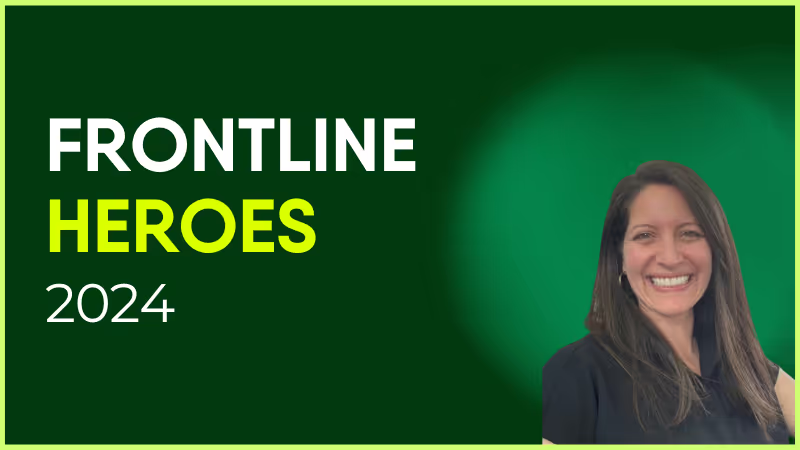
Palliative Care Nurse Practitioner at Children’s of Alabama
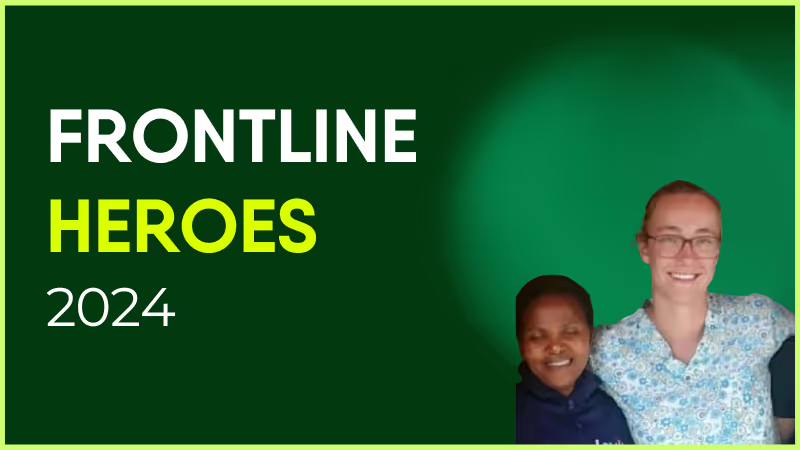
Jess DeVore
Published:
November 25, 2024
Last updated:
December 2, 2024
What we'll cover
What makes her awesome?
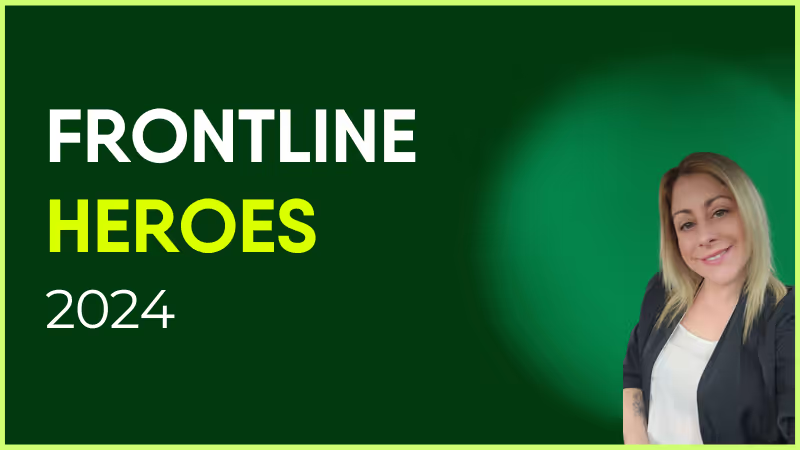
Sasha works primarily with children in the NeuroOnc and their families. Sasha has a remarkable ability to bring joy to every family she encounters. Her energy is infectious! She is able to balance this beautiful spirit of fun with the ability to also meet families in times of crisis and tragedy. Whether laying on the floor with a struggling parent or bonding over 90s music, Sasha is a true support to her patients.
All of these things make Sasha invaluable to our patients — but they also make her an absolute joy to work with. Palliative Care can be a heavy field and Sasha brings such a beautiful sense of love and support to her teammates all over the hospital. She holds space for her coworkers when we have hard days and she energizes us to keep going. She is the first to organize a team activity, include others, and share a “love you!” She has a teaching spirit and truly believes in her coworkers. I am so grateful to know and work with Sasha.
What does she want to do next?
Continue spreading the word about Palliative Care and its role in supporting families going through childhood Cancer!

Nominated by: Brooke Bissell
What makes her awesome?
Sasha works primarily with children in the NeuroOnc and their families. Sasha has a remarkable ability to bring joy to every family she encounters. Her energy is infectious! She is able to balance this beautiful spirit of fun with the ability to also meet families in times of crisis and tragedy. Whether laying on the floor with a struggling parent or bonding over 90s music, Sasha is a true support to her patients.
All of these things make Sasha invaluable to our patients — but they also make her an absolute joy to work with. Palliative Care can be a heavy field and Sasha brings such a beautiful sense of love and support to her teammates all over the hospital. She holds space for her coworkers when we have hard days and she energizes us to keep going. She is the first to organize a team activity, include others, and share a “love you!” She has a teaching spirit and truly believes in her coworkers. I am so grateful to know and work with Sasha.
What does she want to do next?
Continue spreading the word about Palliative Care and its role in supporting families going through childhood Cancer!

Nominated by: Brooke Bissell
What we'll cover
Start your free trial today
See how Blink helps frontline teams stay connected, informed, and engaged.
Most frontline workers who quit don’t do it on day one.
And they don’t do it at the one-year mark, either. They do it somewhere around Day 90.
When you look at what’s happening — or not happening — between weeks two and twelve, it’s not hard to see why.
Frontline employees are caught in a hinterland. A place after induction and before real engagement kicks in, where the comms, connection, and support they need are nowhere to be found.
So what can you do to reduce employee churn once and for all? How do you persuade this group of employees to stick with you for the long haul?
Here, we take a look at why the 90-day milestone matters so much in frontline retention — and what a better frontline onboarding strategy can do for your organization.
The data behind the 90-day cliff edge
The figures are stark. A third of the HR pros responding to Enboarder’s 2025 HR Leader survey said that 25% of new employees leave during their first 90 days.
For frontline organizations, the picture is even more acute.
Turnover rates in frontline industries are consistently among the highest across all employment sectors — and 56% of organizations are currently experiencing frontline worker turnover at a higher rate than the historical average.
This frontline churn comes at a considerable cost. If we look at the example of grocery retail, frontline turnover absorbs as much as 10-20% of profits.
High frontline turnover results in lower service levels, lower productivity, higher training costs, and increased demands on management. It also keeps recruitment at the top of the strategic agenda, crowding out other priorities.
Why is Day 90 such a precarious time?
Day 90 is when new hire energy wears off and the reality of the role sets in. It’s when the gap between what was promised during recruitment and what’s actually experienced becomes impossible to ignore.
It’s also — critically — the point at which most organizations have stopped formally onboarding but haven’t yet started actively retaining. So frontline employee engagement takes a hit that it can be hard to recover from.
What frontline workers are telling us
Wondering why frontline employees quit? When frontline workers leave around the three-month mark, the reasons they give cluster around the same themes.
A two-tier culture
Almost half of frontline workers report that there are two separate cultures at play within their organizations — one for the frontline and one for everyone else.
That perception is compounded by a clear digital gap. Frontline workers receive just 1% of their companies’ total technology budget, leaving them with ineffective paper-based processes or software that doesn’t work on a smartphone.
The divide between desk-based and frontline experience is very real, very visible, and — for many — a deciding factor in whether to stay.
Feeling invisible
Only 43% of deskless workers feel seen and appreciated at work, compared with 61% of desk-based employees. A lack of recognition hits hard in the early months, when new hires are most in need of reassurance.
Frontline workers also struggle to make their voices heard. 38% say they have feedback for leadership or management, but no way of communicating it.
Feeling out of the loop
When new frontline workers don’t have reliable access to company updates, policy changes, or operational information, they feel disconnected from the organization and unable to do their jobs well.
Employees with strong workplace relationships are 51% more likely to be engaged. But shift-based work can be isolating.
New starters may work alongside different colleagues every day, have limited face time with their manager, and no easy channel to build relationships beyond their immediate shift.
Without deliberate effort to create connection, the social fabric that makes work worth showing up for simply doesn’t form.
Yet 64% of frontline employees say they would stay with their organizations for six years or more if they had access to better career development and training.
The appetite for growth is there, right from the start, but the pathway often isn’t.
The onboarding illusion: What companies are getting wrong
You’ve invested time and money in your frontline onboarding strategy. So why isn’t this moving the needle on new hire turnover?
The answer may lie not in the quality of your employee onboarding program, but in the length. In most frontline organizations, structured onboarding takes place in the first week or two. It’s thorough, well-intentioned. But it ends far too early.
A strong first week doesn’t prevent an exit at the three-month mark. That’s because there’s a significant gap between structured onboarding and what actually happens when a new worker hits the floor solo.
By week three or four, new-hire support has often evaporated. The questions keep coming — but now there’s no clear channel for asking them. Connection to the wider organization fades. The sense of momentum and progress, so strong in week one, starts to plateau.
That’s when employees start to question things. Is this worth it? Does this organization actually care whether I stay? Maybe there’s something better out there…
What the 90-day window actually needs: How to reduce employee churn
That means creating an onboarding strategy that doesn't end at week two, but continues to inform, connect, and support new workers long after they hit their stride.
Here’s what that looks like in practice.
Consistent communications
New frontline workers need to feel like they’re part of something bigger. That means regular, relevant updates that keep them informed about what’s happening in the organization — delivered to their smartphone, not to a desktop intranet they’ll never log into.
The goal is to make a new hire feel like an insider, not an afterthought — and to give them the frontline communications that make their work easier.
Peer community
One of the most powerful retention boosters in frontline work is strong relationships and collaboration with co-workers.
When new workers have a channel to connect with their team — beyond whoever happens to be on the same shift — belonging develops faster. Internal communities, group chats, and shared spaces for non-work conversation all contribute to that vital social infrastructure.
A way to ask questions without feeling stupid
New starters have lots of questions. Many of them don’t ask, because they don’t want to look like they’re struggling or don’t know what they’re doing.
A searchable knowledge hub — policies, procedures, and FAQs findable in seconds from a smartphone — removes that barrier. So does self-serve access to shift swapping, payslips, and benefits enrolment.
Employees who can find answers independently feel more capable and confident.
Visibility into what comes next
New hires who can see a trajectory within the organization are significantly more likely to be there beyond 90 days.
Regular check-ins, clearly communicated development opportunities, and recognition of early progress all signal that the organization is invested in the individual, not just the role they’re filling.
The solution? A well-designed employee experience software platform makes all the above possible. It allows you to deliver structured onboarding content at the right moment in the employee lifecycle — and to fill the day with culture and community-building touchpoints.
Time to rethink your frontline onboarding strategy?
There’s a temptation in high-turnover environments to pull back on investment in the frontline employee experience. Why put significant resources into someone who might leave in three months?
It’s a reasonable question. But fail to consider frontline EX and you end up stuck in a cycle of attrition (and associated costs) that’s impossible to escape.
The frontline organizations reducing employee churn are those making the first 90 days — not just the first few weeks — feel like the beginning of something worth sticking around for.
That means extending the onboarding process beyond the induction checklist, giving new workers the tools to stay connected and informed, and building the peer relationships that make a job feel more than a job.
A mobile-first frontline platform like Blink keeps deskless workers connected from day one — through structured onboarding journeys, communications that reach every employee, recognition and survey tools, and co-worker communities.
With everything available from one user-friendly dashboard, new hires have everything they need to hit the ground running — and build a long-lasting connection to your organization.
It’s time for another Life at Blink feature! This week, we’re thrilled to introduce Wick Kaminski, our Enterprise Implementation Manager who works remotely from Austin, TX.
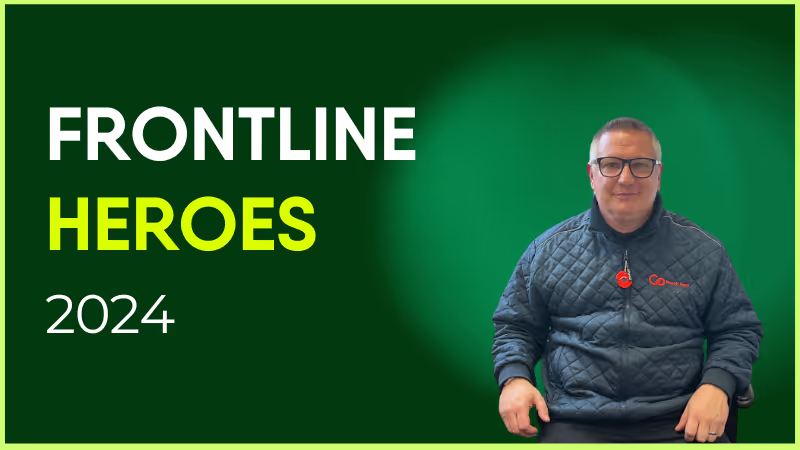
With 1.5 years at Blink, Wick plays a pivotal role in helping our customers bring their workforce together, turning the idea of seamless communication into reality. From his frontline experience to his excitement about empowering employees through Blink, Wick brings passion and purpose to everything he does.
Curious about his journey, his proudest moments, and the culture that makes Blink stand out? Read on to learn more!
How long have you been at Blink?
I have been at Blink for 1.5 years now.
What initially attracted you to join Blink?
First and foremost was the fact that Blink employees use Blink. I think it’s a huge testament to a company’s commitment to excellence when they rely on their own tool to get their daily work done.
Secondly, I was intrigued by the idea of software that had a tangible impact, and I could clearly see how my time in frontline roles would have benefited tremendously from a tool like Blink. Employee communication via a mobile app is a simple and powerful value proposition, and I truly believe every nondigital organization would benefit from the use of it.
What's a project you are proud of from your time at Blink?
My proudest moments at Blink always come when we hit the “launch” button and we observe a workforce that’s READY for a communication outlet. For so many customers I work with, employees haven’t had a channel for sharing back and forth — so when I see the News Feed light up with employees giving recognition and highlighting cool things going on in their area at work, it gives me goosebumps.
How would you describe the company culture at Blink in three words?
Autonomous, responsible, supportive.
What’s one thing you’re excited about for the future of Blink?
I’m personally really excited about expanding our self-service resources to better support our small and midsized business customers. We have an endless amount of ideas for improving the experience and making the onboarding as smooth and quick as possible.
Can you tell us about a recent initiative or program launched at Blink that you found particularly exciting?
Our recent feature release of Communities opened up an entirely new and novel avenue for our customers to build community amongst their workforces, and I’ve been really excited to work with my clients to get those up and running.
Communities are opt-in groups within Blink where you provide spaces for employees to connect on non-work-related things like hobbies, pets, special interest groups, affinity groups, clubs, and more.
Why do you work for Blink?
I know what is expected of me, I have the materials and equipment to do my work right, and I have the opportunity to do what I do best every day. And being a frontline-focused organization, we’re also in a unique position: So much of the tech world happens in a bubble and being able to work with the frontline every day is an important reminder of that bubble and the workforces, cultures, and people beyond it.
Hello! I’m Jess, UK born and (half) bred. I say half because I spent the majority of my childhood in South Africa and Poland - two very different places to live!
I moved back to England to finish school at 15 and then went on to study for a degree in Psychology and a Master’s in Business Management.
Whilst I’ve had part-time and summer jobs in the past, this is my first ever proper job straight out of uni so I am still learning the ropes!
Here at Blink, I am a Talent Sourcer which means I actively seek out awesome employees to join our awesome team.
My main purpose is to scope out the market, find prospective candidates (only the best-of-the-best of course!), reach out to them, tell them all about Blink and convince them why they should come and work for us.
Of course, with any start-up role, there’s a lot more to it than that but that’s my main responsibility in a nutshell.
My absolute FAVOURITE part about Blink is the culture. We value our culture tremendously and it’s something we are all very conscious of maintaining as we grow the team.
Every person at Blink is super approachable, curious, hardworking and collaborative.
We’re a solid team so we trust each other to get our jobs done and we want everyone to collectively succeed. It’s awesome.
Whatever you want to call them, they’re making waves in the workplace.
This cohort of employees, born between 1997 and 2012, now makes up 18% of the workforce. And by 2030 — as more Boomers and Gen Xers retire — that figure is expected to rise to 30%.
When it comes to engaging Gen Z at work, it’s not a case of business as usual. Zoomers, some of whom have been working for a decade now, are bringing fresh energy — and expectations — to the workplace. And internal communications is one area where this shift is becoming increasingly evident.
Gen Z prefers mobile-first, fast-moving, and highly visual employee communications. They value transparency and authenticity, which means traditional, top-down communications will feel increasingly dated and ineffective.
So how do you get Gen Z to take notice of your internal communications? You learn to speak their language.
Here’s how to craft effective communication that is sure to inspire the interest and loyalty of your Zoomer workforce.
Start by getting to know the communication habits and preferences of your Gen Z employees.
Zoomers are digital natives, used to frequently switching between devices and platforms. They tend to look for answers online first — before they send an email or talk to a coworker face-to-face.
This generation also grew up in the era of social media, where communication is instant, interactive, and highly visual. They’ve known nothing else.
So long-winded emails and PDFs don’t just fall flat — they tend to get ignored. Zoomers expect short-form, snackable content that gets straight to the point. And they like having the opportunity to add their voices to the conversation, too.
Authenticity, inclusivity, and relatability are other Gen Z communication must-haves for your internal communications strategy. Corporate-speak and overly polished messaging simply don’t resonate. Zoomers are more likely to believe in your messaging when it acknowledges challenges and complexities, not just successes.
Key takeaway: Internal communication efforts should be concise, visual, and real to match Gen Z’s digital communication style.
{{mobile-live-stream-poll="/image"}}
Crafting messages that stick
Once you’ve gotten to grips with what Gen Z expects from your internal communications plan, it’s time to create messages that grab their attention and stick in their memory. To do that, get creative and try to include at least one of these guiding internal comms principles in your messages.
Tell a story
Stories spark an emotional connection between your organization and employees. They highlight real people and create a positive culture. And they take an audience on a journey — usually from a problem or conflict toward a resolution.
So use real employee experiences, personal anecdotes, customer stories, and behind-the-scenes content to make your messages more engaging for Gen Z workers.
Make it visual
Traditionally, internal communications have been text-based. But that isn’t how Zoomers like to get their information. Incorporate GIFs, emojis, memes, and videos to catch the eye and cut through the noise of internal comms.
With these visual assets, you say more with less, which leans into Gen Z’s preference for concise and straight-to-the-point messaging.
Use humor and personality
Gen Z appreciates informality and wit. So don’t be afraid to show some humor and personality in your employee communications. It’s a way to humanize your brand voice and make messaging more relatable.
Just be sure to strike the right balance: Keep humor inclusive, relevant, and aligned with your company culture. And, of course, when addressing serious or sensitive topics, it’s best to avoid humor altogether.
Leverage interactivity
Posting creative, eye-catching content isn’t enough. Interactivity is another important part of the picture. Polls, quizzes, and reaction buttons ensure high levels of employee engagement and facilitate conversations with two-way communications.
But you can take it even further. By responding to comments and acting upon employee feedback, you show that business leaders genuinely care about the employee experience — helping you foster an even more engaged workforce.
Key takeaway: Think social media, not corporate memo.Make your messages fun and visual — and encourage employee participation, too.
{{mobile-stories="/image"}}
Borrowing from social media
Love it or loathe it, social media should be your main inspiration for your internal communication strategy in 2025. Digital platforms like TikTok and Instagram are expert at generating engagement and keeping users coming back for more. And they set the standard for how Gen Z consumes content.
So play by the social media rule book, creating fast, visual, and interactive content that wouldn’t look out of place on your employees’ favorite feed. To do that, incorporate the following.
User-generated content (UGC)
For the ultimate in authenticity, encourage employees to create and share their own workplace stories. Facilitate peer communication and recognition posts. Launch a content challenge where employees share content around a particular theme. Encourage employees to film their own day-in-the-life videos.
There are so many options to incorporate UGC into your internal communications strategy — you just need to guide employee content creators in the right direction.
Mobile-first design
Where do Gen Z turn first when they’re seeking information and connection? You guessed it. Their smartphones. Your internal communication platform should mimic the accessibility and ease of use of mobile social media apps. And the mobile experience should match the experience employees are getting on desktop. This ensures that office-based staff, remote workers, and frontline employees get the same seamless user experience.
Ephemeral content
Limited-time posts — like the ones you get on Instagram Stories and Snapchat Snaps — drive authenticity. Because when a post is here today and gone tomorrow, there’s no need for it to be perfect. Ephemeral content also boosts internal comms engagement because it produces a sense of urgency. Employees check in with your platform regularly for fear of missing out.
Algorithm-style recommendations
Think back to the last time you scrolled social media. Chances are you saw a news feed filled with content from your favorite people and about your favorite topics. Gen Z employees are used to getting tailored experiences like these. So your internal communications tools should be capable of personalization. When employees see messages that relate directly to them, their roles, location, and interests, they’re more likely to take notice.
Key takeaway: Take inspiration from social media to draw Gen Z employees to your internal communication channels — and keep them there.
{{mobile-main="/image"}}
Turning employees into influencers
Research shows that Gen Z tends toward being skeptical and mistrustful — particularly when it comes to traditional authority figures. In the workplace, they’re more likely to trust their peers over corporate messaging.
Harness the power of peer trust by turning employees into internal comms influencers. Look at your internal communication channels to identify internal content creators who naturally engage their colleagues. Then, give them the time and resources they need to share internal messages.
Over the long term, these influencers can become trusted voices on your intranet or employee app and play a critical role in your company culture.
Key takeaway: Empower employees to be the voice of your internal communications — because Gen Z is more likely to engage with their peers than the C-suite.
Avoiding the “cringe factor”
Like seeing their dad break out his best dance moves at a wedding, “cringey” content will have Gen Z employees backing away from the internal comms dance floor.
Forced trends, outdated slang, and overuse of emojis or GIFs won’t win Zoomers over. They can spot inauthenticity from a mile away. Corporate messaging that tries too hard to be “cool” without understanding the cultural context will likely backfire.
Before jumping on a viral meme or social media trend, ask yourself:
Does this align with our brand voice and company values?
Does it make sense in the context of the message?
Will our employees actually find it relevant and engaging?
If you answer no to any of these questions, let it go.
And — instead of imitating Gen Z’s language or recycling viral posts — focus on what makes their favorite content work. Adopt the principles behind trending content, making your messages short, dynamic, and community-driven, and your content is much more likely to resonate.
Key takeaway: Put your twist on it. Avoid the “cringe factor” by keeping your brand voice and company values front of mind.
{{mobile-story-polls="/image"}}
Keeping up with trends
Staying relevant doesn’t mean blindly chasing every online trend — but it does mean keeping an eye on how communication is evolving beyond your internal communication platform.
Social media trends shift rapidly. And internal communications teams need an agile approach to stay relevant. Here’s how:
Take stock: Regularly audit content formats and messaging styles to ensure they align with Gen Z’s preferences away from work. Use analytics to gain valuable insights about which content formats and messaging styles are resonating most with your target audience.
Experiment: Stay creative. Test new content formats with a small group of employees before rolling them out to a wider audience. Gather feedback from employees, measure engagement, and update your strategy as required.
Assess your tech: Regularly assess whether your internal communication tools are up to the task. Your internal communications app should mirror the social media experience, offering similar features and functionality. Because, if your platform feels outdated, employee engagement will suffer.
Key takeaway: Keep testing, iterating, and adapting — because Gen Z communication platforms and preferences evolve at lightning speed.
Can your internal communications plan keep up with Gen Z?
Gen Z is reshaping modern workplace communication, demanding fast, interactive, and authentic messaging — delivered straight to their smartphones.
By embracing social media-inspired strategies, fostering two-way interaction, and adopting the trends that align with what your entire organization cares about most, you can design an internal comms strategy that truly speaks their language and build a strong culture of transparency.
And the best part? These changes don’t just benefit Zoomers. In a world where more and more people expect information to be concise, engaging, and mobile-friendly, this style of communication improves the experience for every generation in your workforce.
Unfortunately, this stat makes perfect sense. Workplace tech has traditionally been built with office-based workers in mind. So it tends to fall short for the frontline.
Some companies still use a traditional intranet. And others use a patchwork of different HR and IT apps. These tools may work well for desk-based employees. But they cause three common problems for frontline workers:
Limited access to tech. Frontline employees don’t have regular access to a computer and don’t always have a company email address. This means they rely on noticeboards, personal apps, and/or shared company computers to access the information and tools they need.
Access to poor quality tech. Frontline employees have access to a system that does some things, but not others. They can access tech tools via a mobile device but features are limited and the user experience is lacking
Access to too much tech. When employees use lots of different apps via lots of different interfaces, it creates as many problems as it solves. This piecemeal approach can cause friction and tech tool disengagement
Frontline organizations need streamlined tech that works for every employee. As Ian Gordon, former President of Administrative Operations at Elara Caring, said in an interview:
“Being a frontline worker can feel like you’re on an island by yourself, and the solutions that you need must be quicker and more succinct. You can’t spend a lot of time signing in and navigating. You need to get to your answer now.”
Currently, deskless workers waste time and productivity on tasks that could be streamlined. For example, finding their training documents, communicating with managers, or simply tracking down last month’s pay stub.
Thankfully, there’s a solution. A modern intranet takes into account the realities of today’s distributed workforce. It’s a mobile-first tool that provides the same seamless digital experience for both frontline and desk-based employees.
Here, we explore how the right type of technology can benefit your frontline employees andyour organization. We also reveal the three features you should be looking for when choosing frontline tech.
Benefits of a modern intranet for frontline employees
When your frontline has access to the right tech, everyone stands to gain. Let’s take a look at the benefits – for your organization and employees – of a mobile-first employee app.
Higher levels of productivity
When frontline employees don’t have the right tech, they waste a lot of time on tasks that could be streamlined.
They have to call their manager on the phone when they want to change shifts.
They have to use the shared computer on their lunch break to respond to a company survey.
They have to leaf through a paper handbook to find an answer to their question.
A modern intranet helps frontline employees complete tasks quickly and easily. This means productivity for your organization improves.
Streamlined workflows
A modern intranet helps streamline the workflow of every employee in your organization, not just those on the frontline.
That’s because frontline employees can use self-serve functions. They can view their pay stubs, launch an assigned L&D module, and request time off. Employees can book shifts and report faults or accidents. They can also chat with their managers via messaging features.
This helps to streamline the work of your frontline workers. But it also helps HR teams and frontline managers. They get fewer queries and fewer phone calls because frontline employees can achieve so much more using the right tech tool - removing the barrier to access and allowing your HR teams and managers to focus on the work they are meant to be doing.
Tech tool efficiency
The best modern intranets integrate with the software you already use for your business. It's not about adding another tool to your tech stack to be siloed, but increasing access to all of the other tools you already rely on. So employees can access all tech tools from the same, familiar interface.
When workplace tools are intuitive and easy to access, employees spend a lot less time looking for the resources they need. They also spend less time trying to remember different login details. A single click, a single password, and they’re in.
Learning and development
A modern intranet or employee app makes it easy for employees to access vital resources. Like workplace policies, guides, and training materials.
This means new hires get up-to-speed quickly. They can access all onboarding materials via their smartphone. Existing employees also find it easy to weave L&D into their usual workflow.
With access to resources that help them work smarter, not harder, employees become more effective and productive in their roles.
Improved internal communication
Good internal communication is the backbone of any organization.
Without it, trust in leadership suffers. And with it, engagement and loyalty increases. Employees in organizations with effective communication feel more connected to their jobs.
But we know that frontline teams usually don’t enjoy the same level of communication and connection as their desk-based co-workers.
Frontline employees tend to spend very little time at HQ and often spend their days working alone. So they risk missing out on:
Vital company updates
Co-worker collaboration
Recognition from managers
Opportunities to make their voice heard
The right tech helps to bridge the gap. It improves employee communication by connecting frontline workers to their co-workers, head office, and company culture.
Real-time communication
Information is often outdated by the time it reaches frontline employees. It’s hard to spot memos on a crowded noticeboard, and it’s easy to miss an important update in a long thread of messages.
The best modern intranets solve this problem by supporting real-time communication.
Employees can use newsfeed, group chat, and 1-2-1 chat functions to get up-to-the-minute information.
Managers can send smartphone notifications to highlight vital updates. They can post a video of today’s company standup. They can also create and pin mandatory messages to the company newsfeed, ensuring that essential information cuts through.
With access to relevant, timely information like this, employees make better decisions and solve problems more quickly.
Two-way communication
Top-down communication is useful for establishing company culture and sharing updates. But for truly effective internal communication, information needs to move in all directions.
Modern intranets support peer-to-peer connection. Co-workers can interact via the newsfeed or chat functions. They can recognize a peer’s hard work. Or wish their work bestie a happy birthday.
The intranet also supports bottom-up communication. With a newsfeed, direct messaging, and company-wide surveys, you give frontline employees a voice.
This makes a positive difference to the employee experience. Employees who say their voice is heard at work are 4.6x more likely to give their all.
Collaboration
Imagine a frontline care worker has come across a great article about elderly care. How does that person share their new insight with other frontline workers in other locations?
Perhaps they’ll mention the article to the co-workers they physically cross paths with. Or send a link to the small group of people in their work WhatsApp chat.
But you really amplify the reach and impact when that care worker can post the article to the company employee app.
The right tech tools allow frontline teams to share the knowledge they gain when they’re out in the field. They can share best practices and collaborate with other employees, even though they’re not based in the same office environment.
Empowerment and engagement
When employees feel empowered and engaged at work, they’re happier and more productive. They provide better customer service and produce better results. They’re also less likely to look for a job elsewhere.
Employee engagement relies on strong employee communication, development opportunities, recognition – and the right tech.
The wrong tech can be a big drain on employee engagement. When workers use slow, inefficient, and ineffective digital tools, it adds friction and frustration to their work day. So implementing a modern intranet can help with all the following.
Empowering employees
With a company super-app at their fingertips, frontline employees are empowered to make informed decisions and take a proactive approach to their work.
Thanks to user-friendly employee communication channels, they can report safety or equipment issues. They can share their knowledge. And they can access company resources exactly when they need them.
A modern intranet also empowers employees to progress in their careers. 70% of frontline workers are interested in career progression opportunities. But they don’t always get the resources or support they need.
Via an employee app, you can give frontline workers easy access to L&D information, new job opportunities, and any available employee development activities.
Engaging employees
The right frontline tech helps you to improve employee engagement. It allows employees to engage with co-workers and company culture. And it mirrors the experience provided by employees’ favorite social media apps.
A newsfeed. Likes, comments, and shares. Pulse surveys. Digital 1-2-1s. A searchable company library. A modern intranet with a user-friendly interface creates an experience that employees are excited to use and keep using.
The best frontline tech also offers personalization, another thing that helps to level up engagement. Employees can switch up their dashboards to put their preferred features first. Or prioritize their newsfeed to focus on posts that are most relevant to them.
Retention and attraction
Frontline teams experience high levels of churn. A McKinsey study found that 45% of frontline workers planned to leave their jobs within the following 3 to 6 months.
Workplace technology is an important part of the puzzle. 78% of deskless workers say they consider the technology at a company when deciding whether to take a job there.
When you equip frontline workers with the right tech, you show your employees that you value them and care about their experience.
You also provide communication channels that support a better employee experience. You allow employees to give feedback and build stronger relationships with co-workers. This makes it easier to hold onto existing staff – and to attract new talent too.
Choosing the right tech for frontline employees
Some tech solutions – like the traditional intranet – don’t fit the realities of frontline work. So what should you be looking for when choosing tech for frontline employees?
The best frontline tech:
is a one-stop-shop
offers an intuitive user experience
has a mobile-first design
Let’s look at these features in a little more detail.
It’s a one-stop-shop
Currently, many organizations are at risk of app overload. 37% of frontline workers use five or more apps every day. But 39% say that apps aren’t actually helping them in their work.
A patchwork of workplace tools means workers have to learn different interfaces and remember lots of passwords. Tech complicates their workflow instead of simplifying it.
The best modern intranet brings together all the software you use. It acts as a digital front door for your organization.
Behind this door, employees find everything they need to do their jobs. Tools for communication, operations, training, shifts, collaboration, and HR. It’s all available via one interface and a single login.
Tech that acts as a one-stop-shop reduces friction in frontline employee workflow. It also drives adoption for your existing tools, improving the ROI on the software you’re already paying for.
Supercharge your frontline with an employee super-app
It provides an intuitive user experience
Investing in the best frontline tech is pointless if you can’t persuade employees to use it. So you need tech solutions that can prove high usage and adoption rates.
Bear in mind that 56% of deskless workers are using personal tech tools instead of workplace tools. As well as posing security risks, this illustrates a really important point when choosing frontline tech.
Your chosen solution has to compete with the user experience (UX) provided by the most popular social media platforms. So you need tools that offer an intuitive, friction-free UX.
These intuitive tools don’t have a steep learning curve. Instead – because they’re so similar to the apps your employees already use out of work – employees can pick them up and start using them with next to no training.
Because they’re so easy to use, these apps provide clear employee benefits from the get-go. This helps to drive organic app adoption and ensures a higher proportion of your workforce downloads and uses your intranet.
It’s a mobile-first solution
Frontline workers don’t sit at a desk. They don’t always have a company email address, let alone a company computer. Therefore, any workplace tech you choose must be available via a mobile device.
The best solutions have a mobile-first design. They’re not tools designed for desktop with an app added as an afterthought. Instead, they offer the same great features and user experience on a smartphone as they do on other devices.
This allows frontline team members to stay up-to-date with company news, book time off, or look at their shift schedule while they do their daily work. They can access workplace tools from any location, at any time.
Blink: an employee app for frontline workers
The Blink employee app is a modern intranet for a modern frontline workforce. Our app acts as the digital front door for your organization.
It provides access to the tools and systems your entire workforce needs day to day. And it integrates seamlessly with the software you already use. So employees can access all workplace software using one secure single sign-on (SSO).
As a mobile-first solution, Blink provides the same great user experience on smartphones, tablets, and desktop computers. Frontline workers have exactly the same access as their desk-based peers to company culture, co-worker connection, and workplace resources.
If you’re looking to improve the frontline employee experience, connect your workforce, and increase productivity, frontline tech is a great place to start.
Movement is your bread and butter. The movement of goods. The movement of passengers. But when it comes to the movement of information, transit and logistics organizations have it tough.
Reaching employees who aren’t tethered to a desk isn’t always easy. These employees don’t tend to have a company email address. And they don’t have easy access to desk-based tech and tools. This means they can’t access the traditional intranets that many organizations still use.
If you’re anything like thousands of transit and logistics companies up and down the country, you may be experiencing an employee communication gap. And this causes no end of organizational headaches.
Frontline managers bear the brunt. They already juggle competing demands. But they also spend a big chunk of their workday relaying messages between the C-suite, HR, and frontline workers.
Remember, every minute a frontline manager spends sending out comms or fielding inquiries is another minute diverted from delivering speed and quality.
Frontline workers suffer, too. When internal communication is patchy, they feel less connected to their organization. And less satisfied with their jobs.
You can put an end to these headaches with effective workplace communication. It’s a bridge that connects HQ with your transit depot, warehouse floor, and drivers. A solution that eases a frontline manager’s workload and helps you better reach transit and logistics employees.
In this article, we explore all the ways you can develop effective workplace communication in your transit or logistics organization. So buckle up and let’s take a closer look.
Importance of reaching your transit & logistics employees
When the people within your organization struggle to communicate effectively, it isn’t simply an inconvenience. Poor employee communication can cause serious problems for your company. Problems like inefficiency, employee disengagement, and staff churn.
Luckily, the converse is also true. Prioritize communication and find ways to reach your transit and logistics employees and there are valuable business benefits to be gained.
You improve manager efficiency
Currently, managers spend a lot of time using ineffective methods to reach employees.
They stick paper memos on the depot noticeboard. They make phone calls. And they take on the role of messenger, carrying information between HR, leadership, and frontline employees.
When you make employee communication more effective, managers get valuable time back. They can get messages out quickly and effectively. So they have more time to focus on other tasks.
You empower your frontline
Good employee communication empowers your frontline. You help them thrive in their roles and feel connected to the larger mission. You put the tools and resources they need at their fingertips.
For example, employees find it easy to get the latest company updates. They can also access information on their shift schedule and pay stubs. And get support from managers when they need it.
You boost staff happiness and retention
Focus on communication and you make your workplace friendlier and more connected. Managers and leadership can communicate with employees. But employees can also communicate with one another. And they have a direct line to decision-makers
This connection supports engagement, which supports employee loyalty. When an organization has good internal communication, staff are less likely to leave.
We know that it’s difficult to hire frontline staff right now, in both transit and logistics organizations. Labor shortages are impacting a company’s ability to operate and turn a healthy profit.
Engaging your employees better — with the help of effective internal communication — makes it more likely that they’ll stay working for your organization.
8 strategies to improve how you reach your transit & logistics employees
We know how important good employee communication is to a frontline organization. So let’s take a look at all the ways you can achieve it.
Use an employee app
Some of your transit and logistics employees sit at a desk. But many of them spend their days on the road or on the warehouse floor, away from the office.
These frontline team members don’t necessarily have an employee email address. And they very rarely have access to a work computer. This makes them hard to reach — particularly if you’re using traditional, desktop-based communication tech.
A mobile-first employee communication tool, like a frontline app, bridges the gap between head office and frontline workers.
A few standout features?
An employee app doesn’t require an employee email address or a desk-top device. Employees can access all company comms securely via their smartphones.
An employee app is easy to use. Its interface is like that of popular social media apps. So employees find it intuitive to use and adoption tends to be high.
An employee app is a one-stop-shop. Employees get everything from pay stubs to shift schedules, co-worker messages to mandatory updates. All in the palm of their hand.
An employee app is effective. Updates and tools are available for employees to access at a time and place that suits them. So fewer messages are missed.
Implement regular meetings
Whole-team meetings help you to create an open dialogue. Employees get up-to-speed on the latest company news. Managers can answer employee questions. Everyone feels more connected to co-workers and the wider organization.
You can also use meetings to find solutions to problems. When you have a full range of perspectives and priorities in a room, it’s easier to make decisions that work for everyone.
Regular meetings are an important tool in internal communications. But they’re not always easy to arrange for transit and logistics teams. When everyone is working different shift patterns – across many locations – implementing whole-team meetings is a challenge.
There are a couple of ways around this.
You can rotate the time and location of meetings so employees on a fixed shift pattern aren’t always missing out. You can also keep meetings short and sweet to maximize the number of people who can attend.
And don’t forget to harness the power of tech. Virtual meetings are just as valuable as in-person meetings. As long as everyone is able and encouraged to give real-time input.
Provide training opportunities
Continuous training gives employees the skills, knowledge, and confidence they need to excel. It helps employees to make better decisions and provide better service. It also helps your organization to comply with safety regulations.
But frontline employees often miss out on training opportunities.
According to McKinsey research, 20% of frontline employees says that their employer offers no resources to adequately prepare them for advancement opportunities. And 65% say they are unsure or unaware of how to achieve career advancement.
Employees feel more engaged — and therefore more receptive to company comms — when they feel valued, enabled, and supported.
As well as offering role-based training equitably to both frontline and desk-based teams, you can use training to support your comms goals in the following ways:
Teach new hires about company culture and communication norms
Offer training on the communication tools you use
Incorporate training on company goals and how an employee’s role supports them
Training makes employees better at their jobs. But it can also help them to feel more connected to their work and the wider organization.
Establish feedback loops
A one-way conversation, where we can’t get a word in edgewise, is no fun. We’re happy to listen – but we want our voices to be heard, too.
It’s no different for company communications. The most connected and engaged organizations welcome two-way conversations between employees and leadership.
Of course, top-down communication has its place. Leaders need to share company updates and essential information with employees. But ideas, queries, and opinions need to flow in the other direction too.
You can encourage more bottom-up communication from your transit or logistics employees by creating feedback channels. Try to run:
Pulse surveys: to get a snapshot of how employees are feeling
Annual surveys: to gain in-depth insight into the employee experience and benchmark your performance
If you don’t have survey tech that frontline employees can use, suggestion boxes are an alternative. You could also run a regular schedule of 1-2-1 meetings so employees can speak up about any issues they’re facing.
Just remember that facilitating regular, anonymous feedback is only the first step in the process. To ensure employees get involved with your feedback program, you need to establish a feedback loop.
This means telling employees what their feedback has revealed — and any changes you plan to make. You can then give them further updates on the actions you’re taking and the results they’re producing.
Promote transparency
Trust is the foundation of positive internal communication. Employees are more likely to engage with your comms when they trust in what you’re saying. And they’re more likely to be transparent in their own communication when they have your example to follow.
So how do you make your employees more trusting? It all starts with transparency in the way you share information.
Transparent communication helps employees to understand leadership logic. When they understand the reasoning behind decisions and changes, they’re more likely to get behind them. And when you’re honest about challenges and problems, they may also be able to offer helpful solutions.
Ultimately, when employees can count on open, valuable communication like this, they’re less likely to avoid noticeboard memos and the company emails that land in their inbox.
Transparent employee communication is easier when you have the right communication channels — like town hall meetings, a frontline app, and regular 1-2-1s. Training can also help managers and employees to embrace a company culture where sharing information is the norm.
Recognize your employees
Recognition is a form of employee communication that fosters connection between employee and employer. It helps to create a positive work environment with high morale and engagement.
If you feel you could do more to recognize employees, start by thinking about your company culture. What are the behaviors you want to see in your organization?
Then align recognition with these behaviors, celebrating and rewarding employees when they demonstrate them.
Here are a few ideas for ways you can weave recognition into your day-to-day:
Celebrating work and personal milestones
Peer-to-peer recognition (where co-workers get to highlight the successes of their peers)
Employee of the Month awards
Public recognition via employee communication channels
By offering regular, timely recognition you motivate employees to do a great job. And by recognizing employees publicly, you inspire their co-workers to follow suit.
But it’s not just about performance and productivity. Recognition feeds your internal communication efforts, too.
That’s because engaged employees are more likely to read and respond to company messages. And because recognition helps to strengthen workplace relationships. Show that you value one another and open, trusting, effective communication becomes a whole lot easier.
Support collaboration
Collaboration supports internal communication — and vice versa. That’s because collaboration translates into all the following:
Effective knowledge sharing: when employees have the right communication channels, they can share insights and learning with other team members
An aligned organization: when your teams work together, you align employees around company goals and objectives
Improved problem-solving and decision-making: two heads are better than one, so when employees regularly share ideas and perspectives you end up with better solutions and decisions
Strong relationships: employees who work together develop stronger relationships and find it even easier to communicate and collaborate in the future
You can encourage collaboration by celebrating collaboration when you see it. You also need easy-to-use communication channels that break down silos. This means frontline teams can work together, even when they’re physically apart.
Imagine a bus driver comes across a patch of black ice on their route. With a clearly defined, mobile-first communication channel, they can quickly and easily alert other drivers to the hazard.
With good collaboration, everyone’s work gets safer, easier, and more satisfying. And employees have the support they need to be better at their jobs.
Offer clear internal communication channels
Think about how your organization communicates with employees in the here and now. You and your teams might be using some (or all) of the following:
An intranet
Noticeboards
Phone calls
Emails
Word of mouth
A suggestion box
Personal messaging apps
Town hall meetings
1-2-1 meetings
These communication channels don’t meet the needs of every employee within a transport or logistics organization.
Drivers and warehouse workers don’t always have access to a company email address or the company intranet. It’s pretty much impossible to schedule a town hall meeting that everyone can attend.
Some of these methods of communication are also unreliable and inefficient. Memos on a noticeboard are quickly out-of-date. Individually calling employees about their shifts takes up a lot of manager time. And messaging via personal apps isn’t always secure.
A modern intranet or employee app is a more effective alternative. When you put a clear communication channel in place — and train employees in how to use it — you cut the noise.
You also reap the following benefits:
You create one source of reliable information so employees learn to trust company comms
Managers spend less time on comms because they can quickly and easily reach all employees on the same communication channel
Frontline and office-based employees get equal access to internal communication – no one is left out of the loop
Employees get targeted comms, relevant to their roles, so they’re much less likely to ignore the messages you send
Blink is an employee app built for frontline organizations. It helps transit and logistics companies to achieve better communication, connection, and efficiency. It also acts as the digital front door for your organization.
Communication
With a built-in newsfeed, messaging function, and content hub, you can achieve effective company communication. You can share your mission and acknowledge top performers. Managers can post mandatory reads, conduct 1-2-1s, and direct communications to specific regions, sites, and departments. All while avoiding information overload.
Connection
You help to combat driver loneliness with employee chat, employee surveys, and an engaging, personalized news feed. You bring connection to solitary roles and help employees to feel seen, heard, and appreciated.
Efficiency
With Blink, you connect frontline staff to management and resolve issues faster. Staff are empowered to file accident reports and outage updates. Managers replace time-consuming paper-based processes with digital ones. Leaders also get valuable data and reporting features that allow them to visualize communication flow and further improve their comms strategy.
A digital front door
Via Blink’s user-friendly dashboard, employees can access all the apps and tools they use. Shipment details, shift schedules, digital order forms, health and safety notices, training materials, pay stubs. With the Blink frontline app, you put everything at the fingertips of every employee.
Blink case study: Stagecoach bus company
UK bus company, Stagecoach, has already put Blink’s frontline app into action. They needed a way to connect their 21,000 bus drivers and improve staff engagement.
Thanks to Blink they have:
Reduced staff turnover by 26%
Increased employee satisfaction by 46%
And with 89% of drivers opening the employee app an average of six times per day, they’ve managed to reach the majority of their frontline workforce each and every day.