
Multi-location employee engagement: a practical guide
A store manager in Phoenix hears about a product recall from a customer before head office ever tells her. Three states away, a manager at the same company posted the recall notice to his team an hour after it landed in his inbox. Same brand, same policy, two completely different experiences for the people actually running the floor. That gap is what multi-location employee engagement is built to close: the practice of keeping staff connected, informed, and motivated across every site a business operates, not just at head office. A franchise group with 80 stores, a care operator with 40 sites, or a retail chain with 300 locations all run into the same problem, the farther a site sits from HQ, the weaker its connection to the business becomes. The fix isn't a bigger memo. It's a shared channel, consistent local leadership, and a way to recognize good work wherever it happens. This guide covers why engagement drops as locations multiply, eight practical strategies that hold up across sites, how franchise brand standards fit alongside franchisee independence, how to measure multi-location employee engagement site by site, and where Blink's platform fits into the picture. For a closer look at the underlying discipline, see Blink's guide to employee engagement.
Why does employee engagement drop across multiple locations?
Engagement drops across locations because distance erodes three things at once: visibility, consistency, and voice. A single-site business can rely on word of mouth. A 50-site business can't. The CEO who used to walk the floor every morning now sees a handful of locations a year. News that would have spread by lunchtime at one site now depends on a manager remembering to pass it on, if that manager even got it themselves.
Manager variation compounds the problem. Every manager runs their site slightly differently: one over-communicates, one under-communicates, one only posts the bad news. Without a shared channel, head office has no reliable way to know which is which until something goes wrong. A safety incident, a brand standard slipping, a wave of resignations at one store that never showed up anywhere else.
The third piece is the absence of a shared channel that works for people who don't sit at a desk. Email gets set up for salaried staff and ignored by everyone else. WhatsApp groups spring up site by site because they're easy, but they sit outside any system HR can see, audit, or govern, and they carry GDPR and compliance risk that most operators haven't thought through. The result: engagement looks fine at the sites leadership visits most, and invisible everywhere else.
What are the best strategies for engaging employees across multiple locations?
Eight practices consistently work for multi-site and multi-unit organizations, and they fall into three connected groups: give every site visibility, make recognition travel, and keep the basics consistent. None of these require forcing every decision through head office.
1. Put company-wide news in one shared feed. Local groups sit underneath it for shift swaps, local wins, and local chatter, so people get the big picture and their own corner of it.
2. Spotlight a different site on a regular cadence. What they're trying, what's working, who's doing well. Quieter sites get seen, and other managers get ideas worth borrowing.
3. Make recognition visible across the whole network, not just the home site. A shout-out the whole network sees changes behavior, because it signals what good looks like everywhere, not just locally.
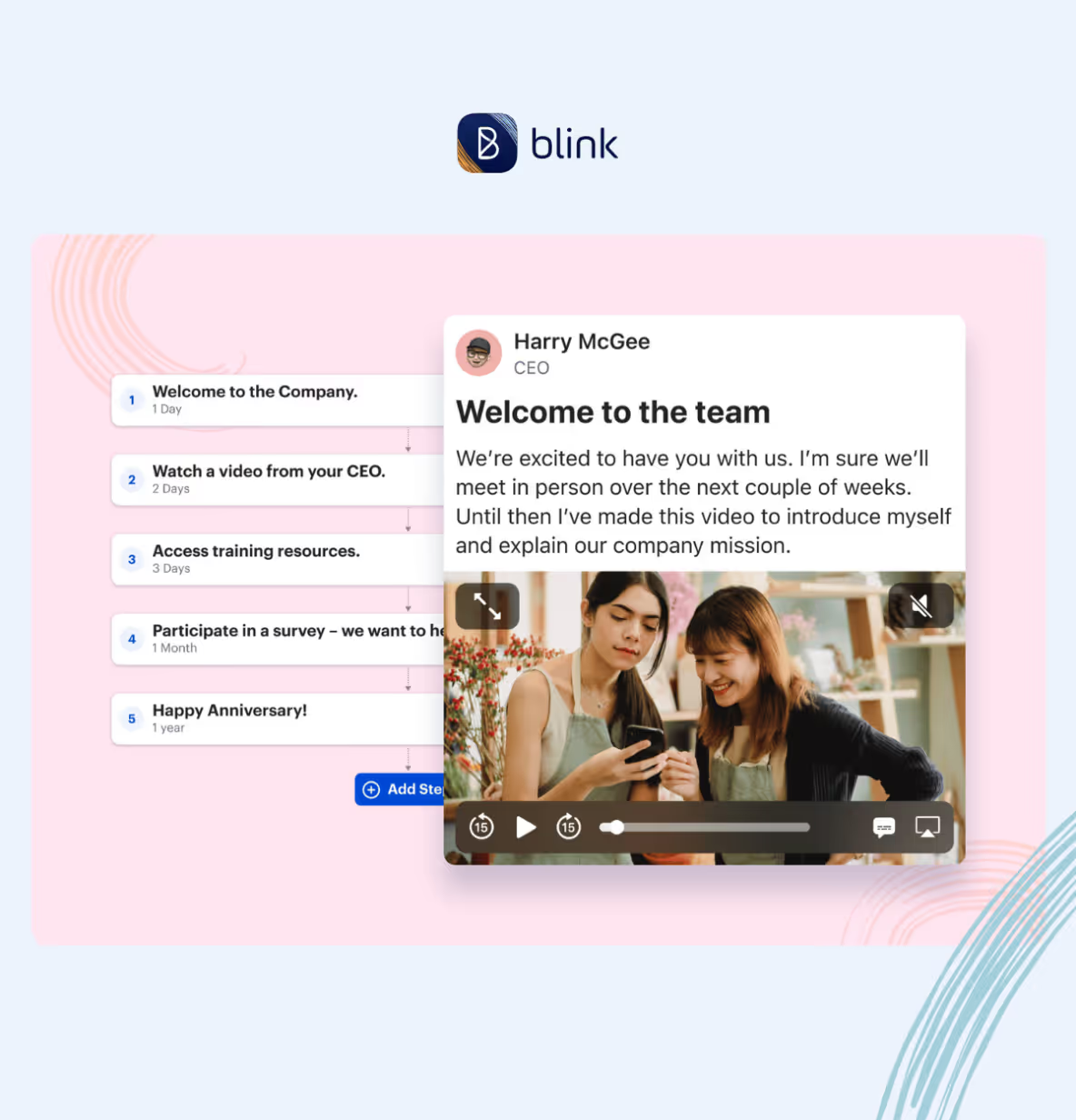
4. Run the same onboarding in every location. A new hire's first week should look the same whether they start in site 3 or site 300, since inconsistent onboarding bakes in the manager-variation problem from day one.
5. Collect feedback site by site, not just company-wide. Pulse surveys let HQ hear what's happening at the sites nobody visits, instead of waiting for a resignation spike to find out.
6. Give every site leader the same toolkit. Pre-built templates, talking points, and a consistent way to run team huddles mean quality doesn't depend on how naturally communicative any one manager happens to be.
7. Surface which sites are outperforming, and let others see why. Peer comparison, run transparently rather than punitively, tends to spread good practice faster than a directive from head office.
8. Celebrate local wins publicly. A safety milestone, a strong inspection result, a store beating its own record. For the people who did the work, that's the thing that matters most that week.
How do franchise operators balance brand standards with franchisee independence?
Franchise groups solve this by separating what must be identical across every unit from what franchisees are free to run their own way. Brand voice, safety protocols, product standards, and compliance training should look the same in every location, no exceptions. Staffing choices, local promotions, and day-to-day management style are usually where franchisees expect, and deserve, autonomy.
The tension shows up fastest in communication. A franchisor pushing every decision through a single top-down channel starts to feel like micromanagement to franchisees who've bought into running their own business. A franchisor with no shared channel at all ends up with brand drift: different uniforms, different customer experience, different safety practices site to site. The middle ground is a platform that carries mandatory brand content (menu changes, compliance updates, safety alerts) through one feed, while giving each franchisee their own group to run their own team their own way underneath it. Brand consistency at the top, local ownership underneath.
How do you measure employee engagement by location?
Measuring engagement by site means tracking the same handful of metrics across every location and comparing them, not just looking at the company-wide average. A single blended number hides exactly the thing you need to see: which sites are thriving and which are quietly failing.
Track activation and active usage rate by site, so you know not just who's signed up but who's actually using the shared channel week to week. Track pulse survey response rate and sentiment by site, since a site that stops responding to surveys is often the same site about to post its resignation numbers. Track recognition volume by site, both sent and received, as a leading indicator of culture health long before a turnover report confirms it. And track turnover by site against the company average, because a single location running well above average is a signal worth a visit, not just a line on a spreadsheet.
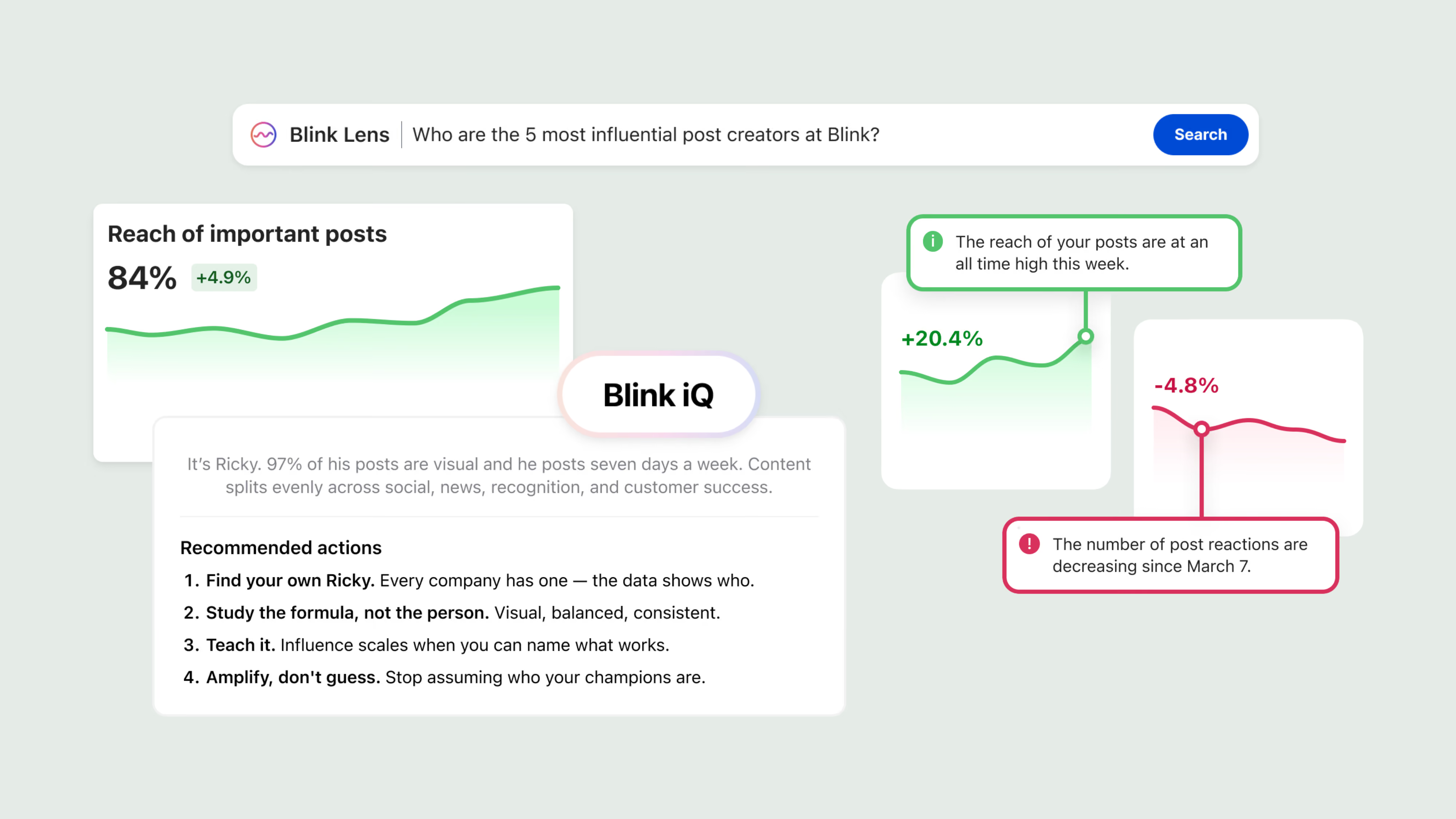
Blink's analytics are built to show these by location and region rather than as one flattened company number, which is the detail that actually makes this comparison possible.
Why does this matter for frontline and deskless teams specifically?
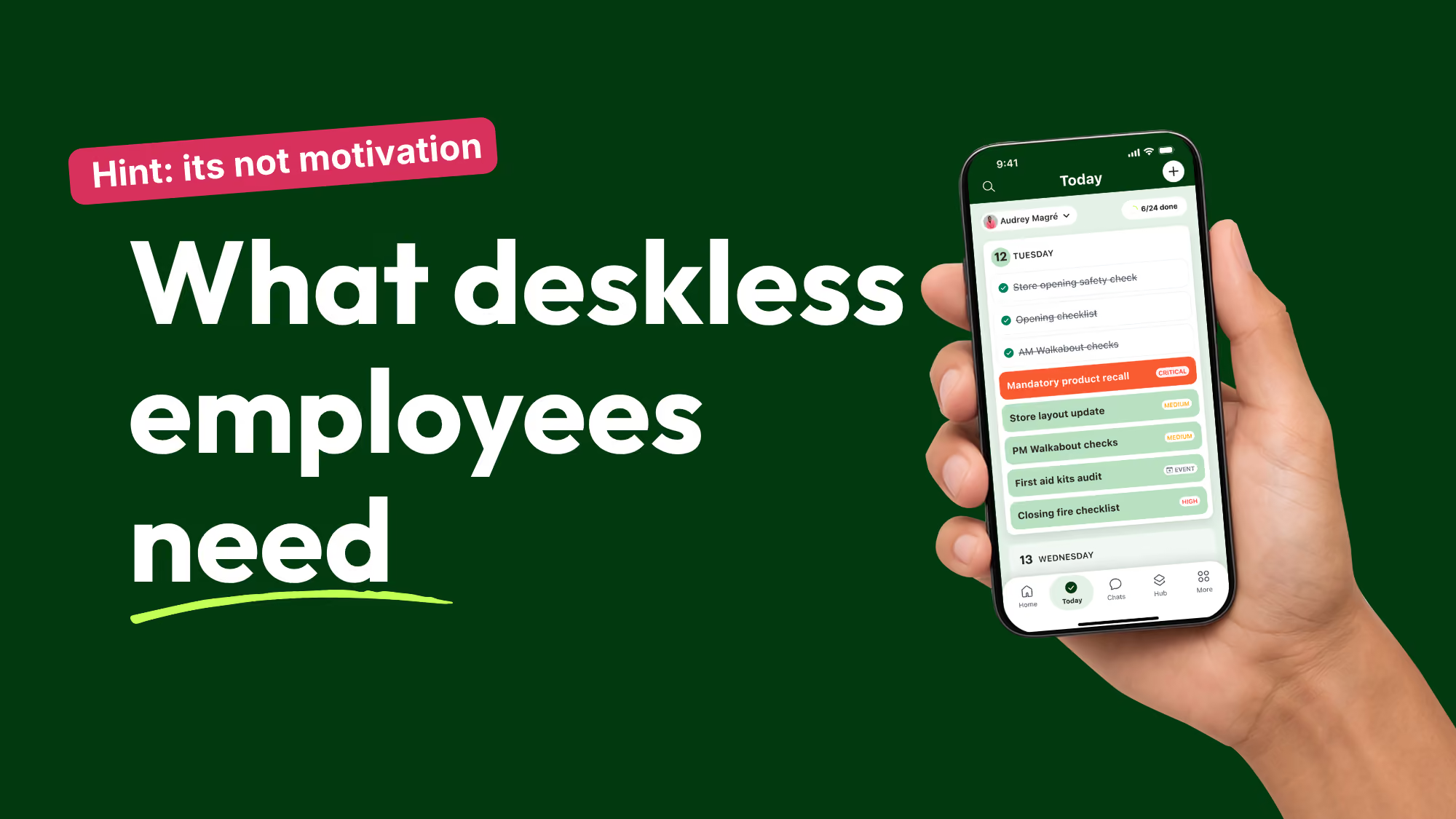
Frontline and deskless employees are the group most exposed to the multi-location engagement gap, because they're the least likely to have a company email address or a desk where company news naturally lands. When something gets announced at head office, it reaches salaried staff through email and reaches frontline staff only if a manager remembers to say it out loud during a shift. Multiply that across dozens or hundreds of sites and the gap compounds fast.
Engagement gaps consistently show up hardest among deskless and frontline employees, across every sector Blink works in, and what gets labeled "disengaged staff" is usually a reach problem: the message never arrived in a form frontline workers could act on.
That pattern holds at very different scales. At Premiere Property Group, a single IT person runs a connected employee experience, comms, training, forms, and a library of custom tools, across many offices with no dedicated rollout team. At JD Sports, Blink reached 87% adoption across its store network within 10 days of launch. Whether a network runs 40 sites or 4,000, reach is solvable when the channel meets frontline workers where they already are, on their own phone, without needing a company email first.
How Blink supports engagement across multiple locations
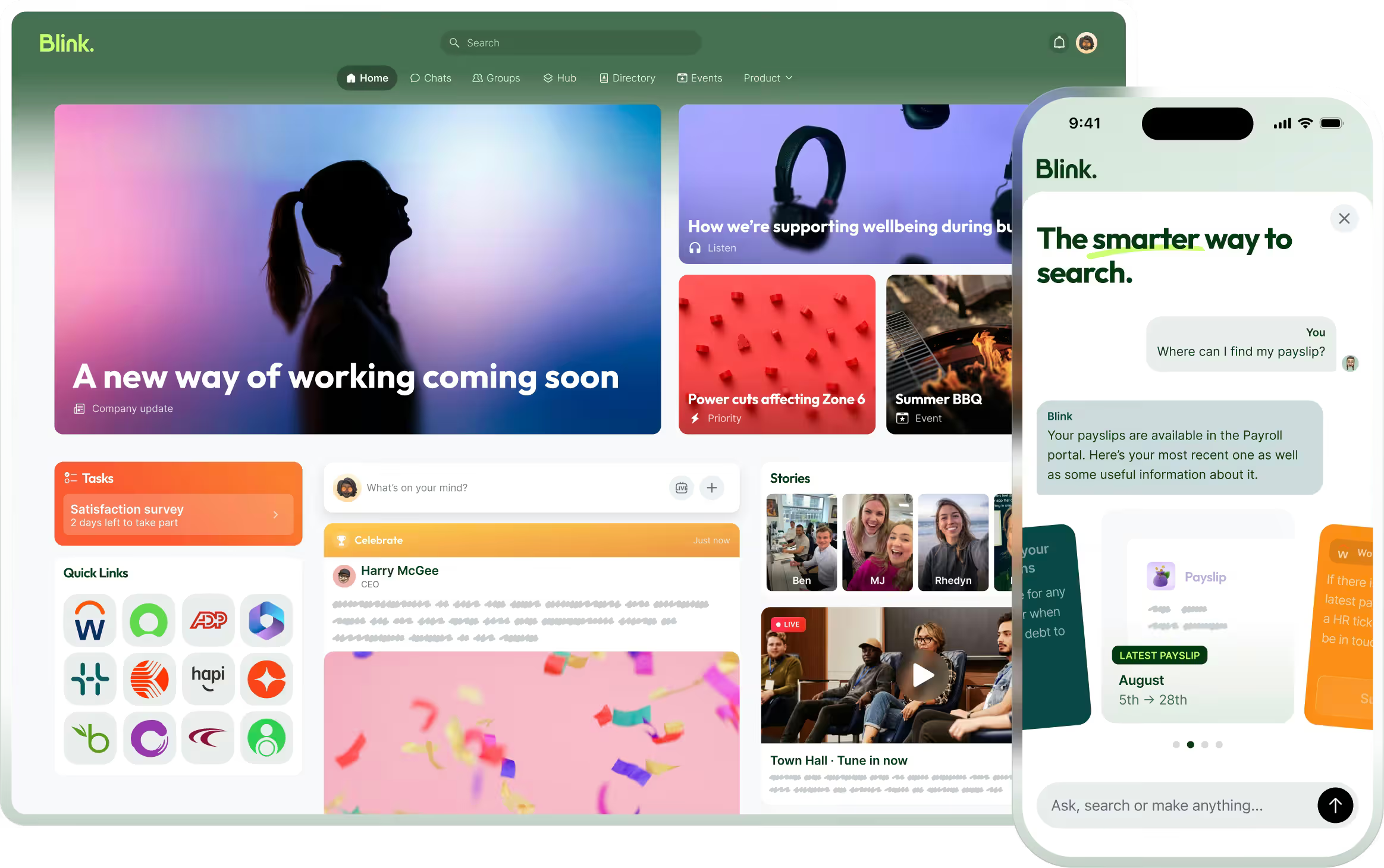
Blink gives every site its own group, nested inside company-wide and regional structures, so HQ can post once and reach everyone while local managers keep a channel that's genuinely theirs. The News Feed carries brand-wide updates with read receipts, so head office can see which locations have acknowledged a new campaign or compliance notice without chasing anyone down. Recognition lets a shout-out at one site show up for the whole network, not just the people in the room that day. Pulse surveys run site by site, and Blink's analytics break results out by location and region so a site quietly struggling doesn't disappear into the company average. For franchise groups specifically, Blink for Franchises centralizes brand content and contact information across the network while leaving day-to-day team management with the franchisee.
Get every site connected
If engagement looks strong at the sites leadership visits and uncertain everywhere else, the gap isn't staff attitude, it's reach. A shared feed with local groups underneath it, recognition that travels, and reporting broken out by site are how that gap closes.
Start a 14-day free trial to see how a shared feed and site-level groups work for your locations, or book a demo to walk through it with your specific site structure. That Phoenix manager shouldn't be the last to know about her own company's recall notice, and with one shared feed, she won't be.