
Employee performance management software for frontline teams
A shift supervisor can tell you exactly who covered a no-show last week and who needs coaching on the register. None of that ever makes it into the annual review software sitting on head office's laptops, because the two never meet. The review cycle runs on a calendar and a company inbox. The actual work runs on a rotating shift pattern with no desk attached to it.
That mismatch is why performance tools built for salaried, desk-based staff tend to stall out the moment they reach a retail floor, a hospital ward, or a delivery route. The software gets bought, the office team uses it, and the frontline, the group doing most of the actual work, barely touches it. This gap is also why frontline employee engagement has become its own discipline, separate from the HR tools built for desk-based staff, and it's closely tied to how organizations approach employee recognition for teams who rarely sit through a formal review.
This guide covers what employee performance management software does, why the standard annual-review model breaks down for hourly and deskless teams, what a lighter continuous model looks like instead, and how the main software categories, including Lattice, 15Five, and Workday, compare on fit for frontline-heavy organizations.
What is employee performance management software?
Employee performance management software is a system that helps organizations set goals, run reviews, collect feedback, and track development for employees, replacing paper forms and spreadsheets with a structured, auditable process. Most platforms in this category center on three things: periodic reviews (often annual or twice a year), goal tracking (sometimes called OKRs, short for objectives and key results), and manager-to-employee feedback captured in one place rather than scattered across email threads.
The category grew up around desk-based knowledge work, where a review cycle fits naturally around a calendar and a laptop. Vendors have since added continuous feedback, pulse surveys, and 1:1 tracking to soften the rigidity of the annual cycle. But the core assumption, that every employee has a login, an inbox, and dedicated desk time to engage with the tool, still shapes how most of these products are built.
Why do traditional performance reviews fail hourly teams?
Annual reviews assume a kind of access and routine that hourly and shift-based workers rarely have: a company login, a desk, and a manager with enough time per person to make the conversation meaningful. None of those three is reliable on a shift floor. A once-a-year form filled in by a manager who oversees fifty people across three shifts captures almost nothing about the day-to-day reality of the job. By the time the review happens, the specific shift where someone handled a difficult customer, covered a colleague's no-show, or hit a safety target is long forgotten by everyone involved, including the employee.
There's a structural mismatch, too. Performance software is typically accessed through a company email and a desktop login, and in frontline-heavy industries like retail, hospitality, healthcare, and logistics, a large share of the workforce never gets a company email at all. If the system requires one to log in, it's effectively invisible to the majority of the people it's meant to manage.
Manager-to-employee ratios compound the problem. A shift manager overseeing a large, rotating team can't realistically hold a meaningful 1:1 with each person once a year and call it performance management. What gets recorded ends up generic, written from memory, and disconnected from anything the employee can act on before the next cycle starts twelve months later.
The result is a tool that works for the people who were always going to get feedback anyway, the office-based staff with calendars and email, while the frontline majority gets an annual form that nobody enjoys filling in and nobody reads twice. The fix isn't a better annual review. It's smaller, more frequent moments that fit inside a shift instead of around one, which is the model the next section lays out.
What does a lighter performance model look like for frontline teams?
A frontline-friendly model trades the annual review for small, frequent moments that happen on shift, not instead of it. Five habits do most of the work: quick recognition, short regular check-ins, clear shift-level goals, two-way feedback, and lightweight development tracking.
Recognition that happens in the moment, not at review time. A shift supervisor calling out a colleague for stepping up during a rush matters far more at the time it happens than it would folded into a review six months later. Recognition that's visible to the wider team, not just logged privately, also does something an annual review can't: it shows everyone else what good looks like, in real time.
Short, frequent check-ins instead of one long annual one. A two-minute conversation at the start or end of a shift, repeated weekly, surfaces more useful signal than a single hour-long review once a year. It also means problems get caught while they're still small.
Goals that make sense at the shift level. "Improve customer satisfaction this year" means nothing to someone stocking shelves at 6am. A goal tied to today's shift, today's section, today's task list, is something a frontline worker can actually act on and see progress against.
Feedback that runs both ways. Annual reviews are almost always manager-to-employee. A continuous model also has to ask the frontline what's getting in the way of doing their job well, because they're the ones closest to the problem.
Development tracked in small steps, not one yearly conversation. Micro-learning, a completed certification, a new skill picked up on shift. None of it needs to wait for a formal review to count.
How do the main performance management software categories compare?
{{blink-table:table-1}}
Workday positions its human capital management suite around unifying HR data, pay, and talent management in one system, with performance sitting alongside core HR transactions rather than as a standalone tool. It's built for large organizations that want one system of record.
Lattice describes itself as an HR platform covering performance reviews, 1:1s, goals and OKRs, engagement surveys, and compensation, built around what it calls "everyday habits" like weekly updates and structured feedback. That continuous-habit framing is a closer instinct to what frontline teams need than a pure annual-review tool, though the product is still delivered through a desktop and browser experience.
15Five takes the coaching angle: it brands itself as continuous performance management software and leans on manager coaching tools and engagement data to build what it calls high-performing managers and teams. The philosophy travels well to frontline settings. The delivery doesn't, since it still assumes the office-based routine of a web login and a structured review cycle.
These three aren't bad products. They're built for a workforce with a laptop, an inbox, and a seat at a desk. The gap shows up the moment an organization has a frontline that doesn't fit that description, and it's also the gap that shows up for teams already running Lattice or Workday for salaried staff: the formal system stays in place for the people it was built for, and a lighter layer sits alongside it for everyone else.
How Blink delivers the five habits without a login
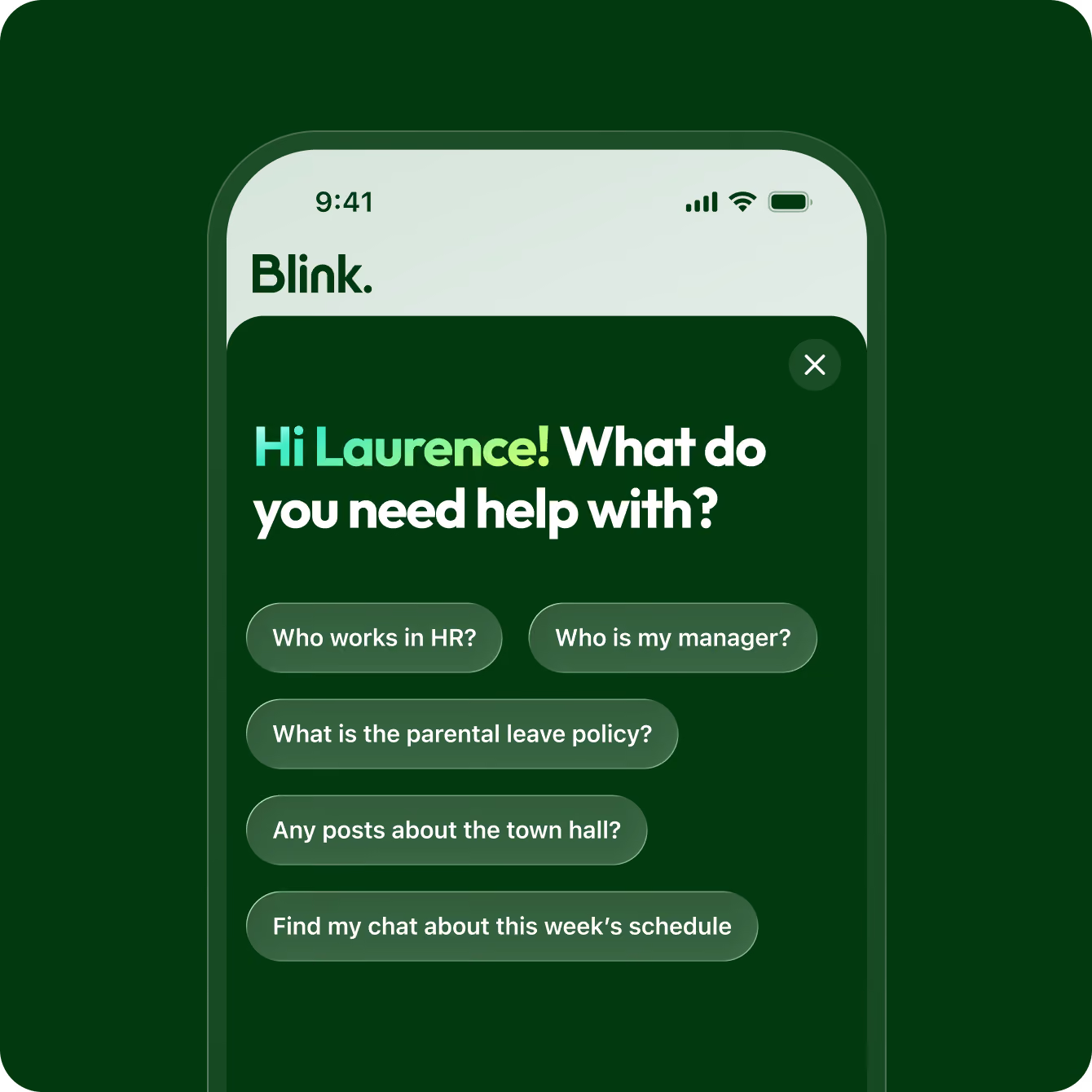
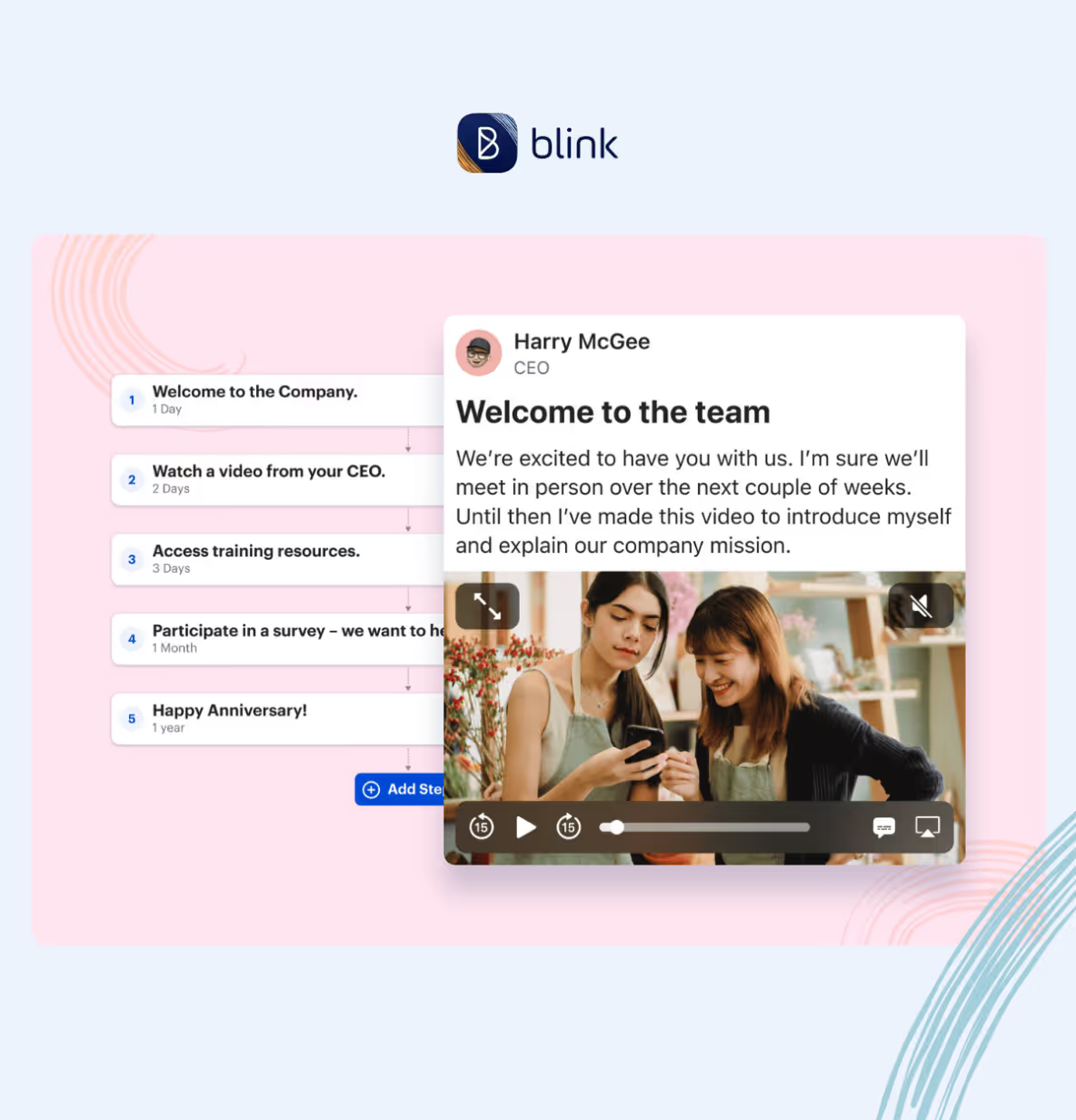
Blink isn't performance review software, and it isn't trying to replace one. It makes the lightweight, continuous habits that actually work for frontline teams possible in the first place, on a channel hourly workers already check.
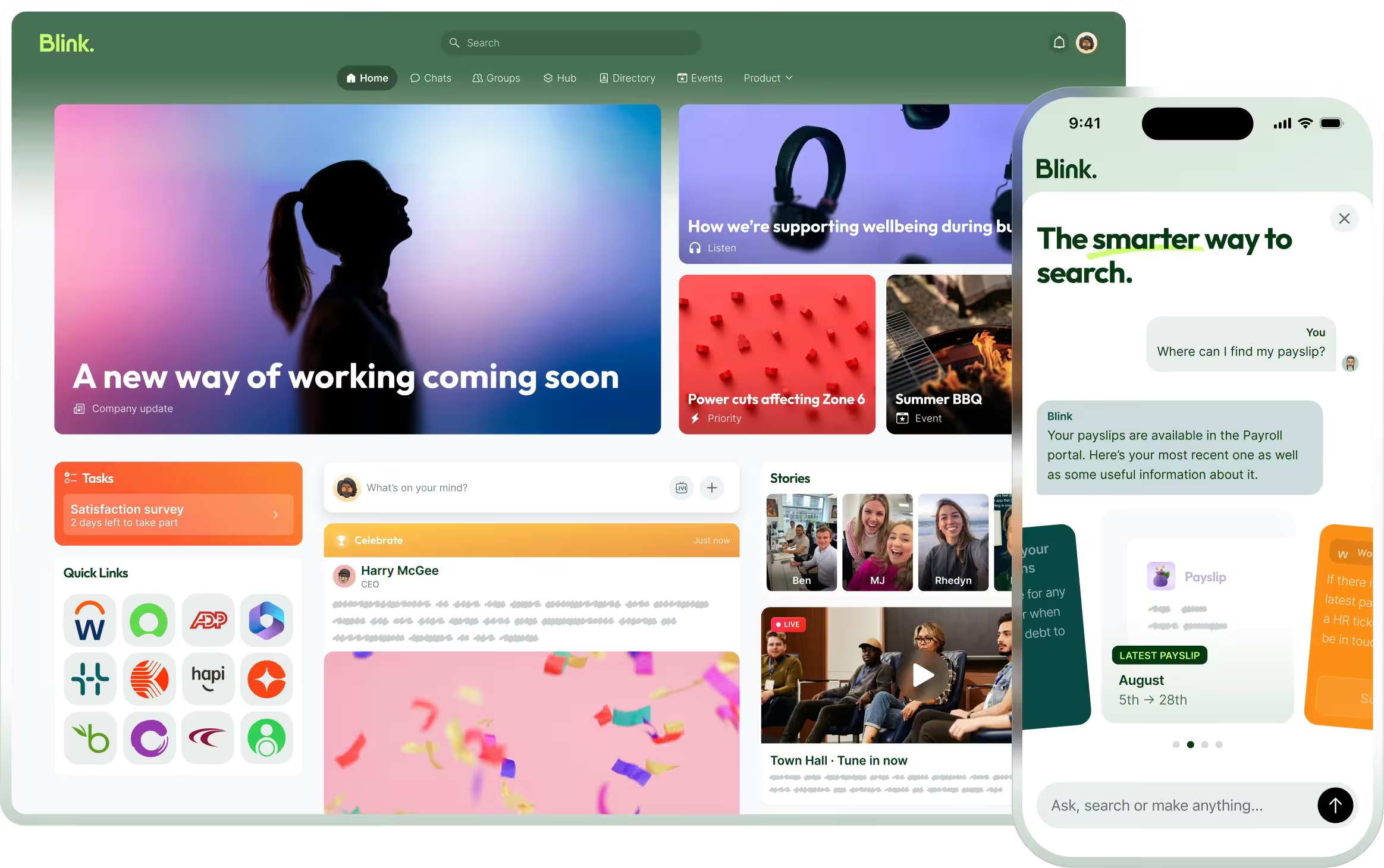
Recognition lives directly in the Blink feed, so a shift supervisor can send a kudos the moment it's earned, visible to the whole team rather than buried in a private note. JD Sports ran a 12-days-of-Christmas recognition campaign through Blink's feed, open to everyone across stores, distribution centers, and head office, with entry as simple as tapping to acknowledge a priority post. Prizes ranged from sneakers and a mountain bike to a family grocery trip, with gift cards given out daily. See how Blink's recognition feature works for peer and manager shout-outs tied to company values.
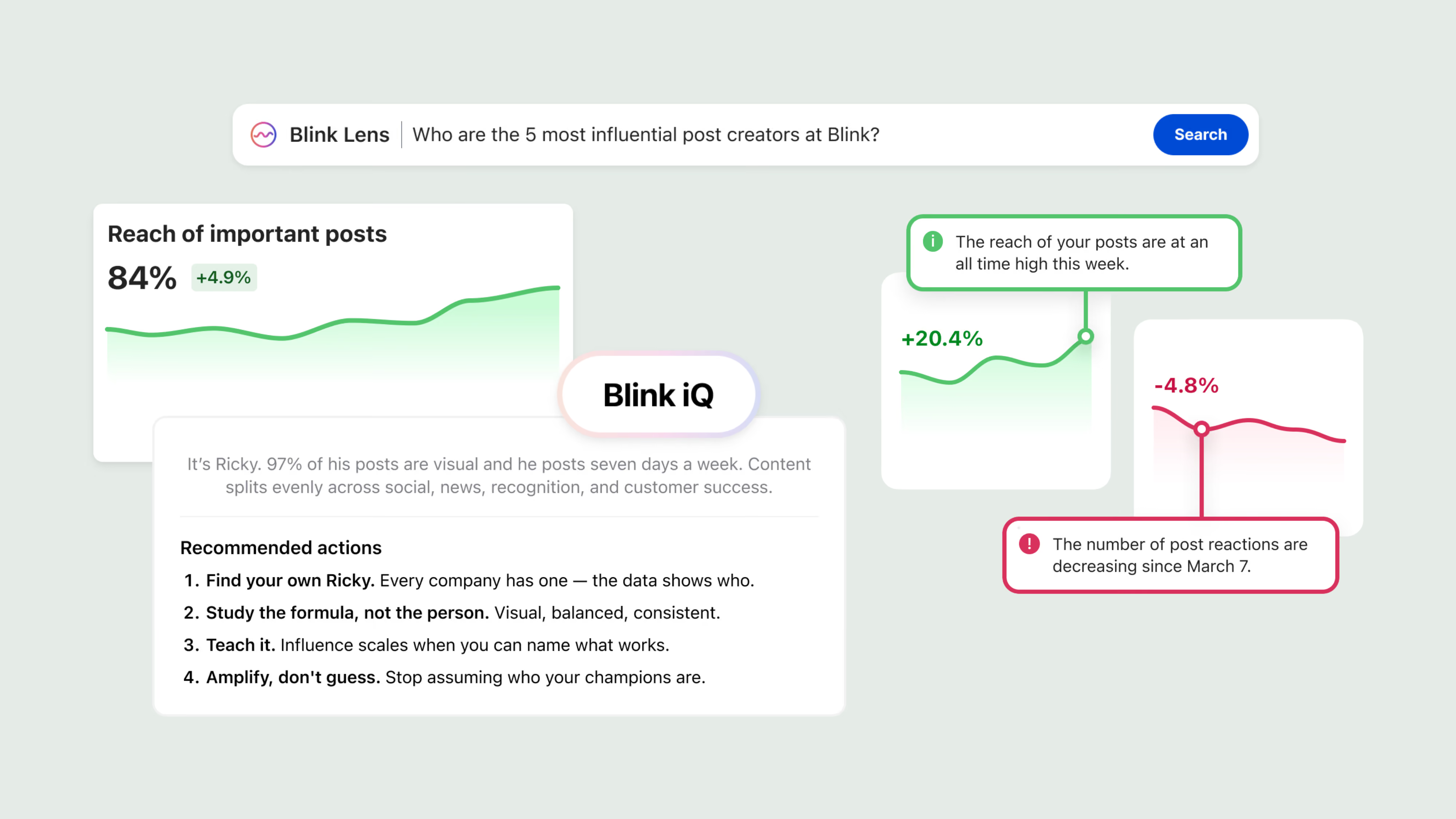
For the listening side, Blink's survey tool, including an AI listening agent, lets a manager type a plain-language brief like "check morale after the schedule change," and the agent builds the questions and then has a short one-to-one conversation with each employee to understand the reasoning behind their answer, not just a score.
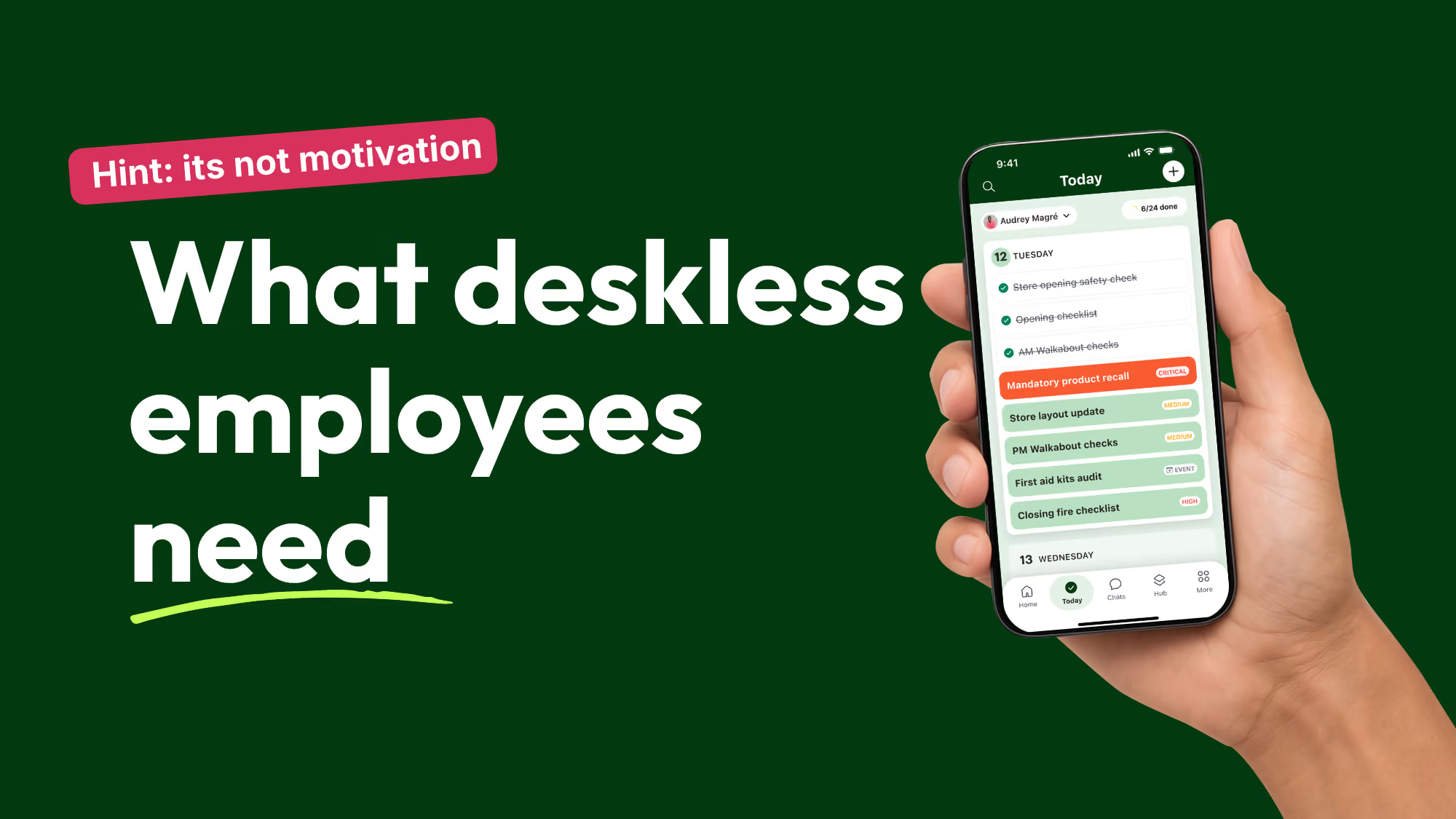
And for the goals and visibility side, Blink's task management gives shift-level clarity on what needs to get done, with completion tracked in real time so a manager can see where things stand without chasing updates.
What it does is close the gap those tools leave open: the day-to-day habits of recognition, feedback, and goal clarity that never reach a worker with no company inbox to check. It runs alongside Lattice or Workday, nothing to rip out.
If your performance process works for head office but goes quiet the moment it reaches the shop floor, start a 14-day free trial to see it on your own team. Prefer to talk it through first? Book a demo.