
Two-Way Internal Communication: What It Is and Why It Works
Discover 8 reasons two-way internal communication drives engagement, trust, and productivity. Plus: practical tips to foster dialogue in your org.
Jess DeVore
Published:
October 23, 2024
Last updated:
January 9, 2025
The workplace is evolving — and so is the way we communicate.
Gone are the days when communication flowed in just one direction, from the boardroom to the break room. Today, the most successful organizations view internal communications as a conversation — not a broadcast.
Consider this: Companies with highly engaged employees are 21% more profitable. And what’s one of the biggest drivers of engagement? Employees who feel heard.
That’s where two-way communication comes in. It’s not just a strategy; it’s the key to creating a thriving, connected workplace. Let’s explore what two-way communication really means — and why it’s the backbone of modern employee engagement.
Shifting from a top-down broadcast model to a genuine dialogue is the key to engaging your frontline workers. However, before you start asking for feedback, it is incredibly helpful to review highly effective internal communications to see exactly how top organizations format their messages to invite a response.
What is two-way internal communications?
Traditionally, employee communications were one way. Leadership would put out a message, which would then be cascaded downward to managers and employees.
A top-down approach established the C-suite as the primary source of internal communication. It also made it difficult for employees to speak up and be heard.
Two-way communication is different. It incorporates three types of communication:
Top-down communication
Bottom-up communication
Peer-to-peer communication
With channels that support these three types of communication, information moves in all directions. Leaders still share company updates — but this multi-pronged approach gives employees the chance to contribute to the company conversation, too.
They can respond to employee surveys, comment on posts in the company news feed, ask questions in town hall meetings, and send instant messages to peers and managers. Information is shared quickly and openly, just as it is on the social media platforms we’ve all grown accustomed to.
In a culture of two-way communication, employees are no longer just passive consumers of internal communications, but active participants in it. And the benefits this can bring to any organization are substantial.
Why does two-way communication matter?
Poor communication is bad for the employee experience: You’re unlikely to foster a positive employee experience without an effective internal communications strategy.
And poor communication isn’t just bad for culture — it’s bad for business, costing an estimated $15,000 per employee per year on loss of time, productivity, and profit.
Adopting two-way communication is a meaningful way to improve communications at your organization — and it comes with a host of business benefits. Here are all the reasons two-way communication lies at the foundation of any modern workplace.
#1. Better engagement with internal communications
Imagine a conversation with the chattiest person you know. They’re talking nonstop and you struggle to get a word in edgeways. Because you don’t get a chance to speak, you disengage and stop really listening to what is being said.
It’s the same in company-wide conversations. When employees are allowed an active role in communications, they engage more with your message. They’re a lot less likely to ignore your internal content — and a lot more likely to read your comms and take the desired action.
{{mobile-stories="/image"}}
#2. Better overall employee engagement
Two-way communication doesn’t just improve engagement with internal messages. It enhances employee engagement across the board.
We know that highly engaged employees are 3x more likely to say they feel heard at their workplace than their highly disengaged counterparts. When employees know that their thoughts and opinions matter to leadership, you improve their satisfaction, motivation, and sense of belonging.
#3. Creating a feedback loop
When you facilitate two-way communication, you get constant feedback from employees. Employee comments, questions, and survey responses help you build a picture of what works — and what doesn’t — in regards to your internal communications.
You’ll develop a better understanding of which messages are cutting through and which are creating employee uncertainty. This knowledge helps you to craft better, more effective employee communications going forward.
{{mobile-survey="/image"}}
#4. Fostering a culture of transparency and trust
No matter the content controls you put in place, opening up your communications to employees requires transparency and trust on the part of your leadership team.
Leaders must be willing to share information on company goals and challenges. They also need to be happy to field employee questions in response to that information.
When leaders demonstrate this level of transparency and trust, employees are more likely to follow suit. You create a company culture in which open communication is valued — and where employees feel comfortable sharing their opinions and concerns.
#5. Promoting inclusion
According to The Workforce Institute, 83% of UK employees say people at their organization are not heard fairly or equally — and 46% say that underrepresented voices are undervalued.
Adopting a policy of two-way communication gives space to previously unheard voices. With the right ethos — and the right internal communications platform — you ensure that all employees are empowered to speak up and be heard.
This leads to greater mutual understanding. It also helps you to create a more inclusive workplace, where everyone feels valued.
#6. Creating coworker connection
Peer-to-peer connection is another beneficial result of two-way communication in the workplace. Over internal communication channels, employees get the chance to build meaningful relationships with coworkers.
This is particularly important for remote and frontline employees, who may spend the majority of their days working alone. Two-way communication channels prevent isolation and disconnection and promote a sense of belonging.
#7. Boosting employee productivity
74% of employees say they are more effective at their jobs when they feel heard.
In a culture of two-way communication, employees get information on policies, tasks, and expectations. But they also get the chance to clarify any uncertainty. With a clear idea of their role and responsibilities, employees are more efficient and less likely to make mistakes.
It’s also easier for coworkers to collaborate with one another. Whether they’re based in the same office — or in completely different locations — employees can share their knowledge and insights, granting a further boost to workforce productivity.
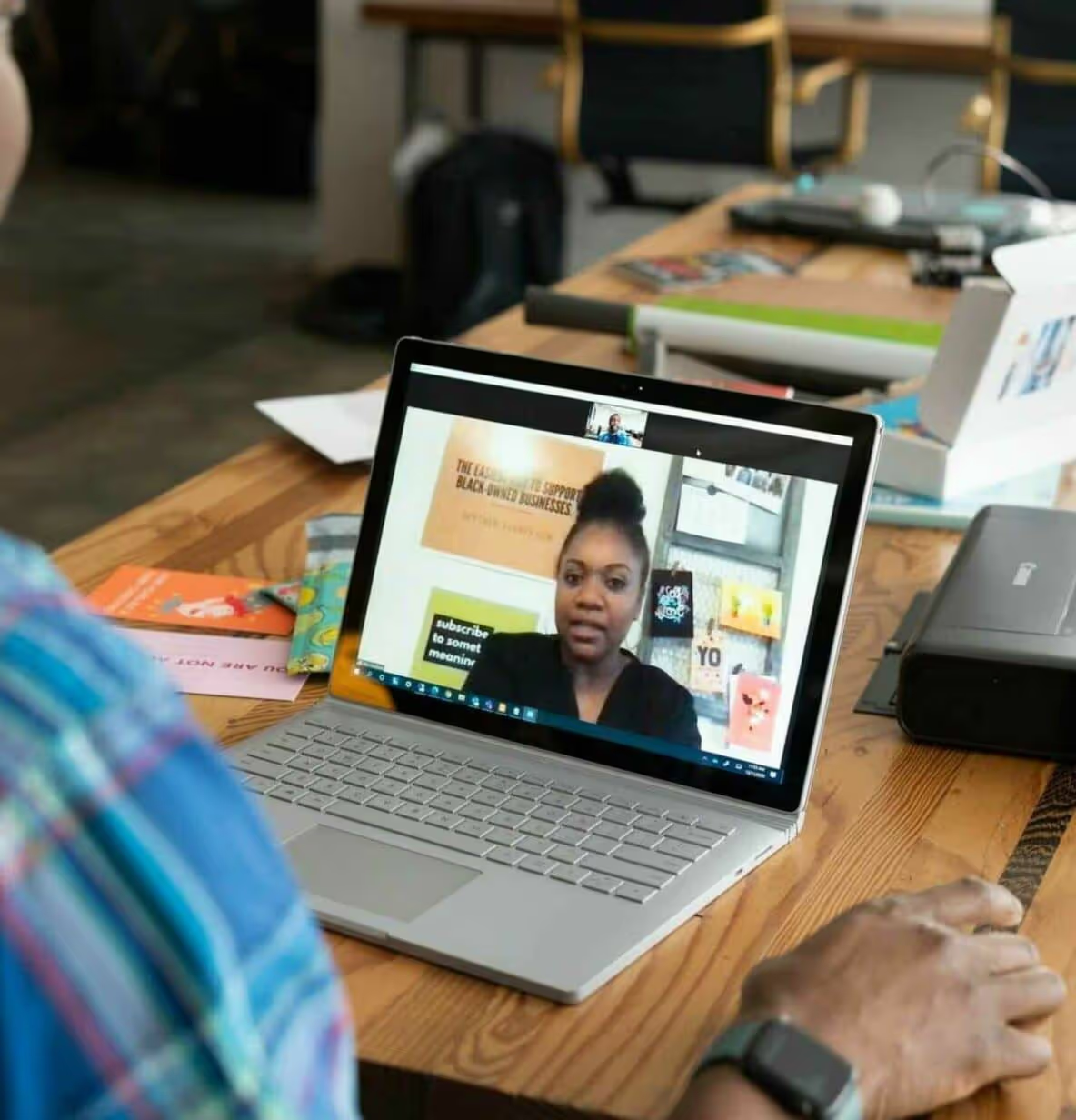
{{mobile-teams-call="/image"}}
#8. Reducing employee churn
Research shows that 1 in 3 employees would rather quit or switch teams than voice their true concerns to management. This makes open, trusting, two-way communication channels a crucial part of employee retention.
When employees feel that they can voice their concerns with managers, managers get a chance to respond. They can make changes to the employee experience and encourage employees to stay.
How can you foster two-way communication in your workplace?
Two-way communication requires effective internal communication tools and channels — and this is where a modern employee experience platform (like Blink) can help.
Whether you’re reexamining your current employee communications platform and exploring alternatives, start by looking at solutions that give employees a voice.
A great way to power two-way communication is by starting to use interactive channels like:
Your platform should make it easy for leadership to share company updates. And for employees to share their thoughts and questions with coworkers, managers, and the C-suite.
By embracing these technologies, internal comms teams can create an inclusive environment where every voice is heard and every employee feels connected.

Dee has been with Arriva since Christmas 2016, working 3 days a week so she could care for her three children. When the 2019 Covid pandemic hit, Dee started to work 6 days per week and stepped up to become acting supervisor. During this time, the team was nominated for (and won bronze at!) the Made A Difference Awards for the initiative and depot leadership they showed. They were also recognized for having the fewest rates of drivers contracting the virus within the area.
After the pandemic, she continued to work 6 days each week — her children were getting older, and she had a lot of ideas to improve the standards! She continued to invest in herself and in Arriva: In 2023, she passed the passenger-carrying vehicle test, and when the previous supervisor retired, she became the supervisor in April 2024.
She gives immense credit to her team. In her own words:
“The two ladies I work with, Abby and Megan, are not only colleagues but friends as well, and that makes a difference. The friendship and team spirit within the team is very high and we all work together brilliantly. The goals and cleaning standards are at a high standard and we all work together to achieve this — when drivers compliment the cleanliness and difference is what I love most about the work we do.”
The Winter 2025 product release highlights Blink's latest innovations — some already live and others rolling out over the next quarter. Missed our Autumn 2024 release? Check it out here!
At Blink, our employee experience platform is always evolving to keep pace with the ever-changing needs of organizations and their teams.
In line with our dedication to creating exceptional employee experiences — whether on the frontline or in the front office — we’re excited to introduce our latest product features, built to transform how employees connect with their organizations and each other.
From enabling easy communication with in-app calling and live streaming, to powering better outcomes through enhanced data intelligence, these powerful new features are designed to support a connected, engaged, and uplifted workplace.
#1. Voice and video calling: Power real-time, in-app collaboration
We’re excited to announce the addition of native 1:1 video and voice calling within Blink, making it even easier for employees to connect, collaborate, and deliver real-time results for your business.
This new feature will include:
Streamlined communication: Enables seamless 1:1 video and voice calls directly from individual chats or colleague profiles on mobile.
Built for international teams: Ideal for organizations with global workforces who need quick and reliable access to colleagues.
Future-proof design: Will launch on mobile, with plans to extend to desktop and explore group calling capabilities.
Flexible add-on: Available as an optional feature priced based on users, ensuring scalability for any organization.
{{mobile-voice-video="/image"}}
#2. Live streaming: Go live with all employees at once
Bring your live events to life on Blink! Our new live streaming feature lets you promote and host events directly in the Feed, fostering real-time engagement and interaction.
Here’s what you can do:
Stream seamlessly via Vimeo or YouTube, with full support for Vimeo interactions on Blink.
Share streams from other platforms using Real Time Messaging Protocol (RTMP) for an additional cost.
Engage your audience as they comment and interact during your event.
Discover what drives your organization with Advanced Employee Intelligence — an upgraded analytics suite that goes beyond the basics to tackle turnover, engagement, and productivity. These actionable insights, available as a paid add-on feature, will empower you to address challenges proactively and foster a thriving workplace.
Transform your data into a powerful driver of organizational success with four core pillars of insights:
Activation: Ensure every employee is connected and engaged with activation metrics by team and role, plus gamified nudges to boost adoption.
Communication: Maximize the impact of your messages with heat maps and deep-dive analysis into communication effectiveness by category, media, and more.
Engagement: Track and improve satisfaction with tools like engagement leaderboards and influencer metrics that spotlight key communicators.
Productivity: Streamline workflows by analyzing app usage, tool access, and shift management to reduce friction and optimize efficiency.
#4. Journeys 2.0: Engage employees before day one
Make a lasting first impression with Blink’s new Journeys for preboarding! This enhancement to our Journeys feature allows managers to kick off onboarding before an employee’s first day, creating a standout employee experience right from the offer stage.
Here’s what’s new:
Include line managers in the journey for a seamless, supportive experience.
Use enhanced start-date triggers to send tailored communications ahead of the first day.
Deliver a bespoke preboarding journey that sets the stage for success.
#5. Image-first feed: Curate the content experience
We’ve made the Feed even better with a new posting experience designed for high-quality, highly curated content that stands out and visually engages users.
Here’s what’s new:
Choose your layout: Opt for the classic look or an enhanced layout that puts your images front and center.
Audience-first review: See how your post will appear to your audience before you post.
Simple to use: The curation and review steps are seamlessly built into the posting process.
#6. Self-service SSO: Simplify access to third-party systems
Our new self-service SSO feature streamlines user access to key third-party systems directly through Blink, reducing the need for multiple logins and improving overall security. This feature makes it easier than ever to connect Blink with the tools your teams rely on.
Key takeaways include:
Enhanced user experience: Simplify workflows by allowing users to access essential systems without remembering multiple passwords, driving better uptake and ease of use.
Flexible configuration: Administrators can set up and manage SAML 2.0 Single Sign-On directly from the Blink Admin dashboard, enabling seamless integration with your Service Provider.
#7. Polls as Stories: Boost engagement with a visual integration
Take your Polls to the next level by sharing them through Stories, including our new image-first Polls feature, to maximize visibility and participation. This integration helps make employee feedback and interaction more accessible and engaging than ever.
Here’s what you can do now:
Increase engagement: Promote Polls in Stories to capture attention and encourage more responses from your teams.
Visual appeal: Leverage image-first Polls to create a dynamic and engaging experience, driving curiosity and interaction.
{{mobile-story-polls="/image"}}
#8. Chat and channel moderation: Maintain a professional communication environment
Administrators now have greater control over chats and channels with new moderation capabilities, including the ability to hide certain types of content when necessary. These tools empower admins to foster a safe, engaging, and well-managed communication space for everyone.
With this feature, you’ll gain:
Improved oversight: Maintain a positive and professional environment by managing and moderating conversations directly within chats and channels.
Content management: Use the “hide” feature to remove inappropriate or irrelevant content, ensuring discussions stay on track.
#9. Dark mode: A new way to experience Blink
Enjoy a more comfortable and visually striking interface with our new dark mode feature, now available via a simple toggle in your settings. This update adds a touch of personalization and comfort to your everyday platform experience.
With dark mode:
Improved comfort: Reduce eye strain during late-night use or in low-light environments with a sleek, dark interface.
Personalized experience: Give users the flexibility to choose between Light and Dark modes based on their preferences.
{{mobile-dark-mode-post="/image"}}
Coming soon
Get excited for updates to the Hub experience, moderation enhancements, and in-app events management!
Bring your consumer-grade employee experience to life
As we kick off a new year of workplace evolution, our mission remains unchanged: to deliver tools that strengthen connections, boost productivity, and ensure every employee enjoys a seamless and exceptional experience — no matter their role or location.
These latest product enhancements reflect our commitment to helping organizations supercharge their employee experience as we step into 2025.
Fernando has been with Holcim since October 2022. Until earlier this year, Fernando's position was a RMX driver at the Bannock location in Denver. The summer of 2024 proved a challenge for staffing levels, and Fernando stepped in across a multitude of environments to keep the business marching forward. Fernando was task-trained, cross-trained, and utilized as an instrumental resource for operating skid steers, front end loaders, water trucks, shovels, and concrete batch plants across the Denver metro.
Plant managers as well as plant operators have welcomed Fernando’s support from operations in Aurora, Castle Rock, Centennial, Denver, Franktown, and Littleton, comprising seven ready-mix plants and both central and dry batch facilities. While every site was different, it was Fernando's attitude and willingness to learn that strengthened our teams’ ability to have a successful year in concrete production. We thank Fernando for being such a valuable member of the Denver RMX business.
How has Blink helped in his role?
Were it not for the Blink platform, I’m not sure Fernando would have the same level of peer recognition that Blink offers. In order to appreciate the opportunities within our business, sometimes allowing others to understand what is available is as simple as sharing a story of success!
What does he want to do next?
Fernando has recently transitioned from a driver to a plant operator at the Bannock RMX plant, and continues to develop his production skills to sharpen our business’s performance within a very competitive market. I look forward to seeing his continued growth within the organization.
Nominated by: Michael Galbraith, Operations Manager
But for the 80% of the global workforce who don’t sit at a desk, it was never designed to work.
Slack is a desktop-centric platform. It’s clunky (and sometimes completely inaccessible) for employees who are on their feet, moving between locations, and rarely sitting down at a desktop computer.
In 2026, this gap is impossible to ignore.
Frontline employees now expect workplace technology to feel as intuitive as the apps they use outside work. Fast, mobile, simple.
And they want to feel as connected to co-workers and company culture as their peers in the office.
So how do you get from here to there?
Follow in the footsteps of the many companies currently seeking Slack alternatives. Specifically, look for mobile-first employee communication tools and frontline messaging platforms.
Slack replacements for mobile-friendly team messaging are designed around the realities of deskless work.
They meet frontline employees where they’re at with the help of intuitive comms tools, available on every employee smartphone. And they make a big difference to comms, culture, and connection in a frontline organization.
In this guide, we’ll explore:
Why Slack falls down for frontline organizations
The internal comms shifts set to shape 2026
Why mobile-first employee comms is now non-negotiable
The features modern frontline messaging platforms must deliver
How Blink supports mobile-friendly team messaging at scale
If your frontline teams currently rely on workarounds, WhatsApp groups, or word-of-mouth to stay informed — this one’s for you.
{{mobile-desktop-main="/image"}}
The limitations of Slack for frontline teams
Slack is one of the most widely recognized internal communication tools in the world. But popularity doesn’t always equal suitability.
Slack was built for desk-based, knowledge worker collaboration. It has lots of great features — like desktop-first team chat, organized communication channels, and app integrations. But it doesn’t make sense for frontline workers.
Frontline workers are employees whose roles require them to work away from a desk or traditional computer. They’re the people working in manufacturing, healthcare, logistics, retail.
These employees often operate in time-sensitive, high-pressure environments. They need communication that is immediate, clear, and impossible to miss. Urgent updates. Relevant content. Highly intuitive messaging tools. And this is where Slack begins to struggle.
Here are some of the key limitations of Slack for frontline use:
Noise and information overload from chat-based streams
Inadequate support for push notifications, role-based broadcasts, and compliance features
Lack of centralized, evergreen knowledge resources suited for easy mobile access
A mismatch between desktop and mobile versions
Slack vs. frontline messaging platforms
Slack
Mobile-first frontline platforms
Mobile-first interface
✔
Desktop-first interface
✔
Fast and reliable mobile performance, even with low or intermittent internet connection
The internal comms shifts driving the 2026 Slack replacement trend
Organizations are choosing to replace Slack because internal communication is changing.
In 2026, three major shifts are reshaping how organizations connect with frontline teams — and exposing the limitations of desktop-based chat platforms like Slack.
Here’s what’s happening.
Shift #1: Multi-channel strategies
Internal comms teams are adopting a multi-channel approach. This is a strategy that combines different communication types — like proactive push channels (emails, SMS) and passive pull channels (intranets, knowledge hubs).
It means sending the right part of the message through the right channel at the right time, adding links between messages where necessary. For example, an urgent update sent via SMS may link to a more detailed policy document on your content hub.
Key actions for frontline organizations:
Implement mobile-first team communication tools
Move permanently beyond paper memos and word-of-mouth comms for frontline workers
Define the purpose of each comms channel to reduce noise
Shift #2: AI automation
In 2026, experts predict that HR and comms leaders will be evaluated on one key thing: how much time their tools give back.
AI is no longer about experimentation. It’s about execution. So there’s increasing demand for AI-powered engagement tools, continuous feedback, and automation in team messaging.
The aim? To drive productivity and smarter workflows. And to free up time for coaching, clarity, and connection.
Key actions for frontline organizations:
Find productivity tools that allow you to automate routine admin
Use AI to make sense of employee feedback, employee sentiment, and platform analytics
Use AI to create and personalize comms platform content
Shift #3: Simplified tech stacks
App overload is real.
The average employee now uses more than 100 digital tools. And frontline workers feel that burden acutely because they’re managing all those logins and tabs on a small smartphone screen.
In 2026, organizations are seeking to simplify their tech stacks. They’re looking for unified platforms that save cost, reduce complexity, reduce cognitive overload, and improve compliance.
By moving from a patchwork of point solutions to an all-in-one mobile-first employee communication platform, see fewer missed messages and improved adoption — particularly among frontline teams.
Key actions for frontline organizations:
Audit tools through a frontline lens
Consolidate around a small number of multi-functional platforms
Integrate a centralized platform with other workplace software
TL;DR: Slack is struggling to keep up with the pace of change in internal comms and the wider workplace — especially in organizations with a frontline workforce. This is why many companies are moving beyond Slack’s limitations to embrace a mobile-first employee communication solution.
The importance of mobile-first employee communication on the frontline
Mobile-first is a philosophy not a feature. A mobile-first employee communication platform is built from the ground up for smartphones. It’s not built for desktop, then adapted later as an afterthought.
For frontline teams, that difference matters. It helps to ensure simple, seamless, touch-friendly experiences for users without easy computer access.
Your retail team can catch up with company news on their lunch break. Carers can swap advice in the time between clients. Your bus drivers get urgent route updates as a smartphone notification.
You get to ditch unreliable and inefficient methods of frontline communication — desktop tools like Slack, manager phone calls, paper memos, and unsecure WhatsApp chats.
You put company comms, culture, and connection, plus essential workplace tools, at the fingertips of every employee. So you can reach, engage, and empower your frontline workers, and the rest of your workforce, too.
{{mobile-chat="/image"}}
The key messaging features frontline platforms must deliver in 2026
If you’re replacing Slack this year — and seeking a better communication solution for your frontline workforce — there are a couple of non-negotiable features you should be looking for.
Some internal communication platforms come with a mobile app. But that doesn’t mean they’re mobile-first. Truly mobile-first employee communication tools are built with smartphone users as a priority. That means intuitive navigation, clear layouts, and simple interactions — a tool that is easy to use on the go, with minimal training and zero frustration.
Employee engagement tools
Modern frontline platforms do more than simply deliver direct messages. They actively foster employee engagement. Features like employee recognition, a culture-boosting news feed, and co-worker chat tools help employees feel connected and valued, even when they don’t sit at a desk.
Two-way, real-time messaging
Two-way communication is another non-negotiable when looking at Slack replacements. Because communication isn’t effective when it’s only top-down. Frontline messaging platforms enable instant conversations so employees can ask questions, provide feedback, and collaborate with teammates in real time.
Content tailored by role
Role-based segmentation allows you to send tailored and secure communications to specific departments, locations, or groups within an organization. It ensures relevance, reduces noise, and helps to drive platform adoption. Look for communication tools that allow you to send targeted messages to your frontline employees. That way, each time they log in, they see content that relates to them.
Searchable, evergreen knowledge spaces
Another key feature of a modern frontline messaging platform is a central hub for documentation, FAQs, and resources. This ensures employees always have access to reliable information — without having to quiz managers or co-workers. And it makes workforce alignment, onboarding, and collaboration much easier.
Analytics and engagement tracking
Insights are critical if you want to understand the impact of your communications. The best platforms track message reach, engagement, and behavior patterns, giving managers the data they need to optimize communication strategies and fix gaps in understanding.
AI-based workflows
AI tools can streamline routine work. Automated reminders, shift notifications, approvals, and content summarization tools save time for managers and staff, letting them focus on higher-value work rather than repetitive tasks.
Integrations and compliance
Frontline communication tools should integrate smoothly with other workplace tools, creating a joined-up system that is easy for deskless workers to navigate — even in the middle of a busy shift. Integrations also help you maintain regulatory compliance. With features like HIPAA readiness for healthcare, secure single sign-on, and audit trails, you can stay efficient and protected while connecting teams across platforms.
{{mobile-integrations-hero="/image"}}
How Blink supports mobile-friendly team messaging for frontline workers
Blink is a mobile-first, social media-inspired employee experience platform, designed around the needs of frontline workers. It streamlines communication, engagement, and operational workflows with the help of:
A multimedia news feed
Real-time messaging tools
Content hub
Employee surveys
Employee recognition
Co-worker communities
Live streams and video calling
Push notifications
AI-powered automation tools
Analytics dashboard
Built-in compliance support
Integrations
Going way beyond the capabilities of Slack (and of a standard team messaging app), Blink gives you the tools you need to transform frontline communication, employee engagement, and company culture.
Organizations like McDonald’s, JD Sports, Dollar Tree, and Domino’s use Blink to connect thousands of frontline employees across stores, warehouses, and healthcare settings. Through Blink, they deliver updates instantly, reduce reliance on WhatsApp or personal text groups, and bring communication, knowledge, and workflows into one mobile-first platform.
Communication platforms are evolving fast — and 2026 marks a turning point.
This is the year mobile-first becomes the baseline for reaching a frontline workforce that’s short on time and always on the move.
It’s the year AI starts doing real work — cutting admin, surfacing insights, and giving managers more time to support their people.
It’s the year organizations get serious about simplifying bloated tech stacks.
Organizations reviewing their frontline messaging tools in 2026 should be thinking beyond chat alone. Because the future belongs to platforms that inform, connect, and motivate your people — all from one streamlined, easy-to-use interface.
Ready to start your search? Look for tools that provide an intuitive mobile experience, a range of comms channels, strong integrations, and clear insights into what’s actually working.
Do that, and you won’t just solve today’s communication challenges — you’ll also be ready for whatever comes next.
How you complete that sentence could speak volumes about your leadership skills.
Good leadership in the workplace is crucial for the long-term success of your business and superb employee experience.
In fact, there's a 1674% chance of an employee having a strong perception about your leadership when you connect them to their purpose, accomplishments, or each other.
Great leaders inspire and motivate their team members. But it's easier said than done.
Being a good leader can be challenging. It takes a lot of practice and focus. But like any other skill, you can learn to be an effective leader.
If you don't know how to be a good leader, you're in luck. We'll explore 10 qualities of a good leader to give you tips to become a strong leader at work.
What makes a good leader in the workplace?
A good leader engages in open communication, motivates their team members, leads by example, listens to feedback, and is open to new ideas in an ever-changing workplace.
Anyone can sit in a corner office and boss people around, but there's more to effective leadership than that.
Learning the traits of a good leader will help you significantly impact your company's success.
With that in mind, here are 10 attributes of a good leader and how to use them effectively to your advantage.
1. Good leaders engage in open communication.
Employees want to be heard — whether it's an issue that needs resolving or ideas they believe would improve the business or better serve clients.
When you don’t communicate well with your team, they may feel discouraged, resulting in poor morale and lower production. Project.co shared that 35% of businesses have lost an employee due to poor communication.
The best leaders customize their communication styles to suit each situation and team members' preferences — which means they take the time to learn which communication mode each team member prefers.
Do your employees prefer email or phone conversations? Or maybe face-to-face?
You can also use a straightforward mobile app like Blink to turn your employees into a close-knit group by enabling communications between them.
Effective communication decreases misunderstandings and employee errors, builds trust among team members, and improves morale. Pumble backs that up, stating that effective communication can increase a team's productivity by 25%.
As long as it's done respectfully, you should maintain a work environment that promotes honest communication.
Promoting a judgment-free environment sinceyour employees are likely to give their opinions more often when they don’t fear discrimination.
Giving undivided attention to your team members when they’re speaking.
Asking your employees for suggestions to increase their engagement. You'll aim to implement employee engagement strategies that work.
Asking (not demanding) your employees to do stuff for you.
2. Great leaders encourage professional and personal development.
One of the most critical leadership qualities you can have is nurturing your staff by giving them personal development opportunities.
That can include anything from leadership training or teaching them a new skill to encouraging them to pursue a passion that inspires them in and out of the workplace.
In 2021, Lorman shared that 70% of employees are likely to leave their current job to work for an organization that invests in employee growth and development.
Employees value learning opportunities, so it's no surprise that companies with successful training programs typically see a significant increase in employee retention.
Picture a company culture where every team member receives training according to their interests. In such a case, every employee will feel you care about their goals, dreams, and overall well-being.
When that happens, your employees will go above and beyond to help you achieve your goals and vision.
Here are four strategies you can use to encourage professional and personal development in the workplace:
Encourage mentoring and coaching between managers and employees.
Identify and develop soft skills such as time management, active listening, and delegation.
Implement cross-departmental training programs to increase the efficiency of your entire company.
3. Successful leaders lead their employees by example.
One of the characteristics of a good leader is their ability to ‘walk the talk.’
Here’s an instance of a true leader leading by example:
Jane is a manager at a local bank with a team of seven employees (you can pretend that’s Jane and her team in the above picture). She shows up to work a few minutes early to plan her schedule.
When her team starts to arrive, she greets them warmly and inquires about their families.
She then calls her team members into a morning meeting. And instead of leading with her plan, she gives each person a chance to voice their ideas. She appreciates their input and asks them to create proposals to bring their ideas to life.
When it’s time to start working, Jane attends to clients like the rest of the team.
As a result, Jane gets high levels of employee engagement since she demonstrates that she’s invested in her team's initiatives and business.
Leading by example means guiding your employees through actions instead of words. The saying ‘do as I say, not as I do’ has no place in today’s world.
Nowadays, employees want to see your actions match what you say. That means showing them what’s required instead of just telling them.
Here are four ways to lead by example:
Be a role model to your employees by walking the talk.
Give clear instructions to your staff.
Avail yourself to answer questions your employees might have.
Make employees feel part of the team by letting them know why you're giving them specific instructions.
Use respectful words like ‘please’ when giving instructions to your team members.
4. Strong leaders give constructive feedback to employees about their performance.
Employee feedback is an incredibly effective tool. Offered well, it can grow your employees, strengthen bonds between staff and managers, and improve trust levels.
“We all need people who will give us feedback. That’s how we improve.” — Bill Gates
Direct, honest feedback is the best way to steer your team in the right direction.
Don’t wait for monthly or quarterly assessments to give your employees feedback. Give them right after an event has occurred. It will have the most significant impact on their performance.
Here are four tips to help you give employees effective feedback that gets the results you need:
Give individual feedback privately.
Avoid sandwiching corrective feedback between two positive feedbacks. It will create confusion, undermine the feedback, and decrease trust levels.
Focus on your employees' behaviors (what they do) rather than their personality traits (what they’re like).
5. Secure leaders ask for feedback from employees about their leadership style.
The saying goes: there’s always room for improvement. That’s especially true when you're a good leader.
Who can point out these growth opportunities better than your employees?
After all, they work with you every day, so they know your strengths and weaknesses.
“Feedback is the Breakfast of Champions.” — Ken Blanchard
However, getting honest feedback isn’t always easy.
Employees may feel awkward revealing their true thoughts. They may not want to offend anyone's feelings or face future consequences for harsh criticism. That may cause them to give you fluffy feedback or avoid the request.
Use these tips to ask your employees for feedback and increase the likelihood that they give honest, actionable feedback:
Ask your employees specific questions instead of vague questions such as, “What do you think?”
Tell your staff not to hold back on their feedback and make them feel they’re doing you a favor by being honest.
Give them time to think about your questions and develop helpful answers.
Ask employees about what you can do better in the future rather than what you did wrong in the past.
6. Transformational leaders are open to change and new ideas.
Change is hard — even if the change is for the better. Successful leaders are aware of this and don't pretend otherwise.
They also understand that embracing change with the right mindset is critical to creating an environment where change is integral to their company's DNA.
A great leader never wants to be the smartest person in the room. They surround themselves with a team of experts with more ideas and experience without feeling threatened.
And when these experts are led well, they can be a powerful force in driving strategy, making changes, and enhancing the company's bottom line. They’ll perform at a high level with little oversight and push you to grow continually.
“It doesn’t make sense to hire smart people and tell them what to do; we hire smart people so they can tell us what to do.” — Steve Jobs
Whether you're leading a team of two or five thousand, below are four ways to embrace new ideas and get your employees on the ‘change-wagon’ faster:
Surround yourself with a committed team of experts.
Understand why you need the change and clearly express the desired outcome.
Include your employees in decision-making from the get-go to strengthen their commitment to change.
Make sure your beliefs and behaviors support the change. Be resilient, persistent, and willing to step outside your comfort zone.
7. Effective leaders set clear employee goals and delegate work.
A good leader makes sure their employees are doing what they’ve assigned them to do to achieve the company's mission and goals.
The instructions you give should be measurable and quantifiable. Use existing data to develop a baseline for employees to do their best work.
Moreover, 2021 research by Bi Worldwide showed that 31% of employees said their manager set attainable goals for them, but they weren’t challenging. So be sure to have goal-setting discussions with your employees to set goals that will challenge them to grow.
An effective leader also knows what tasks to delegate. They know they can’t accomplish everything alone, so they assign tasks to team members they’re confident will complete them.
As a result, they empower and boost their employees’ morale. And in the process, they free up their time to focus on what will yield the highest returns and grow the business.
Here are three tips to help you delegate tasks to your team members:
Look for opportunities to delegate tasks based on your teams' strengths and weaknesses.
Walk your employees through the project you're delegating and clarify when you need it done.
Give continuous feedback and be specific on what they did well and what they need to improve on.
A good leader has the right motivation and passion. They’re not driven by money or prestige but genuinely want to inspire others to do their best.
Passionate leaders increase productivity and make sure workers are committed to the company's values, mission, and vision.
“A great leader's courage to fulfill his vision comes from passion, not position.” — John C. Maxwell
Most successful leaders have a passion (not a job) and know how to rally others around that passion.
In short, passionate leaders lead with heart.
Here are seven qualities that set passionate leaders apart from the crowd:
They're open-minded and respect differing opinions.
They have a positive attitude and superb problem-solving skills.
They’re great communicators and listen with the intent of genuinely understanding rather than advancing their agenda.
They're future-focused and capable of engaging others to achieve their goals.
They look at the big picture and embrace challenges.
They're risk-takers and put in the hard work to execute ideas.
They're self-aware, surround themselves with like-minded people, and sustain collaborative relationships.
Your ability to inspire, motivate, and create a magnetic vision needs commitment and perseverance. But it’s worth the effort, whether your goal is productivity, employee retention, or project management.
9. Successful leaders have a positive attitude even when things go south.
Most people tend to associate good leadership with smooth sailing.
After all, what can go wrong if you build and nurture a great team and generate excellent ideas?
…. a lot.
But whether it's a minor misunderstanding or a significant error, how you handle a negative situation reveals a lot about your emotional intelligence and leadership abilities.
“Great leadership usually starts with a willing heart, a positive attitude, and a desire to make a difference.” — Mac Anderson
When things go south, your words and actions as a leader are critical. Here’s what you can do during those times:
Take time to evaluate the situation and know what the problem is.
Face the problem with positivity and look for solutions.
Be flexible and adaptable and make adjustments along the way.
Remain persistent and determined to solve the issues.
10. Good leaders are always learning.
All successful leaders have one trait in common — a hunger for learning. They enroll in relevant online courses, read great books, use the best tools, and constantly improve.
Great leaders have an innate sense of curiosity that often drives them to learn more, which helps them perform better for their businesses and provide personal fulfillment.
“Leadership is not an expertise. Leadership is a constant education.” — Simon Sinek
Learning helps great leaders challenge their assumptions and bring clear understanding to the table.
In contrast, failure to keep learning means you won't adapt to the ever-changing work environment. And depending on your industry's competition, this can be a significant issue that spells the death of your company.
Here are three ways to keep learning and become a better leader:
Embrace an open mind to see things from different perspectives.
Read relevant books, industry publications, and blogs.
Take advantage of consultants, personal networks, industry events, and other organizations and learn from them.
How to be a good leader at work: your checklist
Openly communicate: Make sure your team always know what's going on and what is expected of them.
Develop your team: Push each team member in their personal development. Make sure you each team member has a clear and robust personal development plan.
Lead by example: Easier said than done, but be the example your team can learn from. Show them the type of employee you want them to be.
Give constructive feedback: Don't be afraid to give constructive feedback. 1-1's are normally the place for this.
Ask for feedback: You won't always get things right, and not everyone will agree with you. Ask for feedback from your team on your management style and how you can improve.
Be open to change and new ideas: If a team member has an idea or a new way of doing things, be open to it. Don't stick to the way things are just because "that's how it's always been".
Set goals & delegate: You can't do everything on your own, give your team responsibility and delegate tasks appropriately. This can help with point 2 as well.
Show your passion: If you love your job, show it. This passion can be infectious and help motivate your team.
Keep positive: Things won't always go to plan, but you can weather the storm. Keep positive and let your team know you have their back with whatever road bumps you hit.
Don't stop learning: Your development also doesn't stop. If you want to lead by example you need to make sure you are up to date with the latest techniques and strategies for your role.
Wrapping up: What makes a good leader in the workplace?
Most people aren’t born with the ability to get things done and inspire others every day. And that’s okay — you don’t have to be born with that ability to succeed.
Although it takes time to be a good leader, you can learn strong leadership skills. But like any other skill, it takes a lot of practice and focus.
Just keep in mind it also requires you to grow and engage your team. Blink’s Employee Engagement App can help you keep employees engaged and connected. Try it out today.
Boston, MA — May 18th, 2026 — Blink, the leading employee experience platform for frontline workforces, today announced it has raised $17 million in funding from Enlightened Hospitality Investments (EHI), the growth equity fund affiliated with Danny Meyer’s Union Square Hospitality Group (USHG). Blink also announced a new global partnership with Shake Shack following a successful integration of its workforce management solutions.
As restaurants – and frontline-driven industries more broadly – continue to navigate high employee turnover, margin pressure, and an increasingly complex operating environment, Blink is helping organizations address some of their most persistent workforce challenges. By improving employee communication and engagement, Blink enables teams to stay connected, informed, and aligned – driving higher staff satisfaction, reducing turnover, and increasing overall productivity. Blink’s frontline workforce solutions empower employees to access critical company information, tools and communicate seamlessly across teams, from corporate to frontline staff, all in one unified platform. In 2025, adoption of Blink’s self-service employee tools, which enable team members to swap shifts, access pay stubs, and have more agency over their work, grew 300% year over year, and employees opened the Blink app seven times a day on average to stay informed, efficient, and connected.
“We are excited to partner with Danny and the EHI team and believe that their commitment to delivering Enlightened Hospitality is more relevant now than ever,” said Sean Nolan, Founder & CEO of Blink. “We also are thrilled to launch with Shake Shack, an industry leader who shares our commitment to a strong corporate culture that begins on the restaurant floor. As we embark on this next chapter of growth, we look forward to partnering with forward thinking brands who are empowering their people to win in this competitive market”
Blink will use the funds to invest in its product and engineering teams and drive continued innovation across its AI-first platform, while also accelerating its go-to-market strategy to reach more customers across the hospitality industry and beyond.
“I have always believed that Enlightened Hospitality – the ethos that when you take care of your people, your people take care of your customers – is how to create sustaining success in any business" said Danny Meyer, Co-Founder and Managing Partner of Enlightened Hospitality Investments and Founder of Union Square Hospitality Group. "Blink’s technology puts people first by making sure team members are equipped and supported so they can, in turn, deliver their very best. Blink’s smart technology will help shape the future of restaurants."
Blink IQ, the company’s AI workforce insights platform, gives management real-time insight into trends such as workforce feedback, productivity, sentiment, and turnover to help companies identify issues early, take action fast, and improve both engagement and operational performance.
“At Shake Shack, everything starts with our people. The energy in our Shacks and the Enlightened Hospitality our teams bring to life each day are what make us special,” said Luke DeRouen, Chief Communications Officer at Shake Shack. “As we continue to grow, we are focused on giving our teams simple tools that keep them informed, connected, and engaged. Blink will help us do exactly that, enabling a more connected and consistent experience across our Support Center and Shack teams.”
Blink works with some of the world’s most recognized hospitality brands across the restaurant and hotel industry and continues to expand across verticals, including retail, transportation, healthcare, manufacturing, and logistics. In 2025 alone, the company added over 700,000 users in the hospitality sector.
By centering the platform on the employee experience, Blink helps restaurants streamline operations, strengthen culture, boost retention, and elevate every guest experience. To learn more about Blink, visit www.joinblink.com.
To learn more about this partnership, read the announcement on Business Wire and Kristen Hawley’s exclusive coverage in Expedite here.
About Blink
Blink is the mobile-first employee experience platform that connects your people, systems, and culture in one super-app. It bridges the digital divide between deskless and desk-based workers, supercharging employee communication and engagement at industry-leading companies like Shake Shack, McDonald’s, Domino’s, Booking.com, Dollar Tree, Nokia, easyJet, JD Sports, Carrefour, and Stagecoach. Blink is the top-rated Employee Communications Application on Gartner Peer Insights and a Leader in the G2 Grid for Best Employee Engagement Software. Learn more at joinblink.com.
About Enlightened Hospitality Investments (EHI)
Enlightened Hospitality Investments (EHI) is a value-added strategic growth equity firm affiliated with Danny Meyer’s Union Square Hospitality Group (USHG). The firm was formed to leverage the brands, businesses and team at USHG to identify and invest in scalable businesses with proven category leadership and a commitment to building an employee, customer and community-focused culture. EHI partners with portfolio companies to provide strategic direction, operational experience, increased visibility and access to relationships to drive growth with our portfolio partners. EHI manages over $550M of committed capital and primarily focuses on hospitality and related technology businesses, but will also invest in other hospitality-related companies that share an employee, customer and community-focused culture.