
10 online collaboration activities for remote teams
Discover simple but effective online collaboration activities and exercises that can help your remote workforce improve performance and team spirit.
Jess DeVore
Published:
September 6, 2023
Last updated:
October 8, 2024
What we'll cover
Study after study has shown the importance of collaboration at work. Companies that get collaboration right are more likely to beat competitors and have a highly motivated, engaged workforce.
But fostering collaboration can be a challenge when most of your employees don’t work from the office. If your employees work on the front lines or from their homes, they won’t have the same bonding opportunities as desk-based workers.
What can you do about this? Invest in creative ways to build effective virtual collaboration into your culture and promote teamwork.
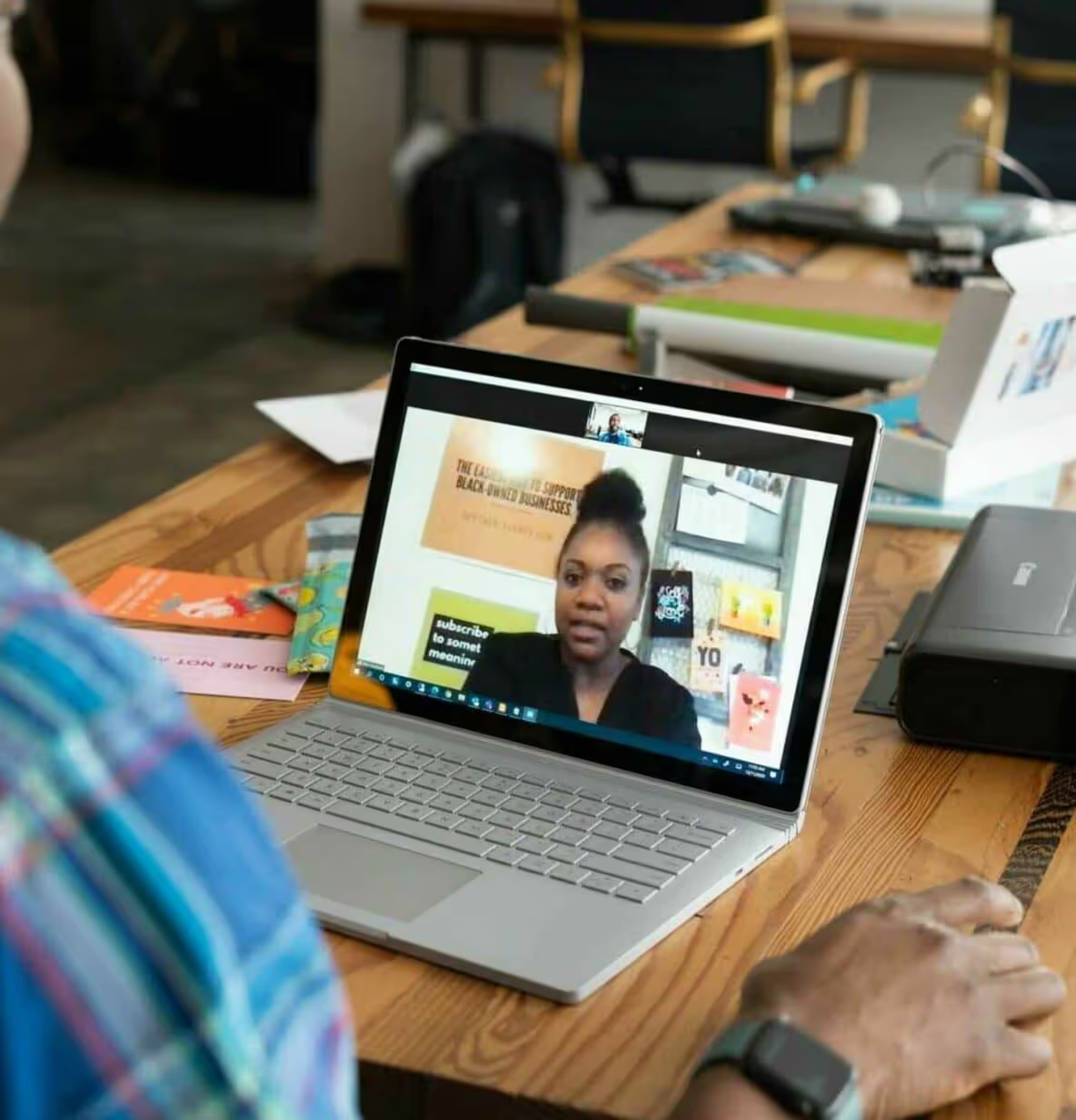
One such way is to conduct online collaboration activities. These exercises provide remote employees the chance to socialize with peers whom they rarely get to meet in person.
So in this post, we’ll walk you through some of the best online collaboration activities we have hosted or seen working recently. But before we get to that, let’s see why virtual collaboration is so important.
Why is online collaboration important?
2500% more companies globally are investing in remote collaboration initiatives in response to Covid-19.
The media has bombarded us for years with stories of isolated, self-made geniuses. But whether you’re an individual or a business, you need to work with other people and teams successfully to get positive results.
You and your workers need opportunities to develop rapport, understand each other’s abilities, and communicate effectively as needed.
It’s teamwork that lets employees put out a collective effort and get things done — things that cannot be carried out alone.

But as we said before, remote work deprives people of the chance to interact with their coworkers beyond the scope of work. If you’re part of a dispersed team, there’s little chance that you’ll ever bump into another colleague near the water cooler, or talk about a hobby.
Because of this, virtual teams often lack the human connection that is critical to job satisfaction and employee retention. And without emotional bonds, team members are less likely to be engaged at work.
That’s where online collaboration activities fill the gap. You can use them to enhance relations between employees and boost motivation. The remote collaboration exercises below will help your workers feel closer than ever, improving their overall well-being and happiness.
Online collaboration activities for remote teams
When picking the following online collaboration activities, we have ensured they are easy to implement and effective. And that they can be adapted to remote work environments using any well-known video conferencing tools.
Plus, if an activity requires a whiteboard, you can share your screen and use any online whiteboard or note-sharing software for each person to see a live, editable page. Let’s begin.
What’s on your bucket list?
Sharing our dreams with another person is a great bonding experience. In this online collaboration example, you’ll give each employee a few minutes to think and make a list of their goals.
Specifically, these would be the things they want to do in the next 12 months, or at least once in their lifetime.
Then, every worker will share the list they created in a video conference. If some employees have the same things on their lists, they can continue the conversation offline to discuss and plan together.
Online coffee meeting
Call for a short, stand-up meeting at the start of the day. Each team member finds a coffee shop nearby, or brews a fresh cup on their own if they are home.
During the meeting, they can talk about the work they have planned for the day while enjoying their morning coffee. If mornings are not possible, you can apply the same concept to evening coffee breaks.
Be careful with this activity though. It’s very easy for it to become a strictly formal, work-related conversation. Make sure to keep the chatter light and fun.
Wall of fame
This online collaboration exercise helps employees facilitate clear communication and recognize each others’ strengths.
Divide workers into teams of two. Now ask each employee to take two minutes and share a work-related accomplishment they have had recently. You can set a particular time frame, such as last year, quarter, or week.
These could include successes such as handling a client, reducing the time it takes for a task, or gaining new insights.
After a worker is done speaking, the other person on their team will summarize to make sure they have understood the value of this achievement. Then repeat the same process for everyone in the meeting.
Photo of your life
Ask your distributed employees to take or share a snap of something meaningful from their personal life.
For example, it can be:
A family portrait
A picture from their recent vacation
A shot from their daily routine
Something they recently purchased
Whatever it is, it should shine some light on their personality and interests. Then schedule a video meeting where workers can show and talk about their pictures. They can say why they chose the image and what it means to them.
Memory board
The memory board is an amazing way to bond over past events, and it helps immensely with virtual team building.
Create a list of some work-related subjects and post them as notes on a whiteboard. For example:
My favorite team member
First day at work
Client presentation
You can then have each worker pick a topic and share a memory related to it.
Two truths and a lie
This is a great collaboration example for newly formed remote teams. Typical introductions based on “say something about yourself” can feel awkward, boring, and uncomfortable.
But with this remote team-building activity, you can give workers a fun, alternative way to introduce themselves and improve future communication.
Before calling an introduction meeting, ask employees to prepare three statements — two truths and one lie — about themselves. The lie should be conveyed as realistically as possible. It shouldn’t be easy to spot.
Each worker will then disclose their three statements in the meeting when delivering their introduction. And other team members will guess what’s the lie and what the truths are. Once they are done, the worker will tell the team members if they were right or wrong.
You can also make it more fun by awarding points to people who hid the lie successfully or who guessed it correctly.
Guess the phrase
This team-building activity has gained so much momentum over the years that companies like Hasbro have turned it into an electronic game.
Create a list of words or phrases. These could include celebrities, expressions, objects in the office, or movie names.
Then assign one to each employee. No one should know the word apart from the worker whom it’s assigned to.
Next, ask each employee to describe the word given to them without actually mentioning the word. And other team members will guess what the word is.
Online lunch and learn
Breaking bread together is an obvious connector. And lunch and learns have been one of the classic online training activities to promote collaboration in physical workplaces. So there’s no reason they can’t be adapted to the virtual world.

Get your team members on a video call and invite a subject matter expert to teach something that everyone can use. The topics may include productivity, problem-solving, and of course, working remotely.
You can schedule the event during lunchtime, allowing workers to enjoy their meals while absorbing new knowledge. If budget is not an issue, you can also offer to pay for the food.
Survival on an island
In this virtual team-building activity, give your team a hard situation. For example, let’s say they were going somewhere in a plane and it crashed on a deserted island, or a zombie apocalypse has made its way into their region.
Then share with them a list of objects that might help with their survival and eventual rescue. Next, ask them to rank each item based on its importance, first individually and then as a whole group.
It’s a great way for everyone to reflect and compare their personal decisions with collective choices. And it may give them new perspectives on collaboration.
Online recipe showcase
It’s not just eating. Cooking too can lead to an effective online collaboration exercise. With the popularity of remote work, more and more people are cooking at home.

You can start an online event where workers share their culinary favorites or experiments with food. And you can also run a challenge where employees will try each others’ recipes and take pictures of what they made.
Over to you: 10 online collaboration activities
Online team building doesn’t have to be difficult. It can be just as fun for workers to get to know each other virtually as physically.
As you can see, there are many online collaboration activities that are quick and easy to arrange. And they are essential to creating a digital employee experience fueled by teamwork and positive working relationships.
Not just that.
Online team-building exercises help you leverage the unique strengths and perspectives of each and every employee, resulting in a better output at work. So incorporate them regularly in the virtual workplace, and the harmony you’ll create is bound to help your business excel. Consider it one of the best practices for employee engagement you need to follow.
Plus, having the right technology, like one of the best employee engagement tools or an all-in-one team collaboration platform can foster collaboration to an even greater level. Request a free Blink demo today.

Study after study has shown the importance of collaboration at work. Companies that get collaboration right are more likely to beat competitors and have a highly motivated, engaged workforce.
But fostering collaboration can be a challenge when most of your employees don’t work from the office. If your employees work on the front lines or from their homes, they won’t have the same bonding opportunities as desk-based workers.
What can you do about this? Invest in creative ways to build effective virtual collaboration into your culture and promote teamwork.
One such way is to conduct online collaboration activities. These exercises provide remote employees the chance to socialize with peers whom they rarely get to meet in person.
So in this post, we’ll walk you through some of the best online collaboration activities we have hosted or seen working recently. But before we get to that, let’s see why virtual collaboration is so important.
Why is online collaboration important?
2500% more companies globally are investing in remote collaboration initiatives in response to Covid-19.
The media has bombarded us for years with stories of isolated, self-made geniuses. But whether you’re an individual or a business, you need to work with other people and teams successfully to get positive results.
You and your workers need opportunities to develop rapport, understand each other’s abilities, and communicate effectively as needed.
It’s teamwork that lets employees put out a collective effort and get things done — things that cannot be carried out alone.
But as we said before, remote work deprives people of the chance to interact with their coworkers beyond the scope of work. If you’re part of a dispersed team, there’s little chance that you’ll ever bump into another colleague near the water cooler, or talk about a hobby.
Because of this, virtual teams often lack the human connection that is critical to job satisfaction and employee retention. And without emotional bonds, team members are less likely to be engaged at work.
That’s where online collaboration activities fill the gap. You can use them to enhance relations between employees and boost motivation. The remote collaboration exercises below will help your workers feel closer than ever, improving their overall well-being and happiness.
Online collaboration activities for remote teams
When picking the following online collaboration activities, we have ensured they are easy to implement and effective. And that they can be adapted to remote work environments using any well-known video conferencing tools.
Plus, if an activity requires a whiteboard, you can share your screen and use any online whiteboard or note-sharing software for each person to see a live, editable page. Let’s begin.
What’s on your bucket list?
Sharing our dreams with another person is a great bonding experience. In this online collaboration example, you’ll give each employee a few minutes to think and make a list of their goals.
Specifically, these would be the things they want to do in the next 12 months, or at least once in their lifetime.
Then, every worker will share the list they created in a video conference. If some employees have the same things on their lists, they can continue the conversation offline to discuss and plan together.
Online coffee meeting
Call for a short, stand-up meeting at the start of the day. Each team member finds a coffee shop nearby, or brews a fresh cup on their own if they are home.
During the meeting, they can talk about the work they have planned for the day while enjoying their morning coffee. If mornings are not possible, you can apply the same concept to evening coffee breaks.
Be careful with this activity though. It’s very easy for it to become a strictly formal, work-related conversation. Make sure to keep the chatter light and fun.
Wall of fame
This online collaboration exercise helps employees facilitate clear communication and recognize each others’ strengths.
Divide workers into teams of two. Now ask each employee to take two minutes and share a work-related accomplishment they have had recently. You can set a particular time frame, such as last year, quarter, or week.
These could include successes such as handling a client, reducing the time it takes for a task, or gaining new insights.
After a worker is done speaking, the other person on their team will summarize to make sure they have understood the value of this achievement. Then repeat the same process for everyone in the meeting.
Photo of your life
Ask your distributed employees to take or share a snap of something meaningful from their personal life.
For example, it can be:
A family portrait
A picture from their recent vacation
A shot from their daily routine
Something they recently purchased
Whatever it is, it should shine some light on their personality and interests. Then schedule a video meeting where workers can show and talk about their pictures. They can say why they chose the image and what it means to them.
Memory board
The memory board is an amazing way to bond over past events, and it helps immensely with virtual team building.
Create a list of some work-related subjects and post them as notes on a whiteboard. For example:
My favorite team member
First day at work
Client presentation
You can then have each worker pick a topic and share a memory related to it.
Two truths and a lie
This is a great collaboration example for newly formed remote teams. Typical introductions based on “say something about yourself” can feel awkward, boring, and uncomfortable.
But with this remote team-building activity, you can give workers a fun, alternative way to introduce themselves and improve future communication.
Before calling an introduction meeting, ask employees to prepare three statements — two truths and one lie — about themselves. The lie should be conveyed as realistically as possible. It shouldn’t be easy to spot.
Each worker will then disclose their three statements in the meeting when delivering their introduction. And other team members will guess what’s the lie and what the truths are. Once they are done, the worker will tell the team members if they were right or wrong.
You can also make it more fun by awarding points to people who hid the lie successfully or who guessed it correctly.
Guess the phrase
This team-building activity has gained so much momentum over the years that companies like Hasbro have turned it into an electronic game.
Create a list of words or phrases. These could include celebrities, expressions, objects in the office, or movie names.
Then assign one to each employee. No one should know the word apart from the worker whom it’s assigned to.
Next, ask each employee to describe the word given to them without actually mentioning the word. And other team members will guess what the word is.
Online lunch and learn
Breaking bread together is an obvious connector. And lunch and learns have been one of the classic online training activities to promote collaboration in physical workplaces. So there’s no reason they can’t be adapted to the virtual world.
Get your team members on a video call and invite a subject matter expert to teach something that everyone can use. The topics may include productivity, problem-solving, and of course, working remotely.
You can schedule the event during lunchtime, allowing workers to enjoy their meals while absorbing new knowledge. If budget is not an issue, you can also offer to pay for the food.
Survival on an island
In this virtual team-building activity, give your team a hard situation. For example, let’s say they were going somewhere in a plane and it crashed on a deserted island, or a zombie apocalypse has made its way into their region.
Then share with them a list of objects that might help with their survival and eventual rescue. Next, ask them to rank each item based on its importance, first individually and then as a whole group.
It’s a great way for everyone to reflect and compare their personal decisions with collective choices. And it may give them new perspectives on collaboration.
Online recipe showcase
It’s not just eating. Cooking too can lead to an effective online collaboration exercise. With the popularity of remote work, more and more people are cooking at home.
You can start an online event where workers share their culinary favorites or experiments with food. And you can also run a challenge where employees will try each others’ recipes and take pictures of what they made.
Over to you: 10 online collaboration activities
Online team building doesn’t have to be difficult. It can be just as fun for workers to get to know each other virtually as physically.
As you can see, there are many online collaboration activities that are quick and easy to arrange. And they are essential to creating a digital employee experience fueled by teamwork and positive working relationships.
Not just that.
Online team-building exercises help you leverage the unique strengths and perspectives of each and every employee, resulting in a better output at work. So incorporate them regularly in the virtual workplace, and the harmony you’ll create is bound to help your business excel. Consider it one of the best practices for employee engagement you need to follow.
Plus, having the right technology, like one of the best employee engagement tools or an all-in-one team collaboration platform can foster collaboration to an even greater level. Request a free Blink demo today.

What we'll cover
Start your free trial today
See how Blink helps frontline teams stay connected, informed, and engaged.
Hazard a guess. How many different tech tools do you use at your organization? If you’re anything like the average business, you’ll have a hefty 112 SaaS apps in the mix.
But what does that mean for the employee experience (EX)? Are these tools supporting employees to do their best work? Or are they adding unnecessary noise and friction to the work day?
One thing’s for sure. With so much of our work now reliant on technology, the digital employee experience is forming an ever bigger part of EX. Slow and clunky tools cause frustration, while user-friendly tools help us achieve a state of flow.
Here, we explain what digital employee experience is. We also offer some examples and a guide on how to improve digital employee experience at your organization.
We’ll be covering the following:
What is digital employee experience?
The difference between employee experience and digital employee experience
Why is digital employee experience important?
Examples of effective digital employee experience
How to improve digital employee experience
Challenges to consider when improving DEX
Best tools for improving digital employee experience
Ready to level up your tech stack? Let’s dive in.
What is digital employee experience?
Digital employee experience — or DEX — describes the way employees feel when using the digital tools, platforms, and technologies you provide for them.
Workers enjoy a positive digital employee experience when your tech ecosystem helps them to do their jobs well — when it supports easy communication and streamlined processes.
Workers are more likely to complain of a negative digital employee experience when systems are outdated, difficult to use, or overly complex.
Ultimately, we can boil DEX down to:
The number of tech tools employees are expected to use
The user interface and user experience of your workplace technology
How fast, reliable, and responsive your tech tools are
How well your tech tools integrate with other workplace software
The level of personalization and customization provided by tech tools
The support and training employees receive when using workplace tech
The difference between employee experience and digital employee experience
Employee experience (EX) is the way employees think and feel about their time at work. It encompasses every employee touchpoint, throughout every employee work day, and throughout every stage of the employee life cycle.
EX incorporates management and communication styles, how comfortable your workplace environment is, the benefits and perks you offer, and even the relationships between an employee and their co-workers.
Digital employee experience (DEX) is just one element of employee experience. But — because the modern organization relies so heavily on digital tools — it has a big impact on overall EX.
A video conference tool that lags. An intranet with inadequate search functions. A news feed populated with content irrelevant to you and your team. Poor digital experiences like these harm the employee experience.
Why is digital employee experience important?
Ivanti, the global IT company, has been creating a report on digital employee experience for the past few years. In 2024, its researchers revealed that 69% of organizations saw DEX as an essential or high priority. This was up from 61% in 2023.
So why is employee digital experience rising up the company agenda? Here are a couple of very good reasons.
57% of office workers say they feel stressed by the number of tech tools they use at work
62% say they feel overwhelmed by the need to learn new technologies at work
53% say they feel frustrated by their workplace tech at least once every day
55% of office workers say negative experiences with workplace technology impact their mood and morale
Poor DEX causes headaches for your IT team too. 86% of IT professionals say poor digital experience encourages employees to use unsafe workarounds.
People use insecure login methods or shadow IT tools because the official software provided causes too much hassle. Your IT team is left to pick up the pieces.
DEX impacts business outcomes
Business leaders surveyed by Ivanti said that high-quality digital employee experience benefits their organizations:
97% said that it positively impacts employee productivity
96% said that it positively impacts employee satisfaction
Workers who have the tools they need to connect with co-workers and complete tasks with ease are happier and do better work.
They’re more engaged, which means they’re more productive. And because they feel tech tools are working with them — not against them — they’re also more likely to stay working for your organization.
The tech landscape is constantly changing
There are new and more advanced tech tools hitting the market every day — faster, smarter, and more user-friendly than the last.
Workforce expectations around tech are also subject to change. Employees are used to evermore sleek and seamless tech tools at home. And they bring those same standards into the workplace.
Without a clear DEX strategy, these changes can get the better of your organization. New tools are brought into the tech ecosystem without proper oversight. Old tools start to feel ancient. Employee overwhelm and disengagement become more likely.
To build a tech ecosystem that truly supports your workforce, you need to keep your finger on the pulse, ensuring DEX at your organization keeps up with advances in technology.
A focus on DEX brings your organization together
In 2025, the workforce is dispersed. 80% of employees work away from a desk. Others are split between the office and remote working locations. And the digital experience isn’t always equitable across these groups.
43% of office workers say it’s not easy to access workplace tools when working remotely. Only 10% of frontline workers say they have high access to the tools, tech, and opportunities they need to connect and advance in their workplace.
When people feel left out, they check out — or leave your organization. But DEX strategy that considers the needs of all employees changes that. It levels the playing field, closes the gap, and builds an inclusive employee experience where everyone feels seen, supported, and connected.
Examples of effective digital employee experience
So what does good DEX look like? Here are a few examples of effective digital employee experience:
Frontline digital inclusion. Frontline employees enjoy the same access to workplace tech thanks to mobile-friendly apps, which they can access via their smartphones. Sign-in processes are simple but secure — and don’t require a company email address.
Automated onboarding. New hires get access to tailored training materials and resources, delivered at the right time in the onboarding process — plus a chatbot that can answer questions or direct them to new information.
Employee self-service. Employees don’t have to submit requests to HR and wait for a response. Instead, they can swap shifts, view their pay stubs, and access benefits direct from a user-friendly digital dashboard.
Going beyond email. Modern internal communication channels support employees to chat with managers and co-workers, view a multimedia company news feed, and respond to pulse surveys. These channels help organizations engage sectors of the workforce — like Gen Z and frontline employees — who don’t always embrace email.
An integrated experience. Employees don’t have to toggle between tabs or remember lots of different login details. They can access all workplace software from the same dashboard thanks to in-depth software integrations.
How to improve digital employee experience
A comprehensive digital employee experience strategy can make all the difference to your workplace. Unsure where to start? Take a look at these tips for improving digital employee experience at your organization.
1. Take stock of your tech stack
First things first. Take a wide-angle view of the tech tools your organization currently uses. Look for redundant tools, areas where software overlaps, and features that are currently underutilized.
Also, assess whether any of your tools or platforms are beyond the point of no return. Perhaps you’re still using a legacy system that simply hasn’t kept pace with the demands of the modern workforce.
When auditing your software, don’t forget to seek feedback from stakeholders, including your employees. Their input can shape what stays, what goes, and what needs improving.
2. Streamline tech tools
If you’ve been steadily acquiring new workplace tech without considering its impact on DEX, it may be time to do a little pruning. A carefully curated selection means fewer platforms to maintain, fewer support requests to manage, and a more streamlined experience for employees.
When deciding what to keep, tech tools that cover as many bases as possible are a good bet. The best tools offer lots of functionality.
They also provide deep integrations with the other workplace software you use. Via single sign-on technology, employees can then access all workplace tools from one familiar dashboard.
If you decide to seek out new and improved tech tools, keep the end-user front of mind. Perhaps even include employees when test-driving shortlisted software solutions.
The best DEX solutions feel intuitive from day one. They provide:
Easy login options
Simple navigation
A user-friendly interface that works for every skill level
Self-help resources that support employees to use the platform
With the right tools, employees can complete tasks quickly and efficiently, without having to take unnecessary steps or wade their way through confusing processes.
4. Go mobile
Want to improve frontline digital inclusion? Then you need mobile-first apps that work just as well on a small smartphone screen as they do on a desktop computer.
{{mobile-main="/image"}}
The best frontline tech is designed around the realities of deskless work — and doesn’t require a corporate email address. It gives everyone the tools they need to stay connected, informed, and productive.
5. Offer training and support
Even the most user-friendly tools can feel overwhelming without the right support. You can’t just hand over login details and expect employees to get on with it.
So offer training sessions. Provide employees with accessible, bite-sized tutorials that help them get the most from your software. Appoint software champions who can share their platform knowledge with co-workers.
Also, consider rolling out new software capabilities in stages, allowing employees to get used to one new set of features before introducing new ones. This helps ensure high levels of digital engagement and better software adoption.
6. Make it personal
The best digital experiences are tailored to each employee — their role, team, location, and tenure.
Start by mapping out a few core user personas. Think about the tools and information these users need. Also, consider how, when, and where they work. You can then use this insight to shape everything from the layout of dashboards to the delivery of internal comms.
The right platforms make it easy. They allow you to customize employee journeys and permissions. You can ensure that someone in marketing sees a different homepage to someone in HR, team leaders get access to insights their crew can’t, and nobody is left sifting through irrelevant noise to find need-to-know information.
The more personalized your tech tools are, the more useful — and used — they become.
7. Measure your DEX efforts
The beauty of DEX is the ease with which you can measure it. Most tech tools provide analytics and reports that reveal exactly how employees are using your software and where they’re experiencing points of friction.
You can keep track of metrics like these:
Adoption rates — the proportion of your workforce that uses a software solution
App open rates — the average number of times an employee opens the app each day
Feature usage — which features are used and how often
Number of support tickets — how regularly your employees have to reach out for software help
Want to dig deeper? Track metrics that relate specifically to the function of your tech tools. For example, you might track content engagement rates within your internal communication tools or your eNPS score within employee engagement software.
It’s also a good idea to segment your findings for different sectors of the workforce. That way, you can find out whether tech tools are having a positive impact for both desk-based and frontline employees.
Challenges to consider when improving DEX
Digital employee experience management is not without its challenges. But understanding a few of the most common hurdles can help you clear them faster. Here are a couple of issues you’re likely to face, plus some strategies for overcoming them.
A complex, outdated tech stack
It’s tempting to keep piling on new tools. But without a clear strategy, your tech stack can become a tangled mess. This overwhelms employees and causes confusion. Troubleshooting eats into your IT team’s productivity — and tech subscriptions eat into their budget.
Solution: Conduct a regular audit of your tech stack. Identify redundant or outdated tools and work to sunset them. Prioritize all-in-one solutions or apps with strong integrations to simplify the digital landscape. The simpler the system, the happier and more productive your team will be.
Getting senior buy-in
Digital transformation can be a tough sell at the top, especially when ROI isn’t immediately clear. But without executive support, securing the budget and resources you need is impossible. Your DEX efforts stall before they even get started.
Solution: Build your case with data. Use employee feedback, engagement scores, and productivity metrics to demonstrate the real impact of DEX. Share success stories from other companies and propose pilot programs to get the C-suite on board.
No insight into frontline needs
If you’re only hearing from desk-based staff or leadership, you’re missing whole chapters from the story. Frontline workers often have unique tech needs — and challenges that get overlooked. This leaves critical gaps in your DEX strategy.
Solution: When choosing tech for frontline workers, involve employees early and often. Use surveys, focus groups, listening tours, or quick pulse checks via mobile-friendly tools to gather honest feedback. Design technology and processes with the frontline’s daily realities in mind, ensuring solutions truly support their work.
Employee resistance to change
New tools won’t improve employee experience if no one actually uses them. And employees can be resistant to change, particularly if they feel unsupported or unclear about tech benefits. If they’re reluctant to give new software a chance, it’s hard to build the momentum you need to achieve high levels of platform adoption.
Solution: Roll out new tech thoughtfully. Communicate openly why changes are happening and how they’ll make work easier. Provide hands-on training and easy-access support. Also, champion digital ambassadors who can encourage adoption and boost employees’ software confidence.
Best tools for improving digital employee experience
Ready to start optimizing your DEX? Then the following digital employee experience software may come in handy.
An employee app
An employee app can transform the workplace experience. And it’s a great way to reach frontline employees. They can access an app from their smartphones, without requiring a corporate email address.
The best apps feature tools for employee recognition, employee feedback, and workplace communication. They also provide easy access to all the workplace software your employees need.
From HR self-service to policy documents to company news, an app puts all tools and resources into the palm of every employee’s hand.
A modern employee intranet
To level up DEX for both frontline and desk-based teams, a mobile-first intranet, built for the modern workforce, could be just what you need.
The best modern intranets aren’t just a repository for outdated docs. They provide a centralized hub for workplace culture, connection, and collaboration — and have a big impact on EX. In fact, there’s increasing overlap between intranets and employee experience platforms, so you can kill two birds with one stone.
Today’s intranets act as a digital water cooler. They provide personalized and relevant experiences for every employee — and the digital tools you need to share resources, collaborate with team members, onboard new hires, and more.
Find an intranet that comes with a comprehensive mobile app and you can improve employee experience for every member of the workforce.
HR self-service tools
Empower employees to manage HR tasks, anytime, anywhere. By making HR self-service tools available digitally, you make life easy for employees and reduce pressure on your HR team.
With secure digital access, employees can view their paychecks, request time off, and swap shifts. They can view their benefits and access wellbeing resources.
Integration with other workplace software makes it easy for employees to access training programs and learning goals too — and to share their thoughts on the employee experience.
Collaboration and communication tools
The right internal communication tools are a modern workplace essential. You need tools that support a range of different communication preferences.
It provides a link between the C-suite and employees — and allows co-workers to build connections with one another. So you can develop a positive and inclusive company culture.
These days, ticking all these boxes doesn’t mean building an internal comms platform from scratch. Off-the-shelf comms tools now have the personalization, scalability, and flexibility you need to create a platform employees will flock to, without the cost and hassle of a self-build solution.
An employee experience platform
What better way to improve your digital employee experience than with a dedicated employee experience platform? The best employee experience software helps you optimize all areas of employee experience, including its digital elements.
It supports improved talent management, streamlined HR processes, and better employee engagement. You get the tools you need to recognize employee efforts and promote a positive company culture.
These EX tools also provide the data-driven insights you need to make meaningful improvements to every aspect of your employee experience.
Time to level up DEX: creating a digital employee experience your workforce will love
Digital employee experience is about giving every employee the tech tools they need to feel connected, supported, and set up for success in the workplace.
We’ve seen the numbers. Bad DEX causes friction, frustration, and stress while good DEX has the power to boost employee satisfaction, engagement, and retention.
So what’s next? Start with your people. Find out what they like and dislike about your current tech stack. Identify areas for improvement. Figure out how you can simplify and streamline the digital experience without losing any of the features and functionality your employees rely on.
And if you decide that new workplace tech is a wise idea, take a closer look at Blink.
Our employee app acts as a digital hub for your organization, providing employees with mobile-first access to all the workplace tools and resources you use — and a user experience we know they’ll love.
Blink. And deliver a streamlined digital experience for all employees.
An intranet is a private internal network a company uses to share information, tools, and documents with its own employees. It looks and feels like the public internet, except only people inside the organization can see it.
Here's the catch. Gallup's State of the Global Workplace 2025 puts employee engagement at 20% worldwide, the lowest since 2020, and most workers, especially the 80% who don't sit at a desk, still can't reach the information they need when they actually need it. A modern intranet is how you close that gap.
This guide walks through what an intranet is in 2026, how it differs from the version your IT team built a decade ago, the features that actually matter, and why most intranets still quietly fail the people who need them most.
What is an intranet?
An intranet is a private digital workspace for employees. It holds company news, policies, HR documents, team directories, knowledge bases, and internal chat in one place, behind a login only employees can reach. Think of it as the company's internal version of the internet: the same browsing and search experience, restricted to your organization.
A modern intranet runs in the cloud, works on mobile, and plugs into the tools employees already use, from payroll and scheduling to Microsoft 365 and Google Workspace. It gives people a single place to find what they need, sign off on policies, and stay in the loop on company news.
Gallup's 2025 research ties engagement directly to whether employees feel informed and connected, and 31% of US employees are engaged, the lowest in a decade. An intranet that actually gets used is one of the fastest ways to move that number.
Types of intranet: Which one fits your company?
Most intranets fall into one of four categories. The right choice depends on who needs to use it and how they work.
The last category is the newest and the fastest-growing, mostly because the others were built for people at desks. If your company is mostly frontline, deskless, or multi-site, anything other than a mobile-first intranet will underperform on day one.
How does an intranet actually work?
Under the hood, an intranet is a secure web application. It lives on a server, either on-premises or in the cloud, and is accessible only to authenticated users inside the organization. Employees log in through a browser or mobile app using single sign-on, a company password, or, for frontline workers, a phone number-based identity that doesn't require a corporate email address.
Content is organized into spaces: company-wide feeds, team channels, knowledge bases, policy libraries, and directories. Admins control who sees what by role, location, shift, or department. Search pulls results across everything, and integrations surface data from HR systems, payroll, rota tools, and document stores.
The main thing that separates a 2026 intranet from a 2006 one is identity. Older intranets assumed every employee had a work email. Modern ones don't, because most frontline workers don't. That one architectural shift is why mobile-first intranets reach adoption rates the older generation never could.
What are the key features of a modern intranet?
Features matter less than the question they answer: Would every employee, even the ones without a desk, actually use this? Strip it back to essentials.
A personalized news feed. Company announcements, team updates, and peer recognition, filtered by role and location.
A searchable knowledge base. Policies, how-tos, benefits, and training in one place, findable in two taps.
Team chat and group channels. Direct messages, team chats, site-specific groups.
Policy sign-off with audit trail. Read receipts, confirmations, timestamps.
Integrations with HR and payroll. Pay slips, shift rotas, holiday requests.
Most communication tools were built for someone sitting at a desk with a company laptop and a company email. That's not deskless work.
Deskless workers (drivers, nurses, retail associates, warehouse operatives, care workers, construction crews) need something different. Mobile-first, fast, intuitive enough to onboard without a training manual, and built to work even when connectivity isn't perfect. This guide ranks the 9 best team communication tools for deskless teams in 2026, with honest notes on what each does well, where it falls short, and who it's right for.
The short answer
The top three for most deskless teams in 2026:
Blink. — mobile-first employee app built specifically for frontline and deskless workers. 90%+ adoption across customers. Best for organizations where the frontline is the priority, not an afterthought.
Connecteam — strong all-in-one for SMB workforce management. Good if scheduling and task management matter as much as communication.
Staffbase — enterprise-grade with multilingual reach and digital signage. Right for large global frontline workforces in manufacturing and logistics.
Microsoft Teams, Beekeeper (now part of LumApps), Pebb, Yourco, HubEngage, and Simpplr round out the list with specific strengths. The right pick depends on workforce size, connectivity, and whether you need communication-first or workforce-management-first.
Quick comparison
Tool
Best for
Starting price
Free tier
Blink.
Mobile-first frontline workforces in retail, healthcare, logistics, hospitality
$3.75/user/month (Core annual)
Free trial
Connecteam
SMB workforce management with comms attached
Free for up to 10 users, paid from ~$29/mo
Yes
Staffbase
Large enterprise global frontline with multilingual reach
Custom
No
Microsoft Teams Frontline
Microsoft 365 environments
$2.25 (F1) or $8.00 (F3) /user/month
Trial only
Pebb
Budget-conscious SMBs
Free up to 1,000 users, premium from $4/user/month
Yes
Yourco
Workforces without smartphones (SMS-first)
Custom
No
HubEngage
Multi-channel reach across app, SMS, email, WhatsApp, signage
Custom
No
Beekeeper (LumApps Group)
Existing customers, hospitality and manufacturing
Custom, third parties cite $5 to $15/user/month
Limited free plan
Simpplr
AI-powered intranet with frontline reach
Custom
No
What is a deskless team communication tool?
A deskless team communication tool is a mobile-first software platform designed to connect, inform, and engage workers who don't sit at a desk. That includes frontline employees in retail, healthcare, logistics, manufacturing, hospitality, transport, and construction.
Unlike a traditional intranet or office chat tool, deskless tools are built for:
Smartphone use without a corporate email address or company-issued device
Low-bandwidth and offline environments
High-turnover workforces that need fast, frictionless onboarding
Shift-based, distributed, and physically mobile teams
SharePoint wasn't built for the frontline. Neither was Slack. Neither was email.
A 2023 Microsoft Work Trend Index found that 60% of frontline workers feel they aren't heard by leadership (Microsoft Work Trend Index, 2023). Multiple frontline studies consistently show that the majority of deskless workers don't have a regular work computer or company email. The communication gap isn't a culture problem. It's a tooling problem.
The good news: in 2026 there are real options purpose-built for the job.
The 9 best team communication tools for deskless teams
1. Blink.
Best for: Organizations where frontline workers are core, not peripheral. Strong fit in retail, healthcare, transport, logistics, and hospitality.
Blink. is a mobile-first employee experience platform built specifically for deskless and frontline workforces. It brings internal communications, a searchable knowledge hub, chat, digital forms, recognition, and analytics into a single app on a worker's personal phone, with no corporate email required.
Key features:
Real-time chat with voice notes, read receipts, and rich media
Personalized news feed by role, location, and team
Unified Hub for policies, SOPs, training, and forms (searchable)
Recognition, surveys, and short-form video
Integrations with Microsoft 365, Salesforce, and major scheduling and HR systems (Blink. integrations)
Offline access for low-connectivity environments
AI assistant on Pro tier for content drafting and translation
Pricing: $3.75/user/month on Core annual, $5.00/user/month on Pro, Enterprise custom. Free trial across all tiers. (Blink. pricing)
Adoption: Blink. customers consistently hit 90%+ workforce adoption. JD Sports reached 87% in 10 days. easyJet runs Blink. across 20,000+ employees. McDonald's, the NHS, Domino's, Stagecoach, and Chick-fil-A are on the platform (Blink. customer stories).
Why it's different: Most platforms bolt frontline features onto office software. Blink. was built the other way around: starting from the frontline experience and building outward.
Best for: Small to mid-sized businesses in retail, hospitality, field services, and construction where scheduling and task management matter as much as communication.
Connecteam is an all-in-one employee management app that combines scheduling, time tracking, task management, forms, HR, and internal communication in one platform.
Key features:
Team chat and direct messaging
Shift scheduling with automated notifications
Job dispatch and GPS tracking
Digital checklists and forms
Company news feed and announcements
Pricing: Free for up to 10 users. Paid plans start around $29/month for the Small Business plan (covers up to 30 users), with per-user pricing above that (Connecteam pricing).
Heads up: Connecteam is strong on workforce management but lighter on internal communications depth compared to platforms built around communication first. For a head-to-head, see Connecteam alternatives.
3. Staffbase
Best for: Large enterprises managing global frontline workforces in manufacturing, healthcare, and logistics.
Staffbase is an enterprise employee communications platform with strong frontline capabilities. Known for branded employee apps, multilingual reach, and integrations with the broader Microsoft and Workday stacks.
Key features:
Fully branded employee app
Multi-channel reach (app, email, digital signage, SMS)
Automated translation across 100+ languages
Offline content access
Emergency alerts and voice messaging
Pricing: Custom enterprise pricing.
For alternatives that compete on price or specific verticals, see Staffbase alternatives.
4. Microsoft Teams (Frontline Worker tier)
Best for: Organizations already deeply on Microsoft 365 where IT prefers to extend the existing stack rather than add another platform.
Microsoft Teams has evolved to serve frontline workers through its dedicated Frontline Worker license tier, adding Shifts (schedule management), Walkie Talkie (push-to-talk), and task management built for field work (Microsoft Teams for Frontline Workers).
Key features:
Shifts for schedule management
Walkie Talkie push-to-talk
Task assignment and tracking
Native Microsoft 365 integration
Enterprise compliance and security controls
Pricing: F1 at $2.25/user/month (read-only Office, limited mailbox), F3 at $8.00/user/month (full features). Both rising July 2026 (Microsoft 365 frontline pricing).
Heads up: Teams was designed for desk-based knowledge workers, and frontline adoption tends to lag behind office adoption. F1's read-only Office and limited mailbox often force upgrades to F3, changing the cost picture. The most common play is to run Teams for HQ and a purpose-built tool for the frontline. For the full breakdown, see our Blink. vs Microsoft Teams comparison and Microsoft Teams alternatives.
5. Pebb
Best for: Budget-conscious SMBs with frontline teams who want a free starting point.
Pebb is a mobile-first communication platform with one of the most accessible free tiers in the category. Familiar social interface designed to reduce onboarding friction.
Key features:
Company news feed with polls and recognition
Unlimited message history
Offline access
Group chat and direct messaging
Peer recognition tools
Pricing: Free for up to 1,000 users. Premium plans from $4/user/month (Pebb pricing).
6. Yourco
Best for: Organizations with workers who lack smartphones or reliable mobile data. Common in logistics, construction, and agriculture.
Yourco takes an SMS-first approach. Rather than requiring a smartphone app, it delivers messages via text, reaching workers on any phone with no download.
Key features:
SMS-native communications (no app required)
High open rates typical of SMS channels
Works on basic phones
Automated message scheduling and reminders
Pricing: Custom.
7. HubEngage
Best for: Organizations that need to reach workers across multiple channels simultaneously (mobile app, SMS, email, WhatsApp, digital signage).
HubEngage combines communication, engagement, and analytics in one platform with multi-channel reach.
Key features:
Multi-channel messaging (app, email, SMS, WhatsApp, digital signage)
Recognition, rewards, and gamification
Pulse surveys and analytics
Content targeting by team, location, and role
Pricing: Custom.
8. Beekeeper (now part of LumApps)
Best for: Existing Beekeeper customers, and operators in hospitality and manufacturing who want shift management and inline translation in the same app as communications. New buyers should weigh integration risk carefully.
Beekeeper was acquired by LumApps in July 2025 in a deal valuing the combined company at more than $1 billion, backed by Bridgepoint (LumApps press release). The combined "AI Employee Hub" is on a 12 to 24 month integration roadmap. LumApps has confirmed no short-term sunset plans for either platform.
Key features:
Team messaging and broadcast announcements
Native shift management
Digital workflows and checklists
HR system integrations
Inline translation across 150+ languages
Pricing: Custom. Third-party trackers cite a range of roughly $5 to $15 per user per month (Capterra).
Heads up: Buyers signing new contracts in 2026 should understand they're buying into a multi-year platform integration. For an objective comparison and the right questions to ask, see Beekeeper vs Blink. and Beekeeper alternatives.
9. Simpplr
Best for: Mid-to-large organizations that want a modern intranet with frontline reach and strong AI-assisted content delivery.
Simpplr is an AI-powered employee intranet that's increasingly targeting frontline and hybrid workforces.
How to choose a team communication tool for deskless teams
Not every tool on this list is right for every team. Start here.
Four questions to shortlist
Do your workers have smartphones? If not, go SMS-first (Yourco). If yes, go app-first.
What's your workforce size? Blink. works across both SMB and enterprise. Under 100 workers, also consider Connecteam or Pebb if low cost is the lead constraint. Over 1,000 workers, the realistic shortlist is Blink., Staffbase, or Simpplr.
Are you already on Microsoft 365? Test Teams Frontline before adding another platform if your IT team is heavily Microsoft-aligned. Then evaluate whether it actually drives adoption on the frontline.
Is your priority communication, or workforce management? Communication-first: Blink., Staffbase. Workforce-management-first: Connecteam, Beekeeper.
Non-negotiables for any deskless team
Works on personal smartphones without a corporate device
Doesn't require a company email to sign in
Intuitive enough to onboard in minutes, not days
Works in low-connectivity environments
Adoption above 80% should be the bar, not the aspiration
Getting the right tool is half the job. The rollout determines whether your frontline actually uses it.
Four steps that work
Run focus groups first. Ask frontline workers what's broken today before selecting a tool. Their answers will surprise you.
Create a platform playbook. Define how the tool is used (channels, posting permissions, tone, governance) before launch.
Build a launch campaign, not a training deck. App ambassadors, incentives, and clear value messaging outperform mandatory PowerPoints.
Integrate before you launch. Connect the tool to scheduling, HR, and payroll systems upfront. Don't retrofit later.
Real results from deskless teams using Blink.
JD Sports and McDonald's use Blink. for mobile-first shop-floor communication, replacing physical shift huddles.
Children's of Alabama uses Blink. to share campaigns including flu shot drives and benefits enrollment, and to keep staff connected across departments.
Go North West (UK bus operator) reached 95% of employees with essential communications and a 26% reduction in employee turnover after switching to Blink. (Blink. customer stories).
Transform deskless team communication with Blink.
Blink. was built from the frontline up. A single app that connects every worker, whether they're on the shop floor, behind the wheel, or at the bedside, to their team, their schedule, and their company.
Managing frontline employees is an altogether different task than leading a desk-based team.
For one, you’re usually working in shift patterns and you might have insufficient tooling to keep you all connected. This connection gap makes it all the harder to navigate the “Great attrition” risks and widespread disengagement that most first-line/frontline managers are faced with.
But we don’t need to linger on the reasons why managing the frontline can be hard. Let’s focus instead on how to do it more effectively.
Because if we can empower first-line managers to better manage their teams, we can help reduce attrition, increase engagement, and improve the employee experience for everyone.
In this guide, we'll discussyour role as a frontline manager, the challenges faced by frontline teams and their managers, and the best practice approaches you can adopt when managing frontline employees.
Understanding the first-line manager role
Frontline managers play a pivotal role in any deskless organization and account for roughly 60% of a company’s management ranks. They are responsible for managing the day-to-day activities of their teams and ensuring that their organization's frontline remains strong and efficient.
Ultimately, the role of a first-line leader is to enable frontline workers to do their jobs effectively. This might include setting objectives, delegating tasks, providing feedback on frontline employee performance, and ultimately driving organizational success. But it also means giving positive and constructive feedback: celebrating a job well done and stepping in to rectify when things aren’t going right.
And yet, first-line managers are often “accidental managers”, too. They might have been promoted to a managerial role because of their subject matter expertise and hands-on experience in the business — but they’ve yet to receive any dedicated management or employee engagement training to prepare them for the job. A large proportion (around 40% based on recent Harvard Business Review research) are first-time managers as well, in the very first year of their leadership journey.
Maybe that’s a description that resonates? And if it is, you’ll also be able to appreciate how that makes the role more difficult.
First-line managers: overworked and under-invested in?
First-line managers can be the hardest working and most undervalued level of management — under pressure from all angles and expected to pick up the slack caused by frontline labor shortages.
When an organization propels someone into a leadership role with insufficient training and insufficient support, we can hardly be surprised if they struggle to perform. And many first-line managers do: 60% in fact, over their first two years.
Flipping that figure around and helping first-line managers to perform is relatively easy to achieve.
A frontline manager’s potential can be unlocked by:
Providing them with tools for proper team-wide communication and workforce management
Investing in employee engagement training to help manage and improve team morale
Alleviating the strain of manual, repetitive tasks to free up their time to better manage their teams
Doing so is in everyone’s best interests. Frontline employees will receive a better and more fulfilling workplace experience which helps them deliver a better quality of service to customers. The impact of this will be felt on the organization’s bottom line, making frontline manager empowerment a business-critical mission for the C-Suite and other leaders.
If you’re a first-line manager, it’s good to know your worth.
You are in a unique position within the organization — you’re frontline-facing and can act as a touchpoint between frontline workers and your desk-based peers. You can also be the catalyst for better frontline employee engagement and motivation.
Common challenges when managing frontline employees
If you’re facing challenges as a first-line manager, know that you’re not alone.
There are a number of common issues impacting frontline teams, including:
Poor communication and engagement
Attrition and turnover
Labor shortages
Unstable service levels and disappointed customers
Lack of useful tooling
Lack of training for frontline teams
Lack of training for first-line managers themselves
Attrition, turnover, and the unavoidable staff shortages that follow can seriously impact the quality of service provided by the frontline workforce. Frontline teams increasingly struggle to cover more tasks with fewer resources — and it’s often the first-line manager who is left racing to fill empty shifts, deliver on tasks, or explain the drop in productivity to other senior management.
High turnover rates can also have a detrimental effect on frontline team morale, as new employees come in and existing ones leave at a rapid rate. Open communication between you and your team — which also means providing fit-for-purpose employee engagement tools and solutions, and employee engagement activities — will be key in helping to build trust and loyalty within the organization.
Finally, frontline managers must effectively advocate for their teams when they are not getting adequate support from executives and training from the business. This may involve having difficult conversations with the C-Suite or presenting frontline engagement data that shows the value of investing in frontline teams.
7 best practices when managing frontline employees
1. Thorough onboarding
It’s important to provide all new team members with a detailed onboarding program. You want to create a sense of community for them and ensure that they know any responsibilities and KPI expectations for the role from the get-go.
All frontline employees should receive adequate training for their specific roles and ensure they understand the requirements of their job. This will be a compliance must-do in many frontline organizations, of course, but even if the role is light on health and safety or legal regulations, you’ll want to take the time to outline the responsibilities clearly.
Onboarding can be a time-consuming process but it's an early driver of employee engagement, so explore the tools you have available to help lighten the load.
Again, the business case for doing so is easy to sell to decision-makers: the faster you can onboard new joiners, the sooner they can help move the business forward (and the less time and focus you’ll lose on your other essential tasks).
2. Active listening
Listening — and we mean really listening — to your frontline teams is essential for successful frontline management.
It can be difficult for frontline employees to feel heard, as they are often more spread out than desk-based colleagues and have less access to resources and support. As a frontline manager, it is important to ask for, actively listen to, and then share the concerns of your team.
3. Communicate across the board
Frontline teams have a unique brief when it comes to internal communications, and there aren’t too many tools that are really fit for purpose.
Having access to a mobile-first frontline employee appcan help keep everyone in the organization connected. As a first-line manager, you can lead by example — posting and commenting on company updates, messaging frontline employees directly and within groups, as well as making sure that senior leaders are seeing what’s being shared.
By prioritizing communication with your frontline employees, you can ensure they always feel informed, appreciated, and engaged — no matter how infrequently you see them face to face.
4. Support and pastoral care
Management support is key for each team member to feel valued and to keep morale high knowing that their supervisor has their back. This can be done through regular check-ins, providing tailored resources for their development, and actively listening to — and actioning — their feedback for the business.
Empowering your frontline workforce with the support of intuitive scheduling solutions and the autonomy to manage their own workloads can also help them feel valued and give them a sense of responsibility.
Finally, providing instant access to mental health resources will enable employees to feel safer in the work environment, and more comfortable in approaching their manager with any issues they may have.
A TikTok video showing a restaurant manager comforting a tearful employee sparked a big conversation about pastoral care for frontline teams. You will find an approach that feels comfortable and beneficial for you and the people you work with every day.
5. Professional development
Many frontline workers feel that they do not receive the same access to career advancement opportunities as their desk-based colleagues. This can leave frontline staff feeling undervalued and, unsurprisingly, employee motivation starts to dwindle.
Professional development is key for frontline employees. Frontline managers know what is expected of them, and what it takes to be successful in the role. If you see those characteristics in someone else, develop them. This might mean connecting them with development opportunities, recommending them for promotion or training, as well as checking that your frontline staff are happy with their career development via ongoing employee surveys.
By investing in your frontline team’s growth, you can ensure that their skills are kept up to date, increasing their confidence and improving their job satisfaction.
6. Reward hard work and commitment
It’s essential to provide frontline employees with tangible rewards for their hard work and dedication, just as you would your desk-based staff. Not seeing your deskless employees every day doesn’t equal forgetting about their contributions to your company — that’s something you may need to remind desk-based senior leaders.
Rewarding your frontline can be done in a variety of ways: bonus pay, gift cards, lunch vouchers, or even just a public shoutout across the company. This helps to show appreciation for their efforts and encourages them to continue striving for excellence. It also allows you to boost employee morale and create a positive working environment.
While rewarding great work is important, in the current economic climate, businesses don't always have the funds to pay frontline workers more. That's why reward and recognition should always go hand-in-hand.
7. Recognize team and individual achievements
Employee recognition, small or large, is crucial for motivating and inspiring team members.
Showing appreciation is a great way to boost morale and create a positive working environment. Recognizing employees can come in various forms such as verbal praise, recognition in meetings, and virtual employee recognition or Kudos.
If someone has dealt with a difficult customer or situation well, recognize this. If someone has worked extra hard to ensure quality of service, recognize this. Acknowledging great work can help empower employees and make them feel appreciated for their efforts. It’ll also make them more likely to perform that way again.
To retain a frontline worker and enable them to become a valuable asset to your organization, you need to ensure their efforts are recognized. By following this advice, you can show them that their hard work is appreciated and foster an environment of engagement and success.
Expert tips from frontline managers
Healthcare ops expert and former President of Administrative Operations at Elara Caring, Ian Gordon, has some key insights for us on the topic of engaging with frontline employees.
Here are just a few of his expert tips for navigating frontline management and engaging your deskless workforce:
Create bi-directional communication: Communicating issues is a team effort. It starts with the CEO and runs the full way through to the frontline. Everybody has to own it
Redeploy resources to the frontline: Increasing investments into the skills and capabilities of your frontline can be a true differentiator in the marketplace. It is also a good reason for your frontline to feel appreciated and invested in. Wondering where this extra budget will come from? If you can help retain employees with training and development, then you won’t need to spend so much on continuous recruitment
The right tech: Being a frontline worker, you can’t spend a lot of time signing in and navigating complex tech. Having hub-based access to all-inclusive and easy-to-navigate information can really be a benefit to employees
Keeping frontline employees engaged is a key part of running a successful business.
Strategies for employee engagement and retention should cover the seven tips mentioned above. As well as providing accessible resources, frequent rewards and recognition, and implementing tailored technology solutions, you can foster an environment of engagement that will help to retain your frontline workers and enable them to become valuable assets for the organization.
Remember: investing in the growth of your frontline team is essential for success. With the right tools and support in place, you can create an environment of engagement in which everyone feels able to thrive.
Enable: Give your frontline the tools, information, and inspiration they need to go above and beyond.
Engage: Give your frontline instant access to the news, people, and information they need to feel part of the team.
Understand: Use data and insights you need to make the best decisions for your frontline team.
With our one-stop solution, you can get rid of complex and outdated processes that are blocking your frontline's satisfaction — and their success. With Blink, you can finally empower your frontline with the tools they need to succeed.
In a world where brand is everything — from how your customers experience your services to how your employees feel about the work they do — consistency matters.
Marketers obsess over customer touchpoints. Designers fine-tune fonts, colors, and microcopy to evoke emotion. Leaders talk about brand as a strategic asset. But there’s one place where branding often stops short: the tools we use to power our employee experience.
And that’s a missed opportunity.
Because here’s the truth: Your brand doesn’t just belong in your storefronts or on your website. It belongs in the everyday moments your employees experience at work — from clocking in to reading a company update to cheering on a teammate. That’s where white-labeling your employee experience platform comes in.
First, what is white-labeling?
At its core, white-labeling means taking a platform — in this case, your internal employee app or communications hub — and customizing it to reflect your brand, not the vendor’s.
That includes everything from in-app colors and logos to app store listings, custom app icons, and branded emails. Done well, white-labeling creates a seamless, fully immersive brand experience. Your employees don’t see a third-party vendor. They see you.
It’s not just a superficial coat of paint — it’s a strategic branding decision with real impact.
{{mobile-jd-feed="/image"}}
Why white-labeling matters more than ever
Most organizations have spent years investing in their external brand. But in today’s workplace — especially with large, distributed, or frontline-heavy teams — it’s your internal brand that drives connection, engagement, and pride.
Here’s why white-labeling your employee experience platform is one of the smartest moves you can make:
#1. Brand immersion builds belonging
Just like a great customer experience is infused with brand personality, a great employee experience should feel unmistakably you.
When your workforce opens an app that looks and feels like your brand — not a generic third-party solution — it sends a clear signal that this technology is ours. It fosters ownership, pride, and connection. Every login becomes a brand touchpoint that reinforces identity and culture.
This is especially powerful for employees who aren’t sitting in HQ. For frontline workers, contractors, and dispersed teams, a white-labeled experience is a powerful way to extend culture and community beyond the walls of the corporate office.
#2. It’s a trust signal — even internally
Brand consistency isn’t just about aesthetics. It’s about trust. Inconsistency — logos that don’t match, tools with unfamiliar names, generic notification emails — introduces friction. People start to question whether the tool is legit, secure, or if it’s even meant for them at all.
White-labeling brings everything under one visual and emotional umbrella. The result? Higher trust, smoother adoption, and fewer support tickets asking, “Is this app safe to use?”
#3. You control the narrative
White-labeling puts your brand front and center — not the vendor’s. That matters when your goal is to unify teams, promote new initiatives, or make a bold culture shift.
When your employee platform looks and sounds like your company, every message has more weight. Every announcement lands with more credibility. And every interaction contributes to a more cohesive, compelling internal brand story.
#4. It’s not just “nice to have” — it’s a competitive differentiator
In industries where employee experience drives performance — retail, hospitality, healthcare, logistics — standing out as an employer of choice is critical.
A beautifully branded, fully immersive app experience tells your workforce (and future talent): We care about experience. We invest in culture. We do things the right way.
It’s the kind of signal that separates good employers from great ones — especially in a competitive labor market.
Not all branding options are created equal
Here’s where things get tricky: Many platforms claim to support branding. But in reality, “customizable” often means swapping out a logo or changing a background color.
That’s like giving someone a sharpie and calling them a designer.
Truly impactful white-labeling goes deeper — into every surface your employees touch. Let’s break it down:
Theming and in-app branding: Change colors, upload your logo, swap in branded images. These are table stakes — but still powerful when thoughtfully executed.
Custom app icon: On your employees’ phones, your platform shouldn’t be buried behind a vendor logo. A branded app icon helps the platform feel like an extension of your company, right on the home screen.
Fully white-labeled experience: This is the gold standard. The app isn’t just themed — it becomes yours entirely. Your name in the app stores. Your brand in the notifications. Your URL in the browser. Every single interaction, owned.
If you're going to invest in an employee experience platform, it should reflect your brand in full. Otherwise, you're building culture on someone else’s terms.
When brand is the experience
One of the biggest drivers of white-labeling demand we’ve seen? Brand-first organizations.
Take a global hospitality company known for high-design hotels and curated guest experiences. For a brand so intentional about every detail — from guestroom playlists to menu typography — it was only natural to carry that same intentionality into the employee experience.
With a fully white-labeled app, the company ensured their workforce — spread across properties worldwide — could access a platform that felt as personal and curated as the guest experience they’re known for.
Every interaction felt undeniably on brand. And that’s exactly the point.
{{mobile-ennismore-log-in="/image"}}
So, is it worth it?
If your brand matters — and let’s be real, it does — then white-labeling your employee platform is absolutely worth the investment.
Because employees aren’t just logging into an app. They’re joining your culture. They’re engaging with your values. They’re experiencing your brand — whether you’ve branded it or not.
White-labeling makes sure that experience is intentional. Aligned. Consistent. And completely yours.
TLDR: Don’t wait to white-label — your brand deserves center stage
White-labeling isn’t a vanity play — it’s a strategic move to elevate culture, trust, and employee connection. And if your employee experience platform doesn’t offer it (or offers a half-baked version), it’s time to rethink what great really looks like.
Brand your experience. Own the interaction. And give your employees a platform they’re proud to open — because it reflects the brand they proudly represent.
Blink. And make your brand the hero of the employee experience.
If you’re like most people, you’d probably prefer not to imagine what happens in a worst-case scenario, or a situational crisis.
However, imagining what could go wrong — and how you’ll react to it — is one of the most important things you can do for your business.
An effective crisis communications plan starts with your employees. With early, clear, and consistent messaging, your team can become advocates for your company during any crisis.
By following these four straightforward crisis communication best practices, your stress levels will go from 100 to 10 (hopefully).
The 4 crisis communication best practices you need to remember
Make messaging consistent
Back up statements with action
Balance timeliness and precision
Practice empathy
Let’s have a more in-depth look at each of these practices.
1. Make messaging consistent
Your internal communications during a crisis should convey the same stance and expectations to every member of your team, regardless of level.
That is more effective if you already have an easy, direct line of communication with each member of your organization.
While different roles may need to respond differently, it’s crucial t foster a sense of transparency rather than secrecy to ensure a better response across your organization.
Communicate often to make sure everyone is on the same page, even with constantly changing information.
In a 2020 Edelman study on internal communications during the COVID-19 pandemic, 63% of employees wanted daily updates, and 23% wanted communications multiple times a day.
2. Back up statements with action
It's important for your team to understand how to talk about a situation, but it's even more important for them to understand what's being done — and their role in the process.
As soon as you have a response plan, communicate it to your team. That way, what's being done to resolve an issue is at the forefront of the conversation. Share what your organization's plan is to prevent situations from arising and use as many concrete steps as you can.
Recruit those in your organization who can help with definite tasks. Perhaps the PR team needs to create an official statement, or the development team needs to redesign a product. Whatever it is, let everyone know how they can help to react to the crisis.
3. Balance timeliness and precision
The moments immediately following an event are often the most critical for your internal communications during a crisis.
You don’t want there to be a sudden vacuum of silence where others may be left to speculate. That is the time to get your initial response out quickly, to guide the narrative.
It’s alright to let your employees know there are some things you still don’t know. It’s better to be upfront about how you’re addressing uncertainties than to wait to communicate at all.
With that in mind, it’s also appropriate to take your time to craft a more thought-out response for the long term. Planning for crises means you’re prepared immediately in the event.
While it can be impossible to plan out the details of your crisis response, it's vital to create crisis response documents that lay the groundwork processes for establishing more detailed responses with your team.
4. Practice empathy
The crisis will undoubtedly affect your employees day-to-day, some certainly more than others.
It’s critical to empathize with your employee’s struggles throughout the crisis and recognize where their duties have become more difficult.
A 2020 Catalyst survey on the effects of empathy in the workplace during COVID-19 found that empathetic leaders and managers increase productivity, innovation, and engagement.
Although you don’t want to dwell on how the situation is causing setbacks or difficulties, you can still empathize with your workers while returning to the positive.
Communicate your gratitude for their continued hard work and outline plans to alleviate their stressors.
The Catalyst study states empathetic leadership entails:
Respecting life circumstances
Supporting both life and work needs
Fostering inclusion
Open lines of communication to hear their input and experiences. Solicit feedback through forms, polls, and one-on-one interviews. Let your employees know that you want to listen to their thoughts on tackling the crisis from their point of view.
Show up in more than just writing. Video messages and calls communicate more empathy than written statements.
Final thoughts: 4 crisis communication best practices
Your internal communication during a situational crisis is just as important as your public communication — and perhaps even more so.
That’s why it’s essential to lay the groundwork for a plan so you can react effectively if necessary. Your internal crisis communications should be consistent, actionable, timely, and empathetic.
All the members of your organization deserve frequent, comprehensive, and accessible updates during a crisis.
Psst – looking for crisis communication tools?
Blink’s employee communications app provides an efficient way for you to communicate with everyone in your organization. From company-wide status updates to policy changes through the intranet, the all-in-one app makes connecting with your employees simple.