Choosing a new internal communication platform is one of those decisions that feels simple — right up until it isn’t.
Because once it’s live, there’s no quiet rollback. No easy undo. If adoption stalls, messages get missed, or employees revert to workarounds, you’re stuck fixing the fallout — not just the tool.
Most teams start this process for the same reasons: a legacy intranet no one uses, too many disconnected comms tools, and a growing sense that important messages just aren’t landing. You want fewer channels, clearer communication, and a platform employees actually trust.
So how do you tell the difference between software that looks good — and a platform that actually works in the real world?
That’s what this guide is for.
Below are seven signs you’ve found an internal communication platform that won’t create more noise, more work, or more clean-up later — but will quietly become the backbone of how your organization communicates.
{{mobile-main="/image"}}
Signs you’ve found the right internal communication platform
1. It reaches every employee (not just desk workers)
Features to look for: Mobile-first design; a user-friendly mobile employee app; the same features and functionality on both mobile and desktop sites
The best internal comms platforms are mobile-first by design. So what does that mean?
Instead of cramming desktop intranet software onto a small smartphone screen, developers work in reverse. They start by creating an exceptional mobile experience, then scale up.
The result? The same user experience and functionality across all devices. And an internal communication platform that’s accessible to everyone — frontline, remote, hybrid, and office-based teams.
There’s no need for shared logins, VPN gymnastics, or insecure workarounds. You don’t need to maintain different channels of communication for different segments of the workforce.
So keeping everyone on the same page, aligned behind company goals, and connected to each other gets a lot easier.
✅ Blink
At Blink, mobile-first design is a pillar of our approach. From the very beginning, our platform was designed as a mobile internal communication app. Frontline employees weren’t an afterthought — they were the starting point.
2. It brings chat, content, and knowledge together
Features to look for: Real-time messaging tools, a content hub, and a news feed
One of the biggest problems with inherited comms stacks is fragmentation. Chat lives in one tool. Real-time updates in another. Policies are housed somewhere else entirely.
Employees are stuck on a digital scavenger hunt, piecing together information across platforms, tabs, and inboxes. And it’s exhausting.
The right employee experience platform brings everything together. Conversations, company updates, and essential updates all live in one place, as part of a single, coherent experience.
That way, an announcement doesn’t just tell employees what is changing. It links directly to a policy, form, or guide so it’s easy to take action.
✅ Blink
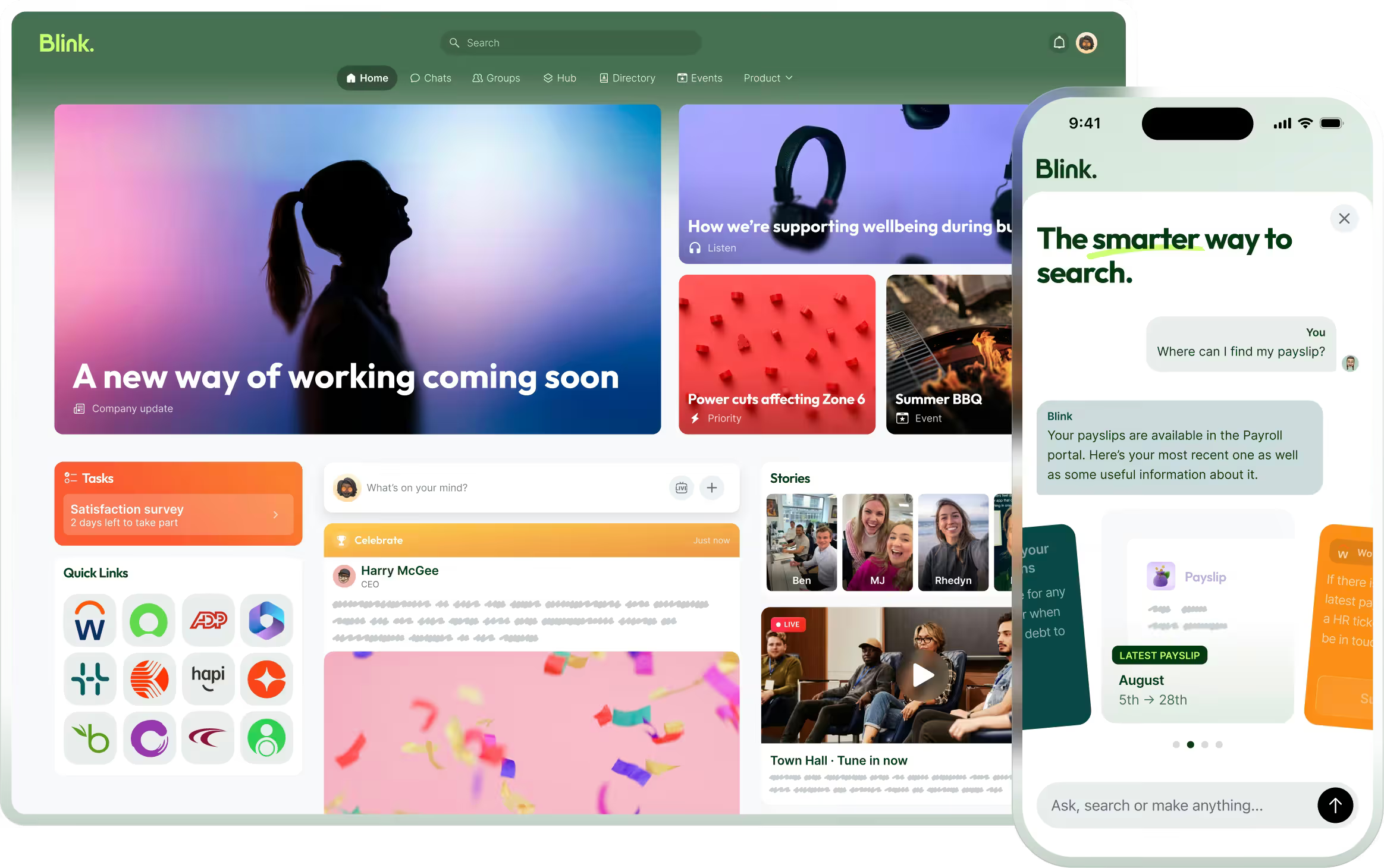
With Blink, everything is accessible from one intuitive dashboard.
Employees can head to the company news feed for company updates, send an instant message to their manager using real-time chat tools, and access the content hub to view policies and FAQs. They can even hop on a video or voice call when text communication just won’t cut it.
They can do all this without switching platforms and without logging in repeatedly. So teams get a connected, friction-free user experience.
{{mobile-hub="/image"}}
3. It makes information easy to find (and trust)
Features to look for: User-friendly content management tools; strong search functionality
“Is this the latest version?”
If you hear that question a lot, your internal communication platform isn’t doing its job.
When employees have to hunt for information — or second guess whether what they’ve found is accurate — it wastes time and erodes trust. And when people stop trusting your systems? They stop using them.
When choosing a new platform, look for a clearly structured resource library. A place where employees can find all the documents and resources they need to do their jobs well.
To ensure this space is useful and always up-to-date, you should also look for strong search functions, defined content ownership, and user-friendly content management tools.
✅ Blink
Blink’s content hub acts as a single source of truth. It’s built to house policies, handbooks, standard operating procedures, digital forms — all in one structured, searchable place.
With content management tools, it’s easy to keep hub content updated and relevant. And because Blink is a mobile-first platform, employees can access resources on the go, whenever and wherever they need them.
4. It supports two-way communication
Features to look for: An interactive news feed; employee surveys and polls; consumer-grade chat tools; other real-time collaboration tools
Internal communication isn’t a broadcast — or at least, it shouldn’t be.
If a shortlisted platform only allows leadership to push messages out, without letting employees respond, it’s a big red flag. Because two-way employee communication is essential for a strong culture and employee engagement.
The best platforms support top-down, bottom-up, and peer-to-peer communication. They do this with features like surveys, chat tools, a social media-style news feed, and spaces for employee-generated content.
✅ Blink
Blink is built for conversation. Features like news feed comments and emoji reactions invite participation, while audience targeting ensures spaces never get too noisy. You can create an internal creator culture with the help of moderation and content approval tools — and gather employee feedback using polls and surveys.
{{mobile-survey="/image"}}
5. It’s secure without being a headache
Features to look for: End-to-end encryption; automated user management; a streamlined login process
Platform security is non-negotiable — particularly when employees are accessing internal communication tools on their own devices. But it’s all about finding the right balance.
If security makes a platform clunky, slow, or frustrating, employees will stop using it. Worse, they’ll find workarounds — WhatsApp groups, personal email, spaces with zero comms team oversight.
The right internal communication software offers enterprise-grade security without killing usability. That includes end-to-end encryption, clear admin controls, and automated user management.
✅ Blink
Blink is secure by design. IT teams get the controls and compliance they need, while employees get an experience that feels intuitive and enjoyable.
Blink also provides secure digital access to other workplace systems. With deep integrations and single sign-on, employees can access all workplace software — without taking risky shortcuts or resorting to shadow IT.
6. It doesn’t just push messages — it helps build culture
Features to look for: Employee recognition tools;co-worker communities; social media-style content tools
If a platform feels cold, corporate, or transactional, it won’t do much for company culture. Today’s dispersed employees are craving recognition, real stories, and moments of connection.
So the right platform makes space for appreciation and informal moments. It acts as a hub for employee experience and employee engagement. It feels less like a corporate noticeboard and more like the apps your employees already enjoy using away from work.
The best internal communication platforms act as a digital water cooler, bringing people together and creating a sense of belonging.
✅ Blink
Blink makes culture visible. It has all the consumer-grade tools you need to build company culture and improve employee engagement.
Recognition tools weave appreciation into every day. Stories (short-form video reels) capture authentic moments. Communities are a space for employees to connect over shared roles and interests. And the news feed, packed with multi-media content, brings it all together.
{{mobile-stories="/image"}}
7. It proves its value with real data
Features to look for: Analytics tools; data segmentation; user-friendly reports
The right platform gives you data you can act on and it doesn’t distract you with vanity metrics. It lets you track key internal comms metrics like these:
Platform usage rates
Content performance
Employee sentiment
Employee advocacy score
✅ Blink
Blink’s analytics and easy-to-action reports show you what’s working and why. You can segment insights by team or location, identify disengaged teams, and identify your best-performing content.
You also have the data you need to demonstrate comms ROI and find ways to make internal comms an even more effective part of your organization.
The right platform = comms without the chaos
The best internal communication platforms bring clarity and connection, while cutting friction and noise. They make it easier for everyone to do their jobs — and feel part of something bigger.
Use the signs we’ve outlined above to guide your decision. Find a solution that ticks all the boxes, and you’ll see a difference from the moment you launch.
Adoption that comes naturally. Fewer messages missed. Employees who know exactly where to go for information. And internal communications that make a much bigger impact on employee behaviors and organizational goals.
{{mobile-chat="/image"}}

Frequently asked questions
#1. What is the best platform for internal communication?
The best platform for internal communication depends on your needs. Blink is a top choice for frontline and hybrid organizations. It has a mobile-first design and it brings together all the communication channels, resources, and software your team needs — making them accessible via one login and one user-friendly dashboard.
#2. How do you choose an internal communication platform?
When choosing an internal communication platform, you should:
1. Assess your needs and goals. What do you struggle with now? What do you want your new platform to achieve? Which comms best practices do you want to adopt?
2. Get stakeholder input. Talk to the people who’ll be using your platform and the people who’ll be tasked with running it. With their input, prioritize key platform features.
3. Evaluate platforms. View platform features. Look at software reviews and case studies. Request demos.Consider customer service and support, as well as platform capabilities.
4. Choose your platform. Research done, you can choose a platform that fits the needs of your organization, using the seven signs listed above to guide your decision.
#3. What features do the best internal communication platforms have in common?
The best internal communication platforms have a mobile-first design, a user-friendly interface, and consumer-grade security features.
They integrate with the other workplace software you use, and also provide tools for top-down, bottom-up, and peer-to-peer communication, including:
Choosing a new internal communication platform is one of those decisions that feels simple — right up until it isn’t.
Because once it’s live, there’s no quiet rollback. No easy undo. If adoption stalls, messages get missed, or employees revert to workarounds, you’re stuck fixing the fallout — not just the tool.
Most teams start this process for the same reasons: a legacy intranet no one uses, too many disconnected comms tools, and a growing sense that important messages just aren’t landing. You want fewer channels, clearer communication, and a platform employees actually trust.
So how do you tell the difference between software that looks good — and a platform that actually works in the real world?
That’s what this guide is for.
Below are seven signs you’ve found an internal communication platform that won’t create more noise, more work, or more clean-up later — but will quietly become the backbone of how your organization communicates.
{{mobile-main="/image"}}
Signs you’ve found the right internal communication platform
1. It reaches every employee (not just desk workers)
Features to look for: Mobile-first design; a user-friendly mobile employee app; the same features and functionality on both mobile and desktop sites
The best internal comms platforms are mobile-first by design. So what does that mean?
Instead of cramming desktop intranet software onto a small smartphone screen, developers work in reverse. They start by creating an exceptional mobile experience, then scale up.
The result? The same user experience and functionality across all devices. And an internal communication platform that’s accessible to everyone — frontline, remote, hybrid, and office-based teams.
There’s no need for shared logins, VPN gymnastics, or insecure workarounds. You don’t need to maintain different channels of communication for different segments of the workforce.
So keeping everyone on the same page, aligned behind company goals, and connected to each other gets a lot easier.
✅ Blink
At Blink, mobile-first design is a pillar of our approach. From the very beginning, our platform was designed as a mobile internal communication app. Frontline employees weren’t an afterthought — they were the starting point.
2. It brings chat, content, and knowledge together
Features to look for: Real-time messaging tools, a content hub, and a news feed
One of the biggest problems with inherited comms stacks is fragmentation. Chat lives in one tool. Real-time updates in another. Policies are housed somewhere else entirely.
Employees are stuck on a digital scavenger hunt, piecing together information across platforms, tabs, and inboxes. And it’s exhausting.
The right employee experience platform brings everything together. Conversations, company updates, and essential updates all live in one place, as part of a single, coherent experience.
That way, an announcement doesn’t just tell employees what is changing. It links directly to a policy, form, or guide so it’s easy to take action.
✅ Blink
With Blink, everything is accessible from one intuitive dashboard.
Employees can head to the company news feed for company updates, send an instant message to their manager using real-time chat tools, and access the content hub to view policies and FAQs. They can even hop on a video or voice call when text communication just won’t cut it.
They can do all this without switching platforms and without logging in repeatedly. So teams get a connected, friction-free user experience.
{{mobile-hub="/image"}}
3. It makes information easy to find (and trust)
Features to look for: User-friendly content management tools; strong search functionality
“Is this the latest version?”
If you hear that question a lot, your internal communication platform isn’t doing its job.
When employees have to hunt for information — or second guess whether what they’ve found is accurate — it wastes time and erodes trust. And when people stop trusting your systems? They stop using them.
When choosing a new platform, look for a clearly structured resource library. A place where employees can find all the documents and resources they need to do their jobs well.
To ensure this space is useful and always up-to-date, you should also look for strong search functions, defined content ownership, and user-friendly content management tools.
✅ Blink
Blink’s content hub acts as a single source of truth. It’s built to house policies, handbooks, standard operating procedures, digital forms — all in one structured, searchable place.
With content management tools, it’s easy to keep hub content updated and relevant. And because Blink is a mobile-first platform, employees can access resources on the go, whenever and wherever they need them.
4. It supports two-way communication
Features to look for: An interactive news feed; employee surveys and polls; consumer-grade chat tools; other real-time collaboration tools
Internal communication isn’t a broadcast — or at least, it shouldn’t be.
If a shortlisted platform only allows leadership to push messages out, without letting employees respond, it’s a big red flag. Because two-way employee communication is essential for a strong culture and employee engagement.
The best platforms support top-down, bottom-up, and peer-to-peer communication. They do this with features like surveys, chat tools, a social media-style news feed, and spaces for employee-generated content.
✅ Blink
Blink is built for conversation. Features like news feed comments and emoji reactions invite participation, while audience targeting ensures spaces never get too noisy. You can create an internal creator culture with the help of moderation and content approval tools — and gather employee feedback using polls and surveys.
{{mobile-survey="/image"}}
5. It’s secure without being a headache
Features to look for: End-to-end encryption; automated user management; a streamlined login process
Platform security is non-negotiable — particularly when employees are accessing internal communication tools on their own devices. But it’s all about finding the right balance.
If security makes a platform clunky, slow, or frustrating, employees will stop using it. Worse, they’ll find workarounds — WhatsApp groups, personal email, spaces with zero comms team oversight.
The right internal communication software offers enterprise-grade security without killing usability. That includes end-to-end encryption, clear admin controls, and automated user management.
✅ Blink
Blink is secure by design. IT teams get the controls and compliance they need, while employees get an experience that feels intuitive and enjoyable.
Blink also provides secure digital access to other workplace systems. With deep integrations and single sign-on, employees can access all workplace software — without taking risky shortcuts or resorting to shadow IT.
6. It doesn’t just push messages — it helps build culture
Features to look for: Employee recognition tools;co-worker communities; social media-style content tools
If a platform feels cold, corporate, or transactional, it won’t do much for company culture. Today’s dispersed employees are craving recognition, real stories, and moments of connection.
So the right platform makes space for appreciation and informal moments. It acts as a hub for employee experience and employee engagement. It feels less like a corporate noticeboard and more like the apps your employees already enjoy using away from work.
The best internal communication platforms act as a digital water cooler, bringing people together and creating a sense of belonging.
✅ Blink
Blink makes culture visible. It has all the consumer-grade tools you need to build company culture and improve employee engagement.
Recognition tools weave appreciation into every day. Stories (short-form video reels) capture authentic moments. Communities are a space for employees to connect over shared roles and interests. And the news feed, packed with multi-media content, brings it all together.
{{mobile-stories="/image"}}
7. It proves its value with real data
Features to look for: Analytics tools; data segmentation; user-friendly reports
The right platform gives you data you can act on and it doesn’t distract you with vanity metrics. It lets you track key internal comms metrics like these:
Platform usage rates
Content performance
Employee sentiment
Employee advocacy score
✅ Blink
Blink’s analytics and easy-to-action reports show you what’s working and why. You can segment insights by team or location, identify disengaged teams, and identify your best-performing content.
You also have the data you need to demonstrate comms ROI and find ways to make internal comms an even more effective part of your organization.
The right platform = comms without the chaos
The best internal communication platforms bring clarity and connection, while cutting friction and noise. They make it easier for everyone to do their jobs — and feel part of something bigger.
Use the signs we’ve outlined above to guide your decision. Find a solution that ticks all the boxes, and you’ll see a difference from the moment you launch.
Adoption that comes naturally. Fewer messages missed. Employees who know exactly where to go for information. And internal communications that make a much bigger impact on employee behaviors and organizational goals.
{{mobile-chat="/image"}}

Frequently asked questions
#1. What is the best platform for internal communication?
The best platform for internal communication depends on your needs. Blink is a top choice for frontline and hybrid organizations. It has a mobile-first design and it brings together all the communication channels, resources, and software your team needs — making them accessible via one login and one user-friendly dashboard.
#2. How do you choose an internal communication platform?
When choosing an internal communication platform, you should:
1. Assess your needs and goals. What do you struggle with now? What do you want your new platform to achieve? Which comms best practices do you want to adopt?
2. Get stakeholder input. Talk to the people who’ll be using your platform and the people who’ll be tasked with running it. With their input, prioritize key platform features.
3. Evaluate platforms. View platform features. Look at software reviews and case studies. Request demos.Consider customer service and support, as well as platform capabilities.
4. Choose your platform. Research done, you can choose a platform that fits the needs of your organization, using the seven signs listed above to guide your decision.
#3. What features do the best internal communication platforms have in common?
The best internal communication platforms have a mobile-first design, a user-friendly interface, and consumer-grade security features.
They integrate with the other workplace software you use, and also provide tools for top-down, bottom-up, and peer-to-peer communication, including:
If employee turnover is causing problems at your organization, take a look at these strategies for improving engagement and retention.
The Great Resignation may be over. But employee retention is still a challenge, particularly for companies with a large frontline workforce.
Frontline organizations have it hard because reaching frontline employees — who work in various locations across different shift patterns — isn’t easy. Deskless workers can end up feeling disconnected from their organization, which leads to disengagement and churn.
Engaging and retaining frontline talent may be tricky. But it’s well worth the investment. When you reduce employee turnover across your entire organization you boost productivity, morale, and business results.
Here, we look at the primary causes of employee turnover in 2024 — and at 14 strategies that will help you improve employee retention at your organization.
33% of hiring managers in the US believe employee turnover will increase at their company in 2024. And Forrester predicts an employee experience (EX) recession, where reduced spending on employee engagement initiatives leads to increased attrition.
Of course, there will always be some turnover in your organization. However, you do have the power to address many causes of employee turnover within your company. Gallup recently looked at the most common reasons people leave a job. They grouped these reasons into four categories:
Engagement and culture. Employees left because they didn’t feel aligned with the role or company culture. They left because they felt like they didn’t belong or because job expectations were unrealistic.
Wellbeing and work-life balance. Workers left because they struggled to manage their work schedule or balance work with personal responsibilities.
Career growth, pay, and benefits. Workers left in search of better pay and benefits. They also sought a culture where learning, development, and career advancement were the norm.
Managers and leaders. Employees left because they didn’t feel respected or appreciated by leadership. They wanted open communication and to be treated equitably.
As you can see, there’s a lot in there that comes down to organizational culture and internal communication — both of which you can do something about using the strategies below.
How to reduce employee turnover: 14 strategies that work
1. Focus on employee engagement
Employee engagement is linked to improved productivity, reduced absenteeism, and higher staff satisfaction.
Engaged employees are also more loyal to your organization. They’d only consider taking a job with another company if they were offered a 31% pay increase. Disengaged employees would leave for a lot less.
You can improve employee engagement by building a strong workplace culture and by looping all workers into company comms. Many of the strategies on this list support engagement and employee retention, too.
2. Cultivate a positive workplace culture
Research from MIT Sloan Management Review says that a toxic culture is by far the strongest predictor of employee turnover. In fact, it’s ten times more important than compensation in predicting attrition.
So how do you create a non-toxic culture that supports a positive employee experience?
Employees want to be part of a culture that is fair and trusting. A culture where transparency is the norm, stress is kept to a minimum, and workloads are reasonable.
In a positive culture, employees also understand the purpose of their work. They’re familiar with company goals and values — and know how their work fits into the bigger picture.
Internal communications have an important part to play in all this. With the communication channels, leaders and managers can amplify company culture. They can share workplace updates, highlight workplace values, and involve teams in decision-making.
3. Improve your onboarding program
Those first few months of employment are the riskiest in terms of retention. Up to 20% of turnover happens within the first 45 days of employment.
If you’re not sure whether your onboarding program is doing its bit for employee retention, start by surveying existing employees. Find out what they thought of their onboarding experience. Ask if there are any areas for improvement.
Then, use your findings to create an effective onboarding program, providing new hires with the following as standard:
The opportunity to make meaningful social connections
Clear expectations and goals
An understanding of company culture and values
Ongoing support from a mentor or manager
4. Embed training and development in company culture
When employees feel like they’re standing still in their careers, they feel less satisfied in their roles — and find less meaning in them, too. So it’s important to embed progression into your company culture.
When creating training and development plans, try to involve employees in decision-making. 90% of employees say having a say in the skills they learn is an important part of their employee experience.
It’s also important to make training opportunities available to everyone. Many frontline employees say they don’t get the right resources or support to advance their careers. This can leave them feeling disengaged and more likely to look for another job.
Of course, sometimes, there simply aren’t enough rungs on the career ladder for employees to progress within your organization. But if an upward move isn’t possible, there are other options.
Stretch assignments, a lateral move, and cross-training programs all help employees develop new skills and prepare for the next stage of their careers.
Bear in mind that managers benefit from training, too. 70% of the variance in team engagement is determined solely by managers. So team leaders may need training to become more effective coaches and communicators.
5. Make internal communication channels more engaging
If you haven’t already, now’s the time to work on your internal communication. Too often, employees are left out of the loop. Or they’re bombarded with so many messages that they start ignoring them.
We know that employees who get enough information to do their job well are 2.8 times more likely to be engaged. And there are lots of ways to improve workplace communication.
Try to make your internal communications:
Personalized — so employees only receive relevant internal communications
Two-way — so employees can take part in the conversation, posting comments and giving feedback
Real-time — so employees get critical comms quickly
You should then use internal communication metrics to track your performance. By looking at measures like message open rates, response times, and communication tool usage, you get a clearer view of what’s working — and what isn’t.
6. Launch a recognition program
Recognition is another retention strategy that needs to be firmly on your radar.
A recent Gallup and Workhuman report revealed that, by making recognition an important part of company culture, a 10,000-person organization can save up to $16.1 million a year in reduced employee turnover costs.
Recognition reduces employee churn. And the best programs allow managers and peers to provide timely, personalized praise.
It’s worth noting that recognition doesn’t have to come from managers and leaders. And peer-to-peer appreciation has some surprising benefits. 75% of employees say that the act of giving recognition makes them want to stay at their current organization longer.
7. Facilitate informal co-worker connection
Employees who have a work best friend are less likely to leave. That’s because belonging and connection are two key elements of the employee experience.
But co-worker connection doesn’t always happen organically. It’s something that managers and leaders have to facilitate.
In-person activities work well for office-based teams. You can plan social activities, like team-building days and coffee mornings.
You also need to allow enough time in the day for informal chats to take place. Stressed, overworked employees are unlikely to spend much time catching up at the water cooler.
When employees are working away from the office, either at home or on the frontlines of your organization, you need an alternative solution. That solution tends to be tech-based.
Using an employee app or a mobile employee intranet you can:
Encourage employees to set up interest groups to find like-minded co-workers and plan social activities
Get managers to use tech tools too, encouraging connection and promoting employee posts
8. Champion flexibility
In workplaces without flexibility, employees are more likely to feel undervalued and unable to express their opinions. But when employees are highly satisfied with work flexibility, they’re 384% more likely to stay for a year or more at their current employer.
Supporting flexibility and work-life balance looks different for different organizations. But don’t rule it out for frontline employees.
Communicating shifts in advance. Incentivizing less appealing shifts. Co-worker shift-swapping tools. There are ways to make flexibility work for everyone.
Neiman Marcus Group, a luxury retailer, has done just that. The firm offered its sales associates flexibility over which store and department they worked in — and over the days and hours they worked. The result? An impressive 20% reduction in turnover.
9. Keep an eye on compensation and benefits
We’re going through a period of inflation. So compensation and benefits packages are on the rise. You need to keep an eye on competitor packages to ensure you don’t lose employees to higher offers.
But, as we’ve already touched upon, salary isn’t the only thing that keeps an employee working for your organization.
A sense of purpose, connection, and work-life balance can be just as important. So if you aren’t in a position to raise salaries right now, consider whether there are any other levers you can pull.
10. Make it fair for the frontline
When an employee feels unfairly treated, they’re much more likely to leave. So it’s crucial that leaders, particularly those responsible for a large frontline workforce, make the employee experience equitable.
We also know that deskless employees are less trusting, less engaged, and more likely to experience burnout than their desk-based peers. So frontline and remote working organizations need to ensure that their employee retention strategies apply to all employees.
Employee engagement initiatives, workplace connection, flexibility, training, and development. Make these things available to everyone if you want to make a real difference to your turnover stats.
11. Invest in health and wellness
Deloitte research shows that Gen Z workers don’t feel they’re getting the mental health support they need in the workplace. And 86% of employees would leave a job if it didn’t support their wellbeing.
Health and wellness initiatives are no longer a nice-to-have. For many employees, they’re an essential part of company culture and something they look for when deciding which company to work for.
There’s debate over the value of some popular workplace wellness programs. But we know that companies with honest feedback, open communication, and mutual respect have higher levels of employee emotional wellbeing than those without. Corporate volunteer days have a positive impact on worker wellbeing, too.
12. Encourage collaboration
Effective teamwork helps to create a positive working environment. Co-workers share knowledge and resources. They support one another. And everyone pulls in the same direction.
Better workplace diversity makes people feel like they belong and reduces employee turnover.
But to make a success of your DE&I efforts, you need to embed this ethos into your company culture. That may mean changing how you manage recruitment, onboarding, and employee advancement opportunities.
14. Get to grips with retention and engagement data
Any good strategy relies on metrics. You need data that shows where you started, where you’re at now, and how you can continue to improve.
So use an employee intranet or app to gather the employee retention and employee engagement data you need. Then, dive deep into that data to discover insights.
By analyzing the data alongside employee feedback, you’ll find data-driven ways to improve employee retention at your organization.
Using an employee app to improve employee retention
Employee retention is about improving employee engagement, internal communications, and company culture. The right tech makes it much easier to do all three.
With a mobile-first employee app, like Blink, you can reach employees via their smartphones. You can share company news, highlight company values, and involve everyone in company comms.
Blink is an easy-to-use tool that connects every employee, whether they’re sitting behind a desk or working on the frontlines of your organization. It provides all the following features.
Two-way communication
Leaders can share updates and critical comms. Employees can post and comment. So everyone gets to take part in the company conversation.
Recognition
Blink’s recognition features make it easy for managers and co-workers to celebrate great work. So you make appreciation an integral part of company culture.
Surveys and polls
Quick pulse surveys. Annual feedback. Employee engagement polls. Managers find it easy to seek employee opinions, helping workers to feel listened to and valued.
Mobile access
Our employee app is available on mobile and desktop devices. So every employee is included in company culture and comms.
Content hub
Employees can access all employee apps and resources from the same central hub. So they enjoy a friction-free digital experience.
Analytics
Use Blink analytics to track which of your employee retention strategies is having the biggest impact — and find areas ripe for improvement.
Jeff takes concepts and turns them into reality. He always has a can-do attitude and follows through until the job is done!
Coach USA uses telematics technology solutions to increase the safety and efficiency of its operations. This includes AI dash cams which help to proactively monitor speed, following distance, and distracted driving, to elevate safety standards.
Jeff is part of the small but impressive team that harnesses such technologies and makes them work for our business and drivers.
What does he want to do next?
Continue to be challenged — he can do anything he puts his mind to!
Nominated by: Dominic Manuele, VP of Maintenance and Engineering
For business leaders, having a strong team is essential for the success of their organization, especially if your teams are dispersed, deskless or remote. But how can you ensure that your team is performing at their best, wherever and however they work? How can you truly improve teamwork in the modern workplace?
The truth is, there’s no one-size-fits-all approach when it comes to how to improve teamwork in the workplace. The best thing you can do is experiment with many different methods until you figure out what works for your workers’ needs. That’s why we created a list of strategies for you to choose from.
So, how can you improve workplace teamwork?
This post covers 22 creative ideas to consider, plus discusses the differences in improving teamwork for frontline teams.
How does improving teamwork differ for frontline vs desk-based teams?
It's important to acknowledge that there are key differences in ways of improving teamwork depending on whether your team is desk-based or on the frontline.
With desk-based teams, developing better teamwork skills might involve setting clear goals, implementing agile project management techniques, and creating an inclusive work culture. You’re likely going to be able to have regular and easy face-to-face meetings to keep team members engaged and up to date on team projects. Your tactics for improving teamwork, therefore, become a little more straightforward and almost naturally occur.
Frontline employees, on the other hand, require a bit more attention and thought. Frontline workers aren’t going to be sitting at their screens all day, and they may not meet in a central location like an office. This is why you may need to implement specific teamwork tactics for this group of employees.
For example, you might focus on workflow optimization and really driving efficient two-way communication between teams and leaders in order to compensate for the lack of a central location and “office chit-chat.” Tightening your comms between the frontline and desk-based teams ensures everyone is on the same page and working towards a common goal.
Whether you’re managing a frontline or desk-based team, what really matters is that you listen to the direct needs of your workers. What does their day-to-day life at work look like? How can you provide your teams with the right tools to succeed as a team, wherever they may be working from? The creative ideas outlined in this guide should help you brainstorm some out-of-the-box solutions for improving teamwork in your workplace.
What are the first steps leaders can take to improve teamwork?
Using the innovative tips we've outlined for you below, you can inform your regional managers, team leaders, and line managers, so they can start implementing these ideas with their respective teams. But before jumping straight into the fun, get-your-hands-dirty type of team building, it's important for leadership to lay down some groundwork.
Here are our first steps for business leaders looking to improve teamwork in their workplace:
Clearly define team goals, roles, and responsibilities
Communicate openly and frequently
Foster a culture of accountability and support
Find the right employee app to support your workforce.
21 innovative ideas to improve team performance
1. Involve team leaders in corporate communication
Leadership is a crucial driver of teamwork. For teams to work effectively, objectives need to be clearly defined. Competing projects and responsibilities pull most team members in different directions (see the corporate communications strategy tool).
For example, leaders in the manufacturing industry can often be stationed on the factory floor, where they may not have easy access to company-wide communications. This can lead to a disconnect between their team and overarching company goals.
It’s up to leaders to set the bigger picture so they can set priorities. Ensure leadership is involved in internal comms planning so employees at all levels across multiple teams can understand the overarching company goal towards which they’re working. If all team members understand their place in the bigger picture, it will help motivate and align their efforts towards a common goal.
2. Create teamwork recognition programs
Rewarding successful collaboration creates an incentive for people to do so more frequently. Collaboration is significant for deskless and frontline employees who might not feel like part of the team.
Find ways to publicly acknowledge the hard work of effective teams, whether by giving them an award in front of their peers or by sharing their wins in a writeup. Teams who win together will continue to work well together.
Teamwork recognition programs will be especially important for frontline or remote teams, as they may not receive that natural praise that occurs in an in-person or office setting unless it is directly communicated with them.
In fact, employee engagement statistics show that nearly 4 in 10 (37%) frontline workers don’t feel as valued as their desk-based colleagues. One solution to this is to provide an employee app with a recognition feature, such as Blink’s Recognition.
By providing direct tools that enhance recognition or Kudos between team members, leaders can increase collaboration, job satisfaction and more natural engagement.
3. Clarify ownership early on
Teamwork is challenging when people aren’t sure what their roles are. Ambiguity can lead to resentment, arguments, or even delayed projects. So, clearly document the scope of each role from the get-go. And make sure that documentation is accessible to everyone, so that when questions arise, they’re easy to answer.
For example, Blink users can store this information in the Hub. This allows workers that are frequently on the go to have easy access to job responsibilities and sets the tone for role ownership.
4. Make communication a two-way street
Teamwork only works when team members feel like they can speak openly, share ideas without getting shot down (and build on those of others), make suggestions, and voice their opinions.
Make sure communication isn’t just flowing downward, but also upward and between team members. Multi-way communication is the goal. A communication tool that allows employees to engage in two way conversations with each other and with management is a great way to facilitate this.
Outlining clear roles isn’t enough to keep teams operating smoothly. The next step is figuring out who is responsible for what work (on what timelines). Get the team together to outline skill-sets and create project workflows and deadline charts. Oh, and make sure everyone's present when the discussion happens. That way, team members can call out unrealistic expectations of them.
6. Have a clear organizational purpose
Every member of a team should be clear on what the long-term goals of the company are. This ensures the team projects are purpose-driven and valuable, have clearly defined and measurable objectives, and that everyone on the team moves in the same direction.
Having a purpose-driven team impacts engagement levels, productivity, and innovation. When team members have a clear understanding of why they’re doing what they do, they are more likely to feel motivated and inspired to work towards that purpose.
If your company doesn’t have a clearly defined purpose or mission statement, now is the time to create one. This initiative can be guided through brainstorming sessions or employee surveys, and can be stored in an easy-to-access, mobile Hub for on-the-go guidance.
7. Set clear team goals
When you're talking about improving teamwork in the workplace, the importance of clearly defined objectives can't be overstated. Teamwork is basically impossible in an environment where no one is sure what the team is working toward. You need to be sure that everyone on every team is on the same page.
To help with this, you can establish team processes that guide behavior and decision making towards meeting your goals. Whether that means letting other project members know the status of your work, or always speaking up if you see a problem that could affect the team’s success, setting clear expectations helps team members work better together.
An employee app like Blink can keep each team member on the same page and working towards the same goal with secure direct chats, the Blink feed for key updates and a central hub for storing policies, procedures, and guides in one convenient place.
8. Identify communication problems
Doing an internal comms assessment may seem like a strange way to bolster teamwork, but remember that effective collaboration can’t happen without effective communication. Addressing communications pain points and sources of strife (e.g., failure to meet deadlines, unresponsiveness, and interpersonal issues) in your organization proactively will make it easier for all of your employees to collaborate in the future.
To better identify and understand communication problems arising in your teams, particularly on the frontline, you need a way to measure them.
With Blink's Frontline Intelligence feature, you can track powerful engagement analytics to offer insight into the people and relationships that make your organization tick. By understanding who engages with what, and what your teams aren't engaging with, you have the opportunity to spot any potential communication pain points and address them before they become a larger issue
9. Stop micro-managing
Teams should feel like standalone units even as they contribute to your larger organizational goals. If you don't give your teams some degree of autonomy, they won't work as a collective because they'll always be waiting for management to issue orders from on high. As much as possible, let teams set their deadlines, develop their workflows, and work out their issues.
10. Talk less, listen more
There will always be give and take on teams, but the giving and the taking eventually has to balance out, or resentment will build up, and work will slow down. Ensure your company culture rewards listeners as much as speakers and sets a good example by being a listener yourself.
You can also give those whose ideas and opinions would ordinarily be drowned out a voice by encouraging people to share outside of team meetings (on an employee engagement app like Blink, during open-door hours, etc.).
Encouraging a culture of listening will not only have a positive impact on teamwork but on the workplace in general as it will make employees feel valued and increase engagement between team members.
When team members feel heard and their opinions valued, they’re more likely to contribute and collaborate effectively. So next time you’re in a meeting or brainstorming session, remember the age-old adage: it’s better to listen than to speak. Your team will thank you for it.
11. Let teams use multiple methods of communication
Different employees communicate in different ways. Some, as noted above, will dominate a meeting. Others prefer to speak one-on-one while others feel most comfortable in a chat room or texts.
Deskless and frontline employees may be most efficient when using an employee app or similar communication tool. In any case, letting teams use whatever forms of communication and communication tools they prefer is another way to ensure that everyone can have their say.
One way to facilitate this is to provide your workforce with a mobile and desktop employee communication app, like Blink, that allows for various forms of communication and feedback within one easy-to-access, flexible platform.
12. Mediate disputes
Some companies approach conflict resolution with a wait-and-see approach, but that doesn't work very well for team members' disputes. Because these disputes can quickly grow into serious issues that interfere with projects, it's necessary for team members to address them proactively. Ensure interpersonal conflicts are written and bring in mediators as required to work through issues between colleagues.
13. Allow flex work
Introverts, early risers, night owls, and caregivers can all be valuable team members, so don’t ignore them when you’re considering how to improve teamwork in the workplace.
Offering employees flex work options like telecommuting and quiet workspaces ensures that your entire workforce can be as productive as possible and take advantage of opportunities to work collaboratively.
Flex work can also have a positive impact on overall employee satisfaction and mental health by improving work life balance and decreasing stress levels.
So consider offering flex work options, along with the right employee engagement tools to keep your team engaged, and see how it improves teamwork in your organization.
14. Use better collaboration tools
Integrated tools like Blink encourage effective teamwork because they put all of the resources employees need to collaborate in one place. There are information management tools, agile project management tools, sharing tools, scheduling tools, team project and task management tools, and admin tools in one place, so teams don’t have to waste a lot of time switching between platforms.
If you are working with a remote team, you may also want to consider adopting a cloud-based desktop virtualization solution such as V2 Cloud, which provides complete access to a full Windows desktop from anywhere, with any device. It’s crucial to have the right infrastructure when working with a hybrid policy to boost better collaboration and productivity.
This enables distributed teams to accordingly give members access to a multi-user Windows operating system with Microsoft Office, Quickbooks cloud hosting and all business applications that employees and consultants require.
15. Ask team members for feedback
Knowledge is power, so if you want to know where your workforce is when it comes to teamwork, why not just ask them? Soliciting feedback doesn’t have to be complicated or time-consuming.
Open and honest feedback is a vital cog in the teamwork wheel, especially for frontline workers. If team members feel they have a safe space to share their thoughts and concerns, even when they're out of the office loop, they’ll likely be more engaged and willing to contribute their ideas in future. This can help to guide future team-building processes and be part of your employee engagement strategy.
Blink offers surveys within the employee app so that all employees have the opportunity to provide feedback - or do short interviews with team members to see how projects are coming along.
16. Hire wisely
It’s so tempting to fill positions with candidates who have the top qualifications but don’t discount the importance of an applicant’s personality. When you know that a new hire will be working as a part of a team, consider involving that team in the hiring process.
You may know what kind of skills and experience a hire should have, but they will have more insight into how well potential hires will or won’t fit in with existing team members.
17. Start a culture committee
Did your company’s culture develop intentionally? Probably not. Suppose your company culture grew more or less organically and isn’t really supporting teamwork initiatives. In that case, you can create a culture committee to retool your company culture so that it supports collaboration, openness, and other values you deem necessary.
18. Create a mentor program
Team members will work together more effectively when they feel connected. Creating a mentor program that pairs new team members with company veterans promotes cohesiveness and smoother collaboration.And for deskless workers, the benefits of a mentor program reach wider than just your employees.
Studies show that providing coaching and mentoring for frontline practitioners can have a positive mediating impact on outcomes for the children, young people, families and communities who use these services.
19. Meet in different locations
You can cut down on the number of meetings teams have to attend by doing more of your communication in an employee app like Blink, but that doesn't mean you'll never need to have another meeting. When you have to meet, hold meetings in new locations in the office or local cafes or other public spaces. Talking outside of the office can increase productivity, inspire communication, and make team members more creative. Just make sure you’re aware of the risks associated with using public wifi and take appropriate measures to protect yourself from cyberattacks.
20. Create team traditions
When teams have their traditions, and inside jokes, they'll naturally feel a sense of unity. That solidarity will positively impact the work they do, whether in the office or out. Encourage teams to eat lunch or take a coffee break together, or hold a team vs. team board game or video game competition.
This can help to build teamwork skills in a lighthearted and relaxed environment, promoting team collaboration.
21. Mix it up
Teams that have been working together for a long time work better together and may be more productive because of the trust and familiarity that has built up over time. Newly-formed teams, on the other hand, are typically better at coming up with new ideas and making big leaps. Don’t be afraid to shift people around or to form new teams.
You can’t force teamwork. Collaboration is something that happens naturally when conditions are right. Implementing some or all of the ideas above can set the stage for smoother teamwork at your company—resulting in higher productivity (and more profit).
How can the right employee engagement app improve teamwork in the workplace?
As mentioned above, using an employee engagement app can cut down on the number of meetings teams have to attend, allowing them to spend more time actually collaborating and working on projects.
Additionally, having a central place for all company announcements and updates can improve communication between desk-based teams and frontline workers—who make up a whopping 80% of the global workforce.
By facilitating and driving engagement, the best app for business teamwork will enable teams to work together effectively, improve the employee digital experience and help them stay on top of their day-to-day tasks, goals, and communications. By making teamwork easier and more efficient, an employee engagement app can ultimately result in improved productivity and stronger team collaboration, particularly for frontline teams.
Plus with key employee engagement data, analytics and insights available through the Blink platform, your leadership team can always stay on top of who's engaging with what to streamline the employee experience and encourage teamwork.
Why does teamwork in the workplace matter?
Collaboration is the backbone of business success. In fact, the strengths and dynamics of your team directly affect your business outcomes.
In the modern knowledge economy, productivity often involves working with people from different backgrounds, skill sets, and industries. One mind alone cannot generate solutions to the kinds of large-scale problems companies have to overcome to succeed.
The most successful companies think regularly about how to improve teamwork in the workplace because they know they’ll see a return on their investment. They actively work to create the kinds of conditions that promote collaboration.
Here’s the ROI these organizations see:
Boosted employee engagement
Worker engagement distinctly increases when employees can regularly work together in teams and collaborate. The ADP Research Institute surveyed over 19,000 workers and found that feeling part of a team is a massive factor in employee engagement: those employees who felt like members of a team were more than twice as likely to be fully engaged.
In addition, research by McKinsey shows us that the most engaged workers are those who work in teams. They are twice as likely to be fully engaged as people who work on their own.
Collaboration breeds innovation
When teams work together smoothly, they harness the power of diversity and can come up with ideas an individual might struggle to come up with alone. Alexia Cambon, Director of Research at Gartner, says:
“Our research shows that teams of knowledge workers who collaborate intentionally are nearly three times more likely to achieve high team innovation than teams that do not use an intentional approach.”
As such, it’s important to make sure teams have the right tools and processes in place to collaborate effectively. This might include a live, collaborative Feed for easy access to live updates project materials, a team chat tool for quick communication, and regular check-ins to ensure everyone is on the same page.
Teamwork is faster
Teams that work together also tend to work faster because they can draw upon a wider range of opinions, skills, and experiences, whether they’re making decisions or putting together plans.
Divide difficult tasks into simpler ones, then collaborate to complete them faster
Develop specialized skills, so that the best person for each task can do it better and faster.
So encourage teamwork in your organization and watch productivity soar. Not only will speed increase, but it will maximize your efficiency and give your team the opportunity to learn and grow.
Simply put, more brains = more productivity
When an entire team is working on a project, that project will move from the design phase into the implementation phase more quickly, and more efficiently –– even with fewer resources.
Teamwork leads to learning opportunities
Working collaboratively gives all team members an opportunity to learn others’ experiences. They gain insight from fresh perspectives and learn new ways of doing things. This can lead to greater job satisfaction, as well as improved morale and productivity over time.
In addition, team projects can serve as valuable development opportunities for individuals’ skills and experience, helping them grow in their careers, and even develop higher levels of loyalty to your business.
“By sharing information and essentially cross training each other, each individual member of the team can flourish,” reports Atlassian.
Collaboration builds confidence
People who work on effective, supportive teams feel valued and appreciated because they know they have something special to offer the team. And as we’ve discussed many times in the past, employees — especially introverted employees — who feel valued are more engaged.
Of course, it’s important to clarify that questions about how to improve teamwork in the workplace aren’t just being asked by employers. Surveys show that most employees consider teamwork very important, even if they’re not sure how to improve collaboration in their workplaces.
In addition, a person who feels valued as part of a team will feel more confident and willing to share their ideas and take calculated risks. Should they stumble, they know they have a team there to lift them back up.
Final Thoughts
Ultimately, fostering a culture of teamwork takes effort, but it’s worth it for improved productivity and satisfaction in the workplace.
By implementing some of these ideas and using an employee engagement app like Blink, your employees will feel more connected, communication will improve, and your team’s collaboration will thrive. Happy teamwork!
Blink’s employee app makes working in teams a breeze.
For this week’s Life at Blink, we’re excited to shine the spotlight on Joe Whitney! As a Senior Sales Development Representative, Joe has been an integral part of the team for the past year. Starting out as an SDR, Joe’s dedication and growth have made a real impact at Blink. Join us as we explore Joe’s journey, his role in shaping our sales efforts, and what he believes makes Blink a special place to work.
How long have you been at Blink?
I’m coming up on two years — in about five days, it'll be my Blinkiversary. There is a lot going on so it’s gone by really quickly.. Looking back, it feels like these two years have flown by. So many other things outside of Blink seem to have moved a bit slower. But life moves fast, and the older you get, the quicker it seems to go.
What initially attracted you to join Blink?
I have kind of a funny story — well, not exactly funny, but it's the story of how I got to Blink.
For the eleven years before I joined Blink, I was a professional hockey player. I played four years at Boston College, and after college, I signed with the New Jersey Devils to play professional hockey. It was an amazing 11- year journey.
It took me to a lot of different places — I lived in San Antonio, Texas; Tucson, Arizona; Hartford, Connecticut; Hershey, Pennsylvania; New Jersey; and then over to Sweden and Germany. My family and I lived there for two years each. It was a great experience, and I learned a lot of valuable life lessons from seeing different cultures and parts of the world. I think it made me more well-rounded, and I’ve been able to bring some of those experiences into my work at Blink and in sales.
It was funny because when we started having kids, my wife and I never imagined we’d be taking two kids to live in Germany or Sweden for two years. But I wanted to continue my career, so we made the move. We packed all our bags and flew to Sweden. I played in a city called Linköping, and as soon as we landed, it felt like our new home, and the people were incredibly kind. It was a great culture to live in and be a part of, and I thoroughly enjoyed it.
When my contract expired, we moved to Germany to a small city calledIserlohn, about two hours from Amsterdam. The lifestyle there was very different from Sweden. It was more like North America. The town was small and quiet, but it was a great experience. I learned a lot about German culture and the people. And of course, they love their beer, which was a lot of fun!
When that career ended, it was a bit of a “holy smokes, what do I do next?” moment.
At first, I wasn’t sure if I could do it, since I didn’t have any prior experience. But after reassurance from mentors, friends, and family, encouraging me that many of the same skills in athletics can be applied to sales as well was when I decided to dive in. It was important for me to start as an SDR and work my way up.
What's a project you are proud of from your time at Blink?
The thing I’m probably most proud of at Blink is how, despite being a smaller company with a lot of changes and pivots, especially within the SDR team, we’ve been able to build something meaningful.
When I joined in October 2022, our new CRO, Jim McInerny, had just been hired, and we were preparing to go to market in the US. One of the main reasons I came to Blink was to have an impact on the culture and a smaller team. What I'm most proud of is helping to build the culture within the sales development program.
I'm really proud of the fact that after two years, we’re starting to gain traction, building out the program, and seeing the progress we are making as a company. It’s been a journey, but it’s exciting to see how far we have come.
How would you describe the company culture at Blink in three words?
Innovative, creative, tight-knit team.
There are so many different ways to describe it, which makes it tough to choose just three words. I think the culture is very open and transparent, and we have a lot of great people working together towards one mission. That’s what makes it so fun to be part of the team.
Coming from an athletic background, I'm all about teamwork, and it feels great to be in a company where the mindset is very team-oriented. There aren’t any selfish people in our organization, and that makes it incredibly enjoyable to work with everyone.
What's one thing you're excited about for the future of Blink?
I feel like we’re at a point now where we truly control our own destiny. The sky’s the limit for us, and I believe that everyone on the team is fully bought into the company’s mission. The opportunities we have and the market we're tackling are so big and global that we have the potential to change the lives of so many people in different parts of the world. This could have a huge impact on how people approach their work and how they feel about going to work.
I'm really excited about the opportunities ahead of us as a company to transform the way people work and make this as big as possible.
Can you tell us about a recent initiative or program launched at Blink that you found particularly exciting?
Yeah, I think, obviously in sales, day to day, you’re calling people, trying to explain our approach to the employee experience, and inspiring them to see things differently. But I wouldn’t call that a specific project; it’s more like an ongoing journey in sales.
What really inspired me was some of the work we did with some of our biggest customers, particularly on the product side. They’ve done some really cool things within a work app that feels more like a social app we use in our everyday lives. The product features and the vision our product team has for making this next generation of apps so modern is really exciting to see.
Why do you work for Blink?
In general, when I first started, I wasn’t really sure what to expect. There are a million different jobs out there, and a lot of people work on cool things. But I’ve really found a sense of pride in our company’s mission and the vision of where we want to go.
There are so many essential workers around the world who, like us, are trying to take care of their families, make a living, and provide the best opportunities for their loved ones. Many of the people we serve are blue-collar workers who take immense pride in what they do. We often talk about how they’ve been underinvested in and don’t have the same resources as other types of workers.
Serving this part of the workforce is something I’m really proud of. I have a lot of friends and family members who are blue-collar workers on the frontlines, and it took me a little while to realize there was such a gap in support for them. Being at Blink and seeing it firsthand through our customers was eye-opening and helped me fully embrace our mission of serving essential frontline employees. Ultimately, these workers make the world go round.
Providing a better digital employee experience for these essential works and making it much easier to access all the tools they need to do their jobs productively is incredible. It feels like a lifelong mission.
Mass walkouts make headlines. It would not be surprising if 2024 saw an increase in these headlines - particularly in sectors such as healthcare. The recent strike that saw 75,000 Kaiser healthcare workers walk off the job is reflective of the deep level of disengagement among frontline healthcare professionals in general. Unless healthcare leaders can spot rising levels of disengagement, understand what causes it, and take proactive steps to prevent it within their organizations, these worrying trends will continue to persist.
Unfortunately, despite significant and somewhat effective efforts by HR leaders to recognize and reward frontline workers for their contributions, the healthcare industry is struggling to bridge the gap between organizational initiatives and frontline satisfaction. Benefits programs, loyalty initiatives, listening surveys, and wellbeing apps have failed to move the needle, mainly because these initiatives simply don’t always reach those needing them. Technologies such as e-learning and team scheduling platforms, messaging, and collaboration tools - designed to engage employees and encourage a more connected and cohesive organizational culture - have not had the desired impact on frontline staff.
Mismatch Between Technology and Reality
The problem is that while the pace of digital transformation in the enterprise space has been undeniable, the technologies most healthcare organizations purchase today are designed for desk-based workers who are permanently online and have ready access to IT support and/or relevant training resources; or are another add on to an existing legacy system.
The modern enterprise tech ecosystem is incompatible with the reality of frontline work – where mobile ease of use and accessibility are pivotal to driving impact. These tools simply don’t work effectively when rolled out to hospital staff who are time-constrained, constantly on their feet, and rarely anywhere near a desktop computer, especially for anything nonclinical.
A survey of more than 500 US healthcare workers reveals that 37% say technology frustrates them. This lack of positivity around technology creates inequality of opportunity and influence within the workplace, as healthcare workers often don’t enjoy the same sense of value and belonging as their office-based peers, nor do they have the same opportunities for career advancement.
READ MORE: Achieving Employee Techquity: Our guide on why successful digital inclusion in healthcare starts in your teams.
Purpose-built Technology for Delivering Exceptional Care
Healthcare workers aren’t averse to using technology. As consumers, their digital world is immediate and enriching, driven by intuitive smartphone apps, instant notifications, and a sense of always having the tools they need at their fingertips. Yet in their jobs, the current digital experience can be slow and disjointed.
To close the digital divide, organizations must deploy technologies specifically designed with the on-the-go frontline healthcare experience in mind. For example, offering single sign-on (SSO), mobile-enabled access to all applications will greatly improve accessibility. Building a hub can make it easy for all workers to access important information and other systems. Simple mobile forms can replace paper trails, help workers improve efficiency, and eradicate convoluted processes so that workers do not waste time on administrative tasks.
Elara Caring, one of the largest US-based providers of personal care, home health, and hospice care, successfully addressed these challenges after experiencing a 65% annual staff turnover rate due to low morale and lack of peer-to-peer connection. The company decided to deploy Blink, the frontline employee super-app, which has transformed its operational landscape and solved its million-dollar challenge.
Elara, using Blink, streamlined onboarding, enhanced communication efficiency, and created a sense of community among employees, some of whom were never connected to the organization. By leveraging capabilities like SSO and automating daily tasks, Elara centralized operations and increased its productivity. Additionally, they facilitated seamless communication and peer-to-peer networking, fostering a culture of recognition and empowerment within Elara's workforce.
By leveraging Blink's multifaceted capabilities, Elara not only mitigated its turnover challenge but also established a more cohesive, efficient, and connected workforce, reinforcing its commitment to employee well-being and organizational success. And, now that Elara has been able to connect to this large employee constituency successfully, they are innovating on exciting new opportunities for improving these workers’ work-life and their patients’ experience.
Importance of Organizational Culture Shift
Creating a digitally inclusive environment for frontline workers goes beyond technology adoption. It requires a cultural shift within organizations – one that values and actively supports the digital empowerment of every employee, regardless of role. People and HR leaders must champion digital inclusion as a strategic priority, ensuring that frontline workers are not just recipients of technology but active participants in the digital transformation journey.
Organizations can foster this culture by promoting digital literacy programs, encouraging peer-to-peer learning, and recognizing the unique contributions of frontline workers. Understanding the specific pain points of these employees leads to more effective and user-friendly solutions and an increase in technology adoption.
Essentially, closing the digital gap for frontline healthcare workers isn't just about technological advancements, it's about ensuring exceptional healthcare and workplace equity. By investing in the right tools, training, and culture initiatives, healthcare organizations can enable and empower their frontline workforce to better thrive in the digital age.
Working remotely hasn’t stopped Jessica from immersing herself in Blink’s vibrant culture. As a solution consultant for our US enterprise accounts, she’s been making waves since joining over two years ago. Whether visiting our Boston or London offices — or collaborating from her home in Pennsylvania — Jessica loves Blink’s agile, innovative, and positive environment.
Which Blink office do you work out of?
I'm one of the few fully remote employees, but I’ve still managed to visit both offices. I go to Boston more often — probably three or four times so far — and I’ve been to London twice. I’m based in Pennsylvania, roughly in the middle between Philadelphia and New York City.
I lived in New York City for ten years, but now I have three young kids, so we needed more space. Right now, for example, it's snowing outside and there are deer in my front yard — quite a change from the city!
What's your position at Blink?
I'm a solution consultant for enterprise accounts in the US.
How long have you been at Blink?
Just over 2 years now.
What initially attracted you to join Blink?
What drew me to Blink was partly the people I knew here — people I really respected. I thought if they were at this place called Blink, then I should be here, too. On top of that, Blink’s overall mission resonated with me. I’ve been selling software for a long time, usually to IT departments, and I never really saw the broader impact beyond making some people more productive.
But hearing how Blink improves the lives of frontline workers, who often receive little support — especially after everything that happened with COVID — made me realize how crucial they are. Unfortunately, many companies aren’t investing much in improving their experience, and that’s what we’re aiming to change: enhancing their work lives.
What's a project you are proud of from your time at Blink?
I have to say, there’s a major deal I worked on (which we haven’t announced yet) that was incredibly exciting from start to finish. I felt like we were entering the next phase of Blink. Just the fact that this huge company even considered us — and ultimately chose us — was amazing.
I loved seeing the teamwork and effort everyone poured in. At some point, every single team played a role — marketing, product, implementation, sales, pre-sales, legal, and more. So many people came together, and it was really fun to witness. It took about six months, with hundreds of meetings and around 20 demos — truly unbelievable.
How would you describe the company culture at Blink in 3 words?
I would say it's fast-paced, super-positive — which you don't see everywhere — and agile.
I chose “super-positive” because everyone is always open and happy. You never join a meeting — whether it’s an internal call or a customer call — without seeing smiles on people’s faces. Even though everyone’s busy, they’re still great to talk to and easy to connect with.
People here are also eager to help, and I think our customers pick up on that. They know we’re not just going to deliver reliable work — we’re going to brighten their workday, too. That positivity really carries over into our relationships with them.
What's one thing you're excited about for the future of Blink?
I'm excited to see how quickly we're growing in the US and how we'll continue to expand. I’m also really thrilled about what we've already accomplished and what we’re planning to do in retail and hospitality.
When I first joined Blink, we only had a handful of customers in that sector — some of them quite small. Now, seeing what we've achieved, what we're currently doing, and what we have planned for the future is incredibly exciting, especially in that space.
We've done amazing work in transit and healthcare so far, but retail and hospitality brands are more widely recognizable. I feel like this will bring greater awareness to all the good Blink is doing, and more people will hear about it simply because they can relate more to these public-facing companies.
Can you tell us about a recent initiative or program launch at Blink that you found particularly exciting?
Our internal 12 days of Blinkmas gifts campaign was amazing — I’ve never seen another company do anything like it! The gifts were great, and I loved how excited everyone was to participate. I looked forward to it every morning, eager to see who won the previous day’s gift and what the newest gift was. It really made the lead-up to the holidays special.
I actually ended up winning a really cool prize: a donation to a charity of my choice. I chose a local charity that helps families in Bucks County, where I live in Pennsylvania.
Why do you work for Blink?
I love the people here — my daily team, my manager, and the fact that I can easily reach out to anyone in another department when I need something. I always know exactly who to contact, and they typically respond quickly, no matter the time of day. It’s a refreshing change from bigger companies, where requests can just vanish. At Blink, everything gets done efficiently.
I also work here because our product is amazing. I’m in it day in and day out, and it’s so fun to envision solutions for our customers — our product is incredibly straightforward to use. I’m impressed by how fast we roll out new features and develop enhancements, whether it’s based on our own plans or customer feedback. I’ve never been at a company that does it so quickly and so well. We work together to figure out what’s best for the next phase of Blink, always keeping our customers’ needs at the center.