
Build vs. buy: Choosing the right internal communications platform
Building an internal comms platform is costly and complex — buying offers a faster, more scalable solution. Discover why an off-the-shelf tool is the smarter choice.
Why off-the-shelf internal comms tools win every time
Your internal communications tool isn’t working.
Employees miss important updates. Frontline workers feel disconnected. Your IT team is stretched thin, and now you’re faced with a big decision: Build your own solution from scratch or buy a ready-made platform?
Building might seem like the best way to get exactly what you want. Total control, custom features — it sounds great in theory. But in reality? It’s a massive undertaking. Development takes months (if not years), maintenance is a never-ending burden, and by the time your internal communication software is live, it’s already outdated.
The good news? You don’t have to reinvent the wheel. Today’s prebuilt corporate communication tool offers the perfect balance of speed, flexibility, extensive customization options, and a wide range of features tailored to your needs — without the cost and complexity of building from scratch.
Let’s dive into why an off-the-shelf internal communications platform is the smarter, faster, and more effective choice for connecting your entire organization.
The evolution of internal comms platforms
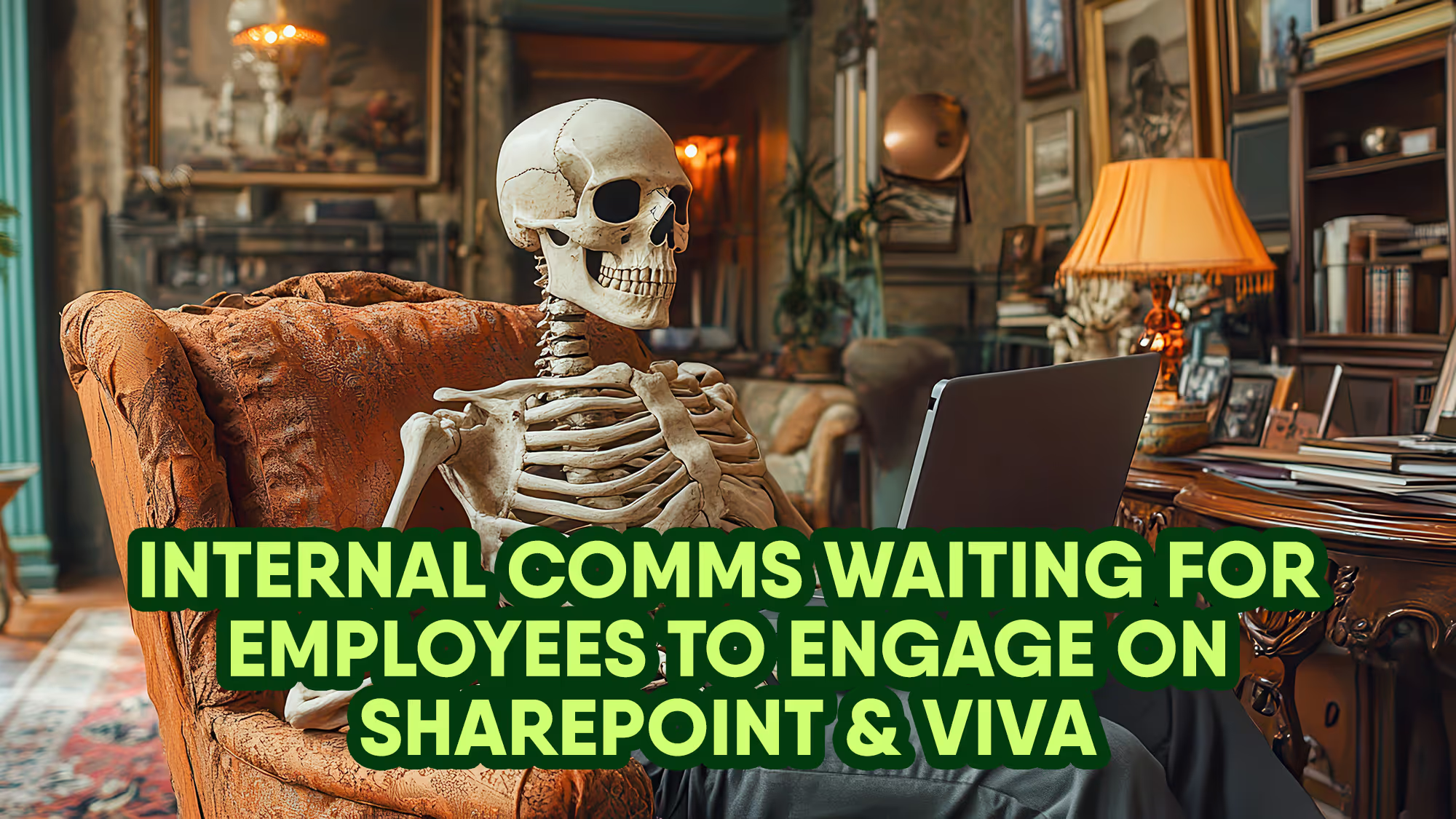
You may once have scraped by with a basic company intranet and SharePoint. But internal comms have come a long way — from bulletin boards and internal email blasts to mobile-first apps that deliver real-time updates and targeted, effective communication.
Today’s workforce demands consumer-grade experiences and a modern UX. So to improve your internal communications strategy and the employee experience, organizations now need platforms that are intuitive, engaging, and integrated with existing tools.
Big changes to your comms tech may feel like a daunting prospect. But if your existing internal comms platform is holding you back, remember that you don’t need to reinvent the wheel.
You can leverage prebuilt platforms to improve internal comms, share company content, and elevate company culture like never before.
6 reasons to buy an internal communication tool
Still on the fence about buying or building your internal communication tool? Let’s look at all the reasons why buying a solution provides everything you need and more.
#1. Easy activation
Building your own internal communication tool requires months (or years) of development, testing, and iteration. The process dominates the time of your tech team for a prolonged period.
When you buy a platform, on the other hand, you get instant access to a proven and reliable system with best-in-class key features and minimal training required. There’s no need to worry about designing UX, managing infrastructure, or fixing bugs.
You can simply configure and launch, counting on tried and tested functionality — and incredible speed, too. A bought platform can be live within months, if not weeks. So you can start making a big difference to your internal comms sooner rather than later.
{{mobile-activation="/image"}}
#2. Digital inclusion
In 2025, internal communication tech shouldn’t be reserved for your office-based team.
If you want to achieve high levels of employee engagement and retention across all sectors of your workforce, you need an internal communication tool that allows you to reach every employee — no matter where or when they work.
With a mobile-first employee app, you can send company updates directly to employee smartphones. Whether you have office-based workers, remote teams, or frontline employees, you can be sure that comms are getting to every corner of the company.
Staff can log in to your platform without a corporate email address and stay informed of company updates on the go. They get push notifications that alert them to critical news. And they can access advanced features that encourage an employee social network, like a news feed and instant messaging tools.
The best employee apps revolutionize workplace communication. But creating, launching, and maintaining your own employee app is no mean feat.
To ensure digital inclusion, your comms tool should be available across desktop, Android, and iOS devices. That means building and maintaining multiple apps in the app store, which is a significant burden for an internal IT team.
Opt for a turnkey solution, however, and you ensure that no employee is left out. With a dedicated tech team on hand, you can be confident that your internal communication tool will work perfectly across a range of devices and that all employees — no matter where and how they work — can onboard in just a few clicks.
{{mobile-main="/image"}}
#3. Customer success
When you create employee communication software from scratch, you’re on your own. Your internal team has to build an engaging platform — and inspire employees to use it.
A purchased platform tends to come with a dedicated success team. These experts can help to optimize platform engagement, adoption, and ROI. They can also take care of training and troubleshooting, removing the burden of support from your internal IT team.
Your platform partner has walked this road before. Rolling out their platform time and time again, they’ve built up a wealth of knowledge. So your employees don’t have to be guinea pigs for a completely new system and launch process.
A customer success team can provide on-site support during the launch phase — and advise on the best ways to drive adoption. Whether that’s through a teaser campaign, employee challenges, or the simple (but very effective!) bribery of giving free ice cream cones or lunch vouchers to every employee who downloads the app.
#4. Custom branding
A common concern about a bought internal communication tool? That it won’t look and feel like your brand. That you have to sacrifice brand identity for the convenience of a bought solution.
But with more comprehensive and robust customization options available, this is no longer the software sticking point it once was.
Modern employee communication platforms allow for full customization. You can add company colors, logos, and fonts. Your company name and logo will appear in the app store, on people’s phones, and inside the platform itself.
The best internal communication software allows you to apply this customization on a micro-level within your organization — by team, role, and geography — to provide a branded and personalized employee experience.
With extensive customization options, you can use your internal comms tool to create a company culture of belonging.
{{mobile-nokia-feed="/image"}}
#5. App personalization
Of course, it isn’t just the look of your internal communication platform that counts. The functionality it offers should be tailored to meet the needs of your employees.
This is why some companies choose to go down the build route. They see it as a way to get a custom solution that perfectly meets their requirements.
But again, bought solutions are keeping pace. They’re going beyond a one-size-fits-all approach to give customers a tailored tool, without the hassle of building it themselves.
With intuitive platforms that offer a user-friendly interface, you can create communication channels, custom workflows, control layouts, modify notifications, and ensure employees receive relevant content for them.
Features you don’t need? No problem — turn them on and off as you see fit. Concerned about real-time messaging? All good — set up alert and time zone parameters as needed.
Bought solutions are also agile. With your platform partner’s support, it’s easy to keep up with internal communication trends and employee expectations. And you don’t have to pay for ongoing development costs every time you need a new feature.
{{future-of-internal-comms-2025="/callouts"}}
#6. Integration
Internal communications don’t exist in a vacuum. Your platform needs to integrate with the other workplace software you use, including HR systems, payroll, scheduling, team collaboration tools, and much more.
Creating deep integrations for a self-build solution is time-consuming and costly. It often requires expensive API development and ongoing maintenance just to keep things connected.
But a purchased solution comes with prebuilt and seamless integrations for software like Workday, ServiceNow, Microsoft 365, and more.
Via secure, single sign-on technology, employees can access all the workplace tools they need. Your employee communication tool acts as a digital company hub, providing easy access to things like employee surveys, training, peer recognition and rewards, employee feedback forms, pay stubs, and shift swap tools.
{{mobile-hub="/image"}}
#7. Future-proofing
The right internal communications platform shouldn’t just solve today’s challenges. It should evolve with your organization and keep your workforce connected no matter how work changes.
Building an in-house solution may seem like a way to tailor communications to your exact needs, but without ongoing investment and dedicated resources, these systems can quickly become outdated. They can struggle to keep up with shifting workforce expectations, mobile-first engagement trends, and emerging technologies.
A prebuilt platform, by contrast, is continuously updated, giving you access to the latest and greatest capabilities without the burden of maintaining and upgrading the technology yourself.
Keep in mind: Not all prebuilt platforms are created equal. Some workplace tools are owned by larger corporations, where internal comms are just one of many priorities. This can leave customers vulnerable to shifting business strategies or product sunsets.
With the right internal comms partner, you get long-term stability, continuous innovation, and a platform designed to adapt and grow with your workforce — so you’re always ahead of what’s next.
Build or buy? Get the best of both worlds with Blink
Building an internal communication app may seem like a great way to get exactly what you want. But it’s often a long, costly, and risky investment.
In contrast, buying a prebuilt platform gives you speed, scalability, and best-in-class technology. You also enjoy the expertise of a team that lives and breathes internal comms tech.
Choose a comprehensive solution like Blink and there’s no trade-off. You get the best of both worlds. The ability to brand and white label the platform. Powerful integrations with other workplace software you use. And a speedy launch — most of our clients go live within 6 to 12 weeks.
Our support is also second to none. Our team comes onsite at your company to assist with the platform launch and ensure high levels of adoption. The proof is in the stats.
With Blink, Domino’s achieved a 94% adoption rate and 81% monthly active users. A company news feed, chat features, and integrations with benefits, payslips, and shift swap tools make it easy for Domino’s to cultivate an informed and motivated workforce.
Over at Stagecoach, Blink has helped increase employee satisfaction by 46% and reduce staff turnover by 26%. What’s more, 100% of employees said they would recommend Blink’s internal communication platform to a colleague.
Don’t spend months reinventing the wheel. Ask the right questions when choosing a new employee communication tool and you can find a single platform that meets your ever-evolving comms needs and builds human connection — today, tomorrow, and beyond.
Blink. And connect your workforce with a ready-made internal comms platform.

Why off-the-shelf internal comms tools win every time
Your internal communications tool isn’t working.
Employees miss important updates. Frontline workers feel disconnected. Your IT team is stretched thin, and now you’re faced with a big decision: Build your own solution from scratch or buy a ready-made platform?
Building might seem like the best way to get exactly what you want. Total control, custom features — it sounds great in theory. But in reality? It’s a massive undertaking. Development takes months (if not years), maintenance is a never-ending burden, and by the time your internal communication software is live, it’s already outdated.
The good news? You don’t have to reinvent the wheel. Today’s prebuilt corporate communication tool offers the perfect balance of speed, flexibility, extensive customization options, and a wide range of features tailored to your needs — without the cost and complexity of building from scratch.
Let’s dive into why an off-the-shelf internal communications platform is the smarter, faster, and more effective choice for connecting your entire organization.
The evolution of internal comms platforms
You may once have scraped by with a basic company intranet and SharePoint. But internal comms have come a long way — from bulletin boards and internal email blasts to mobile-first apps that deliver real-time updates and targeted, effective communication.
Today’s workforce demands consumer-grade experiences and a modern UX. So to improve your internal communications strategy and the employee experience, organizations now need platforms that are intuitive, engaging, and integrated with existing tools.
Big changes to your comms tech may feel like a daunting prospect. But if your existing internal comms platform is holding you back, remember that you don’t need to reinvent the wheel.
You can leverage prebuilt platforms to improve internal comms, share company content, and elevate company culture like never before.
6 reasons to buy an internal communication tool
Still on the fence about buying or building your internal communication tool? Let’s look at all the reasons why buying a solution provides everything you need and more.
#1. Easy activation
Building your own internal communication tool requires months (or years) of development, testing, and iteration. The process dominates the time of your tech team for a prolonged period.
When you buy a platform, on the other hand, you get instant access to a proven and reliable system with best-in-class key features and minimal training required. There’s no need to worry about designing UX, managing infrastructure, or fixing bugs.
You can simply configure and launch, counting on tried and tested functionality — and incredible speed, too. A bought platform can be live within months, if not weeks. So you can start making a big difference to your internal comms sooner rather than later.
{{mobile-activation="/image"}}
#2. Digital inclusion
In 2025, internal communication tech shouldn’t be reserved for your office-based team.
If you want to achieve high levels of employee engagement and retention across all sectors of your workforce, you need an internal communication tool that allows you to reach every employee — no matter where or when they work.
With a mobile-first employee app, you can send company updates directly to employee smartphones. Whether you have office-based workers, remote teams, or frontline employees, you can be sure that comms are getting to every corner of the company.
Staff can log in to your platform without a corporate email address and stay informed of company updates on the go. They get push notifications that alert them to critical news. And they can access advanced features that encourage an employee social network, like a news feed and instant messaging tools.
The best employee apps revolutionize workplace communication. But creating, launching, and maintaining your own employee app is no mean feat.
To ensure digital inclusion, your comms tool should be available across desktop, Android, and iOS devices. That means building and maintaining multiple apps in the app store, which is a significant burden for an internal IT team.
Opt for a turnkey solution, however, and you ensure that no employee is left out. With a dedicated tech team on hand, you can be confident that your internal communication tool will work perfectly across a range of devices and that all employees — no matter where and how they work — can onboard in just a few clicks.
{{mobile-main="/image"}}
#3. Customer success
When you create employee communication software from scratch, you’re on your own. Your internal team has to build an engaging platform — and inspire employees to use it.
A purchased platform tends to come with a dedicated success team. These experts can help to optimize platform engagement, adoption, and ROI. They can also take care of training and troubleshooting, removing the burden of support from your internal IT team.
Your platform partner has walked this road before. Rolling out their platform time and time again, they’ve built up a wealth of knowledge. So your employees don’t have to be guinea pigs for a completely new system and launch process.
A customer success team can provide on-site support during the launch phase — and advise on the best ways to drive adoption. Whether that’s through a teaser campaign, employee challenges, or the simple (but very effective!) bribery of giving free ice cream cones or lunch vouchers to every employee who downloads the app.
#4. Custom branding
A common concern about a bought internal communication tool? That it won’t look and feel like your brand. That you have to sacrifice brand identity for the convenience of a bought solution.
But with more comprehensive and robust customization options available, this is no longer the software sticking point it once was.
Modern employee communication platforms allow for full customization. You can add company colors, logos, and fonts. Your company name and logo will appear in the app store, on people’s phones, and inside the platform itself.
The best internal communication software allows you to apply this customization on a micro-level within your organization — by team, role, and geography — to provide a branded and personalized employee experience.
With extensive customization options, you can use your internal comms tool to create a company culture of belonging.
{{mobile-nokia-feed="/image"}}
#5. App personalization
Of course, it isn’t just the look of your internal communication platform that counts. The functionality it offers should be tailored to meet the needs of your employees.
This is why some companies choose to go down the build route. They see it as a way to get a custom solution that perfectly meets their requirements.
But again, bought solutions are keeping pace. They’re going beyond a one-size-fits-all approach to give customers a tailored tool, without the hassle of building it themselves.
With intuitive platforms that offer a user-friendly interface, you can create communication channels, custom workflows, control layouts, modify notifications, and ensure employees receive relevant content for them.
Features you don’t need? No problem — turn them on and off as you see fit. Concerned about real-time messaging? All good — set up alert and time zone parameters as needed.
Bought solutions are also agile. With your platform partner’s support, it’s easy to keep up with internal communication trends and employee expectations. And you don’t have to pay for ongoing development costs every time you need a new feature.
{{future-of-internal-comms-2025="/callouts"}}
#6. Integration
Internal communications don’t exist in a vacuum. Your platform needs to integrate with the other workplace software you use, including HR systems, payroll, scheduling, team collaboration tools, and much more.
Creating deep integrations for a self-build solution is time-consuming and costly. It often requires expensive API development and ongoing maintenance just to keep things connected.
But a purchased solution comes with prebuilt and seamless integrations for software like Workday, ServiceNow, Microsoft 365, and more.
Via secure, single sign-on technology, employees can access all the workplace tools they need. Your employee communication tool acts as a digital company hub, providing easy access to things like employee surveys, training, peer recognition and rewards, employee feedback forms, pay stubs, and shift swap tools.
{{mobile-hub="/image"}}
#7. Future-proofing
The right internal communications platform shouldn’t just solve today’s challenges. It should evolve with your organization and keep your workforce connected no matter how work changes.
Building an in-house solution may seem like a way to tailor communications to your exact needs, but without ongoing investment and dedicated resources, these systems can quickly become outdated. They can struggle to keep up with shifting workforce expectations, mobile-first engagement trends, and emerging technologies.
A prebuilt platform, by contrast, is continuously updated, giving you access to the latest and greatest capabilities without the burden of maintaining and upgrading the technology yourself.
Keep in mind: Not all prebuilt platforms are created equal. Some workplace tools are owned by larger corporations, where internal comms are just one of many priorities. This can leave customers vulnerable to shifting business strategies or product sunsets.
With the right internal comms partner, you get long-term stability, continuous innovation, and a platform designed to adapt and grow with your workforce — so you’re always ahead of what’s next.
Build or buy? Get the best of both worlds with Blink
Building an internal communication app may seem like a great way to get exactly what you want. But it’s often a long, costly, and risky investment.
In contrast, buying a prebuilt platform gives you speed, scalability, and best-in-class technology. You also enjoy the expertise of a team that lives and breathes internal comms tech.
Choose a comprehensive solution like Blink and there’s no trade-off. You get the best of both worlds. The ability to brand and white label the platform. Powerful integrations with other workplace software you use. And a speedy launch — most of our clients go live within 6 to 12 weeks.
Our support is also second to none. Our team comes onsite at your company to assist with the platform launch and ensure high levels of adoption. The proof is in the stats.
With Blink, Domino’s achieved a 94% adoption rate and 81% monthly active users. A company news feed, chat features, and integrations with benefits, payslips, and shift swap tools make it easy for Domino’s to cultivate an informed and motivated workforce.
Over at Stagecoach, Blink has helped increase employee satisfaction by 46% and reduce staff turnover by 26%. What’s more, 100% of employees said they would recommend Blink’s internal communication platform to a colleague.
Don’t spend months reinventing the wheel. Ask the right questions when choosing a new employee communication tool and you can find a single platform that meets your ever-evolving comms needs and builds human connection — today, tomorrow, and beyond.
Blink. And connect your workforce with a ready-made internal comms platform.

During their first month, employees spend an average of 12.7 hours per week asking coworkers for help. And it doesn’t get much better after the first month. Most workers spend an average of five hours per week waiting to connect with people with the information they need.
If you want to maximize productivity, you need to make information accessible.
That's where knowledge-sharing platforms come in. They facilitate the flow of information and expertise across the board.
What is a knowledge-sharing platform?
A knowledge-sharing platform is a software that enables employees to interact with each other and exchange information. It helps subject matter experts contribute guides, policies, and documents to develop a company's internal knowledge base.
Key features knowledge-sharing tools should have
With many knowledge-sharing tools available, knowing which one to choose depends on your company's goals, budget, size and your workers' specific needs.
Here are four features to look for when choosing a knowledge management system for your organization:
Cross-platform access
Most of your employees use their smartphones even during working hours. Reviews.org shares that Americans spend an average of 2 hours 54 minutes on their phones daily. Even more important is to remember that 80% of the workforce is in frontline roles - in other words, they rarely have access to a desktop computer at all, and are entirely reliant on smartphones.
It's therefore critical that you opt for a knowledge-sharing solution that employees can access from a smartphone, laptop, tablet, or workstation. That'll help your staff perform their tasks efficiently whether they’re in the office or on the move.
Smart search
Panopto shares that 60% of employees find it difficult to get the information they need. To ensure that a knowledge-sharing solution truly solves this, you need a platform that provides intelligent search options.
The platform should enable your employees to organize the shared content by labels and tags, so both your remote and deskless employees can find the relevant information quickly.
Integrations
The right knowledge-sharing tool allows you to deliver access to information without having to uproot your existing systems. Most businesses already have their critical documents housed in multiple areas - a good knowledge management tool will allow you to integrate with those systems to draw those documents through rather than having to move them.
Equally important to consider is how user access is controlled - creating another set of sign-ons for users to have to remember (and invariably, request support and resets for) can potentially be more trouble than it's worth. Explore solutions with Single Sign-On (SSO) capabilities, integrating seamlessly with your existing stack.
Reports and analytics
To know that adoption is going well and that your investment in your new tool was worthwhile, you need ways to measure engagement. That’s even more true if you’ve got deskless and remote workers.
Your knowledge-sharing tool should have reporting features to track how much information is being shared, which content is more popular, and which employees contribute the most. All this data can help you identify knowledge gaps and create strategies to mitigate those gaps.
Best knowledge-sharing platforms
1. Blink
2. Notion
3. Bloomfire
4. Microsoft SharePoint
5. Nuclino
6. Confluence
7. Helpjuice
Here are the six best knowledge-sharing tools to facilitate the flow of information and expertise in your organization:
1. Blink
Blink is an employee experience app that gives frontline and remote workers access to the people, communications, and applications they need to do their job on their personal phone.
You benefit from increased productivity, employee retention, and two-way conversations that bridge the gap between executives, management, and employees.
Blink is ideal for executive teams committed to giving more to their frontline workers. It is flexible, feels like the apps employees use daily, and can be launched in days or weeks.
Key Features:
Powerful Hub dashboard with quick access to policies, rosters, payslips, and apps
Secure group, team, or one-to-one chats for real-time two-way communication
Newsfeed with a personalized stream of bottom-up and top-down multimedia content including news, videos, and pictures
Seamless integration with the apps you already love such as Microsoft 365, Workday, and ADP.
Single Sign On (SSO) — log in to any app without your password
Frontline intelligence — gain powerful insight into what makes your organization tick, from turnover to engagement and sentiment, to stop problems before they start and create a close-knit community.
Micro-apps — get powerful branded apps personalized for your company
Best for:Companies with a large distributed frontline or remote workforce.
Pricing: Starts at $3.40 per person per month (when billed annually).
2. Notion
Notion is a knowledge-sharing platform that combines your internal wiki, projects, and notes in one tool. You can create pages, lists, databases, and tables and interlink them to help your colleagues understand the company-wide web of information.
Many teams and companies globally use Notion to keep their staff informed and collaborate in one place.
Notion creates transparency by centralizing all knowledge and work and making it highly customizable. As a result, it saves time and increases productivity for teams of all sizes.
Key Features:
Content blocks — present information as you want it
Clean, custom, and easy-to-use text editor
Easy linking between documents and pages
Support for multimedia — make your knowledge pages as detailed as possible
Best for:Small technology businesses that manage many documents and projects and want to collaborate easily.
Pricing:Free with limited features. Premium plans start at $8 per user per month (when billed annually).
3. Bloomfire
Bloomfire connects individuals and teams with the information they need to excel at work. It stores relevant information and makes it easily searchable.
This platform powers all departments — from customer support to sales and marketing — with the right information. Your employees can always find the desired information at the right time to make informed decisions that propel them to success.
Bloomfire also uses artificial intelligence (AI) to spark engagement and help your team grow collective intelligence efficiently.
Key Features:
AI-driven search for quick access to information
Flexible user roles and permissions
Custom integrations with open API
Best for:Mid-sized teams, departments, and organizations looking to share knowledge in a meaningful and collaborative way.
Pricing:Premium plans start at $25 per user per month.
4. Microsoft SharePoint
Microsoft SharePoint is a knowledge-sharing platform designed around a traditional intranet structure. It helps teams collaborate effectively by letting them share content, applications, and knowledge.
You can use blocks — including text, videos, forms, and images — to customize page layouts without complex coding. You can also add announcement feeds and news to knowledge pages to ensure they're constantly updated with current information.
Since it’s a Microsoft platform, SharePoint integrates best with other Microsoft tools.
Key Features:
Code-free content customization
News and announcement feeds
Solid integrations with other Microsoft tools
AI-powered content suggestions
Best for:Office-focused companies integrated into the Microsoft ecosystem.
Pricing: Starts at $5 per user per month.
5. Nuclino
Nuclino is a user-friendly, lightweight knowledge management software that empowers teams to collaborate without the chaos of context switching, files and folders, or silos. You can use its simple editor to create rich wiki pages — with text, videos, and images.
You can opt to view data as graphs, lists, or boards to ensure you understand how everything works together. You can also collaborate on every page with team members in real-time, with comments letting you exchange feedback on the spot.
Key Features:
User-friendly interface
Minimal setup time
Real-time content collaboration
Fast and reliable search
Best for:Startups and small teams looking for a lightweight wiki solution.
Pricing:Free with limited features. Premium plans start at $5 per user per month.
6. Confluence
Confluence is a knowledge-sharing solution and intranet owned by Atlassian. The platform lets users create and manage workflows efficiently.
You can use Confluence to capture, organize, and preserve your most valuable assets — project plans, company updates, or other vital information.
The platform’s page tree view and powerful search function make it easy to find the exact file you're looking for.
Key Features
Multiple integrations
Customizable templates for all business needs
Real-time collaborative editing
Real-time notifications and comments
Best for:Mid-size technology companies looking to improve information exchange in functional departments such as project management groups, technical teams, marketing, finance, HR, and legal.
Pricing: Free with limited features. Premium plans start at $5.50 per user per month.
7. Helpjuice
Helpjuice knowledge base software streamlines the process of knowledge sharing for both your team and your customers. The platform is easy to use, with an editor that's straightforward making content creation fast and simple. Their intelligent search feature is designed to allow your customers and team to find the information they need, when they need it.
One notable feature is their decision tree logic which allows you to build step-by-step guides that help direct users to the information or solutions they need, based on their specific circumstances. This can improve the user experience and reduce time spent searching for relevant content.
Helpjuice's platform is also designed to be flexible. You can customize the look of your knowledge base to reflect your brand, making it easy for customers and team members to navigate. The goal is to provide a platform where information is readily accessible, promoting better customer service and efficient internal knowledge sharing.
Key Features:
Intelligent, Google-like instant search
Real-time collaboration features
Easy-to-use editor with multi-language support and decision-tree logic
Fully customizable
Best for: Companies that want an easy-to-use, yet comprehensive knowledge base software solution that’s fully customizable, and capable of fostering effective internal knowledge sharing as well as providing comprehensive external customer support resources.Pricing: Pricing begins at $120 per month, which includes all features and supports up to 4 users.
Connecting your team, whether they're remote, in-office, or frontline, requires seamless communication and engagement.
Team communication apps centralize your team chats, updates, engagement, and experience, unifying your workforce by enabling everyone to stay aligned, regardless of location.
Our list reviews the best internal communication tools for small businesses with under 500 employees and the best internal comms app for large enterprises.
Telling you what each one does best, who it's for, and what you'll pay.
Let's see what the 9 best team communication apps for 2026 offer and which one suits your business.
How to choose the best team communication app
Clear, real-time communication is mission-critical for every team, regardless of industry or organization size. The 2025 International Employee Communication Impact Study found that a whopping 61% of employees felt that communication at their organization had broken down to a point that they considered leaving.
When poor communication affects employees, there’s a trickle-down effect that leads to missed deadlines, unhappy clients, and concerned stakeholders — all of which impact your bottom line.
So what’s the best solution? Team communication apps.
These apps provide key functions and features to help your team — whether remote, in-office, or frontline — stay connected and in sync. Using team chat, video calls, file sharing, and other vital workflow integrations, team communication apps have everything you need to keep your team aligned.
Highlights
The right team communication app aligns with how your team works, not the other way around. Prioritize tools that support your team’s size, location, and communication style (chat, video, file sharing, etc.).
Top apps for 2026 include Blink, Connecteam, Troop Messenger, Slack, Staffbase, Flock, Sling, Workvivo, and Simpplr, each tailored for different business types — from small, mobile-first teams to large global enterprises.
Key features to look for include real-time messaging, file sharing, video calls, admin tools, integrations (with HR, CRM, and project management software), mobile accessibility, and security compliance.
To find the best fit, run a short pilot with real tasks, validate usability and adoption, and ensure the platform enhances collaboration, engagement, and company culture, especially in hybrid or remote work environments.
{{mobile-chat="/image"}}
Here's how you choose the best team communication app
The goal, as Blink emphasizes, is to choose a team communication app that fits your team's way of working, not the other way around.
Decide on your team's communication style: Is it instant messaging, video, or file sharing?
Consider your team's location (are they remote, hybrid, or on-site?)
Think about your team's size, growth plans, and any data-related rules you need to follow
2. Lock in those core features
Ensure your team can communicate using tools such as instant messaging, threads, calls, file sharing, and organized channels. Note: Only 26% of people use online chat tools to communicate with co-workers, while 17% use project management tools, and 9% use other tools, including Microsoft Teams and WhatsApp (source: Project.co).
Confirm your tools' admin controls (user management, permissions, guest access) to ensure they align with your setup
3. Confirm integrations
Prioritize project management, CRM, calendar, file storage, HR, and payroll to check that the app integrates seamlessly and doesn't fragment workflows
4. Check usability and adoption
Look for reliable desktop and mobile apps with intuitive user integration, fast onboarding, and strong search/navigation/notification features. Because if your team doesn't (or can't) use the app, the features won't matter
5. Validate security and compliance
If your business handles private information, confirm the app's encryption, user access controls, storage policies, and certifications
6. Model scale and total cost
Plan at least 12–24 months ahead, considering licenses, storage, add-ons, mobile usage, training, and support/SLAs (like support responsiveness and uptime) to ensure pricing and user licensing scale smoothly
7. Fit your culture
Choose a tool that aligns with how your brand works (consider updates and teamwork), and ensure it includes user rules for guests and sharing outside the company
Handy tip
Try out your new team communication app with real tasks to see how well your team communicates and works together.
And if you're choosing team communication tools for SMBs, shortlist two options and run a two-week pilot following the advice above.
Mobile-first employee communication and engagement tool, built for frontline/deskless workers, is also one of best internal comms app for large enterprise.
News feed, secure chat, digital forms/surveys, analytics, recognition
From $4.50/user/month (business plan)
Connecteam
All-in-one management tool (communication, scheduling, timeclock, tasks) for non-desk/shift workers
Scheduling, time-tracking, GPS/geo-fencing, forms/checklists, communication hub
Free up to 10 users; Basic $29/month (first 30 users, annual), then per-user add-on
Troop Messenger
Secure team messaging & collaboration; focused on chat/calls
1:1 & group chat, audio/video calls, screen sharing, guest access, unlimited search history
From $2.50/user/month (Premium); higher tiers up to $9/user/month
Slack
Advanced team collaboration/messaging platform with many integrations — ideal for knowledge workers
Blink's mobile-first employee experience platform connects and engages every worker (especially frontline and deskless employees) through a single digital hub by unifying internal comms with video calling and chat, news feeds, recognition, digital forms, and analytics.
Making it one of the best internal communication tools for small businesses with under 500 employees that rely on mobile staff.
Best suited for:
Startups, SMBs, and larger companies, with a significant number of non-desk employees (such as retail, manufacturing, logistics, hospitality, and field projects).
Blink pros:
Combines chat, news feed, forms, recognition, and analytics in one app
High engagement potential, Blink claims to reach 95% of the workforce
Built for mobile/deskless workers, ensuring inclusion and access
Enhances your team's alignment, recognition, and connection
Blink cons:
Blink's strengths are communication and engagement, rather than scheduling or shift management
Businesses with large frontline teams can find the per-user pricing setup expensive
Integrations:
Blink works with single sign-on/identity providers (including Okta and Active Directory Federation Services)
It integrates with HR systems like Workday, ServiceNow, and UKG
Blink connects to various cloud tools and knowledge bases
Blink key features:
Analytics and insights on team engagement and content impact
Recognition and employee contribution features (e.g., Kudos)
Records employee journeys to provide onboarding support
Live streaming/events for broadcast-style communication
Knowledge base for policies and procedures
Mobile-first chat and secure messaging
Digital forms and survey tools
Social-style news feed
Blink pricing:
Free: Blinks offers a 30-day free trial.
Business plan: $4.50/user/month (up to 1,000 users)
Enterprise plan: Custom pricing for larger organizations
Connecteam is an all-in-one employee management app for mobile, deskless, and shift-based workforces.
It combines scheduling, time tracking, task lists, forms, HR, and skills in one platform, and is ideal for frontline and remote teams that need more than chat.
Best suited for:
Businesses from startups to SMBs and mid-market with mixed desk and non-desk workers. Organizations in retail, hospitality, field services, and logistics will find the app especially useful when they need to upgrade their scheduling, tracking, and communication.
Connecteam pros:
Combines scheduling, time tracking, communication, forms, and task management
Free small business plan for up to 10 employees with full feature access
Designed for non-desk and operational teams
Includes HR and skills tracking tools
Connecteam cons:
Some advanced features (like GPS tracking or automation) are only available in higher tiers
Complex to set up and use because of its many features
Pricing can increase as your business grows
Integrations:
Connecteam’s Application Programming Interface (API) enables simple automation and syncing
Company chat/communications connect with existing tools
Handy time tracking, HR systems, and payroll features
Connecteam key features:
Mobile communication/chat and knowledge feed
Shift management and scheduling
Task and checklist management
Onboarding and training tools
HR and skills tracking module
GPS tracking and time clock
Forms and reporting
Connecteam pricing:
Free plan: Up to 10 employees, then $0.50/user/month per user.
Basic: $29/month for up to 30 users (annual billing); additional users beyond 30 are $0.80/user/month
Troop Messenger is a secure team collaboration and communication tool with chat, audio messaging, video chat, file sharing, and enterprise-grade options. Perfect for teams that want real-time messaging without the overhead of a large platform and that don’t need HR or scheduling modules.
Best suited for:
Small to medium teams (SMBs) that need real-time communication, chat, calls, and sharing, especially where cost matters, and complete workforce management modules aren`t essential.
Troop Messenger pros:
Includes chat, audio/video, screen sharing, guest access, searchable history
Scalable with enterprise-level options
Affordable entry-level pricing
Troop Messenger cons:
Limited integrations and fewer advanced operations/workflow modules than other, more expensive team communication apps
Whilst giving you control over the settings, its on-premise/custom deployments can complicate the pricing
Integrations:
APIs for enterprise or custom deployment to partners and external developers
Dropbox, Google Drive, Jira, and Zapier
Troop Messenger key features:
Identity and authentication management systems, LDAP/Active Directory, and SSO
Collaboration tools: Including code editor, meeting notes, and tasks
A leading team communication platform with direct messaging (DMS), file sharing, fast integrations, and workflow automation, Slack is built for knowledge-based and distributed teams that rely on multiple apps.
Best suited for:
Medium to large outfits, especially knowledge workers and remote teams, depending on integrations, automation, and real-time collaboration.
Slack pros:
Strong messaging, channels, automation, and search
Free tier available for small teams
Thousands of integrations
Slack cons:
Overpowering for teams with simple communication needs
For large companies, the per-user pricing adds up quickly
No optimization for frontline and non-desk workers
Integrations:
Too many to mention, with integration available for thousands of apps, bots, custom integrations, workflow automations, and APIs
Slack key features:
App integrations, including but not limited to HR, CRM, and DevOps
Staffbase is a mobile-first internal communications platform for large, distributed teams, offering branded employee apps, targeted messaging, and analytics to reach the right people at the right time. A solid solution for large enterprises needing strategic internal comms at scale.
Best suited for:
Large companies with frontline/deskless workforces in multiple sites/countries that require a strategic internal comms platform with deep targeting and analytics.
Staffbase pros:
Strong targeting and engagement analytics
Made for mobile and deskless workers
Scales well for large enterprises
Staffbase cons:
Set-up and management require significant internal communication
Custom pricing is high (see pricing below)
Integrations:
Analytics platforms, HR/CRM systems, and mobile app frameworks
APIs for custom modules and branded experiences
Staffbase key features:
Content management/feed/news stream
Multi-location and multi-language support
Analytics/dashboards on engagement
Branded employee mobile app/hub
Targeted messaging/segmentation
Staffbase pricing:
Custom pricing depending on size and modules. An estimated starting cost is $30,000/year for 1,000 employees.
Teams looking for a budget-friendly, lightweight alternative to Slack will find their perfect fit in Flock. It's easy to use and offers most of the features you'd want in a team communication app.
Best suited for:
Smaller teams and start-ups that need a comprehensive yet affordable team communication tool with task management and messaging that integrates with apps like GitHub and Google Drive.
Flock pros:
Easy onboarding and a layman-friendly interface
More affordable than its premium competitors
Flock has a free starter tier
Flock cons:
Has fewer integrations and advanced features than its pricier competitors
It doesn't suit larger or complex organizations
Caps some features in lower tiers
Integrations:
Flock offers standard integrations with productivity tools, bots, video call apps, and task management systems
Designed specifically for local hospitality businesses (think hotels and restaurants), Sling is a scheduling and shift-planning tool with built-in communication.
Best suited for:
SMBs with hourly/shift workers who need scheduling and simple communication between team members.
Sling pros:
Combines scheduling with announcements and chat for real-time updates
The free tier has core scheduling and shift management features
Cost-effective for small businesses
Sling cons:
Besides scheduling, the app has limited internal communication features
Basic analytic options compared to more expensive team apps
Large or complex operations may find it unscalable
Integrations:
Basic chat/announcements module
Payroll/time-clock systems
Sling key features:
Time clock/attendance tracking
Shift scheduling and planning
Task and shift management
Team chat/announcements
Simple reporting
Sling pricing:
Free plan: Up to 30 users
Premium: $1.70/user/month (annual) or $2.00 monthly
Workvivo's employee experience platform (EXP) combines internal communications, recognition, engagement, analytics, intranet features, and a social-style feed into one platform, helping large organizations communicate, connect and engage with their employees.
Best suited for:
Mid-to large-sized organizations with distributed, hybrid, or multi-location teams that require a mobile-first platform that promotes culture, engagement, and unified communication.
Simpplr is an AI-powered employee experience and intranet platform (EXP) that combines multiple tools and analytics into a single solution to improve internal engagement, communication, and productivity.
Best suited for:
Large organizations that use Microsoft Teams and need a digital workplace hub that combines a business's communication platform with chat, knowledge sharing, analytics, and personalization across a global workforce.
Simpplr pros:
Mobile app allowing employees to access their digital workplace anywhere and anytime
Provides automated workflows and integrates with other workplace apps
Supports personalization, content management, and knowledge sharing
Advanced intranet and employee experience features
Scalable for large organizations
AI search feature
Simpplr cons:
Requires ongoing management and content maintenance
Too heavy for teams seeking simple chat
Expensive custom-based pricing model
Integrations:
Knowledge management systems (including SharePoint, Google Drive, Confluence, Dropbox, and Salesforce), content management, and analytic platforms
AI-powered personalization and intranet modules
Simpplr key features:
Knowledge management and content distribution, including social newsfeeds and newsletters
AI-powered tools for communication and personalized content
Content engagement analytics and insights
Employee recognition and survey tools
Mobile accessibility for employees
Intranet and digital workplace hub
Simpplr pricing:
Custom quotes by size and complexity. Starts at $12/user/month for full EX functionality.
[News feed product screen]
Final thoughts: Choosing the right team communication app
When choosing communication tools for small businesses with fewer than 500 employees, prioritize easy-to-use, mobile-friendly options.
Choose a platform that reflects how your team works, not just what shines on a features page.
For a large company’s internal communications app, ensure it includes strong governance, audience targeting, data tracking, and deployment assistance.
Start with a short pilot, measure adoption, grow from there, and remember:
Blink meets 95% of the workforce where they are and provides the solutions for the team communication problems they face today. So, if you’re ready to start communicating on a whole new level…
One of the top barriers to business success? According to 1 in 4 professionals surveyed by Gallagher, it’s internal communication channels that aren’t fit for purpose.
But it’s easy to get it wrong. Usually, problems occur when:
You have too many communication channels
You don’t have a communication framework — designating specific channels for different types of content
You have channels that are inaccessible to certain segments of the workforce
You don’t ask employees what they want from your internal comms channels
Here, we explore 15 of the most popular and effective internal communication channels for 2025. We also look at the questions you should ask when deciding which channels are best suited to your organization and your internal comms strategy.
Common internal communication channels and why they are not enough
Internal communication channels are the tools, platforms, or methods you use to connect employees to your organization — and each other. These channels support the sharing of information, the amplification of company culture, and the building of coworker connections.
Most organizations use a combination of communication channels to reach their workforce. They may use internal communication software to provide some or all channels — and they tend to use different channels for different types of communication.
For example, a company may use email, a social news feed, in-person meetings, project management software, and survey tools. Each of these channels performs a different internal comms function.
Together, these channels support formal and informal, face-to-face and digital interaction. They also ensure that information moves in all directions across the organization.
Types of internal communication channels
We can categorize internal communication channels by the type of communication they facilitate.
Top-down
Top-down internal communication channels allow leaders to share company updates with employees. You can use these channels to speak to the entire workforce but they’re not as interactive as other options on this list.
Examples: Town hall meetings, intranet announcements, content hub resources
Bottom-up
Bottom-up employee communication channels allow workers to share their thoughts, ideas, and concerns with managers and the C-suite. These channels help employees to feel heard and valued — and they’re an essential part of your communication channel mix.
Examples: Employee surveys and polls, leadership Q&A sessions, digital forms
Peer-to-peer
Peer-to-peer internal communication channels are another essential. These channels allow coworkers to communicate with one another and help to create a culture of belonging and collaboration.
Questions to ask when choosing internal comms channels for your organization
Most organizations use a mix of comms channels. When devising your internal communication channel strategy — and when assessing the usefulness of the channels we’ve listed below — consider the following questions.
What types of communication channels do we currently use and are they effective?
Before updating your internal channels of communication, assess the effectiveness of your current setup. Consider whether existing tools help you meet communication goals, like fostering engagement or enabling collaboration.
Ask whether each channel has a defined purpose. Is it fulfilling a vital function or is it simply adding to the noise? And consider whether your channels are helping you keep pace with internal communication trends and employee expectations.
What do our employees think of current internal communication channels?
Organizations that ask employees about their communication channel preferences report higher channel effectiveness. So get feedback on the things workers do and don’t like about your current channel mix.
The accessibility of your employee communication channels is another key consideration. Find out whether employees from all parts of the organization — in the office, at home, and in frontline roles — can access your primary communication channels with ease. Language barriers, time zone challenges, shift patterns, and access to tech are all things to think about.
What types of internal communication do we want to share?
Your internal communications should be informative and engaging. So you need varied comms channels that offer real-time updates — and that fit naturally into every employee workflow.
Consider the types of content you want to share — whether mandatory reads, deep-dive resources, social posts, or messages from the leadership team. Then, decide which communication channels you need to deliver each of those content types.
How do we give employees a voice?
Internal communications are more effective and engaging when employees get to contribute. The C-suite gets access to valuable insights that can drive business success. Workers feel valued when it’s clear that leadership is interested in their ideas and concerns.
So determine whether your current channels support two-way communications. If not, you need to add some interactive communication channels into the mix.
How do we prevent channel overload?
Bombarding employees with too many messages across too many channels can lead to information fatigue and channel disengagement. So look for tools that provide multiple channels via one dashboard — and allow you to segment your audience, ensuring only relevant messages reach each employee.
Also, consider the admin experience. To avoid overloading your comms team, channels that provide in-built AI support are useful. You can automate routine internal communication tasks, freeing your team up to focus on more meaningful interactions.
15 internal communication channels to use in 2025
The best internal communication channels to use for your organization include:
Instant messaging
Employee surveys
Content hub
Internal news feed
Coworker communities
Face-to-face meetings
Project management tools
Digital forms
Bulletin board
Internal videos
Email
Recognition platforms
Video conferencing
Modern intranet
Employee app
You probably already use some of these channels to communicate with employees. But you may spot some alternatives that will help streamline and upgrade your internal communications.
Just remember: To avoid overwhelming employees, you should look for tools that bring channels together into one user-friendly, digital interface.
Instant messaging
Instant messaging tools support the real-time sharing of information between teams. Unlike email communication, employees don’t have to wait for a response.
The best solutions allow you to create both one-to-one and group chats. They allow you to share images, gifs, videos, and documents — and launch video meetings straight from a chat thread.
Search functionality is another important consideration. It should be easy for employees to search the messaging tool, finding and referencing older chats and resources.
Employee surveys
{{mobile-survey="/image"}}
Employee surveys are one of the most popular employee listening channels. They provide a ton of data about the employee experience — and they promote a positive company culture by ensuring employees feel valued and listened to.
You get the best results when you go beyond the traditional annual survey, using a mix of quarterly surveys and quick pulse surveys to assess employee sentiment on issues like:
Employee satisfaction
Employee engagement
Your internal communication strategy
Upcoming organizational changes
You can use supporting communication channels to close the feedback loop. Share your findings with employees and inform them how you plan to act upon the insights you’ve uncovered.
Content hub
{{mobile-main="/image"}}
A content hub is a library of self-serve resources — and another valuable internal communication channel.
A hub contains things like policy documents, FAQs, and training manuals. By making these resources available to employees, you reduce the number of questions directed at managers and your HR team. You also give employees quick and easy access to the information they need.
To ensure this communication channel works effectively, you need to regularly update or archive old content. Employees then know that they can trust the information on your content hub is reliable and relevant.
Internal news feed
A social-media-style news feed is another essential internal communication channel for a modern workforce. A user-friendly news feed is familiar to employees — and with rich, multimedia content and interactivity, it’s an excellent tool for employee engagement.
Your news feed is a place to:
Promote company culture
Encourage employee interaction, with the platform and each other
Share essential information
Recognize employee achievements
The best tools mirror the experience employees get on social media platforms away from work. Employees can like and comment on posts — and create their own content using features like Stories.
Key features to look for include segmentation and controls. To ensure high levels of engagement, you should be able to personalize the news feed to employee roles, locations, departments, and interests. And admins should be able to fine-tune the experience, limiting posting rights to prevent information overload.
Coworker communities
In remote and frontline work environments, employees miss out on water cooler moments. So they can end up feeling disconnected from their coworkers. This is leading to an epidemic of loneliness.
Over half of employees feel lonely all or most of the time. And with more than 8 in 10 employees saying a sense of community helps them perform better at work, finding ways to combat that loneliness is key to employee productivity and satisfaction.
Include coworker communities in your communication channel mix and you provide a digital space where employees can come together.
Employees can create coworker groups based on shared interests, hobbies, or work-related topics. They can chat, network, connect, and collaborate, developing a sense of community that improves their workplace experience.
Face-to-face meetings
Most of the channels of internal communication on this list are digital. But face-to-face meetings are still an important part of any internal comms strategy and can include:
Manager one-to-ones
Team and town hall meetings
Coaching sessions, workshops, and lunch and learns
Social events
These face-to-face sessions are useful for communicating complex messages and for building better workplace relationships.
However, there are some considerations to bear in mind. Face-to-face meetings aren’t always the most inclusive option if you have employees working in different locations across different shift patterns.
If you have frontline employees, you may like to limit the number of face-to-face meetings you schedule — or vary dates and times. You can also record meetings. Then post a video to your intranet or employee app, so everyone can access the information shared.
Project management tools
Many desk-based teams are using project management software as a communication channel. This brings project management tools and team chat into a single location and helps teams to plan, organize, and execute projects efficiently, even when they’re working remotely.
While useful for project teams, these tools don’t have the full range of features you need for effective internal communication. So they’re best used as part of a more comprehensive communication tool, either built-in or as an integration.
Digital forms
Digital forms reduce your reliance on paper processes. They’re an easy way for employees to communicate with managers and the HR team, without having to send an email or schedule a meeting. As such, they’re another incredibly useful internal communication channel.
You can create digital forms relating to any topic — leave requests, safety reports, shift swaps, employee suggestions. Then, make these forms available via your organization’s primary communication platform.
Bulletin board
If you don’t have a mobile-friendly digital tool that frontline employees can access easily, paper notices may still form a key part of your communication channel strategy.
You may be sharing messages on the bulletin board or via digital signage. We know of transit companies where posters were left on every bus driver’s seat. Needs must. But bear in mind that these methods of internal communication have their limitations:
There’s no interactivity, which means low levels of engagement
You can’t be sure that employees are seeing and reading your messages
Information quickly becomes outdated and irrelevant if older notices aren’t reliably taken down
If frontline and office-based staff are getting their information from different sources, you also run the risk of misalignment and misunderstandings.
Internal videos
Internal videos are another useful communication channel when you want to explain complex concepts. They’re also great for humanizing your leaders and improving workplace trust.
While videos don’t support two-way communication, the combination of audio and visuals catches an audience’s attention, making them good for engagement and knowledge retention.
And — for a more interactive experience — you can use live streaming tools, which allow employees to send reactions and comments during your video event.
Email
Email continues to be a popular channel of internal communication for desk-based workers. It’s a way for coworkers to collaborate with one another — and for leaders to send company-wide updates.
But frontline employees don’t always have a company email address or easy access to their emails during work hours. And even for desk-based employees, email has its drawbacks.
It’s asynchronous and doesn’t support real-time communication. It’s primarily text-based so doesn’t offer great levels of engagement. It’s also easy for workers to become overwhelmed by the number of emails in their inbox.
Recognition platforms
{{mobile-recognition-post="/image"}}
Recognition tools and platforms are an internal communication channel designed to improve employee morale and motivation.
These tools make it easy for managers and coworkers to recognize employee achievements. Some platforms allow managers to assign points, which employees can spend on real-life rewards.
While an increasingly popular part of the channel mix, recognition platforms are unlikely to provide you with all the tools you need for effective workplace communication. So you need to integrate them with your primary communication tools — or find a platform with recognition features built-in.
Video conferencing
When employees can’t meet face-to-face, a video meeting is an excellent alternative. Linking workers across locations and time zones, this is another popular communication channel for desk-based teams.
However, as with email, you can have too much of a good thing. A high volume of video meetings can cause stress and fatigue. And this format isn’t great for frontline workers, whose work environments and patterns aren’t suited to a scheduled video call.
A modern intranet
The traditional intranet has a bad reputation because it fails to meet the communication needs of today’s organizations. Amodern intranet is a whole new ballgame.
The best modern intranet platforms combine many of the internal comms channels listed above. They incorporate a company news feed, content hub, instant messaging, recognition tools, and surveys.
For everything else, there are handy integrations. Employees can access all workplace software from the same user-friendly interface, preventing tech tool overwhelm.
With in-built analytics and a consumer-grade user experience, the modern intranet is an all-in-one solution for internal communications, HR processes, and employee engagement.
An employee app
Like the modern intranet, an employee app combines many of the comms channels above — and provides deep integrations for the other tech tools your teams use.
The key point of difference here is mobile accessibility. An employee app is available on every employee smartphone. Your teams don’t need a company email address to access the app and single sign-on capabilities give them secure access to all workplace tools, with just one set of login details.
The employee app is a particularly useful internal communication channel for a frontline workforce. They can access your comms — and contribute to the company conversation — at a time, at a place, and with a device that suits them.
Creating the right mix of employee communication channels for your organization
Looking through the channels of internal communication above, you may feel spoilt for choice. There are lots of excellent ways to share messages and facilitate connection across your organization.
When deciding which channels best support your internal communication goals, consider these two key principles:
Employee input is essential. You achieve more with your communication channels when you have employee buy-in. Find out what employees want from your channel mix to figure out which of the above tools deserves a place within it.
Less is often more. Create more communication channels without a clear strategy and you’re likely to overwhelm employees. So aim to streamline communication channels into a single internal communications tool, accessible to your entire workforce.
With the right combination of communication channels, you’ll find it easy to share essential information, create an inclusive company culture, and improve employee engagement — without adding unnecessary noise.
Digital tools are transforming the way organizations build and sustain employee engagement. Platforms like Blink, Workvivo, Staffbase, and Reward Gateway are helping teams stay connected, improve communication, and bring company culture to life — wherever employees work.
But with so many employee engagement tools on the market, choosing the right one can be tricky. The wrong platform can waste time, hurt adoption, and even reduce engagement.
Getting it right matters. Companies with highly engaged teams are more productive and see up to 23% higher profitability. The best employee engagement software goes beyond simple communication — it connects people, recognizes great work, and supports a shared sense of purpose.
Every organization is different. The tools that work for a remote or office-based workforce may not suit a frontline team. That’s why it’s important to align your engagement goals with the right platform.
You’ll find software built for:
Frontline employees — mobile-first apps like Blink that keep workers connected on the go
Remote teams — tools such as Asana and Slack that combine communication and project management
Office-based teams — platforms like Culture Amp and OfficeVibe that measure engagement and feedback
And others that specialize in areas such as:
Communication and collaboration
Feedback and performance
Wellbeing and productivity
Rewards and recognition
Choosing the right solution depends on your people and your priorities — because engagement software only works when it works for everyone.
For frontline organizations, this is especially true. Most engagement platforms are still built with desk-based employees in mind. Only 1 in 10 frontline workers says they have access to the tools and technology they need to connect and advance at work — even though they make up 82% of the global workforce.
Without easy access to company updates, communication, and recognition, frontline employees can quickly feel disconnected and undervalued.
That’s why your employee engagement solution needs to work for all employees — wherever and however they work.
In the next section, we’ll look at the best employee engagement software for 2026 — from all-in-one employee apps like Blink to specialized tools for communication, wellbeing, and recognition.
Let’s take a closer look.
Best employee engagement app for frontline organizations
Frontline employees are the backbone of many industries — from transportation and retail to healthcare and hospitality. But engaging this workforce comes with unique challenges. Many frontline employees don’t have regular access to company systems, email, or desktop devices, making it harder for them to stay informed and connected.
That’s why mobile-first employee engagement software has become essential. The best platforms for frontline teams combine communication, recognition, and real-time updates in one easy-to-use app.
These tools close the gap between head office and the field, helping every employee — regardless of location — feel included in company culture.
Below are some of the best employee engagement tools for frontline workers in 2026, starting with Blink, a leading all-in-one platform designed specifically for deskless and distributed teams.
Best employee engagement software for frontline workers
Blink
When it comes to engaging a dispersed, frontline workforce, few tools match what Blink delivers.
Blink is a mobile-first employee engagement platform built to help organizations connect with every worker — whether they’re in the field, on the factory floor, or on the move. Used by teams across industries such as transport, healthcare, logistics, and construction, Blink turns everyday communication into connection.
Employees can easily chat with colleagues, access company updates, view schedules, and complete essential tasks all in one place. The result: better communication, stronger engagement, and a more unified culture.
Managers benefit, too. Blink’s analytics dashboard helps leaders track engagement and performance trends, identify communication gaps, and celebrate wins through built-in recognition tools.
Key features include:
All-in-one communication: Peer-to-peer chat, team groups, and company-wide updates keep everyone aligned.
Employee recognition: Built-in recognition features highlight great work and reinforce culture.
Engagement surveys: Pulse surveys provide quick, actionable insights into morale and satisfaction.
Analytics and insights: Track usage, engagement, and content performance to inform strategy.
Seamless integrations: Connect scheduling, HR, and project management tools for a single digital workspace.
Mobile-first design: Works on any smartphone — no corporate email required.
With Blink, your entire workforce can access the same tools and information, creating a seamless digital experience that keeps everyone connected, informed, and motivated.
Request a demo today to see how Blink can transform engagement across your frontline teams.
Best employee engagement software for desk-based remote workers
If you're looking for employee engagement software platforms suited to desk-based remote workers, here are some excellent options.
Google Chat
Source: Google Chat Capterra Reviews
Google Chat is a communication platform that includes features like video and voice calls, and group chat. It's a great option for workplace communication and it's free to use.
As you’d expect, this tool integrates with the rest of the Google suite, including Google Calendar, Drive, Groups, and Gmail. But it lacks some of the advanced features you tend to get with paid tools.
Reviews from Capterra note that Google Chat is easy to use. It also provides good collaboration tools. However, the interface can be frustrating, message delivery can be an issue, and notifications can be challenging to navigate.
Pricing: Monthly pricing for Google Chat for business starts at $6 per user.
Discord
Discord is a chat app designed for gamers. But it’s recently been used for workplace communication, too. It includes features like voice and video chat, so you can easily connect and communicate with colleagues.
You can use Discord for free, making it a basic but cost-effective tool for internal communications, especially in a remote working environment.
Pricing: Many of Discord’s features are free to use. For businesses that want to invest in extra perks, Discord’s premium tier, “Nitro,” is available for $99 per year.
Asana
Asana is a popular project management tool that can also be used for employee engagement. With Asana, you can easily create and assign tasks, track task progress, and set team priorities. You can also use Asana to create custom projects for easy employee collaboration.
Source: Asana Capterra reviews
Asana makes a great option for remote teams, in part because it offers a mobile app for easy access to tasks and progress data. This helps to ensure that employees are working cohesively and effectively wherever they’re based.
Reviews from Capterra note that while Asana offers a clean, intuitive, and integrated interface, notifications are often missed, automatic opt-in to email notifications can be annoying, and the different projects and access features can be confusing.
Pricing: Monthly pricing for Asana starts at a basic free plan. A business plan costs $24.99 per user per month when billed annually.
ClickUp
ClickUp is a cloud-based collaboration and project management tool and it’s a good option for those looking to improve remote employee engagement.
Key features include task assignments and statuses, alerts, and a task toolbar. But while ClickUp does well in terms of task management, it doesn’t offer a full range of employee engagement tools.
This platform lacks features relating to real-time communication, employee recognition, and social interaction. So you’re likely to need additional software.
Pricing: ClickUp offers a free version. Monthly pricing for a Business plan costs $12 per user per month.
WorkTango
WorkTango is an employee experience platform with a number of solutions for employee engagement. It provides tools like employee surveys, real-time analytics, rewards, and recognition.
You can also see how your engagement scores rank against other WorkTango customers to get a better sense of how you’re doing.
On Capterra, users say that anonymous feedback and anonymous employee chat allow for truly honest conversations. Clients also praise recognition features. However, some users would like better reporting tools and easier platform navigation.
Leapsome is a good employee engagement tool for goal setting and employee development.
It’s designed to support organizations to create high-performing teams. You can use Leapsome to track and collaborate on goals, run 360-degree reviews, and create personalized learning pathways.
With lots of tools for remote teams, Leapsome helps maintain employee progress even when employees aren’t in the office. The software also offers video conferencing tools, which make it easy to collaborate on agendas and align action plans.
Pricing: Pricing starts at $8 per user per month, with the option to add on the extra features you need.
Slack
Source: Slack Capterra Reviews
Slack is a great productivity tool for remote office workers. It helps you to organize teams and their work, with the help of channels, huddles, and a workflow builder.
However, it's worth noting that Slack doesn't provide much in the way of scheduling, performance tracking, or survey features. If these tools are essential to your organization, you’ll need to use Slack plus another employee engagement platform.
Reviews from Capterra note that Slack’s user interface is easy to use. They like channel and plugin features. They also appreciate having all work conversations in one place.
However, reviews also note that it can be a confusing platform to use, with lots of channels across different teams. Adoption can also be difficult if people are not familiar with the software.
Pricing: For multiple employees, monthly pricing for Slack starts at $6.67 per user.
Best employee engagement software for desk-based office workers
Now, let’s take a look at the tech tools best suited to office worker engagement.
OfficeVibe
Source: OfficeVibe Capterra Reviews
OfficeVibe is a “people-first” employee experience platform, with a number of employee engagement features designed for the office.
It helps employers to assess and improve employee engagement levels with robust measurement tools. It also provides an app so you can track progress on the go if needed.
Reviews from Capterra note that OfficeVibe is an innovative tool that helps organizations better understand employee happiness. The company also provides strong customer service.
However, managers complain that survey questions can’t be customized and that insights don’t go deep enough. They also say that the Slack integration doesn’t work too well and that setup can be confusing.
Pricing: Monthly pricing for OfficeVibe ranges from a free version to a $5 per user Pro Plan.
SurveyMonkey
By using employee satisfaction survey tools like SurveyMonkey, you can collect regular feedback from employees on their engagement levels. This real-time feedback can help you to identify problem areas and take steps to improve employee engagement in your organization.
As well as survey templates, SurveyMonkey offers reporting and analytics features that help you spot data trends and insights. It also uses AI to reveal employee sentiment.
Pricing: For over three users, monthly pricing for SurveyMonkey starts at $31.83 per user.
Doodle
Employee polls are a quick and easy way to collect anonymous feedback from employees on a range of topics. You can use employee poll tools from Doodle to gather feedback on everything from engagement levels to job satisfaction.
But Doodle does more than polls. It also provides meeting, video conferencing, and scheduling tools. You can even poll meeting attendees to find a time that works for everyone and improve attendance.
Pricing: Monthly pricing for Doodle Professional starts at $6.95 per user.
Monday.com
Monday.com is a project management tool that can also be used for employee engagement.
With Monday.com, you can create and assign tasks, track progress, and more. You can also use it to create performance tracking templates for employees. This can help you to identify areas where employees need improvement and take steps to address them.
On Capterra, Monday.com users say that the platform’s project management tools are excellent. But others complain that the backend of the platform is complicated and involves a steep learning curve.
Pricing: For more than two employees, monthly pricing for Monday.com starts at $8 per user per month.
Culture Amp
Culture Amp’s employee engagement platform provides over 40 science-backed survey templates. You can use these surveys to find out how employees feel about engagement, belonging, inclusion, and more.
The platform also uses AI-powered insights to summarize employee engagement findings, supporting your business to make data-backed decisions.
Reviews from Capterra say that Culture Amp has a user-friendly user interface. They also praise the platform’s ready-to-go survey templates.
But users don’t like having to rely on the Culture Amp support team to update some parts of the platform. They also say that — while survey features are strong — features like the objective and key results (OKR) module aren’t as well-developed.
The following tools specialize in one area of employee engagement. As such, they make a great add-on to your chosen staff engagement tool.
At Blink, our App Marketplace integrates all the tools you need to manage your employee engagement in one place. If we don't already integrate with your app, just ask!
Kudos
Kudos is an add-on app that allows employees to give and receive recognition in real time. With Kudos, you can create a culture of recognition where employees feel appreciated for their hard work.
Pricing: Monthly pricing for Kudos starts at $3.25 per user.
Friday
Friday is an app that makes it easy to give employees recognition for a job well done. With Friday, you can give employees badges, points, and rewards to show your appreciation.
Pricing: Friday has a free version. Monthly pricing goes up to $100+ for company plans.
Bonusly
Bonusly is another dedicated employee recognition tool. Bonusly supports peer recognition, allowing employees to give each other bonuses in the form of points that can be redeemed for rewards. By using Bonusly, you can create a culture of appreciation and recognition throughout your workforce.
Pricing: Monthly pricing options for Bonusly starts at $2.70 per user.
Limeade Wellbeing
Employee wellbeing programs, like those on offer from Limeade, go hand in hand with employee engagement programs. Because when employees feel healthier, happier, and less stressed, they have the headspace they need to engage with their work.
Limeade provides customized employee wellness programs. These programs encourage participation and deliver essential wellbeing resources via one handy tool.
With this tool, you can also listen and respond to your workforce in real time through anonymous surveys, polls, and quizzes. All that’s really missing from this system is strong employee communication tools.
WeThrive is an employee engagement tool designed to support the mental health of desk-based workers. With this platform, you can create surveys to assess employee wellbeing and then take action to improve it.
WeThrive analytics allow you to segment survey results by team, tenure, location, department, and manager. This makes it easy to identify the root causes of poor wellbeing and identify areas for improvement.
Reward Gateway is an employee engagement solution that offers employee discounts, employee rewards and recognition, and tools for employee communications.
This combined platform is a great tool for office-based employers looking to boost employee recognition, with features such as discounts and rewards accessible in one place.
Reviews from Capterra note that Reward Gateway is flexible and easy to use. But it can be glitchy, with reporting features sometimes not running properly and some features failing to run as smoothly as others.
Pricing: Monthly pricing for Reward Gateway starts at $10.19 per user.
Weekdone
For structured goal setting, Weekdone is an excellent choice. It’s a top-rated OKR platform that allows you to track weekly plans and progress, provide feedback, and get everyone pulling in the same direction.
OKR software can also be used to ensure that remote employees have clear objectives, with performance reviews and goal tracking.
Pricing: For more than three employees, monthly pricing for Weekdone is $8 per user.
Awardco
Awardco is another bonus tool that makes recognizing and rewarding people easier and more effective.
With Awardco, employers can set up reward and recognition programs that their employees can access from any device. You can tailor incentives to your teams, ensuring the prizes on offer act as real motivation.
This tool is a good option for office-based companies of all sizes looking to increase employee satisfaction and engage with their workforce to boost productivity.
Pricing: Pricing for Awardco ranges from $2,500 to $4,000 per year.
QuizBreaker
QuizBreaker is a virtual team-building tool. It works well for both office-based and dispersed teams, bringing a bit of gamification to the work day.
Key features of QuizBreaker include:
a scheduled icebreaker quiz that helps employees get to know each other better
escape games and 1,000+ trivia quizzes for fun team-building events
employee profiles that reveal work style, unique strengths, and fun facts
pulse surveys to help you get regular feedback from employees
QuizBreaker isn’t an all-in-one employee engagement tool. But this platform helps teams to bond and brings a little fun to your workplace culture.
Capterra score: Not found in Capterra database. Pricing: Monthly pricing for QuizBreaker starts at $3 per user.
Motivosity
Motivosity is employee recognition software that makes it easy for managers to give recognition and rewards.
Motivosity’s “Thanks Matters” card is an innovative way of rewarding employees. Like Bonusly, you assign points for great performance. These points directly translate into cash, which employees can access via a special Visa debit card.
They can choose from hundreds of reward options. You can even add your own gifts such as branded swag or lunch with the CEO. Employees can also choose to forgo cash rewards in order to make charitable donations.
Key employee engagement software features to prioritize in 2026
When choosing the right employee engagement software for your organization, focus on the features that will help you overcome your biggest engagement challenges. The right combination of tools can improve communication, morale, and productivity across every level of your workforce.
Channels and chats
Communication is the foundation of engagement. Real-time chat features — including group channels, private messages, and announcements — ensure employees stay in the loop and can collaborate quickly, wherever they work.
Surveys, polls, and content analytics
Platforms with built-in surveys, polls, and analytics help you measure engagement levels, gather employee sentiment, and identify emerging issues before they become major problems. This data ensures every employee has a voice and helps leaders take action with confidence.
Employee recognition
Recognition tools — such as kudos, badges, or points systems — make it easy to celebrate achievements and highlight great work. This simple feature goes a long way toward strengthening motivation, morale, and a sense of belonging.
Analytics and dashboards
For organizations managing distributed or frontline teams, analytics functions are essential. They allow you to measure engagement, retention, and satisfaction while uncovering insights into how employees interact with leadership and one another. These insights drive continuous improvement in your employee experience strategy.
A main feed or hub
A centralized hub — or main company feed — brings all updates, videos, documents, and announcements together in one place. This consolidation creates a single source of truth, keeping employees informed and aligned with your company’s goals.
At Blink, our frontline employee app brings all of these features together. With tools for chat, recognition, surveys, analytics, and communication, Blink helps you overcome common engagement challenges and connect every employee — from the frontline to the office.
The business benefits of digital employee engagement tools
Digital engagement tools require an upfront investment — both financially and in time. But the return on that investment is substantial. The right software encourages participation, builds connection, and creates a culture employees want to be part of.
Below are the five key business benefits of using digital employee engagement software.
#1. Reduce employee turnover and save on recruitment costs
Engaged employees are more likely to stay with your organization, reducing the cost of recruitment and training. According to SHRM, hiring a new employee can cost three to four times the position’s salary, making engagement one of the most effective retention strategies available.
Digital tools strengthen this connection by amplifying company culture and ensuring all employees can participate fully — leading to a happier, more loyal workforce.
#2. Strengthen company culture through digital engagement platforms
In today’s competitive labor market, salary alone isn’t enough to retain top talent. Engaged employees are motivated by purpose, belonging, and appreciation.
Digital engagement tools help reinforce these pillars by improving communication, supporting growth, and enabling public recognition. The right platform makes culture tangible — connecting leadership, values, and everyday work.
#3. Improve internal communication with employee engagement software
Two-way communication is critical for engagement. Modern tools help you deliver the right message to the right people — whether through audience segmentation, targeted updates, or role-based notifications.
These platforms also make it easier to track the effectiveness of communication. With built-in analytics, you can see how employees interact with content and refine your messaging to increase engagement and clarity across the organization.
#4. Use analytics to understand and improve employee engagement
Feedback is the backbone of a strong employee engagement strategy. Without it, leaders can’t identify what’s working or where improvements are needed.
Employee engagement software with advanced reporting provides actionable insights. You can see how satisfied employees are, how frequently they engage with company updates, and where there are communication or experience gaps.
With Blink, for example, you can access detailed data on engagement, satisfaction, and retention — helping you identify frontline challenges early and respond faster.
#5. Boost productivity with connected employee engagement platforms
Disconnected tools slow teams down. Employees lose valuable time switching between apps, searching for information, and handling repetitive admin tasks.
A unified engagement platform streamlines these processes. By digitizing workflows, automating basic tasks, and connecting every workplace app in one place, you free up employees to focus on meaningful, high-impact work.
Blink’s connected platform helps teams stay organized and productive — from digitized HR processes to mobile-friendly task management — improving both individual and organizational performance.
In a world where brand is everything — from how your customers experience your services to how your employees feel about the work they do — consistency matters.
Marketers obsess over customer touchpoints. Designers fine-tune fonts, colors, and microcopy to evoke emotion. Leaders talk about brand as a strategic asset. But there’s one place where branding often stops short: the tools we use to power our employee experience.
And that’s a missed opportunity.
Because here’s the truth: Your brand doesn’t just belong in your storefronts or on your website. It belongs in the everyday moments your employees experience at work — from clocking in to reading a company update to cheering on a teammate. That’s where white-labeling your employee experience platform comes in.
First, what is white-labeling?
At its core, white-labeling means taking a platform — in this case, your internal employee app or communications hub — and customizing it to reflect your brand, not the vendor’s.
That includes everything from in-app colors and logos to app store listings, custom app icons, and branded emails. Done well, white-labeling creates a seamless, fully immersive brand experience. Your employees don’t see a third-party vendor. They see you.
It’s not just a superficial coat of paint — it’s a strategic branding decision with real impact.
{{mobile-jd-feed="/image"}}
Why white-labeling matters more than ever
Most organizations have spent years investing in their external brand. But in today’s workplace — especially with large, distributed, or frontline-heavy teams — it’s your internal brand that drives connection, engagement, and pride.
Here’s why white-labeling your employee experience platform is one of the smartest moves you can make:
#1. Brand immersion builds belonging
Just like a great customer experience is infused with brand personality, a great employee experience should feel unmistakably you.
When your workforce opens an app that looks and feels like your brand — not a generic third-party solution — it sends a clear signal that this technology is ours. It fosters ownership, pride, and connection. Every login becomes a brand touchpoint that reinforces identity and culture.
This is especially powerful for employees who aren’t sitting in HQ. For frontline workers, contractors, and dispersed teams, a white-labeled experience is a powerful way to extend culture and community beyond the walls of the corporate office.
#2. It’s a trust signal — even internally
Brand consistency isn’t just about aesthetics. It’s about trust. Inconsistency — logos that don’t match, tools with unfamiliar names, generic notification emails — introduces friction. People start to question whether the tool is legit, secure, or if it’s even meant for them at all.
White-labeling brings everything under one visual and emotional umbrella. The result? Higher trust, smoother adoption, and fewer support tickets asking, “Is this app safe to use?”
#3. You control the narrative
White-labeling puts your brand front and center — not the vendor’s. That matters when your goal is to unify teams, promote new initiatives, or make a bold culture shift.
When your employee platform looks and sounds like your company, every message has more weight. Every announcement lands with more credibility. And every interaction contributes to a more cohesive, compelling internal brand story.
#4. It’s not just “nice to have” — it’s a competitive differentiator
In industries where employee experience drives performance — retail, hospitality, healthcare, logistics — standing out as an employer of choice is critical.
A beautifully branded, fully immersive app experience tells your workforce (and future talent): We care about experience. We invest in culture. We do things the right way.
It’s the kind of signal that separates good employers from great ones — especially in a competitive labor market.
Not all branding options are created equal
Here’s where things get tricky: Many platforms claim to support branding. But in reality, “customizable” often means swapping out a logo or changing a background color.
That’s like giving someone a sharpie and calling them a designer.
Truly impactful white-labeling goes deeper — into every surface your employees touch. Let’s break it down:
Theming and in-app branding: Change colors, upload your logo, swap in branded images. These are table stakes — but still powerful when thoughtfully executed.
Custom app icon: On your employees’ phones, your platform shouldn’t be buried behind a vendor logo. A branded app icon helps the platform feel like an extension of your company, right on the home screen.
Fully white-labeled experience: This is the gold standard. The app isn’t just themed — it becomes yours entirely. Your name in the app stores. Your brand in the notifications. Your URL in the browser. Every single interaction, owned.
If you're going to invest in an employee experience platform, it should reflect your brand in full. Otherwise, you're building culture on someone else’s terms.
When brand is the experience
One of the biggest drivers of white-labeling demand we’ve seen? Brand-first organizations.
Take a global hospitality company known for high-design hotels and curated guest experiences. For a brand so intentional about every detail — from guestroom playlists to menu typography — it was only natural to carry that same intentionality into the employee experience.
With a fully white-labeled app, the company ensured their workforce — spread across properties worldwide — could access a platform that felt as personal and curated as the guest experience they’re known for.
Every interaction felt undeniably on brand. And that’s exactly the point.
{{mobile-ennismore-log-in="/image"}}
So, is it worth it?
If your brand matters — and let’s be real, it does — then white-labeling your employee platform is absolutely worth the investment.
Because employees aren’t just logging into an app. They’re joining your culture. They’re engaging with your values. They’re experiencing your brand — whether you’ve branded it or not.
White-labeling makes sure that experience is intentional. Aligned. Consistent. And completely yours.
TLDR: Don’t wait to white-label — your brand deserves center stage
White-labeling isn’t a vanity play — it’s a strategic move to elevate culture, trust, and employee connection. And if your employee experience platform doesn’t offer it (or offers a half-baked version), it’s time to rethink what great really looks like.
Brand your experience. Own the interaction. And give your employees a platform they’re proud to open — because it reflects the brand they proudly represent.
Blink. And make your brand the hero of the employee experience.
The average person will work 35 hours per week. That adds up to 84,365 hours over their lifetime. Yet just over one-third of employees (34%) are engaged, and 16% are actively disengaged in their work and workplace.
If you’re reading this, the chances are you want to make sure your employees don’t feel like they are wasting a large portion of their life at work. We’ll do our best to help you do just that.
In this handy guide, we’ll break down the key steps you need to take when creating an employee engagement strategy.
From understanding why your organization truly needs an employee engagement strategy, to the actionable steps you can take to create your own strategy, we’ll cover everything you need to know right here.
Why you need an employee engagement strategy
Creating an employee engagement strategy can seem daunting, but it’s important for any business. Having a strategic approach to your employees’ happiness and engagement will help you retain top talent, keep them motivated and productive, and ultimately grow your business.
Effective employee engagement strategies will outline exactly how you are going to improve employee engagement within your organization, allowing all team members to stay on the same page when it comes to their roles and responsibilities.
In short: by creating an employee engagement strategy, you can strategically work to improve your employee engagement. And with improved levels of engagement, come a number of organizational benefits, including:
Higher Productivity: Employee engagement is closely linked with productivity. Engaged employees are more motivated to do their best work and achieve their goals. In fact, research has shown that engaged employees are up to 202% more productive than disengaged employees.
Reduced Staff Turnover: Low employee retention is costly and disruptive for any business, and one of the most decisive factors for employee retention is employee engagement. Engaged employees are less likely to leave their job, which reduces the need for costly and disruptive staff turnover.
Improved Morale: A happy workforce is a productive workforce. When employees feel engaged and valued, they are more likely to be happy at work and less likely to experience stress or burnout. As such, a staff engagement strategy can motivate employees and improve morale, job satisfaction and overall company culture.
Greater Loyalty: An engaged employee is more likely to be loyal to their company, in fact 90% of workers said they are more likely to stay at a company that takes and acts on feedback: AKA one that engages them. They are less likely to look for jobs elsewhere and are more likely to recommend their company to others. Therefore, the right employee engagement strategies can drive your staff retention rates and encourage employees to stay with your company for longer.
Employee engagement strategies & business types
What your employee engagement strategy needs to consist of will change depending on your business type. For example, a software company will need to focus on ways to motivate and engage product designers and developers in order to compete for top talent in a competitive Silicon Valley environment. A healthcare organization, on the other hand, will need to come up with innovative ways to engage their nursing and medical staff to combat physician burnout and the growing nursing shortage.
What's important is that you provide your workforce with strategies that are designed for them specifically. Ultimately, your strategy will depend on the type of employees you have, the unique challenges facing those teams in your market, their day-to-day tasks, and how your organization operates as a whole.
Employee engagement for the frontline
Creating an employee engagement strategy can be especially important for frontline organizations. With 80% of the global workforce working on the frontline, it’s important to have strategies in place that will help keep these workers engaged, productive and motivated.
Additionally, employees in frontline positions often have more direct contact with customers and are more likely to represent the company to the public. As such, it is important for these employees to be engaged and motivated, so they can provide positive customer service experiences.
Remember: whatever strategies you use, it’s important to tailor them specifically to your industry, business type and workforce.
How to create your employee engagement strategy
In order to have engaged employees, you need a plan in place, outcomes in mind, a clear outline of responsibilities and a culture that takes participation seriously. You also need a toolset available that is able to execute your plan, close distances, track results and simplify operations.
To make this a little easier to understand, we've broken the process down into 7 simple steps.
1. Define - Your purpose, values & mission
Defining your own purpose, company core values, and mission statement is a crucial step in creating your employee engagement strategy. In fact, when teams know your goals and expectations of them, they are 2.8 times more likely to be engaged in their roles, according to research from Quantum Workplace.
By clearly articulating what you stand for as an organization, you can align your staff with these values and give them a reason to be invested in the success of your business in the long-term.
To ensure that all employees are on the same page here, you should provide an easy-to-access Hub containing all company policy and procedure documents, along with a thorough onboarding process for new hires.
2. Listen - Conversations and research
Direct, two-way conversations and further research into your employees’ needs and wants will help you to create a more personalized engagement strategy, making this a core step in the strategic process. One way to do this is through pulse surveys.
Pulse Surveys are short, regular surveys that ask employees about their engagement levels and how they feel about their work. This can help you to identify any areas where your employees may be struggling, and can help to ensure that your employee engagement strategy is constantly evolving.
Whether it’s through surveys, focus groups, one-on-one interviews or anonymous staff feedback tools, gathering data and hearing directly from your employees can give you valuable insights into what they need from an engagement strategy, and help you identify your organisation's key engagement drivers, in order for staff to stay engaged at work.
3. Review - Analyze and plan
Once you have gathered data from your employees, it’s time to analyze this information and determine what action needs to be taken. You may find that certain areas of your workplace are in need of improvement, or perhaps a company-wide change is necessary to boost employee engagement.
Whatever the results of your employee research, it’s crucial to identify specific targets and actions that will make your plan a success. What’s working, what's not? Are there specific issues that need to be addressed? What are your engagement goals as a business leader?
Key goals for your employee engagement strategy could include:
Lower staff absenteeism
Better employee retention rates and lower turnover
Improved productivity
Enhanced employee motivation and happiness
Increased customer satisfaction
More positive organizational culture.
By reviewing and analyzing the data you have gathered, you can gain a clear understanding of how to better engage employees in order to achieve these goals. This will help you to build a more effective employee engagement strategy that your employees want to respond positively to.
4. Commit - Actions speak louder than words
Strategy is important, but actions always speak louder than words. Employee engagement strategies that work, only work if you plan to back them up with core actions, processes and real change.
Below, we have outlined some key ways to commit to your employee engagement strategy. By truly committing to all of these actions, you can bring your employee engagement strategy to life and start seeing real results.
Tools & technology
Digital tools are essential for any organization looking to boost engagement. By providing your employees with the right tools, you can make it easier for them to connect with each other and with your company. This can help to improve communication and collaboration within your team, leading to higher job satisfaction, and a more engaged workforce.
There are a variety of different digital tools that you can use to engage your employees, including great employee engagement apps, online chat software and team collaboration tools.
It’s also important to consider using technology with frontline-specific features in deskless organizations. With52% of frontline workers claiming they would leave their job over tech tools, better digital commitments are clearly needed here. By providing your employees with tools fit-for-purpose on the frontline, you can ensure that your employees feel supported and engaged no matter where they are in the organization.
Assuming that you have already begun the process of gathering data and analyzing it, you should now begin to take actions across the board in order to improve employee engagement. One way to do this is through better recruitment practices.
People who match your ideals and company culture, who will add value, and who are onboarding engagement are more likely to be engaged employees. Therefore, it is important to take care in the recruitment process, and to ensure that you are hiring people who will be a good fit for your company. You can use interviews, personality tests and job simulations to get to know a candidate better, and to see how they would fit into your team.
It is also important to provide a thorough onboarding process for new hires in order to establish a culture of engagement from day one. This can help them to feel welcome and comfortable in their new role, and can help them to learn about your company policies and procedures.
Communication
Regular communication is key to keeping employees engaged. Employees need to feel like they are part of the bigger picture, and that their voice is heard. By establishing a regular communication schedule – whether it be through Secure Chats, email, newsletters, team meetings or other methods – you can ensure that your employees are kept in the loop.
It’s also important to have a clear internal communications strategy in place. This should outline who is responsible for communicating with whom, and what methods will be used. This will help to ensure that everyone is on the same page, and that important messages don’t get missed.
It’s important to tailor communications to the needs of your employees. For example, if most of your employees are frontline workers who don’t have access to a computer, you may need to adjust your communications methods so that they can be accessed on mobile devices – think mobile employee engagement apps. You may also need to consider using different methods for different departments or locations within your company.
Surveys
Although surveys are important when drafting your strategy, it’s also important to gather feedback from your employees on a more regular basis if you want to walk the walk of employee engagement. By conducting regular Employee Surveys, you can get a sense of how your employees are feeling at any given time – and if things need to change.
An employee engagement survey can help you to gather valuable data and feedback from your employees, which you can use to improve your strategy. You may want to consider including questions about work-life balance, employee engagement initiatives, training and development, and other areas.
Frequent surveys are a great way to get ongoing feedback from your employees and to see how they feel about various aspects of their job or the company as a whole. You can also use surveys to measure the success of your employee engagement strategies, obtaining valuable insight into what is working and what needs to be changed or improved.
Managers
“Leadership has an important role to play when it comes to employee engagement, and this is especially important given nearly half (45%) of workers say leadership is “minimally” or “not at all” committed to improving company culture. In fact, 78% of employees confirmed that any change to culture needs to be driven by the CEO.” — Jeff Cates, CEO of Achievers.
For business leaders, mid-level management is often the first step towards employee engagement. By ensuring managers are supported from the top level, given the budget, training, tools and support they need, you can set them up for success as well as help to create a culture of engagement across your entire organization.
Effective managers have many important roles when it comes to employee engagement. They are responsible for setting expectations, holding people accountable, and providing feedback. They are also responsible for coaching and mentoring their team members, as well as helping to resolve any issues or conflicts that may arise.
5. Measure - Analyze and report
To measure the impact and see if their employee engagement activities and strategy is working, businesses should use employee engagement analytics via the right tools, at the right time.
It’s important to use analytics at different points throughout your engagement strategy, as this will help you to gain valuable insight and data that can be used to adjust what is working and improve the areas that need improvement. For example, you may want to analyze employee satisfaction levels before implementing a new training program, or track engagement levels over time to see if your initiatives are working.
There are many different types of analytics tools that you can use to analyze and report this data, for example Blink'sFrontline Intelligencetool. Our powerful analytics offer insight into the people and relationships that make your organization tick.
By analyzing data from people, places, and things on a regular basis, you can gain real-time intelligence into your employee engagement strategy that you can use to better support and understand your workforce.
6. Reward - recognition & progression
When used effectively, recognition can be an extremely powerful tool for improving employee engagement. Employees need to feel appreciated for their efforts, and recognition is one of the best ways to show your most engaged employees that you appreciate them.
However, simply giving employees a pat on the back isn’t enough – recognition needs to be meaningful, memorable and measurable. By taking the time to recognize employees in a meaningful way, you can show them that you truly value their contributions, and make them want to engage and contribute more.
There are many different ways to recognize employees, and it’s important to find what works best for your organization. Some popular methods of recognition include offering Kudos or Employee Recognition, awards ceremonies, Feed shout-outs, gift cards or vouchers, and thank-you notes.
It's also crucial that you back up recognition with opportunities for growth and career development. This may include promotions, opportunities to learn new skills, a stronger compensation and benefits package, or simply more responsibility. By providing employees with opportunities for growth and progression within the organization, you are helping them feel valued and motivated to continue performing well.
7. Repeat - Regular check-ins and adjustments
To truly maximize the impact of your employee engagement strategy, it’s important to take a regular and systematic approach. This means that you should regularly check in on key metrics, analyze the data you gather, and make any necessary adjustments based on what you find.
Stay on top of your engagement. Track key metrics such as employee satisfaction and engagement levels, and conduct regular check-ins to analyze the data you gather. This will help you make any necessary adjustments to your strategy in a timely and effective manner, ensuring that your employees are engaged and motivated at all times.
Final Thoughts
At Blink, we provide the all-in-one solution to employee engagement. Designed for the frontline, our easy-to-access, intuitive employee engagement app delivers real-time data and communications, actionable insights and intelligent recommendations.
Inspiring engagement in your employees has never been easier. With our powerful analytics tools and customizable recognition programs, you can gain valuable insight into your workforce and take the steps needed to boost engagement levels across the board.
Whether you’re looking for a way to track employee performance, improve communication and feedback, or simply create a more positive work environment, Blink has everything you need.