
5 red flags your internal comms platform is holding you back
Think your internal comms platform is working? Discover the five red flags that might be holding your strategy back — and learn how to fix them before they impact your workforce.
Jess DeVore
Published:
January 22, 2025
Last updated:
January 22, 2025
What we'll cover
It's time for your annual internal communications check-up.
You’ve invested in an internal communications platform, so you’re good to go — right?
Not so fast.
The technology landscape has evolved rapidly, and so have employee expectations. In fact, research shows that companies with outdated communication tools experience 23% higher employee turnover and 40% lower engagement compared to those with modern, mobile-friendly employee communication platforms.
Modern internal communication solutions are no longer just message boards or email replacements. They’ve become go-to hubs for connection, collaboration, and engagement. The best ones don’t just help your internal communication strategy survive — they help it thrive by providing features that enhance everything from onboarding to day-to-day tasks.
If your employee communication software hasn’t kept up with the times, it could be holding your business back. How can you tell? Here are five key signs that your internal comms platform might be letting you — and your employees — down.
#1. Your mobile experience is MIA
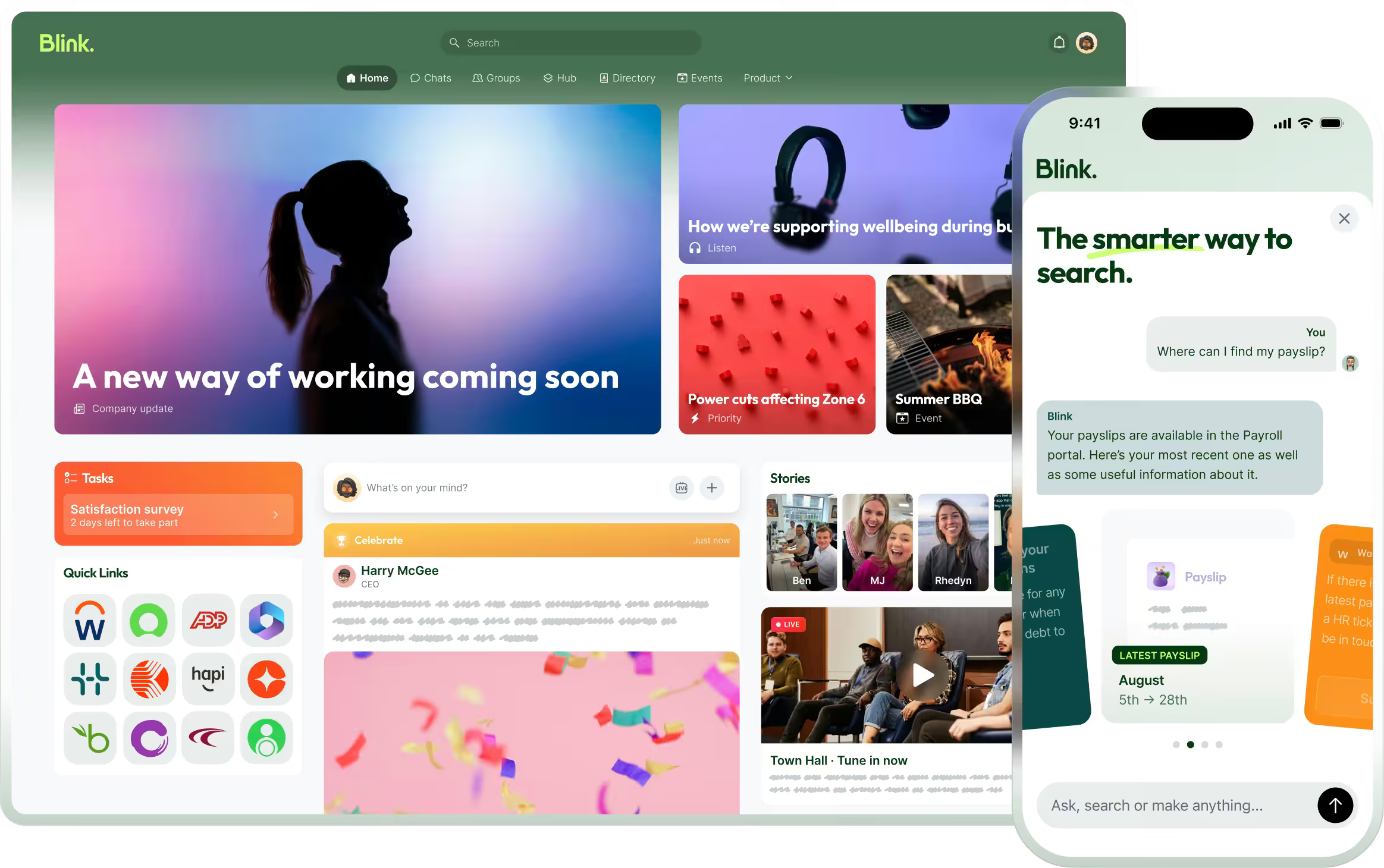
If your platform is a desktop-only by design, it’s time for a reality check. For deskless and frontline employees, mobile access isn’t just nice to have — it’s a necessity.
Think about it: Frontline workers like delivery drivers, retail associates, and healthcare staff are rarely in front of a computer. If your employee communication software platform doesn’t offer full functionality on mobile devices, you’re potentially excluding a significant part of your workforce from critical updates and engagement opportunities.
A truly effective platform ensures that all employees can easily navigate communication channels, tackle daily operations like shift scheduling, access real-time collaboration tools, and get important resources directly from their smartphones.
The gap between desktop and mobile functionality creates unnecessary barriers. Your remote employees or mobile workforce might feel undervalued or left out, leading to disengagement.
To create equity, your platform must deliver the same robust experience on every device, ensuring that everyone stays in the loop — no matter where or how they work.
{{mobile-main="/image"}}
#2. The 1990s called — they want their static platform back
Does your employee communication tool feel like an old-school bulletin board?
Today’s employees are growing increasingly familiar with dynamic and engaging platforms like Instagram and Facebook. If your platform isn’t offering key features like short-form videos, interactive news feeds, or user-generated content, don’t be surprised if your updates aren’t getting the traction you want.
The modern workforce expects more than a repository for company updates. They want to feel connected, heard, and inspired. Platforms that incorporate a wide range of features inspired by social media — such as stories, polls, and real-time messaging — foster two-way communication and increase employee satisfaction. Consider short-form videos that replace long email threads, or how you can enable user-generated content to allow employees to showcase achievements or share ideas.
An outdated, static system doesn’t just fail to engage — it can actively alienate employees. By mirroring the tools they already use in their personal lives and providing a user-friendly interface, a modern internal communications platform helps bridge the gap between work and life, fostering a sense of familiarity and connection.
{{mobile-story-polls="/image"}}
#3. You’re stuck in a click-a-thon
Ever feel like you need a GPS to navigate between business applications?
If your team has to jump between multiple tools to take employee surveys, respond to polls, fill out forms, or reach the company intranet, you’re wasting time and energy — and so are your employees.
Employees shouldn’t have to open a new app or browser tab every time they need to complete a task. An effective internal communication tool centralizes these capabilities in a single platform, letting users seamlessly deploy and respond to surveys, forms, and polls within the same digital workplace through single sign-on and powerful integrations. Not only does this save time, but it also reduces cognitive load and frustration.
Simply put: The easier it is for employees to engage with company content, the more likely they are to participate. A unified platform creates a frictionless employee experience by streamlining workflows, keeping communications clear, and ensuring that no task gets lost in the shuffle.
{{mobile-workday-feed="/image"}}
#4. Your platform looks like it belongs to someone else
Your internal communication platform should feel like an extension of your brand. If it’s generic and non-customizable, it’s missing a major opportunity to reinforce your company culture.
From colors and logos to tone and messaging, your platform should reflect your organization’s unique identity. A white-labeled solution ensures that employees see your brand — not someone else’s — every time they log in, reinforcing brand familiarity and loyalty over time.
And customization shouldn’t stop at aesthetics. The functionality and usage of your platform should align with your company’s values and communication goals.
When your platform mirrors your brand identity, it fosters a stronger connection and a sense of community between employees and the entire organization. It shows that you care about creating a cohesive, immersive experience that resonates with your workforce.
After all, branding isn’t just for customers — it’s for your employees, too.
{{mobile-nokia-feed="/image"}}
#5. Insights get lost in a black hole
Do you have any idea what’s actually working? If your platform isn’t giving you analytics on employee engagement, sentiment, and reach, you may be winging it with your strategy.
Internal communication software isn’t a one-size-fits-all endeavor. To truly understand your workforce, you need data-driven insights. Advanced analytics can reveal which messages resonate most, which channels drive engagement, and where improvements are needed. Metrics like click-through rates, sentiment scores, and survey responses provide a clear picture of what’s working and what’s not.
Without these insights, you’re essentially shouting into the void. Modern internal communications tools don't just deliver your messages; they also show you how they’re received. With the right data at your fingertips, you can continuously refine your approach and create communications that truly connect.
In a landscape where finding talent is competitive and resources can be limited, a healthy internal communication platform isn’t a luxury — it’s an investment in business success. If these red flags sound all too familiar, it might be time for an upgrade.
With the right internal communication tool, you can help you empower your workforce today and set up your workplace culture for success in 2025 and beyond.

It's time for your annual internal communications check-up.
You’ve invested in an internal communications platform, so you’re good to go — right?
Not so fast.
The technology landscape has evolved rapidly, and so have employee expectations. In fact, research shows that companies with outdated communication tools experience 23% higher employee turnover and 40% lower engagement compared to those with modern, mobile-friendly employee communication platforms.
Modern internal communication solutions are no longer just message boards or email replacements. They’ve become go-to hubs for connection, collaboration, and engagement. The best ones don’t just help your internal communication strategy survive — they help it thrive by providing features that enhance everything from onboarding to day-to-day tasks.
If your employee communication software hasn’t kept up with the times, it could be holding your business back. How can you tell? Here are five key signs that your internal comms platform might be letting you — and your employees — down.
#1. Your mobile experience is MIA
If your platform is a desktop-only by design, it’s time for a reality check. For deskless and frontline employees, mobile access isn’t just nice to have — it’s a necessity.
Think about it: Frontline workers like delivery drivers, retail associates, and healthcare staff are rarely in front of a computer. If your employee communication software platform doesn’t offer full functionality on mobile devices, you’re potentially excluding a significant part of your workforce from critical updates and engagement opportunities.
A truly effective platform ensures that all employees can easily navigate communication channels, tackle daily operations like shift scheduling, access real-time collaboration tools, and get important resources directly from their smartphones.
The gap between desktop and mobile functionality creates unnecessary barriers. Your remote employees or mobile workforce might feel undervalued or left out, leading to disengagement.
To create equity, your platform must deliver the same robust experience on every device, ensuring that everyone stays in the loop — no matter where or how they work.
{{mobile-main="/image"}}
#2. The 1990s called — they want their static platform back
Does your employee communication tool feel like an old-school bulletin board?
Today’s employees are growing increasingly familiar with dynamic and engaging platforms like Instagram and Facebook. If your platform isn’t offering key features like short-form videos, interactive news feeds, or user-generated content, don’t be surprised if your updates aren’t getting the traction you want.
The modern workforce expects more than a repository for company updates. They want to feel connected, heard, and inspired. Platforms that incorporate a wide range of features inspired by social media — such as stories, polls, and real-time messaging — foster two-way communication and increase employee satisfaction. Consider short-form videos that replace long email threads, or how you can enable user-generated content to allow employees to showcase achievements or share ideas.
An outdated, static system doesn’t just fail to engage — it can actively alienate employees. By mirroring the tools they already use in their personal lives and providing a user-friendly interface, a modern internal communications platform helps bridge the gap between work and life, fostering a sense of familiarity and connection.
{{mobile-story-polls="/image"}}
#3. You’re stuck in a click-a-thon
Ever feel like you need a GPS to navigate between business applications?
If your team has to jump between multiple tools to take employee surveys, respond to polls, fill out forms, or reach the company intranet, you’re wasting time and energy — and so are your employees.
Employees shouldn’t have to open a new app or browser tab every time they need to complete a task. An effective internal communication tool centralizes these capabilities in a single platform, letting users seamlessly deploy and respond to surveys, forms, and polls within the same digital workplace through single sign-on and powerful integrations. Not only does this save time, but it also reduces cognitive load and frustration.
Simply put: The easier it is for employees to engage with company content, the more likely they are to participate. A unified platform creates a frictionless employee experience by streamlining workflows, keeping communications clear, and ensuring that no task gets lost in the shuffle.
{{mobile-workday-feed="/image"}}
#4. Your platform looks like it belongs to someone else
Your internal communication platform should feel like an extension of your brand. If it’s generic and non-customizable, it’s missing a major opportunity to reinforce your company culture.
From colors and logos to tone and messaging, your platform should reflect your organization’s unique identity. A white-labeled solution ensures that employees see your brand — not someone else’s — every time they log in, reinforcing brand familiarity and loyalty over time.
And customization shouldn’t stop at aesthetics. The functionality and usage of your platform should align with your company’s values and communication goals.
When your platform mirrors your brand identity, it fosters a stronger connection and a sense of community between employees and the entire organization. It shows that you care about creating a cohesive, immersive experience that resonates with your workforce.
After all, branding isn’t just for customers — it’s for your employees, too.
{{mobile-nokia-feed="/image"}}
#5. Insights get lost in a black hole
Do you have any idea what’s actually working? If your platform isn’t giving you analytics on employee engagement, sentiment, and reach, you may be winging it with your strategy.
Internal communication software isn’t a one-size-fits-all endeavor. To truly understand your workforce, you need data-driven insights. Advanced analytics can reveal which messages resonate most, which channels drive engagement, and where improvements are needed. Metrics like click-through rates, sentiment scores, and survey responses provide a clear picture of what’s working and what’s not.
Without these insights, you’re essentially shouting into the void. Modern internal communications tools don't just deliver your messages; they also show you how they’re received. With the right data at your fingertips, you can continuously refine your approach and create communications that truly connect.
In a landscape where finding talent is competitive and resources can be limited, a healthy internal communication platform isn’t a luxury — it’s an investment in business success. If these red flags sound all too familiar, it might be time for an upgrade.
With the right internal communication tool, you can help you empower your workforce today and set up your workplace culture for success in 2025 and beyond.

Amelia has spent the last two years bringing energy, creativity, and a spark of marketing magic to Blink’s Boston office. As a Senior Marketing Associate, she’s helped shape our presence at events across the US, from high-profile conferences to intimate dinners — and even found time to turn our beloved mascot, Blinkie, into plush toys and Legos.
We sat down with Amelia to talk about what brought her to Blink, the milestones she’s proud of, and what makes the culture in Boston so special.
1. What is your role at Blink?
I am the Senior Marketing Associate at Blink and am based out of the Boston office. I have been here a little over two years.
2. What initially attracted you to join Blink?
I’ve always been drawn to the fast-paced, creative energy of tech startups, and when my former colleague Courtney Hayes joined Blink, she couldn’t stop talking about the mission, the buzz around the product, and how great the team was. That instantly piqued my interest.
At the time, I was still early in my career and looking for a place where I could grow — and Blink offered that in a really exciting way. It felt like a no-brainer. Once I learned more about the technology and how it was solving real problems for frontline teams, I knew I wanted to be part of it.
3. What's a project you are proud of during your time at Blink?
Because I run our events in the US, no two days ever look the same. Every event — whether it’s a major conference, a global webinar, or an intimate dinner — comes with its own unique set of challenges and rewards, so it’s hard to pick just one project. But I’m incredibly proud of how we’ve grown our event presence over the last couple of years. People now expect to see Blink at major industry shows, and they expect us to bring a level of excitement and creativity — and we’ve been delivering on that. From how we look to the quality of conversations we’re having, it’s been a huge leap forward.
On another note, I also somehow became a toy manufacturer on the side! Over the past year, I’ve worked with third-party partners to bring our mascot Blinkie to life as both plush toys and Legos. It’s been a long but fun process, from design to production, and now that they’re in our hands, it’s incredibly rewarding. They’re playful and memorable, and they bring so much joy to our customers, prospects, and the whole Blink team.
4. How would you describe the company culture at Blink in three words?
Supportive, upbeat, and collaborative.
The Boston office has such a special vibe. Everyone genuinely supports one another, no matter their title or role. We help each other grow, hold one another to high standards, and always find ways to bring energy and fun into the day. That kind of culture makes it easy to stay motivated and feel confident in the work you’re doing.
5. What's one thing you're excited about for the future of Blink?
Definitely our global growth. It’s exciting to see new customers coming on board — whether they’re small teams or massive enterprises. Even in just the few years we’ve been in the US market, we’ve seen incredible momentum. Every new logo is a reminder that there’s a real need for what we’re building.
I’m especially excited to see where we go in industries like EMS and retail. We’ve already made an impact, and I think there’s still so much opportunity. Some of the brands we’ve signed recently weren’t even on my radar when I first joined — and now they’re some of our biggest wins. It makes the next few years feel full of possibility.
6. Can you tell us about a recent initiative or program launched at Blink that you found particularly exciting?
I’m really excited about the new voice and video feature we launched. I’m someone who sends voice notes all the time and prefers face-to-face conversations, so this update felt like it was made for people like me. It’s not just convenient, it adds a whole new dimension to how people communicate on Blink. Sometimes a message just doesn’t capture tone or emotion the right way, and this makes interactions feel more human and real. I think it’s going to be a game-changer for our customers.
7. Why do you work for Blink?
The product, the mission, and the people. Blink is solving a real need connecting frontline workers who have been left out of digital transformation. That in itself is meaningful work. But what makes it special is the people behind it. Everyone here is passionate about the mission and genuinely wants to make a difference.
There was actually a moment early on in my first year, during an all-hands meeting. Sean gave a really inspiring update about our progress, and I remember looking around the Boston office and seeing how proud people were. That was when it really hit me that I was part of something important.
With the news that Workplace by Meta will be shutting down within a year, there are going to be thousands of companies looking to replace their employee experience platforms soon. Sure, finding a new solution for internal communications with the right features and functionality is important, but just as important (and not talked about enough) is the implementation and rollout experience for employees.
In my mind, a great product implemented poorly is no longer a great product. So, what does a great implementation process and experience really look like?
Whether you’re looking to upgrade your employee app before Workplace from Meta shuts down or you’re just curious to learn more about Blink, here is my take on what a great implementation experience should look like.
I’ve spent over a decade in the implementation space and know how common it is to hear that a vendor will “go the extra mile” for a customer during the crucial time between signing the contract and launching the technology.
Rarely, though, is the extra mile enough; sometimes, what it takes is the extra 1,600 miles.
Prior to my role as Head of Implementation at Blink, I spent the first 8 years of my career in technology consulting working at large firms like Aon and Accenture. In that time, I travelled to 30+ countries and learned how to deliver business value through broader people and technology transformation at multinational enterprise companies.
In all that time, I have never worked in an organization that goes so far above and beyond as Blink. This is truly a whatever-it-takes company, even when it takes a 1,600 mile road trip through 8 states to visit 6 different plants to ensure one of our customers launches the right way. On this particular trip, we met with Plant Managers, HR, Production Managers and more, to build out a use case strategy, run training sessions, and hold focus groups to ensure we were delivering a comprehensive roadmap for their new employee app.
This hands-on approach is why we have an industry-leading user adoption rate of 90% across all our customers. But it’s more than just our willingness to traverse state lines that creates a great implementation experience.
The values that drive our implementation process
I know two things to always be true about implementation: first, customers are busy. Since launching an employee app often involves a lot of contributors and stakeholders, sometimes getting everyone on the same page is the biggest barrier to launching on-time.
Second, and most important, we’ve only got one shot to launch your platform right. Change is often met with scepticism or some resistance, so we bend over backwards to set you up for the best first impression on launch day, from a seamless onboarding experience for employees to quick, demonstrable value for your executive stakeholders.
Our approach and our values that drive the team are done with these two things in mind to ensure each customer sees a high adoption right out of the gate.
So what goes into our process that makes it so successful? There are five things I’d like to highlight:
The experts
When you sign up with Blink, you’ll be guided through the implementation process by an experienced team spread across the US, UK, and Australia. All of our implementations are done solely in-house. Over the years, we’ve developed a playbook of best practices to follow and accumulated deep industry knowledge to recommend the best course of action for your unique needs.
Once you’ve launched, the Implementation team is still there with you. Not only are they helping ensure a smooth transition to your Customer Success partner, they’re helping gather metrics and feedback on the launch and supporting your efforts to hit the user adoption target in those early days.
Our employee-focused strategy
Whether you’re rolling out your first employee app or you’re replacing an old solution like Workplace, getting your employees to buy-in to Blink (or any new technology) is so important at launch. For companies with deskless workforces, where communication is a challenge, in particular, getting that early buy-in is a virtuous cycle where the employees start telling their colleagues about Blink.
When Stagecoach, one of the largest transit providers in the UK, rolled out Blink, their post-launch survey found 100% of the drivers would recommend the app to their peers. With 21,000 bus drivers across the country, word of mouth helped accelerate adoption as much as any top-down messaging.
That’s why, when we plan for a launch at your organization, we ensure there is functionality that your employees want to help get them invested early on. We’ve got an extensive catalogue of integrations that give them easy access and notifications for paystubs, time-tracking, vacation requests, IT help desks, and more. Pair that with Single sign-on, and employees will be doing all these things with one-click access through Blink.
The result of providing quick value to your employees is a high usage and adoption rate. Stagecoach, for example, has an average of 6 app opens each day from 89% of their drivers. That level of employee engagement and communication is critical to keeping everything running smoothly.
Rollout success you can measure
Everyone who implements Blink will know exactly what success looks like. We outline the six key pillars to a successful rollout early on so you have a benchmark for what to expect:
We’re going to get the leadership team aligned around the opportunity driving the rollout
We’ll determine the key metrics and KPIs for success with you so everyone is working towards the same goals
We’ll help you build your company’s digital front door—turning Blink into the single point of access for everything they need—to maximise adoption
We’re going to ensure the look and feel of the app matches your company’s brand to build trust in the early adoption phase
We’re going to build a comprehensive activation strategy to reach every employee, while taking into account the unique challenges posed by disparate and diverse workforces
Lastly, we’re going to help you build out and optimise the app after launch by introducing new functionality and soliciting user feedback to guide the improvements
Our clear roadmaps
With a feature-rich solution like Blink, unleashing the full experience is like asking employees to drink from a firehose.
To avoid overwhelming people, we help you develop a clear roadmap for the long-term experience. It starts with the Day 1 MVP that’s focused on addressing the most pressing needs and quick wins for the employee experience. From there, we help you bring new functionality to the employee experience in a way that boosts adoption without overwhelming users.
Every roadmap is tied to the KPIs you outlined earlier, so there is a definitive business value for each phase. If, like many Blink customers, you’re trying to save money by modernising outdated processes, that KPI can be tied to functionality like payslips being put into the app instead of being mailed out.
That simple change saved one Blink customer $300,000 per year on mailing and printing costs—and we were able to measure that impact because of the KPIs we had established early on.
Low-lift launch
We understand how busy our customers are, so we want every app to be launched quickly—but with as little effort on your part as possible. While you and your team are going to be involved, we keep as much of the work behind the scenes to minimise the disruption to you and your team.
When you combine our expertise with the out-of-the-box functionality and pre-made assets, getting to launch day is simple and fast. We measure implementation in weeks, not months and quarters. You can have users onboard in as little as 6 weeks, while still delivering a compelling first impression with your new employee app.
These five pillars can't capture all of the hard-work and care that the Implementation team has here at Blink. That doesn’t happen without having a team that’s willing to go above and beyond for every single customer.
Change management while implementing Blink
The implementation journey is an intense period for the stakeholders. It’s a lot of work to do quickly, and one of the ways we help ensure you’re staying on course is through our comprehensive Change Impact Assessment.
With so much change, it is easy to lose the forest for the trees and get lost in the day-to-day minutiae of the launch process. The Change Impact Assessment is designed to keep you on track by helping you understand how Blink will affect the following areas:
Operations: How will Blink affect current workflows, and what adjustments are needed to seamlessly integrate it into your existing processes?
Company culture: What changes in team dynamics and communication can we anticipate? How will this software align with your corporate culture?
Resource allocation: What are the costs, both financial and time-based, for training, implementation, and long-term management of the platform?
Technology integration: How does Blink fit into your existing technology landscape? Can we integrate into and leverage compatibility with existing systems?
Return on investment expectations: How does introducing Blink to ADQ map into your business goals? We’ll establish metrics to measure the effectiveness and ROI to ensure change is actively happening and tracking to your business goals.
Hands-on support, on-site or online
Some of the most memorable moments for us come from our on-site, white glove support for the implementation process. Whether we get to visit a corporate headquarters in Chicago to run use case discovery workshops or trekking out to a distribution centre to train frontline managers to use the app to communicate with their team, we’re always hyped to work alongside our customers.
Even if we’re not spending weeks on end at your office, we’re shooting for the same launch experience with every customer. Our job is to ensure you’re going to be successful in delivering enough value to your employees that they fall in love with the Blink app.
So, virtually or in-person, you get hands-on support experience from us. We’ll help you find, train, and empower a network of advocates and experts within your organisation who will help ensure launch-day communication is on point.
Adoption drives feedback drives adoption
Launch day success is not the end for us. Once your employees are onboard, we’re going to canvas for your people’s first impressions to understand what’s resonating and what’s missing the mark.
Getting this survey feedback early on helps us course correct, if necessary, to take you from 70% user adoption at launch up to the 90% user adoption rate we want for all of our customers.
The surveys are rarely surprising, though, because of all the work that went into the implementation journey. From getting stakeholders aligned on KPIs to running frontline focus groups, we know the value is going to be felt from day one.
Blink. And you’re set up for success.
When I take a step back and think about everything that goes into launching each company’s employee app from the people—executive sponsors, project managers, Comms, IT, Operations, managers—to all the planning, content creation, and communications efforts, it’s amazing to think about how all that work leads to something as simple as a text or email invite on launch day.
All the hands-on work that we do prior to launch is to ensure that your employees have a seamless experience from day one. That starts with the invitation to download the app and login to their “digital front door” for the first time. From there, they’ll be able to communicate with secure chat, post in the Feed, search for policies and documents in the Content Hub, and access important information like payslips, vacation requests, and scheduling—all without leaving the app or having to enter another login.
Our job is to make getting to launch as effortless as possible. Because, we know, once your employees login to Blink, they’re going to be more engaged, more informed, and, ultimately, more likely to stick around.
Employee communication and engagement is more important than ever in the remote-work era and for the frontline. You can put your trust in my team’s experienced, hands-on approach to help you deliver the most value to your employees. It’s what we’re so passionate about and what we do best.
But let’s not get ahead of ourselves: the first step is signing up for a demo today to learn more about the Blink platform.
Cut through the noise with attention-grabbing internal communications
We’ll come clean. The idea that humans have an 8-second attention span is a myth. But — as with any enduring story — it’s a myth with its roots in truth.
In a technological age, we’re bombarded with more information than ever. And people looking to convey a message — be they marketers, influencers, or internal comms teams — have very limited time to grab our attention.
As such, the 8-second rule provides a useful frame of reference when designing employee communications content, particularly if you’re aiming to engage frontline workers or Gen Z employees, who prefer short, snappy instant messaging.
By drawing employees in quickly and effectively, you’re more likely to land critical messages. You cut through the noise and improve engagement across your internal communication channels — plus, you help to build a more captivating workplace culture.
Here, we explore all the ways your internal communication strategy can stop the scroll with attention-grabbing internal comms.
The attention economy at work
How many notifications do you get on your smartphone each day? Between news alerts, personal instant messaging, and work memos, there’s a lot of information competing for our attention.
To stand out, your internal communication app needs to adopt the tactics of the most effective players in the game. We’re talking social media platforms, with their rich multimedia content and addictive algorithms.
These platforms provide ample inspiration for internal communicators. They also establish employee communication expectations.
Away from work, employees are used to content that is dynamic, interactive, and concise. They’re accustomed to mobile-first communications and content that attracts their attention in a split second.
This is the challenge for internal communications teams. How do you replicate that experience and level of engagement in the digital workplace? How do you make sure your content is seen, read, and remembered?
How to create attention-grabbing internal communications
To make your employee communications heard above the noise, you need modern internal communication tools with content that attracts employee interest within seconds. Here’s how.
Make your content snackable and visual
Short-form content is everywhere these days. And it tends to resonate well with modern employees.
Workers don’t always have time to read a long, text-based email, scan a PDF, or try to navigate your dense company intranet. Plus, this type of communication and document-sharing are unlikely to spark employee interest anyway.
With bite-sized content, employees can read and digest need-to-know information on the go. Think snappy company news feed posts, pulse checks and employee surveys, and employee recognition shout-outs — all in a single platform with a user-friendly interface.
Visuals are also key. They help you say more with less and, because they appeal to our senses and emotions much more effectively than a plain text document, they’re a surefire way to foster an engaged workforce. Try incorporating micro-videos, carousel posts, and behind-the-scenes photos into your company comms.
Hook ‘em with your headlines
With just a few seconds to convince employees to view your content, you need headlines and subject lines that do much of the heavy lifting.
Your headlines should be short and simple. They need to provoke curiosity without resorting to clickbait tactics — and they should hint at the value employees will gain by reading further.
To craft engaging headlines:
Keep it short and specific. Use a maximum of 40 characters in your subject lines. And ensure your headlines accurately reflect the rest of your content.
Adopt an employee-centric mindset. Make employees the hero of your headlines. Figure out what is most important to your workers, then lead with that.
Avoid corporate language and jargon. Use simple, easy-to-understand language and your headlines will be more engaging and quicker for employees to digest.
Create urgency or intrigue. When crafting urgent updates, mention upcoming deadlines to improve message open and read rates. Also, pique employee curiosity by hinting at what lies within.
Here are a few examples of high-impact internal message headlines:
Create a sense of exclusivity and intrigue
Not this: What you need to know about the new product launch next week.
But this: Be the first to see our new product!
Empower action and counter known hesitations
Not this: Please fill out the latest employee engagement pulse check survey.
But this: Have your say — share your feedback in minutes.
Focus on clear benefits with simple language
Not this: Sign up for our newly implemented training programs to improve your productivity.
But this: Career goals unlocked! Discover new training programs.
{{mobile-main="/image"}}
Embrace the Stories format
The Stories format has been popularized by Instagram, Snapchat, and TikTok. It provides an easy way to share short-form video content, a current favorite among social media users, in a way that highlights human connection.
The beauty of this type of video format is the ease with which you can create it. It doesn’t have to look polished and professional. In fact, DIY, smartphone-filmed content has an air of authenticity that boosts employee engagement and trust, particularly with Gen Z employees.
When exploring this format with your internal communication tools, you can feature daily updates, employee recognition and spotlights, and even shift announcements. Make Stories available on mobile and give your deskless employees a quick and engaging way to access the latest company content, too.
{{mobile-stories="/image"}}
Make your communications a two-way conversation
Interaction and engagement go hand in hand. So — to create compelling internal comms content that positively impacts the employee experience — you need to prioritize two-way communication and team collaboration.
You can do this with the help of key features like:
Polls and quizzes. Quick, easy, and engaging. Polls and quizzes allow you to gather instant employee feedback and insights while giving employees the chance to make their voices heard.
Emoji reactions. A simple way for employees to interact with your news feed content, emoji reactions allow them to express opinions and show support on company updates.
Employee-generated content. The ultimate in interaction, employee-generated content is sure to attract the attention of co-workers and offers a centralized platform for employee content creators too.
Manager video updates. Leadership and management posts break down barriers and make comms more personal, particularly if you throw in the occasional Q&A.
{{mobile-story-polls="/image"}}
Harness the power of FOMO and urgency
The best marketers understand consumer psychology. They know what makes prospective customers sit up, take notice, and take action.
Internal comms teams can harness this psychology to maintain high levels of employee engagement across communication channels. Here are a few ideas:
Time-limited content. Content — like Stories — that disappears after 24 hours is great at grabbing employee attention. It also encourages regular use of your employee app or internal communications platform, because employees don’t want to miss out on the latest company news. A quick video from the CEO, a behind-the-scenes look at an event, or a snapshot of a team milestone feels more valuable when it’s only available for a limited time.
A sense of urgency. As with the 24-hour news cycle, regularly posting real-time updates creates a sense of urgency. Employees want to check in with your internal comms to find out what’s new. Deadlines are also effective. So launch limited-time challenges — and use time-sensitive language like “now,” “today,” “don’t miss out,” and “last chance” — to spark interest and encourage participation when it comes to urgent updates.
Exclusivity. We’re drawn to content that creates a sense of prestige. So offer “sneak peeks” and “first looks” at new products, initiatives, or instant messaging from leadership. Positioning messages to employees as exclusive makes employees feel valued and part of an elite group. It also taps into employees’ natural curiosity and desire to stay in the loop.
{{mobile-live-stream-poll="/image"}}
Adopt a mobile-first approach
The best internal communication tools are mobile-first. They make it easy for employees to comment, react, and participate in real-time conversations.
For a mobile workforce without desktop access and for Gen Z workers who live on their smartphones, mobile-first communication approach supports quick social interactions without a significant time investment.
Make your internal communication platforms available on employee smartphones and you also have the option to use push notifications — the ultimate attention-grabber.
But be careful — don’t overdo it. To prevent notification fatigue, reserve alerts for priority messages and allow your employees to customize their notification preferences, particularly when it comes to lower-stakes content like internal newsletters and direct messaging.
{{mobile-mandatory-reads="/image"}}
Measure, learn, and iterate
When adapting your comms so they catch the attention of employees, it takes more than guesswork. You need to measure your success by tracking engagement metrics, views, and interactions.
You can also make like your marketing team by A/B testing your internal content. Switch up images, thumbnails, colors, headlines, and calls to action to find and roll out the most eye-catching options.
Using the data on employee behavior and gathering feedback you get from your internal communication tool — along with real-time feedback from employee surveys — you can evolve your internal communications strategy to better spark the interest of employees.
Does your comms content meet the 8-second rule?
Attention-grabbing internal communications are short, visual, interactive, and mobile-first. They communicate key information — and draw recipients in — in a matter of seconds.
In a time when it’s hard to maintain the edge in the attention economy, content like this stands out. It helps you share important information and urgent updates with employees and keep everyone on the same page.
Not only does this foster more effective communication, it also improves the employee experience. When people feel informed and connected to their organization, they enjoy higher levels of employee satisfaction.
So do you accept the challenge? Will you strive to meet the 8-second rule with your internal comms?
Audit your current content, explore the capabilities of your internal communication software, and experiment with new formats to find out what works for your entire organization. Because, by going beyond old-fashioned, text-based comms, you stand to make a big impact on your audience and create a more engaging company culture.
On the hunt for the perfect comms solution for your organization?
Whether you’re looking for a tech to engage a frontline workforce or a modern intranet that puts your organization’s knowledge at your fingertips, we’re comparing techs that can take your internal communication to the next level.
Today we look at Interact vs. Blink to see which is right for you.
Interact vs. Blink — quick facts
Blink and Interact are modern internal communication solutions suited for enterprise and small organizations. Their intuitive user experience and mobile applications lend themselves to a frontline workforce.
However, Interact is mainly an intranet replacement with various social employee engagement features. It is an older solution, and some feel that its features are a little old-fashioned. That includes an inclination towards top-down communications and static intranet pages.
In contrast, Blink packages an intranet with chat, micro-apps, and interactive content management to create an open, engaging digital experience. The priority is on encouraging all employees to participate in discussions and voice their contributions.
How they’re similar
Mobile-focused
Blink is designed with the mobile frontline worker in mind. That means you can reach everything you’d expect to have access to as a desk worker straight from your phone. The features and design flow seamlessly, no matter the screen size, to unite your organization with one application.
Similarly, Interact also caters to companies with a significant number of frontline workers. The intranet software is fully responsive and works on both iOS and Android.
Targeted posts
Both internal employee communication tools recognize that the most effective messages are tailored.
Interact uses “personas” you can define based on qualities you set. More than just dividing workers by role, you can segment your messages based on the training they’ve already received, location, and more.
Blink also allows you to target posts based on certain teams and work functions. The live feed of employee posts, company communications, and important real-time notifications are 100% customizable for each individual.
People directory
Both Blink and Interact make it easy to discover and contact any other member in your organization, breaking down communication barriers.
Blink’s People Directory consists of each team member's photographs, role, time zone, and location.
Interact’s directory adds a bit more content to this directory with customizable bios, interests, and expertise.
How they’re different
Many features set each communication management software apart. Let’s take a look:
SMS
Interact adds multichannel broadcasts that include the option to send a text to employees. One reviewer notes how “beneficial a feature like this would be during a pandemic.”
Although Blink can push notifications to each user’s phone, there is no out-of-the-box feature that allows SMS texting.
Chat
When comparing Interact vs. Blink, one large difference is Blink’s native chat function. Users can start secure group or one-on-one chats. Document-sharing and emoji capabilities also mean your employees have the tools to get their message across, no matter the subject.
In contrast, Interact only has a tagging function to start conversations and, more often than not, will need to integrate with third-party chat platforms.
Digital signage
The Interact software includes built-in digital signage capabilities. That gives your team the ability to display updates, company news, and other useful information in break rooms, conference rooms — anywhere with a screen.
Blink does not offer a feature to create and display digital signage natively in the app but can be configured with integration to serve this purpose.
Micro-apps
Blink offers deep integration with thousands of apps, acting as your one-stop solution to digital workplace technology. Blink also lets you build out integrations for any app you need through customizable micro-apps.
When comparing the customization of Interact vs. Blink, you are slightly more limited with the latter. Although it also offers several integrations, the Interact intranet does not offer a way for users to add ample features themselves.
Extranet
Interact offers additional extranet services that provide a communication platform for business partners. External parties can access FAQs, product pages, blogs, answer surveys, and more through a simple login page.
Blink’s product offering is more narrowly focused on internal communications, so if your team is not looking for an extranet solution, a platform with features solely designed for internal teams may serve you better.
Feed page
Blink’s feed page provides an engaging, personalized experience that enables a sense of connectedness and omnidirectional communication.
When comparing Interact vs. Blink’s newsfeed, Interact’s is more focused on activity updates. For example, when a document is updated or a user joins a new group.
Although users can like and comment, the social aspect is not as prominent. The platform’s forum allows more back-and-forth conversations but does not encourage frequent participation.
Ease of use
Blink takes most of the burden of onboarding and IT off your hands, making it an ideal solution for enterprise companies and lean teams alike. The features are intuitive, requiring little to no training, and once you’re onboarded, Blink handles all the behind-the-scenes IT to keep your hands free.
On the other hand, learning to use Interact’s intranet does take a bit more time. User reviews say, “Its functionality is difficult to administer and labor-intensive. It is also not very intuitive.”
One feature that is consistently said to be difficult to use is its forms. “Forms are a great feature to have, but we've found them cumbersome to create and maintain.”
Interact vs. Blink — pricing
Blink offers four levels of paid service based on company size, while Interact’s pricing structure is a bit more opaque. They offer individualized pricing based on your organization’s exact requirements, so you’ll have to request a quote to see how much it may be for you.
Here’s a look at Blink’s pricing:
Essential: $3.40 per person, per month
Business: Price on application
Enterprise: Price on application
Enterprise Plus: Price on application
Interact vs. Blink — final thoughts
If you’re looking for a comprehensive, modern intranet with social features, want to maintain a more traditional communication structure, and have the resources to spend a little more time learning how to use the product in the backend, Interact may be the right choice for you.
However, if you want an intranet with engaging, intuitive features that refresh your internal communications with open dialogue, and you want to be able to fully customize your solution’s features, Blink may be your go-to.
Determine if Blink is the right solution for you by booking a demo. Try it free for 14 days.
Out of date, out of sync, out of tune. A corporate soundtrack of forgotten logins, stale pages, and “Is anyone actually using this?”
This year, Blink is changing the track. We’ve been recognized in the 2025 Gartner® Magic Quadrant™ for Intranet Packaged Solutions — not just anywhere in the grid, but as a Challenger.
For us, this isn’t just a placement. It’s a remix. For the industry. For the intranet. For every employee who’s ever thought, “Why is this so hard to use?”
Why the Gartner Magic Quadrant matters
If you’re in HR, comms, IT, or procurement, you already know the Gartner Magic Quadrant™ - to us, it’s one of the most influential industry reports in technology.
Every year, Gartner independently evaluates vendors on Ability to Execute and Completeness of Vision - then categorizes them as Leaders, Challengers, Visionaries, or Niche Players.
This Quadrant has become the go-to reference for organizations choosing their next digital workplace partner.
We’re proud to debut as a Challenger. But more than that, we see it as a validation that the world is ready for a more human way to work.
Why Blink? Why now?
We built Blink on a simple belief: Work should feel connected.
In a world overflowing with tools but starved of real connection, we’re creating an intranet that people actually want to use. One that unites the CEO’s town hall with the shop floor shift briefing. One that gets frontline and office workers on the same wavelength.
Why we believe Blink was recognized
🎧 Sales and customer alignment: We deeply understand buyer pain points, backed by strategic partnerships with industry leaders like Workday.
🎧 Financial and product strength: Robust growth, an agile roadmap with continuous innovation, and a reliable product strategy built for the future keep Blink ahead of the curve.
🎧 We go beyond software: With specialized onboarding teams, strategic rollout support, and a dedication to long-term success, we’re not just a platform — we’re a true partner.
🎧 From mobile to total experience: Our platform empowers every kind of worker with personalized microapps, powerful social features, and communications that actually cut through.
Challenger energy: More than a position - a mindset
For us, being a Challenger isn’t just about where we land on the grid. It’s about how we move through the world.
We don’t believe “good enough” intranets should do the trick. We don’t do stale or static. We remix the intranet into something dynamic, modern, and centered on people.
Because what good is an intranet that no one uses?
We’re obsessed with adoption: ensuring employees actually engage, communicate, and thrive on the platform. That’s why Blink is designed with every kind of worker at heart, driven by a people-first approach to innovation.
That’s what it means to challenge the status quo. That’s what it means to Blink.
What’s the rest of the market saying?
The intranet packaged solutions (IPS) market is evolving rapidly, moving from static, web-only sites to dynamic, multichannel platforms that are central to the digital workplace.
What used to be dusty web-only portals are now vibrant, multi-channel hubs that power communication, engagement, knowledge, and culture. Today’s IPS offerings go far beyond document repositories - they’re incorporating AI assistants and supporting integrations with Workday, ServiceNow, Microsoft 365, and other leading business systems.
As Gartner puts it, intranets are once again a priority investment as organizations transform their digital workplace, reduce IT complexity, and seek consistent, people-first employee experiences.
Intranets are no longer just “nice to have” - they’re necessary parts of a modern business infrastructure. They’re becoming critical hubs for productivity, connection, and culture across both office-based and deskless workforces.
This isn’t evolution - it’s inflection. And Blink is leading the remix.
Spinning the future of work
For us, being named a Challenger is a milestone. But it’s also just the intro track.
We’re already dropping new hits:
Broadcast-quality live streaming that gives every employee a front row seat
Blink Assist, our AI-powered copilot for content creation and communication
Analytics that actually matter, surfacing predictive insights into how people engage
“Save for later” offline access, so work doesn’t have to stop when the WiFi does
Modern social features like Stories that drive adoption and give Instagram a run for its money
Our vision is simple: The future of work should feel intuitive, inspiring, and essential - not invisible. Blink exists to unlock that.
This isn’t just recognition - it’s our statement
We’re not here to play quietly. We’re here to remix the intranet.
Named top Challenger by Gartner, chosen every day by the world’s most ambitious organizations, and powered by a people-first mission - this is only the beginning.
Today’s employees routinely use digital tools to manage their personal lives — for banking, shopping, fitness, and even dating — and now expect a similar level of convenience and connectivity in their professional environments.
Forward-thinking organizations are meeting these expectations through employee experience software platforms that transform how teams communicate and engage. Solutions such as Blink’s employee experience platform enable staff to feel more connected, motivated, and loyal to their company by simplifying communication and recognition.
Frontline teams, in particular, benefit from a unified employee experience solution. The “frontline connection gap” often leaves these employees isolated from leadership and peers, reducing both satisfaction and retention.
A mobile-first employee experience platform, such as Blink, bridges that gap by bringing everyone together wherever they work. It gives each employee a stronger sense of belonging, supports regular recognition, and creates continuous communication that makes work more fulfilling.
This guide from Blink outlines some of the best employee experience software platforms available today — helping you identify the right solution to connect your workforce and elevate engagement across your organization.
Whether your organization has frontline, desk-based, or hybrid teams, an employee experience software platform like Blink’s employee experience platform helps you meet and exceed modern employee expectations and deliver measurable improvements across engagement, operations, and culture. Here’s what effective employee experience software can help you achieve:
Enhanced employee engagement
Low employee engagement costs the global economy $8.8 trillion, according to Gallup. Employee experience platforms like Blink enable two-way communication, recognition, and collaboration that increase loyalty, satisfaction, and productivity.
Streamlined HR processes
The best platforms automate repetitive and time-consuming HR tasks such as time tracking, performance appraisals, and routine communication. By handling these automatically, HR teams free up time for human-touch, value-add work that improves the overall employee experience.
Improved talent management
Around 65% of frontline employees are unsure how to progress in their careers. Employee experience software provides continuous feedback, coaching, and development tools that help managers identify high-potential talent and guide employees toward advancement.
Data-driven insights
Comprehensive reporting and analytics capabilities enable organizations to measure engagement, sentiment, and performance. Blink’s platform, for example, supplies real-time insights that support better decisions, highlight trends, and surface issues early.
Employee recognition and empowerment
Employee appreciation and self-service tools make staff feel valued and informed. Access to essential information anytime, anywhere fosters a sense of support and connection across the organization.
A positive company culture
Transparent communication and meaningful connection — both core features of leading platforms like Blink — build positive company culture. When employees feel proud of where they work, satisfaction rises, churn decreases, and employer branding strengthens.
Key things to look for when choosing an employee experience software platform
Now that the benefits of an employee experience software platform are clear, it’s important to identify the key capabilities that define an effective solution. When choosing your platform, consider these essential features — many of which are core to Blink’s employee experience platform:
User-friendly interface
The best employee experience platforms minimize the learning curve. They should feel intuitive and familiar from day one, encouraging quick adoption across all teams.
Personalization and customization
Every organization is different. Choose a platform that lets you tailor tools and workflows to your company’s structure and employee needs.
Employee self-service
When employees can access the information and tools they need independently, HR teams spend less time handling routine requests and more time on strategic, people-focused initiatives.
Integration capabilities
For a seamless employee experience, ensure your platform integrates smoothly with existing business systems — from scheduling and payroll to communication tools. Blink, for example, integrates across multiple systems to provide a unified digital workplace.
Mobile accessibility
Frontline workers and remote employees often lack equal access to company tools. A mobile-first platform like Blink enables engagement and communication anywhere — whether on the shop floor, in the field, or during a commute.
Analytics and reporting
Select software that delivers robust analytics on engagement, satisfaction, and retention. Data-driven insight helps HR teams make informed decisions and address trends early.
Comprehensive feature set
To reduce the need for multiple apps, look for a platform that combines employee engagement, feedback, rewards, performance management, and learning and development. Blink’s platform consolidates these into one accessible hub, simplifying management and improving the overall employee experience.
15 best employee experience software platforms
1. Blink
Blink is a leading employee experience app and communication platform purpose-built for frontline teams. As a mobile-first solution, Blink unifies dispersed workers and connects them with leadership through an intuitive, easy-to-use interface.
Users can quickly launch pre-loaded or custom employee surveys, add mandatory reads to a shared company news feed, recognize colleagues for outstanding work, and access real-time insights on engagement, satisfaction, and retention.
Built around frontline accessibility, Blink’s Hub centralizes essential information, including pay stubs, schedules, and key documents. Its interface encourages high adoption and consistent daily use — ensuring every employee stays informed, valued, and connected.
Even after identifying the right employee experience management software, securing senior leadership buy-in remains essential. Before presenting your case, gather evidence and insights in the following key areas — all central to the successful implementation of a platform like Blink.
Developed by the team at Blink, the platform brings together communication, engagement, and HR functionality in one secure space. It’s designed to strengthen connections and alignment across all levels of an organization while reducing the administrative burden on HR teams.The essential guide to executive buy-in for frontline employee experience
Scalability: Evaluate how your chosen platform will adapt to your company’s future needs, including long-term growth and an expanding workforce. Blink’s platform is designed to scale seamlessly as organizations expand, supporting larger teams without adding administrative complexity.
Implementation: Assess how straightforward it is to deploy your software and integrate it with existing systems. A solution such as Blink simplifies this step with pre-built integrations and guided onboarding.
User adoption: An employee experience platform only delivers value when employees actively use it. Confirm that your software has a proven record of adoption. For example, 97% of employees at Care Synergy now use the Blink app, demonstrating how intuitive design drives engagement.
Vendor reputation and support: Review customer testimonials and case studies to verify a provider’s reliability and service quality. Blink’s long-term partnerships and customer success programs help ensure ongoing performance and satisfaction across industries.
Case study: Elara Caring
Elara Caring employs more than 32,000 caregivers who provide in-home and hospice support to patients across the United States. The organization faced a significant communication and coordination challenge:
Without company-issued phone numbers or email addresses, caregivers felt disconnected from both colleagues and headquarters.
An outdated manual scheduling process left hundreds of shifts unfilled each week.
The existing HR platform failed to meet employees' operational and engagement needs.
To close these gaps, Elara Caring implemented Blink’s employee experience platform, developed by joinblink.com. The mobile-first platform unified essential communication, scheduling, and feedback tools into a single, secure, accessible application. Managers and caregivers could now share updates through a company news feed, manage shifts in real time, and recognize great work — all from their smartphones.
The impact was immediate. Workforce efficiency improved, communication bottlenecks were eliminated, and employees felt more connected to both their teams and leadership. Ninety-five percent of employees now report stronger connections to Elara, and 96% would recommend Blink’s platform to others in their field.
Culture Amp is an excellent choice if you want to improve your performance tracking process. You can set and track employee targets, create personalized L&D plans, and access historical conversation and 1:1 data so managers can provide actionable feedback.
This employee experience management software also gives you access to a ton of data. This provides a great basis for analysis and insight. And the platform even does some of the hard work for you too, using employee engagement stats to predict staff turnover.
Key features
Reporting and analytics
Turnover prediction tool
Performance reviews
Goal tracking
Pricing
Contact sales team for prices
3. Bonusly
Bonusly is a great option for employee recognition. Employees meet personalized targets and build up points, which they can then use to claim a selection of rewards, all via the platform.
Whether you want your team to go above and beyond for customers, meet their sales quota, or simply engage with a request for employee feedback, Bonusly helps you to promote and recognize the employee behavior you most want to see.
Key features
Peer-to-peer recognition
Employee rewards
Goal setting
Reporting and analytics
Pricing
Core: $3 per user/month
Pro: $5 per user/month
Contact sales team for custom plans
4. Lattice
With Lattice, you’ll find it easy to launch employee surveys, celebrate employee wins, and get real-time experience data with the help of the platform’s Pulse feature and sentiment analysis. Lattice also supports employee development opportunities. It connects individual work to business outcomes so employees can view their progress easily.
Key features
Reporting and analytics
Employee surveys
Employee recognition
Goal management
Pricing
Performance Management + OKRs and Goals: $11 per user/month
Engagement: +$4 per user/month
Grow: +$4 per user/month
Compensation: $+6 per user/month
5. Qualtrics XM
Qualtrics XM offers several products, one of which they’ve designed specifically for people teams. The employee experience platform uses AI and automation, so you can continually gather and assess employee feedback and get to know employee views at every point in the employee life cycle.
Data analytics tools help you to connect employee feedback to customer experience and business outcomes – so you can target employee experience improvements where they stand to make the most difference.
Workhuman is built around social recognition. Team-based social feeds support peer-to-peer appreciation. Employees gain recognition points, which they can exchange for personalized and locally sourced rewards. And an AI-powered Inclusion Advisor gives real-time feedback on recognition posts to prevent unconscious bias and promote a culture of belonging.
Key features
Employee recognition
Performance management
Translation into 34+ languages
Community building
Pricing
Contact sales team for prices
7. Mo
Mo is one of the best employee experience software platforms for team communication and appreciation. It allows you to share successes, recognize results, and reward good work.
Standout features include the Mo assistant, which helps people managers to remember work anniversaries and prompts them to appreciate employees who haven’t had a pat on the back in a while, and the social feed, where you can start conversations, prompt employees to start conversations, and ask for employee feedback.
Key features
Team appreciation
Social feed
Employee feedback
Insights
Pricing
Starter: $3 per user/month
Level Up: $5 per user/month
Contact sales team for custom plans
8. Motivosity
Motivosity provides tools for every stage of the employee journey. From recruitment to onboarding to development to career progression and even an employee’s company exit experience. The basic plan gives you access to a company social feed, great for important announcements and getting to know co-workers. Add-ons include Recognition and Rewards, Manager Development, and Employee Insights.
Key features
Social feed
Employee recognition
Manager training
Surveys and insights
Pricing
Motivosity: $2 per user/month
Recognition and Rewards: +$2 per user/month
Manager Development: +$2 per user/month
Employee Insights: +$2 per user/month
9. WorkTango
WorkTango (formerly Kazoo) allows you to highlight the strengths and skills of peers and employees, while a points and rewards system incentivizes key behaviors. It’s one of the best employee engagement platforms for teams who want to make recognition an integral part of their company culture.
Key features
Employee recognition
Goal setting and feedback
Surveys
Analytics and reporting
Pricing
Contact sales team for prices
10. 15Five
15Five is one of the best employee experience software options if you’re looking to connect employee work with business objectives. Managers and employees can create career paths that motivate performance. Employees can identify their strengths and how these align with their goals.
Key features
Goal setting tools
Feedback
Employee recognition
Manager coaching
Pricing
All of the following prices are billed annually:
Engage: $4 per user/month
Perform: $8 per user/month
Focus: $8 per user/month
Total Platform: $14 per user/month
11. Leapsome
Leapsome is a solid employee engagement software, particularly if you’re looking for a solution that can scale with your company. You can select the modules you need, adapting the software to the size and budget of your organization. With Leapsome, you can run meaningful, well-structured meetings. You can also congratulate co-workers publicly and share private feedback too.
Key features
Employee feedback
Learning and development
Goal setting
Employee competency framework
Pricing
Pricing starts at $8 per user/month with the option to add on the extra features you need
12. BambooHR
BambooHR provides a huge range of HR tools. Teams can use it to track payroll, hours worked, and paid time off. The platform offers recruitment and L&D tracking tools.
As well as making life easier for HR teams, BambooHR has a couple of features designed to improve the employee experience. Wellbeing and eNPS surveys help teams to understand the employee perspective, while performance tracking tools support employee progression.
Key features
Performance reviews
Time tracking
Payroll management
Applicant tracking system (ATS)
Pricing
Contact sales team for prices
13. Officevibe
If you’re looking for an easy and effective employee survey tool, Officevibe is an excellent choice. Officevibe is just one of the HR products available under the Workleap umbrella and this offering is laser-focused on employee experience.
The platform gives managers tools to become better leaders and build happier teams. Pulse and customized surveys, peer-to-peer recognition, and 1-1 meeting tools that guide meaningful and productive conversations are all at a manager’s disposal.
Key features
Surveys
Employee feedback
Employee recognition
Performance tracking
Pricing
Free: $0 per user/month
Essential: $5 per user/month
Pro: $8 per user/month
14. Workvivo
Another good employee experience management software, Workvivo helps organizations streamline their communications and showcase their company culture, even when teams work remotely. When posting on the social feed, employees can link their posts to company values and goals. And with the Badge Feature, managers can recognize employee achievements publicly.
An intuitive platform with a quick and easy setup process, Jostle is another popular employee engagement platform. It works to connect everyone within an organization, providing a social feed and a space for shared documents.
Managers can set tasks and then use built-in chat functions to track progress. They can also separate the social feed by location or team, ensuring that the right information reaches the right people.
Key features
Social feed
Surveys
Peer-to-peer recognition
Document and policy sharing
Pricing
Prices depend upon the number of employees you have. For an organization with 15-50 employees, prices are as follows:
Bronze: $5 per user/month
Silver: $9 per user/month
Gold: $12 per user/month
Smaller organizations can expect to pay more per user. Larger organizations can expect to pay less. Prices for the Platinum plan are available from the sales team.
Additional considerations for HR teams
You may already be sold on a particular employee experience management software, but getting senior leadership buy-in is a vital next step. Before entering conversations about the type of tool you’d like to implement, be sure to gather information on all of the following:
Scalability – Find out if and how your chosen platform will respond to your company’s future needs, considering long-term company growth and an increase in the number of employees.
Implementation – Determine how easy it is to implement your chosen software and whether it integrates with your other existing systems.
User adoption – An employee experience platform provides very little value if employees don’t use it. Check whether your chosen platform has a user-friendly interface and a history of high adoption rates. We’re proud that 97% of employees at Care Synergy are now using the Blink app. Find out more by watching our on-demand webinar.
Vendor reputation and support– Take a look at customer reviews, testimonials, and case studies to find out whether your software provider has a good track record in terms of product quality and client care.
Case Study: Elara Caring
Elara’s 32,000 carers spend their workdays caring for patients in their homes or in hospice settings. The company faced a million-dollar communication problem:
Without company phone numbers or email addresses, carers felt disconnected from their co-workers and head office
Carers wanted shift opportunities but an inefficient manual system meant hundreds of shifts went unfilled each week
The company’s existing HR platform was failing to meet the needs of employees and the wider organization
Elara saw a solution in Blink. Our platform gathered all the information and tools that employees needed in one easy-to-use platform that everyone could access from their smartphones. Employees and managers had access to a social feed, shift scheduling, employee feedback and employee recognition tools.
The result? Improved workforce efficiency and streamlined communications. Thanks to Blink, Elara has transformed the employee experience. 95% of employees now feel more connected to Elara and 96% would recommend the platform.