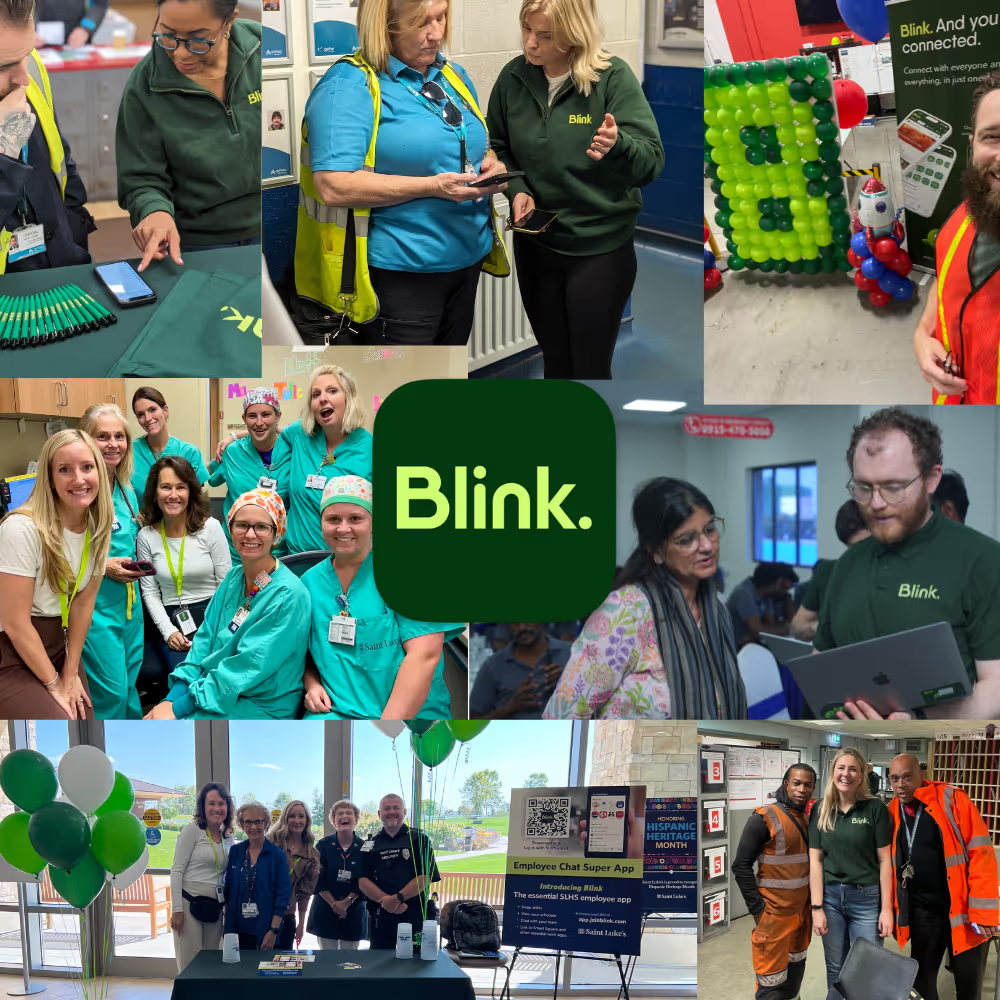
Workplace by Meta winding down? Compare 8 alternatives for employee communication and engagement, with features, pricing, and adoption data.
Jess DeVore
Published:
May 15, 2024
Last updated:
January 7, 2025
What we'll cover
On May 14th, 2024, Workplace from Meta announced that it would be closing, leaving its users looking for a new digital home.
Ten years ago, bringing social-media-style tools to the workplace was revolutionary. And Workplace by Meta (launched in 2016) was quick to bring its version of the social intranet to the market.
Since then, many organizations have relied on Workplace for employee engagement and internal communication. They liked the Workplace from Meta interface, which mirrored those of popular social media apps.The interface was intuitive and felt familiar, so employees found it easy to use.
But over the last few years, we’ve seen product development across various social intranet companies grind to a halt. The customers we speak to here at Blink say that they’re looking to change platforms because their workplace social channels are noisy and irrelevant. Others say that their chosen platform has such low adoption that the business gets no value from it.
Now, organizations are looking for workplace software that does it all. A platform that provides an attractive social feed along with features that boost communication and productivity.
Whether you’re a Facebook Workplace customer looking for an alternative or you’re looking to adopt a platform for the first time, here are our recommendations. On our list, you’ll find products that are doing exciting things within this space — and that offer a wide range of features and functionality for your organization.
Top 8 alternatives to Meta from Workplace
1. Blink
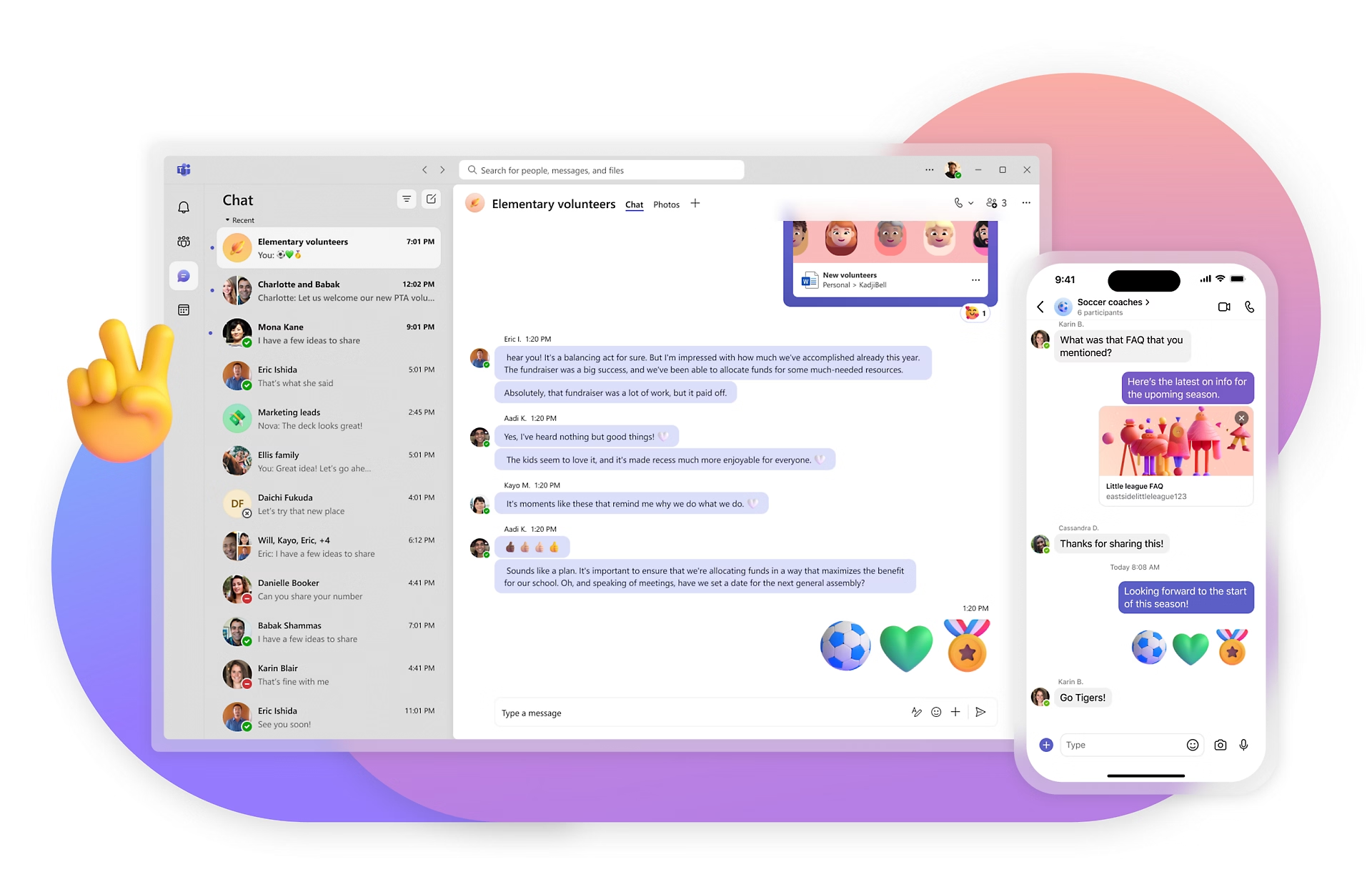
Blink is the market leader in delivering world class access and user experience to your employees, regardless of their work environment or location. It simplifies the digital experience with a single super-app. Employees can access the app via their smartphones, without using an email address.
Blink’s employee app is also available in a desktop version so all employees enjoy a unified experience. They can access an engaging news feed, 1:1, and group chats. They can take part in two-way communication, knowledge sharing, and employee recognition. The platform makes it easy to gather employee feedback, too.
Productivity also gets a boost, thanks to custom micro-apps and deep integrations with your favorite tools. Via single sign-on, employees can use the Blink interface to request time off, view their schedules, manage tasks, and complete training courses.
By putting all of these tools and resources in one place, Blink’s app gets excellent rates of adoption (90%+) and usage (96% monthly active users). Managers can also track adoption, usage, employee sentiment, and engagement thanks to Blink’s robust analytics features. So they can make data-driven changes to improve employee performance, experience, and retention. Blink is the leading choice for a Facebook Workplace alternative.
{{mobile-desktop-main="/image"}}
Pros
An engaging news feed: Blink has an intuitive social-media-style news feed that supports two-communication, employee recognition, and top-down updates. Admins can tailor the newsfeed so employees get relevant communications based on their teams, interests, and roles.
Mobile-first: Designed for smartphones — and for the frontline workforce — Blink ensures both mobile and desktop apps have the same great features and functionality. And employees don’t need an email address to get set up.
Analytics: Blink’s analytics features allow teams to dive deep into employee engagement data. They can learn about how employees engage with the organization and the platform and find actionable areas for improvement, too.
A digital front door: Offering excellent integrations, the Blink super-app lets employees access all workplace tools and resources from a single, user-friendly dashboard. They can request time off, sign up for shifts, and access training resources.
Customer support: Blink’s customer success managers are with you every step of the way — from set up to launch and beyond — helping you get the most from the platform and ensuring employee adoption.
Cons
Frontline-focused: Blink was designed for frontline workers, however there is a best-in-class desktop application that allows for all employees to take advantage of the features and platform.
Pricing
Pricing is available on request.
Ratings
Capterra: 4.6/5
G2: 4.7/5
2. Staffbase
Staffbase is a tool that focuses on employee communication. It offers email, messaging, and chat functions to connect employees, including frontline workers. Billed as an intranet solution to unite entire organizations, Staffbase's communication and intranet features make it a strong Workplace from Meta alternative.
Pros
Content planning: Good content planning and goal-setting tools that help your content creators coordinate campaigns.
Reporting: Staffbase analytics lets you see how many employees are using the platform and how they engage with your content.
HR tools:This platform makes life easy for your HR team. They get communication tools, surveys, and analytics, while employees get self-service options.
Cons
Pricing: Staffbase comes in at a high price point and there are added costs if you want to use all available modules.
Mobile app: While Staffbase provides a mobile app, this takes time to set up as there aren’t many out-of-the-box features for frontline workers.
Beekeeper Around since 2012, Beekeeper is a tool that focuses only on the frontline organizations. The platform’s employee app provides lots of useful forms and integrations, meaning companies can give employees access to workplace tools from a single interface. However, Beekeeper doesn’t put a lot of emphasis on the office worker experience, which means your desk-based teams may need a separate system.

Pros
Communication tools: Beekeeper provides a range of communication tools, including chats, streams, surveys, polls, and campaigns. Daily stand-up briefings and crisis communication allow critical comms to cut through.
Employee services: The Beekeeper platform supports workplace and HR operations. Employees can request time off or view their shifts via the Beekeeper dashboard.
Personalized comms: It’s possible to filter communications so employees only see information that’s relevant to them.
Cons
A complicated interface: Some users say that the Beekeeper interface isn’t particularly user-friendly when compared to other apps and modern intranets on this list.
Reliability: The platform sometimes takes a while to load, for both admins and end-users.
Search functionality: You can’t prioritize or order search results so it can be hard to track down older posts and content.
Pricing
You can try Beekeeper for free for 14 days. There’s also a limited free plan for up to 30 users. Pricing for other plans is available on request.
Simpplr is an all-in-one social intranet platform with two priorities. First, to create a centralized social hub for sharing news and updates. And second, to provide an alternative to SharePoint for housing documents and policies. Simpplr’s advanced search capabilities promise a seamless experience and a simple interface is appealing to users.
Pros
Customer support: Simpplr prides itself on customer service so customers can expect plenty of support.
A minimal interface: The Simpplr interface is very simple and feels like a social media app. This makes it easy to navigate and understand.
AI assistance: You can use AI chatbots to support employees with their queries. AI also comes in useful for automating processes and producing platform content.
Cons
Lack of customization: Simpplr doesn’t provide a lot of design flexibility so users may find it hard to align the platform with their branding and company requirements.
Integrations: Some users complain that there are limited integration options with third-party tools.
Yammer, now also known as Microsoft Viva Engage, works well with other products in the Microsoft suite. This particular product focuses on communication and you’ll need to use other Microsoft products to create a fully-fledged intranet ecosystem. If you already use Microsoft products in your organization, Yammer is certainly a Workplace from Meta alternative worth considering.
Pros
Microsoft integration: Viva Engage offers easy integration with other Microsoft tools and is familiar to those already working within the Microsoft suite.
Communities: As well as keeping up-to-date on company news through the news feed, employees can create communities, connecting with co-workers with whom they share interests.
Virtual town halls: Viva Engage allows you to create virtual events with video and Q&A functions, so both remote and office-based employees can be part of the company conversation.
Cons
Interface: Some users complain that the Viva Engage interface isn’t particularly user-friendly, especially on the mobile app version.
Unfiltered comms: Without comprehensive content filtering options, content in the news feed isn’t always relevant to individual employees.
Notifications: Users complain about the number of email notifications they get from Yammer, which they say is frustrating and distracting.
Pricing
The full suite of Viva tools costs $12 USD per user per month. There’s a yearly commitment and prices aren’t inclusive of GST/VAT.
Ratings
Capterra: 4.2/5
G2: 3.6/5
6. Workvivo
Workvivo - has been named as Meta’s preferred migration partner. It’s a product that’s risen to prominence in recent years due to its acquisition by Zoom. Seamless integration with Zoom’s video conferencing software is a major platform selling point. Workvivo also provides a mobile app and a variety of communication channels.
Pros
A variety of communication channels: Workvivo’s channels include a news feed, 1:1 chats, live streams, and podcasts.
Translation capabilities: The platform makes it easy for multilingual teams to publish and read content in their chosen languages.
Microsites: Teams and special interest groups can create microsites, which are tailored to their community.
Cons
Cost: Some features — like Workvivo TV and advanced analytics — are add-ons that cost extra.
Personalization: Workvivo offers limited personalization options meaning users can’t configure the platform to suit their needs.
Notifications: This is another platform where notifications seem to be a problem. Users complain that excessive notifications disrupt their workday.
Happeo is a Google-based social intranet that makes a good alternative to Workplace from Meta, particularly if you’re a Google Workspace organization. Happeo helps teams to share knowledge and manage internal communications. It offers a template-based page builder, which you can use to create intranet pages and employee content.
Pros
Easy setup: It’s easy for organizations to get started with Happeo, particularly if they’re already using Google Workspace.
Communities: Happeo allows users to create hubs and communities, based on departments, roles, or shared interests.
Search functions: You can search people, posts, and integrated third-party apps to find exactly the information you’re looking for.
Cons
Analytics: There’s a time delay on analytics, so it’s hard to get real-time insight. Some analytics features are only available as an add-on.
Limited customization: Users can’t change notifications, page layouts, menus, or formatting to suit their needs and preferences.
Content management: Some users say content management features could be improved so it’s easier to recognize old content and assign admins to update it.
Igloo is workplace experience software that offers a sense of community, recognition, and resources to employees. This cloud-based, mobile-optimized solution gives teams all the tools they need to collaborate, share knowledge, and communicate.
Pros
A digital workplace: Igloo helps organizations create an effective digital workplace with tools like the news feed, polls, targeted content, and file sharing.
Analytics: Igloos provides users with great analytics tools. These help you to improve your content, identify key creators, and understand user flow.
Access to Igloo University: Customers can use Igloo’s education program to learn more about the platform and how to use it effectively.
Cons
Integration: While Igloo makes workplace apps available via the one interface, integrations can be tricky and may require additional development resources.
Lack of customization: Some users say they struggle to customize pages and the Igloo interface in the way they’d like.
Complexity: Getting started with Igloo involves a steep learning curve that can be off-putting for users.
Pricing
Pricing is available upon request. Although Igloo does say that pricing typically starts at around $20,000 USD per year for an organization.
Ratings
Capterra: 4.5/5
G2: 4.2/5
In summary
Rest assured that there are plenty of excellent alternatives to Workplace from Meta. The platforms on this list all offer a social-media-style feed, along with other employee communication and engagement features.
For all organizations with a large frontline employee base, Blink is a standout option. With its user-friendly, mobile-first app it supports employee connection, even for hard-to-reach frontline teams. It gives employees a voice and makes their lives easier, giving them access to workplace tools from one simple, digital front door.
Supporting communication, engagement, and productivity, Blink helps organizations to thrive. And it gives frontline workers the sense of belonging and connection they need to feel invested in their work and less likely to look for another job.
Find out what Blink could do for your frontline organization. Book your Blink demo today to see our platform in action.
On May 14th, 2024, Workplace from Meta announced that it would be closing, leaving its users looking for a new digital home.
Ten years ago, bringing social-media-style tools to the workplace was revolutionary. And Workplace by Meta (launched in 2016) was quick to bring its version of the social intranet to the market.
Since then, many organizations have relied on Workplace for employee engagement and internal communication. They liked the Workplace from Meta interface, which mirrored those of popular social media apps.The interface was intuitive and felt familiar, so employees found it easy to use.
But over the last few years, we’ve seen product development across various social intranet companies grind to a halt. The customers we speak to here at Blink say that they’re looking to change platforms because their workplace social channels are noisy and irrelevant. Others say that their chosen platform has such low adoption that the business gets no value from it.
Now, organizations are looking for workplace software that does it all. A platform that provides an attractive social feed along with features that boost communication and productivity.
Whether you’re a Facebook Workplace customer looking for an alternative or you’re looking to adopt a platform for the first time, here are our recommendations. On our list, you’ll find products that are doing exciting things within this space — and that offer a wide range of features and functionality for your organization.
Top 8 alternatives to Meta from Workplace
1. Blink
Blink is the market leader in delivering world class access and user experience to your employees, regardless of their work environment or location. It simplifies the digital experience with a single super-app. Employees can access the app via their smartphones, without using an email address.
Blink’s employee app is also available in a desktop version so all employees enjoy a unified experience. They can access an engaging news feed, 1:1, and group chats. They can take part in two-way communication, knowledge sharing, and employee recognition. The platform makes it easy to gather employee feedback, too.
Productivity also gets a boost, thanks to custom micro-apps and deep integrations with your favorite tools. Via single sign-on, employees can use the Blink interface to request time off, view their schedules, manage tasks, and complete training courses.
By putting all of these tools and resources in one place, Blink’s app gets excellent rates of adoption (90%+) and usage (96% monthly active users). Managers can also track adoption, usage, employee sentiment, and engagement thanks to Blink’s robust analytics features. So they can make data-driven changes to improve employee performance, experience, and retention. Blink is the leading choice for a Facebook Workplace alternative.
{{mobile-desktop-main="/image"}}
Pros
An engaging news feed: Blink has an intuitive social-media-style news feed that supports two-communication, employee recognition, and top-down updates. Admins can tailor the newsfeed so employees get relevant communications based on their teams, interests, and roles.
Mobile-first: Designed for smartphones — and for the frontline workforce — Blink ensures both mobile and desktop apps have the same great features and functionality. And employees don’t need an email address to get set up.
Analytics: Blink’s analytics features allow teams to dive deep into employee engagement data. They can learn about how employees engage with the organization and the platform and find actionable areas for improvement, too.
A digital front door: Offering excellent integrations, the Blink super-app lets employees access all workplace tools and resources from a single, user-friendly dashboard. They can request time off, sign up for shifts, and access training resources.
Customer support: Blink’s customer success managers are with you every step of the way — from set up to launch and beyond — helping you get the most from the platform and ensuring employee adoption.
Cons
Frontline-focused: Blink was designed for frontline workers, however there is a best-in-class desktop application that allows for all employees to take advantage of the features and platform.
Pricing
Pricing is available on request.
Ratings
Capterra: 4.6/5
G2: 4.7/5
2. Staffbase
Staffbase is a tool that focuses on employee communication. It offers email, messaging, and chat functions to connect employees, including frontline workers. Billed as an intranet solution to unite entire organizations, Staffbase's communication and intranet features make it a strong Workplace from Meta alternative.
Pros
Content planning: Good content planning and goal-setting tools that help your content creators coordinate campaigns.
Reporting: Staffbase analytics lets you see how many employees are using the platform and how they engage with your content.
HR tools:This platform makes life easy for your HR team. They get communication tools, surveys, and analytics, while employees get self-service options.
Cons
Pricing: Staffbase comes in at a high price point and there are added costs if you want to use all available modules.
Mobile app: While Staffbase provides a mobile app, this takes time to set up as there aren’t many out-of-the-box features for frontline workers.
Beekeeper Around since 2012, Beekeeper is a tool that focuses only on the frontline organizations. The platform’s employee app provides lots of useful forms and integrations, meaning companies can give employees access to workplace tools from a single interface. However, Beekeeper doesn’t put a lot of emphasis on the office worker experience, which means your desk-based teams may need a separate system.
Pros
Communication tools: Beekeeper provides a range of communication tools, including chats, streams, surveys, polls, and campaigns. Daily stand-up briefings and crisis communication allow critical comms to cut through.
Employee services: The Beekeeper platform supports workplace and HR operations. Employees can request time off or view their shifts via the Beekeeper dashboard.
Personalized comms: It’s possible to filter communications so employees only see information that’s relevant to them.
Cons
A complicated interface: Some users say that the Beekeeper interface isn’t particularly user-friendly when compared to other apps and modern intranets on this list.
Reliability: The platform sometimes takes a while to load, for both admins and end-users.
Search functionality: You can’t prioritize or order search results so it can be hard to track down older posts and content.
Pricing
You can try Beekeeper for free for 14 days. There’s also a limited free plan for up to 30 users. Pricing for other plans is available on request.
Simpplr is an all-in-one social intranet platform with two priorities. First, to create a centralized social hub for sharing news and updates. And second, to provide an alternative to SharePoint for housing documents and policies. Simpplr’s advanced search capabilities promise a seamless experience and a simple interface is appealing to users.
Pros
Customer support: Simpplr prides itself on customer service so customers can expect plenty of support.
A minimal interface: The Simpplr interface is very simple and feels like a social media app. This makes it easy to navigate and understand.
AI assistance: You can use AI chatbots to support employees with their queries. AI also comes in useful for automating processes and producing platform content.
Cons
Lack of customization: Simpplr doesn’t provide a lot of design flexibility so users may find it hard to align the platform with their branding and company requirements.
Integrations: Some users complain that there are limited integration options with third-party tools.
Yammer, now also known as Microsoft Viva Engage, works well with other products in the Microsoft suite. This particular product focuses on communication and you’ll need to use other Microsoft products to create a fully-fledged intranet ecosystem. If you already use Microsoft products in your organization, Yammer is certainly a Workplace from Meta alternative worth considering.
Pros
Microsoft integration: Viva Engage offers easy integration with other Microsoft tools and is familiar to those already working within the Microsoft suite.
Communities: As well as keeping up-to-date on company news through the news feed, employees can create communities, connecting with co-workers with whom they share interests.
Virtual town halls: Viva Engage allows you to create virtual events with video and Q&A functions, so both remote and office-based employees can be part of the company conversation.
Cons
Interface: Some users complain that the Viva Engage interface isn’t particularly user-friendly, especially on the mobile app version.
Unfiltered comms: Without comprehensive content filtering options, content in the news feed isn’t always relevant to individual employees.
Notifications: Users complain about the number of email notifications they get from Yammer, which they say is frustrating and distracting.
Pricing
The full suite of Viva tools costs $12 USD per user per month. There’s a yearly commitment and prices aren’t inclusive of GST/VAT.
Ratings
Capterra: 4.2/5
G2: 3.6/5
6. Workvivo
Workvivo - has been named as Meta’s preferred migration partner. It’s a product that’s risen to prominence in recent years due to its acquisition by Zoom. Seamless integration with Zoom’s video conferencing software is a major platform selling point. Workvivo also provides a mobile app and a variety of communication channels.
Pros
A variety of communication channels: Workvivo’s channels include a news feed, 1:1 chats, live streams, and podcasts.
Translation capabilities: The platform makes it easy for multilingual teams to publish and read content in their chosen languages.
Microsites: Teams and special interest groups can create microsites, which are tailored to their community.
Cons
Cost: Some features — like Workvivo TV and advanced analytics — are add-ons that cost extra.
Personalization: Workvivo offers limited personalization options meaning users can’t configure the platform to suit their needs.
Notifications: This is another platform where notifications seem to be a problem. Users complain that excessive notifications disrupt their workday.
Happeo is a Google-based social intranet that makes a good alternative to Workplace from Meta, particularly if you’re a Google Workspace organization. Happeo helps teams to share knowledge and manage internal communications. It offers a template-based page builder, which you can use to create intranet pages and employee content.
Pros
Easy setup: It’s easy for organizations to get started with Happeo, particularly if they’re already using Google Workspace.
Communities: Happeo allows users to create hubs and communities, based on departments, roles, or shared interests.
Search functions: You can search people, posts, and integrated third-party apps to find exactly the information you’re looking for.
Cons
Analytics: There’s a time delay on analytics, so it’s hard to get real-time insight. Some analytics features are only available as an add-on.
Limited customization: Users can’t change notifications, page layouts, menus, or formatting to suit their needs and preferences.
Content management: Some users say content management features could be improved so it’s easier to recognize old content and assign admins to update it.
Igloo is workplace experience software that offers a sense of community, recognition, and resources to employees. This cloud-based, mobile-optimized solution gives teams all the tools they need to collaborate, share knowledge, and communicate.
Pros
A digital workplace: Igloo helps organizations create an effective digital workplace with tools like the news feed, polls, targeted content, and file sharing.
Analytics: Igloos provides users with great analytics tools. These help you to improve your content, identify key creators, and understand user flow.
Access to Igloo University: Customers can use Igloo’s education program to learn more about the platform and how to use it effectively.
Cons
Integration: While Igloo makes workplace apps available via the one interface, integrations can be tricky and may require additional development resources.
Lack of customization: Some users say they struggle to customize pages and the Igloo interface in the way they’d like.
Complexity: Getting started with Igloo involves a steep learning curve that can be off-putting for users.
Pricing
Pricing is available upon request. Although Igloo does say that pricing typically starts at around $20,000 USD per year for an organization.
Ratings
Capterra: 4.5/5
G2: 4.2/5
In summary
Rest assured that there are plenty of excellent alternatives to Workplace from Meta. The platforms on this list all offer a social-media-style feed, along with other employee communication and engagement features.
For all organizations with a large frontline employee base, Blink is a standout option. With its user-friendly, mobile-first app it supports employee connection, even for hard-to-reach frontline teams. It gives employees a voice and makes their lives easier, giving them access to workplace tools from one simple, digital front door.
Supporting communication, engagement, and productivity, Blink helps organizations to thrive. And it gives frontline workers the sense of belonging and connection they need to feel invested in their work and less likely to look for another job.
Find out what Blink could do for your frontline organization. Book your Blink demo today to see our platform in action.
What we'll cover
Start your free trial today
See how Blink helps frontline teams stay connected, informed, and engaged.
Union conversations have a habit of making people nervous. Leaders worry about saying the wrong thing. Employees worry about being monitored. Union reps worry about losing influence or control.
And technology? It often gets blamed for all of the above.
But here’s the reality we see time and time again: unionization itself isn’t the problem. Poor communication is. And when communication breaks down, mistrust fills the gap.
This is where a modern, frontline‑first employee experience platform can either inflame tensions — or quietly make everything work better.
Let’s talk about how.
Why union engagement makes or breaks change
Rolling out any new workplace technology without union engagement is risky. Rolling it out to a unionized workforce without involving union reps early? That’s how good initiatives get derailed.
Union concerns are rarely about the tool itself. They’re usually about how the tool shows up:
Is it being forced on people?
Will it blur the line between work and personal time?
Can data be used against members?
Is this really about safety and communication — or “efficiencies” and headcount reduction?
If these questions go unanswered, assumptions fill the gap — and those stories spread fast.
The fix isn’t better messaging at the end. It’s earlier, more transparent engagement from day one.
{{mobile-desktop-main="/image"}}
The most common union concerns — and what’s actually behind them
Union concerns tend to cluster around a few themes. None of them are unreasonable.
1. Personal devices and work creep
No one wants a workplace app that turns evenings, weekends, and lunch breaks into unpaid work time.
The fear isn’t the app — it’s the expectation that comes with it.
2. Surveillance and disciplinary misuse
“Are managers reading chats?”
“Is location tracking involved?”
“Can this data be used against members?”
If workers feel monitored, trust evaporates.
3. Data security and privacy
Unions are rightly skeptical of where employee data lives, who owns it, and whether it’s being shared or sold.
4. Digital exclusion
Not everyone is equally comfortable with technology. Digitizing forms and processes can unintentionally disadvantage certain groups if it’s done carelessly.
5. Loss of union voice
In some organizations, unions have historically been the primary communication channel. New platforms can feel like a threat to that role — unless they’re positioned differently.
None of these concerns disappear if you ignore them. They just get louder.
{{mobile-chat="/image"}}
Reframing technology as a worker benefit — not a management tool
When unions are brought into the conversation early, something interesting happens: the narrative shifts.
Instead of “this is being done to us,” the conversation becomes “how can this work for our members?”
When critical information reaches everyone instantly — not just the people with email access — it reduces risk for the entire workforce.
Clearer boundaries between work and personal life
Replacing informal tools like WhatsApp with a dedicated work app actually protects personal time.
Features like Do Not Disturb and notification controls make expectations explicit instead of implied.
A stronger union communication channel
A modern employee app doesn’t replace union communication. It strengthens it.
Union reps can:
Share updates directly with members
Run group chats and discussions
Post sign‑up forms and resources
Communicate clearly during industrial action or negotiations
Instead of losing visibility, unions often gain it.
Less friction, fewer workarounds
Paper forms, scattered systems, and shared logins aren’t just inefficient — they’re inequitable.
Centralizing access to tools and information creates a more level playing field between desk‑based and frontline workers.
A more equitable employee experience
When everyone gets the same access to updates, policies, and conversations — regardless of role or location — trust grows.
That sense of fairness matters more than most organizations realize.
[Product image - Reporting / digital forms (if we have it?)]
{{mobile-hub-report="/image"}}
What successful union engagement actually looks like
The organizations that navigate union alignment well don’t rely on clever slogans or last‑minute reassurance. They follow a few consistent principles.
Engage early (earlier than you think)
Unions should hear about new platforms before launch plans are finalized — not after.
Early conversations surface concerns while there’s still time to address them.
Make participation voluntary — and mean it
Choice matters. When people feel coerced, adoption drops and resistance hardens.
Ironically, voluntary rollouts often see higher uptake because the value is clear.
Involve union reps as champions
Union reps shouldn’t be observers. They should be part of the champion group helping shape how the platform is used.
Ownership beats endorsement every time.
Explain the “why,” not just the “what”
Link the rollout back to real issues unions already care about — safety, inclusion, access, and communication gaps raised by members.
When the problem is familiar, the solution makes more sense.
Keep the dialogue going after launch
Union engagement doesn’t end on go‑live day.
Post‑launch check‑ins, feedback sessions, and open forums build credibility — especially when concerns are acknowledged and acted on.
{{mobile-priority-post="/image"}}
What we see in the real world
Across transport, logistics, healthcare, and other unionized environments, the pattern is consistent:
Unions that are resistant at first often become the strongest advocates once they’re genuinely involved
Union‑led communication through the platform increases trust and reach
During negotiations or industrial action, having a clear, controlled communication channel reduces confusion and misinformation
The common thread isn’t the industry. It’s respect.
Technology doesn’t replace relationships — it exposes them
No platform can fix a broken relationship between leadership and unions. But the right technology does amplify intent.
If the intent is control, workers will feel it. If the intent is safety, clarity, and fairness, that shows up too.
Unionized workforces don’t need fewer tools. They need better ones — introduced with transparency, choice, and trust. Blink was built for environments exactly like this — complex, frontline‑heavy, and relationship‑driven.
Because when communication works, everything else gets easier.
Diversity and inclusion aren’t just HR trends. They’re strategic issues.
Studies show that lack of inclusion in the workplace costs U.S. businesses up to $1.05 trillion. Insights highlighting the costs of poor diversity measures are forcing companies to reevaluate existing policies and practices.
Specifically, the COVID-19 global pandemic has shined a light on diversity and inclusion issues affecting frontline workers.
On the flip side, companies that implement diversity and inclusion strategies are reaping benefits such as increased employee engagement, better retention, and more creative problem-solving.
Here’s what you’ll learn
Current state of diversity in the workplace for frontline workers
How a lack of diversity in the workplace affects frontline workers
Business benefits of providing diversity in the workplace
What diversity in the workplace looks like
Obstacles to diversity in the workplace
How to promote diversity and inclusion in the workplace
Final thoughts: championing diversity in the workplace for frontline workers
In this post, we’ll discuss the current inclusion challenges facing frontline workers. We’ll also outline how businesses can better promote diversity in the workplace – and how to include it in your internal communications.
Current state of diversity in the workplace for frontline workers
Frontline workers in the United States are employed in the following six industries:
Grocery, convenience, and drugstore
Public transit
Trucking, warehouses, and postal service
Building cleaning services
Health care
Child care and social services
When the U.S. government issued mandated business shutdowns, these essential industries remained open. The frontline workers who keep these businesses running experienced pandemic-related stress and risk of exposure to the COVID-19 virus.
Here’s a quick look at the demographics of the more than 31 million frontline workers in the United States:
64.4% female / 36.6% male
58.8% white
17.0% Black
16.3% Hispanic
6.7% AAPI (Asian American / Pacific Islander)
Although women make up most frontline workers, they’re underrepresented in the public transit (29.1%) and trucking, warehouse, and postal service (22.7%) industries.
How a lack of diversity in the workplace affects frontline workers
Frontline workers are the face of your company, and they provide valuable insights into your customers’ needs and pain points. However, if you don’t prioritize diversity and inclusion in your frontline workforce, you could risk losing many of these high-impact team members.
Here are a few ways lack of inclusion and diversity in the work environment creates a negative experience for frontline workers:
Poor communication
Communication between team members with different native languages or cultures can be challenging. Add to that the fact your frontline employees aren’t necessarily in the office every day; they’re out in the world facing customers.
Without communications systems in place that cater to all of your employees, your frontline workers can feel confused or disconnected from the greater team. In more extreme cases, poor communication channels can lead to conflict between team members.
When companies have a clear majority profile, it’s more likely for an employee who doesn’t “fit the mold” to experience harassment and discrimination. If you don’t have diversity in management positions, it’s harder for employees to speak up about harassment or other negative experiences.
Less incentive to feel engaged at work
Even if frontline employees don’t experience harassment at work, lack of diversity leads to lower employee engagement. A frontline employee who’s different from the workplace majority can experience isolation and feel they’re not seen or heard.
And if your company tends to promote only those who fit the majority, then employees who feel different won’t see room for long-term growth that keeps them engaged.
Ultimately, employees who don’t feel safe or valued in your organization are more likely to leave. Over time, the cost of continually replacing alienated and dissatisfied employees will cost your business.
Business benefits of providing diversity in the workplace
Creating a more diverse place and inclusive culture doesn’t just benefit your frontline employees; it’s a competitive business advantage too.
Here are the top benefits that businesses report after investing in diversity and inclusion programs:
Increased perspectives and creativity
A diverse workforce brings unique perspectives to the table, which increases creativity and problem-solving. According to a Boston Consulting Group study of more than 1,600 companies, teams with diverse leadership drive almost 20% more innovation revenue than their counterparts.
How to champion diversity in the workplace for frontline workers 1
According to the Wall Street Journal, the 20 businesses ranked the highest in diversity and inclusion scores recorded 12% operating profit margins. Companies who ranked low on diversity initiatives, on the other hand, only generated operating profit margins of 8%.
Bringing together people from different backgrounds gives you a broader customer perspective, results in better decision making, and helps you avoid tone-deaf features or marketing campaigns.
Different perspectives in your business help you identify and capitalize on more market opportunities.
Reduced employee turnover
Higher employee engagement remains one of the top benefits of hiring diverse teams — businesses with better employee engagement experience less turnover in their workforce.
What diversity in the workplace looks like
It’s clear that successful workplace diversity and inclusion efforts can give businesses a strategic advantage.
But what exactly does diversity in the workplace look like?
It turns out that diversity is, well, diverse. Business owners and leaders must consider several types of diversity, including:
Cultural background diversity
Religious diversity
Gender identity diversity
Race and ethnicity diversity
Age diversity
Neurodiversity
Disability diversity
Sexual orientation diversity
Modern diversity equity and inclusion (DEI) programs need to go further than race and gender diversity.
Companies also need to think about embracing diversity in all departments and at all levels of their organization. Diversity initiatives are most successful when they include leadership and management.
Obstacles to diversity in the workplace
While the benefits of workplace diversity may seem clear, many companies struggle to implement effective diversity programs.
The primary obstacles businesses face when creating a diverse and inclusive environment are:
Leadership buy-in
Manager training
Lack of awareness
Encouraging honest feedback from employees
How to promote diversity and inclusion in the workplace
Expand where you post job notifications
Train leaders and managers
Allow employees to take off cultural and religious holidays
Offer on-site daycare
Extend options for flexible hours
Use an app with on-demand translation
Solicit feedback from your employees
1. Expand where you post job notifications
Fostering a diverse workplace starts with the hiring process. Hiring managers can reach a more diverse talent pool by expanding where they share job openings. Your hiring department can build relationships with outreach groups, community hiring offices and chambers of commerce, and job fairs that cater to minority groups.
2. Train leaders and managers
You can’t assume that your managers know the value of diversity. To successfully implement diversity and inclusion efforts into company culture, both leadership and frontline managers need to buy into the idea of creating diverse teams.
How to champion diversity in the workplace for frontline workers 2
As you make changes in your hiring process, conduct manager training sessions that underscore the benefits of an inclusive workplace. Give them tools to implement your initiatives on their teams.
3. Allow employees to take off cultural and religious holidays
When you hire diverse talent, demonstrate that your company honors and celebrates the various cultural backgrounds and points of view your team brings to the workplace.
One simple way to do that is by letting employees take off work for religious or cultural holidays that aren’t observed by the entire office. By creating a culture that empowers all workers to observe important holidays, you can increase employee engagement and retention.
4. Offer on-site daycare
Many diversity initiatives focus on race and ethnicity, but gender diversity is an equally important facet. Although gender roles are expanding, access to quality childcare presents a significant challenge to working mothers. During the COVID-19 pandemic, 2.9 million women left the workforce between March and September 2021, when schools closed.
According to Care.com, over 60% of parents would be more loyal to their company and have better job performance if they had access to employer-subsidized child care.
Let’s face it: your employees’ lives don’t revolve around their jobs. Many of them want to start families and raise children. If you consider child care a business issue, you can improve retention and job performance.
5. Extend options for flexible hours
If you can’t offer employer-subsidized child care, then consider expanding your flexible work hour options. Telecommuting, remote work, part-time positions, and job sharing help you provide equal opportunity to a more diverse talent pool.
How to champion diversity in the workplace for frontline workers 3
Flexible work hours will grow increasingly important as more baby boomers move into retirement and old age. Minorities rely less on professional care for the elderly. So, many millennials are entering an era where parent care and child care compete with work for their attention.
Offering remote work or even hybrid work models means your diverse employees won’t have to choose between work and parent care. You’ll have a more engaged team that feels seen, heard, and supported.
6. Use an app with on-demand translation
It’s not enough to focus on hiring people from diverse backgrounds; you have to ensure that your workplace culture feels inclusive to everyone. If you create a recruitment process that succeeds in cultivating a diverse workplace, consider using an app with on-demand translation.
How to champion diversity in the workplace for frontline workers 4
Make it possible for everyone at the company to access your internal communications in their native language.
7. Solicit feedback from your employees
Bottom line, fostering diversity and inclusion in the workplace is an ongoing process. You can’t do it all in one fell swoop. To ensure your entire team feels heard, consistently ask for feedback from employees.
That’s helpful when starting, and it lets you measure your success as you roll out changes to company culture. Keep in mind that change doesn’t happen overnight. Diverse employees may not feel comfortable voicing concerns to managers or other leaders in person. So, consider using an internal communications app to let employees submit feedback.
Final thoughts: championing diversity in the workplace for frontline workers
Implementing diversity and inclusion initiatives helps you create a workplace where your employees feel included and empowered. When you have an engaged team of diverse employees, your business performs better. Explore Blink today to learn more about technology solutions that improve engagement and retention for everybody on your team.
Are you stuck between Speakap and Blink for your organization's employee communication solution?
Keep reading to find out the major similarities and differences and see which one is right for you.
Speakap vs. Blink — quick facts
Speakap and Blink are both mobile-focused employee communication apps designed for organizations with many frontline workers.
The main difference is the number of features — and cost.
Speakap could be the perfect lightweight top-down communication software for you if you’re just looking for a way to keep employees up to date and enable chat features.
However, if you want more extensive interactions, a centralized hub, and in-depth customization that replaces all other employee intranets, Blink’s features are more than worth the price.
Speakap vs Blink: How they’re similar
Blink and Speakap have a few similarities:
Modern UI
Speakap nails its app by providing a straightforward user experience that is comparable to consumer-oriented apps your employees are already familiar with. With its timeline and one-on-one chats, it will fit right into your employees’ day.
The same can be said for Blink. The user interface is intuitive and modern, making it enjoyable to use for any employee. Users report that the platform “works equally well for desk and frontline workers.”
Timeline
Blink offers a versatile feed to share news, updates, and employee-generated content. You can send important notifications, share inspiring pictures and stories, and collect acknowledgements through actionable posts.
In Speakap, it’s straightforward to share news articles, publications, documents, and images. However, some features are slightly more limited. Some user reviews say “docs can't be opened directly within the app” and that there is a “Limited availability to insert images into posts.”
Custom branding
Blink’s theming options make it simple to add your own colors, images, logo, and even a fully white-labelled app with your company’s branding.
Speakap also offers excellent features to create a branded employee communications platform. You can create a branded app, add a custom logo, and play with menu themes.
Speakap vs. Blink: How they’re different
Analytics
Blink is a robust frontline communications platform that offers a lot of analytic capabilities and customizations to reach and engage every worker.
You can track your employees’ engagement with the content through data on every post’s reach, impressions, and interactions.
For uploaded documents, you can see the total number of views for each file and the change in views over time. You get an overall picture of your organization's engagement through a total user and active adoption count as well
Speakap has metrics that provide insight, including usage, adoption rate, read receipts, and user polls.
However, some users will find the analytics weak compared to other platforms. Besides tracking the employees who engage with your posts, data like reach and impressions are missing.
Omni-directional communication
Blink leans on user-generated content for their feed, making it ideal for organizations that want to open up lines of communication and encourage engagement.
In contrast, Speakap prioritizes a top-down style of communication. This could be a disadvantage for organizations looking for maximum engagement and collaboration between all levels of employees.
The communication style is less targeted to individual groups and teams, and some reviewers report that they “can’t target multiple recipients per post.”
Integrations
Along with a feed for daily updates, a hub for document sharing, pages for long-form content, and a multi-directional chat, Blink can be tailored to the needs of each organization.
You can customize the look of your app through personalized branding and many integrations. You can also add any essential software through Blink’s API.
Using Blink’s micro-app feature, you can add just about any functionality to your centralized app. Complete end-to-end customization can take some work through micro-apps and necessary integrations.
In Speakap, you do have a good range of integrations for HR and e-learning. But you only get read-only interfaces, links, and iframes rather than something more substantial.
Speakap is unlikely to be an overall internal communications solution as it lacks a native way to customize the functionalities within the app.
Besides linking integrations, users can’t add additional functions like payroll tracking into the app itself. Users say a con for their experience with Speakap is that there is “no ability for custom features.” and you “can't connect different apps easily.”
Customer service
Blink’s newness is a major plus for user experience and feature adoption, but this means some essential features are still being rolled out, and bugs do occur.
However, the customer service and development teams are quick to resolve any issues. Blink offers each client a dedicated support contact that oversees the transition and helps to optimize the platform for each business.
Blink also takes customer input and feedback heavily into consideration when developing new features.
Speakap’s users also frequently say they appreciate the company’s customer support, which also assigns a dedicated customer success manager to each account. Nonetheless, users report that “There are some features that would need better customer support.”
Speakap vs Blink: pricing
Blink offers four levels of paid service based on company size, while Speakap offers three pricing tiers based on features and customer service.
Blink levels:
Essential: $3.40 per person, per month
Business: Price on application
Enterprise: Price on application
Enterprise Plus: Price on application
Speakap levels:
Basic: Price on application
Premium: Price on application
Additional features, customer support
Premium+: Price on application
Additional features, priority technical support
Speakap vs. Blink: final thoughts
Both Blink and Speakap are good employee communication tools for organizations with a number of frontline workers. If your goal is to encourage across-the-board engagement with a total communications solution, go with Blink.
If you’re looking for a more targeted top-down communication app that fits into your organization’s existing platforms, go with Speakap.
If you’re not sure, try Blink’s powerful frontline employee communications solution for free.
Searching high and low for the perfect employee to fill a complicated role can be difficult. It stresses you out if you’re already short-staffed and in a rush to get more hands as quickly as possible.
Of course, it would be preferable not to worry about hiring at all. Retaining employees you already have can be a lot simpler than constantly hiring. And it can benefit your business too.
While you’re probably familiar with some of the benefits of employee retention, there are several hidden advantages of employee retention that you may not have considered.
If you’re ready to get motivated to kick your retention efforts into high gear and retain your top talent, keep reading and learn some of the lesser-known benefits of staff retention.
Why employee retention is important
Employee retention is important because it can improve the productivity of an organization.
Organizations with high employee retention profit from increased employee engagement, higher employee morale, more experienced employees, and lower employee turnover costs.
That’s why 91% of Human Resources leaders are concerned about employee turnover in the near future.
Besides the revenue, companies with a lower turnover rate can spend time on their employees, build a cohesive company culture, and achieve innovations that outperform their high-churn counterparts.
Employee retention’s effect extends beyond your annual revenue or quarterly performance reports — it improves each day for your workers, managers, and customers.
In short, it’s hard to overstate the importance of effective employee retention strategies as they can impact just about every aspect of your business, including revenue, service, and company culture.
1. More quality hires
Hiring typically increases when employees leave your company. So it should decrease as your retention goes up.
The hidden benefit of high retention is that you can allocate more resources to the time-consuming job of sourcing new hires. You can be more selective in finding candidates with relevant experience and perfect cultural fit instead of rushing to fill a vacancy.
The candidates you hire this way are more likely to stick around and better fit your organization, which further improves your retention rate.
Ultimately, more employees staying means more business growth and more new positions. You can focus your hiring efforts on adding to the team rather than replacing previous talent.
2. Better employee training
Hiring new employees takes up a significant portion of your company’s HR budget and time. It’s estimated that replacing an employee costs anywhere from 50% to 200% of their annual salary.
Retaining just one extra employee means thousands of dollars saved you can use in other areas.
One often-neglected management area is training, with 78% of workers saying they want more training. By saving on hiring, you can spend on training.
With more time for training, your employees will be happier, more skilled, and even more likely to stay with your organization.
3. Improved customer relationships
Most of your return customers and clients don’t think of your business as a logo or physical store. They think of the person with whom they interacted. Your employees are the face of your business, from frontline workers up to account managers.
Your customers rely on your employee’s knowledge of their needs and history with the company to deliver the highest level of service. So when an employee leaves, the relationships they built with your customer base leave with them.
A PWC report found that 80% of Americans think a knowledgeable staff is the most important element to customer satisfaction, along with speed and convenience. They also pay more for things when they experience a positive customer experience.
The benefits of employee retention reach beyond your current staff and bottom line and impact the customer experience. A high employee retention rate ultimately improves your clients’ and customers’ perception of your business.
4. Faster progress
While onboarding and formal training programs are essential for satisfied, efficient employees, these resources are hardly the only way employees learn on the job.
One of the most valuable sources of guidance and information is your current employees. Studies show that 91% of employees with a workplace mentor are happy with their jobs.
By retaining most of your employees, you get:
Strong relationships between your employees that impact their performance
Employees who possess in-depth knowledge in their fields
Great mentors who have the technical skills and know little-known tricks in the field to help the newcomers
You benefit from the perks of high employee retention: Employees have a wealth of team members to turn to when they have a question or need advice. This turns your newest employees into your best employees.
Also, when turnover is low, you keep the work environment of cultural cohesion and the know-how of experienced employees. This results in less stress and high productivity.
Final thoughts: 4 hidden benefits of employee retention you should know
Why retain employees? The answer is clear.
The benefits of employee retention are wide-reaching for your entire organization. Employees, management, and customers all reap the benefits of employee retention.
Employees benefit from greater satisfaction, higher productivity, and better support on the job. Employers can enjoy greater profit and less uncertainty. And your customers can rely on consistently high-quality and personalized customer service.
These benefits are well worth the expense of managing incentives like healthcare, training, and work-life balance.
If you’re ready to improve your employee retention, an all-in-one employee communication tool like Blink can maximize your organization’s initiatives.
Good internal communication is the glue that holds organizations together. It keeps everyone informed, aligned, and connected — helping employees understand company priorities and feel part of a shared purpose.
In 2026, internal communication involves more than noticeboards and scattered email threads. Organizations with hybrid or frontline teams need modern internal communication platforms like Blink to connect employees, simplify updates, and enable easy collaboration.
A successful internal communication strategy includes all communication types: top-down, bottom-up, and peer-to-peer. These channels work together to connect employees and ensure information flows throughout your organization.
For larger or dispersed teams, achieving this can feel like a tall order. But with the right internal communication software, even global workforces can stay connected and engaged.
Luckily, many new tools and platforms can help your company improve communication.
Types of internal communication tools and platforms
Before diving into specific providers, it helps to understand the main types of internal communication software shaping the modern workplace in 2026.
The most effective organizations use a combination of these tools — or a single employee experience platform like Blink, which combines many of these functions into a single mobile-first solution.
Instant messaging tools
Internal communication isn’t just top-down. Co-worker collaboration tools keep conversations flowing across teams and locations by enabling quick information sharing, file exchange, and informal social connections.
{{mobile-chat="/image"}}
Advantages:
A communication tool that allows employees to chat and share information (along with emojis and GIFs)
Most instant messaging tools are available on both desktop and mobile
Messaging tools can be used for communication between co-workers, but also for information-sharing between leadership and employees
Best tools: Blink, Slack, Jive, Workvivo
Emails and newsletters
Digital newsletters have always been great for sharing essential company updates. Modern tools enhance this channel with templates, analytics, and branded content delivery.
Best tools: ContactMonkey, Axero, Poppulo, Staffbase
Audio and video conferencing tools
Rewind a decade and video conferencing probably wouldn’t be one of the top staff communication tools on your list. Today, however, in a world of remote and hybrid teams, video conferencing tools are a workplace essential. They allow employees to talk face-to-face, even when they’re not based in the same office.Now a workplace essential, these tools make remote and hybrid meetings seamless — from one-to-one calls to company-wide events.
Best tools: Zoom, Google Meet, Microsoft Teams
Employee recognition center
Recognition platforms reward effort and build engagement by blending social recognition with tangible rewards to boost morale and employee retention.
Best tools: Blink, Bonusly, Unily
{{mobile-kudos="/image"}}
Employee engagement and surveys
Engage your employees and you experience countless benefits, including improved productivity, customer loyalty, and profitability. But if you really want to improve employee engagement, you need to measure it.
Employee surveys and feedback forms are an essential part of any internal communication toolkit. They support bottom-up communication and give you valuable insight into how employees really feel about working for your firm.
{{mobile-survey="/image"}}
Best tools: Blink, SurveyMonkey, Bonusly, Qualtrics
Company news feed
A private, social-style feed alerts employees to company updates and important cultural moments.
Best tools: Blink, Workvivo, Staffbase, Happeo
{{mobile-main="/image"}}
Project management
Project management platforms keep work visible, accountable, and collaborative.
Best tools: Asana, monday.com
Intranet
Evolving beyond traditional intranets, these tools now enable engagement, two-way communication, and document collaboration.
Mobile-first employee communication apps centralize updates, messaging, and engagement features — ideal for hybrid and frontline teams.
Best tools: Blink, Workvivo
Employee experience platform
These top-tier employee experience platforms offer a user-friendly way to access messaging, news, surveys, recognition programs, and HR functions.
These platforms go beyond communication — supporting onboarding, engagement, and culture-building.
Best tools: Blink, Workvivo, Staffbase
The takeaway:
Modern internal communication relies on an integrated ecosystem or a unified platform like Blink, which simplifies your tech stack and enhances workforce connection.
Blink serves as a mobile-first communication app, a modern intranet, a recognition tool, and a complete employee experience platform.That agility makes it ideal for companies looking to streamline their technology and boost employee engagement.
20 best internal communication tools
Ready to find the right comms solution for your organization? Take a look at our round-up of the best internal communication tools for 2025.
Blink is a modern internal communication tool and employee experience platform that brings together messaging, news, surveys, recognition, and analytics into a single mobile-first solution. It’s designed for organizations that want to improve communication, engagement, and access to information across both desk-based and frontline teams.
{{mobile-hub="/image"}}
As a mobile-first internal communication platform, Blink’s unified interface lets teams share updates, message peers, and access essential workplace applications in real time, without a corporate email address — no matter their location.
Unlike single-purpose messaging apps, Blink functions as an all-in-one internal communication software, combining collaboration and employee engagement tools in one place.
Features like pulse surveys, recognition, and content personalization enable two-way communication and make company-wide updates more meaningful.
Blink also includes social-style communication features — such as Stories, Communities, and a personalized news feed — that make information sharing intuitive and engaging. Built-in analytics help leaders understand message reach, engagement trends, and content effectiveness.
Pros
Unified internal communication toolset: Blink combines chat, news, surveys, recognition, and analytics.
Mobile-first accessibility: It works on smartphones and desktops, and doesn`t require a company email.
Seamless integrations: Connects with Microsoft 365, Google Workspace, HRIS, and scheduling tools.
Data-driven insights: The analytics dashboards measure communication performance and engagement.
Cons
The search functionality could benefit from more advanced filtering and refinement options.
Pricing
Pricing is available on request
Use Cases
Strengthening culture and alignment through data-informed communication strategies
Connecting hybrid and frontline teams with one internal communication platform
Centralizing all company messages, tools, and resources in a single hub
Improving engagement through interactive multimedia content
2. Asana
Asana is a well-known project management tool and, if you use it, you’re in good company. Around 85% of Fortune 100 companies say they use Asana.
With this workplace communication platform, you can create, prioritize, and allocate tasks. You can view tasks in timeline, board, and list formats — and track your progress toward milestones.
The visual format makes it easy to see which tasks your team needs to complete first. And the process of identifying and remedying project bottlenecks becomes much easier too.
Pros
A free version that supports 10 members and comes with unlimited storage, tasks, and messages
A clean, intuitive interface and a comprehensive selection of project and task management tools
Comes with a mobile app so employees can keep of track of projects on the go
Good integration with third-party tools
Cons
A high volume of email notifications can be frustrating for users
One of the more expensive project management solutions available
The mobile experience pales in comparison to the desktop experience
Collaboration tools aren’t as extensive and effective as those of other project management tools on the market
Pricing
Monthly pricing for Asana starts at a basic free plan. A business plan costs $24.99 per user per month when billed annually.
Use cases
Giving remote teams the tools they need to manage projects effectively
Cross-team collaboration
Status updates and reporting — leaders can view dashboards and reports to stay informed of project progress.
3. Jive
Jive is a community-building communication tool that you can use for top-down, bottom-up, and peer-to-peer connection. Team members can share photos, videos, documents, status updates, and blog posts. They can also decide whether their post gets seen by one team member, a specific group, or the whole organization.
Another great feature of Jive is its People Directory. Here, employees can search for co-workers they want to connect with, based on their skills, endorsements, and favorite activities.
Pros
Jive is an all-purpose business communication tool
Supports personalized news updates
Provides a single inbox so employees can manage all company communications and conversations in one place
Cons
Jive has a complicated interface and a cluttered layout that can be difficult for users to understand and navigate
Limited integrations with the other workplace tools you use
Some users say the Jive mobile app is slow and clunky with lackluster features
Pricing
Pricing is available on request.
Use cases
Creating a centralized hub for updates and document sharing
Personalizing company updates to make them more relevant and engaging
Giving employees the tools they need to interact with leadership, managers, and coworkers
4. Zoom
Zoom is often listed as one of the most reliable video conferencing platforms. It offers excellent audio and visual quality, even when internet connection is patchy, and it’s really easy to use.
You can record meetings, direct meeting participants to breakout rooms, and make use of a meeting annotation function. Zoom offers a range of other useful features too, including an online whiteboard and virtual working spaces (known as Zoom Huddles).
Pros
User-friendly interface
Can run small one-to-one meetings, large conferences, and anything in between
Advanced features include breakout rooms and webinar hosting
Cons
Zoom can be expensive for larger teams, with add-ons needed for meetings of more than 500 participants
Pricing
A Pro plan, for up to 99 users, costs $15.99 per user per month. A Business Plan, for up to 250 users and with a greater range of features, costs $21.99 per user per month.
Use cases
Running live meetings and webinars
Supporting video and audio communication for hybrid and remote teams
5. Bonusly
Bonusly gives you all the tools you need to run a successful recognition program. Via an intuitive platform, employees can tag peers and congratulate them on their accomplishments. Congratulated employees earn points, which they can then use to claim their preferred reward — a gift card, cash, or a charitable donation.
Reporting tools give leaders insight into team dynamics and patterns of recognition. It helps you to discover top performers and identify people who haven’t had any recognition in a while.
Pros
A user-friendly interface and next to no learning curve
The option to tailor recognition programs to fit your culture and values
Out-of-the-box integrations with other workplace tools including Workday, Asana, and Slack
Cons
Limited analytics — so it can be hard for companies to understand employee engagement and recognition patterns
Pricing
Monthly pricing options for Bonusly starts at $2 per user.
Use cases
Strengthening company culture and employee morale with regular recognition, even when employees are working remotely
Creating a culture of peer-to-peer recognition — employees can award points and praise to their co-workers
6. Axero
Axero is an internal comms platform designed to unify teams, increase productivity, and improve workplace culture. It features mass email tools, an activity stream, a blogging platform, and instant messaging.
Using Axero, you can create a central hub for files, communications, and company updates. Collaboration features also come in handy, with space for team discussions and the option to co-edit documents.
Pros
Axero’s customer service is responsive and helpful
Good customization and integration options
A comprehensive employee directory that makes it easy for staff to find and connect with co-workers
Cons
A steep learning curve — users say that Axero can be overwhelming for beginners
Some users say that Axero functionality lags behind that of other intranet competitors
Limited features on the mobile version
Pricing
Pricing is available on request.
Use cases
Creating a single hub for news, updates, and resources
Supporting collaboration across your company, with file sharing and team discussions
Building a personalized employee experience, with custom dashboards tailored to the roles and departments of employees
7. ContactMonkey
ContactMonkey is one of the best newsletter platforms available. Unlike some of its competitors, ContactMonkey integrates with both Outlook and Gmail so you can send emails from and receive replies to your usual inbox.
The platform provides an easy-to-use, drag-and-drop email builder. Multiple team members can collaborate on the same email. And analytics tools help you judge which newsletter content is best engaging your workforce, so you can create more of the same.
Pros
Employee survey tools so you can email your surveys to the workforce with ease
Integration with Outlook and Gmail
SMS integration that allows you to reach employees with urgent updates
Real-time tracking and analytics — so you get insight into email open rates and click-throughs
Cons
You can only use ContactMonkey for internal emails, not external marketing emails
Only supports communication over email, which may not be particularly engaging or appropriate for all organizations
Unlikely to fulfill all your internal communication needs
Pricing
Prices start from $600 per month for 500 employees. Prices for more extensive plans are available on request.
Use cases
Engaging email and newsletter communication for employees
Launching employee surveys to help you acquire useful feedback
8. Slack
Slack is an instant messaging tool that supports asynchronous communication. Slack works well for desk-based employees who have access to other platforms, like Google Drive. Slack doesn’t work as well for on-the-go, field-based employees, who don’t have such easy access to separate cloud storage.
People within your organization can launch chat threads, including as many or as few team members as they like. They can create threads for different projects, departments, and topics. Teams also get access to little extras, like file sharing, message search, and a task reminder function.
Pros
User-friendly interface
Integration with a wide range of other workplace software
Customizable notifications
Cons
Doesn’t work well for teams who are on the go — Slack is most suited to desk-based teams
Can be hard to find what you’re looking for across multiple chats and channels
Pricing
Slack offers a limited free plan. Paid plans start from $8.75 per user per month.
Use cases
Ensuring real-time communication between dispersed team members
Providing a variety of internal communication channels — including direct messages, group chats, and channels
SurveyMonkey has made it to our employee survey top spot for its ease of use. This employee communications platform has lots of survey templates to choose from and, if speed is your priority, lots of features that help you get employee feedback fast.
You can choose from hundreds of expert-written questions or write your own. And with the help of custom templates, you can find or create surveys for any situation, whether you want to conduct 360 reviews, find out your Net Promoter score, or seek feedback on your employee engagement efforts.
Pros
Ease of use — SurveyMonkey has a clean, uncluttered interface that employees will enjoy using
Using the Genius Assistant and the “build it for me” feature, you can create surveys quickly
Excellent analytics that help you make sense of employee responses
Cons
Limited free features
Limited customization options, so you may struggle to create complex or specialized surveys
Pricing
Prices start from $30 per user per month.
Use cases
Boosting employee satisfaction and engagement with the help of employee feedback
Making it easy for your teams to launch and respond to employee surveys
10. Microsoft SharePoint
Microsoft SharePoint is a file-sharing software that integrates seamlessly with the other Microsoft tools you may already use. You can create branded document libraries called sites, customizing them for document collaboration or top-down comms.
Teams get to share news, documents, and data. They can also edit documents collaboratively — setting notifications so they know when a co-worker makes changes.
Pros
Easy integration with other Microsoft products
Allows you to segment employees by division, giving each division its own calendar and visual timeline
Customization options so you can build forms, workflows, and custom applications for your teams
Cons
Not particularly user-friendly, especially on mobile
Cost of implementation is high and adoption rates tend to be low
Pricing
A basic SharePoint plan costs $5 per user per month.
Use cases
Project collaboration — teams can co-edit documents and manage workflows
An easy way for desk-based teams to access company documents and resources
Using internal announcements and newsletters to communicate with all employees
11. Monday.com
Monday.com is a project management tool that supports comms and employee engagement. You can use this internal communications software to create and assign tasks, track project progress, and create performance-tracking templates for employees.
Team members receive notifications when action is required. And an easy-to-use visual interface makes it easy to see where each project is up to at a glance.
Pros
A comprehensive set of project management tools
Customizable project templates to get you started
A weekly overview so you can see tasks and project milestones you need to tackle over the next few days
Cons
The backend of this business communication software is complicated and involves a steep learning curve
Limited comms tools so Monday.com isn’t useful as a standalone business communication platform
Pricing
Prices start from $8 per user per month.
Use cases
Improving project management and work collaboration
Task and workflow automation to streamline repetitive processes
12. Workvivo
Workvivo is an intranet software company owned by Zoom. You can use this internal communication tool to improve comms, employee engagement, and recognition, too. You can also make use of multiple communication channels and employee feedback tools.
Standout features include live broadcasting tools, so you can launch live streams and podcasts. You can also create microsites, where teams and special interest groups can create their own, tailored communities.
Pros
Strong translation abilities for multilingual organizations
An engaging, social-media-style interface that will feel familiar to employees
Rich communication tools including a news feed and instant messaging (available through integrations with tools like Slack, MS Teams, and Zoom meetings)
Cons
Chat functionality on the mobile app falls behind the desktop experience
Advanced features — including chat, Workvivo TV, and advanced analytics — are add-ons that come at an additional cost
Admins say they want better customization options and improved third-party integrations
Staffbase is an internal communication platform designed to connect and engage employees. It brings company news, messaging, and resources into one place, making it easier for you to reach your workforce — whether they’re remote, hybrid, deskless, or office-based.
With Staffbase, you can communicate over the company intranet and send emails and SMS, all from one centralized dashboard. You can also create tailored content paths so employees receive the right information at the right time.
Pros
A great user experience across desktop and mobile versions
Brings a range of communication and workplace functions into one location, supporting top-down, bottom-up, and peer-to-peer conversations
Built-in reporting so you can see how employees are using the platform and interacting with your content
You can customize the platform so it matches the look and feel of your branding
Cons
Some add-ons and integrations come at an additional cost
There are few out-of-the-box features on the employee app
Search functionality and integrations aren’t as good as they could be
Pricing
Pricing is available on request.
Use cases
Launching employee surveys with in-built tools
Creating a single source of truth within your organization thanks to communication channels that all workers can access
Making comms more personal, with the option to segment your audience and deliver relevant content to different employee groups
14. Poppulo
Poppulo is an email and mobile communications software. It also provides digital signage functionality and digital tools for desk and meeting room management.
You can target messages based on location, role, or interests to cut through the noise. You can also access tools for planning and promoting internal events, like town halls and team meetings.
Pros
Omni-channel communications, across email, SMS, intranet, and digital signage
Drag and drop email design tools plus advanced personalization
Strong analytics — Poppulo gives comms teams clear visibility into message performance
Cons
Poppulo is more complex than some of the other tools on this list, so there can be quite a learning curve
While it brings multiple communication channels together, Poppulo isn’t comprehensive enough to work as a standalone company communication system
Pricing
Pricing is available on request.
Use cases
Enterprise email communication and analytics
Improving the quality of email messaging with employee segmentation tools
Managing office workspace among hybrid teams
15. Qualtrics
Qualtrics is an employee survey and feedback tool. You can use it to capture employee data via surveys and passive listening — and discover how your business is doing across metrics like intent to stay, engagement, inclusion, and wellbeing.
Surveys are easy to customize, with advanced question types and logic, while analytics and reporting tools help you turn insights into actionable strategies.
Pros
Flexible survey design options
Powerful analytics and reporting capabilities
AI tools that guide you to take action based on your employee feedback findings
Cons
Using advanced features effectively may require training
Qualtrics can be overly expensive for smaller businesses
Pricing
Pricing is available on request.
Use cases
Improving employee satisfaction and engagement with the help of regular surveys
Creating a culture of 360 feedback to improve the effectiveness of management and leadership
16. Happeo
Happeo is a Google-based intranet that provides a centralized location for all internal communications. It provides a hub for company news, documents, and collaboration tools.
Key features include a social intranet, an employee directory, and an intuitive search function. You can also use AI tools to find and fix gaps in your knowledge base.
Pros
Easy integration with Google Workspace tools
Excellent search functions so it’s easy to find the people, posts, and integrated third-party apps you’re looking for
The option to create hubs and communities based on departments, roles, and shared interests
Cons
Limited integrations beyond the Google suite
A web-first platform, best suited to desk-based teams
Pricing
Pricing is available on request.
Use cases
Creating a centralized hub for updates and document sharing
Unily is an employee experience and internal communications tool. It provides features that support its “four cornerstones” of digital employee experience: Alignment, Engagement, Enablement, and Simplicity.
Key features include email, employee feedback, and recognition tools. You can design, sequence, and automate employee journeys so staff receive relevant information at the right time. You can also use gamification features to improve intranet engagement.
Pros
An excellent desktop version, with an engaging and intuitive user experience
Fine-grained controls for admins
A good range of notifications
Cons
Mixed opinions on Unily’s customer service and ability to support its partners
Translating Unily’s comprehensive desktop features to mobile is a challenge for admins
Pricing
Pricing is available on request.
Use cases
Creating channels for company-wide communications
Boosting employee engagement with dynamic content and gamification
A comprehensive intranet platform, Simpplr supports internal communication and employee engagement. It provides a user-friendly, social-media-style interface and provides AI-driven content recommendations.
Standout features include employee listening tools, surveys, and a recognition program. There are also lots of communication channels you can use across email, SMS, a mobile app, and desktop software.
Pros
An intuitive, uncluttered interface
Strong analytics that make it easy to track engagement metrics and content performance
Great search functions
Cons
Difficult login process, with multiple links provided
Some users say the struggle to integrate Simpplr with their preferred third-party apps
Advanced features can be expensive
Pricing
Pricing is available on request.
Use cases
Making employee feedback and listening a key part of company culture
Creating a centralized hub for communications, resources, and community
Bringing large organizations and distributed teams together
Google Meet is a video conferencing and virtual meeting tool. It’s integrated into Google Workspace, so it connects easily to Gmail, Calendar, and any other Google tools your team happens to use.
It’s incredibly easy to use via an internet browser so users don’t even have to download the software. This makes it one of the most accessible virtual meeting tools currently available.
Pros
Easy to set up and use
The ability to hold meetings with up to 1,000 participants
Chat, emoji, and screen share functions available during meetings
Cons
You need additional tools to fulfil all internal communication needs
Fewer advanced features compared to Zoom and Microsoft Teams
Pricing
Prices start from $6 per user per month.
Use cases
Virtual team meetings, webinars, and company-wide announcements
One-on-one video meetings
Virtual training and employee onboarding
20. Microsoft Teams
Microsoft Teams combines instant messaging, video conferencing, and file-sharing tools. As you’d expect, it offers the best possible integration with other Microsoft Office tech. You can use a selection of tools to create an all-round internal communication solution.
You can use Teams to run video meetings and team chats when your employees are working remotely or across different locations.
Pros
Strong integration with other Microsoft products
Secure communication and file sharing
Cons
Interface isn’t particularly engaging and there are few social-media-style features
Teams is designed for desktop use so mobile users don’t get the same user experience
Pricing
Prices start from $4 per user per month.
Use cases
Creating digital channels for internal communication and project management
Launching video and audio calls and sharing company-wide updates
Bringing remote and hybrid teams together, even when they’re working in different locations
Choosing an internal communication tool for your frontline organization (2026)
The right choice depends on your organization’s structure, workforce, and goals — particularly if you operate with hybrid or frontline teams.
For frontline organizations, the most significant communication challenge is dispersion. To resolve this, every employee should receive critical updates and feel part of the same company culture, even if they rarely visit headquarters.
To build a sense of belonging, choose a mobile-first internal communication platform that’s user-friendly and equally accessible for all.
To identify the best fit, ask yourself these four questions when evaluating internal communication software:
#1. Is your organization office-based, or do you have deskless workers to consider?
Some internal communication tools suit desk-based teams, such as intranets designed for desktop access. However, these are often unsuitable for reaching frontline workers who rely on smartphones.
To prevent information gaps, look for mobile-first internal communication solutions that offer the same functionality across devices. A dedicated mobile app ensures equal access and engagement across every team member — no matter where they work.
#2. Do your employees have regular opportunities to connect during the workday?
Connection drives performance, and employees who feel they belong are much more engaged and productive.
The problem for frontline teams is that they often lack organic “water cooler” moments. Using internal communication tools that enable social-style interaction — such as chat, feeds, and communities — fosters real-time collaboration between field and office teams.
#3. How much time can your employees spend on internal comms each day?
As frontline employees are busy serving customers, maintaining operations, or working off-site, they need a simple and reliable communication platform.
When evaluating tools, prioritize their ease of use, onboarding speeds, and precise message delivery.
Also check adoption rates and engagement levels as they’re powerful indicators of how smoothly a tool integrates into your daily workflow.
#4. How many internal communication goals do you want to cover?
Some platforms specialize in single functions, such as surveys, document sharing, or project management. Others, like all-in-one employee communication platforms, combine these capabilities.
To streamline your tech stack while enhancing connection and engagement, choose an internal communication tool that supports multiple channels — chat, news, surveys, recognition, and analytics — within one system.
The importance of internal communications in an organization
Every organization — frontline or otherwise — needs an effective internal communication strategy thatunites employees behind the company culture and values, improves collaboration, and enhances retention.
Strong internal communication also supports:
Company connection: When employees feel aligned with organizational goals, engagement and satisfaction rise
Change management: Transparent communication ensures buy-in during transitions
Problem-solving: Clear, direct messaging limits misinformation and strengthens trust
Productivity: Employees perform best when information is easy to find and act upon
Many internal communication tools support these goals — from instant messaging and surveys to intranets and recognition platforms. For frontline teams, the right solution must be mobile-first and easy to access on the go.
The right internal communication software can transform a disconnected team into a cohesive, informed community.
Blink shows how this works by helping companies like Go North West connect all their employees through a single digital hub.
Blink. And transform company communication with an all-in-one internal communication platform built for every worker.
56% of US companies have been increasing their level of remote work, according to a 2021 survey.
But as more and more workers operate from different locations, managers around the globe are facing the uncharted territory of managing remote teams. And that’s as if managing a team wasn’t hard enough already in person.
Regardless, the hardship of managing remote teams is a small price to pay for the benefits they offer. Plus, how you handle this new reality of work will shape your true potential as a leader.
So consider this post as your go-to guide for managing remote teams. We’ll begin with some common challenges that plague virtual managers, followed by our best strategies to lead your remote team with confidence.
Challenges of managing remote teams
Working from home seems normal these days, but many organizations didn’t have remote work on their radar until the global pandemic forced them to.
Before we get to the remote management strategies, let’s see some key challenges faced by leaders and their team members when adapting to this new way of working.
Shifting to a new structure
Human beings are creatures of habit. From that morning commute to the evening snack, our daily work routines have probably been pretty consistent.
When you and your team members start working remotely, everything can get upside down. You are forced to establish a new routine, along with juggling your personal and professional duties outside the office, factory, or wherever you used to work before.
Plus, it doesn’t help that you are now supposed to deal with a lot of new virtual tools, communication methods, and remote work policies. No wonder managing remote teams seems overwhelming.
Adopting tech-based communication
Facing an issue, or need a second opinion on something? Just go to your nearest team member and sort it all out in a second.
This is possible in an office, but may feel like a distant dream in today’s remote working environment, too good to be true!
In fact, 45% of employees worry over not seeing their team members in person because of remote work, and 34% have doubts about their ability to collaborate virtually. Ensuring you're providing a good digital employe experience is key.
As communication moves to technologies such as email and instant messaging, managers and their team members are finding it hard to get the answers they need in time.
Juggling productive and personal time
Personal time at home. Work on site. It has been a simple rule to follow. When you work from an office, there’s a clear line between your professional and personal life, at least more straightforward than the boundaries set by remote work.
With remote work, the lines are blurred. It’s easy for the personal responsibilities to distract you from your work, or for your work to eat up your family time. So both managers and their employees are faced with the issue of striking a balance between the two.
Building trust and rapport
When managing remote teams, you want to keep your team members assured that you are available to lead and support them. And that you’re in touch with their concerns, needs, and suggestions.
But when everyone is struggling to communicate efficiently, it gets increasingly difficult to do that. And with no visible body language and non-verbal cues, you may not get an accurate sense of their level of engagement, feelings, and emotional well-being.
We don’t mean to scare you with a laundry list of challenges of leading remote teams. But rather to drill down the fact that you’ll need to really pull up your sleeves for the job. To truly manage and engage remote teams, you should be ready to work harder than ever, which brings us to the next section.
Best practices for managing remote teams
Ready to learn the tips and tricks to manage remote teams the right way? Here’s how to get the best results from your remote employees.
1. Establish clear expectations
34% of remote workers worldwide say that transparency from leadership triggers a deep sense of connectedness at work. And a big part of transparency is setting clear rules and regulations for your team members.
When managing remote teams, it’s important to set boundaries and expectations that your team members are supposed to work with. For example, random video meetings may get awkward for some employees if they weren’t expecting them.
So you need to let your team members know exactly how you plan to manage them from a distance. This includes communicating the following:
Values and behaviors that shape the company culture
Remote work procedures
Guidelines specific to their project
Communication style guides
Expectations regarding workload and availability
The best way to start implementing work expectations when managing virtual teams is to have a kick-off meeting to introduce all the policies and procedures. Then keep reinforcing them in regular weekly and monthly meetings.
2. Implement the right communication channels
Email has its place. But there are many different types of communication, not all of which are best-suited for emails. These include:
Status updates
Frequently used resources for team members
Project schedule and deadlines
Troubleshooting guide for common problems
Because of this, picking the right communication channels is crucial for managing remote teams.
For example, depending on the nature of communication, you may also want to use channels like instant messaging, virtual meetings, or cloud sharing from time to time. And if you want to limit the use of random video calls, you can establish email and online chat as the main communication channels for your team.
Avoid having too many different tools and channels as they can overwhelm your team and allow important messages to slip through the cracks. It’s better to use a single communication platform or employee engagement tool that consists of multiple communication streams.
Blink, for example, is a mobile app that allows team members to communicate via a social-media-style feed, instant messaging, and cloud-based document sharing — all from one place.
3. Set regular check-in times
When your team is working from an office, it’s easy to check in regularly with the whole group as well as individual team members. But don’t think you can’t do the same with remote teams.
In fact, if your team has just started working remotely, you might need to schedule extra check-ins until the team members have adapted successfully to the new routine. Then scale back based on what works for your team and the given workload.
For example, start with a daily meeting of 15-20 minutes. Go around in a circle and give each worker a chance to talk about their plan for the day, any issues they have, and what they need from other team members.
4. Invest in mental health and well-being
According to World Health Organization (WHO), anxiety and depression lead to productivity losses that cost the world $1 trillion annually.
Not just that. For every $1 that goes into workers’ mental health, there’s a return of $4 in terms of employee health and productivity.
When your team members are working remotely, their mental health should be an even higher priority for you than what it was in the office. Because with remote team management, you don’t have as many opportunities to identify what emotional challenges your workers are struggling with.
For example, some employees may find it easier to adapt to remote working and maintain sound health than others. And for the ones that don’t, you’ll need to identify and support them as per their needs. Some ways to do that include:
Appointing a psychotherapist the employees can talk to
Sharing guidelines and resources for self-care
Encouraging workers to take frequent breaks
5. Celebrate both small and big wins
Achieving milestones together is what makes your team, a team. So when managing virtual teams, don’t let the physical distance come in the way of celebrating and rewarding accomplishments.
Celebrating successes will encourage your remote employees and motivate them to keep doing their best work. For example, you can host virtual parties, get a gift delivered to a team member’s doorstep, or give a bonus day off.
Also, don’t postpone a celebration in your wait for achieving something big. Even short-term successes count, especially when managing remote teams. Otherwise, your team members can easily feel discouraged.
6. Document everything
Managing remote teams can get real complicated, real fast. As you take your project activities from the physical world to a virtual environment, many key steps and tasks can slip through the cracks.
So for effective remote team management, it’s not enough to have the workflows, roles, and processes just in your head. The best way to retain and enhance team productivity is to document as much as possible and make the documentation easily accessible for all remote employees.
Create detailed documents that provide step-by-step breakdowns of all the things the team needs to get done, when to do them, and who is responsible for the work items. For example:
Checklists and templates for routine tasks
Playbooks that go deep into project protocols and procedures
Flow charts showing what actions to take in dynamic circumstances
Forms to record key information and instructions to fill them properly
To make sure your team can refer to these documents as needed, put them on a shared storage platform and set permissions for team members to access at any time. This will reduce bottlenecks and get the team members to complete their tasks efficiently.
7. Provide socializing opportunities
According to a Buffer survey, 20% of remote workers go through a heightened sense of loneliness, and another 20% find it difficult to collaborate and communicate.
So it’s vital to encourage social interactions among remote teams. You need to proactively create time and opportunities for employees to connect and socialize with one another.
Some of the best ways to do that include virtual hangouts, joint brainstorming sessions, morning coffee standups, online lunch and learns, and team-building games.
Conclusion: managing remote teams like a pro
As you can see, managing remote teams is not a piece of cake. It requires you to keep a close eye on not just the progress of tasks and project goals, but also team members’ emotional well-being and their relationships with one another.
No doubt, you’ll need to step up as a leader in some big ways. Some of the remote team management strategies we have covered may already be familiar to you, while others will need you to go out of your comfort zone.
Regardless, if you’re serious enough to be reading this article, we’re confident that you can handle managing remote teams with flying colors. So start following these best practices today, and see the difference they make in your remote team’s performance.
Plus, as we said earlier, consider using an all-in-one communication app that can make collaboration easy and bring team members together despite the physical distance that comes with remote work. Book a free blink demo.