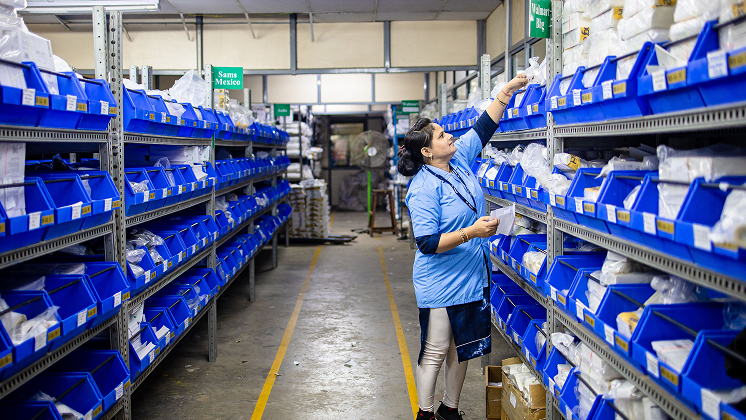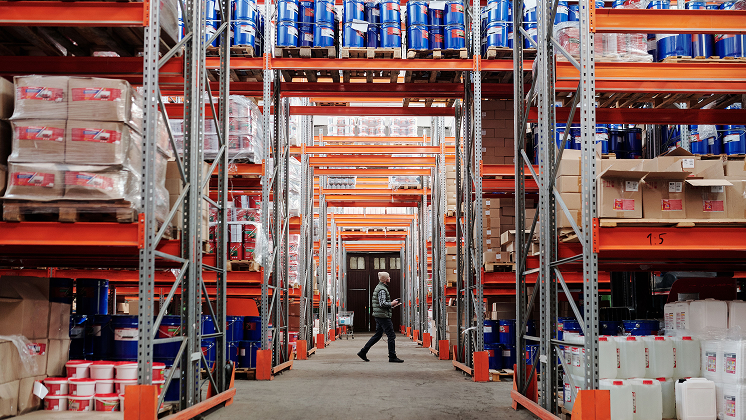
Warehouse turnover has been a hard number to ignore. US warehouse worker turnover hit 49% in 2023, according to Bureau of Labor Statistics data, which means for every two people on a shift, roughly one won't be there a year later. Most operators respond by hiring faster and paying a little more. Both help at the margins, but neither one touches the actual reason a lot of people walk.
Talk to warehouse managers long enough and the pattern repeats: the people who leave rarely say the job itself was the problem. They say they didn't know what was going on, they found out about a schedule change too late, or nobody noticed when they were struggling. Those are communication failures wearing a turnover mask.
The real number behind warehouse turnover
A 49% turnover rate isn't just a headline statistic, it's a constant drain on training time, supervisor attention, and safety, since newer associates are more likely to be involved in incidents. Every replacement hire means someone experienced is pulled off the floor to train them, which slows the whole shift down. The cost of turnover shows up everywhere except the line item most operators are watching, which is usually just recruiting spend.
What actually pushes people out the door
Ask an associate why they quit and pay is rarely the whole story. It's finding out about a shift change from a coworker instead of a supervisor. It's a safety concern raised verbally that never gets acknowledged, let alone fixed. It's going two weeks without anyone from management saying a word to them beyond a task assignment. None of this shows up on an exit interview as "communication," but it's what an exit interview about "culture" or "management" usually means underneath.
Why the first two weeks decide whether someone stays
Peak-season hiring makes this worse. When a distribution center brings on fifty new associates in a week, onboarding gets compressed and a lot of that early context, who to ask, how shifts work, where to report an issue, gets lost. New hires who don't quickly build a mental map of the operation are the most likely to quit in the first month, and they're also the hardest group to reach with a general announcement, because they haven't learned the informal channels yet.
Turning communication into a retention lever
The fix isn't a bigger sign-on bonus, it's making sure every associate, new or tenured, day shift or night, has a direct line to the information and the people that affect their day. That means shift updates that reach a phone instead of relying on a verbal handoff, a simple way to flag a concern and see that someone read it, and recognition that doesn't depend on which manager happens to be on the floor that day. None of it is complicated. Most of it just requires a channel that actually reaches everyone, which is exactly where a lot of warehouse operations fall short today. We cover some concrete starting points in Beyond the pizza party: warehouse engagement ideas that actually stick.
See how Blink helps warehouse and distribution operations cut turnover with better day-to-day communication on the Blink for logistics page, or book a demo.