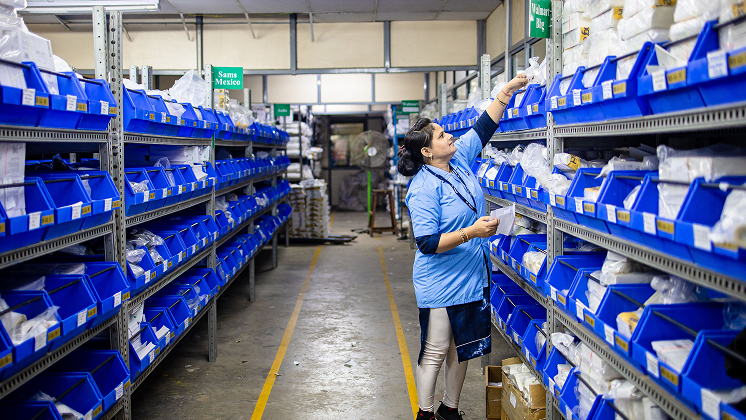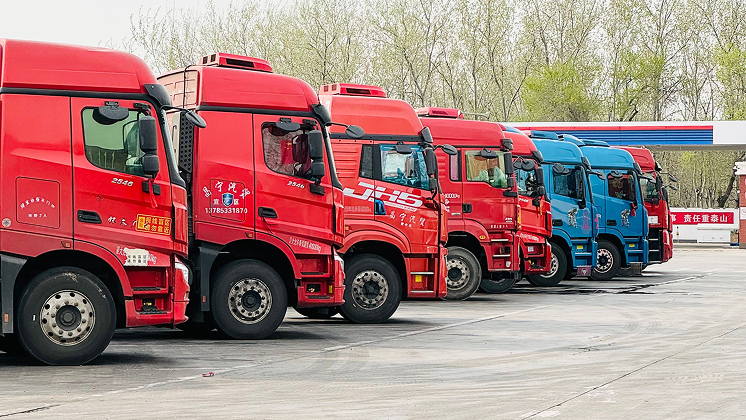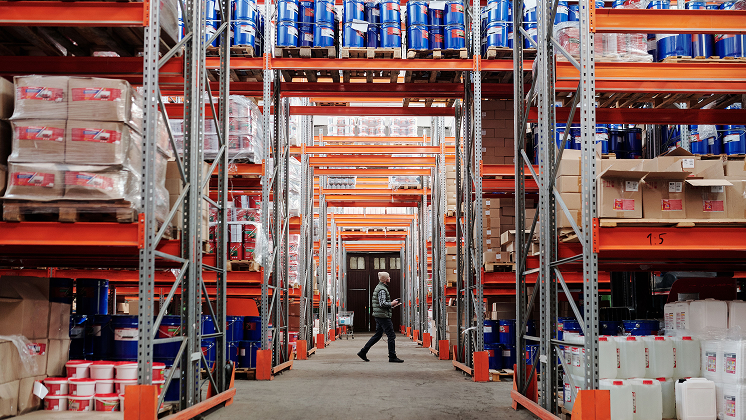
Search for a "warehouse communication app" and most of what comes back is a messaging tool built for people who sit at a laptop all day, with a warehouse use case bolted on afterward. That mismatch shows up fast. An app that assumes everyone has a company email address, a reliable wifi connection at their desk, and time to check a channel between meetings doesn't hold up on a warehouse floor or in a cab on a delivery route.
Before comparing vendors, it helps to be specific about what a warehouse and depot actually need, because the requirements are different enough from a typical office rollout that a lot of otherwise good tools fall short.
Why Slack and Teams don't solve this
Both were built around the idea of a company email account and a device sitting on a desk. Neither assumption holds for a warehouse associate without a corporate inbox, or a driver who's on the road for most of a shift with patchy signal. Rolling out a tool like this to a frontline logistics team usually means half the workforce never gets an account, and the other half checks it rarely enough that it becomes one more channel management has to work around rather than through.
The non-negotiables for a warehouse and depot communication app
Associates need to be able to sign up and log in without a company email, since a huge share of warehouse and driver staff never get one. The app needs to work reliably on a phone, including moments with weak signal in the back of a depot or on a rural delivery route. It has to reach every shift, not just the one that overlaps with the office day. And it should let someone report a safety issue or a vehicle problem directly from the floor or the cab, with a record that shows someone actually saw it, rather than relying on a verbal handoff that's easy to lose in a shift change.
What good adoption actually looks like
A tool only matters if people actually use it. One Blink customer running warehouse and distribution operations reached 78% adoption across more than 5,500 frontline employees, which is the kind of number that tells you the app fit how people already work rather than asking them to change their habits to fit the software. That's the bar worth holding any option to: not whether it has a feature list that looks complete in a demo, but whether a driver or a picker actually opens it during a shift.
A short way to test any option
Ask how a new warehouse associate without a company email gets an account on their first day. Ask what happens when a driver has no signal for twenty minutes on a route. Ask whether a safety report sent from the floor shows who saw it and what happened next. The answers to those three questions will tell you more about whether a tool fits a warehouse and logistics team than any feature comparison chart will.
Related reading: Beyond the pizza party: warehouse engagement ideas that actually stick and Warehouse turnover isn't a hiring problem, it's a communication problem.
See how Blink connects drivers, depot staff, and warehouse workers on one platform on the Blink for logistics page, or book a demo.