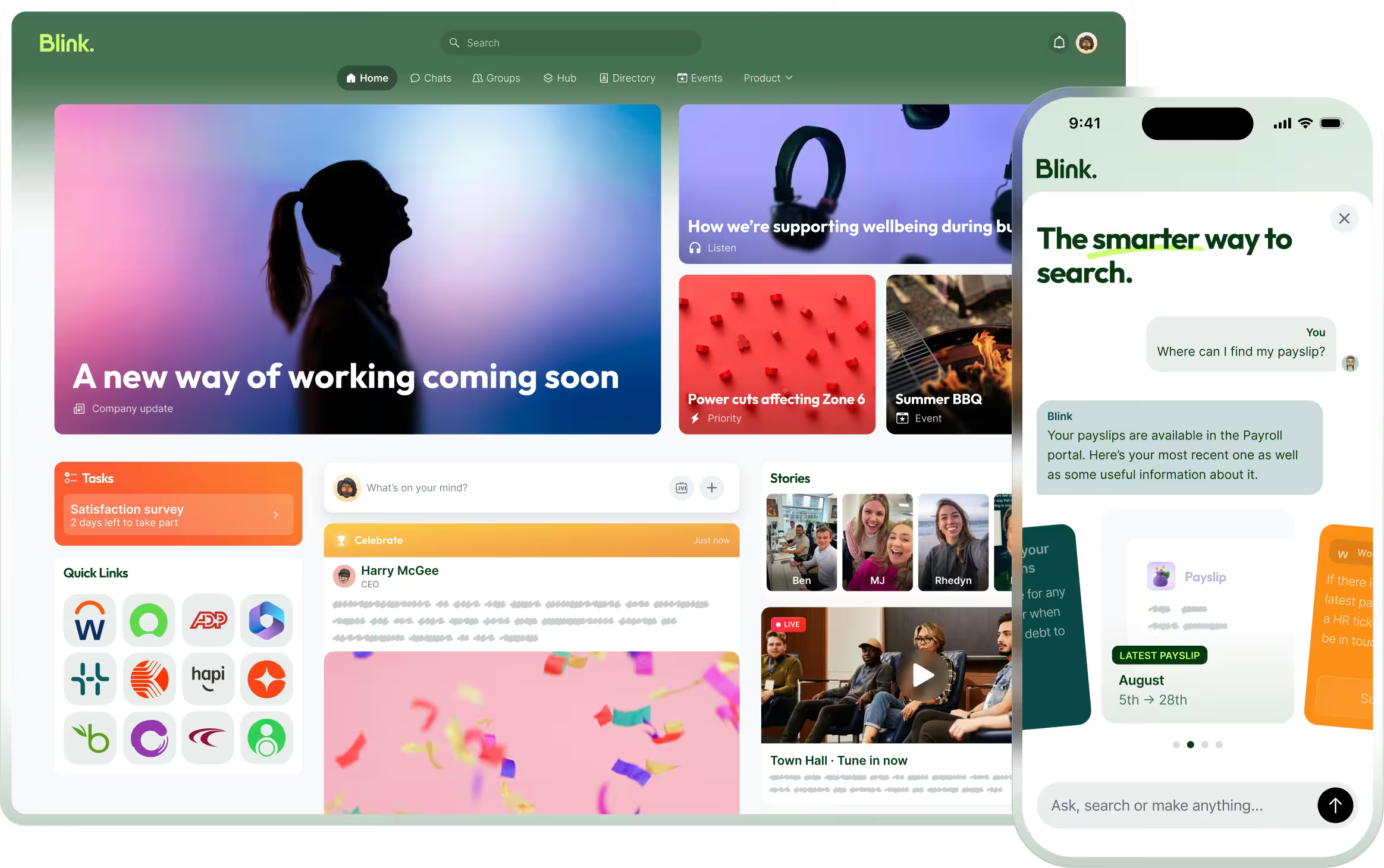
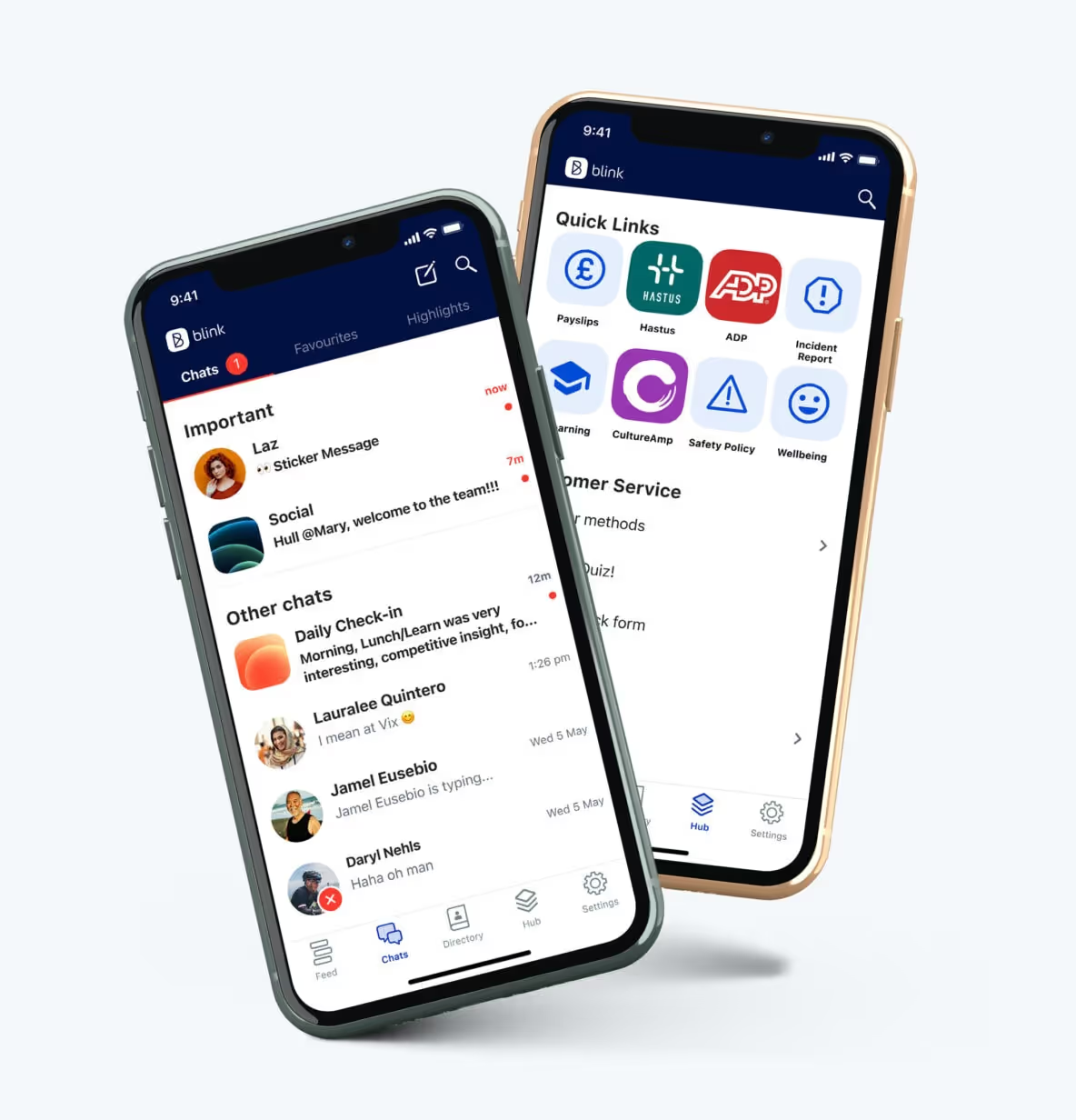
The once clunky, desktop-bound relic has been making a comeback in the era of remote work and mobile design with modern intranet features.
Workers need access to the documentation as they step away from the desk. They require a way to communicate with their coworkers securely. To meet the demands of their growing mobile workforce, companies are taking another look at intranets.
While modern intranet features several quality-of-life improvements and productivity hacks, they aren’t always used to their fullest. A recent survey found 57% of employees saw no point in their company intranet.
It doesn’t have to be like this.
Let’s go over the best features a modern intranet design offers and how you can use them to increase engagement and boost productivity.
What does a modern intranet look like?
Modern intranets are mobile.
Instead of the old-fashioned office-bound software of yesterday, we have sleek, multipurpose apps. Workers can benefit from these systems on the frontlines or at a desk.
Despite being more accessible than ever, these intranets are more secure. Each employee can be granted access to only the materials they need. Each person has their feed, showing them the information and updates relevant to them.
The design is simple, and the emphasis is on easy-to-navigate, uncluttered browsing. You want your workers to find the required content quickly, so using the app doesn’t feel like a chore.
Finally, a modern intranet isn’t just top-down. Employees can communicate with each other and with supervisors. They can generate content, engage with others’ posts, and develop personal connections.
The 8 best modern intranet features
Newsfeed
CMS
Integrations and micro apps
Single sign-on to integrations
Employee directory
Multi-way conversations
Mobile-first
Analytics
Modern intranet platforms should help you engage your employees and improve your company’s productivity. Here are the key features of a modern intranet.
1. Newsfeed
A company-wide feed lets your employees learn about important issues and share achievements with others. You can configure stories to be shared with all workers or only those affected by a problem.
2. CMS
A content management system (CMS) lets workers access the documents and files they need. Workers can easily find the files and even share the files with others.
3. Integrations and micro apps
A modern intranet isn’t an isolated software system. Your intranet should integrate with the apps and programs you use every day.
You should be able to connect with programs like Microsoft 365 and Slack.
Besides the integrations, your employees will also benefit from micro-apps. Micro-apps are customized programs that let users request time off or provide anonymous feedback, all from the intranet itself.
4. Single sign-on to integrations
Juggling multiple passwords can cause huge delays for employees. 60% of workers surveyed reported that passwords prevent them from doing their job.
Remembering multiple passwords is hard. Single sing-on prevents this issue.
5. Employee directory
Finding the right person to connect with saves time for everyone. With an employee directory, you can find up-to-date contact information for every employee or only the employees you have access to.
6. Multi-way conversations
Communication should be a two-way street. Instead of a constant flow of information from managers, let your employees provide feedback and chat securely with individuals and groups.
7. Mobile-first content
If your intranet is optimized for desktops only, it’ll only help desked employees.
Statista expects the mobile workforce in the United States to grow by 15 million between 2020 and 2024. These workers need a mobile-friendly design to work effectively.
8. Analytics
Using analytics, you can check how each post in your feed performs, how engaged your employees are and compare these levels to previous periods.
You should be able to track individual and group engagement and even see the active periods when your workers use the app.
Final thoughts: 8 modern intranet features your organization needs
A mobile intranet can make a huge difference in how your workers engage.
Sharing information they need and letting them have a platform to connect with others is no longer a luxury. It’s a necessity.
You need a platform your workers can access from anywhere to communicate with coworkers and catch up on the news from the head office.
Blink has all of these features and more. Sign up for a free trial today to see just how big a difference a modern intranet can make for you.
The once clunky, desktop-bound relic has been making a comeback in the era of remote work and mobile design with modern intranet features.
Workers need access to the documentation as they step away from the desk. They require a way to communicate with their coworkers securely. To meet the demands of their growing mobile workforce, companies are taking another look at intranets.
While modern intranet features several quality-of-life improvements and productivity hacks, they aren’t always used to their fullest. A recent survey found 57% of employees saw no point in their company intranet.
It doesn’t have to be like this.
Let’s go over the best features a modern intranet design offers and how you can use them to increase engagement and boost productivity.
What does a modern intranet look like?
Modern intranets are mobile.
Instead of the old-fashioned office-bound software of yesterday, we have sleek, multipurpose apps. Workers can benefit from these systems on the frontlines or at a desk.
Despite being more accessible than ever, these intranets are more secure. Each employee can be granted access to only the materials they need. Each person has their feed, showing them the information and updates relevant to them.
The design is simple, and the emphasis is on easy-to-navigate, uncluttered browsing. You want your workers to find the required content quickly, so using the app doesn’t feel like a chore.
Finally, a modern intranet isn’t just top-down. Employees can communicate with each other and with supervisors. They can generate content, engage with others’ posts, and develop personal connections.
The 8 best modern intranet features
Newsfeed
CMS
Integrations and micro apps
Single sign-on to integrations
Employee directory
Multi-way conversations
Mobile-first
Analytics
Modern intranet platforms should help you engage your employees and improve your company’s productivity. Here are the key features of a modern intranet.
1. Newsfeed
A company-wide feed lets your employees learn about important issues and share achievements with others. You can configure stories to be shared with all workers or only those affected by a problem.
2. CMS
A content management system (CMS) lets workers access the documents and files they need. Workers can easily find the files and even share the files with others.
3. Integrations and micro apps
A modern intranet isn’t an isolated software system. Your intranet should integrate with the apps and programs you use every day.
You should be able to connect with programs like Microsoft 365 and Slack.
Besides the integrations, your employees will also benefit from micro-apps. Micro-apps are customized programs that let users request time off or provide anonymous feedback, all from the intranet itself.
4. Single sign-on to integrations
Juggling multiple passwords can cause huge delays for employees. 60% of workers surveyed reported that passwords prevent them from doing their job.
Remembering multiple passwords is hard. Single sing-on prevents this issue.
5. Employee directory
Finding the right person to connect with saves time for everyone. With an employee directory, you can find up-to-date contact information for every employee or only the employees you have access to.
6. Multi-way conversations
Communication should be a two-way street. Instead of a constant flow of information from managers, let your employees provide feedback and chat securely with individuals and groups.
7. Mobile-first content
If your intranet is optimized for desktops only, it’ll only help desked employees.
Statista expects the mobile workforce in the United States to grow by 15 million between 2020 and 2024. These workers need a mobile-friendly design to work effectively.
8. Analytics
Using analytics, you can check how each post in your feed performs, how engaged your employees are and compare these levels to previous periods.
You should be able to track individual and group engagement and even see the active periods when your workers use the app.
Final thoughts: 8 modern intranet features your organization needs
A mobile intranet can make a huge difference in how your workers engage.
Sharing information they need and letting them have a platform to connect with others is no longer a luxury. It’s a necessity.
You need a platform your workers can access from anywhere to communicate with coworkers and catch up on the news from the head office.
Blink has all of these features and more. Sign up for a free trial today to see just how big a difference a modern intranet can make for you.
What we'll cover
Start your free trial today
See how Blink helps frontline teams stay connected, informed, and engaged.
Project Hydra was initially a short-term project commencing early September 2023. It was expected to last initially for 8 weeks (on Saturdays) — however, it has continued until June 2024. The necessary upgrades to water pipes at the VHK affected access to the renal unit, impacting on patients attending their scheduled dialysis. The Project Hydra Volunteering Team supported patients to access the alternative route to the unit to ensure patients were supported, and their stress minimized.
The Volunteers assisted patients on arrival in a meet-and-greet / escort role. This involved welcoming patients in the designated reception area and escorting them to the clinic area. Our volunteers were more than happy to help, and worked a rota system over the Saturdays on a shift basis, starting at 6:45am and finishing at 6:00pm. During September 2023–June 2024, eight volunteers assisted with Project Hydra, supporting — on some days — 30+ patients.
How has Blink helped in their role?
Communications updated Blink with relevant information about the ongoing works and its impact. This allowed the Volunteer service to communicate effectively with the Project Hydra Volunteer Team to inform them how long they were still needed to provide this service for.
What do they want to do next?
Our volunteers continue to support the hospital, both staff and patients, and maintain their drive and passion to give back and provide support to the NHS and the people who use it.
Nominated by: Elizabeth Fallas, Volunteer Service Support Officer
Out of date, out of sync, out of tune. A corporate soundtrack of forgotten logins, stale pages, and “Is anyone actually using this?”
This year, Blink is changing the track. We’ve been recognized in the 2025 Gartner® Magic Quadrant™ for Intranet Packaged Solutions — not just anywhere in the grid, but as a Challenger.
For us, this isn’t just a placement. It’s a remix. For the industry. For the intranet. For every employee who’s ever thought, “Why is this so hard to use?”
Why the Gartner Magic Quadrant matters
If you’re in HR, comms, IT, or procurement, you already know the Gartner Magic Quadrant™ - to us, it’s one of the most influential industry reports in technology.
Every year, Gartner independently evaluates vendors on Ability to Execute and Completeness of Vision - then categorizes them as Leaders, Challengers, Visionaries, or Niche Players.
This Quadrant has become the go-to reference for organizations choosing their next digital workplace partner.
We’re proud to debut as a Challenger. But more than that, we see it as a validation that the world is ready for a more human way to work.
Why Blink? Why now?
We built Blink on a simple belief: Work should feel connected.
In a world overflowing with tools but starved of real connection, we’re creating an intranet that people actually want to use. One that unites the CEO’s town hall with the shop floor shift briefing. One that gets frontline and office workers on the same wavelength.
Why we believe Blink was recognized
🎧 Sales and customer alignment: We deeply understand buyer pain points, backed by strategic partnerships with industry leaders like Workday.
🎧 Financial and product strength: Robust growth, an agile roadmap with continuous innovation, and a reliable product strategy built for the future keep Blink ahead of the curve.
🎧 We go beyond software: With specialized onboarding teams, strategic rollout support, and a dedication to long-term success, we’re not just a platform — we’re a true partner.
🎧 From mobile to total experience: Our platform empowers every kind of worker with personalized microapps, powerful social features, and communications that actually cut through.
Challenger energy: More than a position - a mindset
For us, being a Challenger isn’t just about where we land on the grid. It’s about how we move through the world.
We don’t believe “good enough” intranets should do the trick. We don’t do stale or static. We remix the intranet into something dynamic, modern, and centered on people.
Because what good is an intranet that no one uses?
We’re obsessed with adoption: ensuring employees actually engage, communicate, and thrive on the platform. That’s why Blink is designed with every kind of worker at heart, driven by a people-first approach to innovation.
That’s what it means to challenge the status quo. That’s what it means to Blink.
What’s the rest of the market saying?
The intranet packaged solutions (IPS) market is evolving rapidly, moving from static, web-only sites to dynamic, multichannel platforms that are central to the digital workplace.
What used to be dusty web-only portals are now vibrant, multi-channel hubs that power communication, engagement, knowledge, and culture. Today’s IPS offerings go far beyond document repositories - they’re incorporating AI assistants and supporting integrations with Workday, ServiceNow, Microsoft 365, and other leading business systems.
As Gartner puts it, intranets are once again a priority investment as organizations transform their digital workplace, reduce IT complexity, and seek consistent, people-first employee experiences.
Intranets are no longer just “nice to have” - they’re necessary parts of a modern business infrastructure. They’re becoming critical hubs for productivity, connection, and culture across both office-based and deskless workforces.
This isn’t evolution - it’s inflection. And Blink is leading the remix.
Spinning the future of work
For us, being named a Challenger is a milestone. But it’s also just the intro track.
We’re already dropping new hits:
Broadcast-quality live streaming that gives every employee a front row seat
Blink Assist, our AI-powered copilot for content creation and communication
Analytics that actually matter, surfacing predictive insights into how people engage
“Save for later” offline access, so work doesn’t have to stop when the WiFi does
Modern social features like Stories that drive adoption and give Instagram a run for its money
Our vision is simple: The future of work should feel intuitive, inspiring, and essential - not invisible. Blink exists to unlock that.
This isn’t just recognition - it’s our statement
We’re not here to play quietly. We’re here to remix the intranet.
Named top Challenger by Gartner, chosen every day by the world’s most ambitious organizations, and powered by a people-first mission - this is only the beginning.
Experts predict that the staffing industry will bring in a record $185.5 billion in revenue in 2022. That’s because many companies are finally learning that people are one of the most important assets in a business.
Investing in attracting and hiring the best talent makes sense, but recruitment is only half the battle. To maximize the benefits of your recruiting efforts, you need to create a work environment where your team members feel connected, energized, and motivated.
Highly engaged organizations have been found to benefit from a 23% increase in profitability due to improved retention, customer ratings and sales.
Operating with a solid organizational communication strategy is the key to building a culture of engagement where you retain employees instead of fighting turnover.
In this article, we'll explore how you can achieve that. Here’s what we’ll cover:
Why communication is the key to employee engagement
The Harvard Business Review describes an engaged employee as someone who's committed to their employer and identifies with their organization, has job satisfaction, and feels energized while at work.
For human resource or communications leaders, this creates two primary objectives to improve employee engagement: creating a positive relationship between employee and employer, and enabling job satisfaction.
Internal communications is essential for creating that positive relationship since it fosters trust and keeps leadership better informed about the employee experience. As for job satisfaction, communication is a valuable tool that can reinforce positive work experiences.
When employees are well-informed, they’re better engaged with the business, and this leads to all kinds of positive business outcomes.
Communication builds trust
According to a 2020 Brunel University London study, internal communications strategies such as open communication channels, information sharing, and consistent feedback result in higher co-worker trust and more engagement at work.
Communication informs leadership
Good communication works in both directions. It helps leadership convey values and big-picture goals and enables employees to share their opinions, concerns, and questions with decision-makers.
Too often, employees feel that company leadership is out of touch with the needs and priorities of the workforce. Internal communication in the form of two-way conversations bridges that gap and enables leaders to make better-informed decisions about matters that affect their teams.
Likewise, when employees can see proof that leadership receives their feedback and acts on it, this encourages them to speak up more.
Communication makes people feel valued
A report by McKinsey found that 54% of employees that left their jobs didn’t feel valued at work and 51% lacked a sense of belonging.
You may value all your employees highly, but if you don’t communicate it, it will be difficult to keep employee retention numbers up.
Creating initiatives that increase recognition helps your employees feel valued. You can also use internal communications to share the company’s vision and help employees understand where they belong in the big picture.
Communication improves efficiency
In competitive rowing, there’s a person on the team known as the coxswain (or “cox”) who communicates orders to the rest of the team to keep them motivated and working together.
It’s the same in the workplace. Keeping your employees informed and aligned enables them to do their jobs well. And when people feel empowered to do their jobs, satisfaction, energy, and motivation all increase.
Frontline focus: the increased importance of communication in frontline organizations
Creating a sense of belonging and supporting employee engagement is especially important when you have a frontline (or 'deskless') workforce.
However, there are also more challenges to overcome when employees are spread out at various locations, don't have frequent or formal in-person interactions with management, and are heavily reliant on paper documentation.
Yoobic’s 2022 Frontline Employee Survey illuminates some gaps that can lead to a lack of trust and engagement.
Although 83% of frontline employees want a workplace they can believe in and trust, only 45% believe management cares about their mental health. Another 81% say they want to feel valued by management, but only 38% feel connected to management and headquarters.
To make matters even more challenging, most frontline workers don’t have access to a work email or central communications platform where they can feel connected.
Many workplace communications solutions were built for desk-based office workers, and aren't convenient for the needs of frontline staff, leaving them feeling even more distant.
This creates a knowledge gap for frontline organizations where management isn’t fully aware of what's happening on the frontline and is, therefore, unable to connect with and make the right decisions for its employees.
Communication strategies to improve employee engagement
By implementing these five effective communication strategies, you can energize your workforce — whether they’re remote workers, on the frontline, or in the office.
Ultimately, these strategies will help you build a sense of community where employees feel free to share their opinions and ideas and foster relationships based on meaning and growth.
So here's how to improve employee engagement through communication.
1. Implement transparency and visibility from the top down
Workplace trust works best when it’s implemented from the top down. A 2022 survey by People Element highlighted significant areas for improvement in communication from leadership.
Specifically, it found that:
44% of employees don’t think there’s sufficient communication from senior leadership
40% say that leadership doesn’t communicate a clear vision of the future
39% still feel that leadership doesn’t value employees
Without clear and transparent communication from leadership, it’s easy for employees to feel uninformed about the decisions that impact them and disengage from the workplace.
Similarly, as a senior leader, you may get trapped in an “optimism bubble” when it comes to communication. In other words, you might overestimate your approachability, listening, and communication skills and underestimate how much your title and position make it hard for some employees to communicate with you.
If you want to build a more connected organization, leadership visibility and approachability need to be part of your engagement strategy.
Ensure management is communicating regularly, with purpose and opening up a two-way conversation as a result. Avoid sending “faceless” announcements and memos. Instead, have individual leaders sign their names on important messages. Take simple steps like adding photos of leadership next to their email signatures, so there’s more of a human element to their communication. You can take a look at different email signature examples to get an idea of how to personalize these signatures
2. Encourage two-way communication and listen
Open and honest two-way communication sounds simple, but it doesn’t happen automatically. You have to build communication processes that facilitate employee feedback and then prove that you’re listening.
Start by giving your employees a few different channels to provide feedback to higher-ups. This creates more accessibility and lets people choose the communication method they feel most comfortable with.
It's important to go beyond the annual survey. Unstructured feedback in the form of multidirectional dialogue has huge potential as it provides insights into ideation, opinions, and concerns that let you capture your employees' inner voices.
When you have a better grasp of your employees’ voice, you can feed that into the messages you put out and integrate it into your strategies, objectives, values, and the company mission.
Your employees' ideas and opinions are excellent resources, but if you don’t provide space for free dialogue, you’re leaving that gold mine completely untapped.
Once you have your feedback channels, make sure to actively promote them and send confirmation every time you receive communications. If employees feel that their words have disappeared into thin air, they won’t be encouraged to continue providing information.
3. Centralize your communication technology
Technology is an excellent way to make your communications accessible to everyone. But too many communication tools and platforms can make it harder for employees to stay engaged.
Nadir Ali, CEO of Inpixon, explains that people at large companies may have “10 or more work-related apps, each with a different interface and operating characteristics.” This means that even figuring out the right app to use becomes a challenge.
Instead, you can use an employee app like Blink, which gives your employees access to the people, processes, communications, and applications they need for their jobs.
Blink was designed for the needs of frontline workers and offers a unique and simple user experience across corporate or personal devices. Desk workers or management can access the app on a computer, while frontline and remote employees can find all the same information on a tablet or mobile device.
With one central platform at the core of your communications, you can create more accessibility without adding complexity or sacrificing consistency. This will make your employees' lives easier, save them a huge amount of time, and leave them more capacity to do their “real jobs,” all of which will result in their engagement and loyalty in return.
4. Create community through recognition, support, and inclusion
Effective internal communication builds community. You can do that by using recognition, providing support, and supporting inclusion.
Recognition isn’t just about celebrating good work and achievements. It’s also about showing empathy and letting employees know you understand and appreciate the challenges they face at work.
In other words, be explicit about appreciation and supporting employee mental health. Demonstrating that you consider your employees’ well-being is a key factor for engagement.
This is especially important for frontline workers who often bear the burden of implementing organizational change at the customer level and may feel less connected to headquarters because they’re not working out of a central office.
It’s also crucial for leaders to ensure that the culture of support applies to all employees. In recent years, we’ve seen organizations prioritize diversity, equity, and inclusion (DE&I) in the hiring process, but it shouldn’t stop there.
Employees with different backgrounds and life experiences need to be supported, encouraged, and made to feel a part of the broader community to stay engaged and reach their full potential. Your internal communications can support this by creating employee resource groups that help people find their “tribe” at work and provide a safe and secure environment where DE&I issues can be discussed.
Ultimately, recognition and community building work best when they’re ingrained into the company culture.
One of the best ways to make recognition a regular practice (instead of an occasional one) is by attaching it to existing processes. Look at the communications you regularly send out and see where you can add messaging that celebrates wins and acknowledges current challenges.
5. Use messaging to inspire and energize
As companies continue to deal with the effects of the great resignation and more recently "quiet quitting", leaders have to figure out how to mobilize and motivate workforces dealing with burnout. Every communications initiative is an opportunity to energize your employees and create a more engaged workforce.
Internal communications can be boring if you’re not thinking about your messaging. Instead of falling into the trap of simply spewing information, craft messaging that inspires your workforce.
Implement useful and engaging communications that help employees visualize a common goal to strive for, and invite them to help you craft that future. In other words, remember that while your employees need communications that answer “what,” “where,” and “how,” they also need a “why” that keeps them going.
In addition to providing your employees with the services and tools that fit into their busy days and help them do their jobs, make sure you are using that space to invite engagement with content that makes teams gravitate towards that space naturally.
To do this, you can unleash user-generated content such as on-the-job stories, celebrations of small wins, and peer recognition. Authentic content generated by your employees is still the best employee branding available. When employees are given the freedom to talk about their work, they feel seen and heard, and they keep the conversation and engagement going.
Final thoughts: communication strategies to boost engagement in the workplace
Many companies are still figuring out how to bring energy back into the workplace while dealing with employee burnout to avoid attrition.
What you need to know is that your communication plan is one of the best tools you have to re-engage your workforce. With the right initiatives in place, you can build trust, make your employees feel valued, and make sure leadership has the information they need to create a better workplace.
Blink’s frontline engagement app facilitates these strategies that improve two-way conversations between employees and leadership and creates a space which invites sustainable and organic engagement.
Silencing our nightly wind-down reminders and ignoring the unopened book on our nightstand as we endlessly scroll through increasingly negative news articles and social media posts — only to feel worse afterward.
It’s called doomscrolling, and it’s not just a buzzword. It’s a real problem.
Coined — and escalated — during the Covid pandemic, doomscrolling is the growing habit of constantly consuming negative articles on news sites or social media. What may begin as a well-intended desire to stay informed on world events can quickly devolve into a downward spiral of distressing content. For instance, searching for updates on the economic market can lead to a flood of articles on recessions and layoffs, and looking up the latest on a local election can unearth politically divisive headlines. It’s an especially easy trap to fall into on smartphones, as our social media apps algorithmically learn how to keep us scrolling for more.
The unending cycle of stress caused by doomscrolling has the power to infiltrate not just our personal lives, but our professional ones, too. It exacerbates feelings of anxiety and pessimism that people can inadvertently bring to work with them, hindering workplace satisfaction, focus, and productivity.
And if you don’t think your workforce is impacted by the doomscrolling dilemma, you may be surprised: A recent survey revealed that nearly 1 in 3 U.S. adults who use social media — and, generationally, a whopping half of Gen Z adults (53%) and millennials (46%) — said they occasionally or frequently doomscroll.
The good news? Employers can help to reverse this trend and improve employee well-being.
Enter: The power of positive internal comms
If we consider the average 8-hour workday, employees spend a third of their day — or more — at work and on workplace tech platforms. This means that internal communications leaders have an opportunity to make a meaningful difference in mitigating the damage of doomscrolling and creating corporate content that uplifts the workforce.
Let’s explore four ways that internal comms teams can help their workforce detox from doomscrolling and boost employee spirit — whether they’re on the frontline or in the front office.
1. Gauge the mindset of your employees
Doomscrolling, and overall negativity, can be detrimental to an individual’s mindset, focus, and overall well-being — making it a priority for HR and people-facing leaders.
To lift up employees, an important first step is acknowledging the challenges that people may be facing and understanding the state of the workforce. In addition to having open conversations with employees in team meetings or one-on-one check-ins, internal comms teams should consider conducting company-wide outreach.
Short-form polls, which people can respond to anonymously, can be a great way to gauge how employees are feeling across the organization. By conducting a quick poll or pulse survey on how stressed people are feeling outside of work, or how supported they feel by their manager or employer, organizations can establish a baseline for employee morale and track sentiment over time with follow-up check-ins.
{{mobile-survey="/image"}}
This is also an excellent chance to see what employees are looking for in their company’s internal comms. Employees can share their thoughts on the frequency, formats, themes, and channels they prefer the most when it comes to receiving information from their company, helping internal comms to ensure their important company updates and culture-building messages aren’t lost in the noise.
2. Create a positive communications culture
Long gone are the days of internal comms being just corporate news-sharing and policy updates. Today’s most successful comms plans include telling uplifting stories from across the organization as part of a broader effort to improve employee engagement and retention.
By regularly celebrating company wins (like the opening of a new facility), recognizing employee contributions, and celebrating big milestones (such as birthdays and work-iverseries), internal comms teams can establish a rhythm of lighthearted and positive content. Not only can this help to counterbalance negativity outside of work, it’s a good step toward humanizing and strengthening internal storytelling overall.
For employers who have a significant population of frontline workers, the risk of disconnect and isolation can be much greater, given the very nature of how and where they work. These team members may want more frequent and engaging updates — think personal shout-outs from coworkers or short-form videos from people leaders — that highlight their hard work and the positive impact they’re having on the organization.
Bonus points if all of this employee celebration and recognition is happening on a mobile platform where everyone can engage and chime in with their own comments of appreciation.
3. Encourage connection over isolation
Employers of any size and scope — and especially those who have a combination of office-based, frontline, and remote workers — know how difficult it can be to build a cohesive sense of community. When not all employees have a company email address or access to a work computer, how can you reach everyone where they are? And, maybe even more importantly, how can they connect with one another?
This is where a mobile-first internal comms platform can be a game-changer. Virtual chats and communities give employees a dedicated place to communicate with each other. By mimicking the most collaborative parts of social networking apps like Facebook, internal comms leaders can facilitate social connection and create a unifying and fulfilling employee experience.
{{mobile-community="/image"}}
And with easy photo- and video-sharing capabilities, employees can be not just consumers of internal comms content, but creators as well. Consider encouraging employees to generate and share their own content — giving coworkers visibility into their day-to-day roles, for example, or virtually checking in from their current worksite. This can be a great way to incorporate more voices and bring a new level of authenticity and personalization to your internal comms strategy.
4. Promote a digital peace of mind
Even when it comes to uplifting internal comms, it’s possible to have too much of a good thing.
Part of the appeal of doomscrolling is that it’s easy to mindlessly scroll on and on — the last thing we want workplace platforms to do is encourage the same behavior. Internal comms teams can mitigate the endless scroll by keeping their messages positive, avoiding information overload, and making their digital workplace super relevant.
Sharing content based on team, role, or region, for example, can minimize potential information overflow. Likewise, labeling critical company updates as mandatory reads can help internal comms ensure their must-read messages are being seen, while providing flexibility to employees to engage with or dismiss other posts as they see fit. And organizations that offer employee well-being solutions, such as a mindfulness app, can create an internal resource hub that quick-links to helpful employee benefits where they’re easy to find and use.
Finally, as a rule of thumb, internal comms should serve as external eyes and keep a pulse on what’s happening outside of work. Be sure to stay up to date on current social conversations that may be causing distress, as well as upcoming events that may cause heightened anxiety. By factoring these concerns into monthly or quarterly plans, internal comms teams can more proactively create content that’s timely and helpful to employees across the organization.
Don’t let doomscrolling get your employees down.
Detoxing from doomscrolling is about more than just unplugging from technology, which is often difficult or — for some employees — outright impossible. It’s about thoughtfully using workplace platforms to create an encouraging and supportive environment at work.
By taking a more strategic approach to employee morale and implementing these uplifting communications strategies, internal comms teams can help their people stay positive, connected, and resilient — even during the most uncertain times.
Learn how you can uplift your workforce with an inclusive and interactive internal communications platform. Discover Blink today.
Stress, strained relationships, and missed deadlines. According to Grammarly’s 2024 State of Business Communication report, poor internal communication causes all three of these things.
In contrast, good workplace communication leads to increased productivity and work satisfaction. Employees who get enough information to do their job well are also 2.8 times more likely to be engaged in their work.
Effective communication helps employees feel more connected to the organization, their work, and each other. These highly engaged employees then contribute to positive workplace communication.
It’s a virtuous circle that — according to Gallup research — leads to improvements in employee retention and wellbeing, as well as your business profits.
In this article, we look at how you can boost employee engagement through your internal communication strategy.
If you want to improve employee engagement, improving employee communication is a great place to start. To do that, you need a plan.
An internal communication plan helps you approach employee communications with strategy. You understand where you are now, where you want to get to, and which combination of activities is most likely to get you there.
We can boil an employee communication plan down into four key stages. You can create a successful internal communications strategy by:
1. Assessing your current situation
What are the strengths and weaknesses of your current communication strategy? Are your comms successfully engaging employees? Are messages resonating in the way you want them to? Are some communication channels more effective than others? Listen to opinions and ideas from across the company to evaluate your current comms performance.
2. Choosing communication channels
Communication channels should be accessible to all employees, including those working remotely and on the frontlines of your organization. You need appropriate channels for company-wide updates, 1:1 meetings, and group chat. You also need channels that facilitate top-down, bottom-up, and peer-to-peer communication.
3. Deciding on communication content
If one of your priorities is employee engagement, crafting engaging company messages is the next item on your list. Create an internal communication calendar, starting with the essential messages that help your organization function safely and efficiently. Next, decide on the types of content you’ll use to share company culture and foster a sense of belonging.
4. Assessing engagement
A good internal communication plan is fluid. It’s a constant work in progress. So once you’ve put your new strategy into action, it’s time to assess what works and what doesn’t. Using communication and engagement key performance indicators (KPIs), see how far you’ve come and make targeted improvements.
11 engaging ideas for your internal communication plan
Approach your internal communication plan tactically and it will better support your employee engagement efforts. Here, we’ve put together a list of internal communication best practices to incorporate into your plan.
Choose the right channels
Employee communications should reach every member of every team. In a world of remote working, this means using digital communication channels.
These digital communication channels need to be accessible on mobile devices because 80% of the world’s workforce doesn’t sit behind a desk — and because paper memos on a noticeboard are far too easy to miss.
If email is your first thought, bear in mind that it’s rarely the best solution. Many frontline workers don’t have a company email address and lots of desk-based workers are suffering from email overload. There’s a temptation to overlook company comms in your inbox when it’s already overflowing.
Your internal communications engage employees more effectively if you create dedicated, digital channels with the help of a social intranet or employee app.
These platforms allow your teams to communicate over a news feed, group chats, and 1:1 messages. The best tools come with lots of engaging, social-media-style features and are available on every employee smartphone.
Clear and concise internal communications are essential to engagement because:
You get fewer misunderstandings — and when employees fully understand your message they’re more likely to respond to it quickly
It makes messages easier to absorb and remember
You show respect for your employees’ time, which means they’re more likely to read future messages
So when creating employee communications, try to use simple language, avoid industry jargon, and keep sentences short.
Before you put anything down on paper or into words, think about what you want your audience to do after reading or watching your content. Also, identify the most important information and put this at the start of your message.
Once you’ve written your content, edit it ruthlessly cutting unnecessary words and repetition. You can also use AI tools, like Hemingway. Hemingway highlights sentences that are difficult to read. You can then simplify these sentences to make your internal communications clearer and more concise.
Foster two-way communication
Imagine you’re watching a presentation.
The speaker — let’s call him Steve — clicks through his well-designed slides. He talks through the content competently. But he doesn’t pause for input or questions.
Now, another speaker takes to the floor.
This speaker — let’s call her Maria — starts her presentation with an interactive poll. After speaking for a few minutes, she involves the whole room in a discussion so everyone gets to share their thoughts and ideas. She speaks some more, then invites you to ask questions.
Which presentation is the most engaging?
It’s likely that if you had to sit through Steve’s presentation, your mind would wander. You’d start thinking about the workload waiting for you back at your desk — or what you fancied eating for lunch.
But by incorporating two-way communication, Maria grabbed everyone’s attention from the beginning. She sustained that attention by regularly involving everyone in the conversation.
When you involve people in a presentation — or in your internal communications — you make the experience more engaging.
There are lots of ways to create interactive, two-way employee communications. You can launch polls and surveys. You can run an online Q&A session with your CEO. You can also post content to the company news feed, where employees can interact by commenting, liking, and sharing.
Create open dialogue like this — where thoughts, opinions, and questions flow in all directions — and you’ll find it much easier to interest employees in your internal communications.
Collect feedback
As we’ve just mentioned, polls and surveys boost employee engagement. Employees like to feel that they have a voice — and that leadership takes their thoughts on board.
So collect feedback regularly. Ask employees about the employee experience, the latest company changes, or the next company social event. You can also ask them what they think about your internal communications.
According to Axios research, 36% of employees want to share feedback with leaders about the essential communications they’re receiving but they don’t feel they get the opportunity.
So ask your employees about their communication preferences and any pain points they experience with your current employee communication plan. Give workers the option to share feedback anonymously if they prefer.
Then, analyze your feedback results. Also, be sure to share the results of polls and surveys with your employees. Thank them for their input and tell them what you plan to do.
This type of feedback loop shows employees that feedback requests aren’t just empty attempts at engagement. You really care about their opinions and ideas — and are willing to take action on them. This helps to engage employees with these types of communications going forward.
Tailor your communications
If all employees get all internal communications, they start to switch off. When your audience knows that only a small proportion of employee communications apply to them, they stop taking the time to read them.
That’s why another internal communication best practice is personalization. Using digital internal communication tools you can segment your audience based on their role, department, location, and tenure. You can then tailor content to each segment of your audience so everything they receive is relevant.
Your warehouse team sees different messages to the staff in HQ. Managers receive different comms to new hires. Employees in each of the regions you cover only see content relevant to their location.
With an intranet or app, you can also personalize employee dashboards, making them applicable to different roles and departments, putting the most important content front and center.
Celebrate achievements and milestones
Recognition is an integral part of any good employee communication plan. That’s because praise makes employees feel valued — and because other employees love to get behind a co-worker who’s done a great job.
Whether you’re celebrating the completion of a project, a birthday, or a work anniversary, you’re engaging your workforce. You’re creating a sense of accomplishment, belonging, and motivation. This can make a huge difference to your business.
A recent Gallup and Workhuman recognition report revealed that, by making recognition an important part of company culture, a 10,000-person organization can save up to $16.1 million a year in reduced employee turnover costs.
The easiest way to give company-wide recognition is via a dedicated recognition program across your digital communication channels. This type of program helps you build recognition into the fabric of your organization.
It makes manager-employee and peer-to-peer recognition incredibly easy, so it becomes a regular occurrence. A digital solution also ensures that frontline employees — who don’t get a lot of face-to-face time with managers or co-workers — get the same level of appreciation as their office-based peers.
Be consistent
The best employee communications are consistent. They stick to a reliable schedule and they demonstrate a similar tone and style.
This consistency ensures that employees come to trust and rely on your internal communications. They know when and where to expect key messages and feel kept in the loop. So they’re more likely to engage with what you have to say.
Here’s how you can make your comms more consistent:
Use an internal communications calendar. Plan your comms for each month, including a mix of formal and informal company content.
Provide clear guidelines and templates. That way all members of staff can deliver communications with the same style and tone.
Use automation tools. A feature like Blink’s Employee Journeys allows you to create automated content paths. This ensures that all employees receive essential comms at key milestones — for example, during onboarding or after a year of service.
Create engaging content
We all know from browsing social media that multimedia content catches the eye. An original photograph, an infographic, or a video is much more likely to grab our attention than plain, old text. So make these multimedia elements part of your internal communication plan.
Also, include a variety of content on your communication channels. That means need-to-know company updates along with snaps from your latest social event. Informal content helps to amplify company culture and create a sense of belonging.
Stories are also engaging. So post a real-life story about a customer your company has helped — or about one of the causes your organization supports.
When planning internal communications, think about what matters to your employees, too. They might like a reminder of the training and development opportunities, wellbeing resources, or benefits you offer. FAQs come in handy for new hires.
You could also take inspiration from the Tesco supermarket chain, by creating personalized videos to support employees with financial planning.
Encourage leadership involvement
When leaders communicate transparently with their workforce, it creates trust and builds engagement. It also sets a great example. Employees are more likely to be active on communication channels if their leaders are showing up there, too.
Employees also care what their leaders have to say. 36% say that they’d like to hear from their leaders more often.
So encourage leaders to get involved on the company news feed. Schedule a bi-weekly post from the CEO. Or plan an online Q&A session, where employees can ask leaders their burning questions.
Create connection
Employees who feel that they belong within an organization are 5.3 times more likely to feel empowered to do their best work.
So use your communication channels to reinforce a positive and inclusive company culture — and make peer-to-peer connection part of your employee communication plan.
Frontline employees — and those who work remotely — have much less opportunity to collaborate and build workplace friendships. So ensure that employees have company communication channels suited to informal conversation.
Salesforce has made peer-to-peer connection and inclusivity a priority. They’ve created equality groups where employees with a shared interest, background, or identity can come together to champion their needs in the workplace.
However you choose to do it, be sure to make connection part of your internal communication plan. By giving co-workers the tools they need to support one another, share useful insights, and build workplace friendships, you create a more engaging workplace.
Leverage technology
Internal communication tools make comms and employee engagement much easier. With the right all-in-one platform, you create a company hub, which becomes the go-to place for the latest company news.
Using this platform, you can post communications that are easy for employees to find and search. You can create multi-media content to engage employees. You can recognize hard work, launch polls, and automate content so it reaches the right people at the right time.
Through integrations, you support employee engagement beyond comms. Employees are only ever a click or tap away from learning and development programs, wellbeing resources, and self-serve HR tools — like vacation booking and shift scheduling.
Technology helps you measure the success of your internal communication plan, too. A communication tool with in-built analytics can tell you how employees are interacting with your comms.
Metrics like message open rates, post likes, response time, profile completion, and communication tool adoption build a picture of what is and isn’t working when it comes to your internal communication strategy.
You can then use your findings to make data-backed improvements, finding new and more effective ways to engage employees with your internal communications going forward.
Using an employee app for internal communication plan success
Creating and executing a successful internal communication plan is easier when you use the right technology. A great tech tool is essential if you have hard-to-reach employees working on the frontlines of your company.
Frontline employees don’t spend a lot of time in the office nor do they have easy access to a computer or company email account. That’s why — if even a small proportion of your employees work away from a desk — you need mobile-first internal communication tools, accessible via smartphone.
An employee app fits this description. It brings communication channels to the palm of every employee.
Workers can catch up with company news during a break or check their shift schedule from home. They get to chat with co-workers and feel part of company culture in a way that simply isn’t possible if your organization still relies on emails or a desktop-based intranet.
Here at Blink, our employee app comes with a company news feed, 1:1, and group chat. It has tools for surveys and employee recognition.
Your employees also get access to a content library and a digital hub — where it’s easy to access other workplace software. Your comms team gets automation and analytics features that help them hone your internal communication plan.
Sherry has worked at Pierce Transit since February 1990 and has received many accolades and awards during her long career.
She is a member of the agency’s Safety Committee where she lends her experience to help make safety a priority for everyone. She goes above and beyond in her role as Operator: This past year, while on duty, she assisted with putting out a vehicle fire and rescued a lost young girl along her route.
Sherry was a recipient of Pierce Transit’s Q1 2024 Excellence in Safety award. She truly cares about her community and many people have been honored to receive what she gives from the heart.
How has Blink helped in her role?
Sherry uses Blink to keep up to date on what's happening at our agency.
What does she want to do next?
Travel the world!
Nominated by Penny Grellier, Communications Administrator