What is a communication platform?
A communication platform is a digital system that centralizes how people in an organization exchange information. It replaces fragmented point solutions like email chains, WhatsApp groups, printed notice boards, and hallway conversations with a structured, searchable, and measurable channel. Modern platforms handle multiple communication modes in one place: asynchronous messaging, real-time chat, video conferencing, announcements, documents, and task-linked notifications.
The best ones connect to HR systems like Workday and ServiceNow, so communication flows alongside the data that powers daily operations. At its most effective, a communication platform does more than transmit information. It creates a verifiable record that the right people received it and acted on it.
The main types of communication platform
Not every communication platform does the same job. The category spans five distinct types, each built for a different primary use case.
1. Team messaging and collaboration platforms
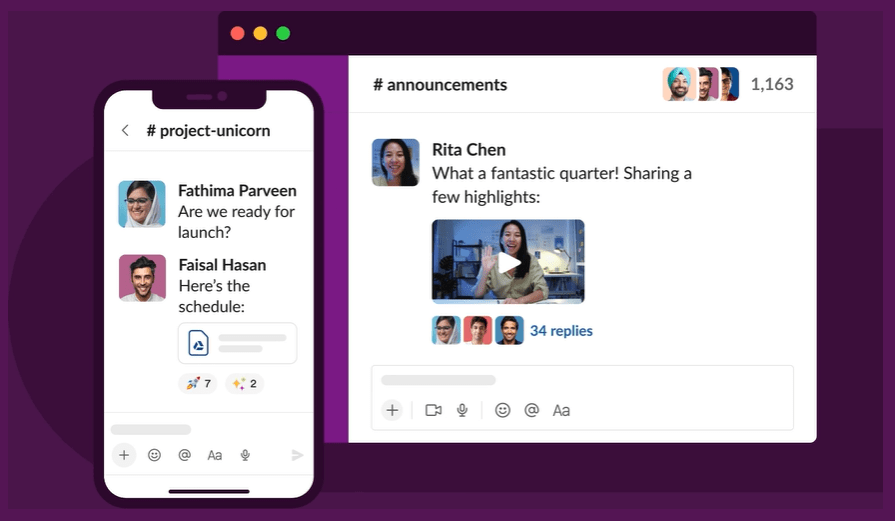
These are the platforms most office workers know best: Slack, Microsoft Teams, and Google Chat. They excel at real-time threaded conversation, file sharing, and integrations with productivity tools. They're built for knowledge workers with company-issued laptops, stable Wi-Fi, and dedicated email addresses, which describes roughly 20% of the global workforce.
2. Internal communications platforms
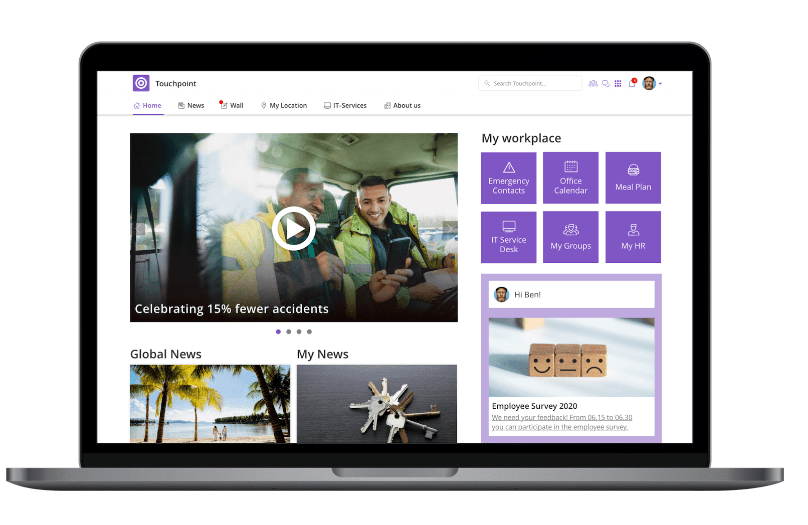
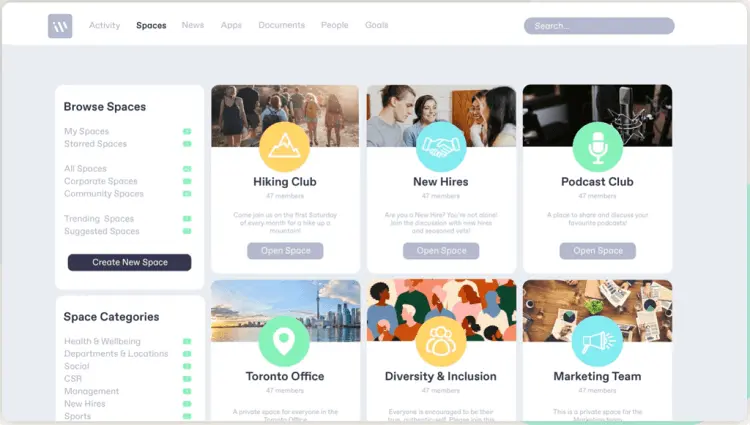
Internal comms platforms are built to reach every employee at scale, not just the team next to you. Tools like Staffbase, Workvivo, and Blink focus on top-down and peer-to-peer communication, with built-in analytics to prove message reach. These platforms care deeply about engagement metrics, segmentation (pushing the right message to the right location or role), and compliance: read receipts, audit trails, mandatory acknowledgements. For organizations managing multi-site workforces, these features aren't optional extras.
3. Frontline communication platforms
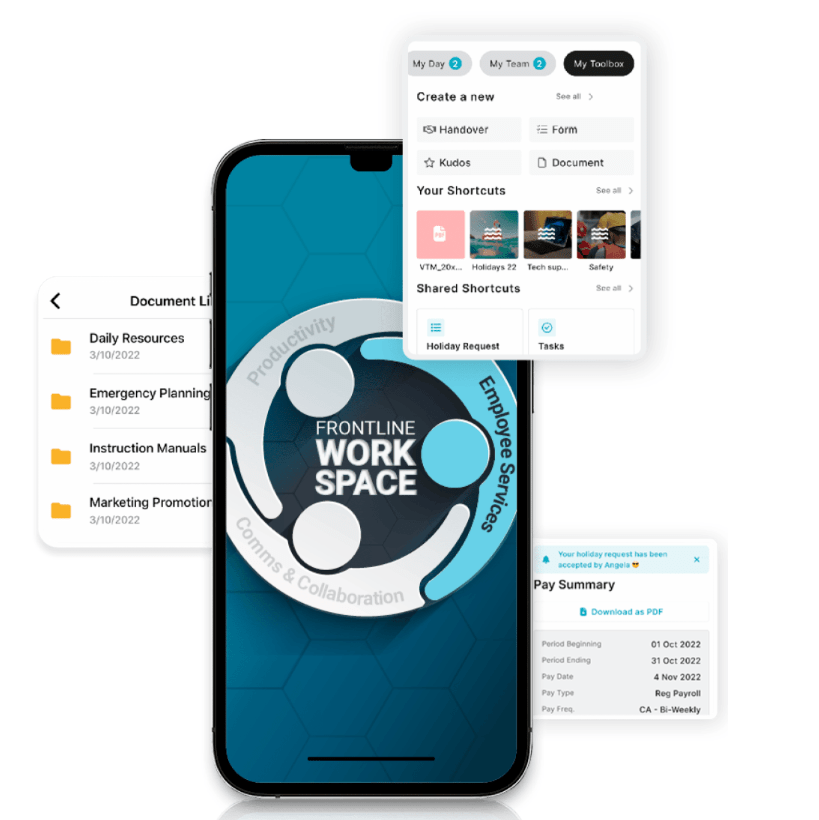
Frontline platforms solve the distribution problem that desk-centric tools can't: reaching workers who don't have company email addresses or desk access. They're mobile-first by design, built to work on personal smartphones, and require zero technical setup from the employee. Blink, Beekeeper, and Connecteam lead this segment. The distinguishing feature isn't the feed or the messaging. It's activation. Getting 95%+ of a 5,000-person retail or healthcare workforce into a single app within days is a different engineering and UX challenge than getting the marketing team onto Slack.
4. Unified communications as a service (UCaaS)
UCaaS platforms, including Dialpad, Nextiva, and RingCentral, bundle voice, video, and messaging into a single cloud system. They're primarily oriented around customer-facing communication: call centers, support lines, and sales teams. While they include internal messaging, their core value proposition is telephone infrastructure, not workforce engagement.
5. Developer communication platforms (CPaaS)
Communication Platform as a Service (CPaaS) tools like Twilio and Vonage let engineering teams build communication features directly into products and workflows, covering programmable SMS, voice, and push notifications. This type serves developers integrating communication capabilities into custom applications, not HR or operations teams choosing an employee tool.
Platform comparison: which type fits your workforce?
{{blink-table:table-1}}
Why most communication platforms miss 80% of the workforce
The desk assumption runs deep in most platforms, and it shapes everything from the sign-up flow to the mobile experience.
Standard platforms require a corporate email address to get started. They assume reliable broadband. Their mobile apps are afterthoughts, scaled down from a desktop interface rather than built from scratch for a 4-inch screen. And they assume the user is checking the app because it's their job to check the app, not because they're on a warehouse floor, in a bus depot, or on a hospital ward.
That describes every desk-based tool in the table above. It doesn't describe most of the workforce. According to McKinsey, 2.7 billion workers globally, 80% of the total workforce, are frontline or deskless. Retail associates, healthcare workers, logistics drivers, construction crews, hospitality staff. These workers don't have company laptops. Many don't have company email addresses. And when the only available communication platform is designed for people who do, those workers are functionally invisible.
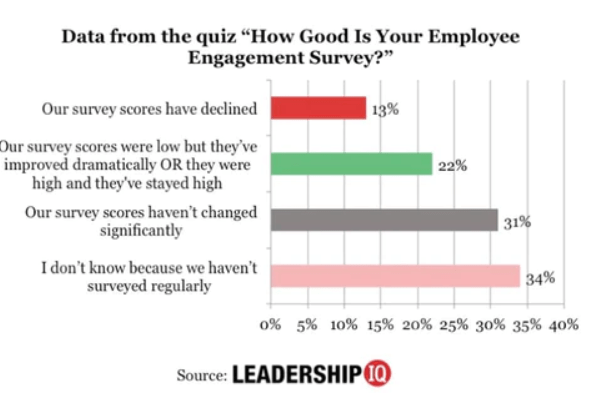
The business cost is measurable. Gallup research consistently shows that disengaged employees cost organizations roughly 34% of their annual salary in lost productivity. A major driver of that disengagement isn't pay or management. It's feeling uninformed. Workers who don't receive clear direction, who hear company news via the grapevine, and who can't surface concerns upward are far more likely to leave. The average frontline industry turnover rate sits between 40% and 60% annually. Communication infrastructure is rarely blamed. It should be.
Blink was built specifically for this gap. In deployments across logistics, retail, and healthcare, the consistent pattern we see is that activation, getting the full workforce onto one platform, is what unlocks the value. JD Sports achieved 87% adoption across their workforce within 10 days. Pizza Pilgrims hit 96% adoption. easyJet reached 88% active users across 20,000+ employees. Those numbers aren't achievable with a tool that requires a company email address and a desktop computer to get started.
Key features of an effective communication platform
Every category has its basics. These are the features that separate a communication platform that actually improves organizational performance from one that just adds to the noise.
Reach and activation rate. A platform only creates value if people use it. Look for published adoption data, not feature lists. Platforms that require IT provisioning or corporate credentials will always underperform platforms with self-serve QR code onboarding on a personal device.
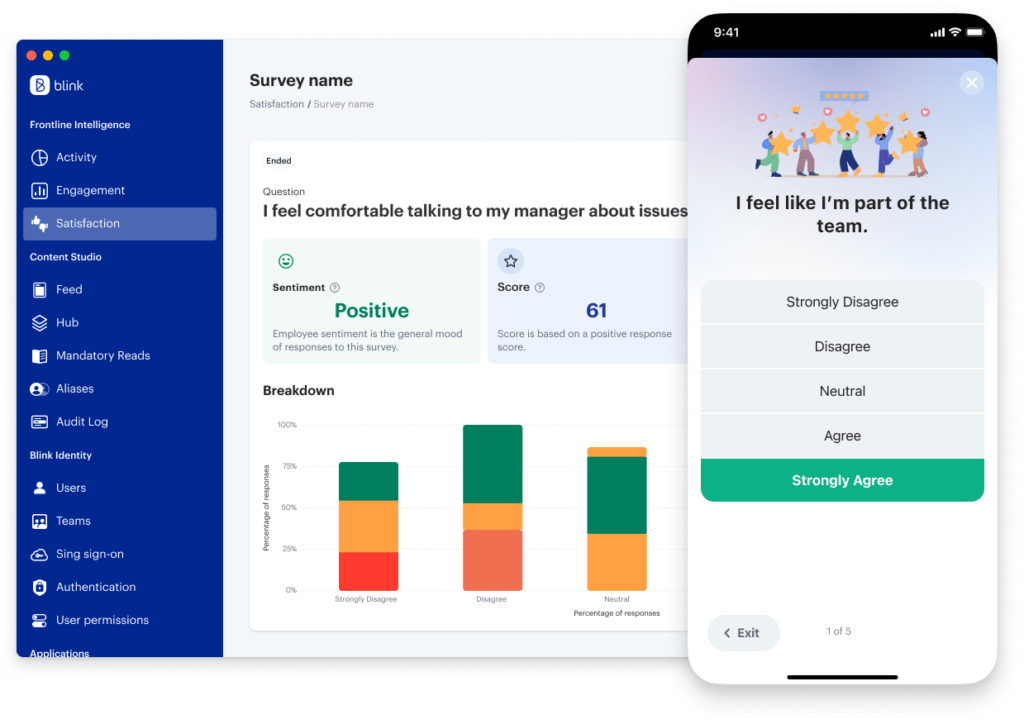
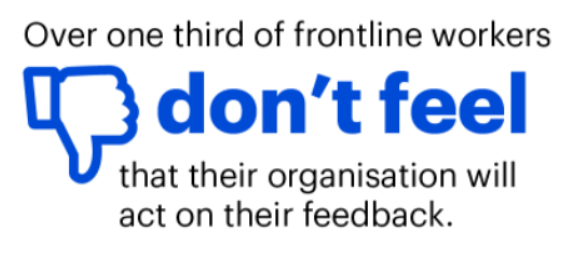
Two-way communication. Top-down broadcast isn't communication. It's publishing. Strong platforms create feedback loops: reactions, comments, direct messaging, pulse surveys. The best ones measure whether messages were read, not just sent.
Segmentation and targeting. Sending the right message to the right person by location, role, shift, or department reduces noise and increases relevance. A driver in Manchester doesn't need the same update as a warehouse operative in Atlanta.
Integrations. A communication platform that exists in isolation quickly becomes a burden. Look for native integrations with Workday, SAP, ServiceNow, Microsoft 365, and HR systems of record. The platform should surface information from those systems in the communication layer, not require employees to switch between five apps.
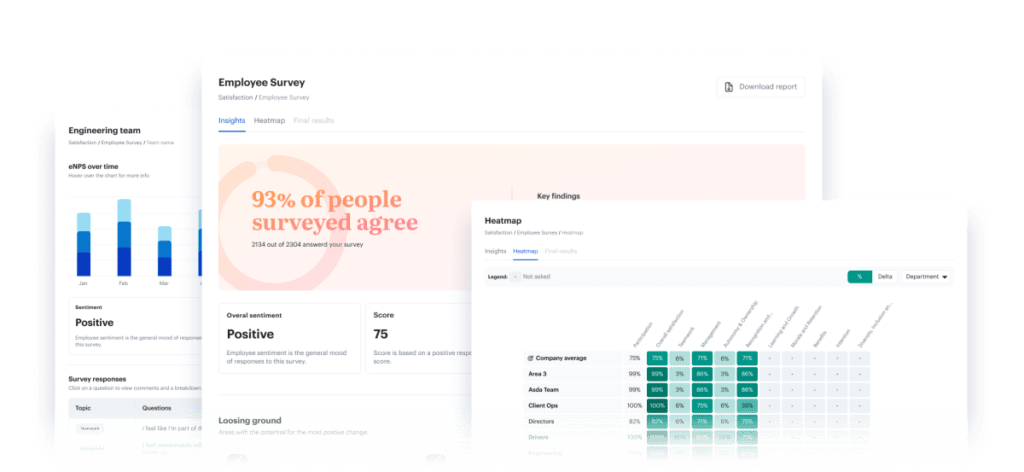
Analytics and compliance. Read receipts, engagement rates, and mandatory acknowledgment flows are the difference between assuming a message was received and knowing it was. In regulated industries like healthcare, transportation, and financial services, audit trails aren't optional.
Mobile-first design. If the mobile app feels like the desktop site compressed onto a phone screen, it will fail with frontline workers. Mobile-first means the phone experience was the primary design surface, with desktop as secondary.
How to choose the right communication platform
The platform category you need depends on your workforce composition, not your feature wishlist.
Step 1: Map your workforce. What percentage of your employees are deskless or frontline? If the answer is more than 30%, desk-centric tools will structurally underserve your workforce regardless of their feature set.
Step 2: Define your primary communication goal. Are you solving for real-time collaboration (team messaging tools), top-down broadcast and compliance (internal comms platforms), or two-way engagement at scale (frontline platforms)? Each type optimizes for a different outcome.
Step 3: Check activation requirements. How does an employee get onto the platform? Does it require IT provisioning, a corporate email, or VPN access? Each requirement reduces activation rates. For hourly workers or high-turnover environments, frictionless onboarding is a hard requirement.
Step 4: Evaluate integration depth. A communication platform you have to maintain in isolation will duplicate effort. Map the HR, scheduling, and operations systems already in use, and verify native integrations exist before signing a contract.
Step 5: Ask for adoption data, not feature demos. Any vendor can demo a feature. Ask for third-party validated adoption rates, customer retention figures, and case studies from organizations comparable to yours in size and sector.
The right communication platform for your whole workforce
Choosing a communication platform that works for the 20% of employees at desks, while the other 80% go unreached, is half a solution at best. The organizations consistently outperforming on retention, productivity, and employee satisfaction are the ones that treat frontline connectivity as infrastructure, not an afterthought.
Blink was built to solve exactly this. It's a mobile-first communication platform designed for organizations where most of the workforce is deskless. One app that handles news feeds, direct messaging, document access, HR integrations, and compliance workflows, all activatable via QR code with no corporate email required.
See how organizations like easyJet, JD Sports, and McDonald's have connected their entire workforces with Blink. Explore the Blink platform or talk to our team about your specific situation.
Frequently asked questions
A communication platform focuses on information exchange: messaging, announcements, video calls, and notifications. A collaboration platform focuses on working together on shared outputs, covering documents, projects, and workflows. In practice, the line has blurred significantly. Microsoft Teams and Slack bundle both. But the distinction matters when choosing: if your primary problem is reaching employees who don't receive company information, a communication-first platform will outperform a collaboration-first one. If your teams need to co-author documents and manage project tasks, a collaboration-focused tool may be more appropriate. Many large organizations run both, using a collaboration platform for knowledge workers and a dedicated communication platform for frontline teams. According to Gartner's research on digital workplace strategy, over 60% of enterprises with significant frontline workforces now operate at least two distinct communication systems to serve different workforce populations.
Frontline communication platforms support deskless workers by removing the barriers that prevent standard tools from reaching them. No corporate email required, no IT setup, no desktop dependency. The best frontline platforms are mobile-first by design, with QR-code-based onboarding that lets a new hire join from their personal smartphone in under two minutes. Features that matter most for frontline workers include offline access for low-connectivity environments, push notification-based broadcasts from managers, two-way feedback channels so workers can surface issues upward, and integrations with scheduling and HR systems. According to McKinsey, connected frontline workers are 3.5 times more likely to be highly engaged than disconnected peers. In Blink deployments across logistics and retail, we consistently see adoption rates above 85% within the first month, figures not achievable with platforms built for desk workers.
The five features that most reliably predict whether an employee communication platform will deliver measurable impact are: mobile-first design (not a mobile-adapted desktop tool), frictionless activation (no corporate email or IT setup required), two-way communication (not just broadcast), analytics and read receipts (so you know what was received, not just sent), and integration with existing HR and operations systems. Secondary features like video, gamification, and social feeds add value only once the fundamentals work. A platform with 40% adoption and beautiful video features is worse than a simple platform with 90% adoption. According to Gallup's State of the Global Workplace report, employees who are well-informed by their organization are 23% more likely to have high wellbeing, which translates directly to retention and productivity outcomes for frontline employers.
Email is a communication channel. A communication platform is a system that integrates multiple channels, including messaging, video, announcements, surveys, and documents, with an organizational layer on top: user management, segmentation, analytics, and compliance. The critical difference for frontline employers is that email requires every employee to have a dedicated address, which most hourly and deskless workers don't. It also has no way to confirm message receipt at scale, no ability to segment by role or location, and no feedback mechanism beyond reply-all. Communication platforms solve all of these. They also aggregate activity in one searchable record, reducing the information fragmentation that comes from maintaining separate WhatsApp groups, notice boards, intranet pages, and email lists. A 2023 survey by McKinsey found that employees spend an average of 28% of their workweek managing email, time that modern communication platforms recover through structured, targeted messaging.
For desk-based knowledge workers, replacing Microsoft Teams or Slack is rarely the right move. The switching cost is high and these platforms are deeply embedded in daily workflows. For frontline and deskless workers, neither Teams nor Slack was ever the right fit to begin with. A purpose-built frontline communication platform sits alongside desk-centric tools as a separate layer for the workforce segment those tools can't reach. In large organizations, including retailers, logistics companies, and healthcare systems, the typical architecture is Teams or Slack for head office and a frontline platform like Blink for field teams. Blink integrates with Microsoft 365, SharePoint, Workday, and ServiceNow, so content created in desk-centric environments can be surfaced to frontline workers without duplication of effort. The goal isn't replacement. It's coverage, ensuring no segment of the workforce is structurally excluded from company communication.
Pricing for communication platforms varies widely by type and scale. Collaboration tools like Slack and Microsoft Teams typically charge per user per month in the $7–$30 range, with enterprise pricing negotiated at volume. Frontline and internal communication platforms, including Staffbase, Blink, Workvivo, and Connecteam, generally price on a per-user-per-month basis with minimum seat requirements, usually starting in the $1–$8 range for frontline-scale deployments. UCaaS platforms like Nextiva and Dialpad bundle telephony and messaging, often starting at $20–$30 per user per month. The total cost of ownership calculation should include implementation, training, and integration work alongside license fees. According to a Deloitte analysis of enterprise communication technology ROI, the measurable cost of poor communication, covering rework, turnover, and missed operational targets, typically exceeds platform licensing costs by a factor of 10 to 1 for large frontline employers, making the investment case straightforward when adoption is high.





%2520(2).avif)