
No items found.
Employee experience
10 mins

America’s most booming main streets: The top U.S. cities for small businesses

Discover the U.S. cities with the most booming main streets, based on small-business growth, workforce expansion, and consumer search demand.

Lauren Burns
Published:
July 17, 2026
Last updated:
July 17, 2026
America’s most booming main streets: The top U.S. cities for small businesses
What we'll cover

Many factors go into a business making it in today’s world, but one of the biggest make-or-break factors is the environment. Strong downtown districts tend to benefit from a range of factors, the main ones being population growth, local engagement, and economic activity. From retail to hospitality, mid-sized cities are a good sweet spot due to affordability and space.

For businesses, understanding where people spend time and engage with their communities is becoming increasingly important. That's why Blink helps brands better understand and connect with local audiences. By identifying the cities where residents are actively exploring, businesses can make more informed decisions about where to invest and grow.

A successful Main Street isn't just about the number of businesses operating there. It's also about whether people want to work, shop, eat, and spend time in the area. To determine the U.S. cities with the most booming downtown areas, we focused on retail and food/hospitality business density, small business births, and workforce growth, alongside search volume, population growth, and walkability score.

Not sure where your business falls? Find out what qualifies as a small business in high-growth U.S. cities.

The best U.S. cities for small business growth
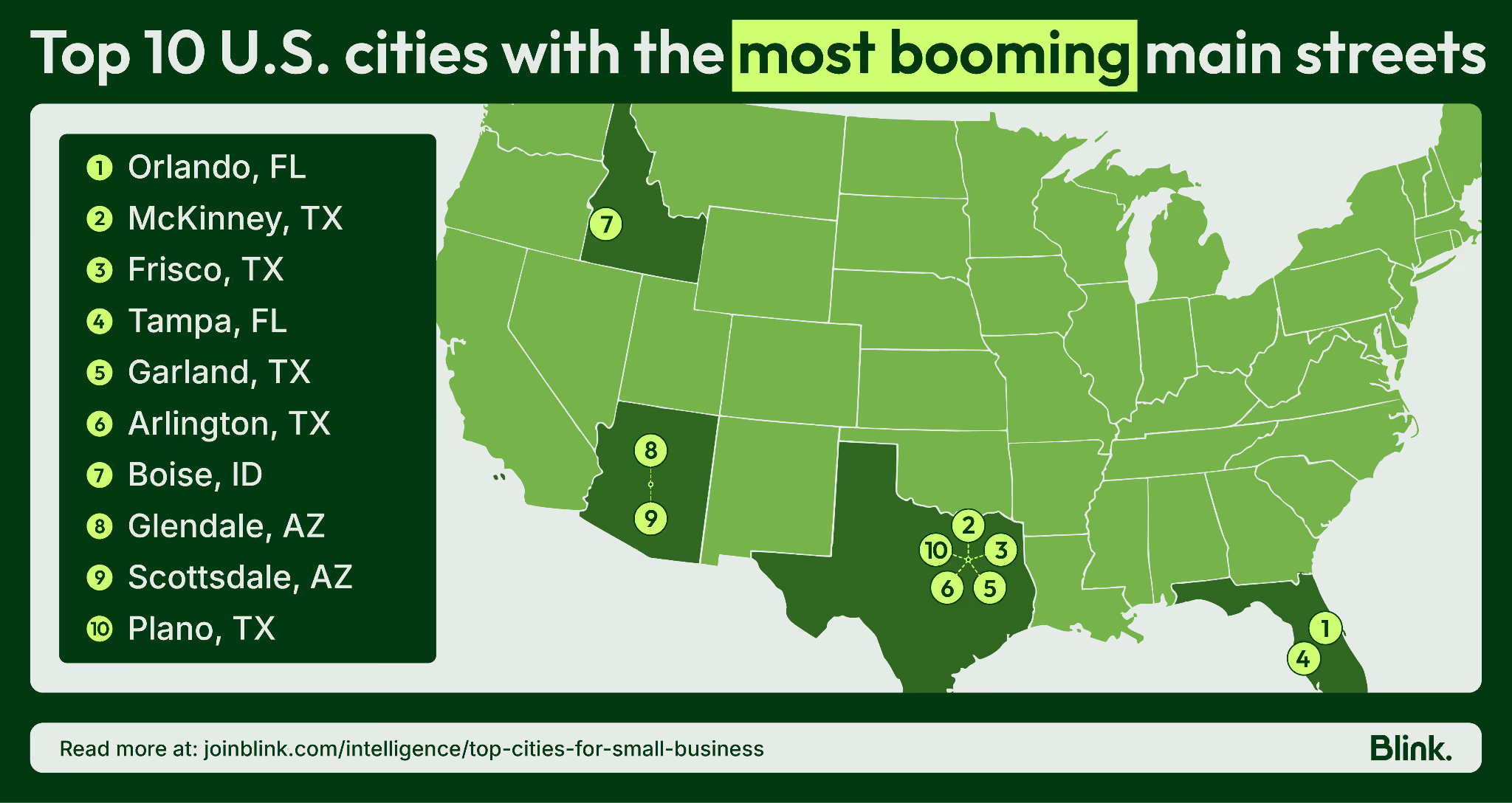
1. Orlando, Florida

Orlando takes the top spot with a score of 46.8, thanks to its blend of rapid growth, thriving tourism, and a steady stream of new businesses. The city added 7,464 residents in just one year and generated one of the highest small-business search volumes in the rankings, at 8,140. Retail and hospitality continue to flourish, with thousands of new businesses opening across both sectors. Orlando's appeal extends well beyond its theme parks, too, with 25,800 searches for things to do in the city. For entrepreneurs, that means access to a large, active audience of locals and visitors looking to shop, dine, and explore.

2. McKinney, Texas

McKinney may have one of the smaller populations in the top 10, but it's growing faster than almost anyone else. The city added 11,664 residents between 2023 and 2024—the largest population increase in the rankings—and continues to see strong growth in both retail and hospitality. That momentum is helping transform McKinney into one of the most exciting business destinations in North Texas. With more than 3,000 searches for both local businesses and things to do, it's clear that people are increasingly paying attention to what the city has to offer.

For entrepreneurs eyeing cities like McKinney, getting the foundations right matters from day one—starting with choosing the right business structure for a high-growth market

3. Frisco, Texas

Once overshadowed by neighboring Dallas, Frisco has quickly carved out a name for itself as one of Texas's fastest-growing business hubs. The city earned a score of 41.7 after adding more than 8,200 new businesses in a single year and posting strong employment growth across retail and hospitality. Interest in the city is growing alongside its business community, with searches for things to do in Frisco reaching 3,700. As more residents and visitors discover the city's shopping, dining, and entertainment options, Frisco continues to strengthen its appeal for entrepreneurs.

4. Tampa, Florida

Tampa combines the advantages of a large city with the energy of a growing small business scene. Home to more than 427,000 residents, the city welcomed nearly 4,800 new people in the past year while generating more than 7,000 searches for small businesses. Tampa's downtown also attracts plenty of attention, with nearly 16,000 searches for things to do. Supported by a healthy mix of population growth, tourism, and local engagement, Tampa remains one of Florida's strongest cities for retail and hospitality businesses.

5. Garland, Texas

Garland rounds out the top five with a score of 38.5, driven by strong business expansion and steady population growth. The city added more than 4,100 residents over the past year and achieved an impressive average employment growth rate of 10.3% across retail and hospitality. At the same time, thousands of searches for local businesses and downtown activities show that people are actively exploring what Garland has to offer. These trends suggest the city is becoming an increasingly attractive place for both business owners and customers.

6. Arlington, Texas

Arlington is best known for its sports, entertainment, and major attractions, but it is also proving to be a strong environment for small businesses. The city is home to more than 408,000 residents and recorded average employment growth of 10.3% across the retail and hospitality sectors. Interest in local attractions remains high, with more than 4,000 searches for things to do downtown and more than 3,300 searches related to small businesses. Combined with steady population growth, Arlington offers businesses a large audience and plenty of opportunities to stand out.

7. Boise, Idaho

Boise shows that a smaller city can still deliver big opportunities for entrepreneurs. With a population of just under 239,000, Boise recorded an average employment growth rate of 9.7% across retail and hospitality sectors, while also earning the highest walkability score among the top 10. More than 3,700 searches for small businesses and over 3,000 searches for things to do downtown reflect a community that actively supports its local economy. Combined with steady population growth, Boise continues to attract both new residents and new business ventures.

8. Glendale, Arizona

Glendale has quietly become one of the strongest markets for retail and hospitality businesses in the Southwest. The city added more than 3,100 residents over the past year and recorded some of the strongest workforce growth in the rankings, including a 15.3% increase in hospitality employment. Searches for local businesses and downtown activities also remain healthy, highlighting a city that is attracting attention from both residents and visitors. These factors helped Glendale secure a place among the top 10 booming main streets in America.

9. Scottsdale, Arizona

Scottsdale pairs strong business growth with one of the most engaged audiences in the rankings. The city posted an average employment growth rate of 11.5% across retail and hospitality while generating 6,450 searches for things to do downtown—one of the highest totals in the study. Searches for small businesses also remained strong at 3,680, showing that people are actively seeking out local experiences. This combination of business activity and visitor appeal continues to make Scottsdale a standout destination for entrepreneurs.

10. Plano, Texas

Plano closes out the top 10 with a score of 37.0, demonstrating that a strong business community can thrive even during slower population growth. Despite a slight population decline, the city maintained an average employment growth rate of 10.3% across retail and hospitality and generated nearly 3,800 searches for small businesses. Interest in local attractions also remains high, with almost 4,500 searches for things to do downtown. Those figures suggest Plano's established business ecosystem continues to attract customers, helping the city remain competitive for new and growing businesses.

The top U.S. cities for job growth
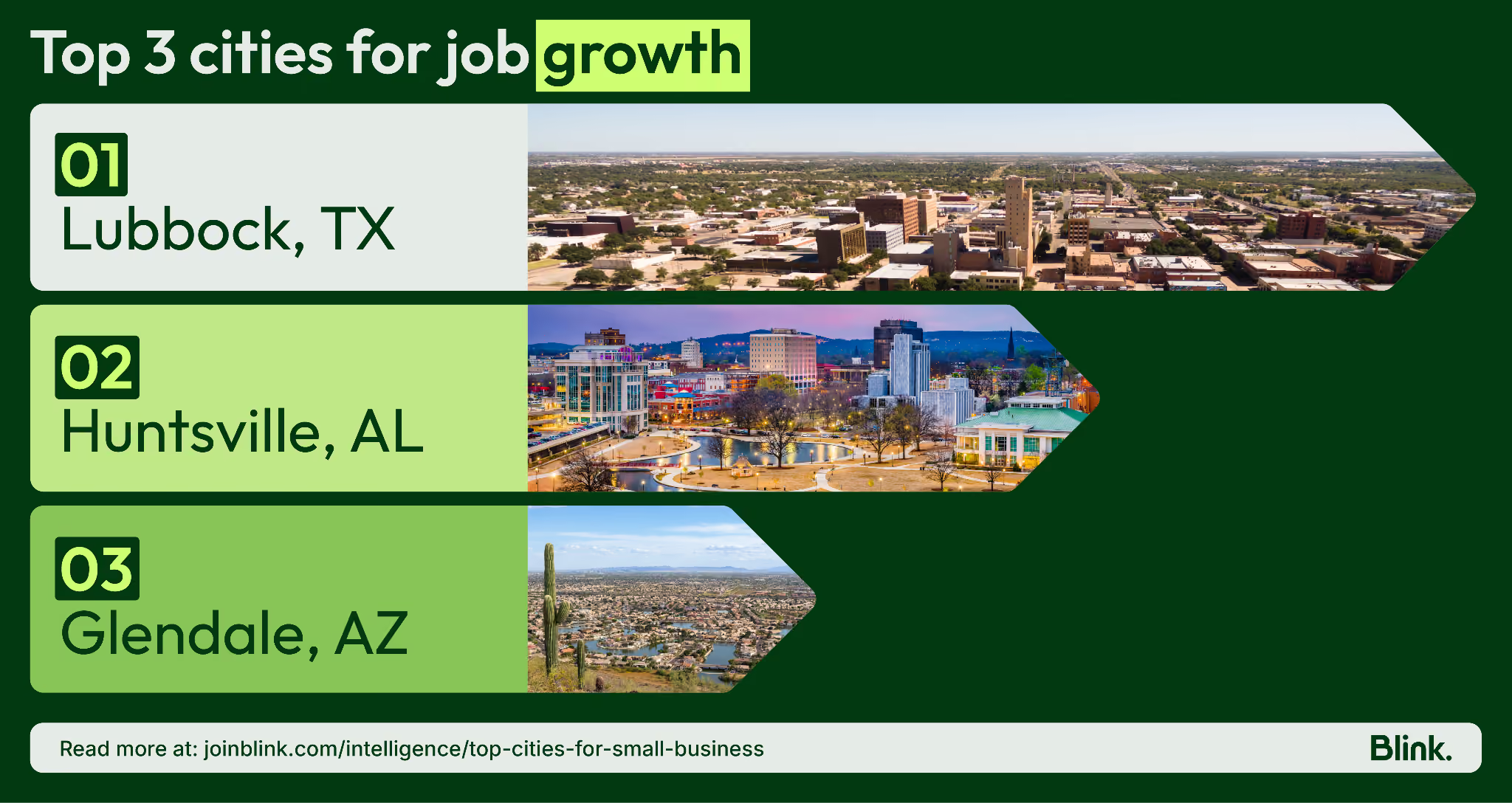
1. Lubbock, Texas

Taking the top spot is Lubbock, TX, with the highest average employment growth rate in the ranking at 13.1%. The city's labor market is being driven by strong expansion across both major industries analyzed. Retail employment grew by 11.3%, while employment in food and accommodation services climbed even higher at 14.9%, making Lubbock one of the few cities to post double-digit workforce growth in both sectors. This balanced growth suggests that job creation is occurring across a broad range of businesses rather than being concentrated in a single industry. With a population of 279,104 and an annual population growth of 4,033 residents, Lubbock's workforce momentum shows few signs of slowing.

For small businesses looking to compete in markets like this, offering the right employee benefits can be the difference between attracting top frontline talent and losing them to larger employers.

2. Huntsville, Alabama

Coming in at #2 is Huntsville, AL, with an average employment growth rate of 12%. The city recorded workforce growth of 10.6% in the retail sector and 13.4% in food and accommodation services, highlighting strong hiring demand across consumer-facing industries. Huntsville's ability to achieve double-digit employment growth in both sectors demonstrates a healthy local economy that is rapidly creating opportunities for workers. Supported by a growing population of 237,413 residents and an annual population growth of 1,305 people, Huntsville continues to establish itself as one of the strongest job markets in the country.

3. Glendale, Arizona

Rounding out the top three is Glendale, AZ, with an average employment growth rate of 11.45%. While retail employment increased by a solid 7.6%, the city's food and accommodation sector was the standout performer, recording workforce growth of 15.3%—the highest among the top three cities. This surge in hospitality hiring helped push Glendale's overall employment growth into double digits and reflects increasing demand from both residents and visitors. With a population of 262,745 and an annual population growth of 3,142 residents, Glendale's expanding workforce suggests a city where employers continue to invest and hire at a significant pace.

The fastest-growing U.S. cities
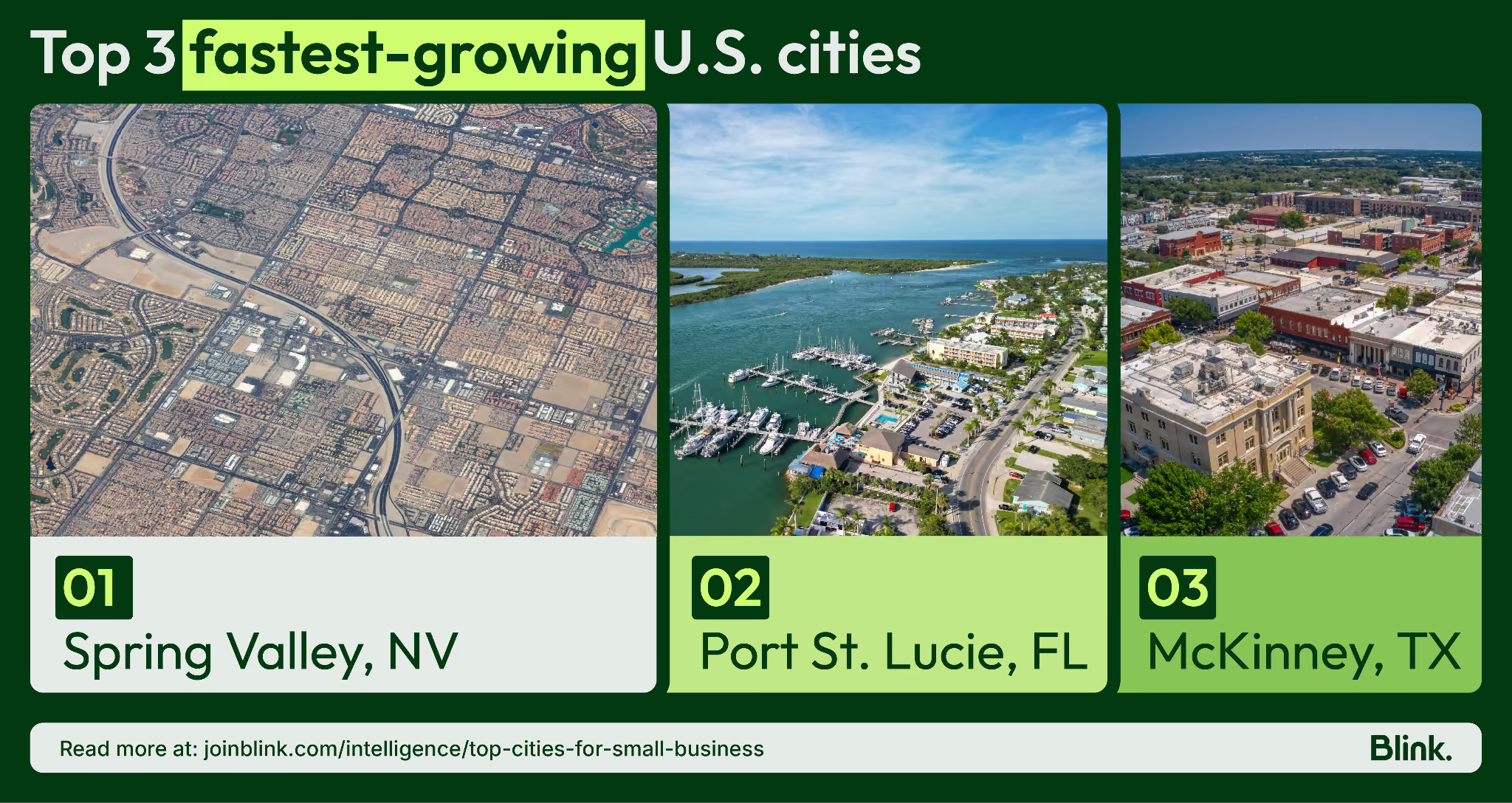
1. Spring Valley, Nevada

Taking the top spot is Spring Valley, NV, which added an incredible 22,974 residents from 2023-2024, the largest population increase in the ranking. With a total population of 229,494, the city is experiencing rapid expansion, welcoming new residents at a pace that far exceeds that of many larger metropolitan areas. Spring Valley also maintains a substantial business presence with 6,500 retail businesses and 5,780 food and accommodation businesses. The area's continued population boom suggests growing demand for housing, services, and local businesses as more Americans choose to call this Nevada community home.

2. Port St. Lucie, Florida

Coming in at #2 is Port St. Lucie, FL, which welcomed 11,880 new residents in 2023-2024 alone. The city now has a population of 284,448 and remains one of Florida's fastest-growing destinations. Population gains have been accompanied by healthy economic growth, with average employment growth reaching 5.1% across the retail and hospitality industries. The city is home to 1,639 retail businesses and 1,011 food and accommodation businesses, helping support its expanding population. As more people relocate to Port St. Lucie, demand for local services, shopping, dining, and entertainment is likely to continue rising, further strengthening the local economy.

3. McKinney, Texas

Ranking third is McKinney, TX, which added 11,664 residents in 2023-2024, bringing its population to 242,534. The North Texas city continues to attract new residents thanks to its strong economy and growing business community. Employment growth averaged an impressive 10.3% across retail and hospitality sectors, one of the highest rates in the ranking, indicating that job creation is helping fuel population growth. McKinney also benefits from a sizable business base, with 21,680 retail businesses and 18,161 food and accommodation businesses supporting the local economy. With thousands of new residents arriving each year and employers continuing to expand their workforce, McKinney remains one of the fastest-growing cities in America.

The U.S. cities with the most walkable downtowns and main streets

1. Boise, Idaho

Taking the top spot is Boise, ID, with an exceptional walkability score of 93, making it the most walkable downtown and main street destination in the ranking. For residents and visitors alike, this means many of the city's shops, restaurants, and attractions can be reached on foot, creating a vibrant environment for local businesses. Boise is home to 2,281 retail businesses and 1,732 food and accommodation businesses, while employment growth remains strong across both sectors, averaging 9.7%. People are also very interested to see what the city of trees has to offer, with 3,730 searches for small businesses, 500 for local shops, and 3,080 for things to do downtown. Combined with annual population growth of 1,530 residents, Boise's highly walkable downtown continues to support both economic activity and quality of life.

2. Jersey City, New Jersey

Jersey City, NJ, takes the second spot thanks to its highly walkable downtown and vibrant urban atmosphere. With a walkability score of 87, residents can easily access shops, restaurants, and local services without relying on a car, helping create a lively environment for small businesses. The city is also home to a substantial retail and hospitality sector, supported by strong interest in local attractions and businesses, with more than 4,000 searches for small businesses over the past year. While employment growth has slowed recently, Jersey City still added 4,609 residents, suggesting its mix of convenience, amenities, and proximity to New York City continues to attract new residents and support local commerce.

3. Newark, New Jersey

Newark, NJ, rounds out the top three thanks to its highly walkable downtown, growing population, and thriving business community. With a walkability score of 76, residents can easily access local shops, restaurants, and everyday services, helping create a bustling environment for businesses of all sizes. The city added 8,078 residents in the past year—one of the largest population increases among the top-ranked cities—while also generating nearly 4,800 searches for small businesses and more than 2,400 searches for things to do downtown. With its extensive retail and hospitality sectors, Newark continues to offer a mix of accessibility, activity, and growth that helps local businesses thrive.

Curious where your city ranks? Check out our interactive table below 

What America’s top main streets have in common

The results show that thriving main streets aren't limited to major metropolitan areas. While fast-growing cities in Texas and Florida performed especially well, the rankings highlight a broader trend: places with growing populations, active downtown districts, and strong retail and hospitality sectors tend to create the best conditions for small businesses. But the businesses that thrive long-term in these cities are the ones that also get the fundamentals right internally — from managing employees effectively to building teams that grow with the city around them.

Whether driven by tourism, new residents, or vibrant local communities, these cities are proving that a successful main street depends on more than just business density; it requires an environment where people want to live, work, shop, and spend time.

Methodology

To determine which U.S. cities have the most booming main streets, we analyzed the 200 most populous mid-sized cities (pop. 500,000 or less) using a weighted index combining four key indicators:

- Retail & Food/Hospitality business density — the total number of retail, food, and hospitality businesses (NAICS 44-45) (NAICS 72) operating in each city's surrounding metro area

- Retail, Food, and Hospitality workforce growth — the percentage change in retail, food, and hospitality sector employment between Q1 2019 and Q1 2025

- Retail, Food, and Hospitality small business births - The number of newly established retail, food, and hospitality small businesses within each city's surrounding metro area

- Search Volumes - The total search volume for each query (“Small businesses [city]”, “Local shops [city]”, “Things to do downtown [city]”) across each city listed 

- Population Growth (1-Year growth '23-'24) - The increase or decrease in population YoY from 2023-2024 (most recent data available) 

- Walkability Score - The total score determining how easy it is to walk around each city listed 

Establishment counts were sourced from the U.S. Census Bureau's 2023 County Business Patterns. Employment growth figures were drawn from the U.S. Census Bureau's Quarterly Workforce Indicators, accessed via the LED Extraction Tool. The MSA populations were sourced from the 2023 American Community Survey 5-Year Estimates.

Cities sharing an MSA were assigned the same metro-level data, showcasing that retail and hospitality businesses serve regional economies rather than strictly city limits. Cities were then ranked from highest to lowest by total score to identify the metros where small-business activity and growth are strongest.

* Workforce growth was measured by comparing Q1 2019 to Q1 2025 employment data from the U.S. Census Bureau's Quarterly Workforce Indicators (QWI). For four metros — Columbia, MO; Springfield, MO; Springfield, MA; and Worcester, MA — Q1 2024 was used as the endpoint due to the delayed Q1 2025 release; this represents a 5-year span instead of the standard 6-year span. For Anchorage, AK; St. Louis, MO-IL; Detroit-Warren-Dearborn, MI; and Grand Rapids-Wyoming-Kentwood, MI, workforce growth could not be calculated due to incomplete or unreleased state-level QWI data. These cities remain in the ranking based on their establishment density figures (Census 2023 County Business Patterns), with workforce growth treated as -100%. Data accurate as of May 15th, 2026.

Many factors go into a business making it in today’s world, but one of the biggest make-or-break factors is the environment. Strong downtown districts tend to benefit from a range of factors, the main ones being population growth, local engagement, and economic activity. From retail to hospitality, mid-sized cities are a good sweet spot due to affordability and space.

For businesses, understanding where people spend time and engage with their communities is becoming increasingly important. That's why Blink helps brands better understand and connect with local audiences. By identifying the cities where residents are actively exploring, businesses can make more informed decisions about where to invest and grow.

A successful Main Street isn't just about the number of businesses operating there. It's also about whether people want to work, shop, eat, and spend time in the area. To determine the U.S. cities with the most booming downtown areas, we focused on retail and food/hospitality business density, small business births, and workforce growth, alongside search volume, population growth, and walkability score.

Not sure where your business falls? Find out what qualifies as a small business in high-growth U.S. cities.

The best U.S. cities for small business growth

1. Orlando, Florida

Orlando takes the top spot with a score of 46.8, thanks to its blend of rapid growth, thriving tourism, and a steady stream of new businesses. The city added 7,464 residents in just one year and generated one of the highest small-business search volumes in the rankings, at 8,140. Retail and hospitality continue to flourish, with thousands of new businesses opening across both sectors. Orlando's appeal extends well beyond its theme parks, too, with 25,800 searches for things to do in the city. For entrepreneurs, that means access to a large, active audience of locals and visitors looking to shop, dine, and explore.

2. McKinney, Texas

McKinney may have one of the smaller populations in the top 10, but it's growing faster than almost anyone else. The city added 11,664 residents between 2023 and 2024—the largest population increase in the rankings—and continues to see strong growth in both retail and hospitality. That momentum is helping transform McKinney into one of the most exciting business destinations in North Texas. With more than 3,000 searches for both local businesses and things to do, it's clear that people are increasingly paying attention to what the city has to offer.

For entrepreneurs eyeing cities like McKinney, getting the foundations right matters from day one—starting with choosing the right business structure for a high-growth market

3. Frisco, Texas

Once overshadowed by neighboring Dallas, Frisco has quickly carved out a name for itself as one of Texas's fastest-growing business hubs. The city earned a score of 41.7 after adding more than 8,200 new businesses in a single year and posting strong employment growth across retail and hospitality. Interest in the city is growing alongside its business community, with searches for things to do in Frisco reaching 3,700. As more residents and visitors discover the city's shopping, dining, and entertainment options, Frisco continues to strengthen its appeal for entrepreneurs.

4. Tampa, Florida

Tampa combines the advantages of a large city with the energy of a growing small business scene. Home to more than 427,000 residents, the city welcomed nearly 4,800 new people in the past year while generating more than 7,000 searches for small businesses. Tampa's downtown also attracts plenty of attention, with nearly 16,000 searches for things to do. Supported by a healthy mix of population growth, tourism, and local engagement, Tampa remains one of Florida's strongest cities for retail and hospitality businesses.

5. Garland, Texas

Garland rounds out the top five with a score of 38.5, driven by strong business expansion and steady population growth. The city added more than 4,100 residents over the past year and achieved an impressive average employment growth rate of 10.3% across retail and hospitality. At the same time, thousands of searches for local businesses and downtown activities show that people are actively exploring what Garland has to offer. These trends suggest the city is becoming an increasingly attractive place for both business owners and customers.

6. Arlington, Texas

Arlington is best known for its sports, entertainment, and major attractions, but it is also proving to be a strong environment for small businesses. The city is home to more than 408,000 residents and recorded average employment growth of 10.3% across the retail and hospitality sectors. Interest in local attractions remains high, with more than 4,000 searches for things to do downtown and more than 3,300 searches related to small businesses. Combined with steady population growth, Arlington offers businesses a large audience and plenty of opportunities to stand out.

7. Boise, Idaho

Boise shows that a smaller city can still deliver big opportunities for entrepreneurs. With a population of just under 239,000, Boise recorded an average employment growth rate of 9.7% across retail and hospitality sectors, while also earning the highest walkability score among the top 10. More than 3,700 searches for small businesses and over 3,000 searches for things to do downtown reflect a community that actively supports its local economy. Combined with steady population growth, Boise continues to attract both new residents and new business ventures.

8. Glendale, Arizona

Glendale has quietly become one of the strongest markets for retail and hospitality businesses in the Southwest. The city added more than 3,100 residents over the past year and recorded some of the strongest workforce growth in the rankings, including a 15.3% increase in hospitality employment. Searches for local businesses and downtown activities also remain healthy, highlighting a city that is attracting attention from both residents and visitors. These factors helped Glendale secure a place among the top 10 booming main streets in America.

9. Scottsdale, Arizona

Scottsdale pairs strong business growth with one of the most engaged audiences in the rankings. The city posted an average employment growth rate of 11.5% across retail and hospitality while generating 6,450 searches for things to do downtown—one of the highest totals in the study. Searches for small businesses also remained strong at 3,680, showing that people are actively seeking out local experiences. This combination of business activity and visitor appeal continues to make Scottsdale a standout destination for entrepreneurs.

10. Plano, Texas

Plano closes out the top 10 with a score of 37.0, demonstrating that a strong business community can thrive even during slower population growth. Despite a slight population decline, the city maintained an average employment growth rate of 10.3% across retail and hospitality and generated nearly 3,800 searches for small businesses. Interest in local attractions also remains high, with almost 4,500 searches for things to do downtown. Those figures suggest Plano's established business ecosystem continues to attract customers, helping the city remain competitive for new and growing businesses.

The top U.S. cities for job growth

1. Lubbock, Texas

Taking the top spot is Lubbock, TX, with the highest average employment growth rate in the ranking at 13.1%. The city's labor market is being driven by strong expansion across both major industries analyzed. Retail employment grew by 11.3%, while employment in food and accommodation services climbed even higher at 14.9%, making Lubbock one of the few cities to post double-digit workforce growth in both sectors. This balanced growth suggests that job creation is occurring across a broad range of businesses rather than being concentrated in a single industry. With a population of 279,104 and an annual population growth of 4,033 residents, Lubbock's workforce momentum shows few signs of slowing.

For small businesses looking to compete in markets like this, offering the right employee benefits can be the difference between attracting top frontline talent and losing them to larger employers.

2. Huntsville, Alabama

Coming in at #2 is Huntsville, AL, with an average employment growth rate of 12%. The city recorded workforce growth of 10.6% in the retail sector and 13.4% in food and accommodation services, highlighting strong hiring demand across consumer-facing industries. Huntsville's ability to achieve double-digit employment growth in both sectors demonstrates a healthy local economy that is rapidly creating opportunities for workers. Supported by a growing population of 237,413 residents and an annual population growth of 1,305 people, Huntsville continues to establish itself as one of the strongest job markets in the country.

3. Glendale, Arizona

Rounding out the top three is Glendale, AZ, with an average employment growth rate of 11.45%. While retail employment increased by a solid 7.6%, the city's food and accommodation sector was the standout performer, recording workforce growth of 15.3%—the highest among the top three cities. This surge in hospitality hiring helped push Glendale's overall employment growth into double digits and reflects increasing demand from both residents and visitors. With a population of 262,745 and an annual population growth of 3,142 residents, Glendale's expanding workforce suggests a city where employers continue to invest and hire at a significant pace.

The fastest-growing U.S. cities

1. Spring Valley, Nevada

Taking the top spot is Spring Valley, NV, which added an incredible 22,974 residents from 2023-2024, the largest population increase in the ranking. With a total population of 229,494, the city is experiencing rapid expansion, welcoming new residents at a pace that far exceeds that of many larger metropolitan areas. Spring Valley also maintains a substantial business presence with 6,500 retail businesses and 5,780 food and accommodation businesses. The area's continued population boom suggests growing demand for housing, services, and local businesses as more Americans choose to call this Nevada community home.

2. Port St. Lucie, Florida

Coming in at #2 is Port St. Lucie, FL, which welcomed 11,880 new residents in 2023-2024 alone. The city now has a population of 284,448 and remains one of Florida's fastest-growing destinations. Population gains have been accompanied by healthy economic growth, with average employment growth reaching 5.1% across the retail and hospitality industries. The city is home to 1,639 retail businesses and 1,011 food and accommodation businesses, helping support its expanding population. As more people relocate to Port St. Lucie, demand for local services, shopping, dining, and entertainment is likely to continue rising, further strengthening the local economy.

3. McKinney, Texas

Ranking third is McKinney, TX, which added 11,664 residents in 2023-2024, bringing its population to 242,534. The North Texas city continues to attract new residents thanks to its strong economy and growing business community. Employment growth averaged an impressive 10.3% across retail and hospitality sectors, one of the highest rates in the ranking, indicating that job creation is helping fuel population growth. McKinney also benefits from a sizable business base, with 21,680 retail businesses and 18,161 food and accommodation businesses supporting the local economy. With thousands of new residents arriving each year and employers continuing to expand their workforce, McKinney remains one of the fastest-growing cities in America.

The U.S. cities with the most walkable downtowns and main streets

1. Boise, Idaho

Taking the top spot is Boise, ID, with an exceptional walkability score of 93, making it the most walkable downtown and main street destination in the ranking. For residents and visitors alike, this means many of the city's shops, restaurants, and attractions can be reached on foot, creating a vibrant environment for local businesses. Boise is home to 2,281 retail businesses and 1,732 food and accommodation businesses, while employment growth remains strong across both sectors, averaging 9.7%. People are also very interested to see what the city of trees has to offer, with 3,730 searches for small businesses, 500 for local shops, and 3,080 for things to do downtown. Combined with annual population growth of 1,530 residents, Boise's highly walkable downtown continues to support both economic activity and quality of life.

2. Jersey City, New Jersey

Jersey City, NJ, takes the second spot thanks to its highly walkable downtown and vibrant urban atmosphere. With a walkability score of 87, residents can easily access shops, restaurants, and local services without relying on a car, helping create a lively environment for small businesses. The city is also home to a substantial retail and hospitality sector, supported by strong interest in local attractions and businesses, with more than 4,000 searches for small businesses over the past year. While employment growth has slowed recently, Jersey City still added 4,609 residents, suggesting its mix of convenience, amenities, and proximity to New York City continues to attract new residents and support local commerce.

3. Newark, New Jersey

Newark, NJ, rounds out the top three thanks to its highly walkable downtown, growing population, and thriving business community. With a walkability score of 76, residents can easily access local shops, restaurants, and everyday services, helping create a bustling environment for businesses of all sizes. The city added 8,078 residents in the past year—one of the largest population increases among the top-ranked cities—while also generating nearly 4,800 searches for small businesses and more than 2,400 searches for things to do downtown. With its extensive retail and hospitality sectors, Newark continues to offer a mix of accessibility, activity, and growth that helps local businesses thrive.

Curious where your city ranks? Check out our interactive table below 

What America’s top main streets have in common

The results show that thriving main streets aren't limited to major metropolitan areas. While fast-growing cities in Texas and Florida performed especially well, the rankings highlight a broader trend: places with growing populations, active downtown districts, and strong retail and hospitality sectors tend to create the best conditions for small businesses. But the businesses that thrive long-term in these cities are the ones that also get the fundamentals right internally — from managing employees effectively to building teams that grow with the city around them.

Whether driven by tourism, new residents, or vibrant local communities, these cities are proving that a successful main street depends on more than just business density; it requires an environment where people want to live, work, shop, and spend time.

Methodology

To determine which U.S. cities have the most booming main streets, we analyzed the 200 most populous mid-sized cities (pop. 500,000 or less) using a weighted index combining four key indicators:

- Retail & Food/Hospitality business density — the total number of retail, food, and hospitality businesses (NAICS 44-45) (NAICS 72) operating in each city's surrounding metro area

- Retail, Food, and Hospitality workforce growth — the percentage change in retail, food, and hospitality sector employment between Q1 2019 and Q1 2025

- Retail, Food, and Hospitality small business births - The number of newly established retail, food, and hospitality small businesses within each city's surrounding metro area

- Search Volumes - The total search volume for each query (“Small businesses [city]”, “Local shops [city]”, “Things to do downtown [city]”) across each city listed 

- Population Growth (1-Year growth '23-'24) - The increase or decrease in population YoY from 2023-2024 (most recent data available) 

- Walkability Score - The total score determining how easy it is to walk around each city listed 

Establishment counts were sourced from the U.S. Census Bureau's 2023 County Business Patterns. Employment growth figures were drawn from the U.S. Census Bureau's Quarterly Workforce Indicators, accessed via the LED Extraction Tool. The MSA populations were sourced from the 2023 American Community Survey 5-Year Estimates.

Cities sharing an MSA were assigned the same metro-level data, showcasing that retail and hospitality businesses serve regional economies rather than strictly city limits. Cities were then ranked from highest to lowest by total score to identify the metros where small-business activity and growth are strongest.

* Workforce growth was measured by comparing Q1 2019 to Q1 2025 employment data from the U.S. Census Bureau's Quarterly Workforce Indicators (QWI). For four metros — Columbia, MO; Springfield, MO; Springfield, MA; and Worcester, MA — Q1 2024 was used as the endpoint due to the delayed Q1 2025 release; this represents a 5-year span instead of the standard 6-year span. For Anchorage, AK; St. Louis, MO-IL; Detroit-Warren-Dearborn, MI; and Grand Rapids-Wyoming-Kentwood, MI, workforce growth could not be calculated due to incomplete or unreleased state-level QWI data. These cities remain in the ranking based on their establishment density figures (Census 2023 County Business Patterns), with workforce growth treated as -100%. Data accurate as of May 15th, 2026.

What we'll cover

Start your free trial today

See how Blink helps frontline teams stay connected, informed, and engaged.

Try Blink

Related Blogs