
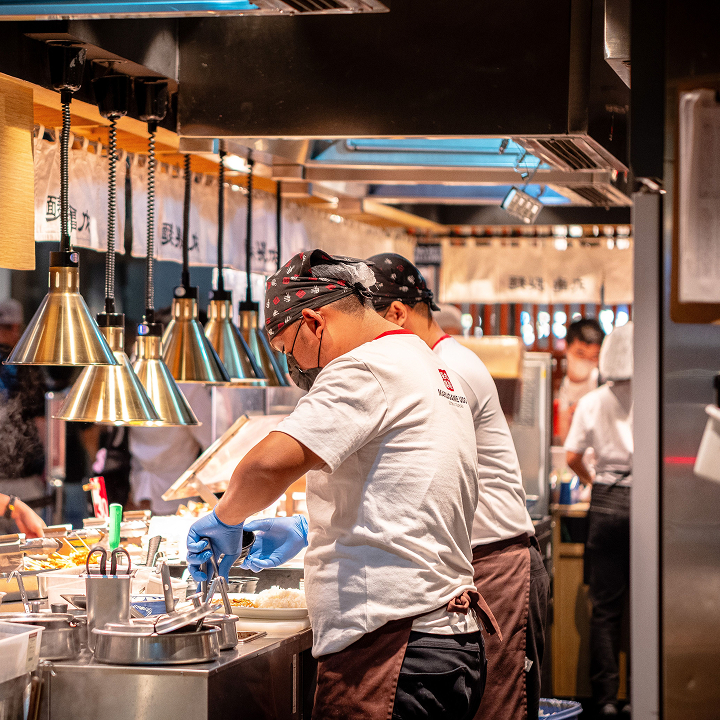
Every full-service restaurant runs on two teams that rarely stand in the same room for more than a few seconds at a time. Front-of-house is out on the floor, reading tables and managing the room. Back-of-house is behind a line, heads down, timing tickets. They need to move in sync, but the way most restaurants communicate wasn't built for that.
A menu change gets mentioned once at a pre-shift huddle that half the closing staff never heard. A table with an allergy gets flagged verbally and lost somewhere between the POS and the pass. A VIP walk-in gets a heads-up to the host stand, and nobody bothers to tell the kitchen. None of this is anyone's fault exactly. It's what happens when the tools for staying in sync are informal at best.
Why this gap is so easy to miss
It's easy to miss because most of the time, things work out. A good manager plugs the gaps by relaying information themselves, running between the floor and the kitchen, repeating updates twice, three times, as many times as it takes. That works, until the manager is slammed, or off, or the update happens mid-service when there's no time to relay anything at all.
An employee messaging app for restaurant staff exists precisely for that moment: the update that needs to reach both sides of the house at once, without relying on a manager to physically carry it there.
What a real fix looks like
Closing this gap isn't about adding another group chat. Most restaurants already have one, and it usually just adds noise rather than solving anything. What actually helps is a restaurant staff communication app built around a few specific things:
Updates that reach both FOH and BOH at once, without depending on whoever happens to be standing near the pass when the news arrives.
Targeting by role or section, so a server doesn't get buried in kitchen equipment notices, and line cooks aren't reading front-of-house scheduling changes that don't affect them.
A record that persists, so a server coming in for a dinner shift can check what changed since lunch service instead of relying on someone remembering to tell them.
Training and onboarding content in the same place, so a new hire in either role has one starting point instead of a binder nobody's updated since last year.
Why this matters more for full-service than quick-service
Quick-service restaurants deal with a similar communication challenge, but the operational rhythm is different: shorter interactions, faster turnover, less of the choreography that full-service demands between the dining room and the kitchen. Full-service restaurants run on timing and coordination in a way that makes a communication gap more expensive when it opens up, not less. If you're weighing the difference, the Blink page for quick-service restaurants covers that side of the business.
And for restaurant groups managing more than one concept, this same communication gap tends to multiply across locations. That's worth its own conversation, which we get into in the next post in this series.
Start with the basics
You don't need to overhaul everything at once. Start by identifying the two or three updates that most often get lost between front-of-house and back-of-house (menu changes, allergy flags, VIP or large-party notices are common ones) and build a reliable way to get those specific updates to both sides of the house every time. The rest tends to follow once that foundation is in place.
See how Blink closes this gap on the Blink for restaurants page, or take a look at the broader picture on the Blink hospitality page.