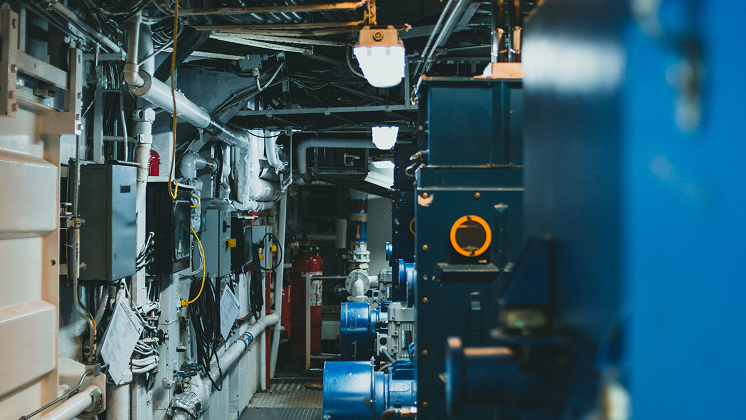
A pipe bursts in a hospital plant room overnight. A fire panel trips at a warehouse with no one on site. A tenant reports a gas smell in a mixed-use building at 6 a.m. on a Sunday. In facilities management, the emergencies that matter most rarely happen during business hours, and they rarely happen near a desk. The question that decides how bad the outcome gets isn't whether your team is skilled enough to fix it. It's whether the right on-call technician even sees the alert in time.
Most facilities teams still run emergency communication on a patchwork of phone trees, group texts, and whoever happens to pick up the on-call phone. It works, until it doesn't, and the moment it doesn't is exactly the moment you can't afford it.
Why generic alert tools fail facilities teams
Plenty of "emergency alert systems for deskless workers" are built for a single scenario: severe weather, an active threat, a mass notification blasted to an entire building. Facilities emergencies are different. They're specific, frequent, and technical. A chiller failure needs the HVAC specialist, not the whole maintenance department. A flagged safety incident needs the site supervisor and the technician nearest that building, not a company-wide push notification that gets ignored because it happens every week.
A real solution has to route the right alert to the right person, fast, and confirm they've actually seen it. Anything less and you're relying on hope.
The gap between "sent" and "seen"
This is where most facilities teams get burned. A dispatcher sends a text about an urgent work order. The technician's phone is in their truck, or they're mid-job with gloves on, or the message got buried under a dozen others. Hours later, someone calls to ask why nobody showed up, and the honest answer is that the alert went out, it just never landed.
For anything safety-critical, "sent" isn't good enough. A gas leak, an elevator entrapment, a fire suppression system going off, these need a guaranteed read, and if there isn't one within minutes, an automatic escalation to the next person on the list. That escalation path is the difference between a contained incident and a genuine crisis.
Building an alert system technicians will actually act on
The most effective setup for facilities and maintenance teams has a few clear pieces. Urgent alerts get flagged distinctly from routine updates, so a technician learns to treat a red flag as a red flag instead of tuning everything out. Alerts go to a device the technician is already carrying and already checking, their own phone, not a portal they have to remember to log into. And managers get visibility into who has and hasn't acknowledged a critical message, so a supervisor can call a technician directly the moment an alert goes unread instead of finding out after the fact.
Blink builds this kind of urgent alert system directly into the same app technicians already use for schedules and site instructions. A mandatory-read flag on a safety alert means a manager can see, in real time, exactly who has confirmed it, and follow up immediately with anyone who hasn't.
Fewer surprises, faster response
Facilities emergencies will keep happening at inconvenient hours. What's in your control is how fast the right person finds out, and how confident you are that they actually did. A team with a real emergency alert system in place doesn't eliminate the 2 a.m. boiler failure, but it does mean the on-call technician is on their way in minutes instead of the building manager finding out from an angry tenant first.
Related reading: One technician, ten buildings: fixing the communication gap in facilities management and Trained today, gone in a year: fixing retention in facilities management teams.
See how Blink helps facilities teams respond faster to critical alerts on the Blink for facilities management page, or book a demo.