Frontline transformation is won or lost at adoption. The Retail sector is proving it.
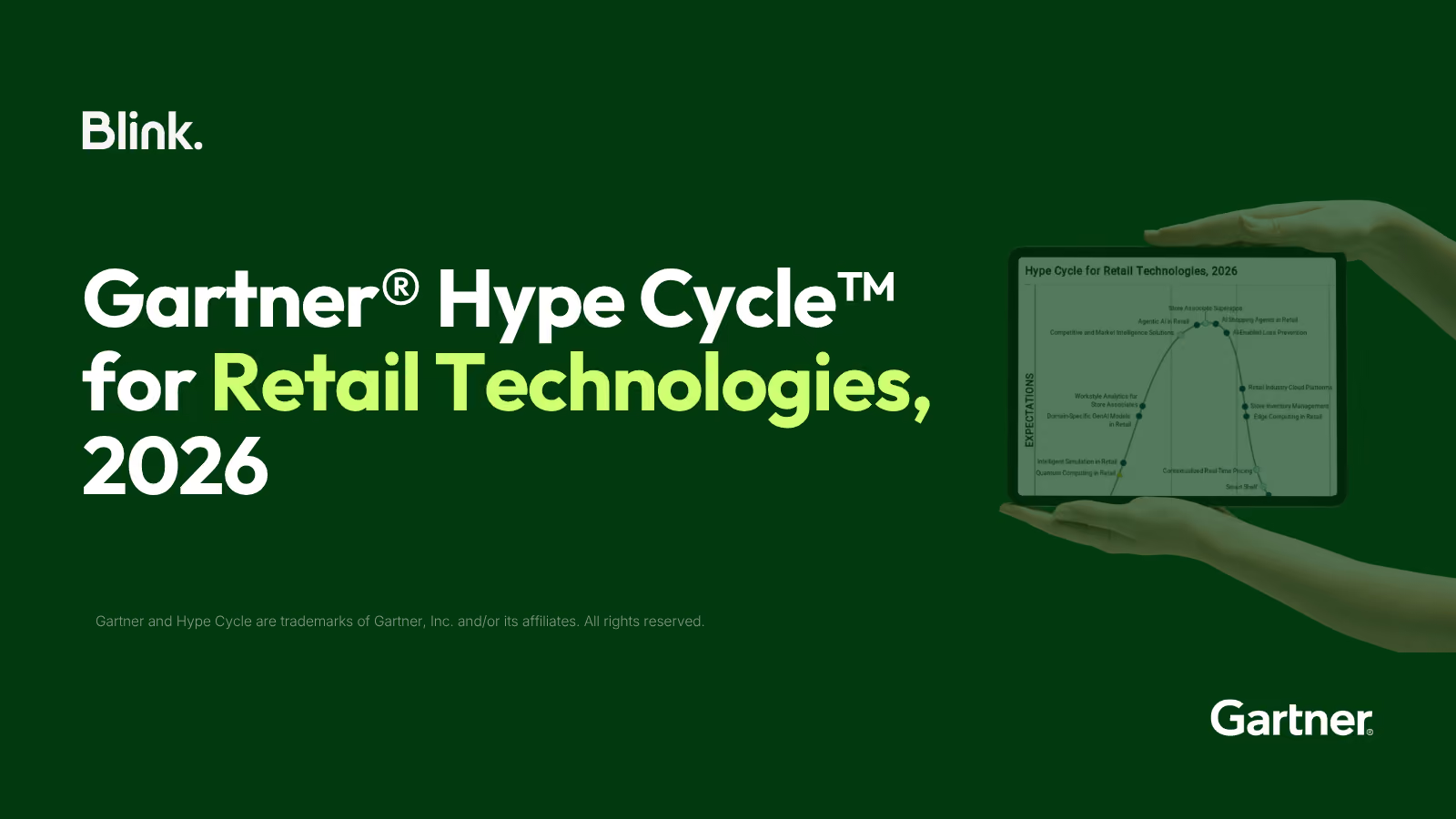
The Gartner Hype Cycle for Retail Technologies 2026 rates frontline worker technology as transformational. Here's what that means for retail leaders and why adoption will be the decider of success.
Aislinn Logan
Published:
July 22, 2026
Last updated:
July 22, 2026
Gartner has published its 2026 Hype Cycle for Retail Technologies, and one category sits among the highest-impact, fastest to adopt technologies on it: Frontline Worker EXTech where Blink has been named as a Sample Vendor. Gartner rates the category transformational.
If we look at the 2026 Hype Cycle as a whole, almost every transformational technology on it points at the store: generative and agentic AI, AI-assisted checkout, smarter inventory, AI shopping agents. The store associate shows up again and again, in frontline worker technology, in associate superapps, and in workstyle analytics. Retail's new wave of technology runs through the person on the floor. The retailers with the advantage will be those who’ve thought about the journey for their frontline.
The technology was never the hard part
Retail has spent over a decade buying frontline tools. Scheduling lives in one place, tasks in another, comms somewhere else, and a training portal gets dustier with every passing day that nobody logs on. The truth is, the gap has never been the tools. The real gap is whether they actually get opened in the first place.
If your store associates never open a tool in the aisles, its value goes unrealized shift after shift, and the operational excellence your tech stack promises remains nothing more than a phantom return on investment. So the real question behind Gartner’s research isn’t whether the category matters. It’s how you get a deskless, high turnover, always-on-the-go workforce to engage with it. If adoption never gets off the ground, even the most advanced frontline tech in retail is just a budget line item nobody uses.
Retail is solving adoption first
We at Blink find the transformational rating credible because we’ve witnessed it happen. McDonald's reached 80% adoption in 16 days. Shake Shack hit 78% in 21 days. AG Barr got to 94% in two weeks. Domino's sees 8 in 10 employees active every month.
The best bit is that these aren’t launch-week spikes that fizzle to nothing after the second month. They're a clear, reliable pattern. Retail experiences the sharpest edge of the frontline problem: shift work, seasonal hiring, high turnover, and thin lines of comms from head office to stores at the coalface. If adoption can work here, it will get off the ground anywhere. We don’t think retail leaders are waiting for the category to mature, the potential for execution advantage in this sector is proof that it’s already worth betting on.
What we think "transformational" actually takes
The technologies that earn the rating of ‘transformational’ do one thing: they unify the whole frontline work day. Communication, tasks, and knowledge in one, familiar place the associate already opens, on the device already in their hand.
Most platforms retrofit the frontline. Many began as a desk-first tool for knowledge workers with a mobile app bolted on, built for the office and flung at the frontline as an afterthought. Blink started there, built for the frontline first and proven across the enterprise. We think that's the difference between a category Gartner calls ‘transformational’ and software that sits unused behind the till.
What retail leaders should look for
If you're evaluating the category, three questions matter more than any feature list:
Does it reach every worker, not just head office? The frontline makes up the majority of your workforce and they’re the hardest to reach. If a tool wasn’t built with them in mind and can't easily get to them, it can't transform anything.
Will the frontline actually adopt it, and can the vendor prove it with numbers? Ask for real adoption data on real deployments, and sense check this usage with existing customers.
Does it meet enterprise security, scale, and compliance? Frontline-first and enterprise-grade don’t need to be in battle. At real scale, both should be core to the platform.
"Operational excellence at the frontline doesn't fail because the technology is missing. It fails because no one adopts it. Retail worked out that the people are the deployment, they shouldn’t be an afterthought." - Peter Durkin, CMO, Blink
Where retail technology is heading
Gartner's rating confirms the category is real, high-impact, and worth investing in now, but the winners will be decided by how well the technology is adopted. As a sector, Retail is showing the rest of the frontline economy how it's done.
On 29th July we're breaking down the research with our own commentary on where retail budgets go next, real adoption numbers from the likes of Dollar Tree and Shake Shack, and a live AMA with the team that deploys this for a living. [Register for the webinar - HERE]
You can read the Gartner Hype Cycle for Retail Technologies, 2026 here. [Get the report - HERE]
Gartner, Hype Cycle for Retail Technologies, 2026, Max Panther Hammond, Kelsie Marian 30 June 2026.
GARTNER is a registered trademark and service mark, and HYPE CYCLE is a registered trademark, of Gartner, Inc. and/or its affiliates in the U.S. and internationally and are used herein with permission. All rights reserved. Gartner does not endorse any vendor, product, or service depicted in its research publications, and does not advise technology users to select only those vendors with the highest ratings or other designation. Gartner research publications consist of the opinions of Gartner's research organization and should not be construed as statements of fact. Gartner disclaims all warranties, expressed or implied, with respect to this research, including any warranties of merchantability or fitness for a particular purpose.

Gartner has published its 2026 Hype Cycle for Retail Technologies, and one category sits among the highest-impact, fastest to adopt technologies on it: Frontline Worker EXTech where Blink has been named as a Sample Vendor. Gartner rates the category transformational.
If we look at the 2026 Hype Cycle as a whole, almost every transformational technology on it points at the store: generative and agentic AI, AI-assisted checkout, smarter inventory, AI shopping agents. The store associate shows up again and again, in frontline worker technology, in associate superapps, and in workstyle analytics. Retail's new wave of technology runs through the person on the floor. The retailers with the advantage will be those who’ve thought about the journey for their frontline.
The technology was never the hard part
Retail has spent over a decade buying frontline tools. Scheduling lives in one place, tasks in another, comms somewhere else, and a training portal gets dustier with every passing day that nobody logs on. The truth is, the gap has never been the tools. The real gap is whether they actually get opened in the first place.
If your store associates never open a tool in the aisles, its value goes unrealized shift after shift, and the operational excellence your tech stack promises remains nothing more than a phantom return on investment. So the real question behind Gartner’s research isn’t whether the category matters. It’s how you get a deskless, high turnover, always-on-the-go workforce to engage with it. If adoption never gets off the ground, even the most advanced frontline tech in retail is just a budget line item nobody uses.
Retail is solving adoption first
We at Blink find the transformational rating credible because we’ve witnessed it happen. McDonald's reached 80% adoption in 16 days. Shake Shack hit 78% in 21 days. AG Barr got to 94% in two weeks. Domino's sees 8 in 10 employees active every month.
The best bit is that these aren’t launch-week spikes that fizzle to nothing after the second month. They're a clear, reliable pattern. Retail experiences the sharpest edge of the frontline problem: shift work, seasonal hiring, high turnover, and thin lines of comms from head office to stores at the coalface. If adoption can work here, it will get off the ground anywhere. We don’t think retail leaders are waiting for the category to mature, the potential for execution advantage in this sector is proof that it’s already worth betting on.
What we think "transformational" actually takes
The technologies that earn the rating of ‘transformational’ do one thing: they unify the whole frontline work day. Communication, tasks, and knowledge in one, familiar place the associate already opens, on the device already in their hand.
Most platforms retrofit the frontline. Many began as a desk-first tool for knowledge workers with a mobile app bolted on, built for the office and flung at the frontline as an afterthought. Blink started there, built for the frontline first and proven across the enterprise. We think that's the difference between a category Gartner calls ‘transformational’ and software that sits unused behind the till.
What retail leaders should look for
If you're evaluating the category, three questions matter more than any feature list:
Does it reach every worker, not just head office? The frontline makes up the majority of your workforce and they’re the hardest to reach. If a tool wasn’t built with them in mind and can't easily get to them, it can't transform anything.
Will the frontline actually adopt it, and can the vendor prove it with numbers? Ask for real adoption data on real deployments, and sense check this usage with existing customers.
Does it meet enterprise security, scale, and compliance? Frontline-first and enterprise-grade don’t need to be in battle. At real scale, both should be core to the platform.
"Operational excellence at the frontline doesn't fail because the technology is missing. It fails because no one adopts it. Retail worked out that the people are the deployment, they shouldn’t be an afterthought." - Peter Durkin, CMO, Blink
Where retail technology is heading
Gartner's rating confirms the category is real, high-impact, and worth investing in now, but the winners will be decided by how well the technology is adopted. As a sector, Retail is showing the rest of the frontline economy how it's done.
On 29th July we're breaking down the research with our own commentary on where retail budgets go next, real adoption numbers from the likes of Dollar Tree and Shake Shack, and a live AMA with the team that deploys this for a living. [Register for the webinar - HERE]
You can read the Gartner Hype Cycle for Retail Technologies, 2026 here. [Get the report - HERE]
Gartner, Hype Cycle for Retail Technologies, 2026, Max Panther Hammond, Kelsie Marian 30 June 2026.
GARTNER is a registered trademark and service mark, and HYPE CYCLE is a registered trademark, of Gartner, Inc. and/or its affiliates in the U.S. and internationally and are used herein with permission. All rights reserved. Gartner does not endorse any vendor, product, or service depicted in its research publications, and does not advise technology users to select only those vendors with the highest ratings or other designation. Gartner research publications consist of the opinions of Gartner's research organization and should not be construed as statements of fact. Gartner disclaims all warranties, expressed or implied, with respect to this research, including any warranties of merchantability or fitness for a particular purpose.
Start your free trial today
See how Blink helps frontline teams stay connected, informed, and engaged.
Internal communicators, it’s time to share the mic with your employees
There are an estimated 50 million content creators worldwide. Alongside the A-listers and sports stars, there are lots of regular people posting videos, sharing stories, and creating content that connects.
The social media giants have tapped into something. They know that people don’t just want to consume content. They want to contribute. And in 2025, this creator mindset deserves a place within your employee communications strategy.
An internal creator culture allows employees to react, comment, and share their own stories — you turn spectators into storytellers. Give the green light to employee-generated content (EGC) and you give your entire workforce a voice while taking engagement on your internal communication channels through the roof.
{{mobile-stories="/image"}}
Want to drive this kind of mindset at your organization? Here, we look at the benefits, risks, and tips you need to know when building an internal creator culture.
Why internal communications needs creators, not just consumers
Your comms pros are great at what they do, right? So what does EGC have that traditional comms doesn’t?
#1. Authenticity
Trust in leadership teams is down. In fact, Gen Z and Millennial workers are some of the least trusting in the workplace.
Real stories from real employees hit different. Like Iman Pabani recently said in Fortune: “Credibility today isn’t about expertise but about who tells the most compelling story.”
It’s not always slick and polished. But EGC is genuine. It reflects the real experiences of your workforce. Unscripted moments stick in the mind and spark conversations.
{{human-internal-comms="/callouts"}}
#2. Diversity
When your internal comms team creates every piece of content, it can start to sound…well, like internal comms. Perspective and tone become repetitive and employees start to switch off.
But hand the mic to your employees and you reflect your entire organization — not just the C-suite office.
You can create Insta-worthy internal comms that resonate with your digital natives. You can post frontline-focused and relevant content created by frontline employees. You can respond with agility to the latest events and trends.
EGC helps you showcase a more diverse range of voices and create a sense of community across your internal communications channels.
In a nutshell? By sharing diverse and authentic voices, EGC improves employee communications and employee engagement. It helps you build connection and trust across your organization — and develop a vibrant company culture.
Busting the myths about employee-generated content
Here at Blink, we’re big champions of EGC. But we know that not every organization approaches this topic with the same level of enthusiasm.
Large companies are often a little wary about opening up their comms channels to employees. But their concerns don’t always reflect how EGC works in practice.
So — in the hopes of settling a few nerves — here are some common EGC misconceptions and the reality behind them.
“It’s risky.”
Giving employees free rein to post on your internal communications platform can feel risky. But with the right guardrails in place, it’s empowering and effective.
Here are some ideas for managing the risks associated with EGC:
Assign moderators to take down any content that fails to meet your creator guidelines
Only allow content online once it’s been approved by your comms team
Make an employee’s content visible to just their team — not the whole organization
Do a trial run to see how EGC fits within your content ecosystem
With the right internal communication tools, there are lots of levers you can pull. You can fine-tune permissions and oversight to minimize the risks of EGC while maximizing the benefits.
“People won’t participate.”
Build it and they will come? But what if they don’t?
Many comms pros are worried that they’ll enable and encourage an internal creator culture only for there to be tumbleweed — they’ll find that their employees simply aren’t interested in posting to company channels.
If you have an organizational culture of open communication, this is unlikely to be the case. You’ve already created the psychologically safe conditions that make content-sharing feel normal and fun.
What’s more, remember that many of your employees are already creating content for their social media profiles. All it takes is a small shift in mindset and easy-to-use digital tools to harness their creative talent for your comms platform.
“It’s just fluff.”
Of course, your employees won’t be posting company news or financial forecasts. But their lighter style of content still brings a ton of value to your organization.
Birthday shoutouts make employees feel seen. A behind-the-scenes video instills pride and morale. That “meet my team” post builds bridges between departments.
With the help of EGC you can create a digital water cooler — a place where employees gather, connect, and find enjoyment in their work day. And its impact on your business shouldn’t be underestimated.
EGC boosts culture and engagement — and moves the dial on big business metrics like employee satisfaction and retention. It’s not about jumping onto the latest internal comms trends and it’s far from “just fluff.”
The building blocks of a creator culture
Convinced that a creator culture can benefit your business? Here are the four pillars you need to put in place to make it happen:
Tools. The best workplace communication tools make life easy for employee content creators. They’re mobile-friendly, so creators can upload photo and video content straight from their smartphones. They provide in-built templates and AI support that guide employees to create the best possible posts. These comms tools also inspire interaction by giving your EGC audience a range of emojis, GIFs, and reactions to choose from.
Permission. Beyond the permission settings on your employee communication platform, you should aim for a company culture of psychological safety, where employees know that showing up and sharing is celebrated. That means normalizing imperfect content — the kind filmed on a hand-held smartphone screen. And leading from the top by getting business leaders to post personal or informal content first.
Inspiration. Kickstart creativity by showing employee content creators what’s possible on your internal comms platform. Showcase early EGC examples from real employees. Also, create content prompts, asking employees to share their content around a particular theme or hashtag. Give them inspiration and employees are much more likely to get involved.
Feedback. Positive reinforcement fuels more great content. So like, comment, and repost EGC on your networks. Encourage employee feedback. Give kudos publicly, celebrating creators and maybe even crowning a Creator of the Month. Also, share content stats, telling employee creators which types of communication are resonating and why — so they can create more of the same.
How to start small and scale with EGC
Still unsure how to get your EGC initiative off the ground? Here are some ideas for getting started.
Start with a pilot
Before you go all in, test the waters. Start an EGC pilot with a small group — how about your frontline employees, remote workers, or a group of culture champions?
Give this group a clear brief. Allow them to post and view EGC. Then, after a month or so, dive into the top metrics to gauge effective communication.
How has this content performed in terms of likes, shares, and comments? Is this group logging onto the platform more often? Are employee engagement stats improving?
If your pilot is a success, you can roll out your EGC initiative to the wider organization.
Create a series
Get the ball rolling and content creation brains ticking by launching a series. How about one of these ideas:
A day in the life (a behind-the-scenes look at employee workdays)
My why (insight into the things employees love about their jobs)
Work hacks (tips on how to bring your A-game and get the most from workplace tools)
Weekly win (one thing that went really well this week)
Provide a few strong examples, regularly promote your series across employee communication channels, and keep the momentum going with reminders and reactions.
Offer incentives
When you’re just getting started with EGC, incentives can be useful.
Gamification works well. Features like leaderboards, badges, and points for content creation can awaken employees’ sense of competition. Which means lots of great EGC for your news feed.
Another idea? Offer tangible rewards, like gift cards, lunch vouchers, and professional opportunities. Perhaps a top content creator could represent their team in a leadership Q&A.
But you don’t need to overthink it. Sometimes a few words of appreciation do more than any points system. Thank employees for their content creation efforts and you’ll inspire them to do more.
Using EGC to elevate employee communications
Employee-generated content is a breath of fresh air for your employee communications. It adds authenticity, fosters two-way communication, and builds a real sense of community — all things traditional messaging can struggle to deliver.
Employees enjoy logging onto your comms platform to see what their peers have shared. And once they’re there, your core messages are more likely to cut through.
EGC also works wonders for company culture. A social feed full of real voices and relatable moments helps everyone feel seen, heard, and connected — which means a better employee experience and a workplace people genuinely want to be part of.
If you’re just getting started with EGC, it needn’t be a mountain to climb. Start small, share content inspiration, and give employees the essential tools they need to be the voice your comms has been missing.
Blink. And build an internal creator culture at your organization.
Blink, the leading employee engagement super-app, announced that The Learning Experience, a premier early childhood education provider, has successfully implemented Blink’s employee engagement platform as part of its strategic initiative to improve frontline staff communication, engagement, and retention across its 350 locations.
As The Learning Experience continues its significant growth, finding innovative ways to enhance company culture and ensure effective communication across all locations has become increasingly important. Due to the nature of the work, traditional communication methods aren’t accessible, as most staff members are teachers who do not use email during the day and need a more flexible solution. To address these needs, the organization launched a strategic initiative called Operation Blue Elephant, utilizing Blink’s platform to enhance engagement and streamline internal communication. This effort focuses on unifying the experience for the company’s 10,000 employees, 90% of whom work in franchise-operated centers with limited direct connection to the corporate team.
Blink’s platform, known as the "Happy Hub" within The Learning Experience, has become a key component of its employee engagement strategy. This centralized communication tool offers employees timely access to essential information, core tools, and a platform for feedback, thus enhancing overall engagement and connectivity.
“Blink has been a game-changer on how we communicate and engage with our employees,” said Traci Wilk, Chief People Officer, of The Learning Experience. “By providing a unified platform, we’ve ensured that every team member, from corporate staff to frontline franchise employees, feels connected and valued. This initiative is not just about improving communication-it’s about building a culture where every employee thrives.”
Key highlights of the Happy Hub
Comprehensive benefits program - The Learning Experience introduced "TLE Cares," an affordable benefits package for franchisees to offer their employees.
Reimagined teacher onboarding program - Through the platform, new teachers have the tools they need to succeed from day one, leveraging new technology and resources.
Happiness index -The Learning Experience began running both parent and employee engagement surveys. Viewing these results together gave the organization and franchisees a clearer idea of their performance and how Happiness index scores relate to employee engagement, retention, and family enrollment at centers.
Results
Since the launch of the Happy Hub, there has been a notable improvement in employee retention rates. The streamlined onboarding process has also contributed to this success by boosting new hires' confidence and readiness to lead classes effectively. In addition, the positive reception of the platform, with 99% of franchisees actively participating, highlights its effectiveness in enhancing staff engagement and creating a more supportive work environment.
Sean Nolan, CEO and co-founder of Blink said, “The success of The Learning Experience’s Happy Hub showcases the profound impact of effective frontline connection. In today's competitive market, fostering a strong organizational culture and ensuring employees feel supported is crucial for retention and growth. Other organizations can look to The Learning Experience as a model on how to leverage technology to achieve these goals.”
While the Great Resignation seems to have subsided, talent retention is still a pressing issue — and it can make all the difference to your business. Holding onto your best people, with all their skills and knowledge, means better productivity, customer service, and profitability.
In this quick guide, we explain what talent retention is and why it’s important. We also share what you can do to inspire employee loyalty in 2025 — from a connected workplace culture to the perks that matter most.
Ready to turn retention into a competitive advantage? Let’s get started.
What is talent retention and why is it so important?
Talent retention is your ability to hold onto your employees once you’ve hired them.
If you have an effective talent retention plan, employees stick around for long, stable, and productive careers within your organization.
So why does talent retention matter?
Talent retention is important because replacing employees is expensive. Gallup estimates that replacing a frontline employee costs 40% of their salary. This rises to 80% for employees in technical roles and 200% for leaders and managers.
By improving staff loyalty, you reduce costs associated with recruitment and onboarding. But there are other benefits of employee retention to bear in mind:
Improved productivity. Your organization is more productive because a high proportion of employees are fully trained and know how to do their jobs.
An expert workforce. You retain knowledge and skills within the business, which means you achieve your goals faster.
A positive company culture. Because workers are able to build strong and lasting relationships with co-workers, you raise satisfaction and loyalty.
One final benefit of staff retention is a better customer experience. And that deserves a section all of its own...
The link between employee retention and customer experience
“The customer's perceptions and related feelings caused by the one-off and cumulative effect of interactions with a supplier's employees, systems, channels or products.”
The snappier version? It’s the degree to which interactions with your brand spark joy in customers.
It’s easy to delight customers when employees are informed, happy, and engaged. And it’s very easy to do the opposite if staff are new to the job — or looking for a role elsewhere.
According to PwC research, 46% of customers will abandon a brand if employees aren’t knowledgeable and don’t know how to meet their needs.
Employee retention, employee experience, and customer experience are closely linked. Do right by your employees and they’re more likely to stay working for your company.
They continue to build their knowledge and skills, which means they’re more likely to provide an industry-leading experience for your customers.
Talent retention: why now?
52% of employees say they’re watching for or actively seeking a new job. And turnover rates for frontline industries remain high: 73.8% in hospitality, 56.7% in transportation, and 21.9% in professional and business services.
There’s another, stealthier problem at play too. Glassdoor has revealed that nearly 2 in 3 employees feel stuck in their roles. And Gallup says that we’ve moved beyond the Great Resignation into the Great Detachment, where employees are staying in roles they have little interest in.
In 2025, some employees are quitting. Others are sticking around for lack of a better option. In either case, the business suffers. But a focus on talent retention can help to combat both of these issues.
Talent retention strategies revolve around improving the employee experience. You make your workplace a better, more fulfilling, and more inspiring place to be. So both employee engagement and retention improve.
The first hurdle: identifying talent retention issues
How is your company doing in terms of talent retention?
To truly understand your performance, you need to know — and keep track of — your employee retention rate. You can use this number to set a baseline and establish targets. But while this figure tells you how many employees are leaving your organization, it doesn’t tell you why.
For that, you need to dig deeper. Exit surveys and interviews can reveal trends and problems with the employee experience. They can help you understand why employees are choosing to leave. Some of the most common culprits in 2025 include:
Work-life balance: a lack of flexibility in the workplace is leading staff — including frontline employees — to look for jobs elsewhere.
Career progression: lack of career or professional development opportunities is one of the most cited reasons for leaving a job.
Recognition: when you don’t show regular and authentic appreciation for employee efforts, they become demotivated and more likely to jump ship.
Workplace culture: a sense of connection and belonging have a big impact on employee satisfaction, so issues with managers and co-workers, or feelings of loneliness can raise employee turnover.
Salary and benefits: sometimes, it’s simply about the money — it’s difficult to keep employees if competitors are offering better rates of pay.
Convince employees to stay with these 6 talent retention strategies
Staff retention rates not where you’d like them to be? Reduce employee turnover with the help of these practical strategies.
Keep your finger on the pulse
Exit interviews are a useful talent retention tool. But wouldn’t it be better if you could prevent employees from handing in their notice in the first place? To do this, you need to understand the state of employee morale and engagement in your organization at any given moment.
There are some signs a manager may be able to spot. Drop-offs in productivity, refusal to commit to long-term projects, and a lack of enthusiasm are all signs that an employee sees their future elsewhere.
But you can go beyond manager observations to take the pulse of your entire organization. Use employee surveys to gauge sentiment on a range of retention-related topics. For example, job satisfaction, internal communications, benefits packages, and recognition.
{{mobile-survey="/image"}}
You can then act on any major bugbears to prevent employee experience issues from translating into higher employee turnover.
This feedback process has another talent retention benefit. When you show employees that their input is prompting real change in the workplace they feel heard and valued — and become more invested in your organization.
Help them achieve their goals
According to recent Randstad research, 31% of employees have quit a job because of a lack of career progression opportunities. Employees want to feel that they’re making progress toward their learning and career goals.
Investing time and money in professional development sends a strong signal that you’re supporting your employees over the long term. Build in career development plans, coaching, and one-on-one time as soon as a new member of staff joins your workforce — and sustain these initiatives throughout the entire employee journey.
Emphasizing that you see this as a long-term partnership rather than a transactional exchange of services (“you work, we pay”) lays the foundations for future success.
Offer regular recognition
Retaining employees is easier when they feel valued and appreciated. Workers are five times more likely to stay with your organization for two years or more when there’s a comprehensive recognition program in place.
{{mobile-kudos="/image"}}
All employees — whether they work in the office, at home, or on the frontlines of your organization — should receive regular appreciation for the work they do.
For teams working in the same location, informal recognition is relatively easy. For disparate teams and frontline employees, you have to be more intentional. The right internal communication tools can help.
You can use an employee app or intranet to highlight the hard work and achievements of your employees — and encourage peer-to-peer recognition across digital communication channels, too.
Create a positive workplace culture
Having a work bestie is more important than you might think. Employees who feel a sense of belonging are more likely to stay working for your organization.
As well as helping employees to build connections with co-workers, support them to understand and take part in company culture. Make company values and purpose part of your every day.
Managers also have a big role to play. 70% of the variance in team engagement comes down to the manager. So give your leaders the training they need to boost employee engagement and create a culture employees enjoy being part of.
Offer flexibility where possible
Flexibility and work-life balance are a top priority for employees. In fact, it’s the second most important factor for frontline employees when choosing a job.
Flexible working looks different in different organizations. Some employees get to work remotely, work compressed hours, or choose start and finish times.
For frontline employees, this isn’t so easy. But you can support work-life balance for this segment of your workforce by offering expanded paid time off (PTO) policies, a choice of schedules, and easy-access shift swap tools.
Revamp your salary and benefits package
When was the last time you looked at the salary and benefits package you offer? Pay is another big factor in employees deciding to look for another job.
So compare your offering to that of your competitors and consider improving your package if you find you’re falling behind the pack.
But remember that pay isn’t everything. It will take more than a small pay increase to tempt engaged employees to jump ship. According to SHRM, employees may be willing to trade pay for improved work-life balance, flexibility, and workplace culture.
Make life easier for your HR team with talent retention software
An effective talent retention strategy gives you an edge over your competitors. When you build and maintain a skilled and engaged workforce, your business performs better.
To achieve high levels of retention, you need to offer training and development, honor work-life balance, and provide regular recognition. You should also strive to create a company culture based on purpose, connection, and community.
The best software is available on desktop and as a mobile-first employee app, so you can tackle talent retention issues across your entire workforce. These solutions provide employees with easy, digital access to:
Training and career development tools
Company news, community, and co-worker chat
Recognition and rewards
Health and wellbeing resources
They also give HR teams access to tools like employee surveys and analytics. So you get greater insight into the state of employee engagement and talent retention within your business.
You can spot engagement and retention issues before they harm company culture and lead more workers to jump ship — and you can uncover what employees want from your organization.
With this information, you can make meaningful improvements to the employee experience, keeping staff turnover rates low and engagement high.
Out of all the terms we’ve added to our lexicon over the course of 2020, ‘frontline workers’ is our favorite.
At Blink, we build software that improves the experience of thousands of frontline workers all over the world. We know how hard they work. The hours they put in. The pride they take in keeping their communities healthy, fed and well looked-after.
There’s a lot about this year we’d all like to move on from. The word 'unprecedented' being one of them. But there’s one thing that we need to take forward, and that's our appreciation of brave frontline teams.
We're forever indebted to you. Thank you for looking after us during the most unprecedented (sorry) of times.
We can’t possibly mention you all, and we’re sorry. But we hope you know how much we appreciate everything you do for us.
Long live society’s newfound appreciation; long may it continue!
The frontline workers we need to thank
NHS medical teams
This Christmas, many will be raising glasses to the medical staff who threw themselves behind global efforts to contain the pandemic and minimize its impact.
We’ll certainly be joining them.
So, here’s to the doctors, nurses, paramedics, healthcare assistants, physios, occupational therapists and pharmacists.
Whether directly or indirectly involved in treating Coronavirus patients, the world owes you one.
While we extend our gratitude to healthcare workers globally, we can’t help but be extremely grateful for our native NHS. Providing stellar, free-at-the-point-of-access care during a global pandemic isn’t easy - but somehow you’ve managed, and managed spectacularly.
It’s stories like that of Dr Sarbjit Clare, Sandwell and West Birmingham Hospital NHS Trust's deputy medical director, that demonstrate what a gargantuan effort healthcare workers put in.
Central to operational and clinical decision-making surrounding COVID-19 treatment, Dr Clare cared for over 700 patients. Oh, and she single-handedly kept her department open when all her colleagues were sick or self-isolating.
If treating and caring for patients wasn’t enough, some healthcare workers took on even more responsibility in their spare time. Ashleigh Linsdell founded and coordinated a national effort to make scrubs during the UK shortage.
Alison Williams raised funds for COVID-19 patient essentials, including iPads to help them contact their families during isolation.
NHS support teams
We need to thank the often-overlooked support teams that keep wheels turning behind the scenes.
Without them, it would be practically impossible for healthcare workers to do what they do. They’re the backbone keeping the NHS - and healthcare organisations the world over - together and functional.
Caterers for keeping staff and patients fed.
Laundry and housekeeping staff for keeping hospitals clean, whilst navigating intense and often-changing safety regulations.
Hospital porters, for providing an ever friendly, welcoming service. Veteran porter Terry Allen worked tirelessly for patients, transferring them between departments, facilitating their treatment and helping them feel comfortable.
The NHS’s medical teams provide first-class care, but they couldn’t do it without Terry and thousands of others like him.
Care home workers
Residential care home staff - working with elderly people or those with disabilities - look after those most vulnerable to COVID-19.
It’s a tough, underappreciated (and often underpaid) job. So, it's all the more remarkable that care workers have gone above and beyond for their patients and their families.
Care staff have made it an absolute priority to keep their residents safe. Sometimes, they have done so at great personal sacrifice to them and their own families.
Countless others moved away temporarily, when the support of loved ones has never been more important.
We haven’t even mentioned all the work they put in keeping spirits up amongst those who couldn’t go outside.
From fiddling about with FaceTime to organizing activities, care home residents would have struggled without them.
Supermarket workers
A huge shoutout to supermarket and food supply chain workers for putting food on our tables.
Whether you’ve been working on the supermarket floor or manning the warehouse, we wouldn't have survived the pandemic without you. We mean that literally –– access to food is generally important for long-term survival, after all.
Here are a few of the ways food supermarket and food supply chain workers made a difference:
Eased shortages by introducing limits on certain items (toilet roll, anyone?) and enforcing them effectively at checkouts
Remapped warehouses and supermarkets and implemented queueing systems so they could operate with social distancing
Kept up with frequently changing regulations with regard to masks and PPE
Stepped up to a massive increase in demand for online orders/home delivery
Julie Cook, who works at Asda in Aberdare, South Wales, spent her time off shopping for care homes to ensure they received key supplies.
It’s thanks to supermarket workers like Julie that we’ve all been able to eat and shop safely this year. So, wherever you shop, make sure to thank their in-store team for their efforts when you pop in next.
Teachers
As schools shut and lessons launched online, anyone with a child found themselves more appreciative of how hard teachers work.
If you thought homeschooling your school-aged child was hard, imagine trying to teach a class of 30. Then imagine trying to teach a class of 30 online, with the myriad distractions and potential for disruption that offers.
Teachers have kept classrooms open for children of key workers. Dealt with whole year groups being sent home for isolation. And increased their risk of exposure to the virus to minimise disruption to education.
Headteacher Jane Davenport and the staff at Reynalds Cross School kept classrooms open for children of key workers. They also made sure the school’s most vulnerable children - with complex educational, healthcare and behavioural needs - could attend classes safely. Jane put so much work that she was recognised with an OBE for services to young people with special educational needs and disabilities.
They’ve certainly earned those Christmas chocolate boxes, bottles of wine and ‘best teacher ever’ mugs. If you can’t offer these, a nice note thanking them will be equally as treasured!
Logistics personnel
In a pandemic, it’s vital to keep key supply lines open. That’s exactly what lorry drivers do, alongside the logistics teams that support them.
The logistics sector made sure food, essential medicines, PPE and medical equipment were delivered to organizations in need, whilst working under significant pressure and increased demand.
To all the frontline workers across the logistics and supply chain sector, whether working for an in-house operation or a third-party logistics specialist –– thank you.
You can’t eat food that doesn’t arrive on supermarket shelves before expiring. Pharmacists can’t fill prescriptions if they don’t have the right medication on hand. Doctors and nurses can’t protect themselves with PPE if it doesn’t arrive on time.
Logistics teams make this all happen.
Public transport workers
Car ownership is by no means a given amongst many groups of frontline workers. Without the efforts of public transport personnel worldwide, lots of urgently-needed staff would have been stranded.
Drivers, ticket sellers, platform guards and many others in every transport system across the globe need to be thanked here.
We were in awe of how professionally our own transit clients’ workforces carried out their duties under lockdown regulations.
Drivers from Go Ahead, Metroline and Stagecoach provide essential services whilst operating in uncertain and unfamiliar circumstances. Not to mention dealing with significantly reduced capacity to ensure social distancing. Kudos to you.
Police, fire and social workers
While it’s great we recognize the contribution ambulance drivers and paramedics made, it’s easy to forget other essential services.
For police and fire crews, this involved keeping essential services running, whilst adding new responsibilities to their workloads.
For example, UK police have been tasked with enforcing both national and local lockdown laws. These have often changed quickly, and guidance for policing them has been somewhat vague at times.
Enforcing them whilst strengthening links to local communities has been a difficult, often thankless task. We’d like to thank them for their part in containing the spread of the virus.
Meanwhile social services workers have continued to do an emotionally demanding job in extremely difficult conditions.
The Queen’s Birthday Honours List reflected this, with both senior and on-the-ground practitioners recognised for the work they do.
Social workers Manvir Hothi (Hammersmith and Fulham), Danny Levine (North Yorkshire) and Louise Peart (Vale of Glamorgan) were all recognised for supporting service users throughout the pandemic - but that’s only the tip of the iceberg.
Thousands more helped vulnerable people and families navigate a particularly confusing time, provided community-based support and eased the loneliness of those self-isolating.
Postal workers and parcel couriers
There’s a lot to be said for delivering ‘everyday’ post as well.
Ask yourself: how much more difficult would those initial stages of lockdown have been without that new hobby you took up?
How much more lonely would elderly relatives or those living alone have felt without cards, letters and gifts delivered?
Postal workers kept it together in tough working conditions. In doing so, they kept countless others together by keeping them connected and keeping them occupied.
Lockdown would have been a lonelier, more boring place without them.
Honorable mentions
Containing and treating the Coronavirus pandemic has required a Herculean effort from so many key workers across different industries.
Not everyone involved in the COVID effort needed to work directly on the frontline. So much organization has gone on behind the scenes, from so many people – many of whom weren't involved as professionals.
We’d like to give an honourable mention to the groups below for stepping up!
Operations who repurposed their facilities
The most impressive thing about society’s collective response to the Coronavirus was how everyone came together.
Companies repurposing their manufacturing operations to provide essential items and supplies was just one example of this phenomenon.
It takes entrepreneurship, ingenuity and a lot of hard work to turn around a new, unfamiliar product at short notice. We think it’s important to recognise just how much effort this took, for both strategic decision-makers and on-the-ground workforces.
There are countless examples across the globe here. Close to home, we saw international craft beer brewery BrewDog produce batches of hand sanitizer to help meet skyrocketing demand.
Luxury fashion brand Barbour’s manufacturing workforce turn their sewing machines away from wax jackets to making seriously high-quality medical gowns.
Further north, design teachers from James Calvert Spence College and Duchess’s Community High School in Northumberland teamed up to make PPE.
James Calvert Spence science teacher Dan Davison, who previously worked in an NHS lab, helped develop a test protocol whilst still teaching online classes. Miss Scrimgeour, Mr Donnison and Ms Whitelock from the two schools’ DT departments laser cut visors for use across local hospitals and care homes.
This ‘all hands on deck’ attitude helped significantly in easing shortages - particularly at a local level.
Last but not least... let's hear it for the volunteers
Alongside frontline workers and key workers paid to do their jobs, an army of volunteers rose to the challenge.
They transformed old bedsheets into useful medical scrubs, started essential goods collections for struggling families, dedicated their time to befriending isolated people over the phone and so much more.
We can’t list everyone who helped out, so to finish off, we’ll share Cambridgeshire resident Geoff Norris’ story.
Already a frontline worker, Geoff worried elderly and vulnerable residents would struggle to get their groceries amidst food shortages. Noticing that all the delivery slots were booked up too, he set up a weekly food delivery service.
On the days he wasn’t working at Asda in Wisbech, he picked up orders, put them through the tills and delivered them at his expense, using his own vehicle. Soon, he had recruited colleagues to help, and was taking orders via phone and email.
We all know a Geoff - or several - who has selflessly given up their time to help others during the pandemic. In our eyes, they’re just as much key workers as anyone else.
So we’ll end by saying “thank you, volunteers, for donating time when you didn’t have to, and making a real difference to so many.”
Your contribution has been absolutely unprecedented (oh no!), and we appreciate it.
While 2020 was a rotten year for many, many reasons, the sense of togetherness fostered is inspiring and moving.
KC has been with Arriva North West and Wales since 2023. A well-loved character at the Speke Bus Depot, he is an extrovert and gregarious. In his own words: “I love social interaction because it brings me enjoyment. I love meeting new people and feel energized at big social events.”
This is why bus driving matches him perfectly. Unsurprisingly, what he loves most about his role is meeting new passengers and learning something about them. He practices his faith as often as possible, and his gratitude and positive attitude is contagious: “I feel blessed and always like to give thanks.”
Alongside the people, he also enjoys discovering new routes and the challenge of learning them. Most of all, community is at his heart, saying that bus driving “makes me feel like I can make a difference in my local community… I just like driving buses as they make many people happy when you get it right.”
According to Mark Brack, the Site Manager: “He has been a breath of fresh air in our Speke depot and has thrown himself into a number of roles to help improve engagement and the performance of the depot, including being our Blink and Employee Survey Champion. It’s great to see him recognized.”
Nominated by: Lee Coleman, Head of Communications and Engagement
Connecting your team, whether they're remote, in-office, or frontline, requires seamless communication and engagement.
Team communication apps centralize your team chats, updates, engagement, and experience, unifying your workforce by enabling everyone to stay aligned, regardless of location.
Our list reviews the best internal communication tools for small businesses with under 500 employees and the best internal comms app for large enterprises.
Telling you what each one does best, who it's for, and what you'll pay.
Let's see what the 9 best team communication apps for 2026 offer and which one suits your business.
How to choose the best team communication app
Clear, real-time communication is mission-critical for every team, regardless of industry or organization size. The 2025 International Employee Communication Impact Study found that a whopping 61% of employees felt that communication at their organization had broken down to a point that they considered leaving.
When poor communication affects employees, there’s a trickle-down effect that leads to missed deadlines, unhappy clients, and concerned stakeholders — all of which impact your bottom line.
So what’s the best solution? Team communication apps.
These apps provide key functions and features to help your team — whether remote, in-office, or frontline — stay connected and in sync. Using team chat, video calls, file sharing, and other vital workflow integrations, team communication apps have everything you need to keep your team aligned.
Highlights
The right team communication app aligns with how your team works, not the other way around. Prioritize tools that support your team’s size, location, and communication style (chat, video, file sharing, etc.).
Top apps for 2026 include Blink, Connecteam, Troop Messenger, Slack, Staffbase, Flock, Sling, Workvivo, and Simpplr, each tailored for different business types — from small, mobile-first teams to large global enterprises.
Key features to look for include real-time messaging, file sharing, video calls, admin tools, integrations (with HR, CRM, and project management software), mobile accessibility, and security compliance.
To find the best fit, run a short pilot with real tasks, validate usability and adoption, and ensure the platform enhances collaboration, engagement, and company culture, especially in hybrid or remote work environments.
{{mobile-chat="/image"}}
Here's how you choose the best team communication app
The goal, as Blink emphasizes, is to choose a team communication app that fits your team's way of working, not the other way around.
Decide on your team's communication style: Is it instant messaging, video, or file sharing?
Consider your team's location (are they remote, hybrid, or on-site?)
Think about your team's size, growth plans, and any data-related rules you need to follow
2. Lock in those core features
Ensure your team can communicate using tools such as instant messaging, threads, calls, file sharing, and organized channels. Note: Only 26% of people use online chat tools to communicate with co-workers, while 17% use project management tools, and 9% use other tools, including Microsoft Teams and WhatsApp (source: Project.co).
Confirm your tools' admin controls (user management, permissions, guest access) to ensure they align with your setup
3. Confirm integrations
Prioritize project management, CRM, calendar, file storage, HR, and payroll to check that the app integrates seamlessly and doesn't fragment workflows
4. Check usability and adoption
Look for reliable desktop and mobile apps with intuitive user integration, fast onboarding, and strong search/navigation/notification features. Because if your team doesn't (or can't) use the app, the features won't matter
5. Validate security and compliance
If your business handles private information, confirm the app's encryption, user access controls, storage policies, and certifications
6. Model scale and total cost
Plan at least 12–24 months ahead, considering licenses, storage, add-ons, mobile usage, training, and support/SLAs (like support responsiveness and uptime) to ensure pricing and user licensing scale smoothly
7. Fit your culture
Choose a tool that aligns with how your brand works (consider updates and teamwork), and ensure it includes user rules for guests and sharing outside the company
Handy tip
Try out your new team communication app with real tasks to see how well your team communicates and works together.
And if you're choosing team communication tools for SMBs, shortlist two options and run a two-week pilot following the advice above.
Mobile-first employee communication and engagement tool, built for frontline/deskless workers, is also one of best internal comms app for large enterprise.
News feed, secure chat, digital forms/surveys, analytics, recognition
From $4.50/user/month (business plan)
Connecteam
All-in-one management tool (communication, scheduling, timeclock, tasks) for non-desk/shift workers
Scheduling, time-tracking, GPS/geo-fencing, forms/checklists, communication hub
Free up to 10 users; Basic $29/month (first 30 users, annual), then per-user add-on
Troop Messenger
Secure team messaging & collaboration; focused on chat/calls
1:1 & group chat, audio/video calls, screen sharing, guest access, unlimited search history
From $2.50/user/month (Premium); higher tiers up to $9/user/month
Slack
Advanced team collaboration/messaging platform with many integrations — ideal for knowledge workers
Blink's mobile-first employee experience platform connects and engages every worker (especially frontline and deskless employees) through a single digital hub by unifying internal comms with video calling and chat, news feeds, recognition, digital forms, and analytics.
Making it one of the best internal communication tools for small businesses with under 500 employees that rely on mobile staff.
Best suited for:
Startups, SMBs, and larger companies, with a significant number of non-desk employees (such as retail, manufacturing, logistics, hospitality, and field projects).
Blink pros:
Combines chat, news feed, forms, recognition, and analytics in one app
High engagement potential, Blink claims to reach 95% of the workforce
Built for mobile/deskless workers, ensuring inclusion and access
Enhances your team's alignment, recognition, and connection
Blink cons:
Blink's strengths are communication and engagement, rather than scheduling or shift management
Businesses with large frontline teams can find the per-user pricing setup expensive
Integrations:
Blink works with single sign-on/identity providers (including Okta and Active Directory Federation Services)
It integrates with HR systems like Workday, ServiceNow, and UKG
Blink connects to various cloud tools and knowledge bases
Blink key features:
Analytics and insights on team engagement and content impact
Recognition and employee contribution features (e.g., Kudos)
Records employee journeys to provide onboarding support
Live streaming/events for broadcast-style communication
Knowledge base for policies and procedures
Mobile-first chat and secure messaging
Digital forms and survey tools
Social-style news feed
Blink pricing:
Free: Blinks offers a 30-day free trial.
Business plan: $4.50/user/month (up to 1,000 users)
Enterprise plan: Custom pricing for larger organizations
Connecteam is an all-in-one employee management app for mobile, deskless, and shift-based workforces.
It combines scheduling, time tracking, task lists, forms, HR, and skills in one platform, and is ideal for frontline and remote teams that need more than chat.
Best suited for:
Businesses from startups to SMBs and mid-market with mixed desk and non-desk workers. Organizations in retail, hospitality, field services, and logistics will find the app especially useful when they need to upgrade their scheduling, tracking, and communication.
Connecteam pros:
Combines scheduling, time tracking, communication, forms, and task management
Free small business plan for up to 10 employees with full feature access
Designed for non-desk and operational teams
Includes HR and skills tracking tools
Connecteam cons:
Some advanced features (like GPS tracking or automation) are only available in higher tiers
Complex to set up and use because of its many features
Pricing can increase as your business grows
Integrations:
Connecteam’s Application Programming Interface (API) enables simple automation and syncing
Company chat/communications connect with existing tools
Handy time tracking, HR systems, and payroll features
Connecteam key features:
Mobile communication/chat and knowledge feed
Shift management and scheduling
Task and checklist management
Onboarding and training tools
HR and skills tracking module
GPS tracking and time clock
Forms and reporting
Connecteam pricing:
Free plan: Up to 10 employees, then $0.50/user/month per user.
Basic: $29/month for up to 30 users (annual billing); additional users beyond 30 are $0.80/user/month
Troop Messenger is a secure team collaboration and communication tool with chat, audio messaging, video chat, file sharing, and enterprise-grade options. Perfect for teams that want real-time messaging without the overhead of a large platform and that don’t need HR or scheduling modules.
Best suited for:
Small to medium teams (SMBs) that need real-time communication, chat, calls, and sharing, especially where cost matters, and complete workforce management modules aren`t essential.
Troop Messenger pros:
Includes chat, audio/video, screen sharing, guest access, searchable history
Scalable with enterprise-level options
Affordable entry-level pricing
Troop Messenger cons:
Limited integrations and fewer advanced operations/workflow modules than other, more expensive team communication apps
Whilst giving you control over the settings, its on-premise/custom deployments can complicate the pricing
Integrations:
APIs for enterprise or custom deployment to partners and external developers
Dropbox, Google Drive, Jira, and Zapier
Troop Messenger key features:
Identity and authentication management systems, LDAP/Active Directory, and SSO
Collaboration tools: Including code editor, meeting notes, and tasks
A leading team communication platform with direct messaging (DMS), file sharing, fast integrations, and workflow automation, Slack is built for knowledge-based and distributed teams that rely on multiple apps.
Best suited for:
Medium to large outfits, especially knowledge workers and remote teams, depending on integrations, automation, and real-time collaboration.
Slack pros:
Strong messaging, channels, automation, and search
Free tier available for small teams
Thousands of integrations
Slack cons:
Overpowering for teams with simple communication needs
For large companies, the per-user pricing adds up quickly
No optimization for frontline and non-desk workers
Integrations:
Too many to mention, with integration available for thousands of apps, bots, custom integrations, workflow automations, and APIs
Slack key features:
App integrations, including but not limited to HR, CRM, and DevOps
Staffbase is a mobile-first internal communications platform for large, distributed teams, offering branded employee apps, targeted messaging, and analytics to reach the right people at the right time. A solid solution for large enterprises needing strategic internal comms at scale.
Best suited for:
Large companies with frontline/deskless workforces in multiple sites/countries that require a strategic internal comms platform with deep targeting and analytics.
Staffbase pros:
Strong targeting and engagement analytics
Made for mobile and deskless workers
Scales well for large enterprises
Staffbase cons:
Set-up and management require significant internal communication
Custom pricing is high (see pricing below)
Integrations:
Analytics platforms, HR/CRM systems, and mobile app frameworks
APIs for custom modules and branded experiences
Staffbase key features:
Content management/feed/news stream
Multi-location and multi-language support
Analytics/dashboards on engagement
Branded employee mobile app/hub
Targeted messaging/segmentation
Staffbase pricing:
Custom pricing depending on size and modules. An estimated starting cost is $30,000/year for 1,000 employees.
Teams looking for a budget-friendly, lightweight alternative to Slack will find their perfect fit in Flock. It's easy to use and offers most of the features you'd want in a team communication app.
Best suited for:
Smaller teams and start-ups that need a comprehensive yet affordable team communication tool with task management and messaging that integrates with apps like GitHub and Google Drive.
Flock pros:
Easy onboarding and a layman-friendly interface
More affordable than its premium competitors
Flock has a free starter tier
Flock cons:
Has fewer integrations and advanced features than its pricier competitors
It doesn't suit larger or complex organizations
Caps some features in lower tiers
Integrations:
Flock offers standard integrations with productivity tools, bots, video call apps, and task management systems
Designed specifically for local hospitality businesses (think hotels and restaurants), Sling is a scheduling and shift-planning tool with built-in communication.
Best suited for:
SMBs with hourly/shift workers who need scheduling and simple communication between team members.
Sling pros:
Combines scheduling with announcements and chat for real-time updates
The free tier has core scheduling and shift management features
Cost-effective for small businesses
Sling cons:
Besides scheduling, the app has limited internal communication features
Basic analytic options compared to more expensive team apps
Large or complex operations may find it unscalable
Integrations:
Basic chat/announcements module
Payroll/time-clock systems
Sling key features:
Time clock/attendance tracking
Shift scheduling and planning
Task and shift management
Team chat/announcements
Simple reporting
Sling pricing:
Free plan: Up to 30 users
Premium: $1.70/user/month (annual) or $2.00 monthly
Workvivo's employee experience platform (EXP) combines internal communications, recognition, engagement, analytics, intranet features, and a social-style feed into one platform, helping large organizations communicate, connect and engage with their employees.
Best suited for:
Mid-to large-sized organizations with distributed, hybrid, or multi-location teams that require a mobile-first platform that promotes culture, engagement, and unified communication.
Simpplr is an AI-powered employee experience and intranet platform (EXP) that combines multiple tools and analytics into a single solution to improve internal engagement, communication, and productivity.
Best suited for:
Large organizations that use Microsoft Teams and need a digital workplace hub that combines a business's communication platform with chat, knowledge sharing, analytics, and personalization across a global workforce.
Simpplr pros:
Mobile app allowing employees to access their digital workplace anywhere and anytime
Provides automated workflows and integrates with other workplace apps
Supports personalization, content management, and knowledge sharing
Advanced intranet and employee experience features
Scalable for large organizations
AI search feature
Simpplr cons:
Requires ongoing management and content maintenance
Too heavy for teams seeking simple chat
Expensive custom-based pricing model
Integrations:
Knowledge management systems (including SharePoint, Google Drive, Confluence, Dropbox, and Salesforce), content management, and analytic platforms
AI-powered personalization and intranet modules
Simpplr key features:
Knowledge management and content distribution, including social newsfeeds and newsletters
AI-powered tools for communication and personalized content
Content engagement analytics and insights
Employee recognition and survey tools
Mobile accessibility for employees
Intranet and digital workplace hub
Simpplr pricing:
Custom quotes by size and complexity. Starts at $12/user/month for full EX functionality.
[News feed product screen]
Final thoughts: Choosing the right team communication app
When choosing communication tools for small businesses with fewer than 500 employees, prioritize easy-to-use, mobile-friendly options.
Choose a platform that reflects how your team works, not just what shines on a features page.
For a large company’s internal communications app, ensure it includes strong governance, audience targeting, data tracking, and deployment assistance.
Start with a short pilot, measure adoption, grow from there, and remember:
Blink meets 95% of the workforce where they are and provides the solutions for the team communication problems they face today. So, if you’re ready to start communicating on a whole new level…