





What are you here to fix?





























.svg)
.svg)





.svg)


.svg)





Where Slack falls short.

Built for developers. Not for the shop floor.
Slack was designed for fast-moving tech teams. Channel-based messaging works when you're at a computer, tracking threads across a screen. It doesn't work when you're on a kitchen shift, a construction site, or a hospital floor.
Important updates buried in channel noise.
Frontline workers can't manage fifteen active channels. Slack's chat-based stream means a critical health and safety update competes with a meme and a lunch order. Capterra reviewers describe notifications as "overwhelming" and the interface as hard to navigate when you need to find something fast.
Pricing built for startups. Painful at scale.
Slack Pro costs £5.75/user/mo. Business+ costs £12/user/mo. For a 200-person frontline team, that's £13,800–£28,800 a year for a tool that wasn't designed for them. Blink Pro covers the same headcount for £9,000/yr — with a company feed, document hub, and analytics included.
Ops, Comms, and HR.
One platform, one plan.

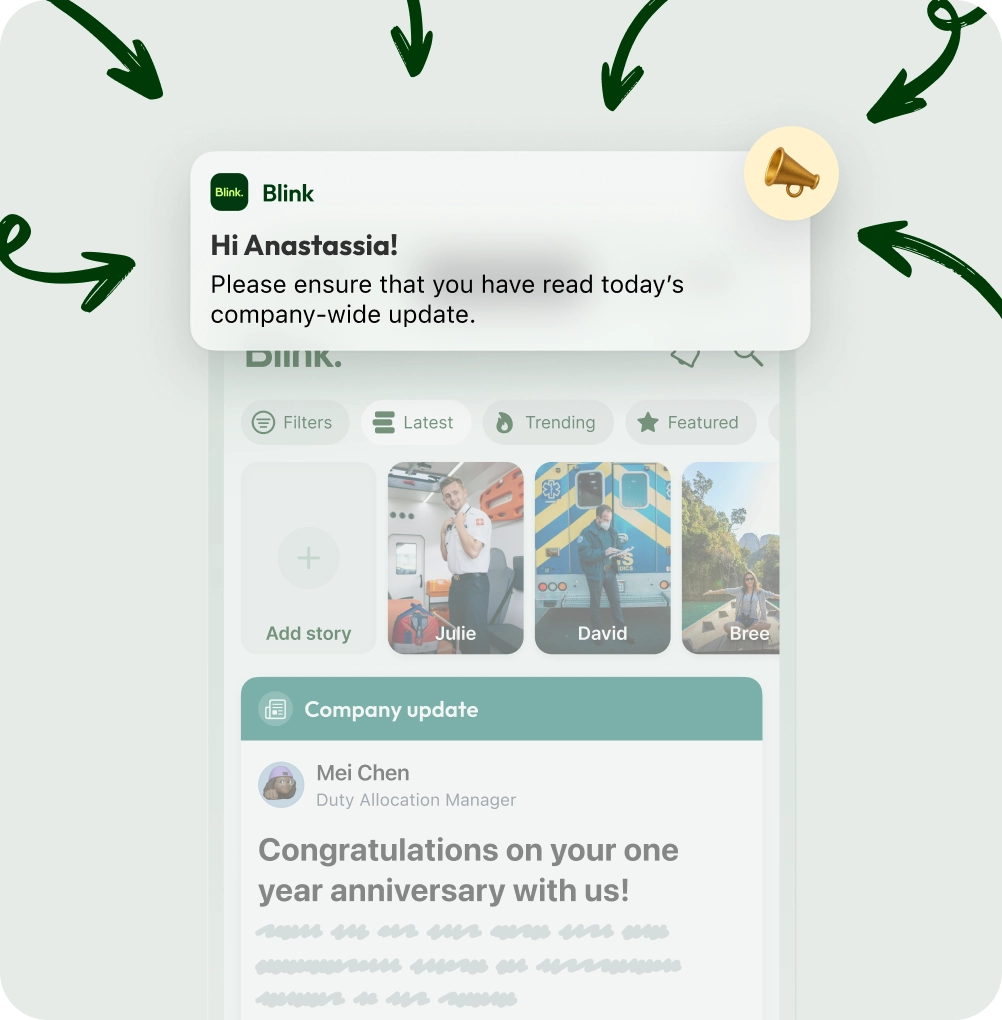
Comms your frontline opens.
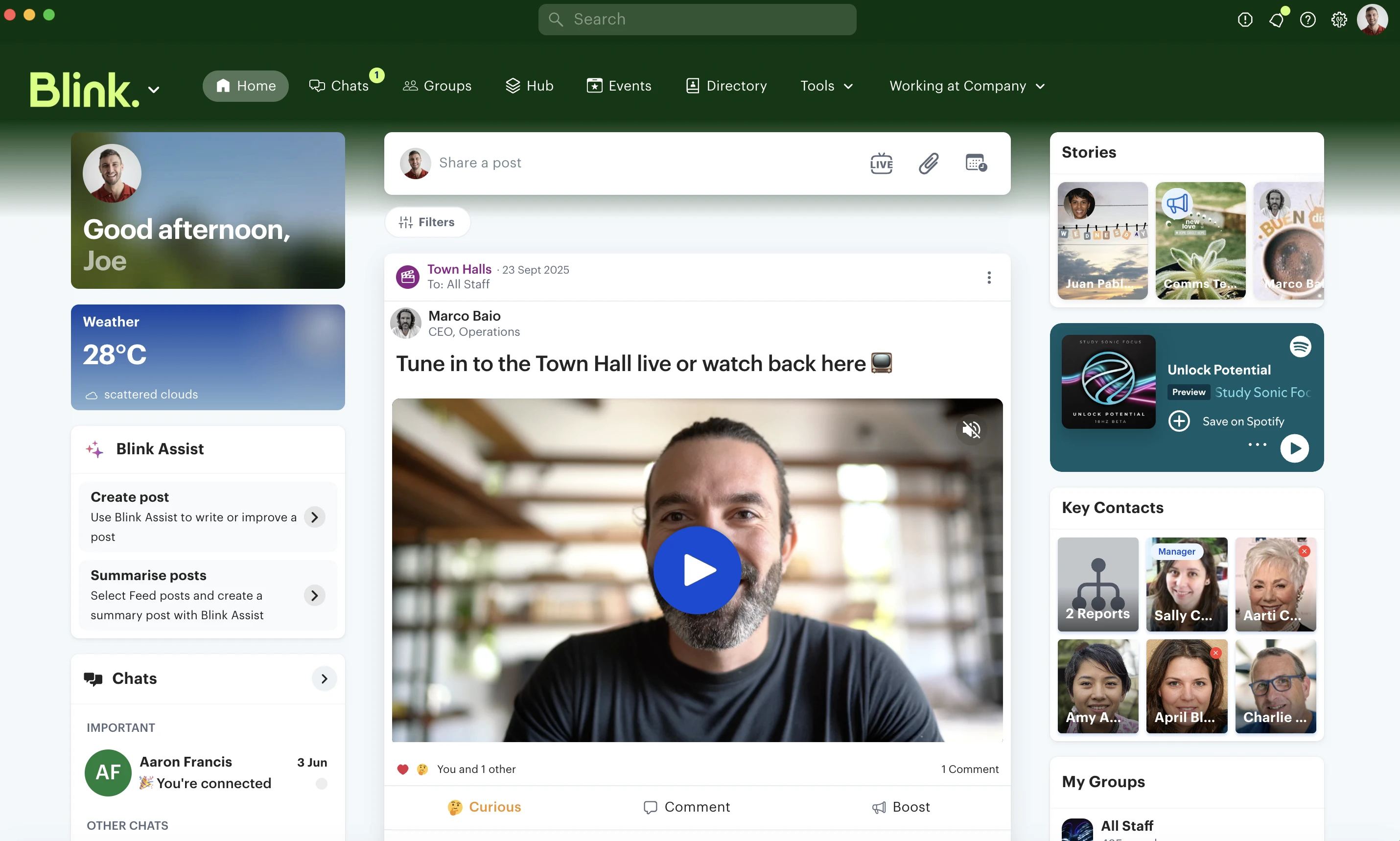
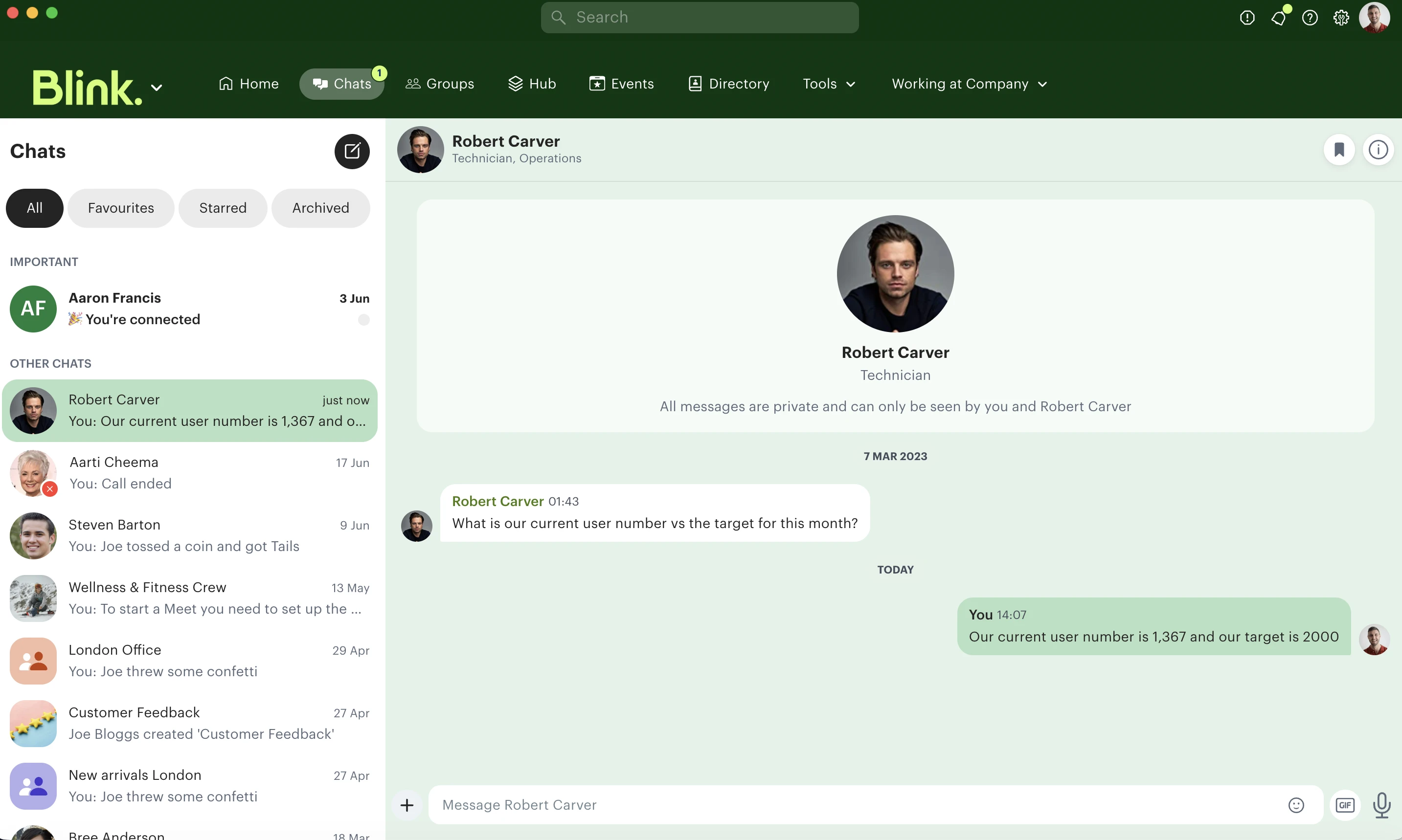
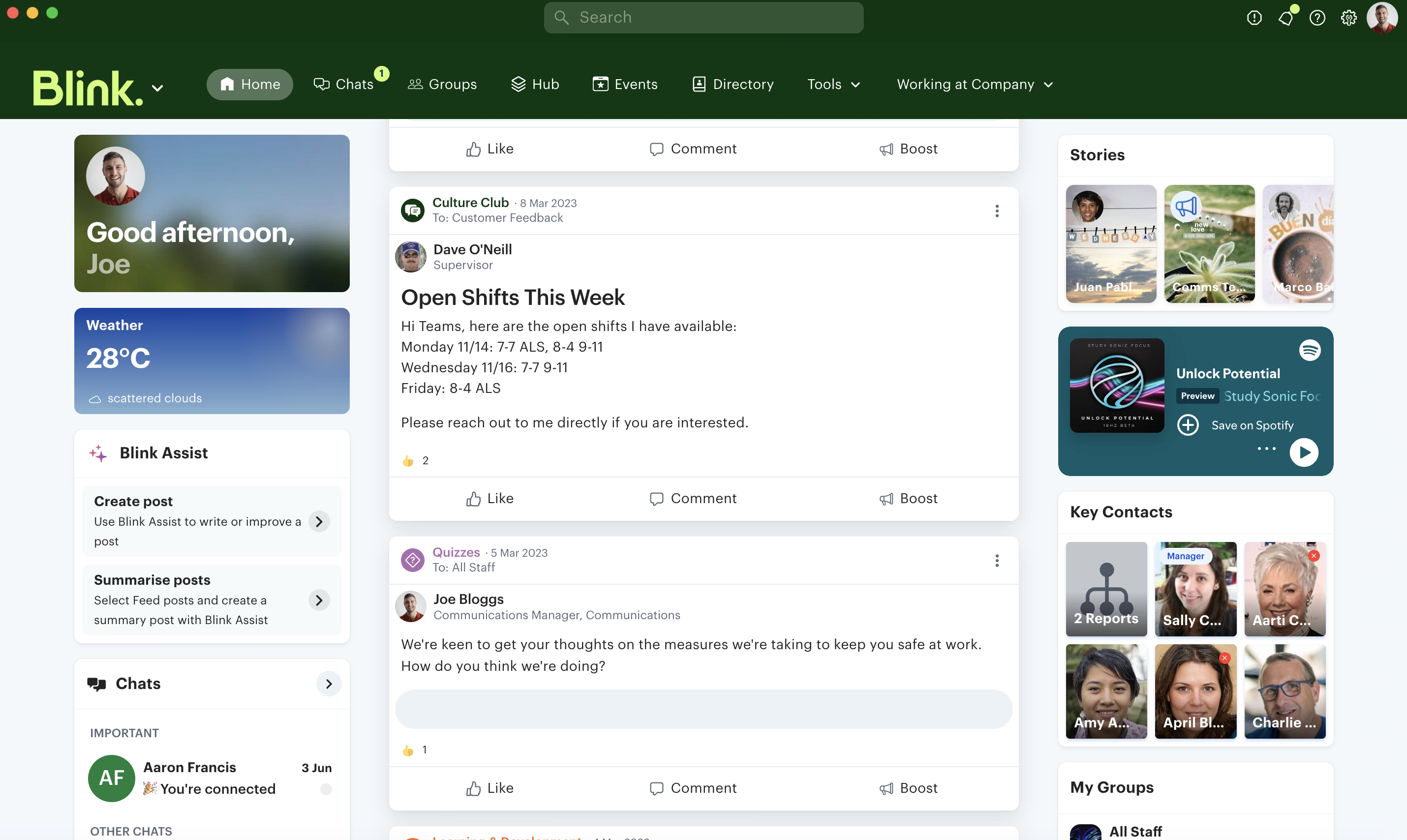
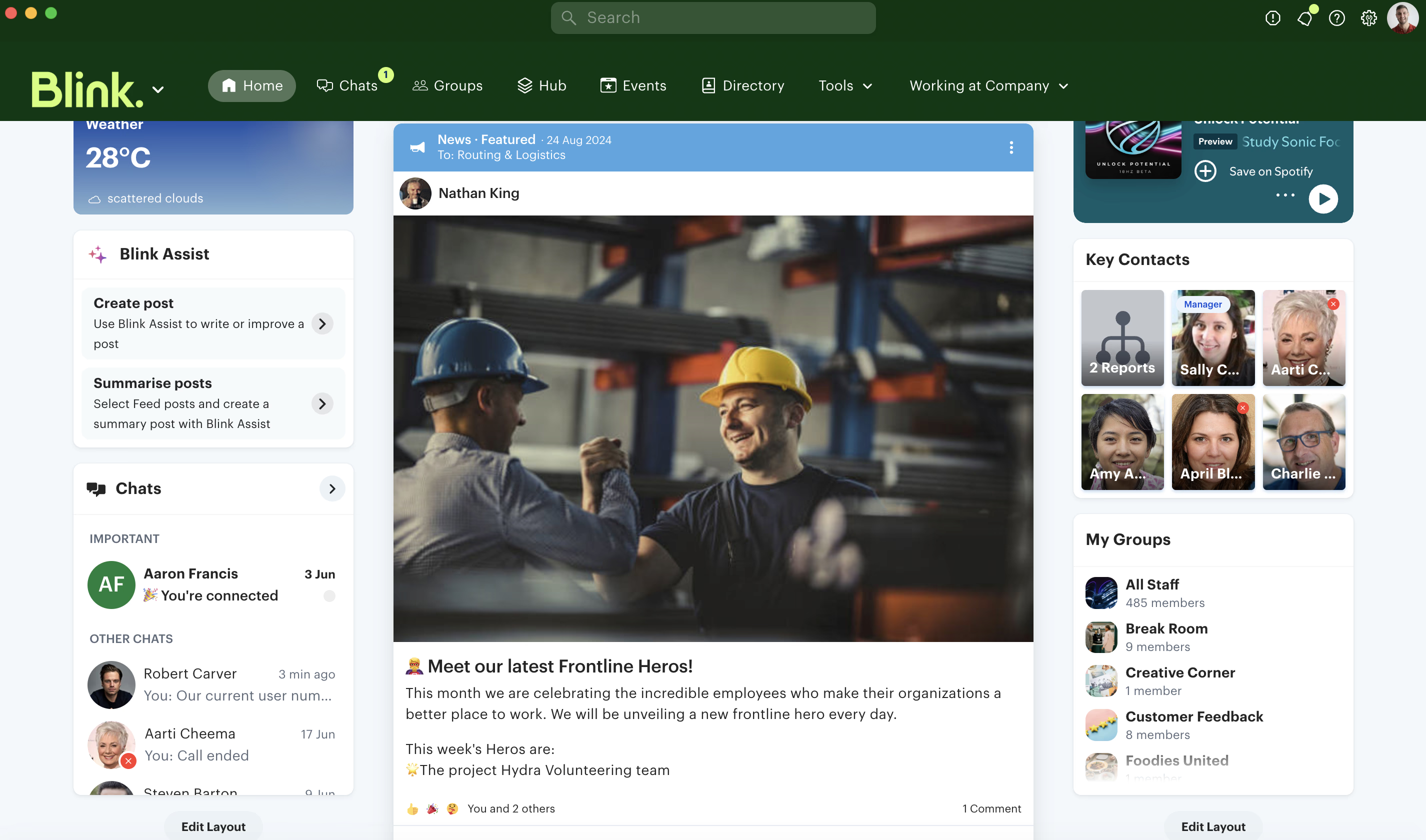
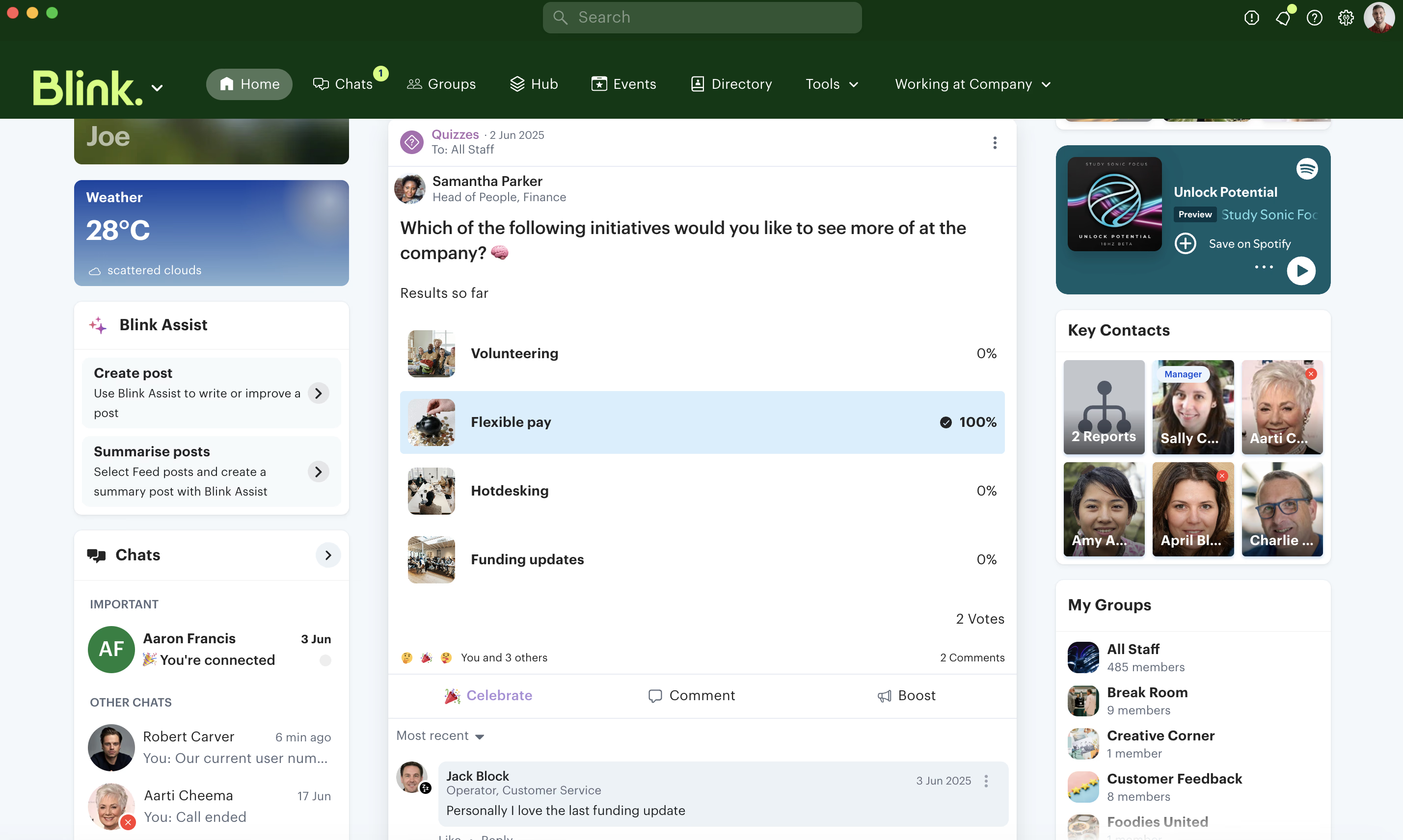
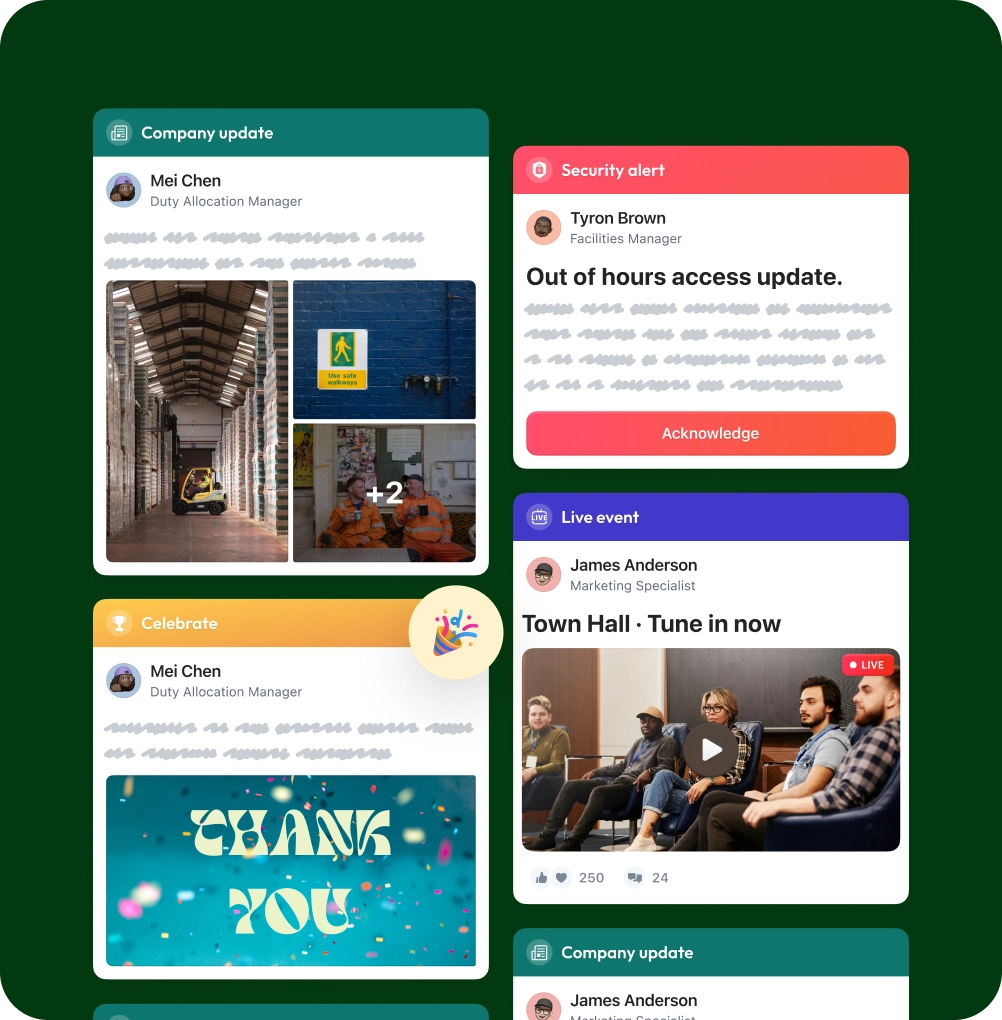
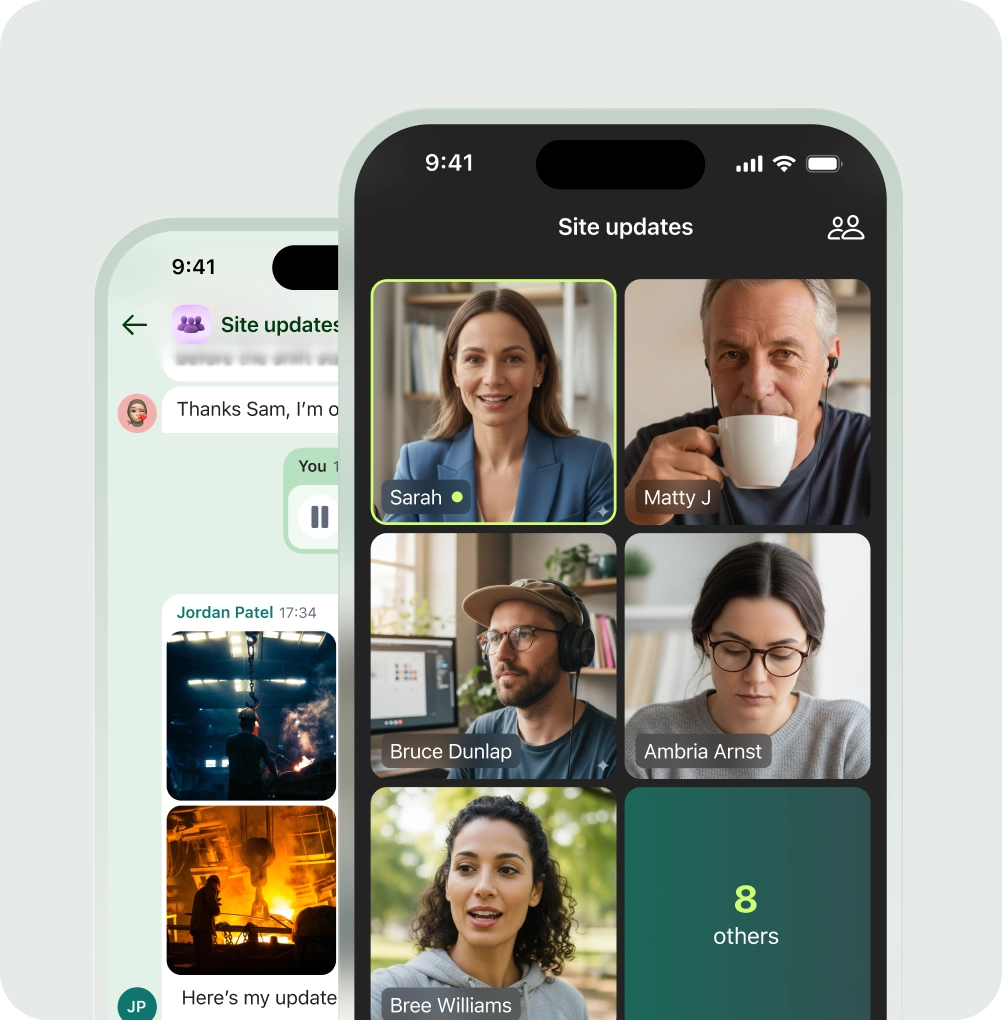
Native news feed, 1:1 and group chat, Stories, polls, video. Designed for the way frontline teams actually communicate.
Open rates that decide everything.
Reach analytics, sentiment, daily opens. At Bubala, Blink drives 99% activation and 14 app opens per user, every day.
The Hub for everything frontline teams need.
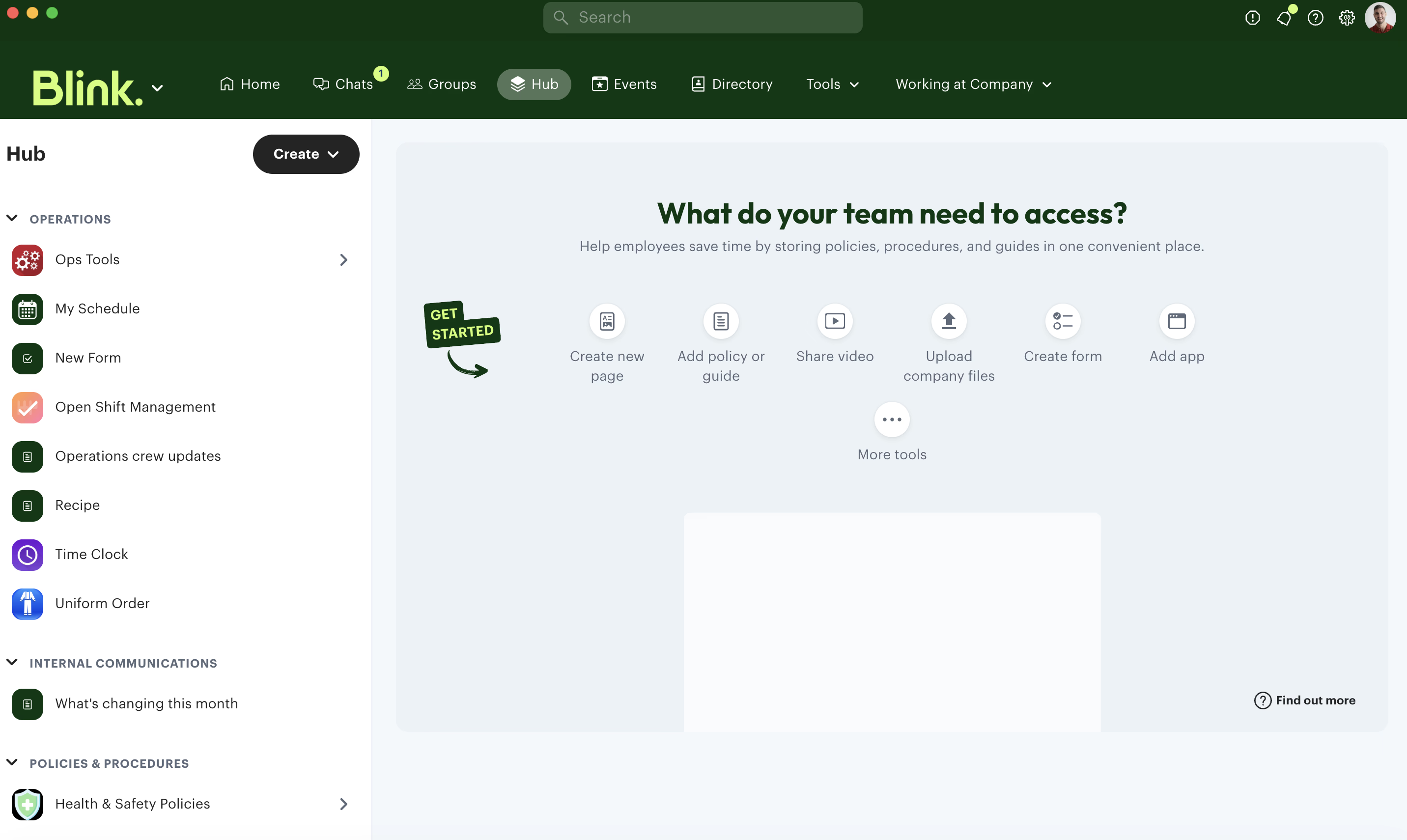
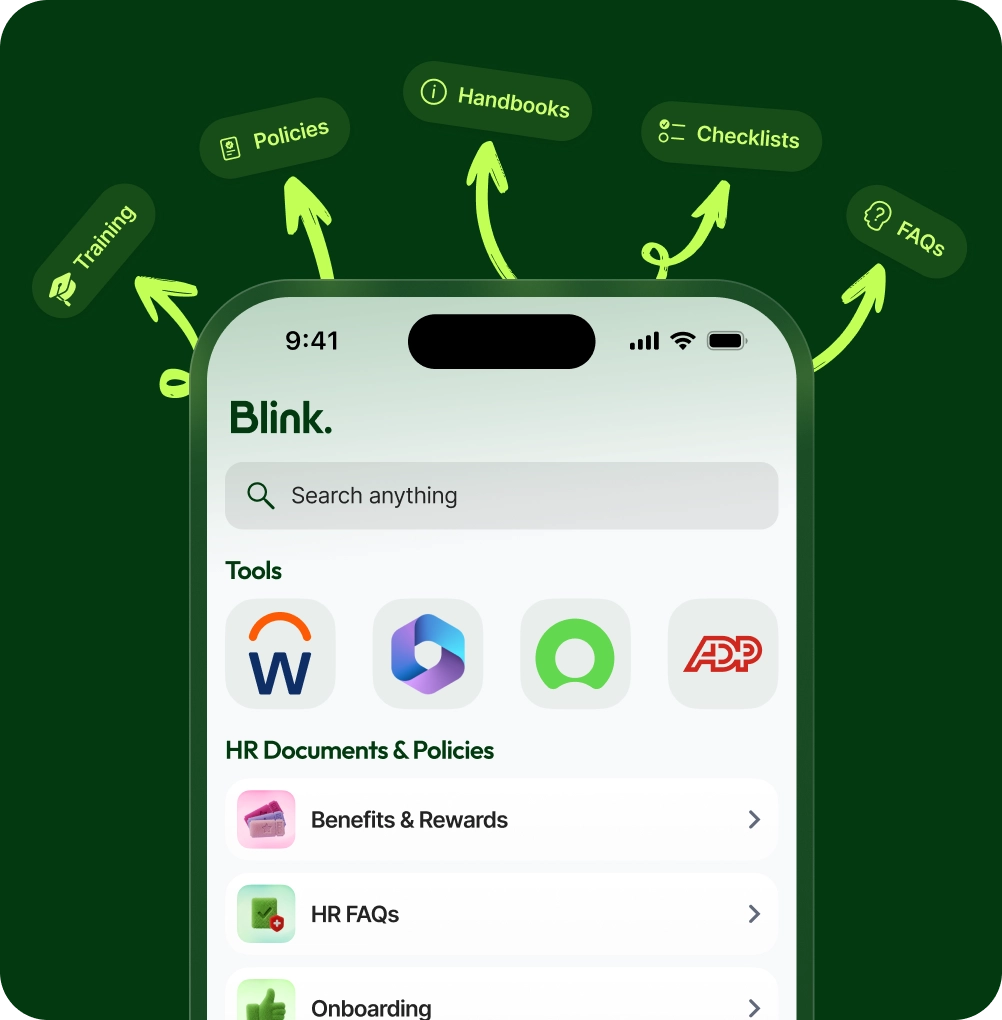
Policies, training, contacts, documents. Searchable, mobile-first, kept current by your team.
Onboarding, forms, and the daily HR work.
Onboarding journeys for new starters, digital forms, and surveys, with custom roles and permissions built in.
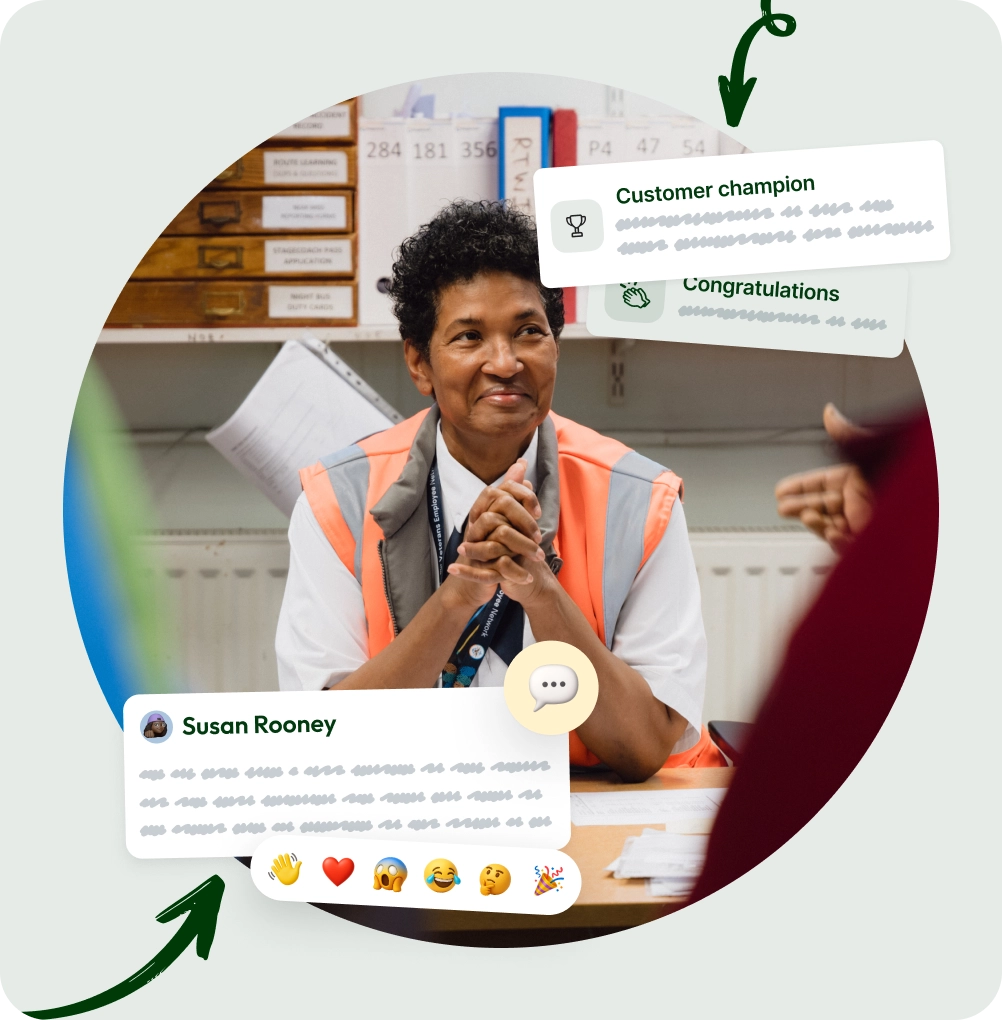
Kudos that travel further than a thank-you.
Native recognition with reach analytics. See who praised whom, where the energy is, and where it stalls.
Plugs into the tools you already run.
Native integrations with Workday, ADP, iTrent, Okta, and Microsoft 365, plus single sign-on and user provisioning.
Slack connects your office. Blink connects your whole business.



A chat tool and a frontline platform aren't the same thing.
Where Blink wins.
Frequently asked questions
Not necessarily. Many teams run Slack for their desk-based staff and Blink for their frontline. Blink integrates with the tools your office team already uses — so the two can coexist cleanly. The question is whether your frontline workers are actually using Slack. Most aren't.
Yes. Blink Core is £2.95/user/mo. Blink Pro is £3.75/user/mo. Slack Pro is £5.75/user/mo. For a 100-person frontline team on annual plans, that's a £2,400 difference on Pro — for a product built for them, not adapted from a desk tool.
Blink Pro integrates with Microsoft 365, Google Workspace, Workday, ADP, Okta, and more. If your frontline team needs to connect to HR and identity systems, it's covered. Blink doesn't have 2,600 desk-app integrations — because your frontline workers don't need them.
Yes. Staff sign up with a personal email or phone number — no corporate account, no IT ticket, no onboarding dependency. That's the key reason Blink adoption runs so much higher than Slack on frontline teams.
Blink is built to look and feel like the apps your frontline team already uses. Jamar S. on G2 put it this way: "The user interface is clean and straightforward, which lets our less tech-savvy frontline workers jump right in and locate the resources they need without any formal training."
Most teams are live in a day. No IT department, no workspace configuration, no channel architecture to design. You set it up, invite your team, and they're in.