92%
adoption
6.3
app opens per user, every day
10
locations connected on one app
See how Heidi, a from-scratch bakery group with 10 sites, replaced WhatsApp with one app its team opens six times a day, and built one culture where most of the chatter flows branch to branch.
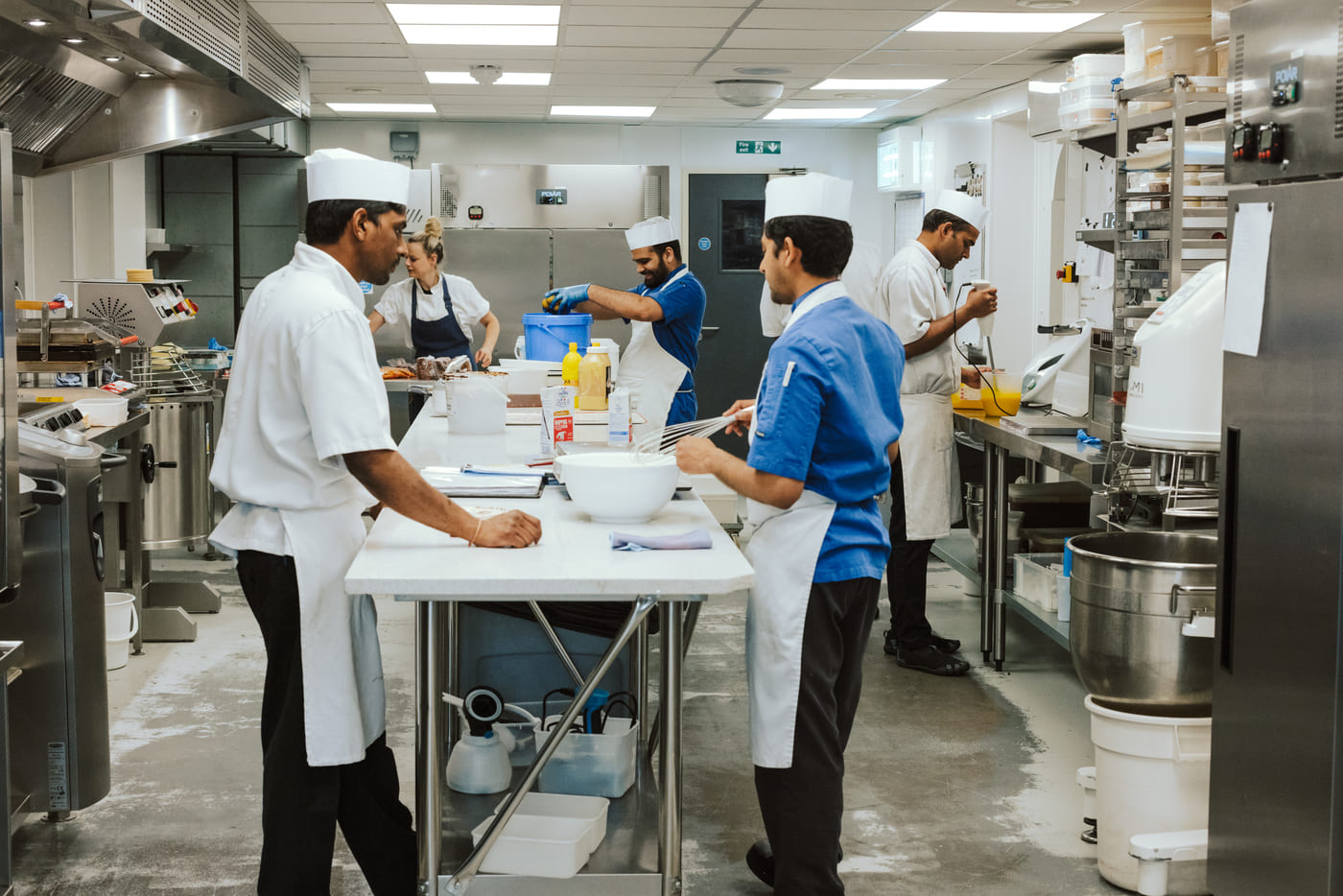
Heidi started as a small family business in Windsor about ten years ago. Today it’s a 10-site bakery group spread across London, Hampshire, Surrey, and Berkshire, and it still bakes everything from scratch. Beneath the railway arches in Windsor sits Heidi Studio, the group’s central kitchen, where around 15 pastry chefs roll dough, shape croissants, and turn out some 50 product lines by hand. Out in the nine shops, front-of-house teams bake those products off, serve customers, and make a great deal of coffee. It’s a business with real craft at its heart, run by a team that’s almost never in the same room.
Keeping everyone connected used to mean juggling tools. Before Blink, Heidi leaned on a mix of messaging apps that never quite fit, with a lot of WhatsApp underneath. “We were trying to use certain messaging-based apps, but they felt very corporate, and they were really only good for messaging,” says Rory Shanks, a director at Heidi. “Underneath that, there was a huge amount of WhatsApp going on, which we really wanted to avoid.”
Blink gave the group a single channel it could push information through quickly, in a format the team already recognized. People could post, like, and comment, and that familiarity, Rory says, is where the engagement came from.
A feed that flows both ways. What surprised him most was which way the conversation flowed. Blink was never meant to be head office talking at the shops, and in practice it rarely is.
“It’s not just head office throwing information down. Most of the traffic is going the other way, or between branches.”
Head office still shares the essentials, marketing campaigns, policy updates, and new menu launches from the Windsor kitchen. But far more of the activity happens laterally, shop to shop: teams asking each other for support, comparing notes, and sharing the small, good moments of a day in hospitality. A piece of latte art. A regular who made someone’s shift. Last night’s team drinks. It’s the kind of chatter that makes a scattered group feel like one.
Culture that spreads to every new site. That shared culture has become Heidi’s quiet advantage every time it opens a new site, as it did recently in Richmond and Victoria. A new team can scroll back through months of posts and see at once how the rest of the group works. “It helps them understand the culture of the company pretty fast,” Rory says. And it runs both ways: the established shops show newcomers what good looks like, and the new teams post proudly from their shiny new counters. “I love it when that happens.”
Everything in one place, on everyone’s phone. The practical side lives in the Hub, where the day-to-day information sits on everyone’s phone, process guides, documentation for menu items, the things people actually need mid-shift. Rory’s logic is simple: the more accessible you make information, through a medium people already use, the more likely they are to pay attention to it and use it. So at Heidi, as much as possible goes through the Hub.
The feature they’d be lost without: Stories. Ask Rory which feature the team would be lost without, and the answer is Stories. For a group that rarely shares a roof, it’s the part that makes everyone feel human. “It’s such a fantastic way for any team member, no matter how senior or junior, to communicate what’s been happening in their day,” he says. “I’m constantly surprised by what my team posts, and our managers love showing off their branches. I see stories that make me smile all the time.”
His advice to other hospitality operators weighing it up is refreshingly blunt: get off WhatsApp and the corporate channels, and give people something that feels like the apps they already use.
“A feature set that feels like the social media your team already use out of work is genuinely invaluable for culture-building. We love the product, and it’s a core part of our day to day.”