Connect Blink and Workday to unify frontline employee data, automate onboarding, and deliver a seamless experience from HR system to employee super app.
Jess DeVore
Published:
December 11, 2024
Last updated:
January 9, 2025
What we'll cover
Blink and Workday. Better together.
Employees power your business, but many are often left behind when it comes to workplace tools and technology.
That’s where Blink and Workday come in.
With the industry’s most comprehensive integration between Workday and any employee experience platform, Blink extends Workday’s powerful capabilities to all employees — whether they’re desk-based, remote, or on the frontline. This unmatched integration ensures every employee can access what they need, when they need it — driving engagement, boosting productivity, and helping organizations unlock the full potential of their Workday investment.
Together, Blink and Workday bridge the employee experience gap, offering the entire workforce seamless, one-click access via their smartphones to the tools and information they need.
Let’s take a closer look at how Blink and Workday work hand in hand to revolutionize the employee experience, creating a more connected and engaged workforce.
Blink and Workday: How it works
Blink is a mobile-first employee experience platform that serves as a digital front door for your organization, giving employees access to all the software you use in just a few clicks.
If you’re already a Workday customer, you benefit from our pre-built, out-of-the-box integration. This means we can take Workday user data into Blink and automatically create user accounts.
Employees can download the Blink app from Android or Apple app stores and use their email or phone number to access.
Through single sign-on (SSO), employees can access third-party apps — like Workday — by simply clicking on the relevant icon. Users can also click on deep links that take them straight to specific Workday functions, like payslips or an address update form.
When you partner with Blink and Workday, you make Workday accessible to all of your employees.
Blink and Workday: The benefits
Here’s what you can expect when you use Blink and Workday together.
#1. Improving adoption of Workday (and other third-party tools)
Persuading employees to download multiple workplace apps is a challenge. But with Blink, there’s just one app to download.
The Blink app acts as a centralized hub. With SSO, employees can access all workplace software — including tools like Workday, SharePoint, and ServiceNow — from Blink. Employees don’t have multiple passwords to remember or reset.
{{mobile-hub="/image"}}
This explains why Blink customers enjoy a 5x improvement on adoption of third-party tools. Pair Blink with Workday and you’ll get much more value from your Workday subscription.
#2. Easy identity management
Frontline workers don’t tend to have a corporate email address or device. So these employees are often left behind when it comes to workplace tech tools like Workday.
But with Blink, it’s easy to get hard-to-reach deskless employees onto your systems. That’s because Blink serves as your identity provider.
Deep integration between Workday and Blink allows the transfer of rich employee data to Blink systems. Then, Blink verifies user identities, making it simpler than ever to activate employees.
#3. Streamlining the frontline workforce experience
Together, Blink and Workday makes it easy for frontline workers to access all the tools and resources they need, at a time and place that suits them. This makes workers more efficient and effective.
Via Blink, employees can access Workday Skills Cloud, view pay and benefits, pick up shifts, complete employee surveys, submit paperwork, and report safety concerns.
Putting these tools in the hands of frontline workers means you squeeze all possible value from them. You also make life easier for your frontline workforce — so much easier that Blink users give the app a 9/10 ease rating.
{{mobile-workday-feed="/image"}}
#4. Improving employee communication
Blink takes internal comms beyond the office noticeboard and word-of-mouth messaging. An intuitive news feed gives every employee instant access to up-to-date internal communications, tailored to them.
Admins can use the news feed to highlight Workday-related tasks. You might like to communicate available shifts, signpost training resources, or prompt staff to book their vacation time. You can add links to your posts, directing users to the appropriate place on the Workday app.
Blink’s wide range of employee communication tools supports your workforce in other ways, too. They find it easy to chat with supervisors, coworkers, and leadership. So they feel more connected to your organization and the people within it.
#5. Accessing comprehensive data
When you use Blink and Workday together, you get access to rich analytics and survey data relating to your employees, all via a user-friendly dashboard.
This data reveals how employees are using your workplace tools. It gives you a deeper understanding of employee engagement and staff turnover. It can even help with workforce planning.
Drill down into this data to identify strategic areas for improvement — identifying operational weaknesses and issues with employee experience.
#6. Closing the digital divide
A majority of workers feel disconnected from their organization — and many feel they lack the tools they need to do their jobs effectively.
By improving the digital employee experience, with a combination of Blink and Workday, you close the digital divide. You give all employees equal access to workplace tools and bring them into the company conversation.
This helps to improve employee engagement and satisfaction. It also leads to better staff retention. Blink customers experience a 26% reduction in employee turnover.
Make Workday work harder for your full organization with Blink
Blink helps leading organizations bring Workday to deskless employees. We provide the most comprehensive and effective Workday integration in the industry, which makes for easy setup and a seamless user experience.
Employees power your business, but many are often left behind when it comes to workplace tools and technology.
That’s where Blink and Workday come in.
With the industry’s most comprehensive integration between Workday and any employee experience platform, Blink extends Workday’s powerful capabilities to all employees — whether they’re desk-based, remote, or on the frontline. This unmatched integration ensures every employee can access what they need, when they need it — driving engagement, boosting productivity, and helping organizations unlock the full potential of their Workday investment.
Together, Blink and Workday bridge the employee experience gap, offering the entire workforce seamless, one-click access via their smartphones to the tools and information they need.
Let’s take a closer look at how Blink and Workday work hand in hand to revolutionize the employee experience, creating a more connected and engaged workforce.
Blink and Workday: How it works
Blink is a mobile-first employee experience platform that serves as a digital front door for your organization, giving employees access to all the software you use in just a few clicks.
If you’re already a Workday customer, you benefit from our pre-built, out-of-the-box integration. This means we can take Workday user data into Blink and automatically create user accounts.
Employees can download the Blink app from Android or Apple app stores and use their email or phone number to access.
Through single sign-on (SSO), employees can access third-party apps — like Workday — by simply clicking on the relevant icon. Users can also click on deep links that take them straight to specific Workday functions, like payslips or an address update form.
When you partner with Blink and Workday, you make Workday accessible to all of your employees.
Blink and Workday: The benefits
Here’s what you can expect when you use Blink and Workday together.
#1. Improving adoption of Workday (and other third-party tools)
Persuading employees to download multiple workplace apps is a challenge. But with Blink, there’s just one app to download.
The Blink app acts as a centralized hub. With SSO, employees can access all workplace software — including tools like Workday, SharePoint, and ServiceNow — from Blink. Employees don’t have multiple passwords to remember or reset.
{{mobile-hub="/image"}}
This explains why Blink customers enjoy a 5x improvement on adoption of third-party tools. Pair Blink with Workday and you’ll get much more value from your Workday subscription.
#2. Easy identity management
Frontline workers don’t tend to have a corporate email address or device. So these employees are often left behind when it comes to workplace tech tools like Workday.
But with Blink, it’s easy to get hard-to-reach deskless employees onto your systems. That’s because Blink serves as your identity provider.
Deep integration between Workday and Blink allows the transfer of rich employee data to Blink systems. Then, Blink verifies user identities, making it simpler than ever to activate employees.
#3. Streamlining the frontline workforce experience
Together, Blink and Workday makes it easy for frontline workers to access all the tools and resources they need, at a time and place that suits them. This makes workers more efficient and effective.
Via Blink, employees can access Workday Skills Cloud, view pay and benefits, pick up shifts, complete employee surveys, submit paperwork, and report safety concerns.
Putting these tools in the hands of frontline workers means you squeeze all possible value from them. You also make life easier for your frontline workforce — so much easier that Blink users give the app a 9/10 ease rating.
{{mobile-workday-feed="/image"}}
#4. Improving employee communication
Blink takes internal comms beyond the office noticeboard and word-of-mouth messaging. An intuitive news feed gives every employee instant access to up-to-date internal communications, tailored to them.
Admins can use the news feed to highlight Workday-related tasks. You might like to communicate available shifts, signpost training resources, or prompt staff to book their vacation time. You can add links to your posts, directing users to the appropriate place on the Workday app.
Blink’s wide range of employee communication tools supports your workforce in other ways, too. They find it easy to chat with supervisors, coworkers, and leadership. So they feel more connected to your organization and the people within it.
#5. Accessing comprehensive data
When you use Blink and Workday together, you get access to rich analytics and survey data relating to your employees, all via a user-friendly dashboard.
This data reveals how employees are using your workplace tools. It gives you a deeper understanding of employee engagement and staff turnover. It can even help with workforce planning.
Drill down into this data to identify strategic areas for improvement — identifying operational weaknesses and issues with employee experience.
#6. Closing the digital divide
A majority of workers feel disconnected from their organization — and many feel they lack the tools they need to do their jobs effectively.
By improving the digital employee experience, with a combination of Blink and Workday, you close the digital divide. You give all employees equal access to workplace tools and bring them into the company conversation.
This helps to improve employee engagement and satisfaction. It also leads to better staff retention. Blink customers experience a 26% reduction in employee turnover.
Make Workday work harder for your full organization with Blink
Blink helps leading organizations bring Workday to deskless employees. We provide the most comprehensive and effective Workday integration in the industry, which makes for easy setup and a seamless user experience.
In theory, everyone loves employee empowerment. Empowered employees are more productive and engaged, more likely to trust senior leadership and more likely to approach situations. What’s not to like?
Equally, that initial process of letting go can be hard – and that’s nothing to be ashamed about. Employee empowerment is a relatively recent philosophy, and many of us will have progressed our careers with a top-down approach to workplace management.
With the huge rise in remote and hybrid work, this approach is crumbling. As many workplaces are set to remain remote, and many others are losing employees in droves due to lack of career progression and low pay, it’s not a viable long term strategy.
Your managers can add huge amounts of value to your business in the projects they oversee and the bonds they build with their teams. Micromanagement is wasting them as a resource.
Staff empowerment involves trading some control over various aspects of your work environment for higher productivity and greater job satisfaction. Here’s how to embrace letting go in return for these tempting performance gains.
“Employee empowerment is a management philosophy that emphasizes the importance of giving employees the autonomy, resources and support they need to act independently and be held accountable for the decisions they make.”
“Autonomy, resources and support” encompasses a range of things here, and could include:
Offering employees freedom over where they work (e.g. remote or hybrid working arrangements).
Offering employees freedom over how they work by building managerial trust and avoiding micromanagement.
Providing resources for skills development and career progression
Structuring your organization in a way that allows employees some say in how it’s run, for example employee voice initiatives and shareholder schemes.
Employee empowerment, engagement, and satisfaction…what’s the difference?
Employee engagement is the strength of the mental and emotional connection employees feel toward the work they do, their teams and their organization.
Employee satisfaction is a measure of how happy an employee is in their role, and with their place of work in general.
Employee empowerment is providing the resources and support needed for your employees to act independently.
If you’re the type for metaphors (don’t blame you, they’re super useful!), consider employee satisfaction and employee empowerment as two key building blocks for employee engagement.
High employee engagement is the ultimate goal – companies with engaged employees are 21% more profitable than companies that aren’t. Workplace satisfaction and empowering employees with control over how they work are essential contributors to this.
The benefits of empowerment in the workplace
Your workforce is more flexible
Empowered workforces can work across locations and time zones, innovate more, and find solutions to problems quicker. That’s a real asset across your business – you can create better products, offer a vastly improved CX and build watertight internal processes.
Your workforce is more productive
Employees who feel trusted are more likely to get more done in the same space of time. This is partly because it’s easier to feel driven when you have autonomy over your work, and partly because micromanagement is a major time drain. Free your colleagues from this over-hierarchical hellscape and they’ll be more willing to go the extra mile.
Your workforce trusts leadership more
Trust is a two-way street. You’ll find that if employees are trusted to manage their workloads and have a say in how your business is run, they trust senior leadership to make mutually beneficial decisions as a result.
Research by the Great Place to Work Institute and Fortune suggests that trust between managers and employees is the main factor in the world’s best workplaces. Workplaces with the most mutual trust beat the average annualized returns of the S&P 500 by a factor of three.
How to empower employees in the workplace
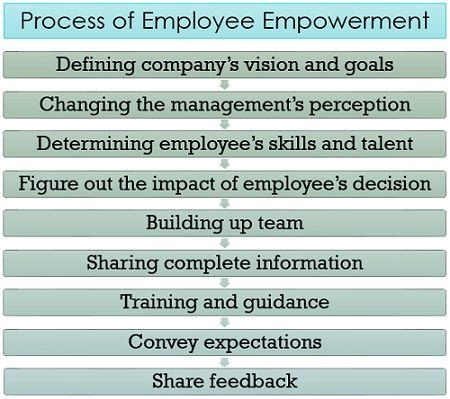
Employee empowerment isn’t a bandaid that you can tack onto your existing workplace to make it better. It needs to be woven into the fibers of your company culture.
Bad news: this takes time and effort.
Good news: this investment will absolutely pay off in the long term. Creating new management practices, investing in new ways of working, sharing feedback regularly and creating a culture of recognition all help you maximize the value you get from employee empowerment as a business.
Feedback: give it and receive it
The more feedback you give on performance, the more you empower your employees to work dynamically, creatively and independently.
The more feedback employees share with you about the workplace, the more your workplace can meet their needs – and the more likely they are to stay.
Recognition: little and often is key
Did you know that a simple ‘thank you’ just once per month to your employees doubles employee engagement, halves the risk of them leaving and triples the likelihood of them sticking with you in the long term?
By all means celebrate the big milestones, but don’t forget to create a supportive, encouraging atmosphere day to day as well. Self belief is empowering – let your employees know that they’re doing a good job and watch performance improve.
Career development: make sure employees are working towards something
Career development motivates employees to act independently. Why take the risks that come with autonomy and decision-making responsibilities if there’s no payout?
In a recent survey 63% of workers cited lack of career opportunities as a reason why they left their position – the joint most popular response alongside ‘poor pay’. To create an empowered workforce motivated to stick around for the long-term, take a look at your career progression structure. What could be improved? Or, if you haven’t got any formalized structures in place, how could you design them to support the needs of your workforce?
Communication: two-way, not one-way
Watching your employees’ every move makes your workforce resentful and erodes trust. Instead of monitoring behavior, start thinking about how you can facilitate meaningful two-way communication between managers and employees.
As well as the right software – employee apps, instant messengers and project management software are all useful here – take a look at shifting your concerns away from regulating behavior and more towards focusing on results.
Responsibilities: avoid making things too top heavy
The classic scenario: managers are expected to maintain a huge degree of control over their teams, resulting in time pressures, delays and a lack of feedback for frontline teams.
By sharing responsibilities across employees and teams, you reduce this pressure drastically and encourage employee autonomy. You also avoid gradual erosion of trust and performance stagnation, as you empower your managers to spend time with their teams and invest time in employee development.
Barriers to employee empowerment and how to overcome them
Stuck on building a naturally empowering workplace? Check these common barriers to employee empowerment.
Your remote employees can’t communicate
To empower employees in a remote environment, your communications strategy needs to be stronger than it’s ever been.
If performance is suffering and deadlines are being missed due to confusion, invest in remote employee communication tools and make sure your managers are checking in at least daily.
Fear of position loss
If your employees are increasingly autonomous, what’s in store for middle to lower management positions?
Ease your managers’ concerns about this by communicating new expectations for different roles. If they know that employee empowerment is as much about reinvesting their time in meaningful work as empowering the workforce, they’re significantly more likely to get on board.
Lack of clear goals
“Be empowered” won’t cut it. To maximize returns on your employee empowerment strategy, you’ll need to be specific about what these goals look like. This could include:
Employees handling specific tasks on their own
Employees contributing regularly to strategic discussions
Employees shaping their workplace via employee voice initiatives
Employee empowerment in different industries
Not all industries work in the same way. What empowers employees in one industry might be impossible in another. Your healthcare workers might not be able to work remotely, for example, or there may be a particularly rigid professional hierarchy in place that you need to work around.
No matter your sector or organizational structure, there are ways to empower your employees. If flexible working is difficult, or there are real limits on the responsibilities you can share, try focusing on:
Employee voice initiatives like surveys and focus groups
Career progression – if your industry is hierarchical, work with it!
Recognition – a little ‘thank you’ never goes awry
Employee empowerment resources
There’s no such thing as being “too nerdy” about the wellbeing, productivity and performance of your employees. If you’re up for a bit of further reading, take a look at these resources.
And, don’t forget to check out our Frontline of the Future podcast! Listen here.
Employee empowerment examples
Need some real-world empowerment inspiration? Take a look at how these three businesses encourage their employees to reach their full potential.
Timpsons
British service retailer Timpsons is a renowned example of what happens when you trust your employees.
The business’s ‘upside down management’ philosophy was borne of owner John Timpson’s realization that “the only way to provide truly great customer service is to trust our customer-facing colleagues with the freedom to serve customers the way they know best.”
Timpsons’ frontline team members are encouraged to do whatever they can to provide a brilliant customer experience, including changing prices, rejigging displays and paying up to £500 to settle a complaint – without having to justify themselves to anyone senior.
John Lewis
If you’re looking for the ultimate employee empowerment strategy, look no further than employee ownership. Your employees become shareholders in your business, and get a share of annual profits and a say in how the business is run.
It’s definitely a commitment, but UK department store John Lewis makes it work. According to recent figures, 84% of John Lewis retail partners recommend John Lewis as a great place to work and 86% of customers feel valued when they shop with John Lewis outlets. Positioning their workforce as partners rather than employees drives empowerment; the retailer regularly tops ‘best workplace’ polls as a result.
Google
It’s no surprise that worldwide innovation leader Google expects the best from its employees. To facilitate this, Google invests a lot in building a creative work environment where employees are empowered to develop new skills at every turn.
Google Cafes encourage employees to build connections across the business, whilst the Google Moderator management tool draws a wider audience into meetings with a range of interactive features.
Google also allows its engineers to spend 20% of their working week on projects that interest them but show no immediate promise of paying dividends. Employees have the chance to develop new skills and work with their interests, whilst Google keeps ahead of the pack on long-term innovation.
Employee empowerment: final thoughts
As how we work continues to change, employee empowerment is becoming essential. Your teams need to be flexible, adaptable and engaged if you want to remain competitive – particularly right now, as open vacancies soar and workforces are asked to do more with less.
Employee empowerment will look different in different workforces. For example, you might not be able to offer flexible working, but you can still allow employees control over their processes and a say in how the workplace is run. Or, you might have strict protocols that need to be followed, but be able to offer some degree of time and location flexibility.
Whatever staff empowerment means for you, encouraging meaningful communication between managers and employees, setting clear expectations and building a culture of mutual trust is essential to success.
Blink is an employee app that enables two-way conversations, builds trust and empowers employees as a result. Get your free demo today!
Jeff takes concepts and turns them into reality. He always has a can-do attitude and follows through until the job is done!
Coach USA uses telematics technology solutions to increase the safety and efficiency of its operations. This includes AI dash cams which help to proactively monitor speed, following distance, and distracted driving, to elevate safety standards.
Jeff is part of the small but impressive team that harnesses such technologies and makes them work for our business and drivers.
What does he want to do next?
Continue to be challenged — he can do anything he puts his mind to!
Nominated by: Dominic Manuele, VP of Maintenance and Engineering
With shifts in working patterns over the past couple of years, maintaining employee productivity has seemed like an uphill battle for many employers!
The good news: your employees genuinely want to do good work. If you provide them with the right tools, environment and support, you’ll get great performance in return.
The slightly-less-than-good-news: you need to do this amidst ongoing uncertainty around COVID and potentially figure out the ramifications of permanent hybrid and remote working arrangements.
This isn’t always easy – but it is doable. Gallup reports that it recorded its highest ever percentage of engaged employees in 2021. Given the links between employee productivity and engagement, this is a really solid starting point for your efforts.
This 101 guide will help you understand a little more about employee productivity, how to increase it and its ties with employee engagement.
What is employee productivity?
‘Employee productivity’ is a measure of performance which tracks the amount of output each employee creates per unit of work.
If that sounds a little fiddly to you…you’re absolutely right.
Unlike ‘workforce productivity’ (also known as ‘labor productivity’) which measures the output of your workforce as a whole, employee productivity is a completely individual measure.
What does that mean?
Firstly, it’s more difficult to define. Each of your employees plays a vital role in the success of your business. What constitutes a ‘unit of productive output’ for your marketing team? What about your frontline retail staff or your drivers?
Secondly, it’s more difficult to measure. You can measure the output of your workforce as a whole relatively easily. Because not every employee will work in a position with an easily definable output, you’ll need to seriously consider how to adjust your approach for different positions in your organization.
How to improve employee productivity
Investopedia identifies three key factors that increase labor productivity:
Physical capital
Technological progress
Human capital development
We think that exactly the same applies when you’re trying to increase employee productivity. After all, the output from each of your employees adds up to the output of your business as a whole. Employee productivity is the individual building block of organizational success.
‘Technological advancement’ feels particularly important with the drastic rise in hybrid and remote working caused by the COVID-19 pandemic. A 2021 study found that home workers dealt with a gruelling four tech problems a week on average, whilst 24% said they didn’t have adequate tools to do their job.
Equally, whilst tech is a major factor in keeping employees productive, it’s not a cure-all. You can invest in all of the latest collaboration tools – AI note-taking tools, augmented reality conferencing solutions, the rest – but it won’t make a difference if your workforce is directionless, confused, and unmotivated.
Here are a few steps you can take to improve employee productivity – both tech and people-focused.
Set clear goals, expectations and priorities
Having solid goals to work towards helps employees remain focused and productive. If they have a clear idea of what to expect, they can figure out how to meet those expectations and prioritize accordingly.
Set deadlines, but contextualize them. “I need this done by Wednesday lunchtime” comes across as needlessly authoritarian and creates stress for the sake of it. “I need this by Wednesday lunchtime so that we can pass onto the production team in time for our to-market target” draws your employees in by emphasizing how important their work is to the wider organization.
Invest in your workforce
In the USA, there are now 5 million more unfilled job vacancies than there are unemployed workers. Getting the most from your existing workforce has never been more important.
Invest time and capital building your workforce’s skills. Offering training – whether in person or e-learning – both allows your employees to do their job more effectively and shows that you’re invested in their long-term career development. Employees work harder and get more done as a result.
Work on building employee trust
Can you trust your direct report to follow instructions and complete tasks on time?
It’s a valid question, but it’s really only half of the equation.
Can they trust you to support them in their goals, be transparent about company developments, communicate effectively and respect their time (such as by approving leave requests promptly without follow up)?
Trust in any relationship goes both ways. If you uphold your end of the bargain with support and respect, you’ll see increased morale and productivity as a result.
Identify issues first. Then find the tech that helps
Since the pandemic began, the market for productivity apps & tools has exploded. It’s tempting if you’ve seen productivity levels dropping, to dive right in and rectify the problem immediately.
Take a step back. Before you commit to anything, work out which issues are currently barriers to employee productivity and look for tech solutions for those specific problems.
For example, virtual kanban boards like Trello can make managing large, desk-based departments much easier with notifications and deadline reminders, immediate visibility into task completion and an easy-to-follow visual layout. Would it offer the same benefits to rapid-fire ER healthcare teams, whose work priorities and tasks shift rapidly throughout the day?
Employee engagement and productivity
Setting clear goals, investing in your workforce, building employee trust and providing time-saving tech solutions all increase employee productivity.
Why?
It’s because they also increase employee engagement – and engaged employees are 17% more productive than non-engaged employees. Understanding how these two concepts are linked is essential in building employee productivity in the long term.
‘Employee engagement' has been a fundamental concept in people strategy circles for the past decade. There’s no absolute definition, but we like global advisory firm Gallup’s for its simplicity and directness:
“Employee engagement as the involvement and enthusiasm of employees in their work and workplace.”
If we had to simplify it even more: employee engagement measures how much your employees buy into your organization. Do they support your organization’s goals, see their work as meaningful and see their career developing at your business over time? Or, are they disinterested, doing the bare minimum and about to jump ship?
Highly engaged teams are more productive. If employees feel involved, respected and needed in the workplace, they innovate more, collaborate willingly and are significantly more motivated – and they’re much less likely to leave, which your hiring budget will thank you for.
How to measure employee productivity
As we discussed above, there isn’t a catch-all approach to employee productivity measurement
As such, your line managers will need to be involved in measuring employee productivity from step one, setting goals and analyzing performance from their direct reports to find effective ways to motivate each individual employee.
Here are a few tools your managers can use to get started.
Percentage of goals met
If you offer clear objectives and goals for each employee, check in on how effectively they’re completing these. Measuring the percentage of goals met gives a good baseline understanding of overall employee performance.
Benchmarks and targets
Businesses now hold more past performance data than ever before. Use this data to set realistic targets and benchmarks for employees, taking into account seasonality and external conditions.
Revenue per employee
How much revenue did you make last quarter? Divide it by the number of employees to give an average of revenue generated per hire.
Employee productivity software: how to track employee productivity
It isn’t easy to track employee productivity at the best of times. With the increase in home-working and virtual collaboration, the employee digital experience makes this even harder.
Employee productivity tracking software is a great way to get insights into how your team is performing, particularly in remote and hybrid environments. You may find some employee experience software has this built in as standard.
The key to success here is not to use tracking software completely negatively. It’s as effective at identifying the habits of top performers (and allowing you to reward and share them) as it is for picking up potentially disengaged employees.
And, when you do use it to identify which employees are lagging behind, you can target coaching to their specific needs to address any potential weak spots and turn their performance around.
When you’re looking for employee tracking software, these features are must-haves:
You might have figured out by now that increasing employee productivity will need time, effort and potentially investment on your part.
What does this get you, in the long term?
The simple answer is: more revenue. Two welcome words for any key decision-maker!
Engaged, productive employees care more and put in more effort as a result. This gives more scope to innovate, more drive to provide great service and better performance across the business in general.
The effort you put into improving employee productivity will more than make its money back as remote and hybrid works become ever more established. If you haven’t already, now’s the perfect time to start.
42% of companies have increased their investment in cloud and unified communications.
And this trend has only grown stronger during the Covid pandemic. The virus has given unified communications a long-overdue seat at the table.
It’s not hard to understand why. As companies grow larger and employees become more remote, keeping track of all your communication channels and devices is a challenge. And unified communications, especially as a service (UCaaS), solves this problem.
Still, many companies are on the fence, with some not even familiar with this new approach. Instead of choosing the benefits of unified communications, they’re busy prioritizing other organizational needs. Big mistake!
In this post, we’ll explore the top reasons why your company should invest in unified communications. Whether you want to learn more for yourself or get buy-in from other leaders in your company, the following list is exactly what you need.
Let’s dig in.
What is Unified Communications?
Ensuring that workers can easily communicate, collaborate on projects, and share documents are critical to your business.
Yet in most organizations, voicemail, email, fax, video calls, and live chats have all been on different systems so far. And managing these disparate platforms has been time-consuming and messy.
Even if it wasn’t, the solution may not have led to any improvement in collaboration and productivity. In fact, 69% of employees waste more than 5 hours each week switching between different communications devices and apps.
Enter Unified Communications. It means connecting instant messaging, video conferencing, data sharing, email, and more in a way that you can fetch data from one into the other.
A solution based on unified communication integrates all your communication devices and apps in one central place. And when this solution is offered as a cloud-based service, it is known as UCaaS (Unified Communications as a Service).
So instead of managing and switching between different places, employees need access to only one platform, streamlining communication and collaboration for everyone involved.
Benefits of Unified Communications
The definition alone should be enough to have you nodding in support of unified communications. Still, the following points will shed more light on why Unified Communications is important.
1. Watertight IT
When you look at how your company communicates, you may discover a number of solutions, with each implementation needing dedicated support and vendor management.
That means your IT department spends a lot of time troubleshooting, installing, updating, and providing support for these solutions. And every minute of time has a cost.
Wouldn’t this time be better spent on innovating proactive strategies that grow your business and meet corporate goals?
A unified communications solution helps free up IT resources by consolidating all communication in one place. So there’s only one system to manage and troubleshoot instead of several.
2. Reduced business costs
Maintaining multiple units of hardware and software licenses adds to your cost and overhead. In fact, you don’t just pay for the different platforms, but also for a person or team to supervise the whole system.
And don’t get us started on the time and budget you’ll need to allocate to train workers on how to use all the platforms. That’s a big waste of money — money that could have been used to grow the organization.
In contrast, with a unified communications solution, you pay only for a single platform. So your overall cost is considerably low.
3. Streamlined operations
Unifying communications in one place makes it easy for employees to do their jobs regardless of where they are located while saving time on routine tasks. For example, with a UCaaS solution, you can:
Route all incoming calls to a dedicated team member, app, or device
Redirect fax or voicemail to an email inbox as a PDF or audio file
You can set up many other automations and workflows to make remote work easy for your workers. And you can do all this without any special support from the IT department. This makes it easy to derive call center analytics on peak load, minimum load, first call resolution rates, etc. which will help with streamlining operations further
4. Improved collaboration and productivity
A survey has shown that companies adopting UC, on average, see a 52% improvement in workplace productivity and a 25% boost in operating profit.
Wondering how? Let’s take an example. Imagine you have a team spread out in five countries, with members trying to share and collaborate on crucial documents. And picture how chaotic it can be.
Now give the team members the ability to present via a virtual call and share documents through instant messaging after the call — all from the same system.
When your team knows exactly what communication platform to use for everything, they won’t spend countless hours searching emails and other apps.
The verdict is clear. With unified communications, employees can communicate on both internal and external communication channels quickly and reliably.
When your different systems can talk to each other, collaboration is a breeze, and you get things done fast.
5. Better customer service
Consumers of today are highly impatient. They expect quick and efficient support and services. If they don't get a response to their problem or question fast, they won’t think twice about switching to one of your competitors.
In fact, 58% of customers will end their relationship with a brand that gives them mediocre customer service.
So if you want to maintain an exceptional level of customer support, two things are essential:
Your employees should have a fast way to communicate with customers
Your employees should find it easy to share information among themselves
But both these goals are almost impossible to achieve if you have different, standalone communication services scattered all over the place. With such an approach, you also run the risk of crucial messages slipping through the cracks.
A unified communication solution goes a long way in offering a stable and predictable experience to customers, increasing their satisfaction and loyalty to the brand.
6. Improved security
Cybercrime costs businesses $2.9 million per minute, says research by RiskIQ. And the more disparity in your communication systems, the more vulnerable your organization will be.
So another advantage of UCaaS is better security. A unified communications solution can ensure that all your calls and communications are encrypted and less susceptible to risk.
7. Simplified remote work
Communication becomes even more important when your workforce is dispersed in several locations. And a unified communications system ensures that all the workers have proper access to your company’s network.
This way, employees can answer emails, attend calls, and share files while on the move. This level of connectivity is what makes a UCaaS solution a must-have.
Final thoughts: 7 Unified Communications benefits
Over the last few years, there has been a massive shift in how companies operate and how employees get things done. For many businesses, the days of large office buildings with the majority of your employees are long gone. Instead, companies today have a diverse workforce across several locations.
This makes unified communications essential for modern businesses. From improving productivity to facilitating remote work, and from delighting customers to reducing security breaches, unified communication has the benefits that make it a necessity for today’s workplace.
Switching to a UCaaS may seem like a big investment, but it can make a big difference in your organization’s future. Even so, if your boss and other senior managers are on the fence, show them this list!
Out of date, out of sync, out of tune. A corporate soundtrack of forgotten logins, stale pages, and “Is anyone actually using this?”
This year, Blink is changing the track. We’ve been recognized in the 2025 Gartner® Magic Quadrant™ for Intranet Packaged Solutions — not just anywhere in the grid, but as a Challenger.
For us, this isn’t just a placement. It’s a remix. For the industry. For the intranet. For every employee who’s ever thought, “Why is this so hard to use?”
Why the Gartner Magic Quadrant matters
If you’re in HR, comms, IT, or procurement, you already know the Gartner Magic Quadrant™ - to us, it’s one of the most influential industry reports in technology.
Every year, Gartner independently evaluates vendors on Ability to Execute and Completeness of Vision - then categorizes them as Leaders, Challengers, Visionaries, or Niche Players.
This Quadrant has become the go-to reference for organizations choosing their next digital workplace partner.
We’re proud to debut as a Challenger. But more than that, we see it as a validation that the world is ready for a more human way to work.
Why Blink? Why now?
We built Blink on a simple belief: Work should feel connected.
In a world overflowing with tools but starved of real connection, we’re creating an intranet that people actually want to use. One that unites the CEO’s town hall with the shop floor shift briefing. One that gets frontline and office workers on the same wavelength.
Why we believe Blink was recognized
🎧 Sales and customer alignment: We deeply understand buyer pain points, backed by strategic partnerships with industry leaders like Workday.
🎧 Financial and product strength: Robust growth, an agile roadmap with continuous innovation, and a reliable product strategy built for the future keep Blink ahead of the curve.
🎧 We go beyond software: With specialized onboarding teams, strategic rollout support, and a dedication to long-term success, we’re not just a platform — we’re a true partner.
🎧 From mobile to total experience: Our platform empowers every kind of worker with personalized microapps, powerful social features, and communications that actually cut through.
Challenger energy: More than a position - a mindset
For us, being a Challenger isn’t just about where we land on the grid. It’s about how we move through the world.
We don’t believe “good enough” intranets should do the trick. We don’t do stale or static. We remix the intranet into something dynamic, modern, and centered on people.
Because what good is an intranet that no one uses?
We’re obsessed with adoption: ensuring employees actually engage, communicate, and thrive on the platform. That’s why Blink is designed with every kind of worker at heart, driven by a people-first approach to innovation.
That’s what it means to challenge the status quo. That’s what it means to Blink.
What’s the rest of the market saying?
The intranet packaged solutions (IPS) market is evolving rapidly, moving from static, web-only sites to dynamic, multichannel platforms that are central to the digital workplace.
What used to be dusty web-only portals are now vibrant, multi-channel hubs that power communication, engagement, knowledge, and culture. Today’s IPS offerings go far beyond document repositories - they’re incorporating AI assistants and supporting integrations with Workday, ServiceNow, Microsoft 365, and other leading business systems.
As Gartner puts it, intranets are once again a priority investment as organizations transform their digital workplace, reduce IT complexity, and seek consistent, people-first employee experiences.
Intranets are no longer just “nice to have” - they’re necessary parts of a modern business infrastructure. They’re becoming critical hubs for productivity, connection, and culture across both office-based and deskless workforces.
This isn’t evolution - it’s inflection. And Blink is leading the remix.
Spinning the future of work
For us, being named a Challenger is a milestone. But it’s also just the intro track.
We’re already dropping new hits:
Broadcast-quality live streaming that gives every employee a front row seat
Blink Assist, our AI-powered copilot for content creation and communication
Analytics that actually matter, surfacing predictive insights into how people engage
“Save for later” offline access, so work doesn’t have to stop when the WiFi does
Modern social features like Stories that drive adoption and give Instagram a run for its money
Our vision is simple: The future of work should feel intuitive, inspiring, and essential - not invisible. Blink exists to unlock that.
This isn’t just recognition - it’s our statement
We’re not here to play quietly. We’re here to remix the intranet.
Named top Challenger by Gartner, chosen every day by the world’s most ambitious organizations, and powered by a people-first mission - this is only the beginning.
Have you ever wondered why in some companies, problems get solved quickly and things move fast, despite a large workforce? And why do other organizations struggle to adapt to even the smallest changes in market forces?
When people communicate and collaborate well in their respective teams, and when all the workers in a company act like one big team, it’s easy to make progress towards business goals.
But good teamwork doesn’t start happening overnight. What makes teamwork work is team building.
And if you’re wondering why team building is important, we’re going to dive deeper into the meaning of team building, and the benefits of team building initiatives at your workplace.
What is team building?
Team building is a collective term for the activities you conduct, training you provide, and other efforts you make to help your teams build collaboration and communication skills needed to work together and meet common goals. Team collaboration is pivotal to the overall success of the team, especially in hybrid workplaces.
Plus, they inspire team members to think and behave like a harmonious unit, not just separate individuals.
Why team building is important
There are several advantages of having close-knit teams in your company, regardless of whether those teams are remote, hybrid, or office-based.
Team building builds trust
Trust is essential for your workplace. As compared to companies with a low level of trust, employees at high-trust companies report 74% less stress, 106% more energy, and 50% higher productivity.
And the importance of team building in establishing this level of trust cannot be denied. With team building, workers learn to support and fall back on one another when needed.
The trust you build also reduces micromanagement and makes employees feel safe to engage in open communication. And we’ve already covered how important that is.
Team building builds bridges between departments
Picture this: Your company developed a new product. But as it rolled out, you realize that the product development and sales teams were not in sync with the customer support and IT departments.
So they did not have quick and satisfactory answers to customer questions and problems. This didn’t just impact potential revenue from the product, but also increased its overall cost to the business.
Building a strong business isn’t just about how team members work within their immediate teams, but also about collaboration with other departments.
Cross-functional collaboration is essential to meet objectives that require people from different teams in an organization to work together. That’s where cross-functional team building comes in.
It lets employees familiarize themselves with people in different teams rather than working in a silo with direct team members. And the positive relationships formed as a result lead to a more productive business.
Team building improves communication
63% of leaders agree that team-building activities improve communication among employees. So that’s another reason why team building is important.
Most collaboration activities and games require team members to communicate well. Take corporate scavenger hunts, for example. What the team members find, and how fast, depends a lot on their ability to communicate efficiently.
So they talk to one another about how to assign roles, organize tasks, share progress updates, and best meet the objective of the activity. Overall, all this practice comes in handy when they later work on actual projects.
Team building improves employee engagement and morale
A team-building session gives employees a collective vision — a chance to be a part of something bigger than themselves. This helps improve their sense of self and understand the role they play in the grand scheme of things.
The result? Workers feel more excited about their work and come back to their tasks more motivated and energized.
Team building boosts productivity
Productivity is another factor that speaks to why team building is important. When employees practice working in teams, they get many benefits that help increase productivity. These include:
Picking up new knowledge and skills
Sharpening their current skills
Understanding one another’s weaknesses, strengths, and aptitude for certain tasks
Learning to divide and conquer their workload
All these factors help employees work better together, contribute meaningfully, and be more efficient at work.
Team building brings workers together
57% of employees say that having a friend in the workplace makes their job more enjoyable. So it’s important to give your workers opportunities to socialize and make friends at work. And organizing team-building initiatives is one of the best ways to provide such opportunities.
Potluck lunches, for example, bring food and employees together in an informal environment. So workers get a chance to communicate in a relaxed setting, which helps build rapport at work.
Creativity is more important than ever to solve some of the biggest problems facing teams and organizations. But employees can’t come up with creative solutions if you don’t give them regular opportunities to practice creative thinking.
According to a Gallup study, 35% of workers say they're given chances to hone their creativity only a few times a year or even less.
This is also why team building is important. Team building activities give workers the time and opportunity to brainstorm ideas.
For example, a company wanted to refresh its branding. But instead of outsourcing to a design agency, senior leaders crowdsourced logo and slogan ideas from their employees.
And since the workers already had an intimate understanding of their workplace brand, this team-building activity led to dozens of great ideas that contributed immensely to the final brand collateral.
Team building makes people more accepting
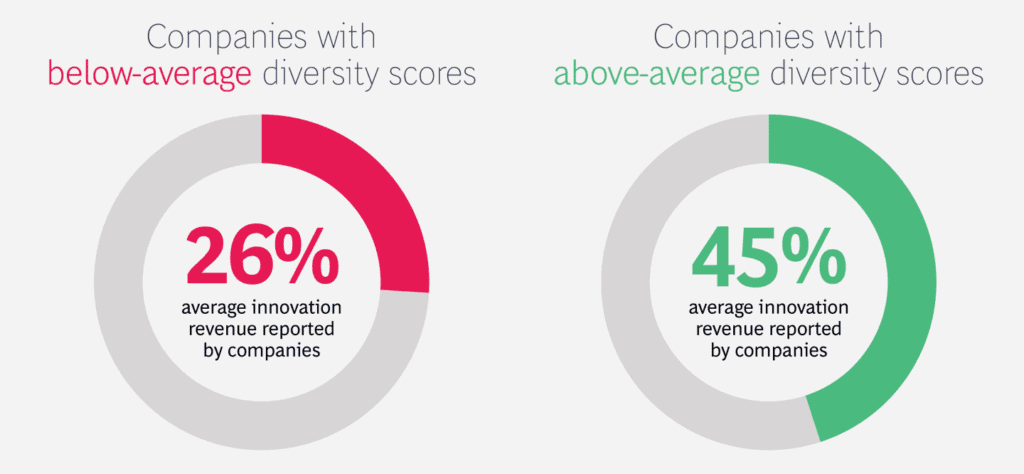
In a study of more than 1700 businesses in eight countries, BCG found that the companies that reported above-average diversity on their teams also reported a 19% higher innovation revenue than that of companies with below-average diversity.
A diverse workforce makes your business stronger by combining different perspectives to get better outcomes.
But diversity can’t work without respect, equality, and dignity. That’s why it’ll help you understand the importance of team building.
With organizations becoming more inclusive, team building is needed more than ever to encourage workers to accept and understand one another.
The more people welcome diversity, the fewer assumptions and conflicts you’ll see at work, and the faster they’ll get things done. This brings us to the next advantage of team building.
Team building resolves conflicts
When people from different backgrounds come together, disagreements are inevitable. 35% of workers have experienced a dispute or ongoing difficult relationship with a coworker.
Now, you can’t prevent conflicts altogether. Plus, not all conflicts are bad. They can often be constructive and valuable to the success of the project at hand.
So the right thing to do is not to avoid conflicts, but rather help your employees learn how to resolve disagreements amicably. The key to resolving conflicts is listening to each other’s needs, respecting different opinions, and practicing open communication. All of these are skills that team building improves.
Team building helps identify and develop talents
Team building lets workers see one another in action. So there are ample opportunities for employees to learn from those who are good at certain skills. And they can do so in a relaxed, low-pressure environment.
Not just that. Team building may also help you find workers with hidden talents that you can use in future projects. For example, new leaders can emerge in team-building games, surprising you with their assertiveness and interpersonal skills.
Team building improves company culture
46% of American job seekers say culture is very important in their decision to apply for an organization. The values, attitudes, and workplace norms in your company play a big role in attracting and retaining the right talent.
And that’s another aspect where team building can make a difference. Team-building events provide a space for employees to understand how their organization expects them to behave.
On top of that, they reduce toxicity in the work environment and bring everyone on the same page, improving the overall culture.
Conclusion: why team building is important
People in sports practice to become strong teams. Corporate teams are no different. Just like basketball practice helps team members systematically improve a range of athletic skills, team building helps workers build skills such as collaboration, communication, and delegation.
So start team-building by setting team-centric goals and planning a series of effective collaboration activities. You can identify the top skills that you want to see in your team and adjust the exercises accordingly.
Also, if you’re looking to streamline team communication and collaboration, Blink can help make a difference. Book a free blink demo.