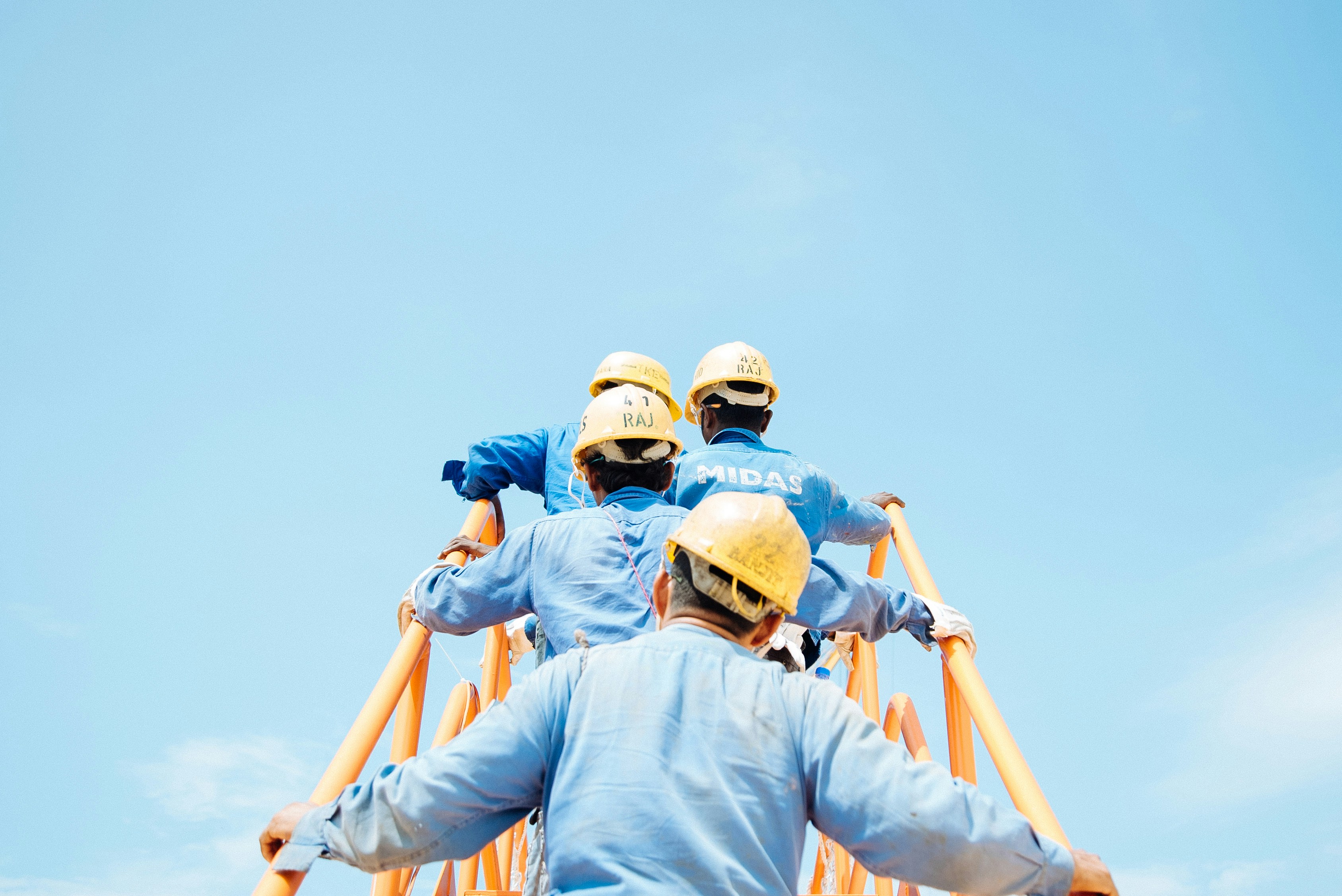

Frontline workers include:
- Healthcare staff (nurses, EMTs, doctors)
- Retail and hospitality employees
- Public safety personnel (police, fire, corrections)
- Teachers and school support staff
- Delivery drivers and logistics workers
- Manufacturing and warehouse employees
- Utility and infrastructure crews
What is the official definition of a frontline worker?
There's no single legal definition of "frontline worker" in the US, but two government frameworks do the heavy lifting. The Cybersecurity and Infrastructure Security Agency (CISA) defines essential critical infrastructure workers across sectors including healthcare, food and agriculture, transportation and logistics, energy, water, law enforcement, and public works. Inside that broader group, the National Institute for Occupational Safety and Health (NIOSH) tightens the definition of "frontline essential workers" to roles that face the highest on-the-job exposure risk because their work can't be done anywhere but on-site. Outside of government definitions, the most common definition covers roles in essential industries who have to physically show up to do their jobs. That's the definition we're building this guide around, since it holds up year-round, not just in a crisis.
Who are frontline workers? A breakdown by sector
Healthcare
Nurses, home health support, EMTs, pharmacy technicians, and hospital support staff. It's the sector most people think of first, and the one CISA puts at the top of the list. It's also where burnout hits hardest, thanks to round-the-clock coverage and relentless shift demands. Our guide to preventing employee burnout breaks down what actually moves the needle on retention.
Public safety
Like healthcare professionals, public safety emergency services like police officers, firefighters, and any other 911 dispatchers are considered frontline workers.
Education: Are teachers frontline workers?
Yes, and not just teachers. CISA's education sector definition covers teaching support and specialist education staff. It even goes one step further and covers staff outside of a teaching role, but providing an equally vital role in ensuring education services can function. This includes bus drivers, crossing guards, cafeteria workers, and school nurses.
Retail and hospitality
From cashiers, stock associates, servers, to hotel staff, retail and hospitality staff interact face-to-face with customers all day, every day, which is exactly why this sector is included as frontline workers.
Transportation and logistics: are delivery drivers frontline workers?
Yes. Delivery drivers, warehouse pickers, and freight workers are all considered frontline workers as they are depended upon to provide an essential service that cannot be paused or moved off the site of delivery.
Manufacturing, infrastructure, and utilities
The frontline workforce also includes industries that don't have public-facing roles, like manufacturing and utility workers. This includes line operators producing food products to power plant workers. Not the roles people picture when they hear "frontline," but they check every box and the economy doesn't run without them.
Frontline workers vs. essential workers: what's the difference?
They overlap, but they're not the same thing. "Essential worker" is the wider net: anyone in an industry the government has flagged as critical, remote roles included. "Frontline worker" is the narrower cut: the job has to happen in person. A hospital's payroll admin is essential without being frontline. The nurse down the hall is both.
Why this distinction matters for employers
A large portion of the global workforce doesn't sit behind a desk to do their job. And it's exactly why classification matters: hazard pay, safety and PPE policy, shift scheduling, and internal comms all depend on getting it right.
Get it wrong, and two things happen fast. HR ends up applying hazard pay and safety policy inconsistently. And the comms tools you rolled out for desk-based staff simply never reach the people who need them most: no company email, no laptop, no login for the intranet everyone assumes they're using. These are some of the many challenges frontline workers face. A lot of frontline work also runs overnight or on rotating shifts rather than a standard 9-to-5, which brings its own set of challenges. Our guide to surviving night shifts can help to support that transition.
Frontline worker classification checklist
Three questions, and you'll know whether a role is "frontline":
Must the work be performed on-site?
If it can be done remotely, it's not frontline, even inside an essential industry.
Does the role involve direct public or customer contact?
Not a requirement, but it's the norm across most frontline roles.
What are the common frontline sectors?
Healthcare, education, food and agriculture, transportation, energy, public safety, and more all qualify.
Frontline Worker FAQs
What does "frontline workers" mean?
It means the job has to happen in person, at a fixed location or out in the field, never remotely. You'll also see it used interchangeably with "deskless workers" in workforce research.
Who is classed as a frontline worker?
Anyone in an essential industry whose role demands on-site presence. That covers healthcare, education, public safety, retail, transportation, manufacturing, and utilities, well beyond just emergency response.
Who are frontline workers? A quick-reference list
Some of the most common examples of frontline workers are:
- Nurses
- EMTs
- Police officers
- Firefighters
- Teachers
- Bus drivers
- Retail staff
- Hospitality staff
- Delivery drivers
- Warehouse workers
- Manufacturing
- Utility crews
What this means for your frontline workforce
"Frontline worker" covers anyone whose job demands physical presence in an essential industry, and that's a much bigger group than healthcare and emergency services alone. Education, retail, logistics, manufacturing, and infrastructure are all frontline. Get the classification right, and you've got the foundation for fair hazard pay, real safety planning, and communication tools that actually reach the 80% of your workforce who never sit down at a desk. See how different metro areas stack up in our guide to the best cities for frontline workers.