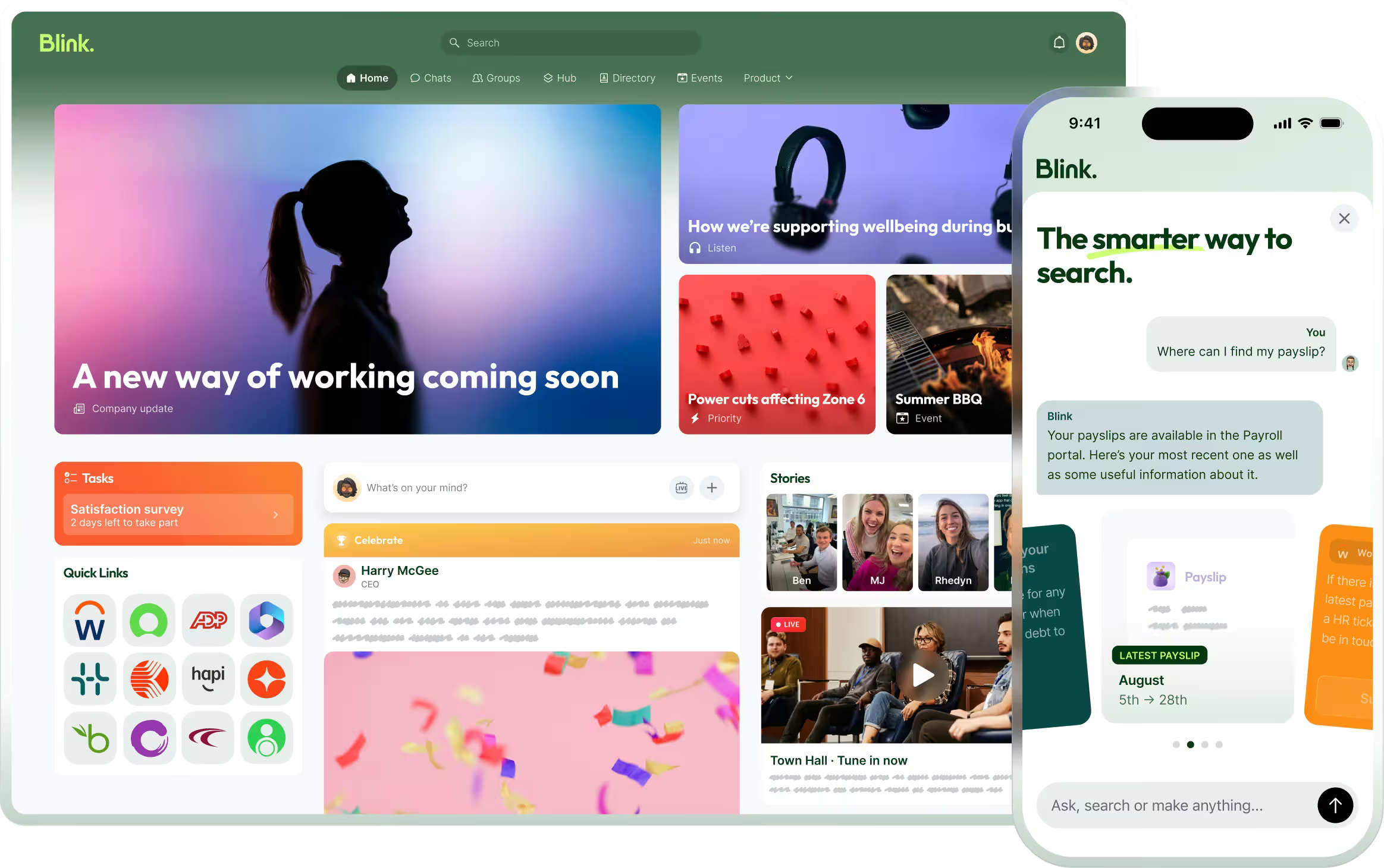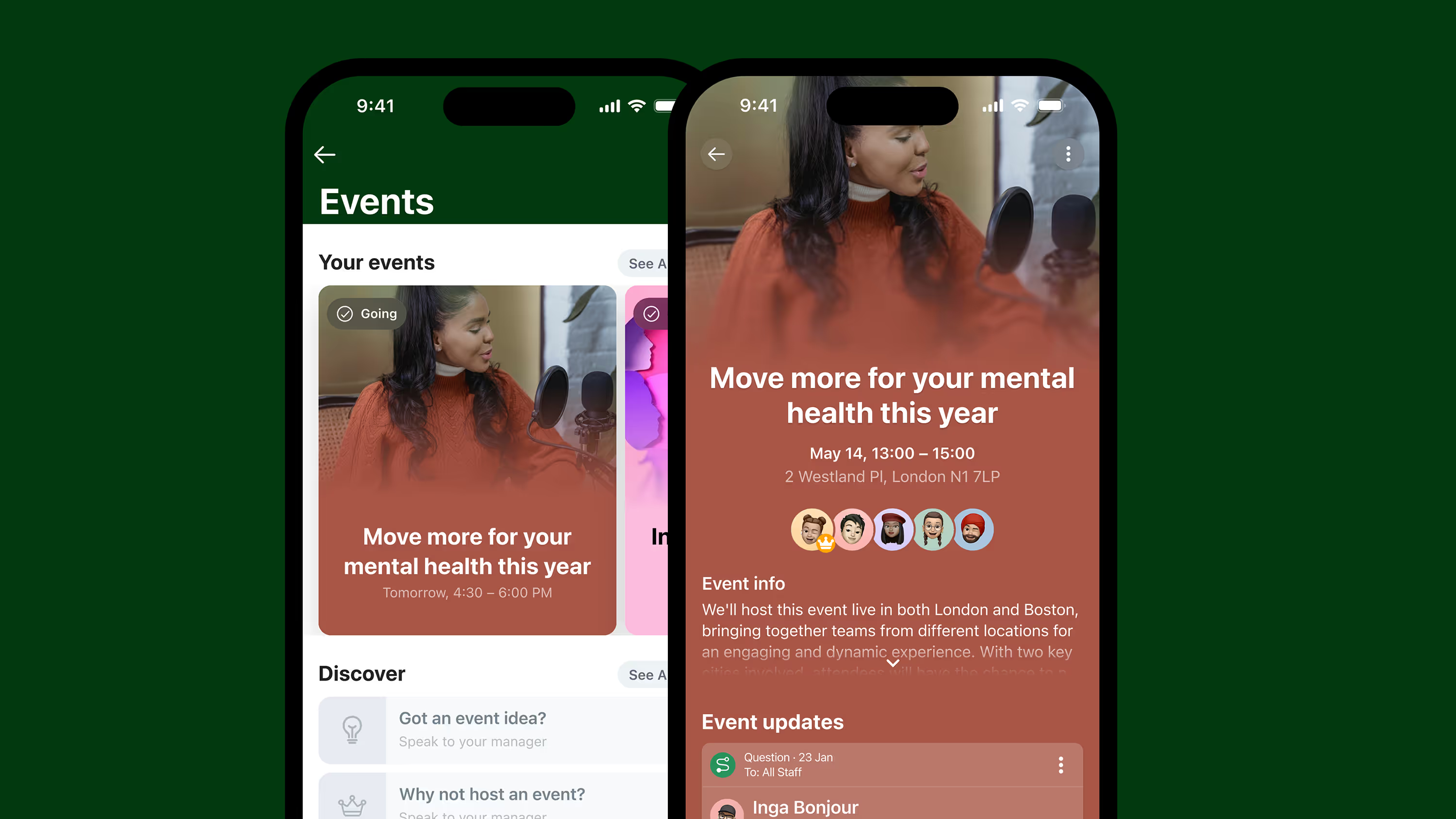
At Blink, we’re continuously evolving our employee experience platform to meet the dynamic needs of organizations and their diverse teams. Our Summer 2025 product release showcases the newest features that will soon be coming to the Blink platform.
Staying true to our commitment to exceptional employee experiences — whether in the field or at the desk — we’re thrilled to introduce our latest innovations. These updates are about more than shiny features. They’re about helping you build the kind of employee experience your people deserve: personal, powerful, and actually easy to use.
From streaming that stops the scroll to governance that keeps content clean, our Summer 2025 release is all about creating smoother, smarter communication — for everyone.
#1. Live streaming: A better way to broadcast
All eyes on your next big announcement. Blink Live now delivers a high-end, broadcast-quality experience — straight to the devices your people already use.
Whether it’s a town hall or training, your live streams just got a serious glow-up.
What’s new:
Instant replay with DVR mode: Viewers can rewind in real time — no more “Wait, what did they say?”
Auto on-demand playback: Every live stream is automatically saved, so people can catch up on their own time.
Captions for accessibility: Every word, loud and clear — and readable.
Preview studio for presenters: Test your mic. Fix your lighting. Go live with confidence.
Coming soon: Streaming on mobile — because your frontline deserves a front-row seat.
This isn’t just another video tool. Blink Live is built for scale, mobile, and moments that matter.
{{desktop-live-stream="/image"}}
#2. “Save for later” mode: Access your Hub, no WiFi needed
No signal? No problem. With new “Save for later” functionality in the Hub, employees can now save posts and resources for later — perfect for planes, underground tunnels, or dodgy breakroom Wi-Fi.
Everything syncs automatically when employees are back online. It’s a seamless experience that keeps everyone in the loop — no matter where work happens.
What’s new:
Save any post to view offline — perfect for on-the-go teams
Automatic syncing when connection is restored
Built-in functionality, no extra tools or downloads required
{{mobile-offline-save="/image"}}
#3. Review cycles: Enhanced content governance
Good governance shouldn’t slow you down. This release brings built-in review cycles and post approvals to the Hub — so your comms stay compliant, on-brand, and typo-free.
It’s easier than ever to manage content at scale — without needing extra tools or workarounds.
What’s new:
Set custom review and approval workflows directly in the Hub
Assign reviewers and approvers by team or content type
Track post status in real time — draft, in review, or approved
#4. Translations & localizations: Speak their language
Whether you’re global or just growing, Blink now supports seamless translations and localized experiences across the platform.
From Hub posts to notifications, your people will see content in the language that works best for them — automatically.
This is more than a translation tool. It’s a step toward a more inclusive employee experience.
What’s new:
Automatically deliver content in your employees’ preferred language
Support for global teams with localized experiences across the platform
Built-in translation tools — no copy/paste or third-party apps needed
#5. Post approvals: Open the feed, keep the control
The best content often comes from the frontlines — but without controls in place, organizations often lock down the Feed to avoid risk.
Post Approvals let you safely open up content creation to a wider audience. When enabled, user-generated posts require approval before they go live. Group Admins and Org Admins can review posts for quality, tone, and relevance — so you can encourage participation without compromising your message.
It’s moderation without micromanagement.
What’s new:
Control content at the group level by enabling “Requires Approval” in the Admin Panel
User-generated posts are held for review when targeting approval-enabled groups
Group Admins or Org Admins approve posts, depending on the audience
No edits after submission — approved or declined posts are final (for now!)
#6. Ghostwriters: Your voice, their words
Sometimes, the person with the message isn’t the one with the time to write it. Enter Ghostwriters — a smarter way to keep leadership visible, consistent, and active on the Feed.
Now, trusted users (like your comms team) can post and comment on behalf of others — say, your CEO, a store director, or anyone else who needs a hand shaping their message. It’s transparent, trackable, and totally above board — everyone involved gets notified and stays in the loop.
It’s like sharing a voice — not a password.
What’s new:
Assign trusted users to post or comment on behalf of others — like execs or team leads
Posts appear as the original author, with their name and profile photo
Authors and ghostwriters are notified, and ghostwriters can only post where they have access
Setup is simple via the Admin Portal under “Publishing Profiles”
#7. Voice notes: A new era of workplace communication
Not everything needs to be typed. Sometimes, the fastest way to explain, empathize, or just say thanks is with your actual voice.
Voice Notes let your team send audio messages in chats and channels — perfect for fast updates, shift changes, or a quick “you’ve got this” before a big day. They’re human, easy to use, and ideal for mobile-first teams who work with their hands, not keyboards.
Now your comms can sound a little more like… you.
What’s new:
Record and send voice messages in chats or channels (mobile only)
Listen on mobile or web with full playback controls
Pause, scrub, reply, forward, or report — just like a regular message
At Blink, we’re continuously evolving our employee experience platform to meet the dynamic needs of organizations and their diverse teams. Our Summer 2025 product release showcases the newest features that will soon be coming to the Blink platform.
Staying true to our commitment to exceptional employee experiences — whether in the field or at the desk — we’re thrilled to introduce our latest innovations. These updates are about more than shiny features. They’re about helping you build the kind of employee experience your people deserve: personal, powerful, and actually easy to use.
From streaming that stops the scroll to governance that keeps content clean, our Summer 2025 release is all about creating smoother, smarter communication — for everyone.
#1. Live streaming: A better way to broadcast
All eyes on your next big announcement. Blink Live now delivers a high-end, broadcast-quality experience — straight to the devices your people already use.
Whether it’s a town hall or training, your live streams just got a serious glow-up.
What’s new:
Instant replay with DVR mode: Viewers can rewind in real time — no more “Wait, what did they say?”
Auto on-demand playback: Every live stream is automatically saved, so people can catch up on their own time.
Captions for accessibility: Every word, loud and clear — and readable.
Preview studio for presenters: Test your mic. Fix your lighting. Go live with confidence.
Coming soon: Streaming on mobile — because your frontline deserves a front-row seat.
This isn’t just another video tool. Blink Live is built for scale, mobile, and moments that matter.
{{desktop-live-stream="/image"}}
#2. “Save for later” mode: Access your Hub, no WiFi needed
No signal? No problem. With new “Save for later” functionality in the Hub, employees can now save posts and resources for later — perfect for planes, underground tunnels, or dodgy breakroom Wi-Fi.
Everything syncs automatically when employees are back online. It’s a seamless experience that keeps everyone in the loop — no matter where work happens.
What’s new:
Save any post to view offline — perfect for on-the-go teams
Automatic syncing when connection is restored
Built-in functionality, no extra tools or downloads required
{{mobile-offline-save="/image"}}
#3. Review cycles: Enhanced content governance
Good governance shouldn’t slow you down. This release brings built-in review cycles and post approvals to the Hub — so your comms stay compliant, on-brand, and typo-free.
It’s easier than ever to manage content at scale — without needing extra tools or workarounds.
What’s new:
Set custom review and approval workflows directly in the Hub
Assign reviewers and approvers by team or content type
Track post status in real time — draft, in review, or approved
#4. Translations & localizations: Speak their language
Whether you’re global or just growing, Blink now supports seamless translations and localized experiences across the platform.
From Hub posts to notifications, your people will see content in the language that works best for them — automatically.
This is more than a translation tool. It’s a step toward a more inclusive employee experience.
What’s new:
Automatically deliver content in your employees’ preferred language
Support for global teams with localized experiences across the platform
Built-in translation tools — no copy/paste or third-party apps needed
#5. Post approvals: Open the feed, keep the control
The best content often comes from the frontlines — but without controls in place, organizations often lock down the Feed to avoid risk.
Post Approvals let you safely open up content creation to a wider audience. When enabled, user-generated posts require approval before they go live. Group Admins and Org Admins can review posts for quality, tone, and relevance — so you can encourage participation without compromising your message.
It’s moderation without micromanagement.
What’s new:
Control content at the group level by enabling “Requires Approval” in the Admin Panel
User-generated posts are held for review when targeting approval-enabled groups
Group Admins or Org Admins approve posts, depending on the audience
No edits after submission — approved or declined posts are final (for now!)
#6. Ghostwriters: Your voice, their words
Sometimes, the person with the message isn’t the one with the time to write it. Enter Ghostwriters — a smarter way to keep leadership visible, consistent, and active on the Feed.
Now, trusted users (like your comms team) can post and comment on behalf of others — say, your CEO, a store director, or anyone else who needs a hand shaping their message. It’s transparent, trackable, and totally above board — everyone involved gets notified and stays in the loop.
It’s like sharing a voice — not a password.
What’s new:
Assign trusted users to post or comment on behalf of others — like execs or team leads
Posts appear as the original author, with their name and profile photo
Authors and ghostwriters are notified, and ghostwriters can only post where they have access
Setup is simple via the Admin Portal under “Publishing Profiles”
#7. Voice notes: A new era of workplace communication
Not everything needs to be typed. Sometimes, the fastest way to explain, empathize, or just say thanks is with your actual voice.
Voice Notes let your team send audio messages in chats and channels — perfect for fast updates, shift changes, or a quick “you’ve got this” before a big day. They’re human, easy to use, and ideal for mobile-first teams who work with their hands, not keyboards.
Now your comms can sound a little more like… you.
What’s new:
Record and send voice messages in chats or channels (mobile only)
Listen on mobile or web with full playback controls
Pause, scrub, reply, forward, or report — just like a regular message
An ageing population, complex patient needs, staff shortages, and technological transformation are stretching teams to the limit.
The fallout from COVID-19 still lingers. In the UK, the NHS has a waiting list of 7.37 million cases. And while the healthcare strikes of 2023 may have been resolved with pay rises, salary disputes rumble on.
If all that wasn’t enough, we can add long, inflexible shifts and emotionally demanding work into the mix. It’s no wonder that nearly one-third of healthcare employees are disengaged.
This is a problem. Because disengagement hits employee retention, patient care, and any new initiatives you try to roll out. It seems that employee engagement in healthcare is in need of urgent attention — STAT.
Ready to rewrite the prescription? Here, we explore what healthcare employee engagement looks like, why it matters, and how to foster it within your organization.
Too many healthcare organizations are getting employee engagement wrong
After hundreds of conversations with healthcare professionals, one thing has become crystal clear to the Blink team. Employee engagement is one of the most misunderstood concepts in the workplace.
Too often, it gets used as a catch-all term for every good thing a worker might do — from smiling at patients to hitting their KPIs.
An engaged healthcare worker is thought to be better organized, happier, more satisfied, more loyal, healthier, more motivated, more productive, better at communicating, and more prepared to go the extra mile.
Some of these behaviors are indicative of engagement. But there are a couple of key problems with this definition:
It’s unrealistic. No one can embody all of those traits all of the time — especially in a high-stress, resource-stretched healthcare environment.
It’s vague. Phrases like “go the extra mile” make engagement sound fluffy — a nice-to-have and not the essential driver of staff performance it really is.
It’s unmeasurable. Tracking all those behaviors would be tricky. So measuring and improving employee engagement feels like too big a challenge.
When engagement is defined as a wish-list, finding practical solutions is tough. In healthcare, real engagement is specific, measurable, and tied directly to better patient care.
What employee engagement in healthcare isn’t
When figuring out what employee engagement in healthcare is, it can help to start with all the things it isn’t. Employee engagement in healthcare is not:
Satisfaction: A satisfied nurse might feel satisfied with their shift pattern. But that doesn’t mean they won’t walk if another hospital offers better pay or hours.
Happiness: A care worker may feel happy at work because they have a lot of free time to chat with co-workers. But that doesn’t mean they’re committed to the very best patient care.
Motivation: A paramedic may feel motivated to work hard because they have their eye set on a promotion. But that doesn’t mean they’re invested in today’s patients or their current team.
Empowerment: An organization may pride itself on the autonomy it affords to its staff. But staff will only take action and make decisions independently when they feel engaged and supported.
Zero stress: A brain surgeon may feel stressed when operating but still be highly engaged. An optimal level of stress can actually increase engagement.
Productivity: A hospital porter may transport patients efficiently all day long. But that doesn’t mean they’re interacting with patients and putting them at ease.
Engagement isn’t a fixed state. It ebbs and flows — from shift to shift and year to year. And it isn’t the same for every employee or every organization.
Whatemployee engagement in healthcare is
In healthcare, engagement isn’t about surface-level positivity or breakneck productivity. It’s about creating the conditions where people — often working in high-stakes, emotionally and physically demanding environments — can bring their best focus, care, and energy to patients.
To achieve this, you need an employee engagement strategy that goes beyond the HR team to involve the whole of your organization.
1. Connection to the work. Not just liking the job but feeling that their work makes a difference, that their skills are used to their fullest, and that even the smallest task has meaning within a patient’s care journey.
2. Leader behaviors. Day-to-day interactions with managers have a huge impact on employee engagement. Employees who feel that their manager treats them with respect, treats everyone equally, cares about job satisfaction, and encourages teamwork, are more likely to be engaged.
3. Commitment to safety. Staff need to believe their organization is serious about high-quality care and safety. That means being able to flag safety concerns without fear of a backlash, and seeing lessons learned when mistakes happen.
These drivers are built into everyday moments — a handover that runs smoothly because everyone was kept in the loop, a break that’s actually honored, a manager who has your back when a patient’s family is upset.
Underpinning them are crucial workplace behaviors: clear internal communication, a culture that supports all staff, and strong connections between co-workers. The organization is dedicated to a positive employee experience, not just a positive patient experience.
When these elements are in place, employees are more likely to feel valued, remain loyal to your organization, and consistently provide the highest standard of patient care.
How can you tell if your healthcare employees are engaged?
We’ve talked about how engaged employees feel about their roles and the organizations they work for. But how is this expressed in their day-to-day work?
Engaged employees aren’t always smiling, stress-free, or happy to work extra hours. Instead, engagement can be seen in the small, meaningful ways they care for patients and their teams.
In practice, healthcare or hospital employee engagement may look like any of the following:
Escorting lost family members to the right place
Washing hands and checking IV lines without fail
Helping a patient back to their room after noticing their yellow “fall risk” bracelet
Listening patiently and actively as a patient asks for details about their medications
Being mindful of quiet times at night
Delivering meals while they’re still hot
Wheeling a resident outside to feel snow for the first time in years
Offering a hand or foot massage during a quiet moment
Why healthcare employee engagement matters
Engaged employees tend to be more satisfied in their roles. They experience lower levels of stress and better workplace relationships.
Achieve high levels of employee engagement at your healthcare organization, and you’re likely to see these other benefits, too.
Better patient outcomes
What’s good for staff is good for patients. Healthcare organizations with high levels of staff engagement are three times more likely to deliver a top patient experience. They perform better in terms of safety, too.
Engaged employees are more likely to hold themselves to the highest patient care standards, whether that means double-checking a patient’s medication list or sanitizing their hands more frequently.
Improved retention
Employee retention in healthcare is a major challenge. In the past five years, the average US hospital turned over an incredible 106.6% of its workforce. In the UK, 1 in 5 NHS workers is planning to leave within the year.
When staff leave, patient experience suffers. We know that for every 1% increase in employee turnover, patient experience scores drop an average of 2 percentiles.
Here’s the kicker. Disengaged employees are twice as likely to leave your organization as highly engaged employees. They’re also more likely to call in sick, adding even more strain to overstretched teams.
During a time of labor shortages and increased healthcare demand, boosting employee engagement is a critical healthcare retention strategy.
Costs fall and revenue rises
Turnover takes a financial toll on healthcare organizations. The British Medical Association (BMA) estimates that the cost of replacing a single doctor can be more than £300,000. Over in the US, the average cost of turnover for a bedside registered nurse (RN) is $61,110.
When employees are engaged, you reduce staff turnover and recruitment costs. And because familiar faces lead to higher patient experience ratings, you improve profitability too. Your organization enjoys customer loyalty, a better brand reputation, and increased referrals.
How to boost employee engagement in healthcare
To boost employee engagement in healthcare organizations, you need activities and strategies suited to busy frontline staff. Here are 9 strategies that work in healthcare settings.
1. Bring comms to the frontline
In too many facilities, staff still find out about shift changes or new protocols by wading through their emails, squinting at a faded noticeboard, or logging into a clunky intranet.
It’s not easy for busy frontline workers to get the information they need to do their jobs well. And seeking out resources takes them away from patients.
To reach every member of the workforce, internal communication in healthcare needs to be mobile and instant. It has to meet employees where they are.
{{mobile-main="/image"}}
A quick update on the news feed. Shift information shared over group chat. A new safety protocol in the content hub. Make internal communication available on every employee smartphone and you keep staff informed and connected.
2. Put everything in one place
The right tech tools make employee communications easy to access — for even the busiest frontline worker. But you can improve engagement further by putting all workplace resources onto the same mobile-first digital dashboard.
Policies, contacts, shift schedules, pay stubs, PPE request forms, even quick links to other workplace tools, are all just a tap away. So your people spend less time searching and more time doing what they do best — caring for patients.
{{mobile-hub="/image"}}
3. Personalize the experience
What matters to the nurse on a night shift doesn’t necessarily matter to staff in the hospital kitchen or the team up in head office. So if you blast everyone with the same updates, it quickly turns into background noise.
To engage people with comms and organizational culture, you need to tailor the employee experience. Ensure employees in different departments, shifts, and roles see information that relates to them with the help of targeted alerts, segmented comms, custom dashboards, and shared-interest communities.
{{mobile-community="/image"}}
4. Build co-worker connections
The emotional toll in healthcare is real. And without strong team connections, burnout hits harder. Worryingly, according to NHS workforce research, just 63% of employees say they feel a strong personal attachment to their team.
This is understandable. Building team bonds in healthcare can be tough. Teams are stressed and overstretched. Employees may work alone in patients’ homes or work shift patterns that rarely align.
The fix? Make space for camaraderie. Give people spaces to swap advice, share wins, or offer support after a rough shift. Those small moments of connection spark a sense of belonging, another powerful driver of engagement.
5. Lead by example
Engagement starts at the top. When healthcare employees are confident in senior leadership, trusting them to promote patient safety and demonstrating the organization’s values, they’re more likely to feel engaged in their work.
So leaders have to lead by example — and be visible to employees. That means showing up on internal communication channels, adopting an open style of communication, welcoming the input of employees, and consistently sharing the mission that drives your organization.
6. Celebrate your workforce
Too often in healthcare, the wins go unnoticed. Just 44% of NHS workers say they feel satisfied with the extent to which their organization values their work.
You can help staff to feel seen and valued — and inspire their loyalty — by making employee recognition an everyday part of organizational culture.
{{mobile-kudos="/image"}}
Create a post in the feed thanking a team for their handling of a difficult case. Allow co-workers to nominate their peers for awards. Share a monthly rundown of standout employee moments.
You can also highlight positive patient stories. Regularly reinforce the link between an employee’s actions and patient outcomes and you remind your people just how much their work matters.
You may uncover a particular shift that struggles with understaffing or a unit where safety concerns are being ignored. Or find that critical comms simply aren’t reaching their target audience.
Give employees a voice and you gain valuable insight into the employee experience — and what you can do to improve it. Dive down into the data and act upon it to show employees that their opinions are shaping how the organization is run.
8. Prioritize employee well-being
42% of NHS staff say they have felt unwell as a result of work-related stress in the last 12 months. And 81% of healthcare workers in the US say that they will look for a workplace that supports their mental health in the future.
So train your managers in how to recognize and respond to signs of stress and burnout in their employees. Provide mental health and well-being support — and ensure employees know how to access it.
But — as healthcare workers know well — it’s important to address root causes, not just symptoms. Depending on your employees and their needs, that might mean:
Offering flexible work and shift swap options
Providing competitive salaries
Promoting a culture of psychological safety so employees can speak up and report issues
Ensuring workloads are manageable
9. Track healthcare employee engagement
If you don’t measure employee engagement at your organization, it’s all guesswork. You can implement healthcare engagement trends — but you can’t be sure if and how new initiatives are benefiting your workforce.
With the right employee engagement tools, you can track engagement over time, establishing benchmarks and KPIs, like absenteeism, turnover rate, and employer net promoter score (eNPS).
You also establish a link between employee engagement activities and business-boosting metrics like employee satisfaction, patient satisfaction, employee productivity, and retention.
Employee engagement in healthcare: the Blink perspective
Back in 2020, we ran a pilot program at one of the UK’s largest private hospitals. Employees across several departments — including nurses, porters, receptionists, cleaners, and security guards — used the Blink app to access internal comms.
Using Blink cost the organization £2 million less than building a native application. But it still gave all frontline workers an easy way to get the resources they needed while on the move.
The results? A 30% increase in engagement with internal communications, with patients receiving better, faster care from more engaged staff. Our easy-to-use mobile platform meant that employees could access all the information they needed, and leadership could share vital messaging without interrupting the flow of care.
Since then, we’ve partnered with many other healthcare organizations, including:
Children’s of Alabama. Blink has helped one of the busiest pediatric hospitals in the US achieve 78% app adoption in just a couple of months. The app is boosting connection and collaboration across the frontline.
Elara Caring. The 17,000+ carers at Elara now chat and receive updates via Blink, with 95% saying they feel more connected to the organization. This is a massive shift for a workforce that previously felt overlooked and undervalued.
Coastal Medical. At this healthcare transport company, the average employee opens the Blink app 5.7 times a day. The ambulance industry sees a turnover rate of around 20%, just for paramedics. At Coastal Medical, that figure is now less than 5%, thanks to a strong workplace culture, co-worker connection, and easy access to vital information.
Transforming employee and patient experiences with Blink
When healthcare workers feel engaged in their work, they provide a better standard of care for patients. They’re more likely to feel positive about their work and committed to your organization.
An inclusive and open organizational culture, employee recognition, easy internal communication, and staff well-being strategies are just some of the building blocks you need to put in place to boost employee engagement in healthcare.
And this is where Blink comes in. A single, secure app puts updates, resources, feedback channels, comms tools, and recognition into the palm of every employee. It’s a mobile-first solution, designed for the realities of healthcare work.
Digital tools are transforming the way organizations build and sustain employee engagement. Platforms like Blink, Workvivo, Staffbase, and Reward Gateway are helping teams stay connected, improve communication, and bring company culture to life — wherever employees work.
But with so many employee engagement tools on the market, choosing the right one can be tricky. The wrong platform can waste time, hurt adoption, and even reduce engagement.
Getting it right matters. Companies with highly engaged teams are more productive and see up to 23% higher profitability. The best employee engagement software goes beyond simple communication — it connects people, recognizes great work, and supports a shared sense of purpose.
Every organization is different. The tools that work for a remote or office-based workforce may not suit a frontline team. That’s why it’s important to align your engagement goals with the right platform.
You’ll find software built for:
Frontline employees — mobile-first apps like Blink that keep workers connected on the go
Remote teams — tools such as Asana and Slack that combine communication and project management
Office-based teams — platforms like Culture Amp and OfficeVibe that measure engagement and feedback
And others that specialize in areas such as:
Communication and collaboration
Feedback and performance
Wellbeing and productivity
Rewards and recognition
Choosing the right solution depends on your people and your priorities — because engagement software only works when it works for everyone.
For frontline organizations, this is especially true. Most engagement platforms are still built with desk-based employees in mind. Only 1 in 10 frontline workers says they have access to the tools and technology they need to connect and advance at work — even though they make up 82% of the global workforce.
Without easy access to company updates, communication, and recognition, frontline employees can quickly feel disconnected and undervalued.
That’s why your employee engagement solution needs to work for all employees — wherever and however they work.
In the next section, we’ll look at the best employee engagement software for 2026 — from all-in-one employee apps like Blink to specialized tools for communication, wellbeing, and recognition.
Let’s take a closer look.
Best employee engagement app for frontline organizations
Frontline employees are the backbone of many industries — from transportation and retail to healthcare and hospitality. But engaging this workforce comes with unique challenges. Many frontline employees don’t have regular access to company systems, email, or desktop devices, making it harder for them to stay informed and connected.
That’s why mobile-first employee engagement software has become essential. The best platforms for frontline teams combine communication, recognition, and real-time updates in one easy-to-use app.
These tools close the gap between head office and the field, helping every employee — regardless of location — feel included in company culture.
Below are some of the best employee engagement tools for frontline workers in 2026, starting with Blink, a leading all-in-one platform designed specifically for deskless and distributed teams.
Best employee engagement software for frontline workers
Blink
When it comes to engaging a dispersed, frontline workforce, few tools match what Blink delivers.
Blink is a mobile-first employee engagement platform built to help organizations connect with every worker — whether they’re in the field, on the factory floor, or on the move. Used by teams across industries such as transport, healthcare, logistics, and construction, Blink turns everyday communication into connection.
Employees can easily chat with colleagues, access company updates, view schedules, and complete essential tasks all in one place. The result: better communication, stronger engagement, and a more unified culture.
Managers benefit, too. Blink’s analytics dashboard helps leaders track engagement and performance trends, identify communication gaps, and celebrate wins through built-in recognition tools.
Key features include:
All-in-one communication: Peer-to-peer chat, team groups, and company-wide updates keep everyone aligned.
Employee recognition: Built-in recognition features highlight great work and reinforce culture.
Engagement surveys: Pulse surveys provide quick, actionable insights into morale and satisfaction.
Analytics and insights: Track usage, engagement, and content performance to inform strategy.
Seamless integrations: Connect scheduling, HR, and project management tools for a single digital workspace.
Mobile-first design: Works on any smartphone — no corporate email required.
With Blink, your entire workforce can access the same tools and information, creating a seamless digital experience that keeps everyone connected, informed, and motivated.
Request a demo today to see how Blink can transform engagement across your frontline teams.
Best employee engagement software for desk-based remote workers
If you're looking for employee engagement software platforms suited to desk-based remote workers, here are some excellent options.
Google Chat
Source: Google Chat Capterra Reviews
Google Chat is a communication platform that includes features like video and voice calls, and group chat. It's a great option for workplace communication and it's free to use.
As you’d expect, this tool integrates with the rest of the Google suite, including Google Calendar, Drive, Groups, and Gmail. But it lacks some of the advanced features you tend to get with paid tools.
Reviews from Capterra note that Google Chat is easy to use. It also provides good collaboration tools. However, the interface can be frustrating, message delivery can be an issue, and notifications can be challenging to navigate.
Pricing: Monthly pricing for Google Chat for business starts at $6 per user.
Discord
Discord is a chat app designed for gamers. But it’s recently been used for workplace communication, too. It includes features like voice and video chat, so you can easily connect and communicate with colleagues.
You can use Discord for free, making it a basic but cost-effective tool for internal communications, especially in a remote working environment.
Pricing: Many of Discord’s features are free to use. For businesses that want to invest in extra perks, Discord’s premium tier, “Nitro,” is available for $99 per year.
Asana
Asana is a popular project management tool that can also be used for employee engagement. With Asana, you can easily create and assign tasks, track task progress, and set team priorities. You can also use Asana to create custom projects for easy employee collaboration.
Source: Asana Capterra reviews
Asana makes a great option for remote teams, in part because it offers a mobile app for easy access to tasks and progress data. This helps to ensure that employees are working cohesively and effectively wherever they’re based.
Reviews from Capterra note that while Asana offers a clean, intuitive, and integrated interface, notifications are often missed, automatic opt-in to email notifications can be annoying, and the different projects and access features can be confusing.
Pricing: Monthly pricing for Asana starts at a basic free plan. A business plan costs $24.99 per user per month when billed annually.
ClickUp
ClickUp is a cloud-based collaboration and project management tool and it’s a good option for those looking to improve remote employee engagement.
Key features include task assignments and statuses, alerts, and a task toolbar. But while ClickUp does well in terms of task management, it doesn’t offer a full range of employee engagement tools.
This platform lacks features relating to real-time communication, employee recognition, and social interaction. So you’re likely to need additional software.
Pricing: ClickUp offers a free version. Monthly pricing for a Business plan costs $12 per user per month.
WorkTango
WorkTango is an employee experience platform with a number of solutions for employee engagement. It provides tools like employee surveys, real-time analytics, rewards, and recognition.
You can also see how your engagement scores rank against other WorkTango customers to get a better sense of how you’re doing.
On Capterra, users say that anonymous feedback and anonymous employee chat allow for truly honest conversations. Clients also praise recognition features. However, some users would like better reporting tools and easier platform navigation.
Leapsome is a good employee engagement tool for goal setting and employee development.
It’s designed to support organizations to create high-performing teams. You can use Leapsome to track and collaborate on goals, run 360-degree reviews, and create personalized learning pathways.
With lots of tools for remote teams, Leapsome helps maintain employee progress even when employees aren’t in the office. The software also offers video conferencing tools, which make it easy to collaborate on agendas and align action plans.
Pricing: Pricing starts at $8 per user per month, with the option to add on the extra features you need.
Slack
Source: Slack Capterra Reviews
Slack is a great productivity tool for remote office workers. It helps you to organize teams and their work, with the help of channels, huddles, and a workflow builder.
However, it's worth noting that Slack doesn't provide much in the way of scheduling, performance tracking, or survey features. If these tools are essential to your organization, you’ll need to use Slack plus another employee engagement platform.
Reviews from Capterra note that Slack’s user interface is easy to use. They like channel and plugin features. They also appreciate having all work conversations in one place.
However, reviews also note that it can be a confusing platform to use, with lots of channels across different teams. Adoption can also be difficult if people are not familiar with the software.
Pricing: For multiple employees, monthly pricing for Slack starts at $6.67 per user.
Best employee engagement software for desk-based office workers
Now, let’s take a look at the tech tools best suited to office worker engagement.
OfficeVibe
Source: OfficeVibe Capterra Reviews
OfficeVibe is a “people-first” employee experience platform, with a number of employee engagement features designed for the office.
It helps employers to assess and improve employee engagement levels with robust measurement tools. It also provides an app so you can track progress on the go if needed.
Reviews from Capterra note that OfficeVibe is an innovative tool that helps organizations better understand employee happiness. The company also provides strong customer service.
However, managers complain that survey questions can’t be customized and that insights don’t go deep enough. They also say that the Slack integration doesn’t work too well and that setup can be confusing.
Pricing: Monthly pricing for OfficeVibe ranges from a free version to a $5 per user Pro Plan.
SurveyMonkey
By using employee satisfaction survey tools like SurveyMonkey, you can collect regular feedback from employees on their engagement levels. This real-time feedback can help you to identify problem areas and take steps to improve employee engagement in your organization.
As well as survey templates, SurveyMonkey offers reporting and analytics features that help you spot data trends and insights. It also uses AI to reveal employee sentiment.
Pricing: For over three users, monthly pricing for SurveyMonkey starts at $31.83 per user.
Doodle
Employee polls are a quick and easy way to collect anonymous feedback from employees on a range of topics. You can use employee poll tools from Doodle to gather feedback on everything from engagement levels to job satisfaction.
But Doodle does more than polls. It also provides meeting, video conferencing, and scheduling tools. You can even poll meeting attendees to find a time that works for everyone and improve attendance.
Pricing: Monthly pricing for Doodle Professional starts at $6.95 per user.
Monday.com
Monday.com is a project management tool that can also be used for employee engagement.
With Monday.com, you can create and assign tasks, track progress, and more. You can also use it to create performance tracking templates for employees. This can help you to identify areas where employees need improvement and take steps to address them.
On Capterra, Monday.com users say that the platform’s project management tools are excellent. But others complain that the backend of the platform is complicated and involves a steep learning curve.
Pricing: For more than two employees, monthly pricing for Monday.com starts at $8 per user per month.
Culture Amp
Culture Amp’s employee engagement platform provides over 40 science-backed survey templates. You can use these surveys to find out how employees feel about engagement, belonging, inclusion, and more.
The platform also uses AI-powered insights to summarize employee engagement findings, supporting your business to make data-backed decisions.
Reviews from Capterra say that Culture Amp has a user-friendly user interface. They also praise the platform’s ready-to-go survey templates.
But users don’t like having to rely on the Culture Amp support team to update some parts of the platform. They also say that — while survey features are strong — features like the objective and key results (OKR) module aren’t as well-developed.
The following tools specialize in one area of employee engagement. As such, they make a great add-on to your chosen staff engagement tool.
At Blink, our App Marketplace integrates all the tools you need to manage your employee engagement in one place. If we don't already integrate with your app, just ask!
Kudos
Kudos is an add-on app that allows employees to give and receive recognition in real time. With Kudos, you can create a culture of recognition where employees feel appreciated for their hard work.
Pricing: Monthly pricing for Kudos starts at $3.25 per user.
Friday
Friday is an app that makes it easy to give employees recognition for a job well done. With Friday, you can give employees badges, points, and rewards to show your appreciation.
Pricing: Friday has a free version. Monthly pricing goes up to $100+ for company plans.
Bonusly
Bonusly is another dedicated employee recognition tool. Bonusly supports peer recognition, allowing employees to give each other bonuses in the form of points that can be redeemed for rewards. By using Bonusly, you can create a culture of appreciation and recognition throughout your workforce.
Pricing: Monthly pricing options for Bonusly starts at $2.70 per user.
Limeade Wellbeing
Employee wellbeing programs, like those on offer from Limeade, go hand in hand with employee engagement programs. Because when employees feel healthier, happier, and less stressed, they have the headspace they need to engage with their work.
Limeade provides customized employee wellness programs. These programs encourage participation and deliver essential wellbeing resources via one handy tool.
With this tool, you can also listen and respond to your workforce in real time through anonymous surveys, polls, and quizzes. All that’s really missing from this system is strong employee communication tools.
WeThrive is an employee engagement tool designed to support the mental health of desk-based workers. With this platform, you can create surveys to assess employee wellbeing and then take action to improve it.
WeThrive analytics allow you to segment survey results by team, tenure, location, department, and manager. This makes it easy to identify the root causes of poor wellbeing and identify areas for improvement.
Reward Gateway is an employee engagement solution that offers employee discounts, employee rewards and recognition, and tools for employee communications.
This combined platform is a great tool for office-based employers looking to boost employee recognition, with features such as discounts and rewards accessible in one place.
Reviews from Capterra note that Reward Gateway is flexible and easy to use. But it can be glitchy, with reporting features sometimes not running properly and some features failing to run as smoothly as others.
Pricing: Monthly pricing for Reward Gateway starts at $10.19 per user.
Weekdone
For structured goal setting, Weekdone is an excellent choice. It’s a top-rated OKR platform that allows you to track weekly plans and progress, provide feedback, and get everyone pulling in the same direction.
OKR software can also be used to ensure that remote employees have clear objectives, with performance reviews and goal tracking.
Pricing: For more than three employees, monthly pricing for Weekdone is $8 per user.
Awardco
Awardco is another bonus tool that makes recognizing and rewarding people easier and more effective.
With Awardco, employers can set up reward and recognition programs that their employees can access from any device. You can tailor incentives to your teams, ensuring the prizes on offer act as real motivation.
This tool is a good option for office-based companies of all sizes looking to increase employee satisfaction and engage with their workforce to boost productivity.
Pricing: Pricing for Awardco ranges from $2,500 to $4,000 per year.
QuizBreaker
QuizBreaker is a virtual team-building tool. It works well for both office-based and dispersed teams, bringing a bit of gamification to the work day.
Key features of QuizBreaker include:
a scheduled icebreaker quiz that helps employees get to know each other better
escape games and 1,000+ trivia quizzes for fun team-building events
employee profiles that reveal work style, unique strengths, and fun facts
pulse surveys to help you get regular feedback from employees
QuizBreaker isn’t an all-in-one employee engagement tool. But this platform helps teams to bond and brings a little fun to your workplace culture.
Capterra score: Not found in Capterra database. Pricing: Monthly pricing for QuizBreaker starts at $3 per user.
Motivosity
Motivosity is employee recognition software that makes it easy for managers to give recognition and rewards.
Motivosity’s “Thanks Matters” card is an innovative way of rewarding employees. Like Bonusly, you assign points for great performance. These points directly translate into cash, which employees can access via a special Visa debit card.
They can choose from hundreds of reward options. You can even add your own gifts such as branded swag or lunch with the CEO. Employees can also choose to forgo cash rewards in order to make charitable donations.
Key employee engagement software features to prioritize in 2026
When choosing the right employee engagement software for your organization, focus on the features that will help you overcome your biggest engagement challenges. The right combination of tools can improve communication, morale, and productivity across every level of your workforce.
Channels and chats
Communication is the foundation of engagement. Real-time chat features — including group channels, private messages, and announcements — ensure employees stay in the loop and can collaborate quickly, wherever they work.
Surveys, polls, and content analytics
Platforms with built-in surveys, polls, and analytics help you measure engagement levels, gather employee sentiment, and identify emerging issues before they become major problems. This data ensures every employee has a voice and helps leaders take action with confidence.
Employee recognition
Recognition tools — such as kudos, badges, or points systems — make it easy to celebrate achievements and highlight great work. This simple feature goes a long way toward strengthening motivation, morale, and a sense of belonging.
Analytics and dashboards
For organizations managing distributed or frontline teams, analytics functions are essential. They allow you to measure engagement, retention, and satisfaction while uncovering insights into how employees interact with leadership and one another. These insights drive continuous improvement in your employee experience strategy.
A main feed or hub
A centralized hub — or main company feed — brings all updates, videos, documents, and announcements together in one place. This consolidation creates a single source of truth, keeping employees informed and aligned with your company’s goals.
At Blink, our frontline employee app brings all of these features together. With tools for chat, recognition, surveys, analytics, and communication, Blink helps you overcome common engagement challenges and connect every employee — from the frontline to the office.
The business benefits of digital employee engagement tools
Digital engagement tools require an upfront investment — both financially and in time. But the return on that investment is substantial. The right software encourages participation, builds connection, and creates a culture employees want to be part of.
Below are the five key business benefits of using digital employee engagement software.
#1. Reduce employee turnover and save on recruitment costs
Engaged employees are more likely to stay with your organization, reducing the cost of recruitment and training. According to SHRM, hiring a new employee can cost three to four times the position’s salary, making engagement one of the most effective retention strategies available.
Digital tools strengthen this connection by amplifying company culture and ensuring all employees can participate fully — leading to a happier, more loyal workforce.
#2. Strengthen company culture through digital engagement platforms
In today’s competitive labor market, salary alone isn’t enough to retain top talent. Engaged employees are motivated by purpose, belonging, and appreciation.
Digital engagement tools help reinforce these pillars by improving communication, supporting growth, and enabling public recognition. The right platform makes culture tangible — connecting leadership, values, and everyday work.
#3. Improve internal communication with employee engagement software
Two-way communication is critical for engagement. Modern tools help you deliver the right message to the right people — whether through audience segmentation, targeted updates, or role-based notifications.
These platforms also make it easier to track the effectiveness of communication. With built-in analytics, you can see how employees interact with content and refine your messaging to increase engagement and clarity across the organization.
#4. Use analytics to understand and improve employee engagement
Feedback is the backbone of a strong employee engagement strategy. Without it, leaders can’t identify what’s working or where improvements are needed.
Employee engagement software with advanced reporting provides actionable insights. You can see how satisfied employees are, how frequently they engage with company updates, and where there are communication or experience gaps.
With Blink, for example, you can access detailed data on engagement, satisfaction, and retention — helping you identify frontline challenges early and respond faster.
#5. Boost productivity with connected employee engagement platforms
Disconnected tools slow teams down. Employees lose valuable time switching between apps, searching for information, and handling repetitive admin tasks.
A unified engagement platform streamlines these processes. By digitizing workflows, automating basic tasks, and connecting every workplace app in one place, you free up employees to focus on meaningful, high-impact work.
Blink’s connected platform helps teams stay organized and productive — from digitized HR processes to mobile-friendly task management — improving both individual and organizational performance.
Today, most of your company’s vital documents live digitally. From benefits plan statements to the potluck sign-up — paper is a thing of the past.
When you tally everything an employee accesses online, it’s easy to see how content can be a lot to manage. That’s why companies need a way to aggregate, manage, and share all of their internal information.
They often use a combination of platforms to get the job done, but this can be confusing and inefficient.
For that reason, more companies are moving towards a single unified intranet CMS software that can act as a single resource for content management.
An intranet content management system boosts communication, improves productivity, and allows workplaces to function remotely. Plus, research shows that companies with strong internal social networks are 7% more productive.
If you’re in the market for the best CMS for intranet, take a look at our recommendations below.
The best CMS intranet for 2023 roundup:
1. Blink
Blink is an employee intranet with many features, making it a great choice for companies looking for an all-in-one solution for their internal communication needs.
The content management hub is a sleek, mobile-first design, and the software is easy to set up and onboard without extensive IT or training teams.
Features:
CMS Hub for documents
Content feed
Business chat
People directory
Micro-app functionalities
Best intranet CMS software for: All-in-one frontline communication.
Price: Plans start at $3.40/user/month.
2. SharePoint
SharePoint is Microsoft’s intranet offering, making it a great choice for teams who already heavily rely on Office Suite tools.
SharePoint leverages internal websites to host content pages and team resources. It’s a powerful content management tool that works well for large companies looking for a robust CMS but could be overly complex for smaller organizations.
Features:
Document library
Information rights management
Project management server and timelines
Team-based content websites
Cloud or on-site data storage
Company news page
Best intranet CMS software for: Enterprise content management.
Price: Plans start at $5/user/month.
3. Glasscubes
Glasscubes provides a cloud-based platform for employees to collaborate and share files. Users can send messages to others or attach files to messages for further collaboration.
The lightweight system is engaging and easy to use, perfect for companies looking for a straightforward, high-value CMS intranet that improves engagement.
Features:
Secure online file storage
No limitation in file type or size
Internal chat
Activity feed
Task management and scheduling
Best intranet CMS software for: Team collaboration.
Price: Plans start at $35/month.
4. Simpplr
Simpplr is a CMS employee intranet that prioritizes usability and social engagement.
Packed with features like an AI-driven social feed, events calendar, and a newsletter, Simpplr is the choice for companies looking for feature-rich software that improves culture, communication, and engagement.
Features:
Employee intranet
Employee blogs
Employee profiles
AI smart feed
Newsletters
Events calendar
Social websites for teams
User analytics
Best intranet CMS software for: Engaging social teams.
Price: Available upon request.
5. OnSemble
Building off a 15-year history in intranet, OnSemble offers a well-rounded intranet platform designed for customer-centred organizations.
The content management tool, employee forums, and leadership blogs engage workers and provide them with the resources to do their best work. Drag-and-drop page builders mean OnSemble can be relatively easy to customize for small to midsize organizations.
Features:
Employee directory
Content management
Document search
Forums
Cloud or on-site data storage
Best intranet CMS software for: Customer-oriented organizations.
Price: Plans start at $6/user/month.
Final thoughts: The 5 best intranet CMS software in 2023
A content management system is an essential feature of your company’s intranet. With so much of today’s work taking place remotely or on mobile, having everything accessible boosts your employee’s engagement, supports a positive company culture, and increases productivity.
There are many great intranet platforms out there, and what you choose will come down to your company’s size and needs.
If you’re looking for a simple solution that packs tons of engaging features into one affordable platform, give Blink a try. The mobile-first platform and modern design will work well for any team.
Since joining Blink’s London office less than a year ago, our Data Analyst, Nikita, has already made her mark — tackling data-driven projects, collaborating across teams, and fueling the mission to empower frontline workers. She loves the energy of a smaller startup and finds real purpose in crafting tech solutions that make a positive impact.
Read on to learn how Nikita dove into the world of advanced analytics at Blink, why she’s proud of her work on the AEI tool, and what keeps her excited about the future!
What initially attracted you to join Blink?
I was really inspired by Blink’s mission to empower frontline workers. It was great to see technology being used for such a positive cause. I’ve worked at startups before and really enjoy the energy of a smaller company. Before joining Blink, I was at a slightly bigger startup, but I love our size and find what we’re doing here incredibly exciting.
What's a project you are proud of from your time at Blink?
AEI! I’m particularly proud of the Advanced Employee Intelligence (AEI) tool. I’ve been working on it with Izzy for the past few months, and it’s been exciting to provide customers with insights they didn’t have before. This tool offers actionable metrics, and it’s gratifying to see how our data can truly help other organizations.
How would you describe the company culture at Blink in three words?
I would say supportive, vibrant and energetic.
What's one thing you're excited about for the future of Blink?
I’m really excited about the coming year at Blink. We have a lot of great new customers on board, which means there will be even more data to explore. I can’t wait to see the insights we uncover and how they’ll help us continue innovating.
Can you tell us about a recent initiative or program launched at Blink that you found particularly exciting?
I found the recent Frontline Heroes holiday campaign especially meaningful. It highlighted real stories from frontline workers who use Blink every day, and hearing their experiences was incredibly heartwarming. It served as a powerful reminder of the impact Blink can have on people’s daily lives, and it gave me a renewed sense of purpose in supporting our users on the frontlines.
Why do you work for Blink?
I’m early in my career, and one of the biggest benefits of working at a smaller company like Blink is getting exposure to so many different areas — Marketing, Customer Success, Product — you name it. I love the variety and the fact that I can see the direct impact of my work. Plus, Blink’s mission really resonates with me, so it feels great to contribute to something I believe in every day.
I started here as an Operations Support Analyst under Ana (Mason), which was a fantastic learning experience. But as I took on more analytical tasks, especially around the development of AEI, I transitioned into my current role in Data RevOps. I’m finding it incredibly interesting, and being hands on with such an important product is really rewarding.
Given how much I’ve already learned and how the company is evolving, I see myself staying at Blink for the foreseeable future. It’s a prime opportunity to keep growing, and I don’t want to miss out while I’m still soaking up knowledge at this stage in my career. I’m excited to see what new challenges and opportunities will come as Blink continues to expand.
Despite having more technology than ever before, the modern workforce is largely disconnected and divided. We’re working across different locations and juggling with more platforms and logins than ever. These challenges, already hard on desk-based, computer-connected office workers, are amplified for the frontline workforce.
Frontline employees tend to spend their days isolated from both their desk-based coworkers and other frontline colleagues. They don’t always have access to the same communication channels or tech tools as their office-based peers — and even if they do, they have minimal time to check on these platforms in between shifts, travels, and on-the-job work.
This means that the concept of the employee experience varies dramatically from team to team, and sometimes from worker to worker, across the same organization. It makes it harder for HR teams to keep a handle on overall employee engagement and satisfaction — and often inadvertently creates gaps in the workforce culture in different pockets of the company.
Just look at a recent Axios report to see this discrepancy in action: Deskless employees are less trusting of their managers and people leaders, less engaged in general, and more likely to experience burnout than their desk-based coworkers.
Bringing your employees together through a unified frontline workforce experience helps to close and mitigate these experience gaps. And by improving employee engagement, you can also make a positive impact on:
Company culture
Workplace communication and collaboration
Productivity and customer service
Employee satisfaction and retention
Here, we take a look at three primary strategies you can use to build connections between employees and create a unified employee experience.
3 ways to unify your frontline employee experience
To unify the frontline employee experience, you need to:
Provide frontline-facing technology
Communicate over one cohesive channel
Conduct regular employee surveys
1. Provide frontline-facing technology
Bad tech adds friction to the work day. It causes headaches and slows your teams down. This is true for any of your employees — but it’s particularly relevant to the frontline.
Frontline workers need fast, easy, streamlined tech solutions that fit into their busy work days. They shouldn’t have to remember lots of different sets of login details and shouldn’t need a company email address to access essential tech tools.
In instances where your desk-based and frontline staff use the same tech tools — which is an excellent logistical way to unify your workforce — everyone should enjoy the same great digital experience. The same features and functionality should be available on both desktop and mobile devices.
But this isn’t the current reality. Just 10% of frontline employees say they have enough access to the tools, tech, and opportunities they need to connect and advance in their workplace.
The most effective frontline-facing technologies are the ones that have been designed for and with the frontline workforce. Rather than trying to modify the desk-based experience, purpose-built technology can make a huge difference to the employee experience. It brings desk-based and frontline staff onto the same (digital) page and ensures everyone feels valued.
2. Communicate over one cohesive channel
Communicating with frontline employees can be a challenge because they don’t tend to spend a lot of time in the office or working alongside managers.
Frontline organizations have usually tried various methods of internal communications. Paper notices on a board in the break room. Posters left on the seat of every bus driver. Overstretched frontline managers sending messages individually to every employee smartphone.
But they all reach the conclusion that these communication channels are inefficient and ineffective. A piecemeal approach makes it easy for important messages to get missed, messaging to become confused, and conversations to remain one-sided.
Communicating over one cohesive communication channel helps to unify your workforce and improve the frontline employee experience. As well as ensuring relevant communications reach your entire workforce, a workforce engagement app can allow you to:
Engage in two-way communication with frontline employees, with the help of features like a news feed and group chats
Target and tailor communications to specific teams, departments, and locations, ensuring that messages are always relevant
Create mandatory reads that necessitate employee acknowledgment so you know that important messages are being read
3. Conduct regular employee surveys
Top-down communication is essential for company-wide updates and culture-building. But if you want to improve the employee experience and bring your workforce together, you need to truly understand what’s going well — and what isn’t — by giving employees a voice.
For many, that might mean conducting regular employee surveys, including:
Quarterly surveys: More regular than the annual survey, quarterly surveys help you to benchmark and track progress in key areas of the employee experience
Pulse surveys: To ensure employee engagement issues don’t sneak up on your HR team, pulse surveys offer a snapshot of employee sentiment, right here, right now
By using a combination of employee surveys, you can seek employee input on corporate policies and initiatives as well as gauge how loyal employees feel toward your company in order to improve retention, engagement, and professional development.
Having an all-in-one internal communications tool to support this process makes things simple. Built-in feedback tools makes it easier for your HR and communications teams to launch surveys — and it makes it a streamlined process for employees, too. No more long-winded paper process. No logging into a communal computer. Workers can simply open the app on their smartphone, get an alert for the survey, and fill it out on their break.
The valuable data you get from your whole organization — and the reporting and analytics tools that analyze it — gives you the information you need to make targeted improvements to the employee experience.
In summary
When you unify your frontline employee experience, you create a work environment where all workers have the channels and technologies they need to come together. They can share their successes, voice their concerns, and experience a sense of camaraderie.
Create the best workplace experience for your entire employee base, and get their best work — and enhanced engagement and loyalty — in return.
With an employee super-app like Blink, you have everything you need to improve the employee experience for frontline and desk-based workers alike. To see what Blink can do for your organization, schedule a personalized demo today.
With a wealth of other digital tools available, email is no longer the de facto king of workplace comms. And if you have frontline employees working for your organization, there’s no doubt that email is falling short.
A retail assistant, a hospital nurse, a warehouse worker — these employees don’t have time to check their emails regularly. Some deskless workers don’t even have a company email address or corporate device, making them even harder to reach via traditional email communication.
So what’s the solution? Let’s take a closer look at why, in 2025, email can’t be your only internal communications strategy — and what makes for a standout alternative.
The pitfalls of email-only communication
Email-only communication is bad news for your business. Here’s why.
Information overload and inbox fatigue
Employees receive hundreds of emails every day, meaning it’s easy for important messages to get lost in the noise.
Critical updates compete with meeting invites, company newsletters, and automated system messages. There’s no clear message hierarchy and things can get pretty messy, pretty quickly.
The result? Employees end up missing essential communications so it’s hard for internal comms teams to keep everyone on the same page.
Poor engagement
Harsh but true: In a world of social media interactivity, emails are dull and uninspiring.
These text-based messages don’t tend to include eye-catching graphics, images, or videos. And they’re not particularly good at engaging employees.
This means workers have less incentive to check their inbox. And your internal communications do very little to boost employee engagement and the employee experience.
{{mobile-image-first-feed="/image"}}
The frontline connection gap
Frontline employees don’t have regular access to email. They work in hands-on roles that involve limited screen time, if any.
Unlike office-based staff, these workers aren’t sitting at a desktop computer being alerted to the latest inbox arrival. Instead, they rely on mobile devices and personal email accounts to check in with internal communications as and when they can.
This makes email a poor fit for real-time, relevant, on-the-go updates. Emails from HQ are lost among personal messages. Information can be outdated by the time workers see it.
You end up with a frontline connection gap that harms the employee experience and increases the risk of poor communication or miscommunication across your organization.
Delayed and one-way communication
A company-wide email is a monologue. You send it on behalf of senior management and everyone else (hopefully!) reads it. Employees are forced into a passive role — they don’t have the opportunity to reply, share their ideas, or ask questions. It’s the ultimate form of top-down communication.
Even one-to-one emails have their flaws. There’s often a delay between receipt of an email and a reply, which can make collaboration with remote workers challenging.
In a world that thrives on instant responses, interactivity, and two-way communication, email feels increasingly outdated. And it’s failing to deliver the employee engagement and culture-building benefits offered by modern internal communication tools.
{{mobile-chat="/image"}}
No analytics, no insights
When sending messages via email, you’re in the dark. There’s no way to track if employees have read or engaged with key messages. So it’s hard to know if emails serve as effective communications or if there's a better channel to use.
This makes it challenging to gauge employee feedback and make improvements. If you don’t know how your messages are landing, how can you make meaningful changes to your internal communication strategy?
The multigenerational workforce has different communication needs
Email was once a logical first choice for company communications. But times have changed.
Millennial and Gen Z workers — who now account for over 50% of the workforce — prefer mobile-first, instant communication. Think WhatsApp, Slack, and social media-style updates.
Gen X and Boomers may still be comfortable with email. They didn’t grow up with social media and the internet in the same way as younger generations.
But now that they too use social media apps in their personal lives, they’ve grown accustomed to the instant messaging experience — and they appreciate fast, direct access to critical information, just like their younger coworkers.
When looking at alternatives to email, you need to pick an internal communication tool that is accessible, engaging, and inclusive for all generations within the workforce. A mobile-first employee app can help you cover all the bases.
A mobile-first employee experience platform brings internal communications to every employee smartphone. In just a couple of taps, they can access the latest company news, chat with coworkers, sign up for shifts, and track down that policy doc they’ve been meaning to reread.
Over email, news about the latest company event, critical safety updates, and messages from coworkers are jumbled together.
You can flag important messages or write URGENT in dreaded capital letters. But as new messages still push emails down an employee’s inbox, there’s a good chance things will be missed.
An employee experience platform gives you defined internal communication channels. Depending on the needs of your company, this might include:
Essential updates that have to be acknowledged by employees before they disappear from the dashboard
A news feed, where employees can find company updates, culture, and connection
A content hub, where you can keep documents like policies, FAQs, and safety guidelines
Digital forms that make it easy for employees to contact HR about their next vacation or their shift availability
Communities, where like-minded coworkers can connect over projects, interests, and hobbies
By putting everything in its place via a multi-channel approach, it’s easier for employees to see essential messages and find the information they need.
{{mobile-main="/image"}}
Instant, real-time communication
Instant messaging tools are a standard feature of employee experience platforms. These social tools support real-time, remote conversations. And they can be used to replace emails and the unauthorized shadow IT, like WhatsApp, that frontline teams often resort to using.
In addition to real time chat, you can share fresh and relevant updates over the news feed, segmenting employees so they only see news that relates to them. You can also use push notifications to highlight time-sensitive information and ensure nothing is missed.
Better reach and accessibility
Employees can log into an employee experience platform without a company email address. This — along with the fact that the app is available via smartphone and doesn’t require a desktop computer — means that all employees, even those working on your frontline, have access to vital employee communications.
Sharing critical messages — think crisis communications, or timely updates to business goals — with everyone gets easier. But there are other benefits to improving internal communications for frontline workers. You also improve frontline employee engagement, boosting satisfaction and loyalty among a traditionally hard-to-reach, hard-to-retain group of workers.
More interactivity and engagement
Employee apps are built to offer an interactive experience. You can launch polls and employee surveys. Employees can comment or leave emoji reactions on news feed posts. With your permission, workers can even post their own content. Peer communication has never been easier.
Multimedia content is also a must, meaning you can move beyond text-based email communication to embrace Insta-worthy internal comms. You can use infographics, videos, and photos to distill complex messages into digestible, engaging content.
Easy-to-access analytics
Over email, it’s hard to keep track of who has read and responded to your messages. And it’s near impossible to understand how you’re doing in terms of employee engagement.
With an employee experience platform, you get access to the effective tools you need to make meaningful changes to your internal communications strategy and the wider workplace experience.
You can use analytics to understand how employees use your app and consume internal comms. You can track engagement trends and drill down into the data to find teams or locations where messages just don’t seem to land.
Armed with this insight, you can identify areas for improvement, setting internal communication KPIs and using data to make more informed decisions regarding your internal communication plan.
{{analytics="/image"}}
Is it time your organization moved beyond email?
Email alone is no longer enough to drive an informed and engaged workforce. For a truly successful internal communication strategy, you need an internal comms tool that is:
Instant. Everyone gets messages when they matter most.
Interactive. Employees can engage, react, and be part of the conversation.
Inclusive. Deskless and office-based workers should get equal access to internal comms.
Insightful. Analytics help you understand what’s working and what isn’t.
The best employee apps support a strong company culture of connection and are built on bottom-up communication. They help you keep pace with the latest internal comms trends and put all the internal communications tools you need in one place.
By relegating email and elevating an employee experience platform, you create a single source of truth, where everyone can instantly access company news, share peer-to-peer communication, and collaborate with each other — right from their smartphone.
Blink. And replace outdated email comms with a modern employee experience platform.