
What is remote workforce management, how can it benefit your business and what technology should you be looking for? Our guide helps you figure out the basics
Jess DeVore
Published:
September 6, 2023
Last updated:
October 8, 2024
What we'll cover
In the current landscape, remote workforce management is a vital skill for your business.
With more businesses moving towards remote and hybrid working – and remote work options becoming a strong pull for employee retention – there’s never been a better time to review how you manage remote employees.
Below, we run through exactly what you need to know to set up and manage a remote workforce effectively.
Remote workforce management
A remote workforce is any workforce that can complete its main duties away from a central place of work. Remote workforce management is the practice of leading and managing a remote workforce using a mixture of communication, processes and technology.
What’s the difference between mobile workforce and remote workforce?
Remote workers generally work in their own space, usually (though not exclusively) in some sort of home office. They are not obliged to stay here – they can work wherever they need to. This opens up a whole range of flexibility benefits – they can work on the train, whilst waiting to pick their kids up from school or in that cute cafe down the road which does the best flat whites.
A mobile workforce needs to move from location to location to complete its work. They might do this on a day-to-day basis, or be positioned in one location for weeks or months at a time. A few examples of mobile workforces include:
Drivers for bus, taxi, train or haulage fleets
Community healthcare teams
Consultants who work client side on long-term projects
On-the-move sales teams with numerous appointments each day
It’s easy to see why remote work is so appealing to employees – it’s flexible and great for work-life balance, whilst opening up a huge range of roles that would otherwise have been off-limits.
Because of remote work, the vacancies available to employees have increased significantly. An employee based in Atlanta doesn’t have to limit themselves to Atlanta-based roles – they could apply for roles previously based in New York, LA or even abroad.
What does that mean for you, as an employer?
Ultimately, you’re going to have to work harder to keep hold of your talent. March 2022 saw a record 4.5 million US workers quit their jobs, with common reasons for doing so including low pay, no career advancement opportunities and feeling disrespected at work.
This means that employee experience will play even more of a key role in employee retention than it does now, and is likely to become a key strategic focus for businesses in the coming years.
The benefits of a remote workforce
If there’s one thing the pandemic has proven, it’s that remote work can be a fantastic tool for both employee engagement and workforce productivity. Far from experiencing the chaos expected at the start of the pandemic, many businesses were immediately impressed by their employees’ ability to adapt to the ‘new normal’ and the productivity that accompanied that.
With a remote working policy, you can:
Access a wider pool of talent with no geographical limits – invaluable for hiring as open vacancies continue to hover around an all-time high.
Access a wider pool of talent that is often excluded from onsite jobs, for example, people with disabilitiesdisabled people, young parents and those without transport.
Improve employee work-life balance by removing commuting times and allowing your workforce control over when and where they work.
When managed well, remote work is a super effective way of expanding your talent pool whilst increasing employee productivity and retention. Equally, there are a few risks that you’ll need to be aware of – factor these into your remote employee management policy to minimize them.
Distractions and lack of direct supervision
Books, food, TV, hobbies…whatever your distraction of choice, your home has it, within seconds of your workstation. As a manager, it can be an uneasy feeling to have no direct oversight of your employees in this type of environment.
Isolation and fewer career advancement opportunities
In the Buffer State of Remote Work Report, 24% of respondents reported loneliness as a key difficulty of remote work – only ‘difficulty unplugging’ and ‘no reported struggles’ scored higher. Isolation can drain productivity and morale, so it’s important to invest in an inclusive digital workspace to combat this.
Communication and technology issues
Not being in the same physical space as your team can cause communication hiccups – make sure you have the right sort of software on hand to overcome this.
Security
If your employees aren’t in the office full time, it’s more difficult to make sure they’re completing their IT security training and using their work devices responsibly.
Bring your own device (or ‘BYOD’) workplaces are on a particularly slippery slope here. 83% of companies have some sort of BYOD policy for at least some of their employees, but only 32% require employees to register their devices with IT for software installation. If you are going down the BYOD route, make sure you have the right security procedures in place.
How do I create a remote workforce?
The answer that many businesses could give here is “get caught by an unprecedented global pandemic, send all of your employees home at once and figure things out from there.”
Now that the initial shockwave of COVID-19 has died down, however, you have the luxury of a controlled and managed shift to remote work. When you’re rolling out remote working, it’s important to give everyone time and space to adapt to new processes. This could include upgrading and monitoring your IT infrastructure to cope with remote working, buying in the right hardware or simply creating a suitable home workspace.
1. Give plenty of notice
If your employees plan their lives around being in the office during certain times each day, giving them space to adapt helps ease your workforce into the change. Aim for a month’s notice, ideally more if this decision has been a long time coming.
2. Roll out department by department, if needed
Going remote requires investment – and you may need to take a short term dip in productivity on the chin as everyone gets used to new arrangements. Rolling remote working out department by department might make this easier to manage, both cash flow-wise and for keeping key functions running as normal.
3. Plan for investment in software and office equipment
It’s a given that you’ll need to up your investment in cloud communication tools and product management tools. Equally, be prepared to spend on other amenities you offer your employees at the office – extra monitors, ergonomic chairs, laptop stands and more might all be useful.
4. Find the right people to oversee the process
A stakeholder panel is a great way to make sure all relevant voices are heard when planning your shift to remote work. Include managers, employees from teams who are going remote and representatives from any functions who might be impacted by this.
5. Allow for growth and adjustment
Is everything going to go swimmingly the instant you move out of the office? Probably not – expect slowdowns as everyone adjusts to their new normal. Keep monitoring progress and learning from your mistakes, and things will quickly start to pay off after this adjustment period.
How can I monitor employees working remotely?
Employees like remote work for the autonomy and responsibility it gives them – this is what contributes to the sky-high engagement and productivity rates at remote companies.
You should not be looking to monitor your remote employees 24/7. They won’t respond well to being micromanaged, and you’ll undo all the benefits remote work offers. Instead of monitoring, shift the focus onto building channels for effective two-way communication.
Start by:
Setting clear deadlines and expectations – are your employees expected to keep core hours, for example, or are you taking a more flexible approach?
Set up daily check ins – a quick ten-minute chat about the work day is reassuring for both manager and employee.
Regular feedback sessions ensure remote employees don’t feel ignored and can develop their skills at the same rate as an on-site employee would.
Use remote collaboration tools to keep in contact throughout the day. Instant messengers, employee apps and project management solutions all help here.
If you need visibility into how employees spend their day, consider an employee monitoring tool to track time usage.
Remote workforce management software
The secret to a great remote workforce management strategy? Finding the right software for the job.
There’s no ‘one size fits all’ here – it’s all about weighing up what you need to meet your unique requirements as a business. You might need the basics only, or you might need remote versions of several different systems to replace the office working environment.
How can technology help remote workforce challenges?
Whilst remote work has been a mainstream working practice since the pandemic began, nearly a quarter of employees reported not having the right equipment (hardware or software) to do the job as recently as spring 2021.
Remote work hinges on having the right tech. Remote employees need software to communicate with their colleagues, share ideas, keep track of deadlines, perform data analysis and more.
You’re likely to have some of this software available in an office setting anyway – so it’s the communication tools that really make the difference. Having intuitive and accessible employee apps, instant messengers and video conferencing tools on hand ensures communication channels stay open, productivity remains high and employees don’t feel isolated.
Remote workforce management technology: the must-haves and the nice-to-haves
The must-have software below would be pretty tricky to go without If you’re starting an online business from scratch!
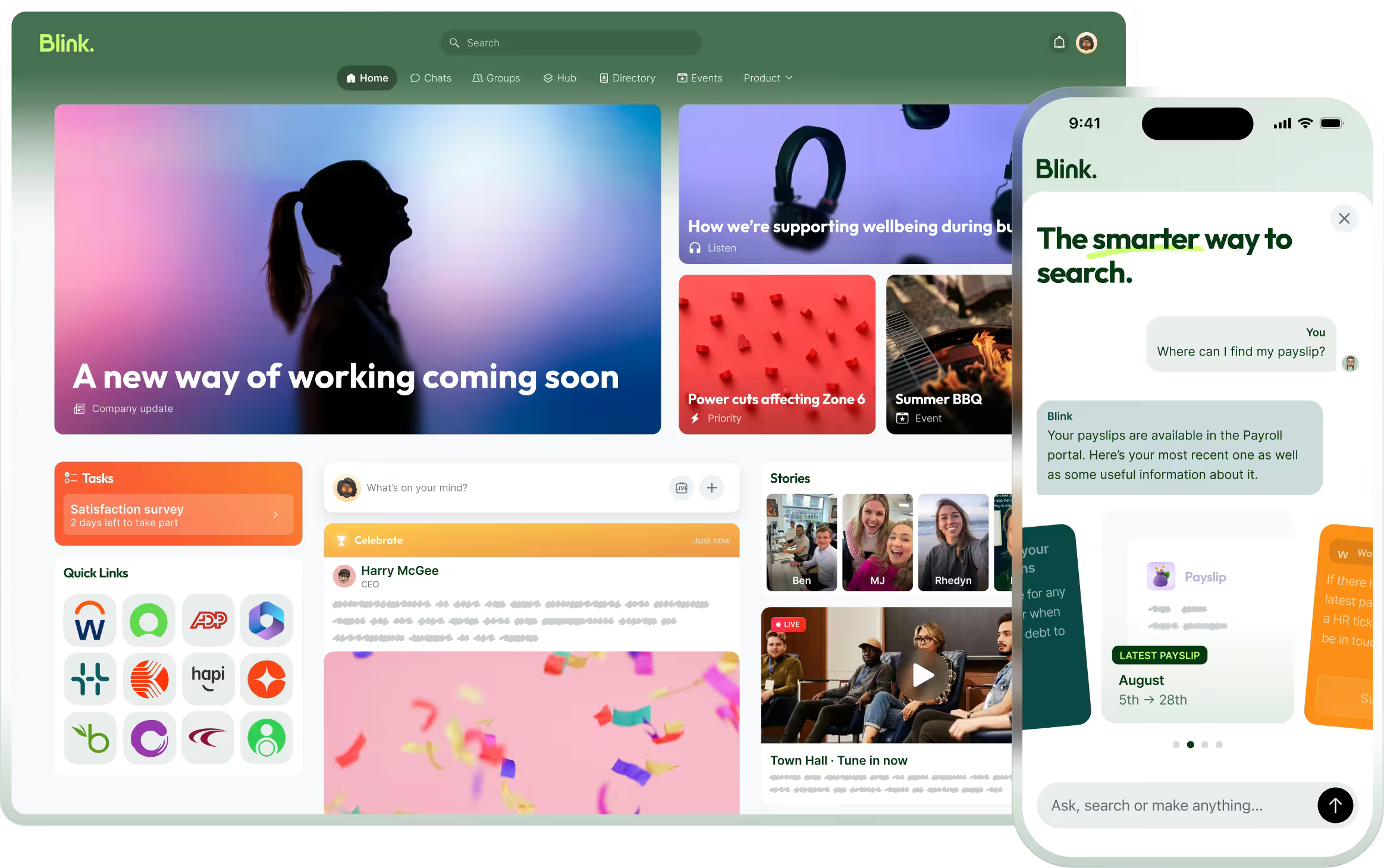
An employee experience app app: mobile internal comms tools like Blink allow employees to share and access important info instantly, from their smartphone. Social feeds and two-way publishing allow employees to expand their internal network, whilst push notifications ensure that important messages aren’t missed.
Video conferencing: why opt for crackly, awkward and generally unreliable phone conferencing solutions when you can use cloud-based video platforms like Zoom and Teams to meet and discuss ideas face to face?
Workplace instant messenger: faster and friendlier than email, workplace messengers like Slack can be used to make remote communication easier (or just for idle workplace chatter that builds workplace morale – pet pic channel, anyone?)
Project management tools: distributed teams need an effective way of keeping on top of tasks and deadlines. Project management tools like Trello, Basecamp and Monday.com use intuitive visual layouts to display and manage these processes.
Depending on your needs, you could also consider:
Employee productivity tools: time trackers, note-taking apps and site blockers can all contribute to your employees’ productivity levels.
Online whiteboard tools: whiteboard and ideation tools like Miro allow your workforce to take remote collaboration beyond a shared Google Doc or Slack channel.
Employee monitoring software: if you’re concerned about productivity, one way to ensure your employees are keeping their minds on the job is by using employee monitoring software to track time usage.
Final thoughts on remote workforce management
As a manager, the transition to remote work can be tough. How can you provide the right levels of support and oversight when your employees are scattered across the country – or maybe even beyond?
With the right technology and the right approach, however, it’s more than manageable.
It goes beyond ‘manageable’ to ‘super beneficial’ in many cases – remote work removes the stress and time pressures of office-based working so that your employees can thrive. If you manage this with the right processes and the right tech, you’ve got a recipe for success!
In the current landscape, remote workforce management is a vital skill for your business.
With more businesses moving towards remote and hybrid working – and remote work options becoming a strong pull for employee retention – there’s never been a better time to review how you manage remote employees.
Below, we run through exactly what you need to know to set up and manage a remote workforce effectively.
Remote workforce management
A remote workforce is any workforce that can complete its main duties away from a central place of work. Remote workforce management is the practice of leading and managing a remote workforce using a mixture of communication, processes and technology.
What’s the difference between mobile workforce and remote workforce?
Remote workers generally work in their own space, usually (though not exclusively) in some sort of home office. They are not obliged to stay here – they can work wherever they need to. This opens up a whole range of flexibility benefits – they can work on the train, whilst waiting to pick their kids up from school or in that cute cafe down the road which does the best flat whites.
A mobile workforce needs to move from location to location to complete its work. They might do this on a day-to-day basis, or be positioned in one location for weeks or months at a time. A few examples of mobile workforces include:
Drivers for bus, taxi, train or haulage fleets
Community healthcare teams
Consultants who work client side on long-term projects
On-the-move sales teams with numerous appointments each day
It’s easy to see why remote work is so appealing to employees – it’s flexible and great for work-life balance, whilst opening up a huge range of roles that would otherwise have been off-limits.
Because of remote work, the vacancies available to employees have increased significantly. An employee based in Atlanta doesn’t have to limit themselves to Atlanta-based roles – they could apply for roles previously based in New York, LA or even abroad.
What does that mean for you, as an employer?
Ultimately, you’re going to have to work harder to keep hold of your talent. March 2022 saw a record 4.5 million US workers quit their jobs, with common reasons for doing so including low pay, no career advancement opportunities and feeling disrespected at work.
This means that employee experience will play even more of a key role in employee retention than it does now, and is likely to become a key strategic focus for businesses in the coming years.
The benefits of a remote workforce
If there’s one thing the pandemic has proven, it’s that remote work can be a fantastic tool for both employee engagement and workforce productivity. Far from experiencing the chaos expected at the start of the pandemic, many businesses were immediately impressed by their employees’ ability to adapt to the ‘new normal’ and the productivity that accompanied that.
With a remote working policy, you can:
Access a wider pool of talent with no geographical limits – invaluable for hiring as open vacancies continue to hover around an all-time high.
Access a wider pool of talent that is often excluded from onsite jobs, for example, people with disabilitiesdisabled people, young parents and those without transport.
Improve employee work-life balance by removing commuting times and allowing your workforce control over when and where they work.
When managed well, remote work is a super effective way of expanding your talent pool whilst increasing employee productivity and retention. Equally, there are a few risks that you’ll need to be aware of – factor these into your remote employee management policy to minimize them.
Distractions and lack of direct supervision
Books, food, TV, hobbies…whatever your distraction of choice, your home has it, within seconds of your workstation. As a manager, it can be an uneasy feeling to have no direct oversight of your employees in this type of environment.
Isolation and fewer career advancement opportunities
In the Buffer State of Remote Work Report, 24% of respondents reported loneliness as a key difficulty of remote work – only ‘difficulty unplugging’ and ‘no reported struggles’ scored higher. Isolation can drain productivity and morale, so it’s important to invest in an inclusive digital workspace to combat this.
Communication and technology issues
Not being in the same physical space as your team can cause communication hiccups – make sure you have the right sort of software on hand to overcome this.
Security
If your employees aren’t in the office full time, it’s more difficult to make sure they’re completing their IT security training and using their work devices responsibly.
Bring your own device (or ‘BYOD’) workplaces are on a particularly slippery slope here. 83% of companies have some sort of BYOD policy for at least some of their employees, but only 32% require employees to register their devices with IT for software installation. If you are going down the BYOD route, make sure you have the right security procedures in place.
How do I create a remote workforce?
The answer that many businesses could give here is “get caught by an unprecedented global pandemic, send all of your employees home at once and figure things out from there.”
Now that the initial shockwave of COVID-19 has died down, however, you have the luxury of a controlled and managed shift to remote work. When you’re rolling out remote working, it’s important to give everyone time and space to adapt to new processes. This could include upgrading and monitoring your IT infrastructure to cope with remote working, buying in the right hardware or simply creating a suitable home workspace.
1. Give plenty of notice
If your employees plan their lives around being in the office during certain times each day, giving them space to adapt helps ease your workforce into the change. Aim for a month’s notice, ideally more if this decision has been a long time coming.
2. Roll out department by department, if needed
Going remote requires investment – and you may need to take a short term dip in productivity on the chin as everyone gets used to new arrangements. Rolling remote working out department by department might make this easier to manage, both cash flow-wise and for keeping key functions running as normal.
3. Plan for investment in software and office equipment
It’s a given that you’ll need to up your investment in cloud communication tools and product management tools. Equally, be prepared to spend on other amenities you offer your employees at the office – extra monitors, ergonomic chairs, laptop stands and more might all be useful.
4. Find the right people to oversee the process
A stakeholder panel is a great way to make sure all relevant voices are heard when planning your shift to remote work. Include managers, employees from teams who are going remote and representatives from any functions who might be impacted by this.
5. Allow for growth and adjustment
Is everything going to go swimmingly the instant you move out of the office? Probably not – expect slowdowns as everyone adjusts to their new normal. Keep monitoring progress and learning from your mistakes, and things will quickly start to pay off after this adjustment period.
How can I monitor employees working remotely?
Employees like remote work for the autonomy and responsibility it gives them – this is what contributes to the sky-high engagement and productivity rates at remote companies.
You should not be looking to monitor your remote employees 24/7. They won’t respond well to being micromanaged, and you’ll undo all the benefits remote work offers. Instead of monitoring, shift the focus onto building channels for effective two-way communication.
Start by:
Setting clear deadlines and expectations – are your employees expected to keep core hours, for example, or are you taking a more flexible approach?
Set up daily check ins – a quick ten-minute chat about the work day is reassuring for both manager and employee.
Regular feedback sessions ensure remote employees don’t feel ignored and can develop their skills at the same rate as an on-site employee would.
Use remote collaboration tools to keep in contact throughout the day. Instant messengers, employee apps and project management solutions all help here.
If you need visibility into how employees spend their day, consider an employee monitoring tool to track time usage.
Remote workforce management software
The secret to a great remote workforce management strategy? Finding the right software for the job.
There’s no ‘one size fits all’ here – it’s all about weighing up what you need to meet your unique requirements as a business. You might need the basics only, or you might need remote versions of several different systems to replace the office working environment.
How can technology help remote workforce challenges?
Whilst remote work has been a mainstream working practice since the pandemic began, nearly a quarter of employees reported not having the right equipment (hardware or software) to do the job as recently as spring 2021.
Remote work hinges on having the right tech. Remote employees need software to communicate with their colleagues, share ideas, keep track of deadlines, perform data analysis and more.
You’re likely to have some of this software available in an office setting anyway – so it’s the communication tools that really make the difference. Having intuitive and accessible employee apps, instant messengers and video conferencing tools on hand ensures communication channels stay open, productivity remains high and employees don’t feel isolated.
Remote workforce management technology: the must-haves and the nice-to-haves
The must-have software below would be pretty tricky to go without If you’re starting an online business from scratch!
An employee experience app app: mobile internal comms tools like Blink allow employees to share and access important info instantly, from their smartphone. Social feeds and two-way publishing allow employees to expand their internal network, whilst push notifications ensure that important messages aren’t missed.
Video conferencing: why opt for crackly, awkward and generally unreliable phone conferencing solutions when you can use cloud-based video platforms like Zoom and Teams to meet and discuss ideas face to face?
Workplace instant messenger: faster and friendlier than email, workplace messengers like Slack can be used to make remote communication easier (or just for idle workplace chatter that builds workplace morale – pet pic channel, anyone?)
Project management tools: distributed teams need an effective way of keeping on top of tasks and deadlines. Project management tools like Trello, Basecamp and Monday.com use intuitive visual layouts to display and manage these processes.
Depending on your needs, you could also consider:
Employee productivity tools: time trackers, note-taking apps and site blockers can all contribute to your employees’ productivity levels.
Online whiteboard tools: whiteboard and ideation tools like Miro allow your workforce to take remote collaboration beyond a shared Google Doc or Slack channel.
Employee monitoring software: if you’re concerned about productivity, one way to ensure your employees are keeping their minds on the job is by using employee monitoring software to track time usage.
Final thoughts on remote workforce management
As a manager, the transition to remote work can be tough. How can you provide the right levels of support and oversight when your employees are scattered across the country – or maybe even beyond?
With the right technology and the right approach, however, it’s more than manageable.
It goes beyond ‘manageable’ to ‘super beneficial’ in many cases – remote work removes the stress and time pressures of office-based working so that your employees can thrive. If you manage this with the right processes and the right tech, you’ve got a recipe for success!
Good internal communication is the glue that holds organizations together. It keeps everyone informed, aligned, and connected — helping employees understand company priorities and feel part of a shared purpose.
In 2026, internal communication involves more than noticeboards and scattered email threads. Organizations with hybrid or frontline teams need modern internal communication platforms like Blink to connect employees, simplify updates, and enable easy collaboration.
A successful internal communication strategy includes all communication types: top-down, bottom-up, and peer-to-peer. These channels work together to connect employees and ensure information flows throughout your organization.
For larger or dispersed teams, achieving this can feel like a tall order. But with the right internal communication software, even global workforces can stay connected and engaged.
Luckily, many new tools and platforms can help your company improve communication.
Types of internal communication tools and platforms
Before diving into specific providers, it helps to understand the main types of internal communication software shaping the modern workplace in 2026.
The most effective organizations use a combination of these tools — or a single employee experience platform like Blink, which combines many of these functions into a single mobile-first solution.
Instant messaging tools
Internal communication isn’t just top-down. Co-worker collaboration tools keep conversations flowing across teams and locations by enabling quick information sharing, file exchange, and informal social connections.
{{mobile-chat="/image"}}
Advantages:
A communication tool that allows employees to chat and share information (along with emojis and GIFs)
Most instant messaging tools are available on both desktop and mobile
Messaging tools can be used for communication between co-workers, but also for information-sharing between leadership and employees
Best tools: Blink, Slack, Jive, Workvivo
Emails and newsletters
Digital newsletters have always been great for sharing essential company updates. Modern tools enhance this channel with templates, analytics, and branded content delivery.
Best tools: ContactMonkey, Axero, Poppulo, Staffbase
Audio and video conferencing tools
Rewind a decade and video conferencing probably wouldn’t be one of the top staff communication tools on your list. Today, however, in a world of remote and hybrid teams, video conferencing tools are a workplace essential. They allow employees to talk face-to-face, even when they’re not based in the same office.Now a workplace essential, these tools make remote and hybrid meetings seamless — from one-to-one calls to company-wide events.
Best tools: Zoom, Google Meet, Microsoft Teams
Employee recognition center
Recognition platforms reward effort and build engagement by blending social recognition with tangible rewards to boost morale and employee retention.
Best tools: Blink, Bonusly, Unily
{{mobile-kudos="/image"}}
Employee engagement and surveys
Engage your employees and you experience countless benefits, including improved productivity, customer loyalty, and profitability. But if you really want to improve employee engagement, you need to measure it.
Employee surveys and feedback forms are an essential part of any internal communication toolkit. They support bottom-up communication and give you valuable insight into how employees really feel about working for your firm.
{{mobile-survey="/image"}}
Best tools: Blink, SurveyMonkey, Bonusly, Qualtrics
Company news feed
A private, social-style feed alerts employees to company updates and important cultural moments.
Best tools: Blink, Workvivo, Staffbase, Happeo
{{mobile-main="/image"}}
Project management
Project management platforms keep work visible, accountable, and collaborative.
Best tools: Asana, monday.com
Intranet
Evolving beyond traditional intranets, these tools now enable engagement, two-way communication, and document collaboration.
Mobile-first employee communication apps centralize updates, messaging, and engagement features — ideal for hybrid and frontline teams.
Best tools: Blink, Workvivo
Employee experience platform
These top-tier employee experience platforms offer a user-friendly way to access messaging, news, surveys, recognition programs, and HR functions.
These platforms go beyond communication — supporting onboarding, engagement, and culture-building.
Best tools: Blink, Workvivo, Staffbase
The takeaway:
Modern internal communication relies on an integrated ecosystem or a unified platform like Blink, which simplifies your tech stack and enhances workforce connection.
Blink serves as a mobile-first communication app, a modern intranet, a recognition tool, and a complete employee experience platform.That agility makes it ideal for companies looking to streamline their technology and boost employee engagement.
20 best internal communication tools
Ready to find the right comms solution for your organization? Take a look at our round-up of the best internal communication tools for 2025.
Blink is a modern internal communication tool and employee experience platform that brings together messaging, news, surveys, recognition, and analytics into a single mobile-first solution. It’s designed for organizations that want to improve communication, engagement, and access to information across both desk-based and frontline teams.
{{mobile-hub="/image"}}
As a mobile-first internal communication platform, Blink’s unified interface lets teams share updates, message peers, and access essential workplace applications in real time, without a corporate email address — no matter their location.
Unlike single-purpose messaging apps, Blink functions as an all-in-one internal communication software, combining collaboration and employee engagement tools in one place.
Features like pulse surveys, recognition, and content personalization enable two-way communication and make company-wide updates more meaningful.
Blink also includes social-style communication features — such as Stories, Communities, and a personalized news feed — that make information sharing intuitive and engaging. Built-in analytics help leaders understand message reach, engagement trends, and content effectiveness.
Pros
Unified internal communication toolset: Blink combines chat, news, surveys, recognition, and analytics.
Mobile-first accessibility: It works on smartphones and desktops, and doesn`t require a company email.
Seamless integrations: Connects with Microsoft 365, Google Workspace, HRIS, and scheduling tools.
Data-driven insights: The analytics dashboards measure communication performance and engagement.
Cons
The search functionality could benefit from more advanced filtering and refinement options.
Pricing
Pricing is available on request
Use Cases
Strengthening culture and alignment through data-informed communication strategies
Connecting hybrid and frontline teams with one internal communication platform
Centralizing all company messages, tools, and resources in a single hub
Improving engagement through interactive multimedia content
2. Asana
Asana is a well-known project management tool and, if you use it, you’re in good company. Around 85% of Fortune 100 companies say they use Asana.
With this workplace communication platform, you can create, prioritize, and allocate tasks. You can view tasks in timeline, board, and list formats — and track your progress toward milestones.
The visual format makes it easy to see which tasks your team needs to complete first. And the process of identifying and remedying project bottlenecks becomes much easier too.
Pros
A free version that supports 10 members and comes with unlimited storage, tasks, and messages
A clean, intuitive interface and a comprehensive selection of project and task management tools
Comes with a mobile app so employees can keep of track of projects on the go
Good integration with third-party tools
Cons
A high volume of email notifications can be frustrating for users
One of the more expensive project management solutions available
The mobile experience pales in comparison to the desktop experience
Collaboration tools aren’t as extensive and effective as those of other project management tools on the market
Pricing
Monthly pricing for Asana starts at a basic free plan. A business plan costs $24.99 per user per month when billed annually.
Use cases
Giving remote teams the tools they need to manage projects effectively
Cross-team collaboration
Status updates and reporting — leaders can view dashboards and reports to stay informed of project progress.
3. Jive
Jive is a community-building communication tool that you can use for top-down, bottom-up, and peer-to-peer connection. Team members can share photos, videos, documents, status updates, and blog posts. They can also decide whether their post gets seen by one team member, a specific group, or the whole organization.
Another great feature of Jive is its People Directory. Here, employees can search for co-workers they want to connect with, based on their skills, endorsements, and favorite activities.
Pros
Jive is an all-purpose business communication tool
Supports personalized news updates
Provides a single inbox so employees can manage all company communications and conversations in one place
Cons
Jive has a complicated interface and a cluttered layout that can be difficult for users to understand and navigate
Limited integrations with the other workplace tools you use
Some users say the Jive mobile app is slow and clunky with lackluster features
Pricing
Pricing is available on request.
Use cases
Creating a centralized hub for updates and document sharing
Personalizing company updates to make them more relevant and engaging
Giving employees the tools they need to interact with leadership, managers, and coworkers
4. Zoom
Zoom is often listed as one of the most reliable video conferencing platforms. It offers excellent audio and visual quality, even when internet connection is patchy, and it’s really easy to use.
You can record meetings, direct meeting participants to breakout rooms, and make use of a meeting annotation function. Zoom offers a range of other useful features too, including an online whiteboard and virtual working spaces (known as Zoom Huddles).
Pros
User-friendly interface
Can run small one-to-one meetings, large conferences, and anything in between
Advanced features include breakout rooms and webinar hosting
Cons
Zoom can be expensive for larger teams, with add-ons needed for meetings of more than 500 participants
Pricing
A Pro plan, for up to 99 users, costs $15.99 per user per month. A Business Plan, for up to 250 users and with a greater range of features, costs $21.99 per user per month.
Use cases
Running live meetings and webinars
Supporting video and audio communication for hybrid and remote teams
5. Bonusly
Bonusly gives you all the tools you need to run a successful recognition program. Via an intuitive platform, employees can tag peers and congratulate them on their accomplishments. Congratulated employees earn points, which they can then use to claim their preferred reward — a gift card, cash, or a charitable donation.
Reporting tools give leaders insight into team dynamics and patterns of recognition. It helps you to discover top performers and identify people who haven’t had any recognition in a while.
Pros
A user-friendly interface and next to no learning curve
The option to tailor recognition programs to fit your culture and values
Out-of-the-box integrations with other workplace tools including Workday, Asana, and Slack
Cons
Limited analytics — so it can be hard for companies to understand employee engagement and recognition patterns
Pricing
Monthly pricing options for Bonusly starts at $2 per user.
Use cases
Strengthening company culture and employee morale with regular recognition, even when employees are working remotely
Creating a culture of peer-to-peer recognition — employees can award points and praise to their co-workers
6. Axero
Axero is an internal comms platform designed to unify teams, increase productivity, and improve workplace culture. It features mass email tools, an activity stream, a blogging platform, and instant messaging.
Using Axero, you can create a central hub for files, communications, and company updates. Collaboration features also come in handy, with space for team discussions and the option to co-edit documents.
Pros
Axero’s customer service is responsive and helpful
Good customization and integration options
A comprehensive employee directory that makes it easy for staff to find and connect with co-workers
Cons
A steep learning curve — users say that Axero can be overwhelming for beginners
Some users say that Axero functionality lags behind that of other intranet competitors
Limited features on the mobile version
Pricing
Pricing is available on request.
Use cases
Creating a single hub for news, updates, and resources
Supporting collaboration across your company, with file sharing and team discussions
Building a personalized employee experience, with custom dashboards tailored to the roles and departments of employees
7. ContactMonkey
ContactMonkey is one of the best newsletter platforms available. Unlike some of its competitors, ContactMonkey integrates with both Outlook and Gmail so you can send emails from and receive replies to your usual inbox.
The platform provides an easy-to-use, drag-and-drop email builder. Multiple team members can collaborate on the same email. And analytics tools help you judge which newsletter content is best engaging your workforce, so you can create more of the same.
Pros
Employee survey tools so you can email your surveys to the workforce with ease
Integration with Outlook and Gmail
SMS integration that allows you to reach employees with urgent updates
Real-time tracking and analytics — so you get insight into email open rates and click-throughs
Cons
You can only use ContactMonkey for internal emails, not external marketing emails
Only supports communication over email, which may not be particularly engaging or appropriate for all organizations
Unlikely to fulfill all your internal communication needs
Pricing
Prices start from $600 per month for 500 employees. Prices for more extensive plans are available on request.
Use cases
Engaging email and newsletter communication for employees
Launching employee surveys to help you acquire useful feedback
8. Slack
Slack is an instant messaging tool that supports asynchronous communication. Slack works well for desk-based employees who have access to other platforms, like Google Drive. Slack doesn’t work as well for on-the-go, field-based employees, who don’t have such easy access to separate cloud storage.
People within your organization can launch chat threads, including as many or as few team members as they like. They can create threads for different projects, departments, and topics. Teams also get access to little extras, like file sharing, message search, and a task reminder function.
Pros
User-friendly interface
Integration with a wide range of other workplace software
Customizable notifications
Cons
Doesn’t work well for teams who are on the go — Slack is most suited to desk-based teams
Can be hard to find what you’re looking for across multiple chats and channels
Pricing
Slack offers a limited free plan. Paid plans start from $8.75 per user per month.
Use cases
Ensuring real-time communication between dispersed team members
Providing a variety of internal communication channels — including direct messages, group chats, and channels
SurveyMonkey has made it to our employee survey top spot for its ease of use. This employee communications platform has lots of survey templates to choose from and, if speed is your priority, lots of features that help you get employee feedback fast.
You can choose from hundreds of expert-written questions or write your own. And with the help of custom templates, you can find or create surveys for any situation, whether you want to conduct 360 reviews, find out your Net Promoter score, or seek feedback on your employee engagement efforts.
Pros
Ease of use — SurveyMonkey has a clean, uncluttered interface that employees will enjoy using
Using the Genius Assistant and the “build it for me” feature, you can create surveys quickly
Excellent analytics that help you make sense of employee responses
Cons
Limited free features
Limited customization options, so you may struggle to create complex or specialized surveys
Pricing
Prices start from $30 per user per month.
Use cases
Boosting employee satisfaction and engagement with the help of employee feedback
Making it easy for your teams to launch and respond to employee surveys
10. Microsoft SharePoint
Microsoft SharePoint is a file-sharing software that integrates seamlessly with the other Microsoft tools you may already use. You can create branded document libraries called sites, customizing them for document collaboration or top-down comms.
Teams get to share news, documents, and data. They can also edit documents collaboratively — setting notifications so they know when a co-worker makes changes.
Pros
Easy integration with other Microsoft products
Allows you to segment employees by division, giving each division its own calendar and visual timeline
Customization options so you can build forms, workflows, and custom applications for your teams
Cons
Not particularly user-friendly, especially on mobile
Cost of implementation is high and adoption rates tend to be low
Pricing
A basic SharePoint plan costs $5 per user per month.
Use cases
Project collaboration — teams can co-edit documents and manage workflows
An easy way for desk-based teams to access company documents and resources
Using internal announcements and newsletters to communicate with all employees
11. Monday.com
Monday.com is a project management tool that supports comms and employee engagement. You can use this internal communications software to create and assign tasks, track project progress, and create performance-tracking templates for employees.
Team members receive notifications when action is required. And an easy-to-use visual interface makes it easy to see where each project is up to at a glance.
Pros
A comprehensive set of project management tools
Customizable project templates to get you started
A weekly overview so you can see tasks and project milestones you need to tackle over the next few days
Cons
The backend of this business communication software is complicated and involves a steep learning curve
Limited comms tools so Monday.com isn’t useful as a standalone business communication platform
Pricing
Prices start from $8 per user per month.
Use cases
Improving project management and work collaboration
Task and workflow automation to streamline repetitive processes
12. Workvivo
Workvivo is an intranet software company owned by Zoom. You can use this internal communication tool to improve comms, employee engagement, and recognition, too. You can also make use of multiple communication channels and employee feedback tools.
Standout features include live broadcasting tools, so you can launch live streams and podcasts. You can also create microsites, where teams and special interest groups can create their own, tailored communities.
Pros
Strong translation abilities for multilingual organizations
An engaging, social-media-style interface that will feel familiar to employees
Rich communication tools including a news feed and instant messaging (available through integrations with tools like Slack, MS Teams, and Zoom meetings)
Cons
Chat functionality on the mobile app falls behind the desktop experience
Advanced features — including chat, Workvivo TV, and advanced analytics — are add-ons that come at an additional cost
Admins say they want better customization options and improved third-party integrations
Staffbase is an internal communication platform designed to connect and engage employees. It brings company news, messaging, and resources into one place, making it easier for you to reach your workforce — whether they’re remote, hybrid, deskless, or office-based.
With Staffbase, you can communicate over the company intranet and send emails and SMS, all from one centralized dashboard. You can also create tailored content paths so employees receive the right information at the right time.
Pros
A great user experience across desktop and mobile versions
Brings a range of communication and workplace functions into one location, supporting top-down, bottom-up, and peer-to-peer conversations
Built-in reporting so you can see how employees are using the platform and interacting with your content
You can customize the platform so it matches the look and feel of your branding
Cons
Some add-ons and integrations come at an additional cost
There are few out-of-the-box features on the employee app
Search functionality and integrations aren’t as good as they could be
Pricing
Pricing is available on request.
Use cases
Launching employee surveys with in-built tools
Creating a single source of truth within your organization thanks to communication channels that all workers can access
Making comms more personal, with the option to segment your audience and deliver relevant content to different employee groups
14. Poppulo
Poppulo is an email and mobile communications software. It also provides digital signage functionality and digital tools for desk and meeting room management.
You can target messages based on location, role, or interests to cut through the noise. You can also access tools for planning and promoting internal events, like town halls and team meetings.
Pros
Omni-channel communications, across email, SMS, intranet, and digital signage
Drag and drop email design tools plus advanced personalization
Strong analytics — Poppulo gives comms teams clear visibility into message performance
Cons
Poppulo is more complex than some of the other tools on this list, so there can be quite a learning curve
While it brings multiple communication channels together, Poppulo isn’t comprehensive enough to work as a standalone company communication system
Pricing
Pricing is available on request.
Use cases
Enterprise email communication and analytics
Improving the quality of email messaging with employee segmentation tools
Managing office workspace among hybrid teams
15. Qualtrics
Qualtrics is an employee survey and feedback tool. You can use it to capture employee data via surveys and passive listening — and discover how your business is doing across metrics like intent to stay, engagement, inclusion, and wellbeing.
Surveys are easy to customize, with advanced question types and logic, while analytics and reporting tools help you turn insights into actionable strategies.
Pros
Flexible survey design options
Powerful analytics and reporting capabilities
AI tools that guide you to take action based on your employee feedback findings
Cons
Using advanced features effectively may require training
Qualtrics can be overly expensive for smaller businesses
Pricing
Pricing is available on request.
Use cases
Improving employee satisfaction and engagement with the help of regular surveys
Creating a culture of 360 feedback to improve the effectiveness of management and leadership
16. Happeo
Happeo is a Google-based intranet that provides a centralized location for all internal communications. It provides a hub for company news, documents, and collaboration tools.
Key features include a social intranet, an employee directory, and an intuitive search function. You can also use AI tools to find and fix gaps in your knowledge base.
Pros
Easy integration with Google Workspace tools
Excellent search functions so it’s easy to find the people, posts, and integrated third-party apps you’re looking for
The option to create hubs and communities based on departments, roles, and shared interests
Cons
Limited integrations beyond the Google suite
A web-first platform, best suited to desk-based teams
Pricing
Pricing is available on request.
Use cases
Creating a centralized hub for updates and document sharing
Unily is an employee experience and internal communications tool. It provides features that support its “four cornerstones” of digital employee experience: Alignment, Engagement, Enablement, and Simplicity.
Key features include email, employee feedback, and recognition tools. You can design, sequence, and automate employee journeys so staff receive relevant information at the right time. You can also use gamification features to improve intranet engagement.
Pros
An excellent desktop version, with an engaging and intuitive user experience
Fine-grained controls for admins
A good range of notifications
Cons
Mixed opinions on Unily’s customer service and ability to support its partners
Translating Unily’s comprehensive desktop features to mobile is a challenge for admins
Pricing
Pricing is available on request.
Use cases
Creating channels for company-wide communications
Boosting employee engagement with dynamic content and gamification
A comprehensive intranet platform, Simpplr supports internal communication and employee engagement. It provides a user-friendly, social-media-style interface and provides AI-driven content recommendations.
Standout features include employee listening tools, surveys, and a recognition program. There are also lots of communication channels you can use across email, SMS, a mobile app, and desktop software.
Pros
An intuitive, uncluttered interface
Strong analytics that make it easy to track engagement metrics and content performance
Great search functions
Cons
Difficult login process, with multiple links provided
Some users say the struggle to integrate Simpplr with their preferred third-party apps
Advanced features can be expensive
Pricing
Pricing is available on request.
Use cases
Making employee feedback and listening a key part of company culture
Creating a centralized hub for communications, resources, and community
Bringing large organizations and distributed teams together
Google Meet is a video conferencing and virtual meeting tool. It’s integrated into Google Workspace, so it connects easily to Gmail, Calendar, and any other Google tools your team happens to use.
It’s incredibly easy to use via an internet browser so users don’t even have to download the software. This makes it one of the most accessible virtual meeting tools currently available.
Pros
Easy to set up and use
The ability to hold meetings with up to 1,000 participants
Chat, emoji, and screen share functions available during meetings
Cons
You need additional tools to fulfil all internal communication needs
Fewer advanced features compared to Zoom and Microsoft Teams
Pricing
Prices start from $6 per user per month.
Use cases
Virtual team meetings, webinars, and company-wide announcements
One-on-one video meetings
Virtual training and employee onboarding
20. Microsoft Teams
Microsoft Teams combines instant messaging, video conferencing, and file-sharing tools. As you’d expect, it offers the best possible integration with other Microsoft Office tech. You can use a selection of tools to create an all-round internal communication solution.
You can use Teams to run video meetings and team chats when your employees are working remotely or across different locations.
Pros
Strong integration with other Microsoft products
Secure communication and file sharing
Cons
Interface isn’t particularly engaging and there are few social-media-style features
Teams is designed for desktop use so mobile users don’t get the same user experience
Pricing
Prices start from $4 per user per month.
Use cases
Creating digital channels for internal communication and project management
Launching video and audio calls and sharing company-wide updates
Bringing remote and hybrid teams together, even when they’re working in different locations
Choosing an internal communication tool for your frontline organization (2026)
The right choice depends on your organization’s structure, workforce, and goals — particularly if you operate with hybrid or frontline teams.
For frontline organizations, the most significant communication challenge is dispersion. To resolve this, every employee should receive critical updates and feel part of the same company culture, even if they rarely visit headquarters.
To build a sense of belonging, choose a mobile-first internal communication platform that’s user-friendly and equally accessible for all.
To identify the best fit, ask yourself these four questions when evaluating internal communication software:
#1. Is your organization office-based, or do you have deskless workers to consider?
Some internal communication tools suit desk-based teams, such as intranets designed for desktop access. However, these are often unsuitable for reaching frontline workers who rely on smartphones.
To prevent information gaps, look for mobile-first internal communication solutions that offer the same functionality across devices. A dedicated mobile app ensures equal access and engagement across every team member — no matter where they work.
#2. Do your employees have regular opportunities to connect during the workday?
Connection drives performance, and employees who feel they belong are much more engaged and productive.
The problem for frontline teams is that they often lack organic “water cooler” moments. Using internal communication tools that enable social-style interaction — such as chat, feeds, and communities — fosters real-time collaboration between field and office teams.
#3. How much time can your employees spend on internal comms each day?
As frontline employees are busy serving customers, maintaining operations, or working off-site, they need a simple and reliable communication platform.
When evaluating tools, prioritize their ease of use, onboarding speeds, and precise message delivery.
Also check adoption rates and engagement levels as they’re powerful indicators of how smoothly a tool integrates into your daily workflow.
#4. How many internal communication goals do you want to cover?
Some platforms specialize in single functions, such as surveys, document sharing, or project management. Others, like all-in-one employee communication platforms, combine these capabilities.
To streamline your tech stack while enhancing connection and engagement, choose an internal communication tool that supports multiple channels — chat, news, surveys, recognition, and analytics — within one system.
The importance of internal communications in an organization
Every organization — frontline or otherwise — needs an effective internal communication strategy thatunites employees behind the company culture and values, improves collaboration, and enhances retention.
Strong internal communication also supports:
Company connection: When employees feel aligned with organizational goals, engagement and satisfaction rise
Change management: Transparent communication ensures buy-in during transitions
Problem-solving: Clear, direct messaging limits misinformation and strengthens trust
Productivity: Employees perform best when information is easy to find and act upon
Many internal communication tools support these goals — from instant messaging and surveys to intranets and recognition platforms. For frontline teams, the right solution must be mobile-first and easy to access on the go.
The right internal communication software can transform a disconnected team into a cohesive, informed community.
Blink shows how this works by helping companies like Go North West connect all their employees through a single digital hub.
Blink. And transform company communication with an all-in-one internal communication platform built for every worker.
Ben epitomizes the value of “genuine.” He consistently demonstrates good character and looks out for the safety and wellbeing of everyone around him. His easygoing nature and technical ability make him a great leader and a core member of the operational team.
How does Blink help in his role?
Blink helps in delivering safety-critical documentation to the RSW workgroup.
What does he want to do next?
Continue driving excellence in training and ORAs standards.
Nominated by: Joel Farrell, Rail Operations Manager
Spoiler alert: Employees don’t count down the days until the next company update hits their inbox
But the next episode of their favorite TV show? That’s a whole different ballgame. Millions of people cleared their schedules to watch the Succession finale — or to binge the whole of The Bear in one sitting.
So what do these shows have that internal communications don’t? It’s not just good writing and compelling characters. It’s the way TV structures its stories to keep people coming back for more.
Internal comms can steal these tricks to make messages stickier, more memorable, and worth tuning in for. From the pilot episode to the spin-off, here’s how to make your employee communications essential viewing.
The pilot episode — hook them early
A pilot episode sets the tone for a TV series. If it falls flat, viewers won’t bother tuning in again. But hit all the right notes, and you’ll have your audience excited for the next installment.
The same goes for your internal communications. The experience employees get when they first encounter your messages shapes how they’ll engage with them — or ignore them — in future.
So, for new hires, comms related to theonboarding process should feel polished and well-produced. Give employees pre-first-day info that sets the scene. Then, deliver a steady stream of timely updates to get familiar with your communication platforms, your workplace, and their coworkers.
When it comes to launching new platforms and digital tools, treat the roll out of a new employee intranet or internal communication tool like a premiere event. Tease the launch with trailers, countdowns, and even a launch party. And make pilot content so strong that employees are blown away by their very first platform experience.
Action! Review your onboarding messages and launch campaigns. Are they as exciting and focused as a Netflix pilot? If not, refine them — think strong storytelling, quality design, and a tone that makes employees want to tune in for the next update.
{{mobile-main="/image"}}
Cliffhangers keep them coming back
“Just one more episode?” That’s the power of a cliffhanger.
The best TV shows don’t give everything away in one go. They create buzz and suspense by hinting at what comes next — leaving you hanging with a surprising reveal or creating excitement with a sneak peek of the next episode.
In internal comms, you don’t need to hold back crucial information to build suspense. But you can use this technique to spark anticipation:
Tease upcoming events. Drop a short trailer for a CEO town hall, a product launch, or a training session.
Share the headline. Drop a compelling stat, quote, or insight ahead of a big announcement or change management initiative.
End with a “next week on…” Close company newsletters or updates with a glimpse of what’s coming next.
These TV tactics build excitement for your next content drop. They can encourage employees to subscribe for updates or sign up for further details — and that means a bigger audience when your primary content lands.
Action! Take a closer look at your employee communication content schedule and look for places where you can share “coming soon” content. You’ll make employees feel like they’re part of an unfolding story — not just at the receiving end of a random collection of broadcasts.
Binge vs. weekly drops
Some TV fans love the ritual of a weekly release. Others prefer to binge the whole season in a weekend. Your employees are no different.
Bingeable comms work for employees who want to consume a lot of info in one sitting. That might be a full training module, an annual company strategy deck, or a comprehensive how-to guide.
Short, steady updates suit busy employees (particularly frontline workers) who need snackable updates they can read between tasks. Big ideas are broken down into bite-sized snippets with the help of visuals and clear copy.
The smartest internal communication teams blend both approaches. A box-set drop for complex topics paired with regular micro-updates to keep messages top of mind.
Action! Review your comms cadence. If everything you send is a dense “season drop,” break it up with lighter, more regular touchpoints. You’ll keep your audience engaged and informed without overwhelming them.
{{mobile-story-polls="/image"}}
Spin-offs shine a light on new characters
Where would the TV world be without Frasier or Better Call Saul?
Spin-off series show us what life is like for one character within an ensemble. They help audiences see familiar characters with a fresh perspective, getting to know their motivations, worries, and wins.
Apply this tactic to your internal communications strategy and you bring your organization together, while also boosting comms engagement. When you highlight lesser-seen people and departments within the company, you give teams the insight they need to collaborate more effectively.
So hand the mic to your delivery drivers, your engineers, or your payroll team. Champion an internal creator culture. And create department crossovers, where marketing and operations, or HR and finance, join forces for a joint update.
This original content is something employees don’t expect — and don’t tend to ignore.
Action! Run a quarterly “takeover” week, where a different department owns internal comms. It diversifies voices, keeps content fresh, and helps employees see work and the workplace from different perspectives.
The watercooler moment
The “red wedding” in Game of Thrones. The final episode of The Sopranos. That super-tense Stranger Things scene when Max faces Vecna to a soundtrack of Kate Bush.
The best TV moments become watercooler moments — both in person or on social media. They spark chatter, memes, and inside jokes. They go beyond the screen to build connection and a sense of belonging among their audience.
Internal comms can do the same, by:
Creating an emotional connection
Inviting employees to interact
Relatable, authentic content about real people creates an emotional connection. So spotlight employees and customers in stories and shout-outs. Encourage leaders to share behind-the-scenes moments. Don’t be afraid to use humor or memes to land a message.
But remember that content alone isn’t enough. The conversation has to flow both ways. Encourage employees to join in. Ask for their input and highlight their intranet contributions. Welcome their ideas and champion an internal creator culture.
Action! Encourage interaction on your corporate communications channels. Launch a poll, invite employees to share their comments under a company news feed post, or get them to create their own content from scratch. Digital channels feel more like a community when they’re built on two-way communication.
{{mobile-stories="/image"}}
All killer, no filler
Sometimes a TV writing team seems to run out of ideas, and you’re stuck sitting through a filler episode. It’s dull and forgettable, it doesn’t move the story forward, and it makes you much less likely to tune in next time.
The lesson for internal communicators? To keep the attention of your audience, avoid filler content at all costs. Ensure that everything you send out deserves its place in your core comms channel. Every piece of content should either:
Inform (share something useful)
Inspire (motivate action)
Connect (build company culture and employee communities)
If it doesn’t do any of those things, skip it.
Also, make every piece of content visually engaging. Videos, infographics, images, polls — Insta-worthy content keeps employees glued to your internal communication platform, making it easier for you to make messages cut through.
Action! Use intranet platform analytics to see which content drives the most (and least) digital engagement. Double down on the hits, learn from the misses, and keep your audience coming back for more.
Anthology vibes — standalones that fit the bigger story
Variety keeps things fresh and interesting — and a standalone story can make a big impact on an audience. Think Black Mirror. Every episode is self-contained but the series works because each installment contributes to a bigger theme.
Apply the same principle to your internal communication plans. Each campaign, post, or announcement should feel complete on its own — clear, valuable, and with a call to action. At the same time, it should tie back to the wider company story. Every message should reinforce the internal behaviors, corporate values, and company culture you want to build.
Action! Define three to four cultural story arcs for your comms this year. Then map every message against them. That way, even standalone content contributes to the bigger narrative, creating a coherent and engaging employee experience.
{{mobile-live-stream-poll="/image"}}
Make your comms less corporate memo, more shiny streaming service
TV shows succeed because they understand their audience, structure stories to keep viewers coming back, and mix variety with consistency.
Internal communications can do the same. From pilot episodes that hook new hires to spin-offs that highlight unsung heroes to watercooler moments that spark conversation — every message is an opportunity to boost employee engagement.
So treat your internal communication strategy like a hit TV series. Done right, employees won’t be second-screening, half-watching while scrolling their phones. Instead, they’ll be invested in your stories. They’ll tune in, interact, and feel part of something bigger.
Ren has been making her mark at Blink for over a year, helping to power our Revenue Operations function with a sharp analytical eye and a strong command of tools like SQL and Python. Based in our London office, she’s been a driving force behind smarter systems, cleaner data, and smoother cross-team collaboration.
We caught up with Ren to hear more about what drew her to Blink, the projects she’s proud of, and how being part of a fast-moving, mission-driven team keeps her inspired every day.
Which Blink office do you work out of?
I'm based in the London office.
What is your position at Blink?
I work as a Revenue Operations Analyst.
How long have you been at Blink?
I’ve been at Blink for just over a year now!
What initially attracted you to join Blink?
Honestly, it was the product that really stood out to me. I really connected with Blink’s mission of helping frontline employees stay connected. I had previously spent some time working in education as a teacher, so I saw first-hand how valuable something like Blink could be. I remember thinking, “If I had this as a teacher, I would’ve loved it.” That real-world application really sold it for me.
What confirmed I’d made the right choice was during the interview process. I got to meet my future team and was thrown straight into a collaborative SQL task. That experience representedthe collaborative nature of the environment at Blink and it immediately felt like a team I wanted to be part of.
What's a project you are proud of from your time at Blink?
Rather than one specific project, I’d say I’m proud of how much I’ve grown my technical skills. I’ve had the chance to work on projects that pushed me to master tools like SQL and Python. It’s been amazing to not only learn those languages but to use them daily and feel confident doing so.
One of the biggest challenges early on was finding the time and headspace to fully focus on that kind of technical development. But as a team, we tackled that by introducing dedicated Hackathon days, which gave us uninterrupted time to solve complex problems and upskill together.
The impact of this has been really rewarding. A lot of the work I’ve done in Rev Ops has helped bring critical data into the hands of our go-to-market teams, enabling them to better connect with customers and prospects. Most recently, I’ve been using SQL and Python to help build out parts of our very own internal “Blink ChatGPT” tool!
How would you describe the company culture at Blink in three words?
I would describe the Blink culture as fun, motivating, and challenging.
Fun because the social side of Blink is genuinely brilliant. We’ve had some amazing team events — from the Crystal Maze experience to crazy boules, an F1 simulator, and even a speedboat ride along the Thames. These moments really help bring people together and build strong bonds across teams.
Motivating because you’re constantly surrounded by incredibly smart, driven people who are all deeply invested in the success of the company. Being around colleagues who genuinely care pushes you to bring your best every day.
Challenging because the pace is fast, and the problems we’re solving are complex. Those challenges have also been the most rewarding and have accelerated my growth more than I expected.
What's one thing you're excited about for the future of Blink?
I’m really excited to keep seeing us sign big, well-known customers. Every time we bring a large name on board, it’s a huge morale boost across the company. It really shows how strong our product is. A standout for me was when we signed McDonald’s — such an iconic brand choosing us felt like a major moment. I’d like to see us continue to expand into the retail market. Another big fashion brand would be really exciting. It’s a sector where our impact could be huge, and there is a lot of potential there.
Can you tell us about a recent initiative or program launched at Blink that you found particularly exciting?
The first thing that comes to mind is all of the work that has gone into the upcoming summer party. I think it’s going to be an amazing event — not just for us internally, but for our customers too. It’s a brilliant opportunity to bring everyone together, share best practices, and show off what makes Blink such a great platform. Events like this really spotlight our culture and our community.
Since joining Blink, I’ve also had the chance to be part of three customer launches. It’s been incredibly rewarding to meet users in person and see the real impact our platform has on their day-to-day work. This definitely motivates me in the work that I do at Blink.
Why do you work for Blink?
I work for Blink because, as I’ve said before, I believe in the product. I think it’s an incredibly impactful software that helps a huge number of people. Another thing I appreciate is the variety in my role — it keeps the work dynamic and engaging. I get to work across lots of different teams at Blink, from operations to technical projects. That mix keeps things exciting. Plus, the atmosphere here is genuinely great. If I had to pick a favorite team to collaborate with, I’d say the sales team. They’re always full of energy, very motivated and really fun to work with. I’m grateful that I get the opportunity to collaborate with them.
Domino's Pizza Group is the UK’s leading pizza brand; their first UK store opened in 1985. They have over 1,000 stores across the country and more than 35,000 team members. Their vision is simple: to be the number one pizza company in the world. But their internal communication strategy was holding them back.
So, what happens when communication becomes critical in the wake of a global pandemic? And how do you reach frontline workers who are digitally and physically disconnected (see the winning types of internal communication)?
The challenge
Domino’s have a distributed workforce operating out of various sites. These include Head Office and Supply Chain Centers in Milton Keynes, Warrington, West Ashland & Naas.
Frontline processes were paper-based and manual with no practical way to reach everyone. Dominoes struggles to get key messages across, because communication relied on word of mouth, posters and consumer channels like WhatsApp.
Domino’s had no reliable channel for frontline communication. And employees needed consistent information – but paperwork posed a Covid-19 transference risk.
The internal communications strategy
The situation demanded an immediate flow of two-way communication. As a result, Domino’s launched Blink in April 2020 as a critical part of their Covid-19 response plan. The goal? Empower, equip and protect all frontline employees.
Before long, Blink integrated with benefits, payslips and holiday bookings. Domino's also began using digital forms for shift swaps and holiday bookings. The result? 85% adoption rate in less than a fortnight, and a strong long-term, communication strategy.
By ‘encourage’, we don’t mean ‘tolerate’. We mean: do you actively encourage it? Do you run regular feedback initiatives and act on them? Do you train managers to ask for, accept and pass on feedback?
A major survey we conducted recently suggests that ‘not being listened to’ is employees’ number one gripe with management – and one that has a significant impact on talent retention. In other words, there could be a huge amount of untapped innovation going to waste, right under your nose.
With over a fifth (22%) of those who raise issues at work feeling that they receive no advice or support, there’s definitely more organizations could be doing. Here’s how an employee voice strategy could help.
Voice of the employee – what is it?
Whenever we’re grappling with important workplace concepts, we can always rely on the CIPD for a useful, easily digestible summary. They define employee voice as:
“The means by which people communicate their views to their employer and influence matters that affect them at work”
If we were to distill this a little more, our answer to “what is employee voice?” would be
“your employees’ involvement in decision making processes and how you encourage it”.
What is an employee voice strategy?
An employee voice strategy is how you encourage your workforce to have their say.
It’s worth distinguishing between ‘action’ and ‘strategy’ here. Running employee surveys as and when might be a useful action to take, but doesn’t constitute a strategy in itself. An employee voice strategy is a planned and sustained program of activities that encourage your employees to make their voices heard.
Check out the employee voice examples below for specific strategy building blocks, but make sure everything you create is built on these two key principles:
Commitment to a ‘speak up’ culture: if employees consider the risks of speaking up (whether delivering a positive input or a criticism) then they simply won’t bother. Make it rewarding to contribute (even if the feedback is negative) and more employees will do so.
Commitment to employee-centered leadership: senior management must take the lead in listening to employees and acting on feedback. High-visibility commitment to this at senior levels will increase the success of your employee voice strategy.
What are the benefits of employee voice?
Employee voice is good for your workforce. Colleagues feel you take their input seriously, and feel happier and safer in their roles as a result.
Secondly, it’s great for your business! In a nutshell, a great employee voice strategy encourages innovation, boosts performance and rubs off on that all important bottom line.
Employee voice and workplace engagement
Employees like to be involved in the decisions that affect them. CIPD data suggests that employees’ satisfaction with involvement in decision-making is significantly and positively related to their overall job satisfaction.
But employee voice doesn’t just affect how happy employees are at work. It also affects how invested they are in your organization and its long-term success.
Being able to participate in decision-making automatically draws your employees into the mission of your business. Rather than being there to follow orders, they become stakeholders that actively contribute to key business achievements.
This sense of ownership is called employee engagement, and it contributes significantly to long-term business success.
A pre-COVID Gallup poll found that companies with high employee engagement achieved:
10% higher customer ratings
17% higher productivity
20% higher sales
21% higher profitability
Importantly, as the Great Resignation continues to cause staffing issues for many businesses, employee engagement also breeds employee retention, making it that bit easier to hold onto your top performers in a tough market. Regularly surveying your employees to keep your finger on the pulse, and actually actioning the results is a simple employee engagement best practice to follow and help your team invested.
Employee voice and organizational performance
Why ignore your single biggest pool of ideas for improving your organization’s performance?
The link between employee voice and organisational performance is hard to ignore. Your employees know the ins and outs of your organization better than anyone. They can tell you better than anyone about which processes work, which don’t, where major silos exist and where slowdowns occur.
Yet all too often, segments of the workforce – frontline employees in particular – feel as if their input won’t be taken seriously. If you allow this type of sentiment to grow, employees won’t share valuable insights further up the chain.
You might not find any million dollar ideas here (but hey, don’t rule it out), but you can expect a million smaller bits of feedback that could help your business run that bit more effectively. The sum of all these parts: cost savings for you, increased satisfaction for your employees. Everyone’s a winner.
Employee voice and compliance
In a recent online poll, a stunning 93% of respondents thought that becoming a whistleblower would negatively impact their career. There are still huge barriers to overcome for employees who witness wrongdoing or poor practice and want to report it.
Encouraging a genuinely open culture via employee voice initiatives makes it so much more likely that your employees will speak up if they see something wrong. In some cases, this opportunity to fix issues internally can save a huge amount of financial and reputational damage.
The importance of employee voice and communication
We recently conducted a case study of frontline healthcare workers in the UK. When asked about the one thing they would say to senior management anonymously, their answers were pretty telling:
“Please answer my emails and questions. I am trying to do my best at work and would appreciate feeling listened to.”
“Communication please!”
“Listen to us! We have been here long enough to know what works.”
Creating an employee voice strategy formalizes two-way communication so that it’s not left to individuals to follow up. An organizational commitment to communication ensures that people feel heard on a personal level, whilst providing senior decision-makers with the tools to keep the conversation going.
Employee voice examples
Employee voice can be direct or indirect, formal or informal.
Direct employee voice involves speaking directly to senior management, line managers and other decision makers with feedback and suggestions. Indirect employee voice does this through an intermediary, such as an employee committee, representative, or union rep.
Formal employee voice is expressed through official, codified channels, such as employee surveys. Informal employee voice can be expressed wherever and whenever – a quick email to a line manager or dropping in for a conversation during a senior exec’s office hours are both good examples.
As you build your employee voice strategy, you’ll likely use a combination of all of these to make sure your workforce truly feels heard. Here are a few examples of employee voice initiatives that you could start in your business.
Regular ‘pulse’ surveys with a process for gathering and acting on feedback
Training on workplace practices and how to flag up when they aren’t being followed
Regular one-to-ones with line managers for two-way feedback and suggestions
Open office hours for senior managers and key decision makers
Open forums or meetings for discussing new initiatives and proposals
Transparent communication about company news and developments
You can extend the scope of your employee voice strategy using the right software tools. Arguably this is hugely beneficial for all businesses now, and for remote, hybrid and mobile teams this is essential.
An employee app with an instantly updated newsfeed, two-way content creation and the ability to support employee-generated content is a must-have, as is employee survey software,
Final thoughts on employee voice
Your employees are brimming with great ideas! Why lock that away?
It’s on you, as a workplace, to actively encourage employees to share these ideas. Don’t sit back and hope people come to you – shout about how receptive you are (and mean it) and how much you value ideas and contributions from across the business.
You’ll need:
The drive to create a culture where everyone feels able to speak up
A commitment at senior leadership level to open communication and two-way dialogue
The willingness to take the negative feedback along with the positive
Use the ideas above to get started. Focus on meaningful sustainable change and commit for the long term and you’ll get results.
Blink’s newsfeed, social sharing and two-way publishing features help you encourage employee voice. Book a free demo to find out how.