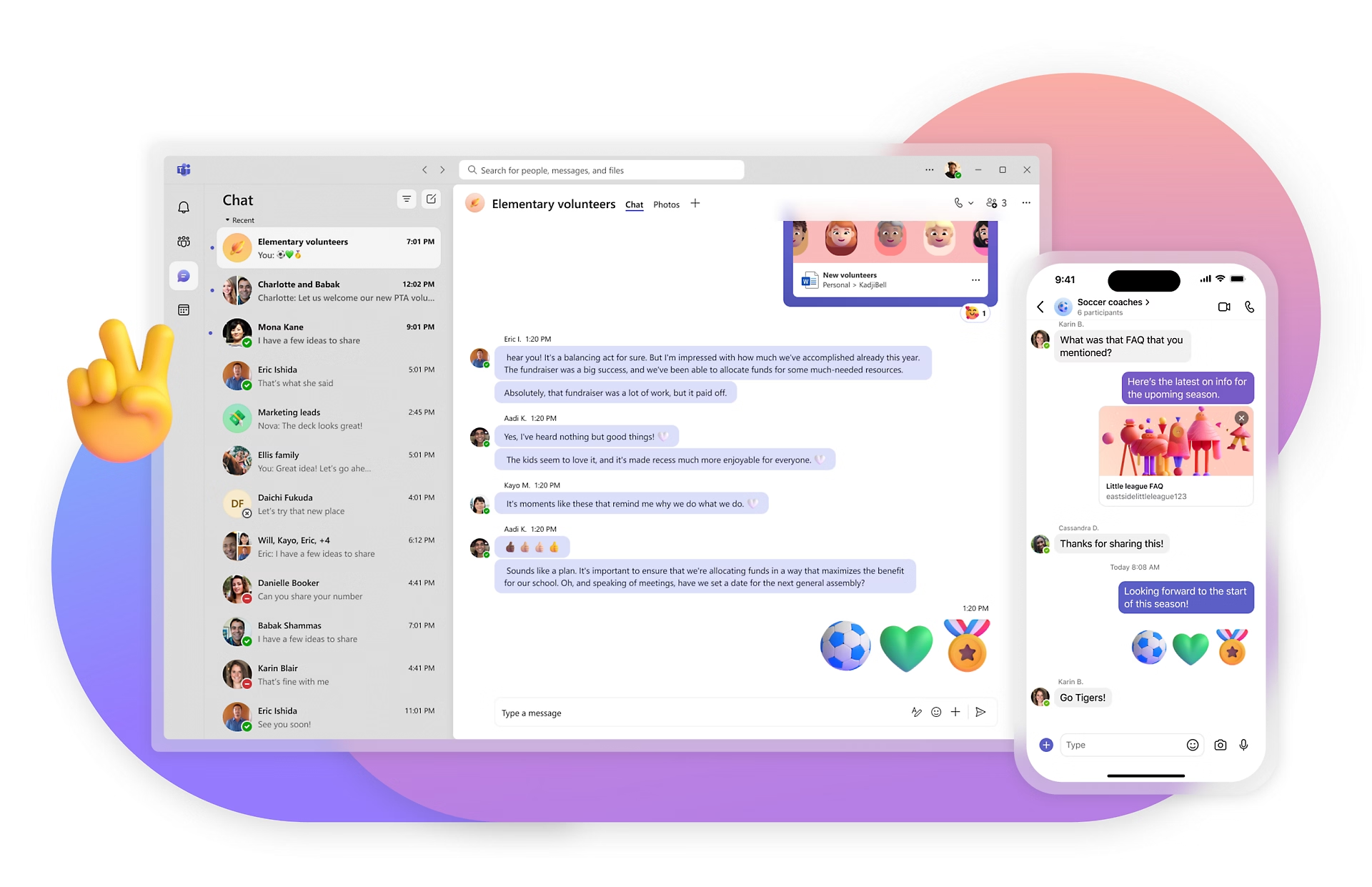
Your internal communications tools can use an update to engage employees in the new year. We compare Staffbase vs. Blink to see which is right for you.
Staffbase vs Blink compared on features, pricing, integrations, and frontline employee engagement. See which communication platform fits your needs.
Jess DeVore
Published:
September 17, 2023
Last updated:
September 17, 2023
You’re in the market for a new internal communications platform, but which is better: Staffbase vs. Blink?
The answer depends on what exactly you’re looking for. Both offer several similar features, but their execution is different. Let’s dive into the specifics to see which communication tool is right for you.
Staffbase vs. Blink — quick facts
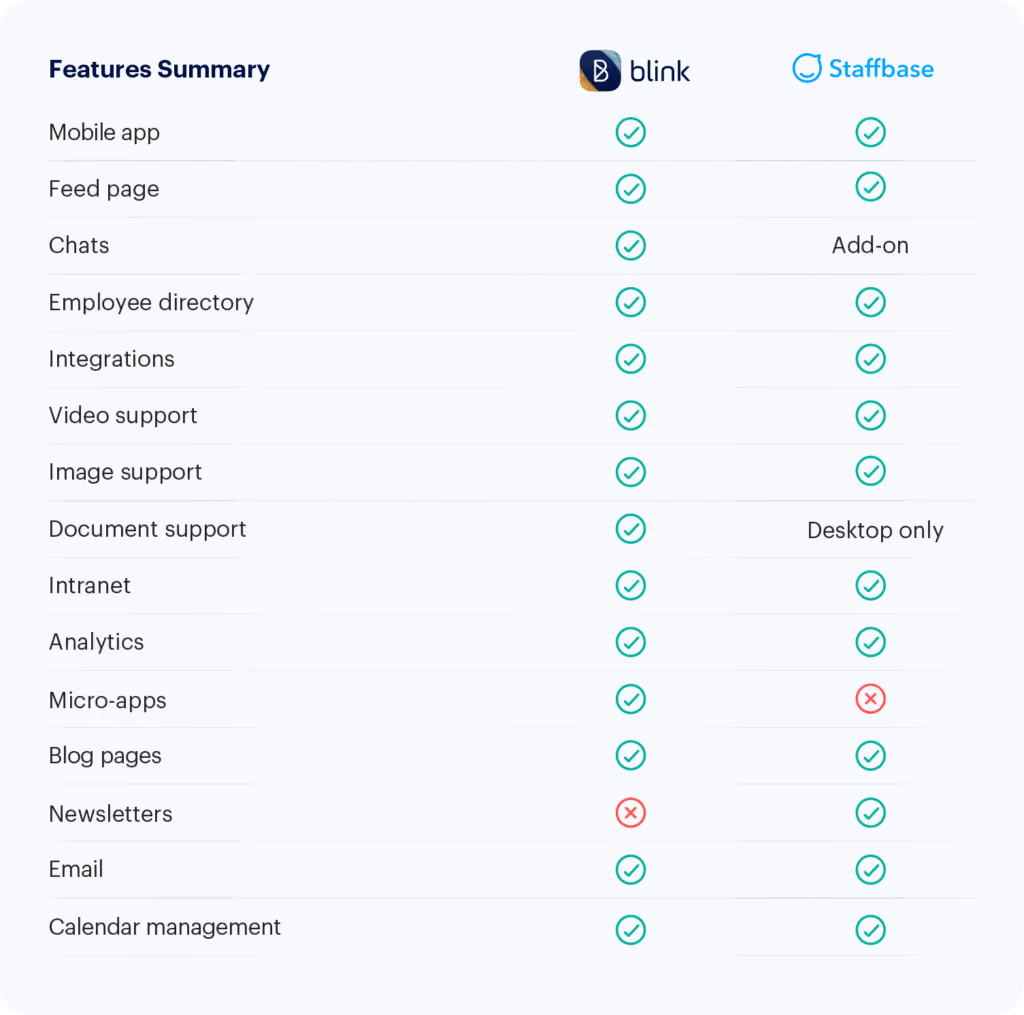
Staffbase vs. Blink: which is best for you in 2022? 1
The Staffbase employee app works best for big corporations, while Blink’s simpler format lends itself to on-the-go workers.
If a good portion of your team comprises frontline employees, Blink is the internal communications platform for you. Their mobile-first design and seamless app integrations are ideal for keeping deskless workers engaged.
Staffbase offers more robust customization features as standard with each product launch, including a custom logo and font.
A user said, “I love the look & feel of the app and the option to personalise the app for (conditional) user groups.”
But for those looking to customize their employee intranet software’s overall function and employee experience, Blink brings more flexibility, with deep integrations with existing apps inside the platform.
Within this, Blink brings existing apps to the platform via Single Sign-On integrations, while Staffbase offers more functionalities out of the box.
For example, Staffbase comes with a basic payroll function, while Blink has an end-to-end integration with Workday.
Comparing Blink vs. Staffbase on history, Staffbase has been around longer, making it a more established product with tried-and-tested service offerings. It is well-respected as a quality option.
As a newer company, Blink offers more innovation and cutting-edge features. 100% of the product roadmap is written based on customer requests, and it’s to provide feedback on the functionalities they want with each update.
The right solution for you depends on if you’re looking for a one-stop solution or something to complement your existing software.
Staffbase vs. Blink: How they’re similar
Staffbase vs. Blink: which is best for you in 2022? 2
Mobile content
Comparing Staffbase vs. Blink on mobile compatibility, you’ll find both offering well-optimized mobile platforms. That means your deskless employees will have the same access to information, documents, and community as those in the office with either platform.
But some G2 reviews suggest that Staffbase’s “Admin access on smartphones is very limited with basic functionality.”
Support for XL enterprises
Both internal communication platforms are robust enough to support enormous organizations. The intranet, news, and key features are designed to aggregate and organize a large content volume across many different functionalities.
But Staffbase is best used by large corporations, while Blink also works for companies with a large frontline workforce but smaller desk-based teams. Blink’s platform requires less time to implement and works with a hands-off IT experience.
Centralized intranet solution
Staffbase and Blink are good options for those searching for an employee intranet replacement. While peripheral features differ, both offer a solution to disseminate updates, provide access to company policies, spark conversation, and track insights about employee engagement.
Although the search in Staffbase works fine for a mobile app, those using Staffbase intranet will find the lack of filters, document management, and content management tools limiting them from creating a proper knowledge base.
Staffbase vs. Blink: How they’re different
When comparing Staffbase vs. Blink at a high level, it may seem like they share many features. But the execution of those features varies greatly.
Customer input
Blink serves fewer customers, which means they can have a much closer relationship with their customers — we’re talking on a first name basis.
Blink relies heavily on customer feedback to craft its product roadmap and even maintains a Product Portal to allow customers to request features and vote on what they want to see next.
In contrast, users say that Staffbase “aren’t quick to take on board and prioritise client feedback/requests for development.” Overall, Staffbase’s updates and features implementations are less agile.
Email
One notable feature that Staffbase offers that Blink lacks is email building. Through their merger with Bananatag, Staffbase lets you create engaging newsletters, send targeted emails to subsets of employees, and measure the impact of your internal email strategy.
Since frontline workers don’t have company email addresses, email is less of a focus at Blink, although it is accessible via integrations with Gmail and Outlook.
Employee generated content
Blink focuses on decentralizing employee communication so that every employee has a voice.
Blink champions employee-generated content through a live user feed and omni-directional chat features. For organizations that want to revitalize their outdated top-down team communication structure, Blink is a great choice.
Staffbase does not make it as easy for users to share content with other users. To upload a photo, users must send a submission form to the admin — who then creates the post themselves.
This setup is ideal for companies looking for greater control over who can share news. A user appreciated this feature, saying, “It’s very easy to make someone editor of a news channel so for example a Team Leader can communicate to his own team without giving him administrator rights of the whole app.”
Integrations
Blink offers a wider range of integrations with thousands of apps via Single Sign-On. Employees can access niche industry tools, Microsoft teams, and Sharepoint without ever leaving the app. The Blink team also takes care of the dev work, making it an all-in-one solution.
Staffbase integrations are more limited. They offer integrations with Microsoft 365 and SAP. This could only work well for a company that uses other enterprise applications or has a dedicated team to customize Staffbase through their APIs. Users said, “Currently, no local programs can be integrated into the launchpad.”
Notifications
Blink offers an array of real-time and schedulable push notifications to keep employees in the loop and engage with the app frequently.
Besides regular notifications, admins can create priority posts to catch everyone’s attention or create mandatory posts that users must acknowledge. Users can switch notifications on and off and follow certain posts.
Staffbase employee app’s push notifications are less customizable, focusing only on basic functions. Users say notifications “need improving,” and “There is no way to control push notifications separately for each channel.”
Chats
Blink’s chat is designed for both socializing and collaboration — wherever you are. Advanced features like saving messages and file sharing elevate the chat as a tool for getting workflows done rather than just a social media feature.
Staffbase offers an instant messaging feature as an add-on to advanced subscriptions. The chat supports one-on-one and group chats with a 128 user cap.
Users can only send images or videos on the Apple and Android apps, rather than documents. This leads to users calling Staffbase’s chat function “very basic.”
Here’s what Staffbase supports:
Staffbase vs. Blink: which is best for you in 2022? 3
Frontline focus
Blink’s core principle is that they improve frontline workers’ lives. As a result, engagement with the app is remarkably high, with an average of 10 opens per user per day.
While Staffbase is also targeted at frontline workers, many features aren’t carried through to the mobile interface. Reviewers say, “The biggest obstacle for us is to get non-desk users excited about the app and to integrate them.”
Content moderation
In Blink, administrators can assign content moderators who have complete power in managing content.
But Blink offers omnidirectional communication: User-generated content does not have to undergo a review before getting published, but any user can report and flag inappropriate content.
At Staffbase, admins have more direct control over moderating content. But there are some functional limitations around offline viewing and flagging inappropriate content which is surprising in an otherwise full-featured app.
Staffbase vs. Blink: pricing
Blink offers four levels of paid service based on company size, while Staffbase structures its pricing based on the number of features you use.
Blink levels:
Essential: $3.40 per person, per month
Business: Price on application
Enterprise: Price on application
Enterprise Plus: Price on application
Staffbase levels:
Employee app
Employee app + Intranet
Staffbase NOW
Final thoughts: Staffbase or Blink — which should you use in 2022?
Staffbase is a highly customizable internal communication software ideal for large corporations with a clear idea of what tools they need to round out their digital workplace.
Blink is ideal for businesses large and small wanting a complete out-of-the-box solution to engage frontline workers and facilitate more communication across their organization.
If you’re not sure, try a free demo of Blink and see for yourself the technology that drives a 330% increase in engagement for its users.
What we'll cover
Start your free trial today
See how Blink helps frontline teams stay connected, informed, and engaged.
Employee retention is the art of holding onto your staff once you’ve hired them.
And, in 202w, it’s more important than ever.
Why?
Because companies are finally waking up to the competitive advantages of being a "people" company. A "churn and burn" approach to hiring results in poor customer service.
This is an issue, because customers are placing increasing value on good service. With smartphones, it’s easier than ever to find a competitor company to buy from. Or in the case of consumer goods, to avoid the shop altogether and order online.
Before we start.
You can hold onto employees (more or less) by treating them well. Listening to their concerns, and providing them with a few incentives to stay put.
If you’re an HR professional or a CEO, you don’t need us to tell you that. What you might find useful is an in-depth guide to employee retention in the modern workforce.
How to maximize your employee engagement efforts. And make sure there were no stones left unturned in creating the most comprehensive guide... we asked some industry-leading experts to contribute. We’ll cover:
Detail on the importance of employee retention today.
How to build effective employee retention strategies.
The exit interview, and how to turn it into your secret employee retention weapon.
Let’s begin...
Why is employee retention important?
Employee retention means "treating your employees right"; it’s an end in itself, not just the means.
From an ethical standpoint, no company should mistreat their employees. Meeting your colleagues’ basic needs and providing them with a safe and stimulating workplace? It's the right thing to do for its own sake.
But it’s more than that.
Attracting talent to your company—and keeping it once you’ve found it—has so many advantages. According to Herzberg's famous Two-Factory Theory, employee retention and employee motivation are interdependent. You can find out more about this in the Vantage Circle HR blog. A strong employee retention strategy will:
Reduce operating costs.
Improve customer service levels.
Allow you to out-compete your competitors for the best people.
The cost of high employee turnover
Hiring and firing is expensive.
Eye-wateringly expensive, to be precise. Think six to nine months salary as a conservative estimate.
Then you need to consider the impact of not having someone there to do that person’s work. That could slow down a massive project. Cause higher overtime costs as existing staff pick up their work. Or just lead to a reduction in staff morale as they struggle with increased workloads.
Companies tend to get the importance of this for salaried positions and execs. but there’s often a bit of a blind spot when it comes to their non-desk workforce and the real cost of losing an employee.
Sure, replacing a senior-level manager is more expensive than replacing a bus driver. But what happens if your bus drivers’ morale becomes so low that two or three quit per month?
It all adds up.
"Losing talented staff can also have emotional consequences on those who stay. Effectively reducing productivity by decreasing morality and motivation," says Rochelle van Rensburg of the Ezzely Blog.
"Maintaining essential talent is therefore mission-critical to organizational effectiveness for all these reasons. Staff retention puts companies ahead of their competitors, by reducing recruiting and re-skilling costs. But more importantly, by keeping the top performers, which results in all of their specialized knowledge and expertise remaining in-house."
Your mobile workforce interacts most with customers. They are the public face of your company. So, their happiness will reflect in the level of service they give your customers.
Happier, more engaged employees deliver better customer service. They also build up a bank of operational knowledge over time. This helps them respond to queries quicker and more effectively than a steady stream of new hires ever could.
The importance of employee retention in 2020
An active employee retention strategy is more important than ever. There are two key reasons for this:
Firstly, it's never been easier for customers to look elsewhere if they feel that your levels of service don’t match their expectations. We live in an age where any information you want is available via a few taps of a smartphone screen.
Dissatisfied with a hotel stay? Booking.com can recommend thousands of others.
Bad experience in a taxi? A quick Google gets you all the phone numbers of other local firms.
Poor customer experience at a theme park? TripAdvisor lists other attractions.
You get the idea.
Despite this, customers still want to be loyal. Millennials want to stick around if your brand fits in with their personal values. Don’t throw away this loyal market.
Secondly, it's never been easier to browse jobs via online jobs boards. If your workforce isn’t happy they will move. Don’t assume that they will sit in their job miserable because there aren’t any other options.
Reasons why employees leave and reasons why managers leave aren't always the same.
Your competitors may be waking up to the benefits of being a "people company." They'll more than happily snap up the staff you can't keep.
The best employee retention strategies
A strong employee retention rate is crucial to remain competitive. How you go about doing this is worth examining in some depth.
Remember - you are an employee too! As you create your employee retention strategies, keep asking yourself, "would I be happy with this?" or, "does this seem reasonable to me?"
Here are a few points you’ll need to cover when creating an employee engagement plan. Remember, the employee experience starts before the first day at the interviewing stage. To set each new starter up for success, getting the onboarding right is crucial. Want to learn more? Check out the Definitive Guide to Onboarding.
Let's quickly touch on the foundation of any working relationship: trust. As Kayla Lopez from the recruitment firm Viqtory.com reminds us. "If your employees trust you and the organization they tend to embrace the workplace; this begins before the employee is even hired. Transparency is something that we need to willingly support to gain trust. A workforce that trusts you will be engaged, a workforce that is engaged will retain. Trust is the foundation of all strong partnerships."
Now for the details...
Pay well
We’ll start with the basics.
If your pay rates don’t match with your competitors’, you’re going to have a bad time keeping hold of your high achievers.
Take a quick look at what your competitors pay for equal positions. Try and build a league table of what similar companies to you pay, and where you rank. Glassdoor is a good starting point.
Aiming for the absolute top is ideal if you can afford it, but you don’t have to offer the best salary offer out there. There are plenty of other ways to encourage your staff to stay put (more on that below), as long as you can land in the middle of the table. For someone working in a frontline job, it is difficult to give your best at work knowing you could get $5.00 per hour more for the same job elsewhere. (Even if there’s free pizza every Friday).
It’s also worth noting that even a generous wage packet won’t persuade your employees to stay if you’re otherwise a nightmare to work for. Consider this step the cornerstone of all your employee engagement efforts. Not enough by itself, but essential in building something lasting and meaningful.
Give competitive benefits
You might not be able to take it to Silicon Valley levels. (Free three-course meals for breakfast, lunch and dinner, unlimited holidays, and puppy creches).
You can offer a benefits package or a performance bonus scheme tailored to the size of your business, your budget, and your business objectives. The key is to prioritize benefits that would have a tangible difference to the lives of your employees. Add the fancy stuff on if you have money to spare.
Think about:
Childcare vouchers: we’re all aware of the struggle to find affordable childcare. Help your workforce with their work-life balance (and keep it diverse—most of the people who end up quitting jobs for childcare reasons tend to be women) by offering vouchers to help with the cost.
Health coverfor employees and dependents: an absolute must if you're US-based, although even if you live in a country which has some form of universal health care, giving employees the opportunity to go private is very appealing.
Flexible working: if the type of work you do accommodates it, flexible working is like gold dust to your staff. A "work your hours however you want" policy helps people manage childcare commitments, fit in dentist appointments, and reduce the stress of trying to juggle work and life commitments.
Lunch program: Most of the lunch break is spent buying, prepping or reheating food. Offering a tasty and healthy in-house solution, such as the online canteen Smunch, allows your employees to capitalize on their break time and share a meal together. Ultimately, this will improve your company culture and cross-departmental communication as well.
Once you’ve got the basics sorted, some nice-to-have options include:
Above average PTO allowances
Free gym memberships and cycle to work programs
Personal development funds
Develop a feedback culture to empower employees
Your employees know their workplace better than anyone else. Make the most of it.
If your employees feel involved in shaping their workplace and consulted on major decisions then they will be reluctant to leave it.
The key to this is to carry regular, easy-to-complete employee engagement surveys so you know exactly what the mood on the ground is and how to improve it.
Employees will hold an enormous amount of goodwill towards a workplace that listens to their concerns and acts on them. Equally, they will reserve a special sort of resentment for those that send out survey after survey, only to ignore the results.
It’s essential to have a solid plan in place for your employee engagement surveys, or they will backfire spectacularly.
Key pointers
Small, regular surveys are better than long, annual ones. Only giving your employees one chance per year to raise issues will result in bottled up frustrations spewing out come survey time. Not only does this result in surveys that skew unhelpfully negative, but it also means that your HR team will face an uphill struggle
Another point about designing surveys that you can respond to effectively: keep it targeted. Focus each of your quick-answer surveys on a specific area—facilities onsite, for example, or about relationships with line managers.
Use short answer questions: "yes/no" or "on a scale of 1-5" formats make it easier for people to respond immediately. Long-form feedback can be helpful, but having lots of long-answer text boxes on your survey will put people off completing it. A good compromise is to have an optional "any specific comments" box at the end of the survey.
When you’ve processed the surveys, share the results and shout about what you’re doing to act on feedback. Employees will appreciate the transparency, and it’s important to signpost what you’re doing to address the concerns they raise—or they won’t bother to participate in future surveys.
Try and create a "feedback culture" in your company by encouraging people to come forward with suggestions for improvements any time they want. Surveys highlight pain points as they are reactive; an anonymous suggestions box (either digital or real-life), on the other hand, will bring out the more innovative side of your workforce.
These suggestions might be small—a new way of organizing the break room fridge, or the introduction of free coffee Mondays—but the opportunity to improve the workplace in this way will work wonders for your wider staff’s sense of allegiance to it.
Make your workplace a fun place to work
If your coworkers are your friends, spending time at work doesn’t seem so taxing.
This is where the fun stuff comes in—the away days, lunchtime yoga, the free breakfast bar, the Christmas party...
If you have a mobile workforce, don’t forget to include them, too! They might not be in the office that often, so having regular get-togethers or breakfast clubs when shifts change is a great way to build a sense of belonging.
Obviously, base these activities on what your own workforce would like, but some ideas include:
Regular lunchtime sports clubs (running, yoga, five-a-side, badminton are good starting points)
Away days and team-building weekends.
Semi-regular opportunities for free food. Depending on the size of your team, you could offer lunch on the company each Friday, pizza parties when teams hit their targets or just because
Big events like Christmas parties and family fun days. If you run awareness weeks for things like diversity, mental health and stress, why not run some exciting events for these too?
Recognition of key milestones. If there are particularly busy periods throughout the year (like the Christmas rush for anyone working in retail or hospitality), put on an event to recognize the hard work your employees put in. This could be a full-on party, or simply just giving your staff the nod to take off after lunch on a quiet day.
This step does, however, come with a big flashing warning sign that says: don’t bother doing any of these without doing the steps listed above first.
Because these are fun and exciting, and sound super trendy when you put them on your Careers page, people often use them in place of paying a decent wage, or offering flexible working hours, or acting on employee feedback.
The exit interview - your employee retention secret weapon
One of the best ways of figuring out what’s going wrong with your employee retention efforts is asking your colleagues when they leave.
Seems counter-intuitive, and rather frustrating, doesn’t it?
And in some ways, it is. No amount of collecting and aggregating exit interview data, tweaking your employee engagement plan and making changes in your company to reduce employee turnover will change the fact that, for that particular employee, your efforts weren’t enough. For HR people and line managers, that stings sometimes.
Still, if you can take your losses on the chin, this is a real opportunity to do better for your colleagues, and identify and fix any major issues that push people to leave.
There are three main reasons why exit interviews are so effective at flagging up things that need to change:
The employee is leaving so won't hold back
Regardless of how many times you reassure your colleagues that your pulse surveys are anonymous and that helpful suggestions are encouraged, they will still be a little suspicious.
The worry that surveys aren’t really anonymous, or that speaking out about a key workplace bugbear will get them labelled as a troublemaker, will be a constant thorn in the side of your employee retention efforts.
(As a side note, if this attitude is pervasive then it might be time to take a look at your workplace culture. A little reticence is natural. An all-encompassing dread of speaking up might indicate something a little more sinister).
The exit interview is a different kettle of fish. They’re leaving. There are no raises or opportunities for promotion in the pipeline. This is their opportunity to "tell it like it really is."
Listen, even if you think they’re being unfair and bitter.
Problems brought up during exit interviews tend to have weighed heavily on an employee’s decision to leave. In other words, they’re big issues you need to address urgently.
Get the whole picture
Multiple exit interviews help build up a better picture of life on the ground.
Of course, there’s always the chance that one particular employee just, for whatever reason, didn’t have a good time.
That’s where keeping data from previous exit interviews comes in.
For example, if an employee complains about their line manager being unbearable, it might just be a clash of personalities. Equally it could be because that line manager is difficult to work for and too demanding. It’s difficult to say without further info.
So. Run some analytics.
How many other employees from that line manager’s team have left over the past year?
Did they say anything in their exit interviews?
Have they been flagged to HR for anything previously?
If so, you might want to investigate further.
This is why it’s important to conduct an exit interview for every single person that leaves the business. If you restrict it to management positions, people based in HQ, or full-time workers, you’re missing key sets of data that could be useful in improving your employee retention strategy.
Find out what went wrong
An exit interview, conducted well, helps you identify wrong turns in your employee journey map.
You’ll probably have some sort of employee journey map already.
You might call it something different. We’re referring to the plan you make that starts at the hire phase and ends with the offboarding phase when the employee leaves. This normally includes guidelines for each stage they go through with your company. For example:
Hiring:
Offer letter and contract sent
Start date agreed two weeks in advance
Onboarding:
First day: tour of premises, fire safety, welcome coffee or lunch
First six weeks: all e-learning to be completed
You get the idea. Here's a basic template you could expand on:
The exit interview provides an excellent opportunity to ask your employees about various stages in this plan, to see whether they’ve been carried out to your expectations.
Ask specifically, and don’t be afraid to go right back to the start of their employment. Whether they felt welcomed in their first weeks, for example. If they were given clear and regular feedback on their performance, and compare that to your notes on how your employee journey should pan out.
It could be that, despite your meticulous efforts in planning it, your employee journey map isn’t being adhered to by managers in the wider organisation. This could be why your employees are leaving - this map provides guidelines on how to make sure people feel safe, supported and included at work. If people don’t follow it you’re going to have problems.
Your employee journey map is important. If it isn’t being followed, you need to correct that as soon as you can. Exit interviews are the best way to do this.
How to conduct an employee retention interview
Be flexible around your employees needs
If a lot of your workforce are remote or mobile, don’t insist on a face-to-face interview at HQ.
There are several free video calling apps available, so why not make use of them? An employee is more likely to feel comfortable talking to you if you’ve made accommodations for their situation.
If they’re more comfortable talking to you, they’re more likely to be honest with you, and that’s exactly what you want.
Don’t make it overly formal
Go for a relaxed vibe. Making things too formal will only stifle conversation.
If you’re conducting a face-to-face interview, it’s a nice touch to provide some sort of refreshments; hot drinks and a pastry, maybe. The employee will appreciate the gesture, and it will encourage a more conversational feel, which is exactly what will get them to open up.
Identify the specifics to touch on
You will know, from previous exit interviews if there are any particular pain points in your employee experience.
Ask about them. You’ll then be able to establish:
Whether these are still issues
What progress you’ve made on them, and how effective your efforts to tackle them have been.
...But allow them to express their opinion too
If the structure of the interview is entirely created by you, you could miss something important.
By allowing employees space to expand on their own concerns, you give yourself the opportunity to pick up on potential issues that aren’t on your radar. Sure, a lot of this could be specific to that particular individual, but you should investigate nonetheless—otherwise you’ll never know whether it’s the iceberg tip of something bigger.
Remember: your relationship with the employee isn't over
People leave for all sorts of reasons—not all of them negative.
You might want to leave the door open for talented employees, in case they want to return at some point. Also consider that talented former employees can be great source of referrals.
These can be your company’s cheerleaders, even after they’ve left. A good exit interview can make this relationship. A poor one can ruin it.
Of course, there’s also the possibility that the employee leaving has been less than stellar. In this case you should see the exit interview as a chance to smooth things over, and divert potentially negative Glassdoor reviews or social media mentions.
Final thoughts
To summarize:
An employee retention strategy is important because it makes your employees happier. Happier, more engaged employees perform better in general, and deliver better customer service.
The cost of employee turnover is measured in increased operational costs and decreased institutional knowledge.
Bearing this in mind, the question you should be asking yourself isn’t "can we afford to expand our employee retention efforts?"
It’s "can we afford not to?"
An engaged, happy workforce with a low churn rate isn’t just a nice thing to have.
It’s not just something you can boast about on your Careers page.
It’s a competitive advantage—and people are only just waking up to this fact. Because now more than ever, people value good customer service. If you can provide that, you’ll have a serious head start on your competitors.
Blink is an internal communications tool that’s does everything your intranet does, but better. Try it out today! Request a free demo to get started.
If you’re in internal communications, you’ve heard that sentence more times than you’ve heard “quick question” (which, as we know, is never actually quick).
The shift is real. Five years ago, a lot of comms tech lived in the “nice to have” bucket. In 2026, it’s a boardroom conversation — and boardrooms don’t buy “nice.” They buy outcomes: efficiency, reduced risk, better retention, higher adoption of expensive tech investments, and measurable operational wins.
In our recent webinar, Proving internal comms ROI in 2026: Lessons from the other side, Ricky Sickelmore shared what he learned after 24 years in transport (including launching Blink at Stagecoach and introducing it at Arriva) — and what consistently held up when leadership came knocking for ROI.
Here are the six takeaways internal comms teams can apply immediately.
1. Ditch vanity metrics for outcomes
Email opens. Page views. Likes.
They’re not useless… they’re just not convincing.
Ricky’s rule: stop leading with activity metrics and start leading with business value. Executives don’t want to hear that “people saw the message.” They want to know: did anything change, and did it matter?
So translate comms problems into operational and financial realities:
Safety reporting increases (e.g., digital near-miss reporting vs. “find the form somewhere and hope someone bothers”)
Turnover movement (not because comms magically fixes attrition — but because comms can remove friction, improve onboarding, and drive consistency)
A useful gut-check: If your metric can’t be repeated in a budget meeting without you adding a 3-minute explanation, it’s not your headline metric.
Executives aren’t interested in open rates. They’re interested in the financial reality.
- Ricky Sickelmore, Blink
2. Start with hard costs and operational efficiency
If you want CFO attention, lead with the stuff they can smell from three floors away: tangible savings.
Ricky shared a simple example that’s painfully common in frontline-heavy orgs: printing and distributing documents at scale. One organization saved over £200,000 by moving payslips from print-and-post to digital distribution.
But don’t just stop at “printing costs.” The strongest ROI cases widen the lens:
Printers and maintenance
Paper, postage, distribution
Staff time to print, collate, deliver, reprint
Support tickets created when things go wrong
And when you talk about “time savings,” make them real. Not “we saved time.” Instead:
“We reclaimed 10 hours per week of manager time previously spent manually filling shifts.”
“We reduced password reset requests because employees access systems through one authenticated front door.”
Pro tip from Ricky: Do a basic “time and motion” study. Follow one process end-to-end and document every human touchpoint. That one form might bounce across 8–10 people, with delays that never show up on a neat process map.
3. Build a cross-functional case, not a “comms case”
One of the biggest mistakes internal comms teams make is trying to win budget alone — with a comms-only story.
Ricky put it bluntly: ROI gets easier when internal comms stops being “the comms team’s project” and becomes an operations, safety, engineering, and HR win.
That means stakeholder interviews early — not once the deck is already written.
Ask department heads:
What’s your biggest friction point right now?
What manual work is wasting your team’s time?
Where do you have compliance risk?
What’s the cost of not fixing this?
Example Ricky gave: if a safety leader can’t reliably get 20 drivers in a room for a briefing, that’s not a comms problem — it’s an operational risk. A digital “mandatory read” gives you trackable compliance without the logistics circus.
Make it tangible: Form a small steering committee with reps from the functions that will benefit most. When you go for sign-off, you’re not walking in alone — you’re walking in with allies.
You’re not in it alone — get the right stakeholders in the room early.
Ricky Sickelmore
4. Prove time-to-value through onboarding
Want a metric that operations leaders actually care about? Onboarding efficiency.
Ricky called this one “underestimated” — and he’s right. Onboarding is where friction shows up immediately, and where improvements are easy to translate into time, money, and productivity.
If employees can receive policies, procedures, training content, and day-one essentials before they even start, you can often get people productive an entire day sooner.
That’s not “engagement.” That’s time to value.
And onboarding improvements have a bonus effect: they reduce downstream errors, reduce manager time spent repeating the same information, and improve early retention (again — comms isn’t the sole driver, but it’s a meaningful part of the system).
5. Position your platform as the digital front door
One of Ricky’s biggest reflections: early on, it’s easy to think you’re buying “a comms tool.”
But the strongest ROI cases position the platform as the gateway to your digital estate — the place employees actually start their day.
This matters because most organizations are already paying for expensive systems (HRIS, scheduling, payroll, benefits, learning, etc.). The problem isn’t always the tool — it’s access and adoption.
If your internal comms platform:
Uses SSO
Reduces password resets
Gives employees one place to find and access tools
Increases self-service
…then your comms investment is also protecting and amplifying other investments.
Ricky shared a real pattern: Once access is simplified through a single front door, usage of other systems can jump dramatically — and suddenly your internal comms platform isn’t “another tool.” It’s the tool that makes the rest usable.
6. Establish a baseline — and sell the cost of inaction
You can’t prove improvement if you don’t know where you started. And you can’t create urgency if you can’t show what “doing nothing” costs.
Ricky’s advice: Baseline early — and don’t just baseline comms metrics.
Baseline business realities that leadership recognizes:
Turnover / attrition
Survey participation rates
Safety reporting volumes
Time spent on manual processes
Printing, distribution, and support costs
Operational delays caused by information gaps
Then translate that into the cost of inaction: the money currently leaking from the business because processes are manual, access is fragmented, and frontline teams can’t reliably get what they need.
When you can credibly say, “Here’s what it costs us to do nothing,” the investment stops feeling optional.
Common mistakes to avoid when proving internal comms ROI
A few “don’t step on this rake” moments that came up in the conversation:
Don’t lead with outputs. “We sent 12 newsletters” isn’t ROI.
Don’t build the case in isolation. Cross-functional pain points = stronger case.
Don’t ignore hard money. The “soft” story matters, but hard savings gets you in the door.
Don’t skip the frontline reality check. Spend time with frontline teams. Watch the work. Learn the friction.
Don’t assume leaders know what to ask for. Often the first job is clarifying the real question behind “prove ROI.”
{{mobile-desktop-main="/image"}}
Be the change maker
Internal comms ROI in 2026 isn’t about becoming a finance team overnight. It’s about learning to translate.
Translate comms into outcomes.
Translate friction into cost.
Translate “this would be helpful” into “this will reduce risk, save time, and speed up productivity.”
On a 2023 listening tour, Safeguard Global, an HR consulting company, discovered that employees were worried about their winter heating bills. The organization acted on this feedback by providing a monthly stipend to help cash-strapped workers.
Chief People Officer Katherine Loranger told SHRM, “It wouldn’t have happened without the firsthand information about how inflation was impacting those employees.”
Similarly, after layoffs at Change.org, Chief Operating Officer Jennifer Dulski used a listening tour to understand the impact on remaining employees. She found that trust was at an all-time low.
The company responded by improving transparency and communication about its financial situation. Employees came to understand why difficult decisions had been made — and felt reassured about their job security.
As organizations like these have found, a listening tour can help you find and fix employee problems before they cause undue harm to your organization. They can also surface fresh perspectives on everything from your products to customer service to the employee experience.
In 2025, a listening tour is an essential part of any good internal communication plan. Let’s look at why that’s the case — and how you can put a listening tour into action.
What is a listening tour and why does it matter in 2025?
A listening tour is a series of structured conversations with employees, designed to gather feedback and insights.
It can include:
1-to-1 interviews with employees
Focus groups
Pulse-check polls
Workplace walk-throughs
Town hall meetings
A listening tour goes way beyond the annual employee survey. By actually speaking to employees, asking relevant questions, and encouraging honest and expansive answers, you develop an in-depth understanding of the employee experience.
In the case of an internal comms listening tour, you get to understand the employee experience in relation to your communications. You discover what employees think of your internal communication channels and tools. And whether your internal comms plan is having the desired impact.
{{mobile-live-stream-poll="/image"}}
Key benefits of a listening tour
Executing an impactful listening tour takes time and effort. But it’s well worth the investment. Here’s why:
It builds trust. Conduct a listening tour and you show employees that you value their input. When you act upon their feedback, employees feel heard. This strengthens their trust in your organization and its leadership.
It fosters inclusion. On a well-planned listening tour, you gather feedback from hard-to-reach sectors of your workforce — like frontline employees — who may have little chance, day to day, to share their ideas, challenges, and perspectives with company decision-makers.
It surfaces actionable insights. A listening tour provides lots of useful qualitative data. You get to know what employees are struggling with and their preferred solutions. These actionable insights allow you to make changes that make a real difference to your workforce.
Why run a listening tour now?
There’s never been a better time to run a listening tour.
We know that many hybrid and frontline employees feel excluded from the company conversation. Nearly 2 in 3 UK workers are worried about burnout in 2025. And the latest Gallup figures show that just 23% of employees are engaged at work.
In 2025, employees are also holding leaders to a higher standard of accountability and transparency. Deloitte research shows that 84% of workers and 74% of leaders say an increasing focus on trust and transparency between workers and the organization is very or critically important.
According to Deloitte, transparency is the most pressing business trend. It’s predicted to have the greatest impact on an organization’s success, both this year and over the next two years.
A listening tour helps to address all these issues. Employers can uncover what employees want from leadership and better understand employee motivation and wellbeing. They can then develop a plan to improve internal communications, transparency, and employee engagement, benefitting workers and the organization’s bottom line.
{{future-of-internal-comms-2025="/callouts"}}
Planning your next listening tour
So how do you make a success of a listening tour at your organization? It starts with a clear and comprehensive plan.
Set clear goals
Decide what you want to achieve with your listening tour and how your communication goals align with broader business objectives, such as employee retention.
If you’re running an internal communications listening tour, you may want to find out how employees feel about the company intranet — or the other internal communication tools you use. You may want to know if employees feel part of company culture and how they rate the transparency of your leadership team. You may also want to gauge their feedback on internal communication efforts such as key messages, internal emails, or peer communication.
Whatever your focus, establishing your goals helps to ensure your listening tour has direction and that you can measure outcomes effectively.
Identify your audience
The goals of your listening tour will help to dictate its audience segments. If you’re looking to address challenges within a single team, you only need to target that department. But for business goals that relate to your entire organization, you should look further afield.
Also, consider the diversity of your target audience. If you want to get a holistic sense of employee sentiment, speak to employees from all corners of your organization. That includes hybrid and frontline workers who experience the workplace differently from desk-based workers.
Choose the right format
The format of your listening tour needs to align with the needs and expectations of your workforce. Be conscious of time zones, shift patterns, access to tech tools, and the resources available to your interviewing team when deciding how to conduct your tour. Options include virtual sessions, in-person conversations, or a mix of the two.
{{mobile-survey="/image"}}
Prepare key questions
You’re more likely to achieve your listening tour goals if you set a couple of key interview questions in stone. Some examples include:
What challenges are you facing in your role?
How can we improve employee communications?
What support would make your work easier?
Which key messages do you care the most about?
What motivates you to stay with the organization?
Pro tip: Conduct an employee survey before running a listening tour. This helps to surface issues you might want to explore in more depth during the tour.
Executing the tour
To get the most from your listening tour:
Be present and authentic. Show genuine interest in employee feedback by demonstrating active listening skills and empathy. Leave space for them to elaborate on their answers.
Encourage open dialogue. Use inclusive language and emphasize that all opinions are valued and confidential. Facilitate two-way communication by allowing participants to ask questions, too.
Adapt as you go. Be flexible and prepared to pivot if certain topics emerge as priorities. Don’t be afraid to go beyond your key questions to ask meaningful follow-up questions.
Document key insights. Designate a note-taker or record sessions (with permission) to ensure no feedback from employees is lost
If you’ve executed an extensive listening tour, the amount of data you now have at your fingertips can feel overwhelming. Here’s a step-by-step process for analyzing and acting upon it.
Step 1. Organize your findings
Group feedback into themes like communication gaps, technology issues, or recognition needs. You can do this manually, using a spreadsheet or sticky notes. Or you can use tech tools like AI and mind-mapping software. This helps you identify any burning issues and prioritize your action plan.
Step 2. Share what you’ve learned
Transparency builds trust. So share a summary of the feedback with employees, acknowledging recurring themes, significant insights, and any surprising findings. Also, thank workers for their input, emphasizing the crucial role they play in shaping workplace improvements.
Step 3. Take action
The ultimate goal of any listening program is meaningful workplace change. So outline specific steps the company is planning to take, along with timelines. Involve managers to ensure employees see immediate and tangible results.
Most importantly, prioritize transparent and effective communication along the way, keeping employees up to date with progress on your action plan and closing the feedback loop.
Pro tip: Seek ongoing employee feedback to find out if changes have addressed the concerns raised in your listening tour. If not, go back to the drawing board and come up with a new plan.
{{mobile-main="/image"}}
Beyond the tour: Building a listening culture
When you go beyond a one-off listening tour to build a culture of listening at your organization, you embed the benefits.
Employees have faith that their feedback is listened to and acted upon — and they feel comfortable voicing their opinions because there’s a wider culture of psychological safety.
As a result, you receive honest and valuable employee input, which yields more effective workplace improvements. You also get ongoing feedback, which means employee dissatisfaction is much less likely to take you by surprise.
So how do you create a listening culture? Start by putting these key foundations in place:
Ongoing feedback channels. An annual feedback event isn’t enough. Encourage employee feedback all year round with regular pulse surveys and 1-to-1s, ensuring feedback channels are accessible to all workers.
Leadership training. Equip managers with the tools and skills they need to conduct their own mini-listening tours, making open and empathetic communication a priority.
A regular schedule of listening tours. Keep your finger firmly on the pulse by turning listening tours into an annual event. You’ll improve the process — and employee input — with each new cycle.
It’s time to make listening tours a fixture of your internal communication plan
Listening tours are a commitment of time and effort. But — because they provide insights that you simply can’t get from an employee survey — they’re well worth the investment.
By embarking on an annual listening tour, deploying other employee listening tactics in the months between tours, and reliably acting upon feedback you build a culture where employees feel heard and supported.
Find new ways to improve your internal communication strategy, foster employee engagement, and build workplace trust. And make a tangible difference to the work lives of employees in the process.
I would like to nominate Mark following his heroic and kind-hearted behavior that recently saved a young girl’s life.
Mark pulled into the bus stand when a colleague approached him and alerted him to a young girl who had been found on the floor in a state. Mark approached the girl, and she told him she was considering ending her life.
Mark brought her back to the bus in a warm, safe space and he asked her about what happened — the girl believed she was drugged and the culprit had stolen her rucksack with her personal belongings inside. Mark called the paramedics and he waited with her for two hours as he spoke to her and calmed her down until she fell asleep on the bus. He monitored her every 5-10 minutes to check that she was breathing and wasn’t in danger. When the paramedics came, he took them up the road to try to search for her bag but sadly to no avail.
Thanks to Mark’s selflessness and fatherly instinct, he saved her and brought her to safety in the hands of the paramedics. Mark deserves to be thanked and recognized for this act, and should know the huge impact he has had on this girl’s life.
How has Blink helped in his role?
Mark is very active in the community and he always takes part in events, which he finds through the app.
An ageing population, complex patient needs, staff shortages, and technological transformation are stretching teams to the limit.
The fallout from COVID-19 still lingers. In the UK, the NHS has a waiting list of 7.37 million cases. And while the healthcare strikes of 2023 may have been resolved with pay rises, salary disputes rumble on.
If all that wasn’t enough, we can add long, inflexible shifts and emotionally demanding work into the mix. It’s no wonder that nearly one-third of healthcare employees are disengaged.
This is a problem. Because disengagement hits employee retention, patient care, and any new initiatives you try to roll out. It seems that employee engagement in healthcare is in need of urgent attention — STAT.
Ready to rewrite the prescription? Here, we explore what healthcare employee engagement looks like, why it matters, and how to foster it within your organization.
Too many healthcare organizations are getting employee engagement wrong
After hundreds of conversations with healthcare professionals, one thing has become crystal clear to the Blink team. Employee engagement is one of the most misunderstood concepts in the workplace.
Too often, it gets used as a catch-all term for every good thing a worker might do — from smiling at patients to hitting their KPIs.
An engaged healthcare worker is thought to be better organized, happier, more satisfied, more loyal, healthier, more motivated, more productive, better at communicating, and more prepared to go the extra mile.
Some of these behaviors are indicative of engagement. But there are a couple of key problems with this definition:
It’s unrealistic. No one can embody all of those traits all of the time — especially in a high-stress, resource-stretched healthcare environment.
It’s vague. Phrases like “go the extra mile” make engagement sound fluffy — a nice-to-have and not the essential driver of staff performance it really is.
It’s unmeasurable. Tracking all those behaviors would be tricky. So measuring and improving employee engagement feels like too big a challenge.
When engagement is defined as a wish-list, finding practical solutions is tough. In healthcare, real engagement is specific, measurable, and tied directly to better patient care.
What employee engagement in healthcare isn’t
When figuring out what employee engagement in healthcare is, it can help to start with all the things it isn’t. Employee engagement in healthcare is not:
Satisfaction: A satisfied nurse might feel satisfied with their shift pattern. But that doesn’t mean they won’t walk if another hospital offers better pay or hours.
Happiness: A care worker may feel happy at work because they have a lot of free time to chat with co-workers. But that doesn’t mean they’re committed to the very best patient care.
Motivation: A paramedic may feel motivated to work hard because they have their eye set on a promotion. But that doesn’t mean they’re invested in today’s patients or their current team.
Empowerment: An organization may pride itself on the autonomy it affords to its staff. But staff will only take action and make decisions independently when they feel engaged and supported.
Zero stress: A brain surgeon may feel stressed when operating but still be highly engaged. An optimal level of stress can actually increase engagement.
Productivity: A hospital porter may transport patients efficiently all day long. But that doesn’t mean they’re interacting with patients and putting them at ease.
Engagement isn’t a fixed state. It ebbs and flows — from shift to shift and year to year. And it isn’t the same for every employee or every organization.
Whatemployee engagement in healthcare is
In healthcare, engagement isn’t about surface-level positivity or breakneck productivity. It’s about creating the conditions where people — often working in high-stakes, emotionally and physically demanding environments — can bring their best focus, care, and energy to patients.
To achieve this, you need an employee engagement strategy that goes beyond the HR team to involve the whole of your organization.
1. Connection to the work. Not just liking the job but feeling that their work makes a difference, that their skills are used to their fullest, and that even the smallest task has meaning within a patient’s care journey.
2. Leader behaviors. Day-to-day interactions with managers have a huge impact on employee engagement. Employees who feel that their manager treats them with respect, treats everyone equally, cares about job satisfaction, and encourages teamwork, are more likely to be engaged.
3. Commitment to safety. Staff need to believe their organization is serious about high-quality care and safety. That means being able to flag safety concerns without fear of a backlash, and seeing lessons learned when mistakes happen.
These drivers are built into everyday moments — a handover that runs smoothly because everyone was kept in the loop, a break that’s actually honored, a manager who has your back when a patient’s family is upset.
Underpinning them are crucial workplace behaviors: clear internal communication, a culture that supports all staff, and strong connections between co-workers. The organization is dedicated to a positive employee experience, not just a positive patient experience.
When these elements are in place, employees are more likely to feel valued, remain loyal to your organization, and consistently provide the highest standard of patient care.
How can you tell if your healthcare employees are engaged?
We’ve talked about how engaged employees feel about their roles and the organizations they work for. But how is this expressed in their day-to-day work?
Engaged employees aren’t always smiling, stress-free, or happy to work extra hours. Instead, engagement can be seen in the small, meaningful ways they care for patients and their teams.
In practice, healthcare or hospital employee engagement may look like any of the following:
Escorting lost family members to the right place
Washing hands and checking IV lines without fail
Helping a patient back to their room after noticing their yellow “fall risk” bracelet
Listening patiently and actively as a patient asks for details about their medications
Being mindful of quiet times at night
Delivering meals while they’re still hot
Wheeling a resident outside to feel snow for the first time in years
Offering a hand or foot massage during a quiet moment
Why healthcare employee engagement matters
Engaged employees tend to be more satisfied in their roles. They experience lower levels of stress and better workplace relationships.
Achieve high levels of employee engagement at your healthcare organization, and you’re likely to see these other benefits, too.
Better patient outcomes
What’s good for staff is good for patients. Healthcare organizations with high levels of staff engagement are three times more likely to deliver a top patient experience. They perform better in terms of safety, too.
Engaged employees are more likely to hold themselves to the highest patient care standards, whether that means double-checking a patient’s medication list or sanitizing their hands more frequently.
Improved retention
Employee retention in healthcare is a major challenge. In the past five years, the average US hospital turned over an incredible 106.6% of its workforce. In the UK, 1 in 5 NHS workers is planning to leave within the year.
When staff leave, patient experience suffers. We know that for every 1% increase in employee turnover, patient experience scores drop an average of 2 percentiles.
Here’s the kicker. Disengaged employees are twice as likely to leave your organization as highly engaged employees. They’re also more likely to call in sick, adding even more strain to overstretched teams.
During a time of labor shortages and increased healthcare demand, boosting employee engagement is a critical healthcare retention strategy.
Costs fall and revenue rises
Turnover takes a financial toll on healthcare organizations. The British Medical Association (BMA) estimates that the cost of replacing a single doctor can be more than £300,000. Over in the US, the average cost of turnover for a bedside registered nurse (RN) is $61,110.
When employees are engaged, you reduce staff turnover and recruitment costs. And because familiar faces lead to higher patient experience ratings, you improve profitability too. Your organization enjoys customer loyalty, a better brand reputation, and increased referrals.
How to boost employee engagement in healthcare
To boost employee engagement in healthcare organizations, you need activities and strategies suited to busy frontline staff. Here are 9 strategies that work in healthcare settings.
1. Bring comms to the frontline
In too many facilities, staff still find out about shift changes or new protocols by wading through their emails, squinting at a faded noticeboard, or logging into a clunky intranet.
It’s not easy for busy frontline workers to get the information they need to do their jobs well. And seeking out resources takes them away from patients.
To reach every member of the workforce, internal communication in healthcare needs to be mobile and instant. It has to meet employees where they are.
{{mobile-main="/image"}}
A quick update on the news feed. Shift information shared over group chat. A new safety protocol in the content hub. Make internal communication available on every employee smartphone and you keep staff informed and connected.
2. Put everything in one place
The right tech tools make employee communications easy to access — for even the busiest frontline worker. But you can improve engagement further by putting all workplace resources onto the same mobile-first digital dashboard.
Policies, contacts, shift schedules, pay stubs, PPE request forms, even quick links to other workplace tools, are all just a tap away. So your people spend less time searching and more time doing what they do best — caring for patients.
{{mobile-hub="/image"}}
3. Personalize the experience
What matters to the nurse on a night shift doesn’t necessarily matter to staff in the hospital kitchen or the team up in head office. So if you blast everyone with the same updates, it quickly turns into background noise.
To engage people with comms and organizational culture, you need to tailor the employee experience. Ensure employees in different departments, shifts, and roles see information that relates to them with the help of targeted alerts, segmented comms, custom dashboards, and shared-interest communities.
{{mobile-community="/image"}}
4. Build co-worker connections
The emotional toll in healthcare is real. And without strong team connections, burnout hits harder. Worryingly, according to NHS workforce research, just 63% of employees say they feel a strong personal attachment to their team.
This is understandable. Building team bonds in healthcare can be tough. Teams are stressed and overstretched. Employees may work alone in patients’ homes or work shift patterns that rarely align.
The fix? Make space for camaraderie. Give people spaces to swap advice, share wins, or offer support after a rough shift. Those small moments of connection spark a sense of belonging, another powerful driver of engagement.
5. Lead by example
Engagement starts at the top. When healthcare employees are confident in senior leadership, trusting them to promote patient safety and demonstrating the organization’s values, they’re more likely to feel engaged in their work.
So leaders have to lead by example — and be visible to employees. That means showing up on internal communication channels, adopting an open style of communication, welcoming the input of employees, and consistently sharing the mission that drives your organization.
6. Celebrate your workforce
Too often in healthcare, the wins go unnoticed. Just 44% of NHS workers say they feel satisfied with the extent to which their organization values their work.
You can help staff to feel seen and valued — and inspire their loyalty — by making employee recognition an everyday part of organizational culture.
{{mobile-kudos="/image"}}
Create a post in the feed thanking a team for their handling of a difficult case. Allow co-workers to nominate their peers for awards. Share a monthly rundown of standout employee moments.
You can also highlight positive patient stories. Regularly reinforce the link between an employee’s actions and patient outcomes and you remind your people just how much their work matters.
You may uncover a particular shift that struggles with understaffing or a unit where safety concerns are being ignored. Or find that critical comms simply aren’t reaching their target audience.
Give employees a voice and you gain valuable insight into the employee experience — and what you can do to improve it. Dive down into the data and act upon it to show employees that their opinions are shaping how the organization is run.
8. Prioritize employee well-being
42% of NHS staff say they have felt unwell as a result of work-related stress in the last 12 months. And 81% of healthcare workers in the US say that they will look for a workplace that supports their mental health in the future.
So train your managers in how to recognize and respond to signs of stress and burnout in their employees. Provide mental health and well-being support — and ensure employees know how to access it.
But — as healthcare workers know well — it’s important to address root causes, not just symptoms. Depending on your employees and their needs, that might mean:
Offering flexible work and shift swap options
Providing competitive salaries
Promoting a culture of psychological safety so employees can speak up and report issues
Ensuring workloads are manageable
9. Track healthcare employee engagement
If you don’t measure employee engagement at your organization, it’s all guesswork. You can implement healthcare engagement trends — but you can’t be sure if and how new initiatives are benefiting your workforce.
With the right employee engagement tools, you can track engagement over time, establishing benchmarks and KPIs, like absenteeism, turnover rate, and employer net promoter score (eNPS).
You also establish a link between employee engagement activities and business-boosting metrics like employee satisfaction, patient satisfaction, employee productivity, and retention.
Employee engagement in healthcare: the Blink perspective
Back in 2020, we ran a pilot program at one of the UK’s largest private hospitals. Employees across several departments — including nurses, porters, receptionists, cleaners, and security guards — used the Blink app to access internal comms.
Using Blink cost the organization £2 million less than building a native application. But it still gave all frontline workers an easy way to get the resources they needed while on the move.
The results? A 30% increase in engagement with internal communications, with patients receiving better, faster care from more engaged staff. Our easy-to-use mobile platform meant that employees could access all the information they needed, and leadership could share vital messaging without interrupting the flow of care.
Since then, we’ve partnered with many other healthcare organizations, including:
Children’s of Alabama. Blink has helped one of the busiest pediatric hospitals in the US achieve 78% app adoption in just a couple of months. The app is boosting connection and collaboration across the frontline.
Elara Caring. The 17,000+ carers at Elara now chat and receive updates via Blink, with 95% saying they feel more connected to the organization. This is a massive shift for a workforce that previously felt overlooked and undervalued.
Coastal Medical. At this healthcare transport company, the average employee opens the Blink app 5.7 times a day. The ambulance industry sees a turnover rate of around 20%, just for paramedics. At Coastal Medical, that figure is now less than 5%, thanks to a strong workplace culture, co-worker connection, and easy access to vital information.
Transforming employee and patient experiences with Blink
When healthcare workers feel engaged in their work, they provide a better standard of care for patients. They’re more likely to feel positive about their work and committed to your organization.
An inclusive and open organizational culture, employee recognition, easy internal communication, and staff well-being strategies are just some of the building blocks you need to put in place to boost employee engagement in healthcare.
And this is where Blink comes in. A single, secure app puts updates, resources, feedback channels, comms tools, and recognition into the palm of every employee. It’s a mobile-first solution, designed for the realities of healthcare work.
Great frontline leaders are the unsung heroes of any organization.
They’re responsible for leading deskless teams, managing resources, and critical processes that can impact health and safety—all while often working long hours and under tight deadlines.
But they’re also responsible for something just as important: employee engagement. This is mission-critical for frontline organizations in particular, as poor relationships with managers is the fourth-biggest reason for frontline workers quitting (the other three were either related to pay or COVID).
To compound the challenge, employee engagement is where frontline organizations face even more difficulties than desk-based companies. When workers are dispersed, rarely engaging with email (let alone surveys) and sometimes even with each other, how would you know if they’re engaged or not?
This is why employee engagement KPIs (Key Performance Indicators) are so important for frontline leaders, and need to be carefully thought-out for feasibility within the constraints of frontline life.
In this guide, we'll explore what employee engagement KPIs are, why they’re important, and which ones you should be tracking as a frontline leader.
We'll also show you some easy-to-implement strategies to help boost productivity and morale among your team members - so let’s get started…
What Is an Employee Engagement KPI?
First, the basics. Employee engagement KPIs are metrics that measure how often and effectively employees are engaging with their organization.
They provide insight into how teams and departments are working together, how motivated and productive team members are, and what factors contribute to better employee engagement.
Do you need Employee Engagement KPIs?
If you’re leading a frontline team, the short answer is yes.
Workday Peakon Employee Voice data shows that an employee’s engagement metrics will typically reveal warning signs nine months before they actually leave an organization.
Measuring employee engagement allows you to pinpoint when and where problems originate, and gain specific insights into your team’s current strengths and weaknesses, so you can implement employee engagement strategies to increase retention, drive productivity and motivate employees to stay with you for longer.
In other words, tracking this data regularly and consistently lets you spot patterns - and those patterns unlock the ability to be proactive, rather than reactive, on employee issues.
7 Of The Most Important Frontline Employee Engagement KPIs
1. Absenteeism
Absenteeism is an important KPI for frontline leaders because it reflects how often team members are taking time off, which can be costly. In fact, in just one large organization almost 11,000 hours are spent by line managers dealing with absence annually, which costs the company £98,458.
Within this amount, conducting disciplinaries costs £41,149 alone. HR administration time concerned with absence represents £44,882, and £93,193 is spent on Occupational Health Services. The remaining £1,815 is spent on line manager training.
Absence rates are vital when assessing engagement, as high rates could be indicative of a lack of motivation, engagement or even employee wellbeing, while low absence rates can mean that employees feel more connected to their work and colleagues.
For example, 70% of frontline workers have either suffered from burnout or felt at risk of burning out. So if, as a frontline manager, you notice that your dispersed team members are frequently taking sick days, it could be a good sign that they are feeling overworked or disengaged. You can then take the necessary steps such as introducing Intuitive Scheduling policies to help improve morale, boost engagement and reduce absenteeism.
Measuring annual employee turnover rates across departments can help you identify any patterns that could indicate a lack of engagement. For example, if one particular department has a higher turnover rate than the rest, it could be a sign that those employees are feeling undervalued or disengaged in their role.
In this case, leaders can take action to address the issue by introducing team-building and employee engagement activities, investing in more professional development opportunities, and creating better employee support systems, such as easy-to-access employee apps.
3. Employee net promoter score (eNPS)
Evaluating employee sentiment is a great way to measure engagement: employee net promoter score (eNPS) can help as a metric that measures how likely employees are to recommend their company as a place to work.
By using eNPS, leaders can receive direct feedback from both current and previous employees and use this to take the necessary steps to improve engagement.
By collecting eNPS data across departments and tracking how it changes over time (doing this at regular, consistent intervals is critical), frontline managers can get a better sense of the overall sentiment in their workforce, as well as any areas of improvement.
4. Employee survey results
Frontline leaders can use regular Employee Surveys to identify what creates satisfied employees, and how to increase job satisfaction among their team members.
Those managers who are particularly ambitious can even use these surveys to collect data on employee engagement levels and calculate an ‘Employee Satisfaction Index’ across different departments in the organization. Having this metric at your fingertips can help you identify any areas of improvement, as well as keep tabs on the overall level of engagement in your organization.
This is another area where things are much tougher for frontline organizations in comparison to desk-based teams. Employee survey response rates for frontline workers are notoriously low, because accessing a desktop computer during the work day is rare (and paper surveys are often lost). It’s therefore critical to adapt the experience to frontline life through ensuring a mobile-first survey experience.
5. Successful hires
On the frontline, the first few months of employment are critical - ‘year one attrition’ being a common and costly problem in hourly roles.
By measuring the number of successful hires versus unsuccessful ones, frontline leaders can track the success of their onboarding process and identify areas for improvement.
Frontline managers should also pay close attention to employee feedback during exit interviews, which can provide insight into why employees are leaving the organization. This information can be used to make tweaks in the recruitment process to ensure that future hires are more successful.
6. Internal promotion rate
By tracking internal promotion rates, leaders can identify how many employees have been successful in their current roles and have moved up within the organization.
This metric gives insight into areas of success among your team members and demonstrates that employees are being recognized for their hard work and achievements. It also highlights any areas of improvement, such as lack of opportunity for career development or limited resources available to employees. Providing management training, upskilling staff or putting managers on even employee engagement training programs can support in this area.
Promotion (or lack thereof) plays a key role in frontline employee turnover, so tracking this data can be extremely useful for retention efforts.
7. Active users
Frontline managers can use active users of employee engagement tools as a quantitative measure of engagement. By tracking these numbers, you can determine how many employees feel motivated to engage with their manager, HQ - and each other.
By having access to these Employee Analytics, frontline managers can also gain insight into which types of engagement content are most effective, and make adjustments in order to ensure that all teams are on track.
How To Use Employee Engagement KPIs
Benchmarking
Benchmarking employee engagement KPIs is essential for any frontline manager looking to make improvements in the workplace. By benchmarking your team against other similar teams, you can identify areas for improvement and set goals for future development.
For example, by looking at the internal promotion rate of your team versus another similar team within your organization, you can see how successful each team has been in terms of developing employees and creating opportunities for career progression. This type of benchmarking helps frontline managers identify areas of strength as well as weakness and make informed decisions about how to improve employee engagement in the long-run.
Track metrics over time
To gain the most value from employee engagement KPIs, it’s important to track them over time. This will help frontline leaders identify trends in their team and put plans into place to tackle them.
For example, tracking active users over time can give insight into which communication types are the most popular among employees, enabling frontline managers to make informed decisions about what inspires the most engagement.
By tracking employee engagement KPIs on a regular basis, frontline managers can not only identify areas of improvement but put plans into place to ensure that employees stay engaged and motivated in the long-term, too.
Focus
Employee engagement KPIs can help frontline managers identify areas of focus - particularly key when there might be numerous challenges to tackle at once. By looking at internal promotion rate, active users and other data points, frontline managers can get an accurate picture of which areas they need to focus on in order to provide employees with the best opportunity for progression and retention.
Hiring process
Employee engagement KPIs can also be used to inform the hiring process. By looking closely at active users, internal promotion rate and other metrics, frontline managers can get an accurate picture of which traits or skills have been most successful within their team in the past.
This information can then be used to assess new candidates during the hiring process, and to attract the right type of talent to the team. This ensures that employees are being hired with the same values in mind, further supporting employee engagement and collaboration within teams.
By making informed changes to your recruitment processes and using employee engagement KPIs to guide decisions, frontline managers can ensure that their teams are made up of the most productive and engaged individuals possible.
Final Thoughts
With this guide, you now have a better understanding of how employee engagement KPIs can be used to measure the success of your team and identify areas for improvement.
By tracking these metrics over time and using them to inform decisions related to recruitment, development and more, frontline managers can ensure that their teams remain motivated, productive and engaged in the long-term.
How can Blink help?
Blink’s Frontline App helps frontline managers track and measure employee engagement KPIs in real-time, enabling them to make informed decisions about recruitment, development, communication and more. Our interactive Frontline Intelligence dashboard allows you to quickly assess active users and other engagement metrics all at once.
And for your frontline workforce, our app provides everything in one easy-to-use platform. From Secure Chats and Employee Recognition to a Hub for critical documents and the Blink Feed for company or team updates, Blink ensures that your frontline teams have everything they need to stay engaged and collaborative in the long-term.
Get started today and see how easy it is to start tracking and improving employee engagement with Blink!